

The Last House Movie Review and Ratings
Cast: Greta Lee, Wagner Moura, Riley Chung, Emma Ho, Noah Alexander Sosnowski, Gabriel Barbosa, Sam Lerner, Audrey Anderson, Sid Edwards
Director: Louis Leterrier
Streaming Platform: Netflix
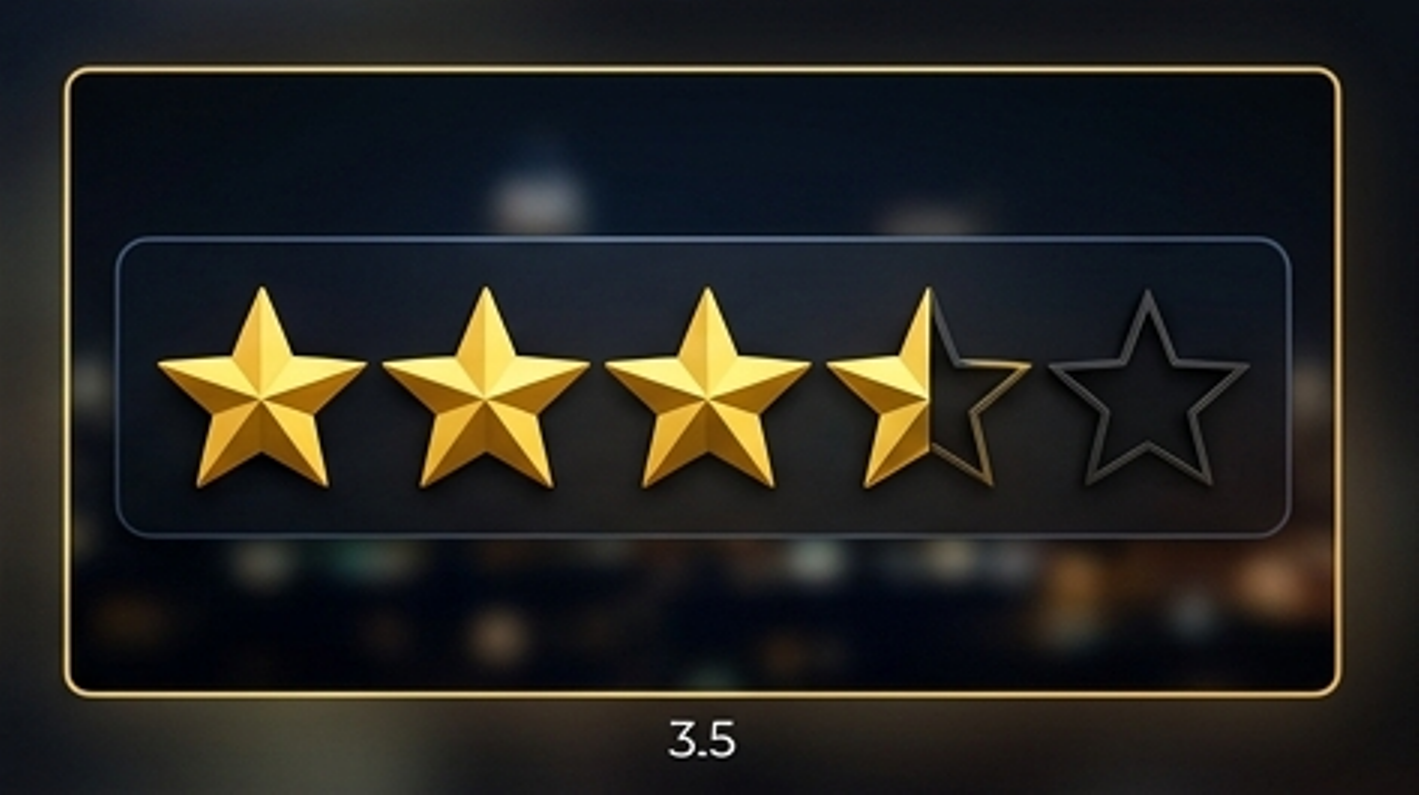
Filmyhype.com Ratings: 3.5/5 (three and a half stars)
Directed by Louis Leterrier and starring Greta Lee and Wagner Moura, The Last House arrives on Netflix on August 7th, presenting itself as a science thriller with horror overtones, combining science fiction and survival in a story constructed almost entirely within a single home. Thanks to Netflix, we previewed the film, and we’ve shared our thoughts below. There are post-apocalyptic films that show destroyed cities, armies in disarray, and crowds on the run. There is nothing particularly original or ever seen in this thesis, especially in the dystopian/catastrophic cinema from which the film takes much of its imagery, starting with The War of the Worlds, among the best known of the genre. Yet The Last House manages to carve out a space for itself, thanks to some ideas that distance it from the more cheesy and botched.
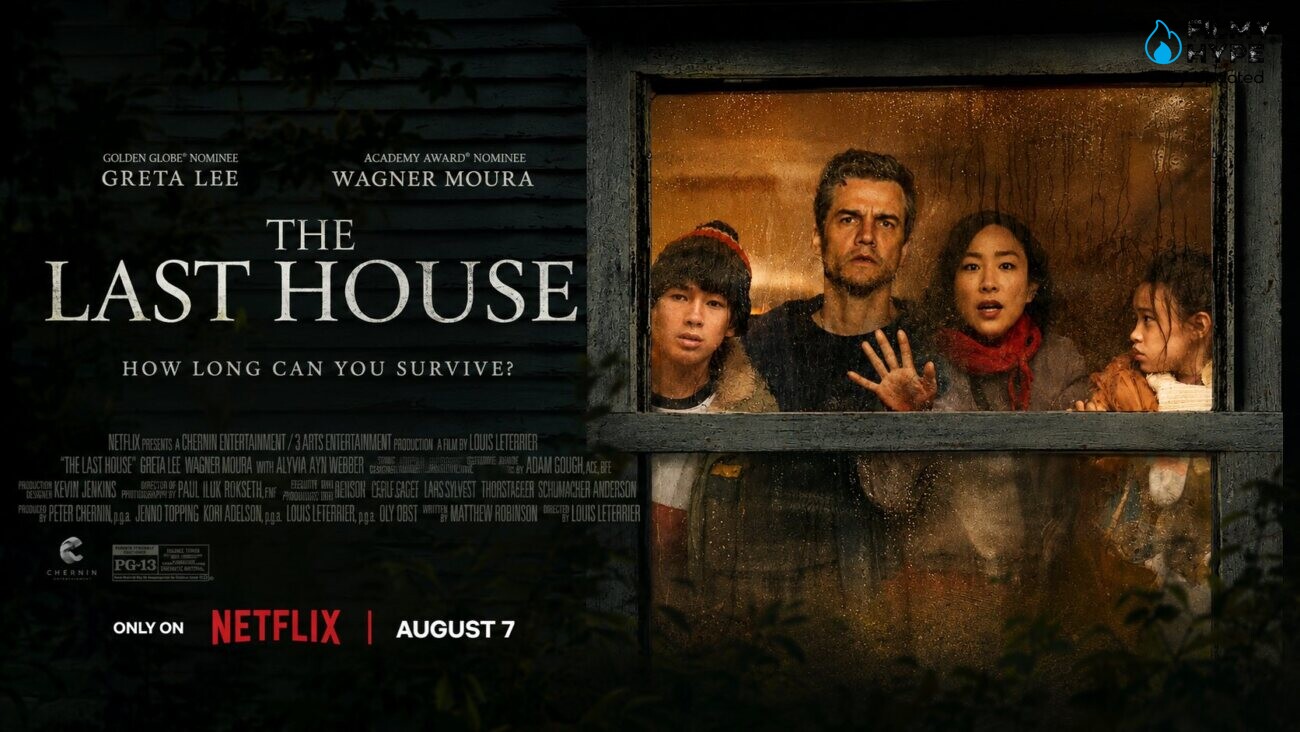
Netflix productions and place it among the well-crafted horror films that have been populating the big screen in recent years (and in particular in 2026, between Obsession, Backrooms, and Hokum). Although this technically won’t go to the movies. It’s inevitable to think about the lockdown experience, even if the film isn’t directly about the pandemic. Doors and windows suddenly impossible to open, communications interrupted, resources rationed, routines built to maintain a semblance of normality: many elements hark back to fears that are still relatively recent. The Last House, however, transforms that collective memory into a science fiction survival, testing not only the survival skills of its protagonists, but the family’s very well-being. The problem is that the film works much better until it explains too much. As the mystery gradually gives way to the science fiction component and the creatures lurking outside, a previously claustrophobic and disturbing story becomes much more conventional.
The Last House Movie Review: The Story Plot
The story follows a family who, at any moment, finds themselves inexplicably trapped in their home, unable to cross the threshold. As time passes, supplies dwindle, and tensions between family members grow, it becomes clear that something unknown and potentially lethal lurks outside. In trying to understand what is really happening and whether there is an escape route, the family unit will be forced to confront both the invisible threat around them and their deepest fears.
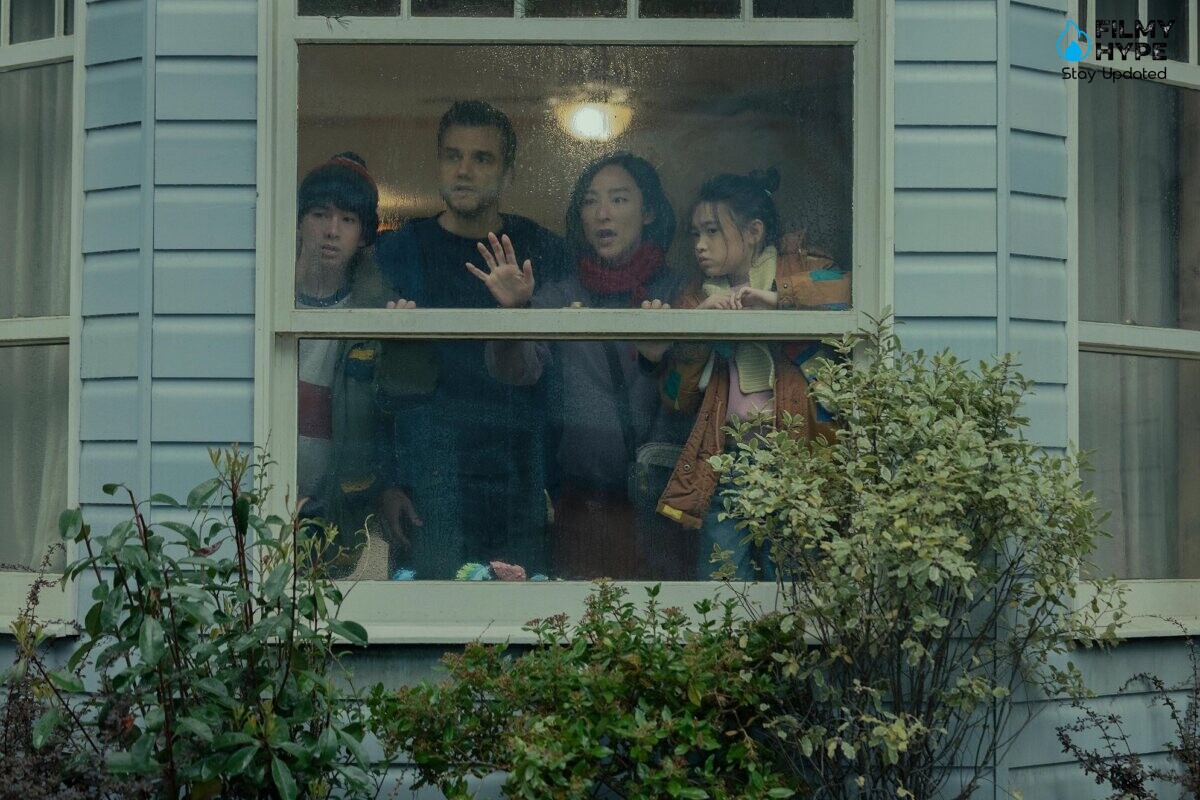
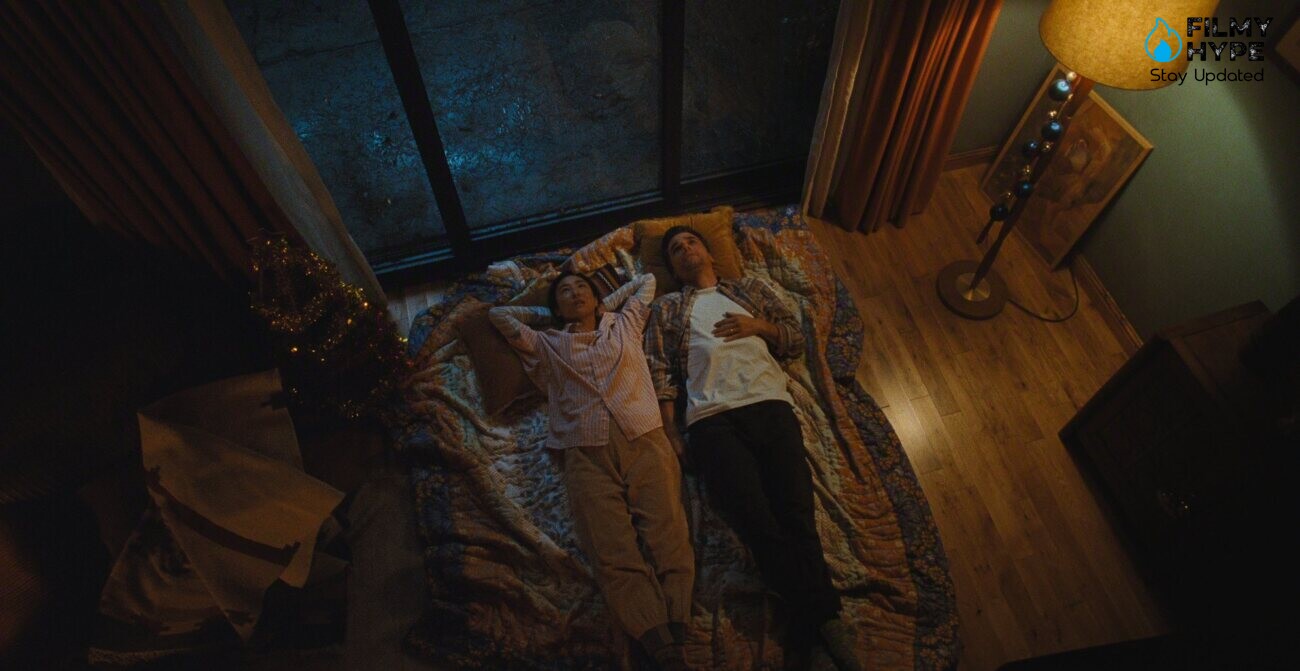
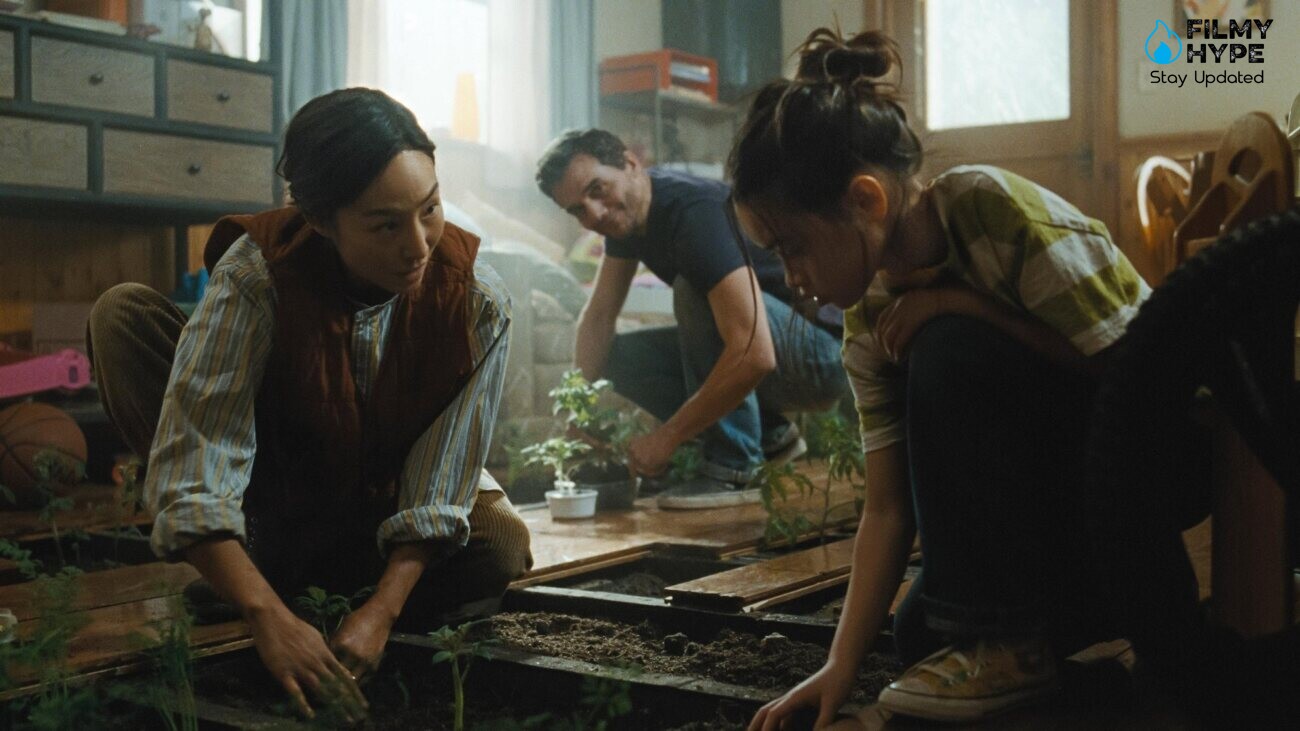
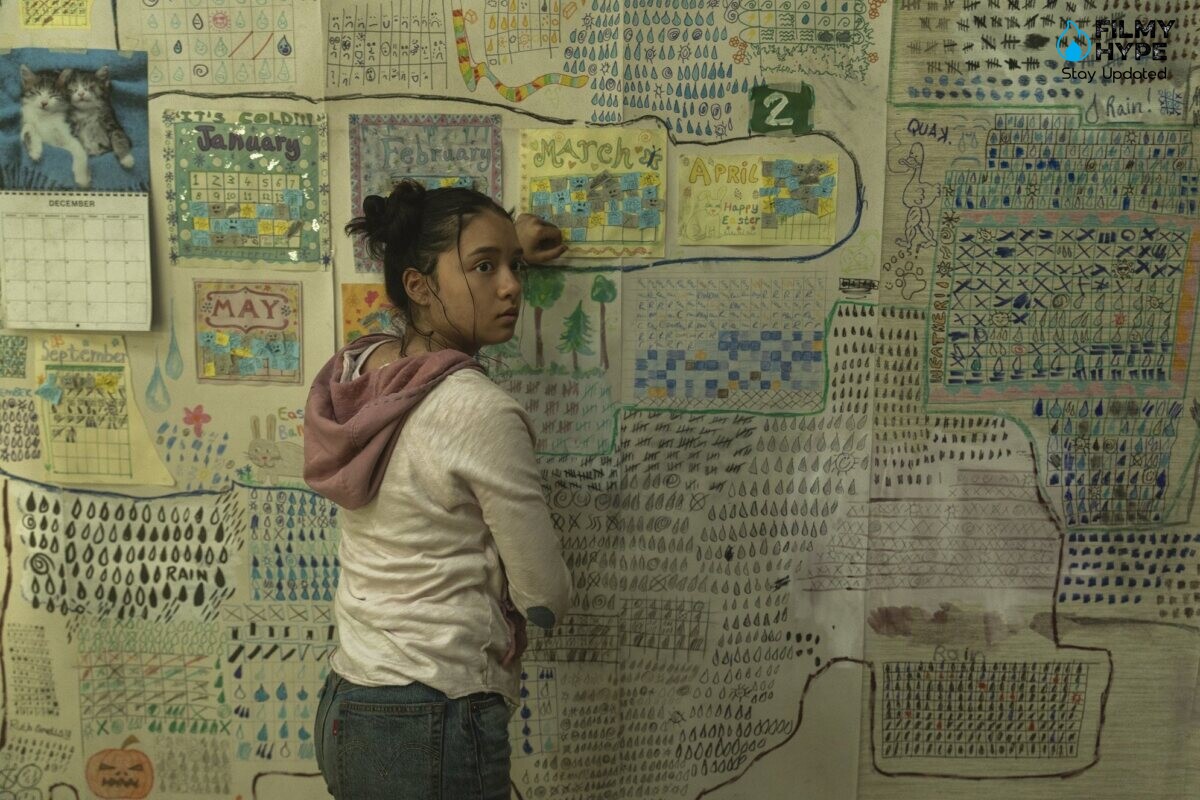
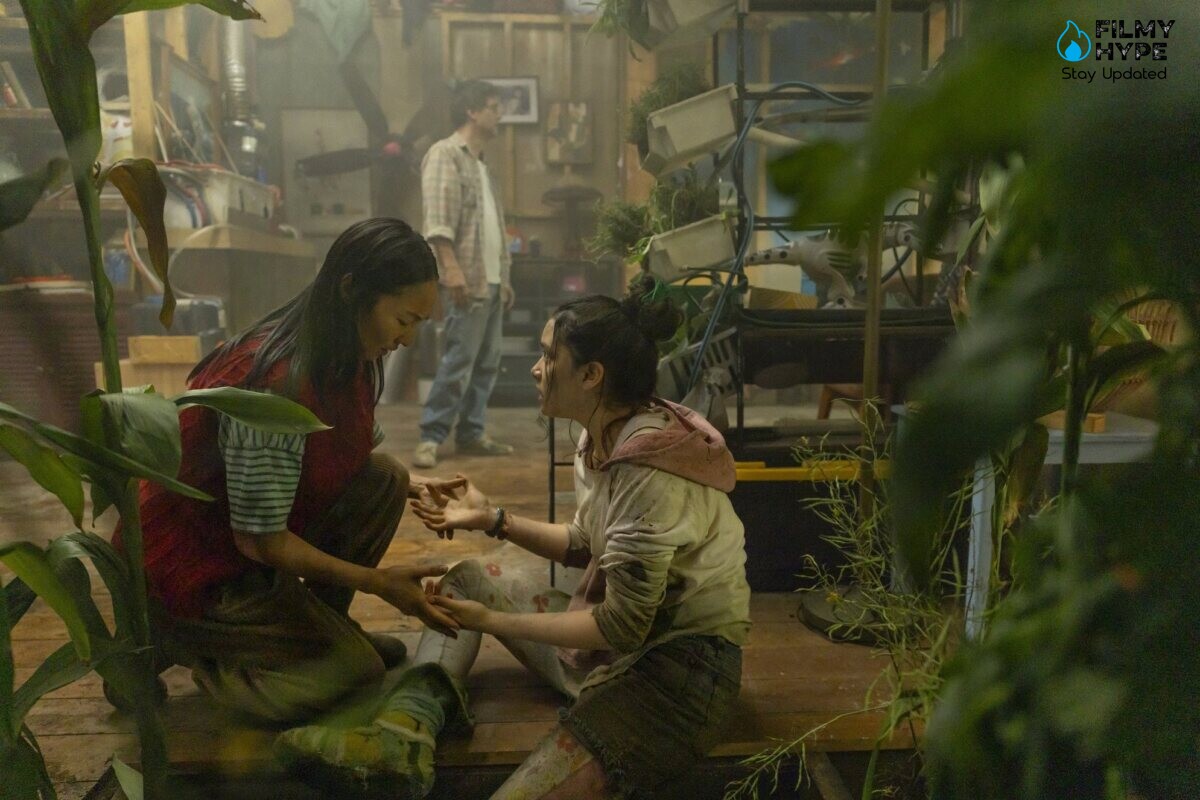
Jason and Ann Delgado live in Seattle with their children, Graham and Ruth. Theirs is a normal family, struggling with financial problems, daily arguments, and the approaching Christmas. Then comes a heavy rain, and when they try to get out, they discover that doors and windows have been sealed by a seemingly inexplicable force. Neighbors are trapped, too. The Internet, phones, television, and radio are down, and no one knows how widespread the emergency is. What initially seems destined to last a few hours turns first into days, then into weeks, and finally into something much longer. The family must thus completely reinvent its existence. Food is rationed, Ann tries to grow plants inside the house, and Jason uses his engineering skills to find new ways to procure resources. Meanwhile, the world outside the windows changes and something seems to move beyond the walls.
The Last House Movie Review and Analysis
There’s something very contemporary about the way The Last House chooses to approach the sci-fi thriller. Despite belonging to that science thriller genre contaminated by horror, Louis Leterrier’s film ends up evoking an experience still very much alive in the collective memory: that of domestic confinement experienced during the pandemic. Not because it wants to be a direct allegory, but because it exploits the same feelings of helplessness, isolation, and progressive loss of reference points to draw the viewer into the story. Several years after the Covid emergency, finding yourself faced with a family forced to be unable to cross the threshold of their home almost automatically reactivates memories and emotions that have now settled.
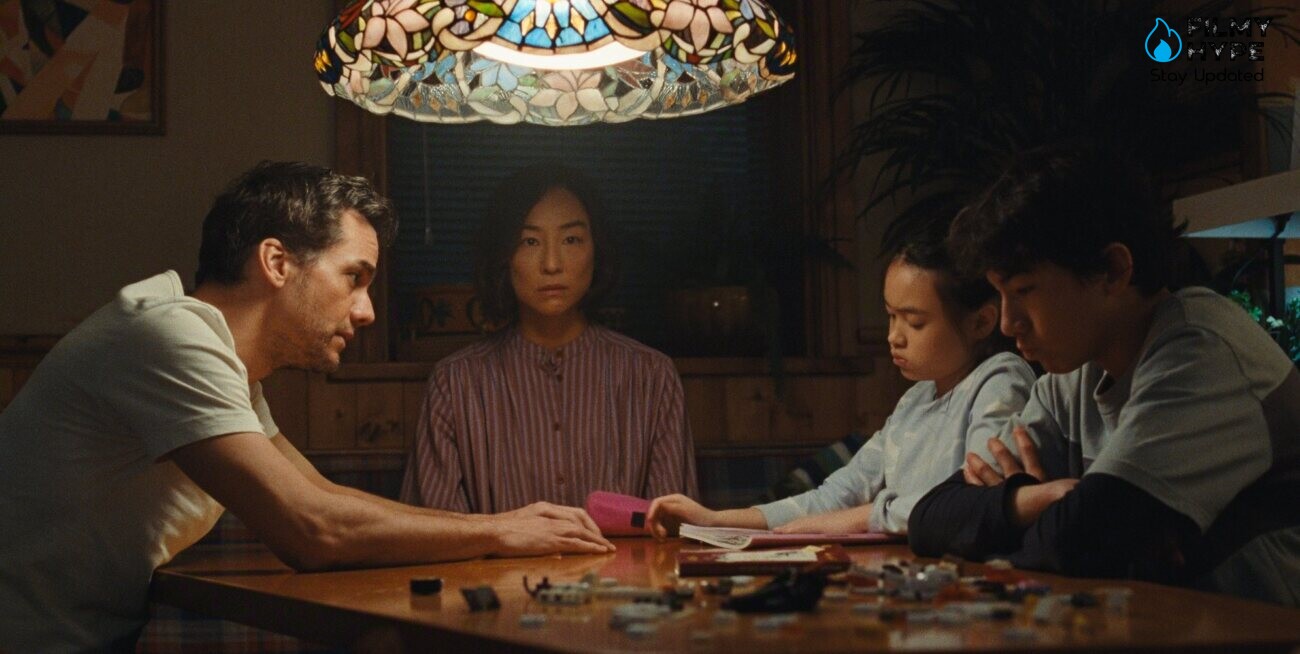
It is precisely in this claustrophobia, psychological and physical, that The Last House develops. Leterrier transforms the home into a microcosm where time is wasted, every decision becomes a risk, and every attempt to rebel against externally imposed rules fuels new questions rather than providing answers. As viewers, one is often surprised to imagine what we would have done in place of the protagonists, whether we would have tried to get out, waited, rationalized, or given in to panic. It is a spontaneous involvement that arises precisely from the familiarity of that extreme situation, capable of making even a science fiction premise credible. Perhaps the film deliberately exaggerates some dynamics, but it still manages to build an immersive experience precisely because it starts from a fear that, albeit in different forms, many have already experienced.
That feeling of imprisonment, however, never becomes just a device to create suspense. Forced isolation is also reflected in the relationships between family members, forced to share every moment, every fear, and every decision without any possibility of escape. This is where The Last House chooses a less obvious path than many works in the same vein. Instead of turning the family unit into a constant battlefield, the script depicts a family that, despite experiencing moments of tension, remains surprisingly close. Conflicts exist, as do misunderstandings and doubts, but mutual trust and the will to face together a situation that defies any logic prevail. Everyone offers what they know how to do, their skills, their way of observing the world, an approach that makes the dynamics between the characters believable and restores a human dimension to a story that, by its nature, could easily have slipped into excess.
The script itself shows awareness in handling the mystery. In an age when many thrillers feel the need to explain every detail of their narrative universe, The Last House chooses the opposite direction. The film is in no rush to provide answers, nor does it feel the need to rationalize what happens. The viewer discovers the events exactly together with the protagonists, sharing their confusion and uncertainty. This choice makes the story much more engaging. Every attempt to understand the rules of that new reality arises from observation, error, and subsequent correction. The protagonists experience, fail, change their behavior, and gradually learn to live with the unknown, just as any person suddenly catapulted into a situation impossible to understand would.
The Last House remains an entertainment-focused film. He does this through good staging, direction that intelligently exploits the confined spaces of the house, and a particularly effective construction of suspense in the first half of the story. It is important, however, to approach the film with the right expectations. Those looking for immediate answers or explanations may be disappointed. The strength of the film lies precisely in the choice to share with the audience the same level of knowledge as the protagonists. There is no omniscient narrator, there are no characters who know more, nor long explanatory sequences designed to dispel any doubt. It’s a narrative choice that requires viewer trust, but makes engagement even more authentic.
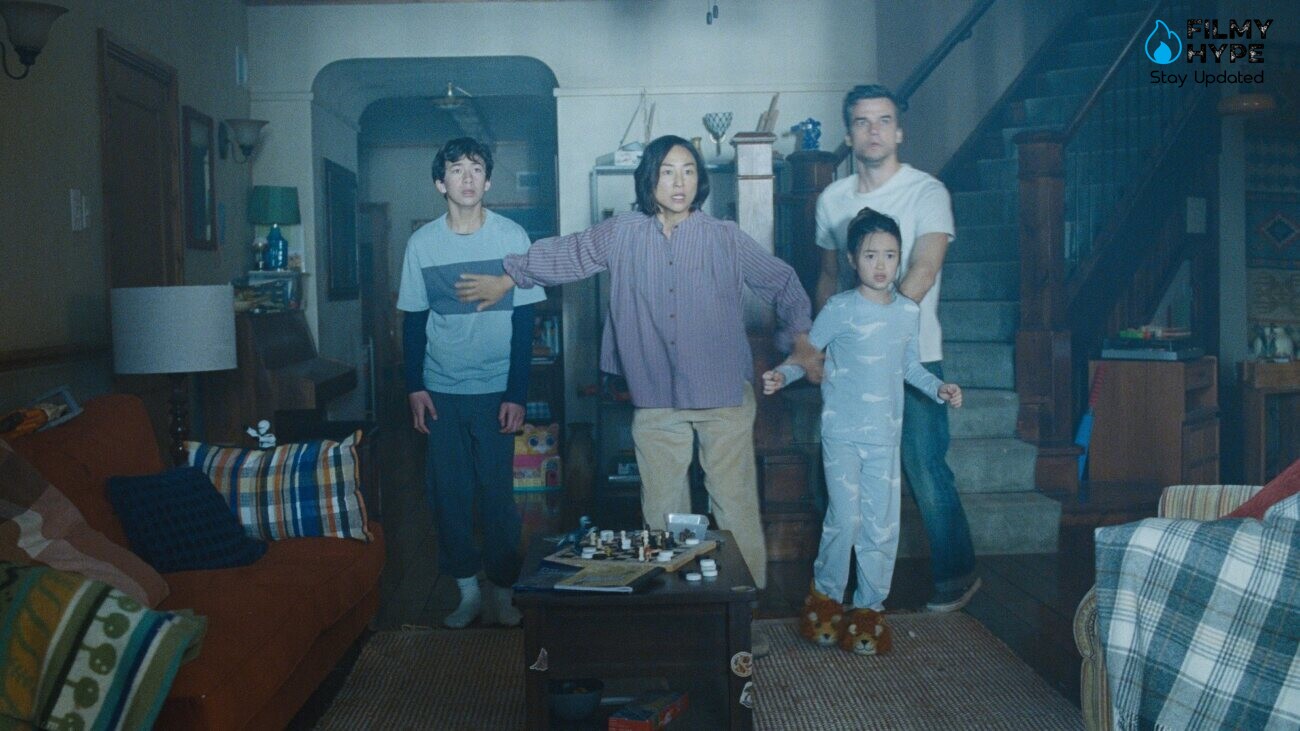
While not reinventing the genre or pushing for particularly profound reflections, The Last House manages to stand out thanks to an intriguing concept and convincing execution. Some excesses in managing tension and some dynamics that, as the minutes pass, lose some of their initial strength prevent the film from making the definitive leap in quality, but they do not compromise an experience that remains engaging from start to finish. A work designed to entertain and, in this respect, is decidedly effective.
If Hokum is in the theater these days, which is essentially a great escape room between folk horror and detective fiction, The Last House is almost the opposite. Running away is not possible, and the only thing left for Jason and Riley’s family is to find comfort in their routine and their bond. A familiar feeling in a world just emerging from a pandemic. This is also why it is not difficult to empathize with the protagonists, well written by Matthew Robinson’s screenplay and enhanced by two excellent actors like Moura and Lee. It’s no coincidence that some of the best moments are when parents reflect on how to raise their children in such an extreme situation, or on the ingenious solutions they find for their own sustenance (for some, you have to turn a blind eye to credibility, but no big deal).
The Last House thus closely resembles the stories of drifting crews, with Leterrier emphasizing the analogy by making the dwelling a kind of vessel immersed in a constant storm. So much so that at a certain point, Jason will start “fishing” for the animals that are wandering around the area from the chimney. There is, in this film, all the survival movie components that Christopher Nolan, legitimately more interested in other aspects, did not dwell on too much in his Odyssey. Of the various genres it crosses, perhaps the one that acts as a connective thread is body horror. Where the “body” is not the human one, but the house itself. Throughout the film, the protagonists –especially Jason, as a good engineer he is – do nothing but demolish, deconstruct, and reshape his walls, floors, furniture, and the objects inside to suit their needs.
It is a house in constant transformation, and the more time passes, the more cracks emerge that undermine its solidity, making it a mirror reflection of the psychophysical attrition of the protagonists. As long as The Last House remains on these tracks, it works very well and is perhaps one of the French director’s best feature films in several years. The moment he tries to build a human/monster or human/alien relationship, he clashes with the complexity and visual depth with which other authors have addressed the same problem – Guillermo Del Toro and Steven Spielberg above all, even in the recent Frankenstein and Disclosure Day – and sinks into an ocean of banality, which cannot even cling to technique and aesthetics, between a rather confusing editing in the more tense scenes and an uninspired character design of the tentacle creatures. Thankfully, by then the film is over.
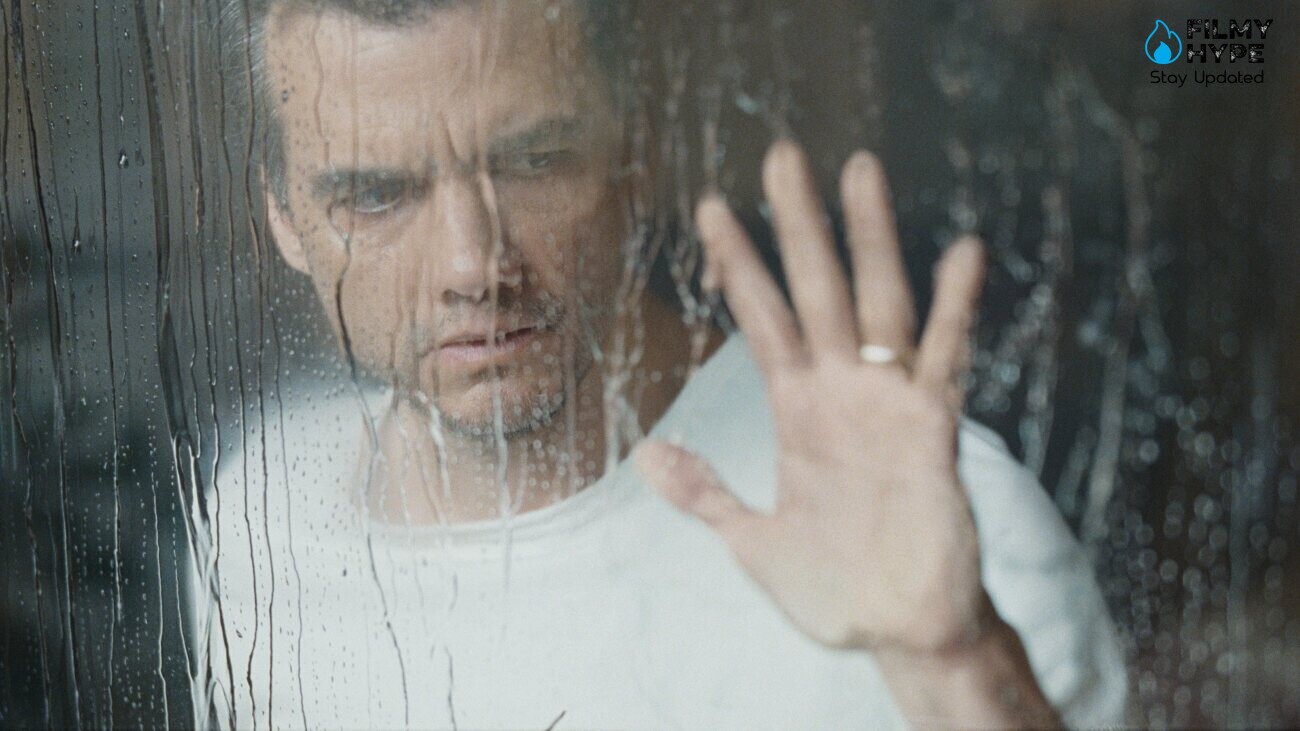
The Last House is especially convincing when it remains anchored to the concrete needs of survival. It is the small solutions devised by the protagonists that give credibility to a deliberately absurd premise. At first, the family tries to maintain a routine: lessons, exercise, household chores, evenings in front of the only DVDs available. Then stocks start to decline, and each item suddenly takes on a different value. Leftovers are recovered, seeds become a potential food source, and even parts of the house are transformed to adapt to the new reality.
It is in these moments that Louis Leterrier builds effective tension. The house slowly changes along with its inhabitants, moving from a familiar place to an improvised survival system. The scenography also contributes a lot: the wear, humidity, and progressive deterioration of the rooms tell the story of the passage of time without the need for constant explanation. The film doesn’t even completely soften the consequences of isolation. The scarcity of resources forces the protagonists to make painful decisions, and the mental health of the family becomes as fragile as the structure of the home.
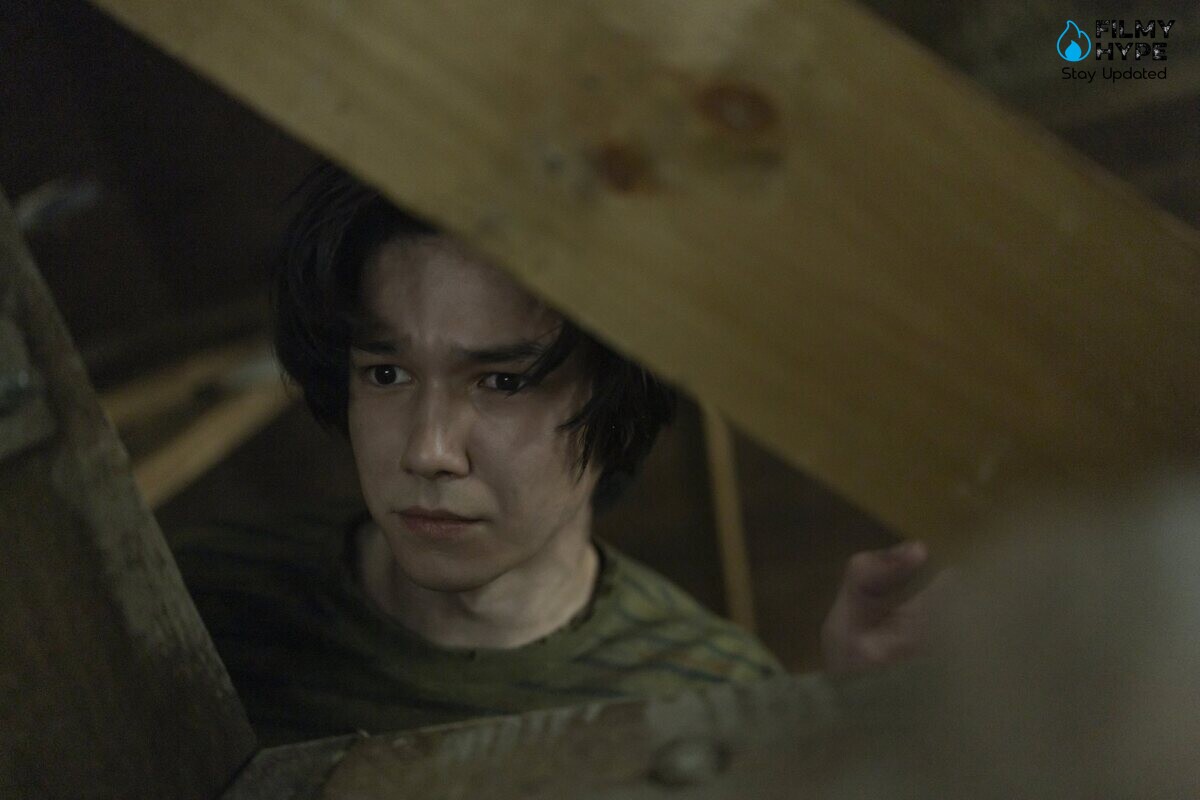
More than pure sci-fi, The Last House functions as a family drama set at the end of the world. Jason reacts to the crisis by turning the protection of his loved ones into an almost obsessive mission. He wants to find a solution to every problem and slowly ends up considering himself more responsible for the group’s survival than as a husband and father. Ann, on the other hand, approaches isolation differently, becoming progressively more fatalistic. Graham and Ruth inevitably change, too. They grow up inside a home they can’t leave, without friends, school, or an outside society to deal with. The film uses this element well to show how deeply the environment conditions the development of the two boys.
Wagner Moura is particularly effective in rendering Jason’s transformation. His performance keeps the film grounded in reality even as the story begins to push into much more fantastical territory. Greta Lee instead works on a character less defined by the script, but still manages to make Ann’s growing emotional exhaustion believable. For much of the film, we don’t know what’s happening outside the house, and it’s precisely this uncertainty that generates the greatest tension. Only clues arrive through the windows: movements impossible to interpret, changes in the landscape, and brief apparitions that suggest the presence of something unknown. The spectator’s imagination does the rest, and Leterrier demonstrates that he knows how to use what remains off-screen very well.
However, when The Last House finally decides to show and explain the threat, it loses some of its charm. The creatures do not possess particularly memorable designs, and references to other science fiction and horror films become much more apparent. From that moment on, the story inevitably recalls titles like A Quiet Place, but without achieving the same visual or narrative strength. Explanations of what happened to the planet are also less interesting than the questions that fueled the first half. The ecological element and the idea of a nature that reacts to human presence are present, but they are developed in a rather superficial way.
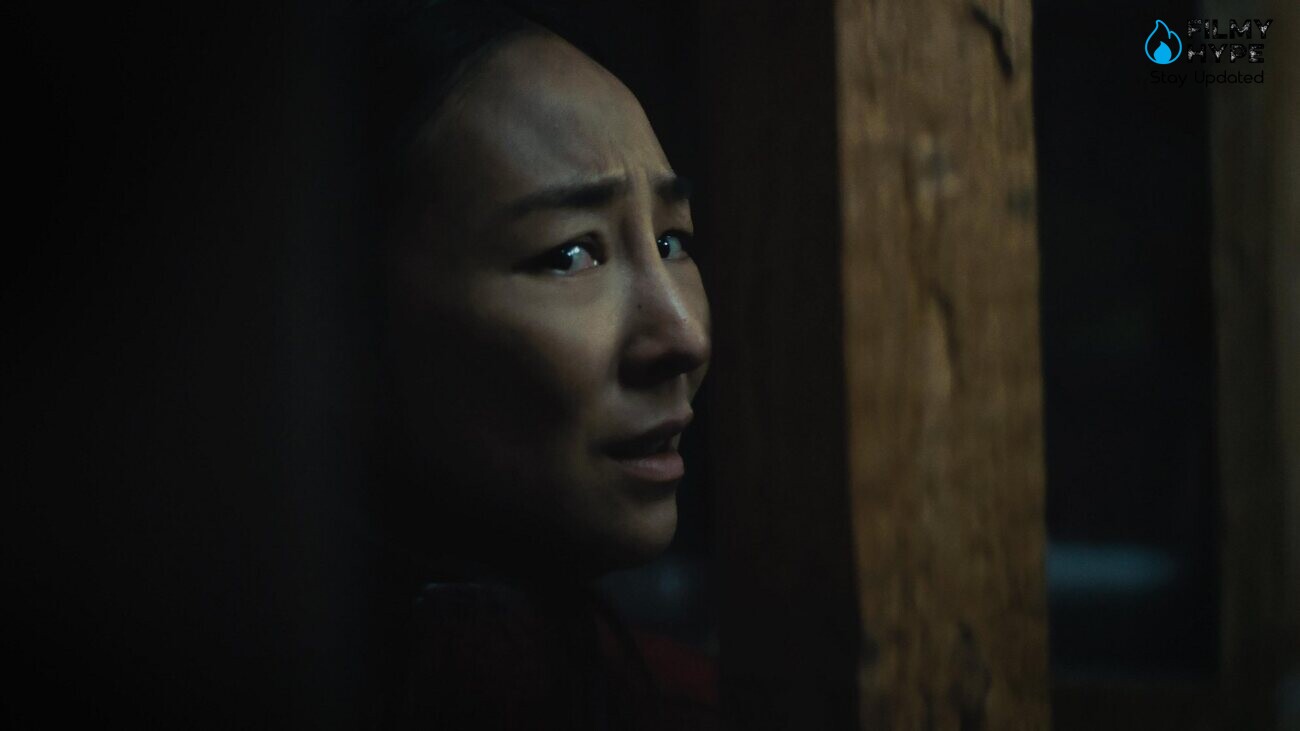
Louis Leterrier’s direction is solid, especially in enclosed spaces. The director manages to create movement and tension even within a few rooms, continually making one perceive the presence of an unreachable world just beyond the walls. The transition to a more overtly spectacular final act, however, does not work in the film’s favor. The digital effects are choppy, and some action sequences are confusing, while the ending seems to want to cram too many answers and too many themes into a short amount of time. It’s a shame, because The Last House had built something more interesting through the simple experience of waiting.
The anguish of not knowing how long isolation will last, the progressive loss of resources, and the deterioration of family relationships are far more disturbing than any creature that might appear outside. The Last House starts from an effective premise and manages to transform it into an engaging domestic survival, supported above all by interpretations and the construction of claustrophobia. The first part can be disturbing precisely because it leaves the viewer in the same situation as the protagonists: without information and without an escape route.
When it comes time to reveal what’s lurking outside the house, the film instead becomes more predictable and loses some of the personality it’s built up to that point. The sci-fi ambitions are not developed as precisely as the family drama, and the ending appears weaker than the lengthy buildup. It remains a solid product, capable of performing very well as a streaming film and using easily recognizable contemporary fears without becoming too explicit an allegory of COVID. It’s not the great sci-fi thriller the premise might have suggested, but for much of its running time, it manages to make four walls a much more disturbing space than the entire outside world.
The Last House Movie Review: The Last Words
The Last House is an effective home survival that finds its strength in isolation, family dynamics, and the mystery of what happens outside. It works less when it abandons uncertainty to become a more conventional horror sci-fi. While not reinventing the genre or pushing for particularly profound reflections, The Last House manages to stand out thanks to an intriguing concept and convincing execution. Some excesses in managing tension and some dynamics that, as the minutes pass, lose some of their initial strength prevent the film from making the definitive leap in quality, but they do not compromise an experience that remains engaging from start to finish. A work designed to entertain and, in this respect, is decidedly effective.