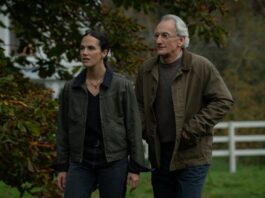
For two seasons, Silo kept its secrets buried underground. The show was a claustrophobic masterpiece of contained storytelling—ten thousand people living in a giant concrete cylinder, told that the outside world is dead, told that asking questions is dangerous, told that the people who came before them destroyed everything. We knew there was a larger story out there somewhere, a before to all this after, but the show was patient. It lets us live in the silo. It let us feel the weight of the walls.
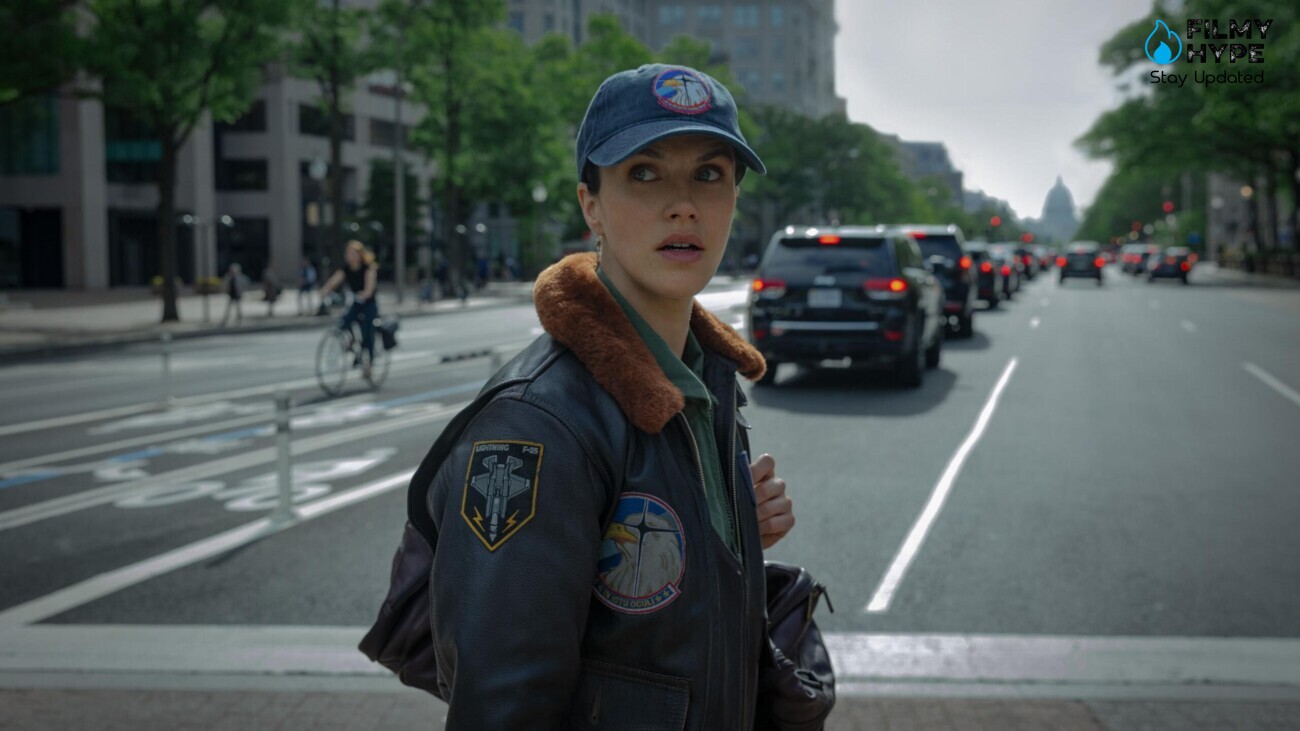
Season 3 opens, and suddenly we’re not underground anymore. We’re in the world. The real world. The one that existed 352 years before Juliette Nichols ever picked up a wrench. And in the middle of that world, flying a Navy jet through a sky that hasn’t yet turned toxic, is Charlotte Keene.
She’s played by Jessica Brown Findlay with a sharp, watchful intelligence that immediately signals she’s not here to be a footnote. She’s a pilot. She’s the sister of Congressman Daniel Keene. And within the span of a single episode, she becomes one of the most intriguing pieces of the puzzle Silo has been building since the beginning.
Who Is Charlotte Keene? The Mission That Changes Everything
Charlotte is introduced in the middle of a situation she doesn’t fully trust. She’s about to fly a mission over Iran, and she’s convinced that someone isn’t telling her the whole truth about what she’s flying into. Before she leaves, she makes her brother Daniel promise something: he’ll agree to join the committee headed by Senator Thurman. It seems like a minor request; the kind of political favor siblings ask each other all the time. But Silo doesn’t do minor requests. By the end of the episode, it’s clear that Charlotte’s mission and Daniel’s committee are two pieces of the same catastrophe waiting to happen.
Her squadron flies into a black cloud suspended at high altitude. Not weather. Not smoke. Something else. A metallic substance invades the cockpit. Systems fail. Planes go down. Charlotte survives, but when Daniel sees her again, she doesn’t recognize him. She doesn’t remember who he is. She doesn’t remember the mission. She doesn’t remember anything.
The hospital says it’s a traumatic brain injury. The show, with its careful framing and its refusal to explain anything before it’s ready, suggests otherwise. The memory loss happens after contact with something unnatural. Something that was waiting in the sky. Something that doesn’t behave the way the world is supposed to behave.
The Thread Between Past and Present
Here’s where Silo does what Silo does best. It draws a line between two events separated by centuries and dares you to connect them.
Charlotte Keene loses her memory after encountering a strange black cloud in the pre-apocalyptic world. Juliette Nichols, in the show’s present timeline, wakes up with no memory of how she got back to Silo 18, her mind fogged by drugs designed to alter her recollection. Two women. Two timelines. Same fundamental violation: the theft of memory.

The causes are different. Charlotte’s amnesia seems to be a consequence of whatever was in that cloud. Juliette’s is chemically induced. But both situations point toward the same unsettling truth that Silo has been circling since the pilot episode. Memory isn’t reliable. It can be damaged. It can be edited. It can be taken away. And the people who know how to do that have been operating for a very long time.
This connection isn’t accidental. The show is laying the groundwork for one of the darkest revelations from Hugh Howey’s Shift, the second book in the trilogy. In the source material, the people who run Silo 1—the overseers of all fifty silos—live under a constant regimen of drugs. Drugs to make them sleep. Drugs to wake them up. Drugs to blunt the psychological horror of cryogenic storage and centuries-long shifts. Their memories are managed. Their minds are not entirely their own.
Charlotte’s amnesia predates the silos by centuries, but it suggests something crucial: the technology or the knowledge required to manipulate human memory existed before the apocalypse. It wasn’t invented in the silos. It was brought to them.
What Charlotte Changes About Daniel’s Story
In Shift, the pre-apocalyptic storyline belongs primarily to Donald Keene, called Daniel in the series. He’s the man who gets pulled into Senator Thurman’s orbit, who slowly realizes that the committee he joined isn’t planning to save the world but to survive its end, and who eventually becomes trapped inside the very system he helped design. It’s a story about complicity and the slow erosion of moral clarity, a man watching himself become a cog in a machine he can’t stop.
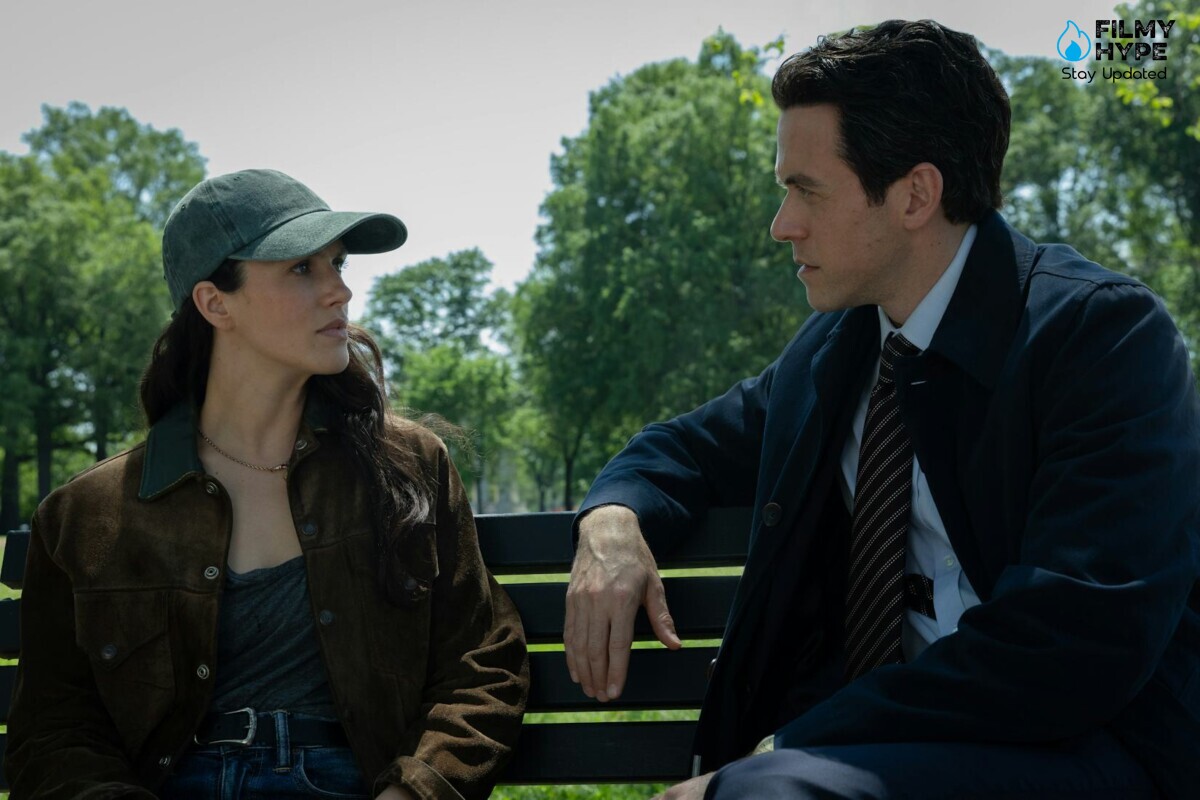
The series adds Charlotte, and in doing so, it changes the texture of Daniel’s arc. He’s no longer just a congressman navigating a political crisis. He’s a brother trying to understand what happened to his sister. He’s watching her lose herself, piece by piece, and he’s being told official explanations that don’t match the facts he can see with his own eyes. The political becomes personal. The conspiracy isn’t just about nations and weapons and the balance of power. It’s about his family. It’s about the person sitting in a hospital bed who no longer knows his name.
This is smart adaptation work. The books are dense with ideas, but they can be chilly. The series, by grounding the mystery in a sibling relationship, gives the audience an emotional anchor. We care about Charlotte because Daniel cares about Charlotte. We want to know what happened to her because we can see what the not-knowing is doing to him.
Who Charlotte Really Is
Charlotte Keene is more than a plot device. She’s more than a tragic figure introduced to motivate her brother. She’s the first character in the series to encounter the apocalypse not as a historical event but as a lived experience, and she encounters it from the cockpit of a fighter jet, flying through a sky that doesn’t make sense anymore.
She’s also a deliberate departure from the source material. The show didn’t have to create her. It chose to. It chose to expand the pre-apocalyptic world by giving us someone who isn’t a politician or a general or a scientist, but a pilot. Someone who operates in the physical world, not the world of committees and memos and quiet conversations in Washington offices. Someone who sees the thing that’s coming not as a report on a desk but as a black cloud at thirty thousand feet, filling her cockpit with something that shouldn’t be there.
Her presence also shifts how we understand the apocalypse itself. In the books, the end of the world is largely the result of human decisions—political miscalculations, military escalations, the awful logic of mutually assured destruction. The series, by introducing Charlotte and the black cloud, opens the door to something weirder. Something less explainable. The metallic substance. The system failures. The memory loss. It doesn’t behave like a conventional weapon. It behaves like something we don’t have a name for yet.
The Question Both Timelines Are Asking
In the present timeline, Juliette is fighting to recover her memories. In the past timeline, Charlotte is losing hers. Between them, stretched across three and a half centuries, is the same question: who controls memory, and what do they want with it?
Silo has always been a show about the politics of knowledge. Who gets to know what? Who gets to decide what’s true? Who gets to edit the past? Charlotte Keene is the earliest point on that timeline, the first person we’ve seen whose mind was taken from her by forces she couldn’t understand. She won’t live to see the silos. She won’t know that the thing that stole her memory was a preview of technologies that would one day be used to manage entire populations. But the show, by placing her here, at the beginning of the story, is telling us that the fight Juliette is waging in the future is a fight that started a very long time ago.
Charlotte Keene flew into a cloud and came out the other side without herself. Somewhere down the line, that technology—or something born from it—became the foundation of a system that controls the minds of everyone who lives underground. The silos aren’t just sheltering. They’re laboratories for memory, for identity, for the question of what a human being becomes when you take away their past.
And Charlotte, whether she knows it or not, was one of the first test subjects.