


The East Palace Ending Explained: The Joseon dynasty had never been so terrifying. The East Palace came to Netflix with a premise that captivated K-drama lovers. Now that the eight episodes are available, the question everyone is asking is: can Gu-cheon and Saeng-gang be saved? And, more importantly, who is truly responsible for the deaths?
Let me tell you something—I did not expect to be so emotionally wrecked by a historical horror K-drama, but here we are. I finished The East Palace three days ago, and I’m still thinking about that final shot of Gu-cheon’s chain trailing invisibly behind him. If you’re like me, you probably have about seventeen questions swirling around in your head right now. Who exactly was behind the curse?
Did Gu-cheon actually survive? What’s going to happen to him and Saeng-gang after the credits roll? And honestly, was the pond spirit even real, or was it all just a convenient cover for decades of palace scheming? I’ve rewatched the finale twice now and pored over every detail, so let’s walk through the biggest revelations together. Grab a cup of tea—or maybe something stronger, given how dark this story gets—and let’s untangle the brilliant, heartbreaking mess that is The East Palace’s ending.
The East Palace Ending Explained: First, Let’s Rewind: What Was the Curse Actually About?
The premise seems straightforward at first. Thirty years before our story begins, a court lady who’d caught the king’s affection was falsely accused of adultery with a royal guard. The accusation? She was pregnant with the king’s child, but the queen—now the formidable Queen Dowager played by Jang Young-nam—couldn’t stomach a lowborn maid receiving the king’s favor. So she orchestrated the execution.
As this court lady died, she screamed a curse into existence. She swore she’d return as a won-gwi, a vengeance spirit so consumed by resentment that it cannot move on to the afterlife. Her promise? She would wipe out the entire royal bloodline.
And then it started happening. Prince after prince died mysteriously. The only survivor was a son born to a different concubine, last in the line of succession. He grew up to become our present-day king, played with such weary intensity by Cho Seung-woo. But here’s where things get interesting—the king’s biological mother fled the palace years ago, terrified of its darkness. She left her son behind to rule alone, trapped in an endless power struggle with the Queen Dowager.
And now decades later, the king’s own sons are dying the same way his brothers died. The Queen Dowager sees opportunity in tragedy—if she can convince everyone that the curse is real and unstoppable, she can install a new crown prince from an outside family that she controls. And this is precisely why the king cannot admit any supernatural involvement publicly. But instead, he blames the deaths on a palace conspiracy, as even his last living son, Prince Yeongan, collapses.
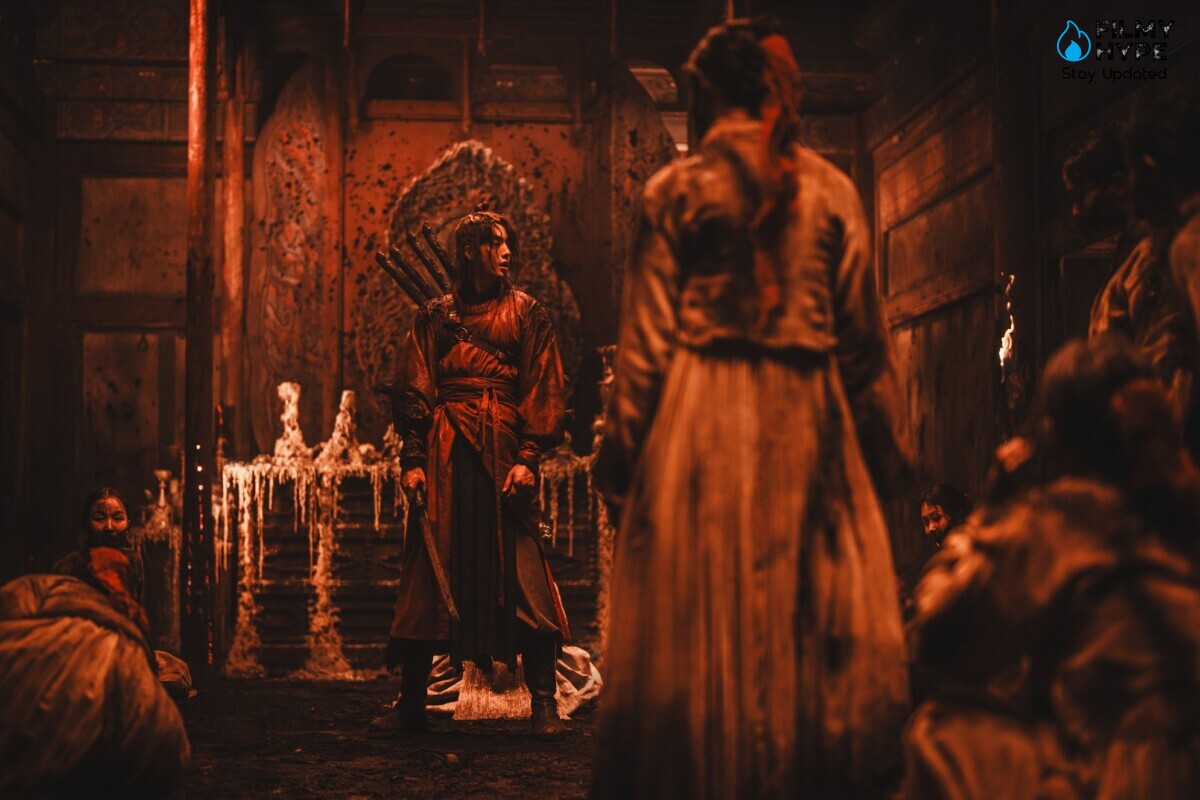
Desperate and out of options, the king secretly summons Gu-cheon—a reluctant spirit slayer living in a remote mountain temple—and gives him an ultimatum. Destroy the won-gwi known as the pond spirit, or die within the palace walls. No pressure, right?
Who Is Saeng-gang and Why Does She Matter So Much?
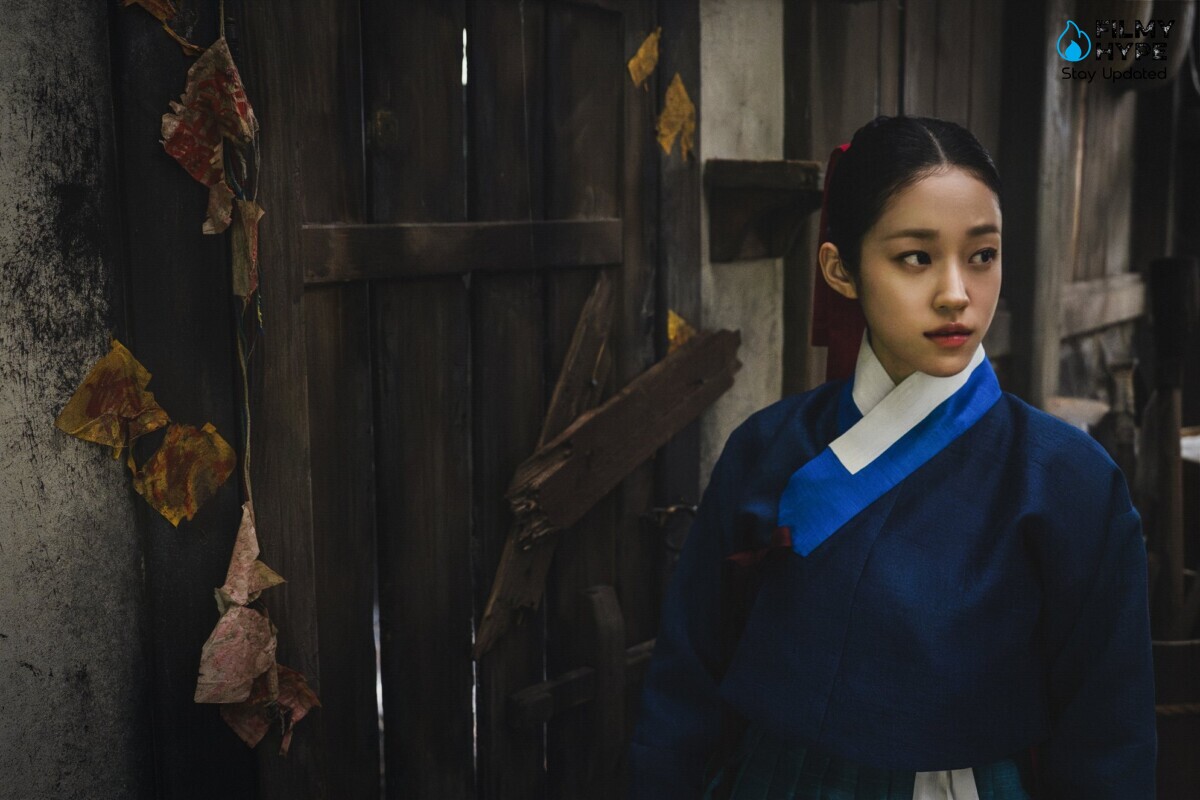
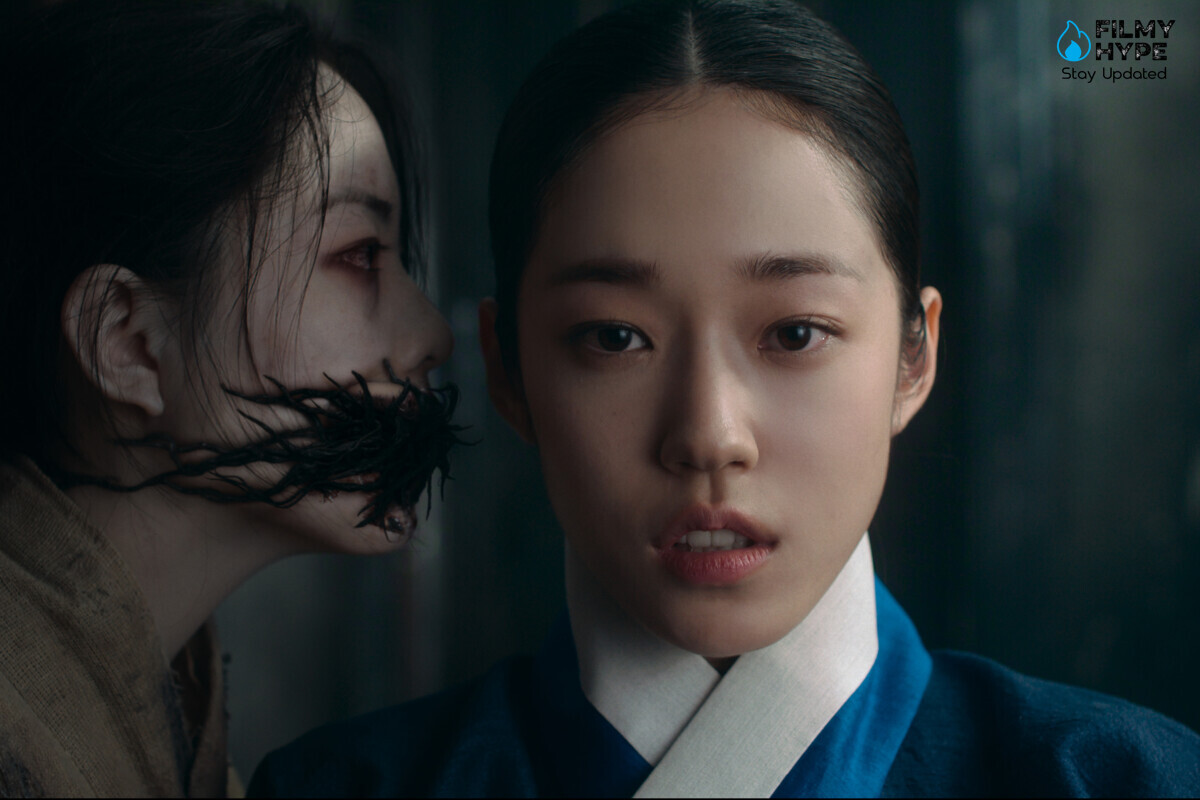
Saeng-gang, played by the luminous Roh Yoon-seo, initially appears to be just another court lady. But she’s hiding two enormous secrets. First, she’s actually the king’s illegitimate daughter, born to a woman who was mysteriously poisoned years ago. Second, she inherited a rare gift from her father’s maternal line—she can hear spirits.
“Saeng-gang is someone who never resolved her pain after her mother’s death,” Roh explained in an interview with Tudum, “and she’ll keep trying to dig up the truth, especially if it involves her mother.”
This relentless pursuit of truth drives much of the finale’s emotional weight. Saeng-gang has spent years believing her grandmother—the king’s biological mother who left the palace—was her safe harbor. After her mother’s murder, her grandmother took her in, raised her, and became her only refuge in a world that had stripped everything from her.
So imagine the absolute devastation when Saeng-gang discovers that her beloved grandmother is not just complicit in the palace’s horrors—she’s the architect of them.
The Big Reveal: Who Was Really Behind the Murders?
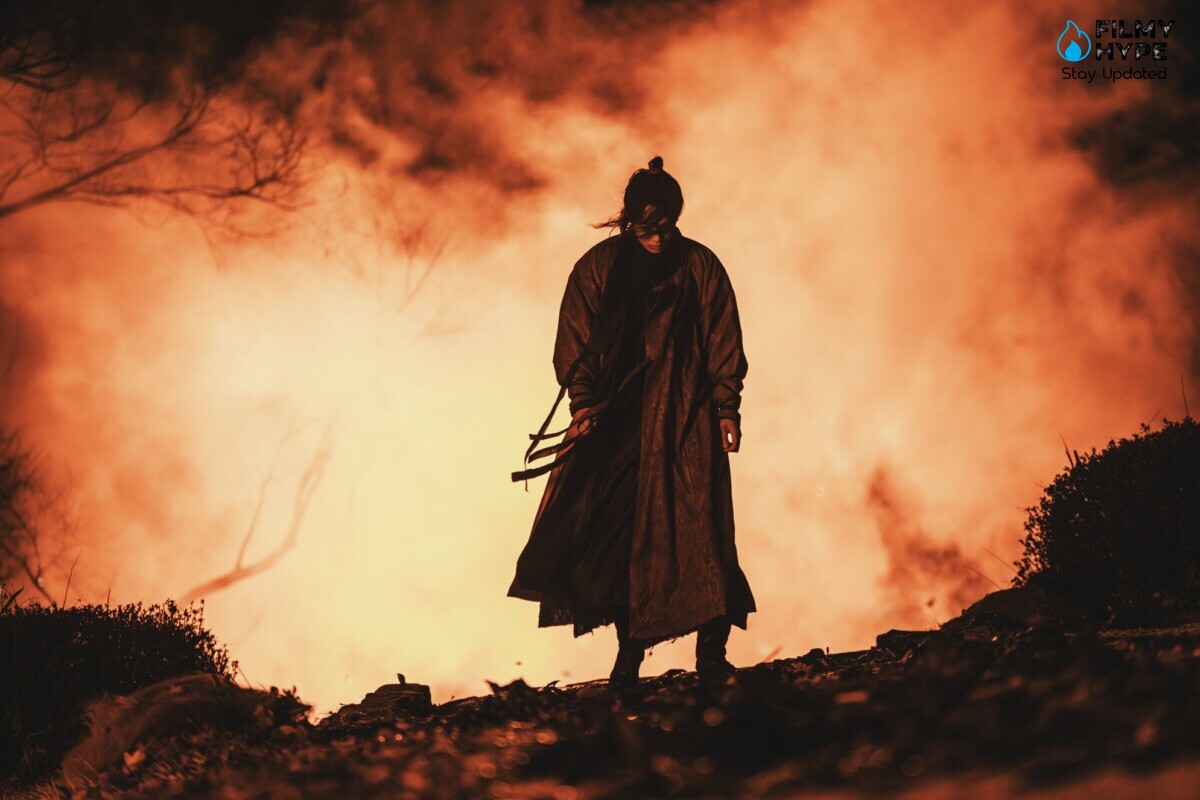
This is where the show pulls off something genuinely brilliant. Gu-cheon defeats the pond spirit. He descends into the Realm of Gwi, finds her, and uses a lightning-struck jujube branch to sever the resentment binding her to the human world. By all accounts, the curse should be broken.
But Prince Yeongan dies anyway.
And Saeng-gang keeps hearing spirits, and they all whisper the same chilling message: The real ak-gwi—the truly evil spirit—is the king himself. The real culprit is still out there.
What unravels from here is a masterclass in generational trauma and moral rot. Saeng-gang pieces together the truth, and it shatters everything she believed. Thirty years ago, her grandmother witnessed the executed court lady’s curse. She saw an opportunity. If everyone believed a vengeful spirit was killing the princes, no one would look too closely at who actually benefited from each death. So she began poisoning every prince ahead of her own son in the line of succession, methodically clearing his path to the throne while the palace blamed each death on the won-gwi.
The king knew. Of course, he knew. And Saeng-gang’s mother—the grandmother’s own daughter—helped carry out the murders. Once the killing was done and her son sat on the throne, the grandmother tied up loose ends by killing Saeng-gang’s mother too. She knew her daughter would eventually become a liability, a loose thread that could unravel the entire tapestry of lies.
“I remember the day I read that in the script and still couldn’t shake the shock,” Nam Joo-hyuk said about this revelation. He’s not alone. I practically shouted at my screen.
Roh Yoon-seo’s commentary on this moment is particularly moving: “The grandmother had been her only source of support, and when that grandmother turns out to be not just a betrayer but, in a sense, the root cause of everything… I don’t think I could presume to measure what Saeng-gang felt. It made me imagine just how far a person can be corrupted, how far that collapse can go.”
Wait, So Is the Grandmother Still Killing the Present-Day Princes?
No—and this twist genuinely made my jaw drop.
The present-day murders have a different killer, someone who learned from the grandmother’s playbook and weaponized the same smokescreen. Remember how Saeng-gang discovered the truth by listening to palace spirits? She wasn’t the first person with this gift to do so.
The king’s third son—the Crown Prince, whose funeral opens the entire series—could hear spirits too. That gift runs through the maternal line, which is how both he and Saeng-gang inherited it. And the dead told him everything. They revealed what his grandmother had done, how the murders had manufactured his father’s kingship. The spirits shared the ugly truth that his entire royal lineage was built on a foundation of poisoned corpses.
The Crown Prince made a horrifying calculation. If he poisoned his two older brothers, the palace rumor mill would automatically blame the pond spirit. Everyone already believed the curse was real. Why not use that belief to clear his own path to the throne, just as his grandmother had done for his father?
But the king—who knew with absolute certainty that the curse was fake because he’d been complicit in the original cover-up—recognized what his son was doing. And this is where the tragedy deepens into something almost Shakespearean. The king had spent thirty years carrying the weight of his mother’s ambition. He ascended to the throne on a staircase of his brothers’ bodies, and that knowledge poisoned every day of his rule. He refused to pass that throne to a son who had committed the same sin.
So the king killed his own son. The Crown Prince died, unable to understand the hypocrisy—his father’s mother had done the same thing and been rewarded with a crown. Why was he being punished for following in her footsteps? His final, devastated question echoes through the rest of the series: “Why couldn’t I be king?”
That resentment, that sense of profound injustice, curdled his soul. The Crown Prince became an ak-gwi—a spirit so consumed by hatred and grievance that it exists only to destroy. And as an ak-gwi, he finished what his father started. He killed his little brother, Prince Yeongan, draining the royal bloodline completely and fulfilling the curse’s prophecy through sheer, brutal irony.
“Out of one person’s desire to put her own son on the throne, she set off that chain of incidents and killed everyone,” Roh said. “So really, human greed was the origin of this curse.”
That line hits hard because it’s the thesis of the entire show. There was never a supernatural curse at all—just human cruelty using supernatural terror as camouflage.
How Does the Final Battle Unfold?
The Crown Prince Ak-Gwi is a different kind of enemy than the pond spirit. The pond spirit was a won-gwi—a spirit bound by resentment that could theoretically be released if that resentment was resolved. An ak-gwi has crossed a point of no return. It cannot be reasoned with or freed. The only option is total annihilation of its soul.
But the Crown Prince isn’t fighting alone. In his rage, he summons the spirits of a plague-stricken village—innocent people the king once ordered slaughtered to prevent sickness from spreading through the kingdom. Now they march behind the Crown Prince, an army of the unjustly killed, hungry for royal blood. The Crown Prince of the Realm of Gwi is coming for the King of the Human Realm, and he’s bringing reinforcements.
Gu-cheon and Saeng-gang prepare for battle, but a gwi-mae—a spirit intermediary—delivers a devastating premonition. Gu-cheon will die tonight.
Saeng-gang refuses to accept this. She drags Gu-cheon to keep him safe and descends into the Realm of Gwi alone, intending to face the Crown Prince spirit by herself. It’s a suicide mission, and she knows it. The ak-gwi would love nothing more than to kill her—she’s the last surviving child of the king, and her death would truly end the bloodline.
But Gu-cheon wakes up. He follows her into the spirit realm and makes a desperate bargain with the Primordial gwi-mae, obtaining the only weapon capable of destroying an ak-gwi’s soul. The cost of this bargain is left ominously vague—but we’ll get to that.
Meanwhile, the king does something he hasn’t done in thirty years: he stops trying to control everything through force. Instead, he apologizes. He stands before the spirits of the plague victims and genuinely offers remorse for his role in their deaths. He promises to care for their living families if they allow him to rule in peace, and he offers his soul’s eternal damnation when he dies if that’s what justice requires. The spirits accept. They’re appeased.
But the Crown Prince ak-gwi is not appeased. He’s beyond that now. However, his father’s sincere apology does weaken him—the acknowledgment of the original sin undercuts some of the spiritual force driving his rage.
This gives Gu-cheon his opening. He declares he’ll destroy the ak-gwi, and the Crown Prince spirit calls his bluff. Destroying an ak-gwi’s soul isn’t a clean act—the destroyer absorbs that spiritual corruption. If Gu-cheon follows through, he’ll become an ak-gwi himself.
Gu-cheon has spent his entire life refusing to let his trauma transform him into a monster. He’s carried unimaginable pain without letting it curdle into the kind of vengeful hatred that creates evil spirits. And now, to save Saeng-gang, he makes the conscious choice to sacrifice everything he’s protected. He drives the Primordial gwi-mae’s weapon into the Crown Prince spirit, obliterating the soul, and then pours his remaining yang energy into Saeng-gang so she can escape the Realm of Gwi alive.
He stays behind to face the consequences.
Does Gu-cheon Actually Die? Does He Become an Ak-gwi?
Yes, and also no. This is where the finale gets beautifully ambiguous.
Gu-cheon does pay the karmic price. He becomes an ak-gwi, exactly as the Crown Prince warned. The Primordial gwi-mae collects on their bargain, chaining him to the spirit realm. For a moment, it seems like this is the end—he’s bound forever, consumed by the very darkness he fought against.
Then the chain moves.
Gu-cheon, assuming the Primordial gwi-mae has come to finish him off, throws himself into one last desperate fight—and suddenly wakes up in the human world. Saeng-gang is overjoyed. The king allows him to live. He walks out of the palace gates alongside Saeng-gang, accompanied by their loyal Ggeomeoksali, apparently free.
But we see something Saeng-gang cannot. The chain is still there, running from Gu-cheon’s hand down into the Realm of Gwi, forever tethering him to the spirit underworld.
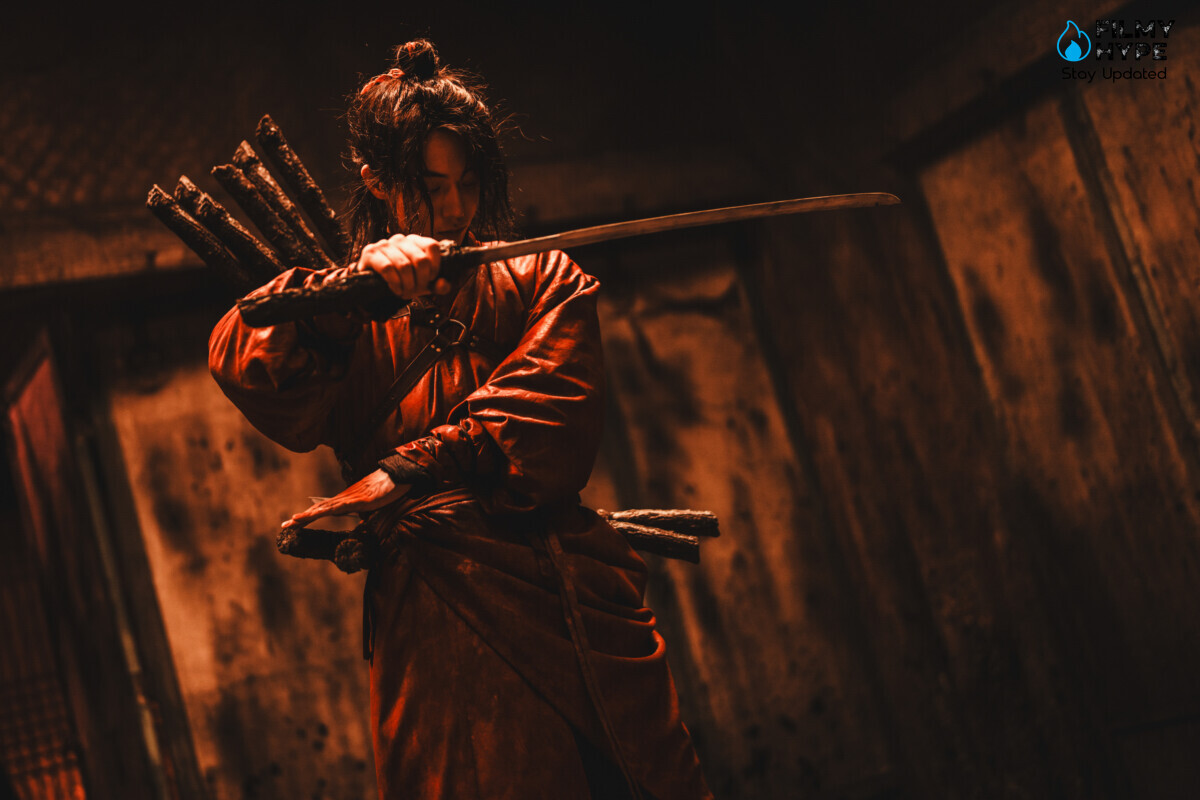
Nam Joo-hyuk offered his own speculation about what this means: “Since Saeng-gang isn’t chained, maybe only Gu-cheon will get dragged back one day?”
Roh Yoon-seo’s response was more hopeful: “But the three of us are a set, so if we do, we’d all get dragged along together.”
Personally, I think the chain represents something profound about trauma and the choices we make. Gu-cheon knowingly sacrificed his spiritual safety to destroy evil and save someone he loves. That act has consequences that can’t simply be undone. He carries a permanent connection to darkness now, an invisible chain that no one else can see. But he’s also still here, still walking in the sunlight, still beside Saeng-gang. The chain binds him, but it doesn’t define him.
What Does It All Mean? The Bigger Picture
The East Palace ends on a note that’s neither purely happy nor completely tragic. The immediate threat is gone. The truth has been uncovered, even if it can never be made public. The cycle of murder that began with one woman’s ambition has finally been broken—though at the cost of nearly every life it touched.
But the show’s real point seems to be this: evil isn’t supernatural. It’s not a curse passed down through blood or conjured by dying words. It’s a choice people make, generation after generation, to prioritize their own power over the lives of others. The grandmother chose ambition over her family. The king chose silence over justice. The Crown Prince chose murder over patience. Each of them had alternatives. Each of them decided the alternatives were unacceptable.
Gu-cheon’s fate reflects the cost of fighting that kind of systemic rot. You can win. You can destroy the immediate evil and save the people you love. But you don’t walk away clean. You carry chains afterward, invisible to everyone else, a permanent reminder of what you had to become to defeat what you faced.
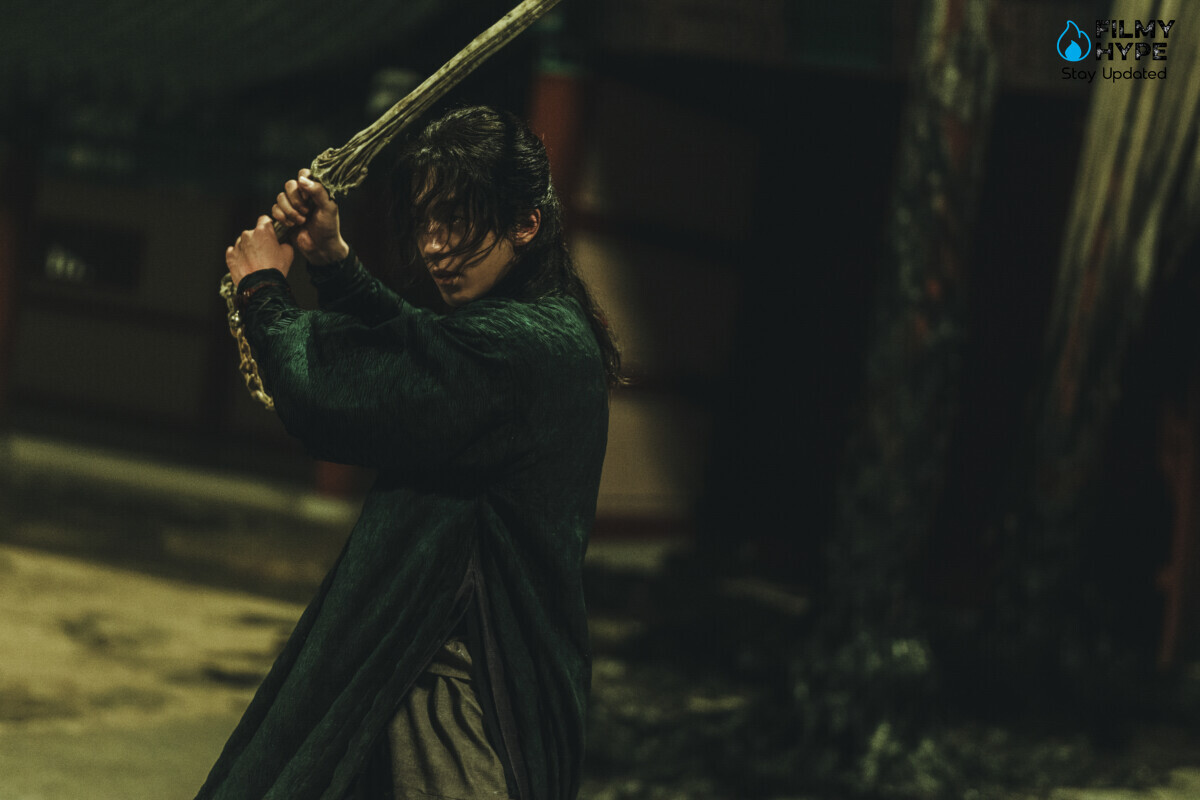
And Saeng-gang? She carries something different. She carries knowledge—the unbearable truth of what her family did and who they really were. She lost her grandmother, not to death but to revelation, which is almost worse. The woman who raised her was a monster. The mother she mourned was complicit in murder. Her entire origin story is soaked in blood she had nothing to do with spilling.
Yet she walks out of the palace at the end, beside the man she loves, with a creature of folklore padding alongside them. She’s free of the physical walls that imprisoned her, free of the lies that shaped her understanding of herself. What she does with that freedom is left open—but the final image suggests something quietly hopeful. They’re together. They’re alive. The chain is there, but so is the sunlight.
For now, as Roh Yoon-seo put it, they could probably all use a break from adventuring. After everything they’ve been through? They’ve earned it.