

The Agency Season 2 Ending Explained: I finished the Season 2 finale of The Agency about an hour ago, and I’m still thinking about the look on Michael Fassbender’s face in that final shot. Not defiance. Not fear, exactly. Just the bone-deep exhaustion of a man who has spent two seasons setting himself on fire to keep other people warm, and who has just realized the fire isn’t going to stop anytime soon. There’s a moment in the Season 2 finale of The Agency that I haven’t been able to shake. It’s not the explosion. It’s not the death of the villain. It’s the quiet, bruised stillness on Michael Fassbender’s face in the final shot, when the man who has spent two seasons being a dozen different people is told, simply, that his captors know who he is. Not his cover. Not his legend.
The Agency Season 2 Ending Explained: Who is Viking, the Season’s Main Villain?
This show has been quietly building something impressive. The first season was a taut, contained spy thriller about a man falling in love with the wrong person at the wrong time. Season 2 blew the doors off. Bigger stakes, more moving pieces, and a willingness to let its protagonist make choices that are genuinely hard to watch. The finale, which closes out ten episodes of escalating tension, doesn’t end on a cliffhanger in the traditional sense. It ends on something more unsettling: a rearrangement of the entire board, with every major character positioned for a conflict that’s only beginning to take shape.
Let’s walk through where everyone landed, and why the ending has me genuinely worried about what comes next.
That’s the knife twist this show has been sharpening since the beginning. The Agency isn’t really a spy thriller, at least not in the way we usually mean that phrase. It’s not about gadgets or car chases or last-second defusals. It’s about what happens to people who spend their entire lives pretending, and what it costs them when they finally try to want something real. The Season 2 finale, titled The King’s Sacrifice—a chess move where you expose your most valuable piece to gain position—is the culmination of everything the series has been building. It answers the questions it promised to answer. And then it lights a fuse for something much bigger.
Samia Is Free, But at What Cost?
The whole season has been orbiting one question: Can Martian get Samia out? After the disastrous attempt in Season 1, she’s been held in conditions that have only gotten worse. Physical torture. Psychological torture. Her family dangled as leverage. Her captors want information about Martian’s real identity, and they’re willing to take her apart piece by piece to get it.
Then, abruptly, she’s released. It’s framed as a humanitarian gesture, the kind of quiet diplomatic maneuver that happens in conflicts most people ignore. But the freedom is a lie. Her mother and sister are still detained. Her release comes with strings—she’s expected to become a mouthpiece for the Rapid Support Forces, the armed group that holds real power in the Sudanese conflict. She’s out of a cell, but she’s not free.
Martian, working outside normal channels and burning through whatever professional capital he still has, makes the actual rescue happen. Blair helps. The logistics come together. Samia gets out for real.
And then the reunion happens, and it’s not what either of them wanted. Samia can’t separate the suffering she endured from the choices Martian made. She’s not wrong to feel that way. His job, his decisions, his entire life as an intelligence operative—all of it led directly to the room where she was tortured. The love is still there, or something that looks like it from certain angles. But they are not the same people who fell for each other during his original mission. The show is too honest to pretend otherwise. Trauma doesn’t just go away because the rescue succeeds. Whatever relationship they build from here, it won’t be the one they had before.
The Traitor Inside British Intelligence?
One of the season’s most gripping threads was Martian’s investigation into a mole inside British intelligence. He zeroed in on James Richardson, the MI5 officer who blackmailed him into becoming a double agent back in Season 1. Richardson has only grown more powerful since then, and his access to classified material makes him catastrophic if he’s compromised.
Martian’s pursuit of Richardson isolates him from his own people. Henry Ogletree and the CIA leadership start to believe he’s gone rogue, that his obsession with Samia has finally pushed him past the point of being manageable. They’re wrong. Martian is right. Richardson has been a Chinese asset for years, buried deep inside British intelligence, feeding Beijing information that has compromised operations across multiple theaters.
The confrontation isn’t drawn out. Martian shoots him. No arrest, no trial, no dramatic speech. Just the cold elimination of a threat that had done incalculable damage. It’s a moment that defines who Martian has become. He’s not a rule-follower. He’s someone who will cross whatever line needs crossing, and he’ll live with the consequences without asking anyone for forgiveness.
The Richardson Betrayal
For most of Season 2, Martian has been operating under a compromise. He agreed to feed information to MI6, specifically to Jim Richardson, in exchange for help freeing Samia Zahir from the Sudanese prison where she was being tortured. It was a deal with a devil, but a recognizable devil. An ally. Someone on the same side, technically.
What Martian couldn’t stomach was discovering that Richardson wasn’t passing information to British intelligence. He was passing it to China. The distinction matters enormously. Martian can rationalize sharing secrets with a partner agency. He cannot rationalize feeding a geopolitical rival. When he kills Richardson, he does it without authorization, without backup, without the machinery of the CIA behind him. He does it as himself. And that act of personal judgment, however justified, is what finally strips away every layer of institutional protection he had left.
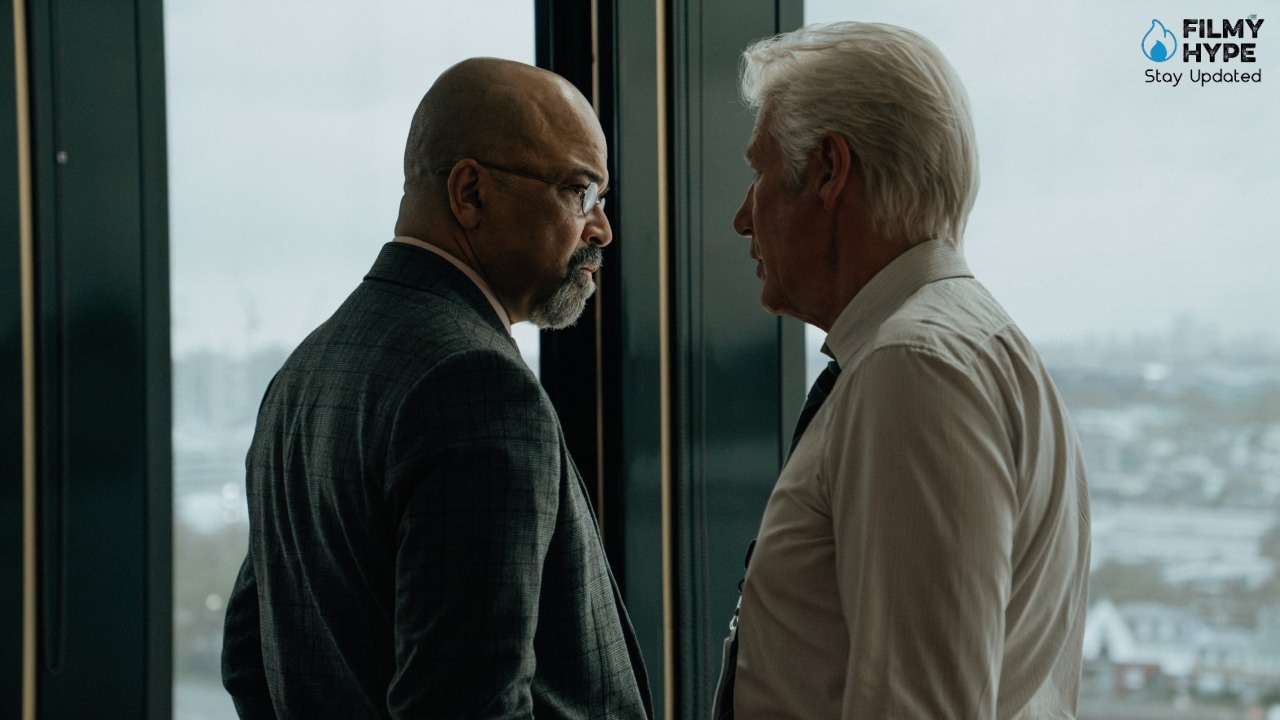
The fallout is immediate. Henry Ogletree, played by Jeffrey Wright with the kind of quiet integrity that feels almost radical in this universe, has spent two seasons being the only person in the series who seems genuinely incapable of manipulation. He was falsely accused of being the mole, pushed out by Bosko, and left to twist in the wind. Richardson’s death exonerates him. He gets his desk back. But the show doesn’t treat this as a triumph. It treats it as what it is: the restoration of something that should never have been broken, in a system where honesty is viewed as a professional liability.
Viking, the Monster Who Was Waiting at the End?
The season’s main antagonist is a man called Viking, played by Clayne Crawford, with a quiet menace that makes every scene he’s in feel dangerous. His real name is Vernon Crawford. He’s a former American Marine who now runs operations for Valhalla, a Russian-backed mercenary organization. Their business is diamond smuggling through Central Africa, and the money they make funds Russian-allied governments and expands Moscow’s reach in a region rich with resources.
The CIA tries to dismantle the network early in the season by sending Owen. It fails catastrophically. Viking identifies the infiltration almost immediately. He doesn’t just kill Owen. He mutilates him and sends him back, a message written in flesh and blood. This isn’t a man who plays by any rules The Agency recognizes.
After Owen’s failure, the mission falls to Martian. He’s the one who has to finish what Owen started, and he’s doing it while simultaneously managing the Samia extraction, the Richardson investigation, and the gradual collapse of his reputation within his own organization. The man is spread so thin you can see through him.
Martian’s Last Stand (For Now)?
Martian’s final mission of the season is the kind of operation that gets described as “high-risk” in briefings and “suicidal” everywhere else. He takes the cover of a diamond trader and infiltrates Valhalla’s operation in the Central African Republic. The plan is to plant a bomb disguised as a chess clock during a meeting with Viking. The metaphor is almost too on the nose, but the show earns it. This has always been a game to these people, and Martian is betting everything on one move.
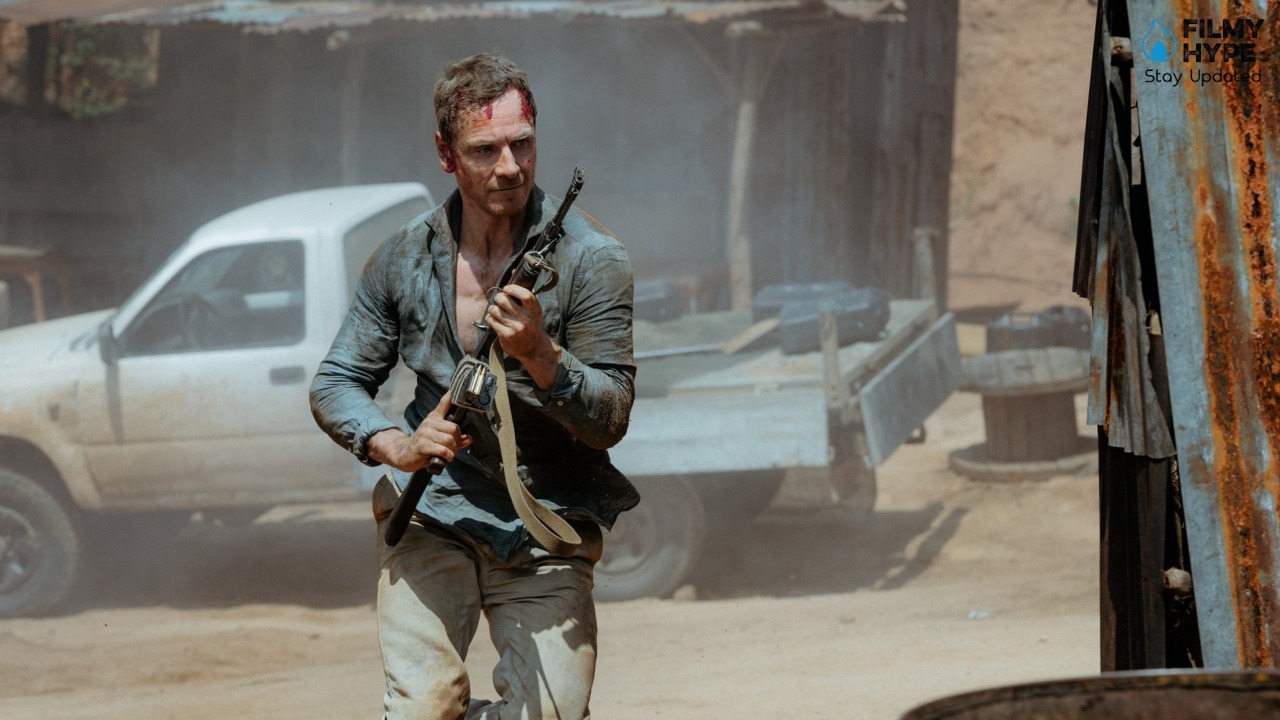
The bomb detonates. It tears through the operation, destroying infrastructure, killing personnel, and dealing Valhalla a blow that will take serious time to recover from. But Martian doesn’t make it out. He survives the explosion. He survives the initial firefight. He runs, and for a moment, you think maybe, impossibly, he’s going to get away.
Then Viking’s men catch him.
The CIA, unable to locate him and finding no trace of his escape, concludes he died in action. It’s the logical assumption. The odds were always terrible. The kind of operation you don’t come back from.
Then we get the final scene. Martian is alive. Beaten, bloodied, and in the custody of people who know exactly who he is and exactly what he’s worth. Valhalla isn’t going to kill him quickly. He’s a strategic asset now, someone who can be interrogated, traded, and used as leverage in ways that could shift the entire balance of the silent war between these intelligence agencies and the mercenary networks that operate in their shadows. The last shot holds on his face, and it’s not defiance you see there. It’s the recognition of a man who understands that surviving was almost worse than dying would have been.
Danny’s Brutal Education?
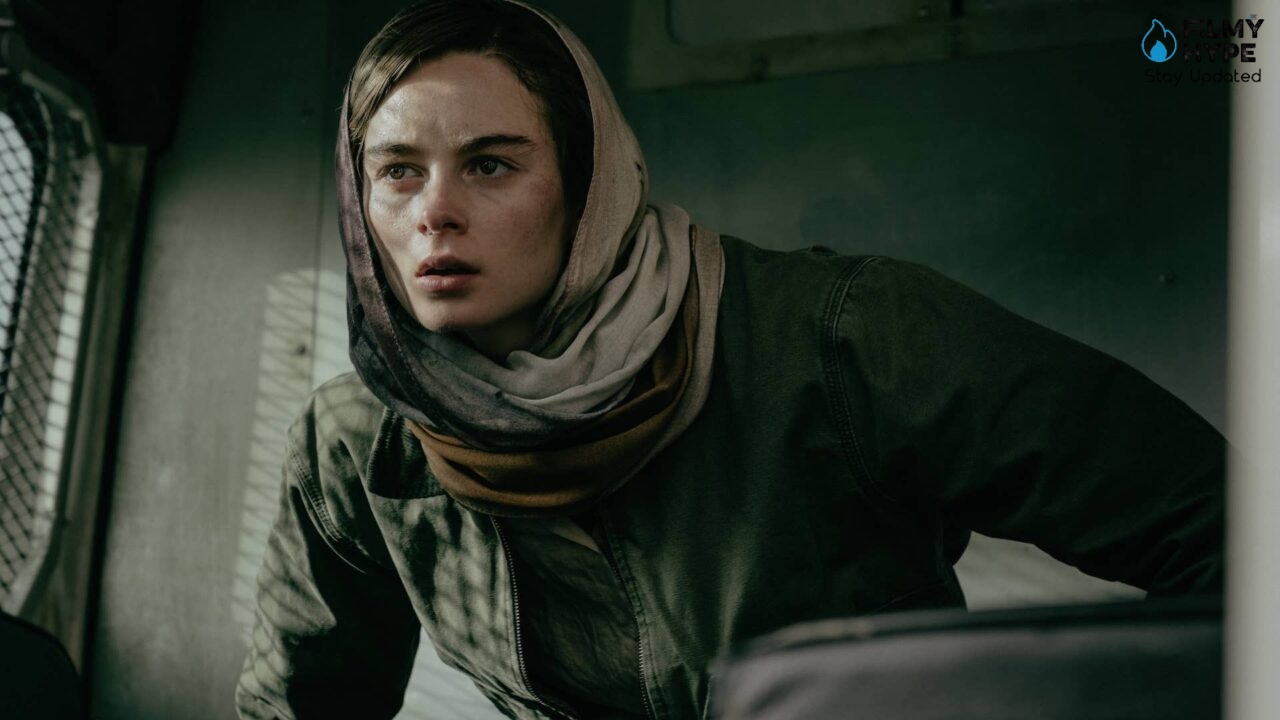
Danny’s arc this season deserves its own appreciation. She arrived in Season 1 as a promising trainee, someone who showed potential but hadn’t been tested. Season 2 threw her into the deep end and held her under.
She’s in Tehran, operating under deep cover as an architecture student. Her target is Hassan, the son of Majid Zamani, a key figure in Iran’s nuclear program. The operation is slow, methodical, the kind of patient infiltration that doesn’t make for flashy television but feels terrifyingly real. She builds trust. She befriends Hassan’s circle. She becomes central to his emotional life, and over time, he starts sharing sensitive information. He depends on her. That dependence is the mission.
Then it all falls apart. Hassan gets linked to suspicious communications involving a Chinese intelligence agent. Iranian authorities find messages about nuclear facilities. He’s charged with espionage, and Danny is caught in the dragnet.
What follows is brutal. Hassan is tortured. He refuses to give Danny up, taking full responsibility even as his situation deteriorates past the point of endurance. Danny is sentenced to death during a prison transfer. She survives the execution attempt, barely, and the extraction that follows is a miracle of timing and violence.
She makes it out. But she’s not the same person who went in. The experience has burned away whatever naivety remained. She’s a field agent now, fully formed and hardened in ways that will serve her in whatever comes next. If there’s a third season, Danny won’t just be a supporting player. She’s one of the most capable operatives the CIA has.
Samia and the Love That Couldn’t Survive?
At its emotional core, Season 2 of The Agency was a story about what intelligence work does to love. Not the glamorous, dangerous romance of lesser spy fiction. The slow, grinding destruction of a real connection between two people who can’t escape the circumstances that brought them together.
Samia spent eight episodes in the hands of Sudanese intelligence. She was tortured, psychologically and physically. Her family was threatened. She was manipulated, isolated, and pushed to the brink. Martian, meanwhile, burned through his career, his credibility, and his parallel channels with MI6 to get her out. He succeeded. She’s free.
And then they see each other again, and Samia says the thing that cuts through everything. The two people who fell in love don’t exist anymore. The damage has transformed her into someone for whom that former love, however real it was, is no longer enough. It’s not an angry scene. It’s not a rejection. It’s an acknowledgment of something the show has been insisting on from the beginning: the work these people do doesn’t just endanger their lives. It changes who they are, and sometimes the person who comes out the other side can’t go back.
Danny’s Escape and the Price of the Mission?
In parallel to Martian’s storyline, Season 2 built the arc of Danny Morata, codename Gremlin, in Tehran. Saura Lightfoot-Leon has been doing quietly devastating work all season as a young operative sent to recruit Hassan, the son of a key figure in Iran’s nuclear program. She didn’t just befriend him. She became his emotional support. His confidante. Eventually, his lover. She immersed herself in the false life so completely that the boundary between cover and reality started to dissolve.
Then Iranian police kill Hassan after discovering he was one of Richardson’s spies for MI6. Danny’s escape from Iran is the closest the finale comes to conventional action, a tense set piece of evasion and violence. She makes it out. But she doesn’t escape what she had to do to stay alive. She lost a target. She lost someone who, whatever the circumstances of their meeting, had become genuinely important to her. She was imprisoned in an enemy country. She killed an innocent person to get out.
The show doesn’t moralize about any of this. That’s not what The Agency does. It just shows you the cost. Danny arrived in Season 2 as a promising talent. She ends it as something else entirely: an operative who has been tested past the point of breaking and didn’t break, but who will carry the weight of that testing forever. She’s too highly trained to be innocent, too human to be a machine. That’s the zone where the best operatives live, and it’s a lonely place.
The Chess Game and the Bomb?
The Viking, played by Clayne Crawford, was the season’s external threat. Former U.S. Marine, now a high-level operative for Valhalla, a Russian-backed mercenary organization running diamond smuggling through Central Africa. He’s the kind of villain who doesn’t monologue. He just acts, and the damage he leaves behind is meant to send a message. Owen was mutilated and returned. Others were killed. The Viking understood that brutality, deployed precisely, is its own form of communication.
The central image of the finale—Martian sitting across from the Viking at a chessboard, a bomb hidden in the game timer—is the most perfectly composed scene the show has ever done. Two men who know exactly what’s happening. A game one of them has turned into a trap. The king sacrifice, exposing the most valuable piece to gain position. It’s the only logic available to someone who has nothing left to lose except his own life.
The Viking dies. Valhalla burns. The mission succeeds. And Martian, impossibly, survives. He’s captured, dragged away by Valhalla’s remaining men, and the CIA concludes he died in action. Officially, he’s gone.
The final shot tells a different story. Martian is alive, beaten and bloodied, in the custody of people who tell him they know who he is. That phrase hangs in the air with all the weight of everything the show has been about. Do they know he’s CIA? Probably. But the more unsettling possibility is that they caught him in the only moment when he was genuinely himself—no cover, no tactics, no institutional machine transforming him into Martian. Just a man acting on his own judgment for the first time. In this universe, authenticity functions as a tracking signal for enemies. The one time he stopped pretending, he got caught.
What Season 3 Is Going to Look Like?
The finale doesn’t tie things up. It loosens every knot and spreads the pieces across the table. Martian is in Valhalla’s hands. Samia is free but adrift, trying to build a life from the wreckage of the last two years. Danny has emerged from Tehran as one of The Agency‘s most valuable field agents. The conflict between intelligence services, mercenary armies, and the nations that fund them both is escalating past the point of containment.
Season 3 will likely revolve around the effort to rescue Martian. But it won’t be a simple extraction. Valhalla isn’t going to let him go without extracting a price that could reshape the geopolitical landscape. And the CIA will have to decide whether the man who spent two seasons alienating his own leadership is worth the cost of bringing him home.
The show has always been interested in the human cost of espionage, the way these jobs eat away at the people who do them. Martian spent two seasons sacrificing himself for the people he loves and the missions he believes in. Now he’s the one who needs saving, and the question is whether anyone he burned along the way will risk as much for him as he risked for them. The finale doesn’t answer that question. It just sets it on the table, heavy and unresolved, and leaves you staring at it long after the credits end.