


Lanterns Episode 1 Ending Explained: The first episode of Lanterns does something genuinely unexpected for a superhero series. It kills the most famous Green Lantern in the opening chapter. Hal Jordan, played by Kyle Chandler, is dead—his body found under the snow in Rushville, Nebraska, ten years after he and John Stewart first investigated strange happenings in the same town. The scene is quiet, cold, and devastating. John, played by Aaron Pierre, stands over the body of his mentor and partner, trying to process what he’s seeing. Hal doesn’t have his ring. That detail matters. It changes everything.

The premiere of HBO’s Lanterns doesn’t unfold in a straight line. It moves across three timelines—1996, 2016, and 2026—building the relationship between Hal and John while slowly revealing the mystery at the center of the series. The approach is deliberate, almost literary. This isn’t a show that’s in a hurry to explain itself. It wants you to sit with the characters, to understand who they are before the tragedy unfolds. And then, once you’ve invested, it pulls the rug out.
Lanterns Episode 1 Ending Explained: The Three Timelines
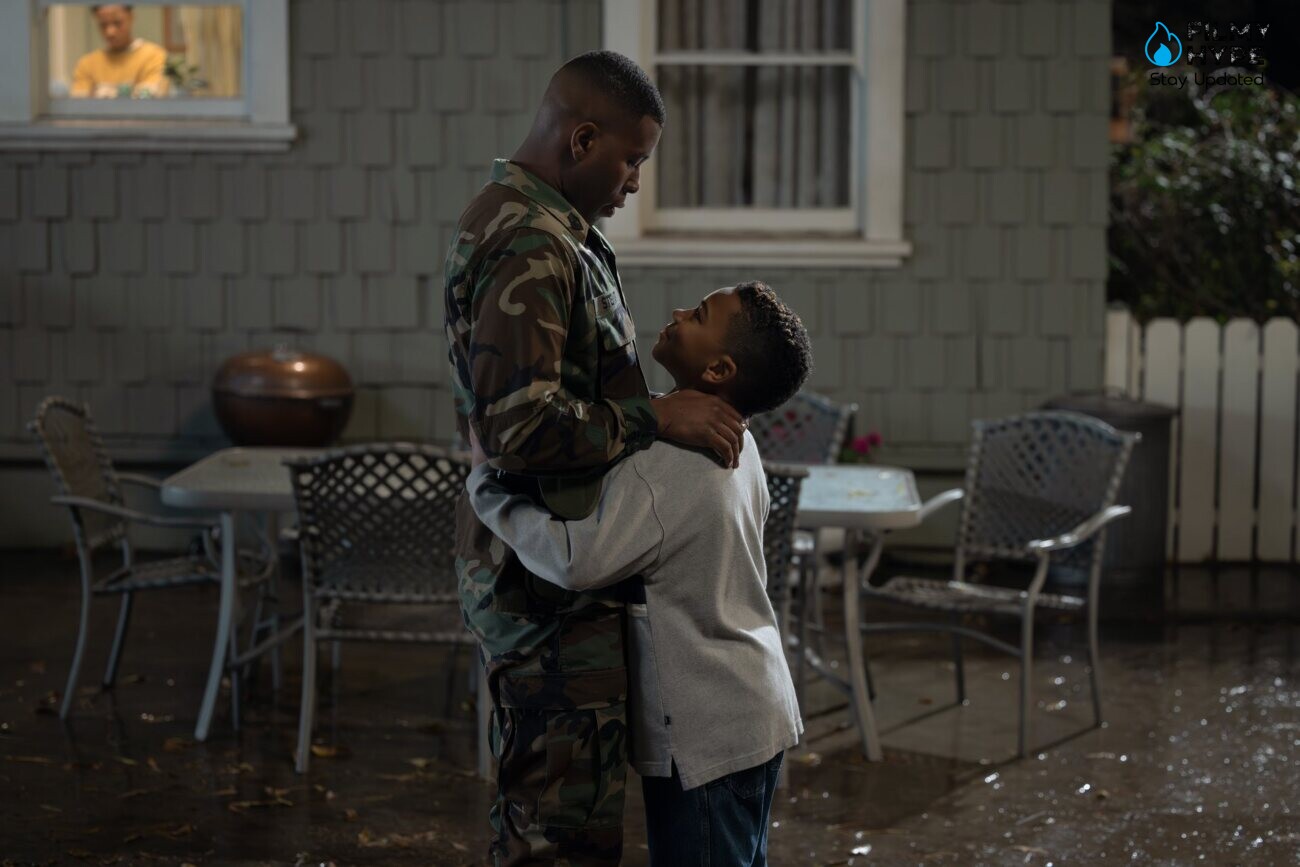
The earliest timeline, 1996, shows John as a child. He watches Hal Jordan with something approaching reverence. Hal is already the only Green Lantern from Earth, a figure of mythic proportions. John’s father seems to be training him for something—pushing him toward a future that hasn’t yet arrived. The scene of John’s father making him shoot an apple off his own head, with bullet holes in the wall behind him suggesting this has happened many times before, is unsettling in ways the episode doesn’t fully explain. When Hal says that becoming a Green Lantern only required answering one question, John’s father asks him the same question: “Are you scared?”
The implication is clear. John was being prepared for this. His father knew something, or hoped for something, that connected his son to the Green Lantern Corps long before John ever touched a ring.
The main timeline, 2016, follows Hal and John in Rushville. Hal has been training John for about two months. John doesn’t have his own ring yet—he uses Hal’s during lessons. The training is intense, even dangerous. At one point, Hal throws John out of a moving car as a test. John survives by using the ring to create a protective cushion, a moment that’s both thrilling and darkly funny.
The two are investigating a mass shooting in Rushville. Hal is convinced the incident involves aliens. Sheriff Kerry, played by Kelly Macdonald, is skeptical. But Hal’s instincts prove correct. By the end of the episode, the suspected shooter—an alien in human form—activates a self-destructive explosion. Hal contains the blast with a green bubble generated by his ring, but the close call makes clear that something larger is happening in this small Nebraska town.
The 2026 Timeline
The episode spends only a little time in 2026, but those minutes land with enormous weight. John is called back to Rushville by Sheriff Kerry. When he arrives, he finds Hal’s body. The man who trained him, who saved his life, who represented everything a Green Lantern could be, is dead. And the ring is missing.

John notes the detail immediately. Hal isn’t wearing his Green Lantern ring. Either someone took it from him, or he wasn’t wearing it when he was killed. Both possibilities raise disturbing questions. If someone took the ring, that person now has access to one of the most powerful weapons in the universe. If Hal chose not to wear it, what was he doing in Rushville without his primary means of defense?
The episode doesn’t provide answers. It just establishes the mystery. Hal’s death is the engine that will drive the rest of the season, and the show is smart enough to let the questions breathe.
Did Hal Jordan Die in the Lanterns Finale?
The episode leaves very little room for immediate interpretation.
In 2026, John Stewart returned to Rushville, Nebraska, the place where he had worked with Hal Jordan ten years earlier on an investigation into a mysterious extraterrestrial event.
When he reaches the bleachers where he had spoken to Hal before, he finds his body.
Hal appears lifeless and with a wound consistent with a gunshot wound.
The premiere therefore wants us to believe that Hal Jordan is dead.
It’s not even a simple detail left in the background. The entire temporal structure of the episode seems constructed to lead the viewer to this very discovery.
Who Killed Hal Jordan?
The immediate suspect is Sinestro, played by Ulrich Thomsen, who’s in prison in the series. Sinestro was Hal’s mentor before becoming his greatest enemy. Their relationship is one of the most complex in DC lore—a teacher who believed his student was too idealistic, a student who watched his teacher fall from grace. The resentment between them runs deep. Sinestro taking Hal’s ring as an act of symbolic reclamation would fit his character perfectly.
But Sinestro isn’t the only possibility. The alien conspiracy in Rushville, hinted at in 2016, could have continued for a decade. The alien who exploded claimed to be seeking revenge and starting a war. If Hal spent ten years investigating the town, he might have gotten too close to something. His death could be the result of a long-running conflict that started with that first shooting.
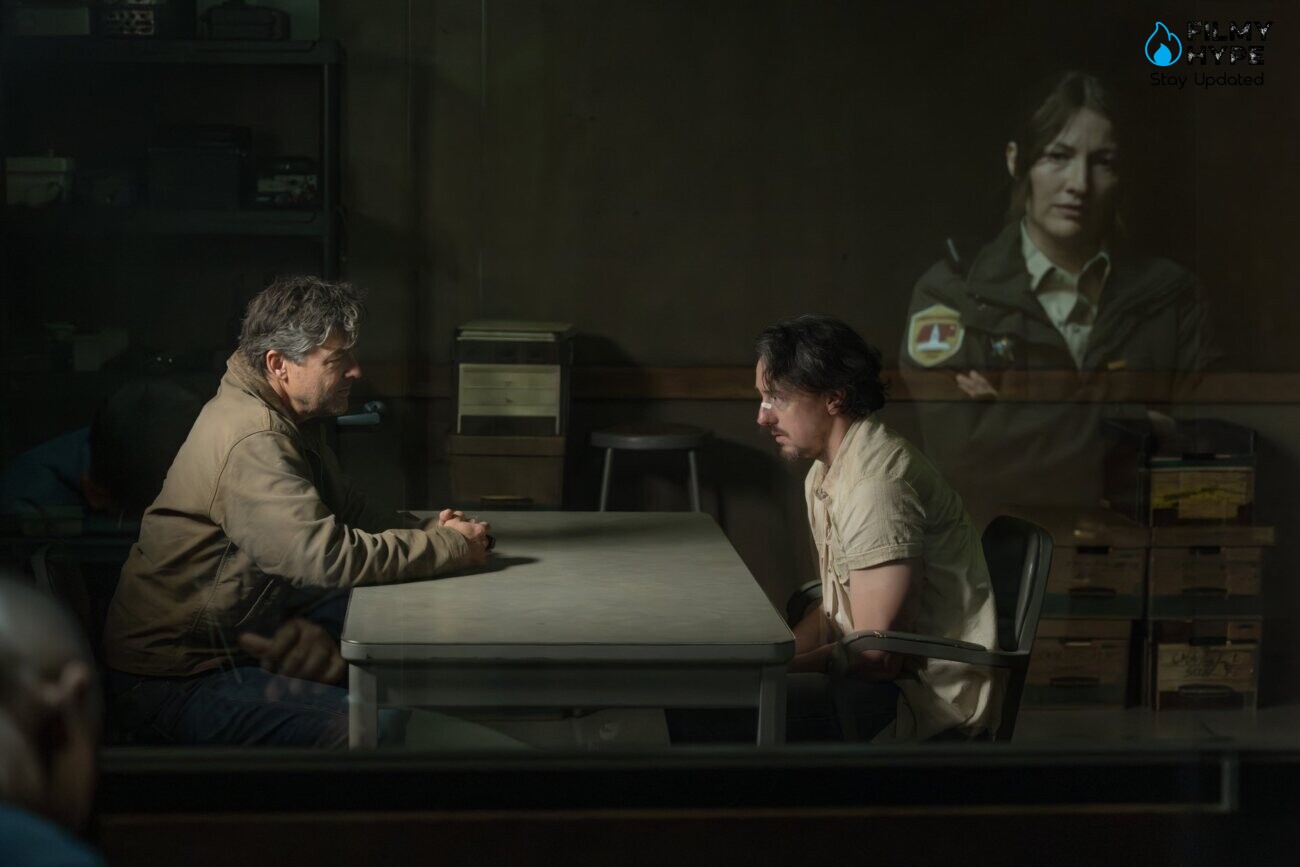
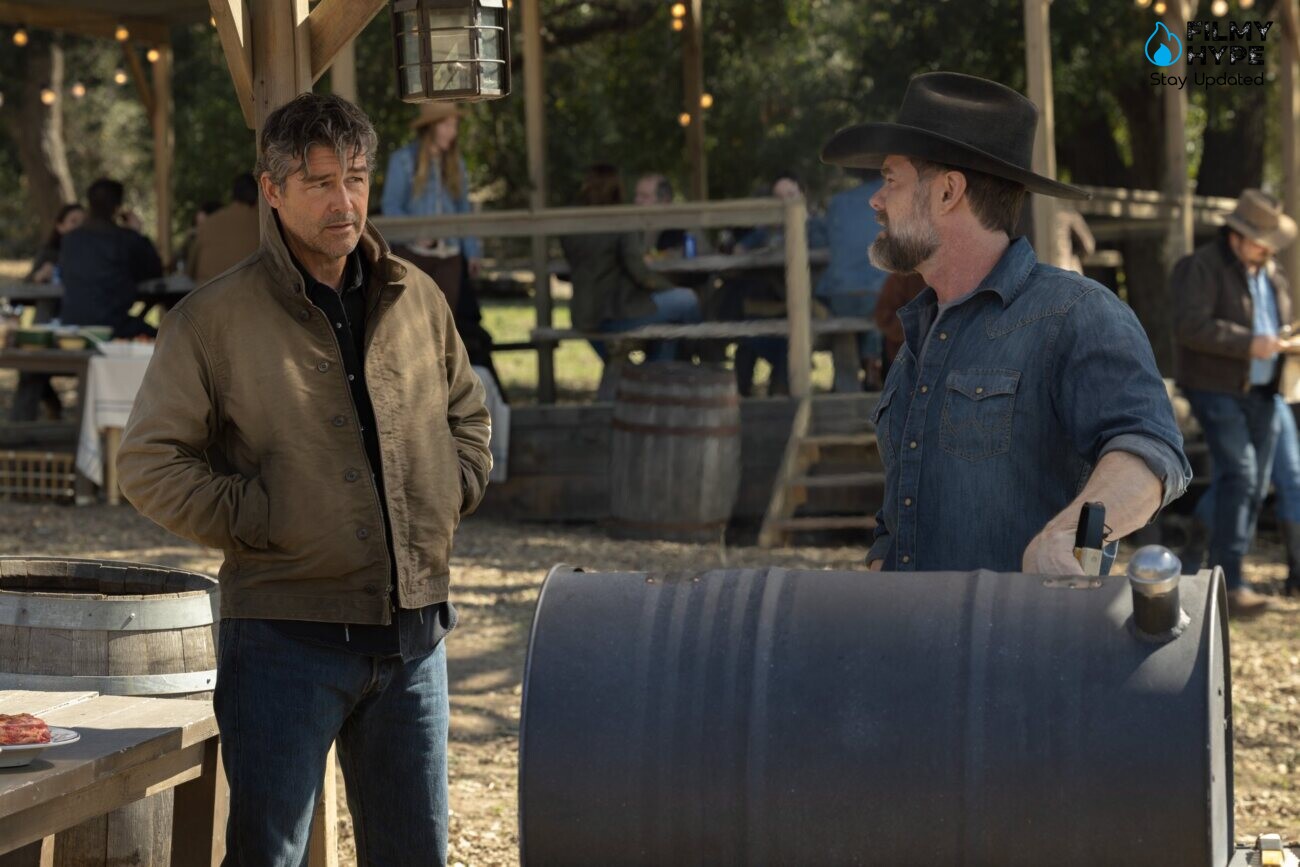
There’s also William Macon, played by Garret Dillahunt. He’s introduced as one of Rushville’s most powerful figures—wealthy, influential, and seemingly answerable to someone even more powerful. His wife had an affair with John Stewart, a detail that creates personal stakes for the investigation. But Macon’s name is the really interesting detail. In DC comics, the villain Black Hand’s real name is William Hand. The coincidence is unlikely to be accidental. Black Hand is the leader of the Black Lantern Corps, and his story is directly tied to Hal Jordan’s death and resurrection in the Blackest Night event. If Macon is a version of that character, the series is laying groundwork for something much larger.
Why Doesn’t Hal Jordan Have His Ring?
It is probably the most important detail of the last scene.
When John finds Hal, the Power Ring does not appear to be with him.
For a Green Lantern, this is not just any object. The ring is simultaneously:
- the source of his powers;
- the symbol of his membership in the Green Lantern Corps;
- a tool capable of collecting information;
- one of the most powerful technologies in the DC Universe.
If someone killed Hal and then took his ring, the death could then be directly linked to the Green Lantern Corps or the investigation that began a decade earlier.
But there is also another possibility: Hal may have lost or given up the ring before he died.
The series, at least in the first episode, still doesn’t give us a definitive answer.
Could Hal Come Back?
The episode also introduces a mechanism for Hal’s potential return. After surviving the car explosion, John witnesses something strange: a projection of a younger Hal’s consciousness. The projection explains that all Green Lantern Corps members upload a copy of their consciousness as a safeguard. If something happens to them, their consciousness can be recovered.
This is a significant addition to the Green Lantern mythology. It suggests that Hal’s death might not be permanent—that some version of him could be restored, either through the ring’s technology or through more supernatural means. The Blackest Night storyline in the comics is all about heroes returning from the dead, and Black Hand is central to that event. If the series is building toward something similar, Hal’s death becomes the beginning of a larger story rather than the end of one.
What the Episode Sets Up
Lanterns is positioning itself as something different from the typical superhero series. It’s a mystery first, a character study second, and an action show third. The three timelines allow the show to explore Hal and John’s relationship from multiple angles—the hero worship of childhood, the tension of training, the grief of loss—while simultaneously building a conspiracy that spans decades.
The supporting cast fills out the world. Kelly Macdonald’s Sheriff Kerry is skeptical, grounded, and clearly holding secrets. Garret Dillahunt’s William Macon radiates quiet menace. Nathan Fillion appears as Guy Gardner, another Green Lantern, connecting this series to the wider DCU. Laura Linney plays one of the Guardians of the Universe, the ancient beings who created the Corps.
The first episode ends on a note of unresolved tension. Hal is dead. The ring is missing. The town of Rushville is hiding something that may have been festering for years. John Stewart, now the last Green Lantern of Earth in a sense, has to figure out what happened to his mentor while navigating a conspiracy that grows more complicated with every revelation.
The show is being developed by Chris Mundy, Damon Lindelof, and Tom King. Lindelof’s influence is particularly evident in the structure—the fragmented timeline, the slow-burn mystery, the willingness to kill a major character in the opening episode. This is Watchmen territory, not Super Friends. If the rest of the season maintains this level of confidence, Lanterns could be something special. The ring is gone. The body is cold. The investigation is just beginning.
Can Hal Jordan Still Be Alive?
Here we need to separate what Lanterns shows from what we know about comics.
In the series, Hal is introduced as dead.
We do not have sufficient evidence at this time to claim that the death is false.
At the same time, however, this does not necessarily mean that Kyle Chandler has ended his presence on the series.
Lanterns, in fact, tells its story over two different time periods.
Many of the events can therefore continue to take place in 2016, when Hal is still alive and working with John.
Creators Chris Mundy, Damon Lindelof, and Tom King spoke openly about the twist alongside Kyle Chandler in an interview with Entertainment Weekly, confirming how important death is to the series’ narrative construction.
This makes one thing quite clear: we must not view the discovery of the body as a random ploy intended to be erased immediately.
Why Kill Hal Jordan in the First Episode?
It’s probably the most surprising choice of the premiere.
Before Lanterns‘ departure, one could imagine that Hal Jordan would be above all the veterans in charge of training John Stewart.
And that’s actually what we see in 2016.
The jump to 2026, however, completely changes the perspective.
Hal is no longer simply John’s mentor: he becomes the center of the mystery that John will have to solve.
The relationship between the two thus takes on a different weight. Any conversation set in the past can contain a clue as to what will happen ten years later.
John Stewart then Replaces Hal Jordan?
Not necessarily in the simplest sense of the word.
Earth can have several Green Lanterns at the same time, and the DCU has already shown Guy Gardner, so the existence of John Stewart does not automatically require Hal’s elimination.
Death, however, changes the meaning of the possible handover.
In 2016, Hal is the veteran and John the recruit.
In 2026, John seems to be the one who has to pick up what Hal left unfinished.
It is therefore not just a passing of the ring from one character to another: it could become a personal, investigative, and narrative legacy.
Has Hal Jordan Died in DC Comics Yet?
Yes, but the history of comics is much more complex and should not be used to automatically predict what will happen in Lanterns.
In DC stories, Hal Jordan has gone through radical transformations, including the controversial Parallax phase, his death, and later his return.
Green Lantern’s mythology therefore theoretically allows for resurrections, cosmic entities, and changes in identity.
But Lanterns is telling a specific version of the characters within the new DCU.
For this reason, it would be wrong to conclude:
“Hal is back in the comics, so he will definitely be back in the series.”
We have no evidence to say so at this time.
Can Kyle Chandler still appear in Lanterns?
Yes.
And it’s an important distinction.
Hal Jordan may have died in 2026 and at the same time continue to have a lot of space in the series.
The structure of two timelines allows us to tell:
- Hal and John during the 2016 investigation;
- what happens to Hal in the following years;
- John, who in 2026 tries to reconstruct events.
Death might even make Hal even more important, because any information about his past becomes a possible clue to his demise.
Could the Power Ring Explain Hal’s Death?
It’s one of the most interesting hypotheses.
The absence of the ring can mean many things.
| Possibility | What it would mean |
| Someone stole the ring. | The killer may know the Green Lantern Corps. |
| Hal had lost the ring. | He may have remained vulnerable before his death. |
| Hal handed it over to someone. | He may have foreseen what was about to happen. |
| The ring has chosen a new bearer | It could connect to the future of the Lanterns |
| The ring contains information. | It could be key evidence in the investigation. |
For now, they are just narrative possibilities.
The important detail is that the series shows us a dead Hal but also deliberately draws attention to what is missing.
What Happens to John Stewart Now?
The discovery should completely transform John’s path.
In 2016, she is still a recruit who must learn to work with Hal.
In 2026, however, he appears to be a man forced to confront what happened to his mentor.
This is where the title Lanterns itself, in the plural, acquires greater importance.
The series not only tells the story of a Green Lantern, but of different generations and different ways of playing that role.
On the site, we also explained why the Lanterns include Hal Jordan, John Stewart, and Guy Gardner, a helpful insight into why Hal’s death doesn’t automatically mean there should only be one Earth Lantern.
So Hal Jordan is Really Dead?
After the first episode, the most correct answer is:
Hal Jordan is shown dead in 2026, but we don’t yet know the full circumstances of his death.
We know that:
- John Stewart finds his body;
- Hal has a wound;
- the Power Ring is missing;
- the death occurs ten years after the beginning of the investigation;
- the mystery looks set to become central to the season.
What we don’t know yet is even more important:
who killed him, why he died, and where his ring is.
These are probably the very questions Lanterns will use to connect 2016 to 2026.
And even if Hal Jordan had finally died in the present of the series, the narrative structure means his story may be far from over.