


The first episode of Lanterns arrived with a clear mission: establish that this isn’t just another superhero show. It’s a detective story, a mystery, and a slow-burn thriller that happens to take place in a world where power rings and alien civilizations exist. The premiere leans hard into the grounded, investigative tone that HBO does so well, but it’s also loaded with references that reward close attention. Some of these Easter eggs are just connective tissue—little nods that remind you this is part of a larger DC Universe. Others feel like clues, pieces of a puzzle that will only become clear as the season unfolds.
Here are the major references and hidden details from the first episode, and what they might mean for the rest of the series.
Lanterns Episode 1: Pharon IV and the Shapeshifting Aliens
During the 2016 timeline, Hal Jordan mentions that he had to interrupt John Stewart’s training to help end a civil war on the planet Pharon IV. It’s a throwaway line in the moment, but it’s not random.
In DC comics, Hal has a history with Pharon and its neighboring world, Dalgova. What makes this significant for Lanterns is a specific detail from the source material: the inhabitants of Pharon possess technology that allows them to reshape their planet to look like Earth and to take on human appearances. They’re shapeshifters, capable of blending into human society without detection.
The episode introduces a threat involving aliens who can assume human form. Waylon Sanders, the survivor of the Rushville massacre, turns out to be one of them. The show hasn’t confirmed a direct link between Pharon IV and what’s happening in Nebraska, but the mention feels deliberate. If the shapeshifting aliens in Rushville are connected to Pharon—or to a similar species—then Hal’s mention of the planet becomes an early clue rather than a casual reference.
The Halogram
One of the most intriguing concepts introduced in the premiere is the Halogram—a digital copy of Hal Jordan’s consciousness stored within his power ring. When John Stewart survives the car explosion, he’s met with a projection of a younger Hal, who explains that Green Lantern Corps members are required to upload a backup of their consciousness. If something happens to a Lantern, the copy can be accessed.
This is a significant addition to the Green Lantern mythology. In the comics, power rings have been shown to record messages and even preserve aspects of their wearers’ personalities. A particularly relevant example appears in “Last Testament,” published in the 80th anniversary edition of Green Lantern, where Hal records messages for the important people in his life after believing he’s about to die.
In Lanterns, the Halogram could serve a crucial narrative function. Hal is dead in 2026. His body has been found. But the digital version of his consciousness might hold information he couldn’t convey before he was killed. John’s ability to interact with the Halogram could become central to the investigation, allowing Hal to guide the search for his own killer from beyond the grave.
Abin Sur’s Fall
The episode also adds a layer of mystery to Hal’s origin story. Hal believes the crash of Abin Sur’s ship on Earth wasn’t a coincidence. Abin Sur, the alien Green Lantern, died in Nebraska—on a planet the Guardians of Oa considered insignificant. His ring chose Hal as his successor, making him the first human to join the Corps.
This is familiar territory for comics readers. But the show seems to be suggesting that Abin’s arrival on Earth might be connected to something larger. If Abin came to Earth for a reason—if he was fleeing something or chasing something—then Hal’s entire career as a Green Lantern was shaped by forces he never fully understood.

Abin’s death is also central to Sinestro’s trajectory. Sinestro was Abin’s student and friend, and his death set in motion the chain of events that led to Sinestro’s fall from grace. Hal, as Abin’s successor, became both the inheritor of his mentor’s legacy and the symbol of everything Sinestro came to reject. The series seems interested in exploring this history, using Abin’s fall as the foundation for a larger mystery that spans decades.
Janus Cosmetics
One of the quieter Easter eggs in the episode appears on a billboard for Janus Cosmetics. For casual viewers, it’s just background detail. For DC fans, it’s a signal.
Janus Cosmetics is the company associated with Roman Sionis, the character who becomes the criminal known as Black Mask. Sionis is one of Gotham’s traditional villains, with deep ties to the city’s criminal underworld. His presence in Lanterns doesn’t necessarily mean he’ll appear in the story—the billboard could simply be world-building, a reminder that this is a shared universe where Gotham and its villains exist alongside the Green Lantern Corps. But it’s the kind of detail that rewards attentive viewing and keeps the door open for future connections.
Waylon Sanders and the Shapeshifting Threat
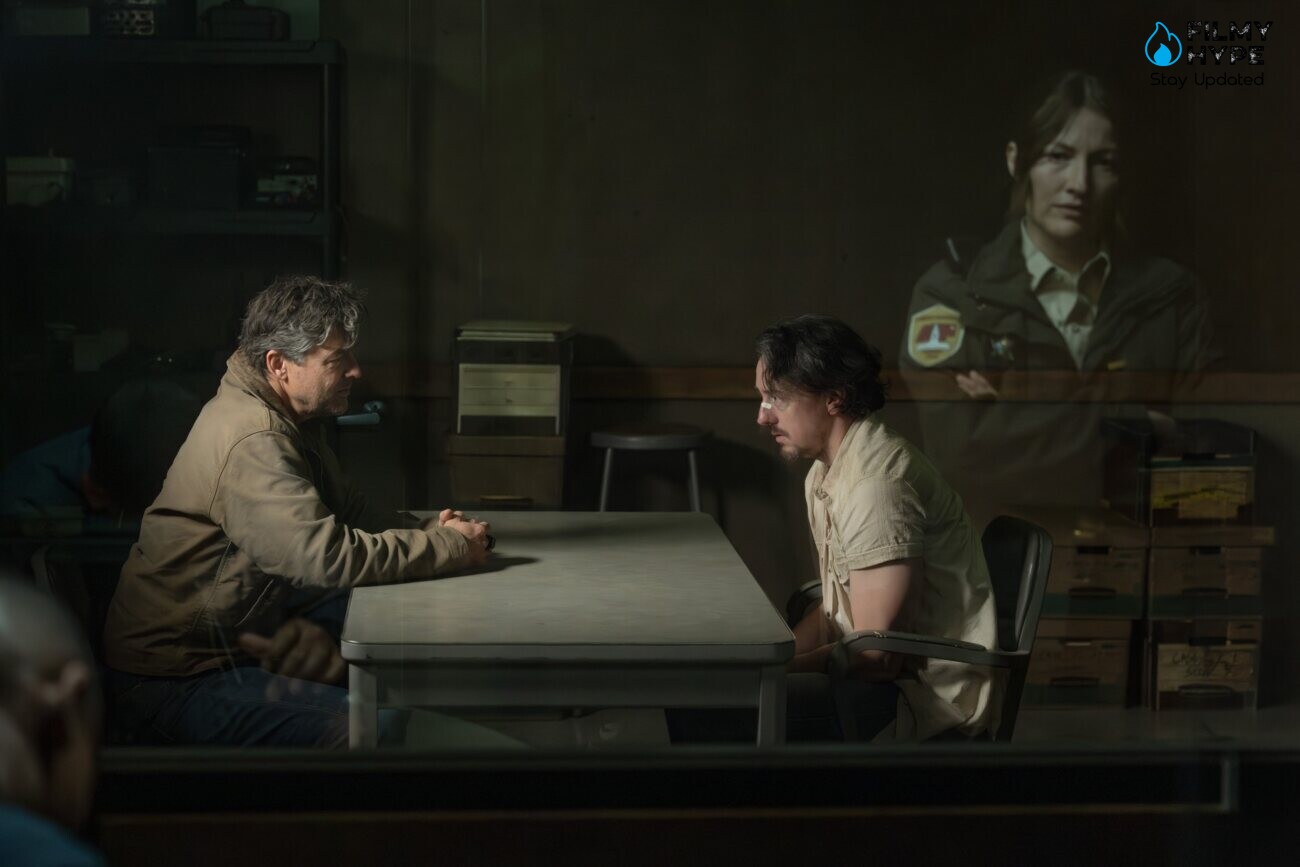
The most important element of the episode is Waylon Sanders, the survivor of the Rushville massacre who turns out to be an alien in disguise. He’s initially presented as an ordinary man, but under interrogation he reveals his true nature—a shapeshifter with a vendetta.
Several DC species possess shapeshifting abilities, including Green Martians and Durlans. The episode doesn’t identify Waylon’s species or explain exactly who he’s seeking revenge against. But one detail stands out: Waylon demonstrates knowledge of the Green Lantern universe. He provokes Hal using elements of the Corps oath, suggesting he’s not a random alien but someone with specific knowledge of—and perhaps specific grievances against—the Lanterns.
This raises the possibility that Waylon was part of something larger. If he was connected to an organization, or if the shapeshifting aliens in Rushville are part of a broader conspiracy, then his death at the end of the episode isn’t the end of the threat. It’s just the beginning.
The Biggest Easter Egg: Hal’s Death
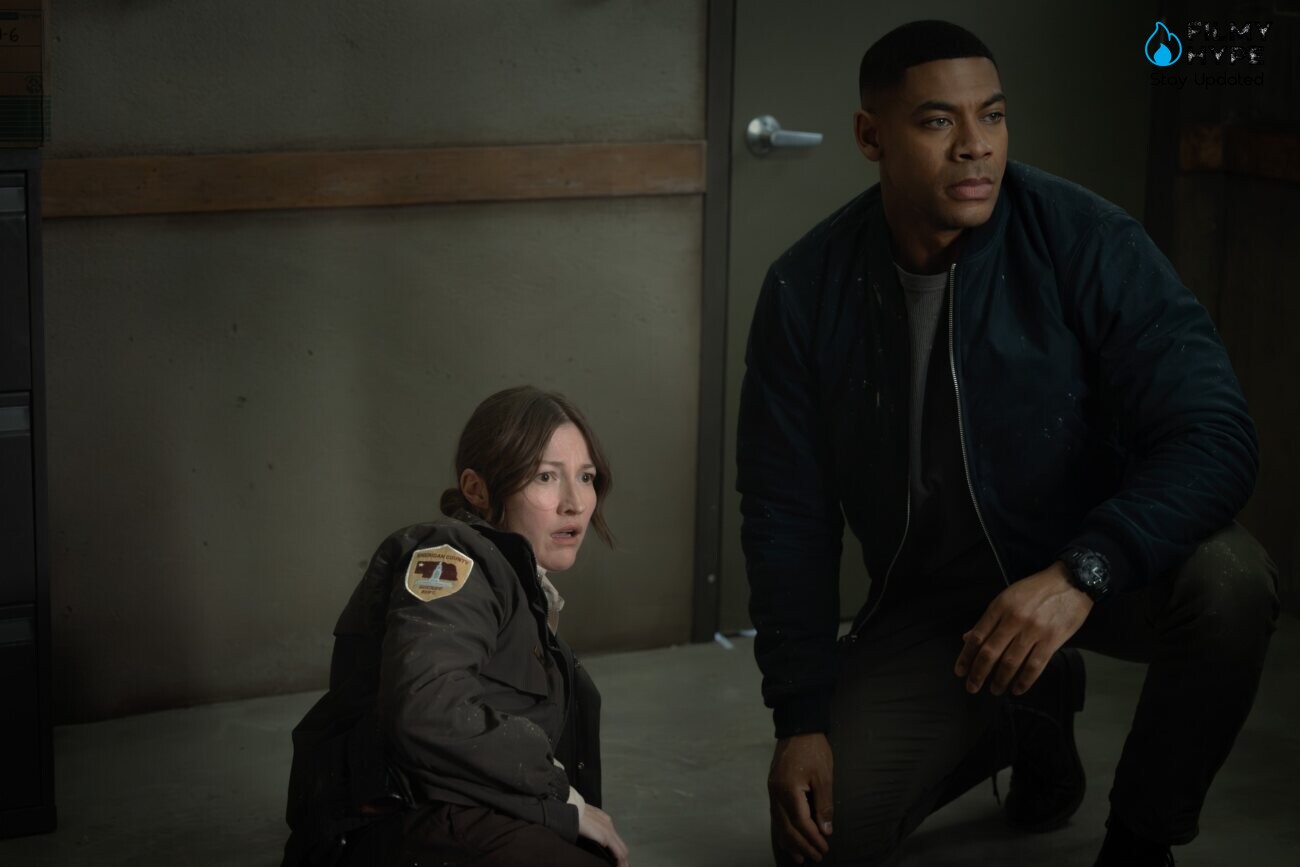
The episode’s final reveal recontextualizes everything. In 2026, John Stewart and Sheriff Kerry Kane find Hal Jordan dead in the stands of the stadium where the Rushville massacre occurred ten years earlier. His body is frozen. He’s been shot in the head. His power ring is missing.
The coincidence is impossible to ignore. The shapeshifting aliens that Hal investigated in 2016 may not have been defeated. And now a central question hangs over everything: is the man found dead really Hal Jordan?
The show has already established that aliens can take human form. If a shapeshifter could impersonate Waylon Sanders, could one impersonate Hal Jordan? The missing ring adds another layer—if Hal wasn’t wearing his ring, it’s possible someone took it from him. Or it’s possible the body isn’t Hal’s at all.
The first episode doesn’t answer these questions. What it does is establish a web of connections: Abin Sur’s mysterious crash, the civil war on Pharon IV, the shapeshifting aliens in Rushville, and Hal’s death all seem to be part of the same story. The Easter eggs aren’t just for fans. They’re the foundation of the mystery that will drive the season.
What It All Means
Lanterns is doing something smart with its mythology. The references to Pharon IV, the Halogram technology, the Janus Cosmetics billboard—these aren’t just window dressing. They’re carefully placed details that deepen the world while also advancing the central mystery. The show is building a version of the DC Universe that feels grounded and specific, where the cosmic elements of Green Lantern lore coexist with small-town murder investigations and shapeshifting conspiracies.
Hal Jordan is dead. That’s the fact the show opens with. Everything else—the flashbacks, the Easter eggs, the references—is in service of understanding how he got there and what it means for John Stewart, who now has to carry the ring forward without his mentor. The Halogram offers a way for Hal to remain present in the story even after death. The shapeshifting aliens offer a way for the mystery to deepen. And the lingering questions about Abin Sur’s arrival on Earth suggest that this story was set in motion long before either Hal or John ever put on a ring.
The first episode ends on a note of unresolved tension. The body is cold. The ring is gone. The investigation is just beginning. And somewhere in the background, the Easter eggs are doing their quiet work, planting seeds for a story that’s only starting to unfold.