


Elize: Shadows of a Woman: There are true crime stories that exist purely to shock you, and then there are the ones that linger because they refuse to let you settle on a simple explanation. The case of Elize Matsunaga falls squarely into the second category. A woman murders her husband. Dismembers him in their apartment. Disposes of the body. The facts alone are grisly enough to generate headlines for months, and in Brazil, they did exactly that. But Netflix’s new fictional feature Elize: Shadows of a Woman isn’t interested in just reenacting the horror. It wants to understand what came before it.

The trailer dropped today, and the film premieres on July 22. Lorena Comparato stars as Elize, and the creative team behind this project suggests something more ambitious than a straightforward crime reconstruction. Raphael Montes, who wrote and created the series Good Morning, Verônica, co-wrote the screenplay with Mariana Torres. Montes has spent years demonstrating that he knows how to explore violence against women without exploiting it, how to examine the psychology of abuse without turning it into cheap thrills. That sensibility matters enormously for material this charged.
Elize: Shadows of a Woman: Why Fiction Instead of Another Documentary?
This is where things get interesting. Boutique Filmes, the production company behind this film, already produced a true crime documentary series about the same case. Elize Matsunaga: Once Upon a Crime is sitting on Netflix right now, covering the facts, the investigation, and the aftermath. So why make a fictional version?
The answer seems to be that fiction can go places documentaries can’t. A documentary can tell you what happened. It can interview the people involved, present the evidence, and walk you through the trial. But it can’t climb inside someone’s head. I can’t imagine the private moments between two people when no one else is watching. It can’t dramatize the slow accumulation of tension and fear and resentment that builds up over years inside a relationship that looks normal from the outside.
Montes addressed this directly. He said the film isn’t just about the crime. It’s an attempt to open a conversation about violence, about what led a woman to commit such a brutal act. That word “led” is doing a lot of work. It’s not excusing anything. It’s not suggesting the murder was justified. But it’s acknowledging that people don’t typically commit horrific acts in a vacuum. Something happened before. Something built up over time. The film wants to explore that buildup.
Torres added that they wanted to show the duality of this woman, to tell a story people can relate to in ways that end, unfortunately, with the worst possible outcome. That’s a risky approach. Making a murderer relatable is uncomfortable. It forces the audience to sit with the idea that the line between an ordinary person and a violent criminal is thinner than we’d like to believe.
The Talent Involved
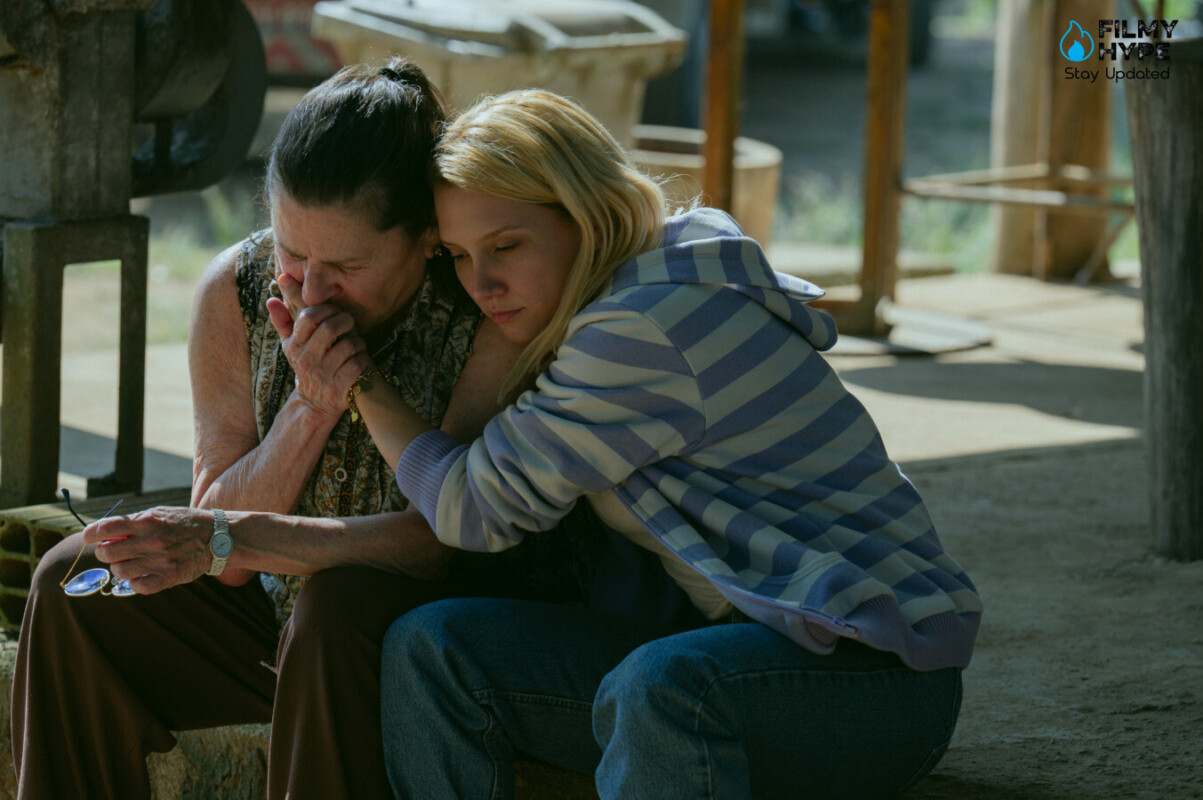
Lorena Comparato is taking on the lead role, and based on the trailer, she’s going for something interior and complicated. The performance doesn’t seem to be about big dramatic breakdowns. It’s quieter than that. The tension lives in her face, in the way she holds herself, in the small moments where something flickers behind her eyes and then disappears. Playing a real person who committed a real crime is a minefield. Go too sympathetic, and you risk looking like you’re making excuses. Go too cold, and you lose the complexity that the script is clearly reaching for. Comparato seems to be threading that needle carefully.
The supporting cast includes Henrique Kimura, Miwa Yanagizawa, Julia Shimura, and Denise Weinberg. That’s a tight ensemble for a story that seems to unfold largely in intimate spaces. The apartment where the crime happened. The rooms where arguments played out. The spaces where a marriage disintegrated.
Felipe Vellas directed. His previous work includes the series Criminal Code, which suggests experience with crime narratives that prioritize psychological tension over action set pieces. A film like this lives or dies on atmosphere, pacing, and performance. The director needs to sustain a sense of dread without tipping into melodrama, and they need to trust the actors to carry scenes that might just be two people in a room talking, with everything unspoken doing the real work.
The Production Company Knows This Territory
Boutique Filmes has been building an impressive track record in this space. They produced 3%, which was one of Netflix’s first major Brazilian originals and helped put Brazilian streaming content on the global map. They’ve been nominated for three International Emmys. More relevantly, they produced Elize Matsunaga: Once Upon a Crime, which means they’ve already done the exhaustive research. They know the facts inside and out. That knowledge lets the fictional version operate with confidence. The writers aren’t guessing at what happened. They’re building a psychological portrait on top of a foundation of documented reality.
The company’s approach to true crime has generally been thoughtful rather than exploitative. Look at their other projects. The Invisible Victim about the Eliza Samudio case. Flordelis: Question or Worship. PCC: The Secret Power. These are not sensationalist productions. They’re attempts to use crime as a lens for examining bigger social questions. Elize: Shadows of a Woman fits squarely in that tradition.
The Uncomfortable Questions
A film like this is going to generate debate. That seems to be the point. The case of Elize Matsunaga divided public opinion when it happened. Some saw a cold-blooded killer who murdered her husband for money. Others saw a woman who had been abused and pushed past some breaking point. The truth, as it usually does, probably sits somewhere in the gray area between those two positions, and that gray area is exactly where fiction can operate most effectively.
What kind of relationship produces this kind of violence? What happens in the years before the crime that makes the crime possible? What role did power, control, fear, and desperation play? The film doesn’t seem to be positioning itself as a legal argument. It’s not trying to convince you of innocence or guilt. It’s trying to make you understand how someone gets to the point where violence feels like the only option left.
That’s an uncomfortable project. It’s much easier to label someone a monster and move on. Monsters are simple. They do terrible things because they’re terrible people. But if the monster turns out to be a person, someone with reasons and fears and a history, then the story gets messy. Elize: Shadows of a Woman appears willing to get messy.
The Trailer Sets a Tone
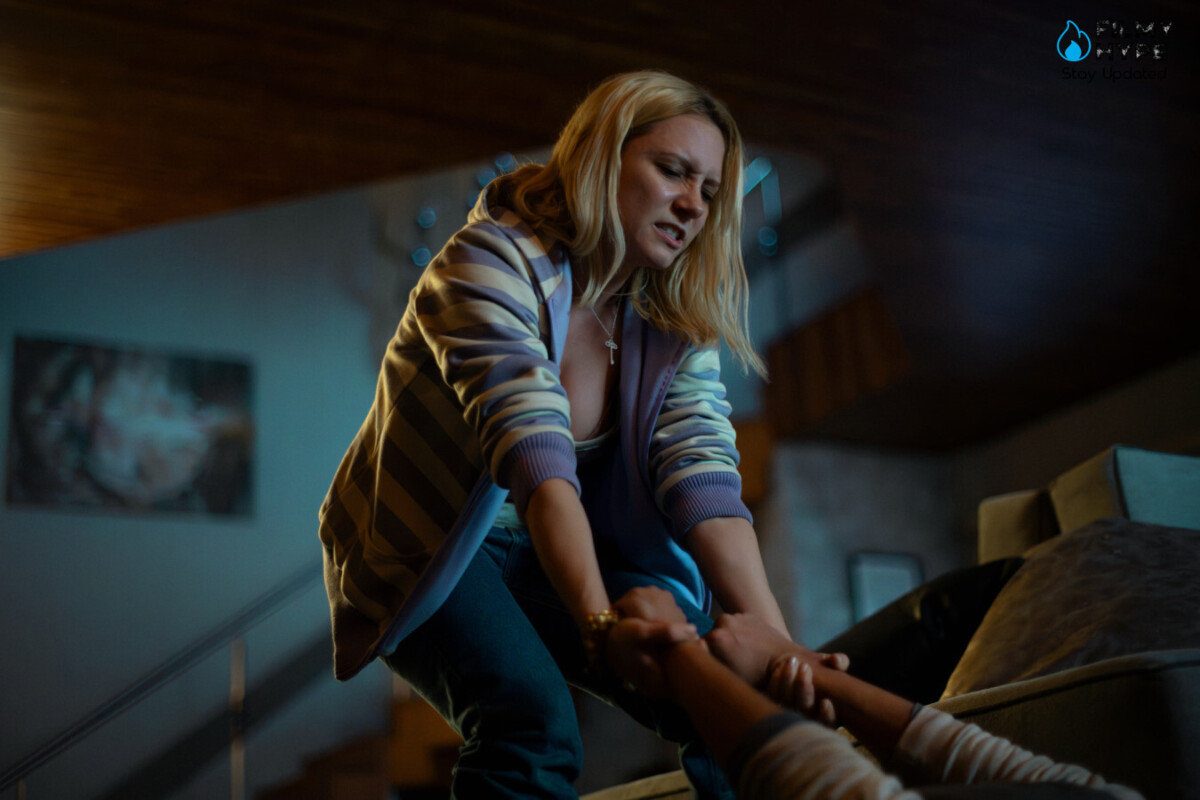
The trailer doesn’t give away much in terms of plot. It establishes mood. Shadows. Close-ups of Comparato’s face. Fragments of conversation that hint at conflict without spelling it out. The apartment feels claustrophobic, which is appropriate given where the story is heading. A marriage that becomes a trap. A home that becomes a crime scene.
There’s a restraint to the marketing that suggests confidence in the material. No one is screaming. No one is running down a hallway. The horror here is psychological, not physical, and the trailer trusts that an audience exists for that kind of storytelling.





July 22 is the release date. The film will be available globally on Netflix, which means an international audience is going to encounter this very specific Brazilian story. That’s one of the interesting things about the streaming era. A crime that dominated headlines in one country becomes accessible to viewers everywhere, and the questions the film raises about violence, relationships, and accountability aren’t confined by geography. They translate.
I’ll be watching when it drops, partly for Comparato’s performance and partly because Montes has earned enough trust from his previous work that I’m willing to follow him into uncomfortable territory. The best true crime fiction doesn’t just recreate what happened. It makes you think about why it happened, and whether any of us are as far from that edge as we’d like to believe. This film looks ready to do exactly that.