
Deep Water 2026 Movie Review and Ratings
Stars: Aaron Eckhart, Ben Kingsley, Angus Sampson
Director: Renny Harlin
Filmyhype.com Ratings: 3/5 (three stars)
A plane crashes into the Pacific Ocean, breaks into several pieces, and leaves about thirty survivors at the mercy of a pack of mako sharks. Renny Harlin needs nothing more to build Deep Water. This film seems to have been born from the union of two titles recovered from a 1970s video library: an airport disaster movie and a marine adventure conceived in the endless wave of Jaws. The result is crude, derivative, and populated by characters reduced to a few basic characteristics, but it possesses at least one quality that is now less common than it should: it knows exactly what show it wants to offer. For fifty years, summer has rhymed with sea and sharks in cinema. The genealogy still goes back there: Jaws, Steven Spielberg, 1975, prototype of the modern blockbuster. Shark cinema continues to survive thanks to a formula as simple as it is resilient: isolating a group of people in the middle of the water and turning any movement beneath the surface into a potential threat.
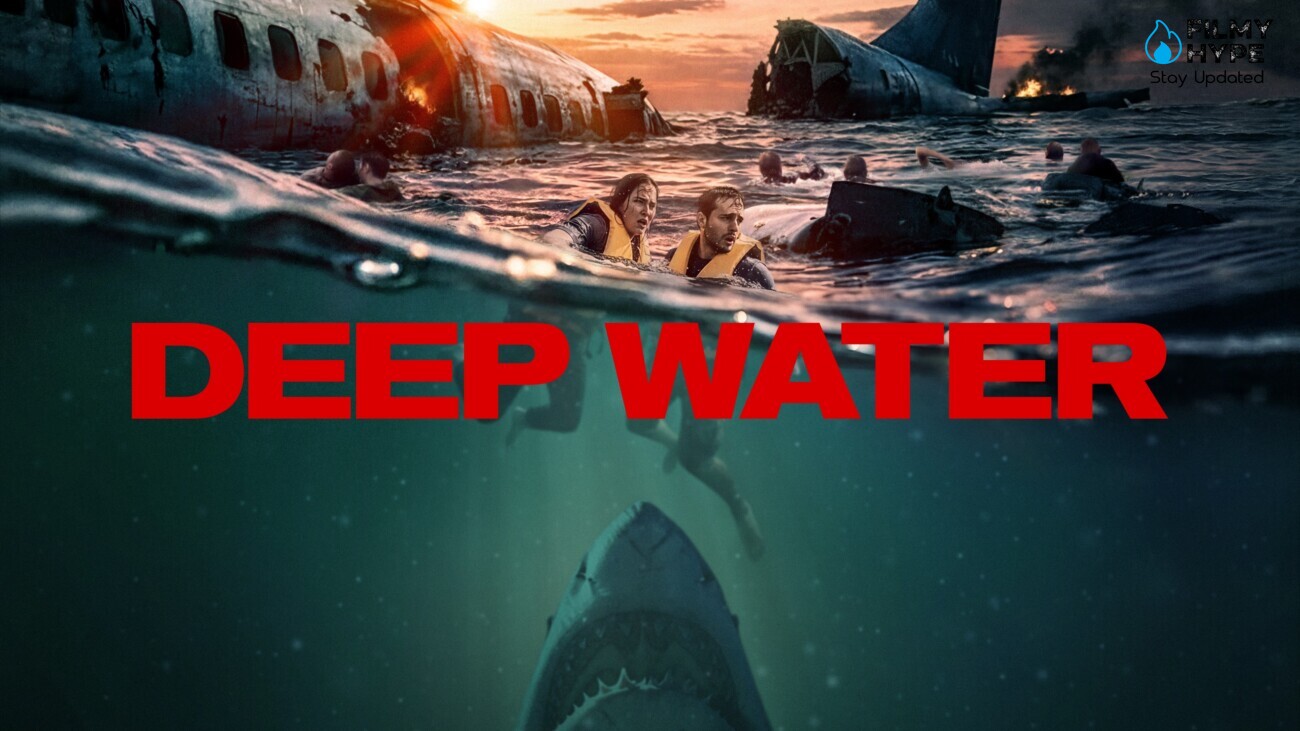
After decades of imitating Jaws, however, it is no longer enough to show a fin and a few victims dragged into the depths. Films like Open Water, The Shallows, Under Paris, or even deliberately absurd operations like Sharknado have shown that, to stand out, you need to at least find a recognizable perspective. Deep Water attempts to do so by combining two already highly codified genres: the aerial disaster movie and the shark movie. First, an intercontinental flight crashes into the ocean, then the few survivors must defend themselves from a pod of mako sharks while awaiting rescue that may not arrive. On paper, the idea possesses a perfect immediacy for a film of pure escapism. In practice, Renny Harlin builds a work that finds some momentum in the action sequences, but remains weighed down by schematic characters, predictable dialogue, and a second half incapable of producing real tension.
Deep Water 2026 Movie Review: The Story Plot
There are trips where everything goes wrong. It may have happened to everyone on that vacation where nothing goes as it should, but the protagonists of Deep Water live this experience to the nth degree: the passengers and flight crew of the flight from Los Angeles to Shanghai are intact when a fire breaks out in the cargo hold, forcing the pilots to crash-land to avoid disaster. The impact is devastating, however, and passengers find themselves trapped in the plane’s wreckage, isolated and far from any immediate assistance, with time running out before the wreckage of the vehicle sinks completely.
But that’s not enough, because the survivors quickly realize that the waters they’ve fallen into are infested with hungry and dangerous sharks, which begin to surround, threaten, and attack them. And the only way to survive is to overcome the contrasts, differences, and suspicions they may have about each other. Collaborate and operate as a group to prevent the ocean from becoming the place of their end. Among the passengers are families, couples, crew members, and Dan, an aggressive and unpleasant man who carries a suitcase full of defective electronic equipment in the hold.
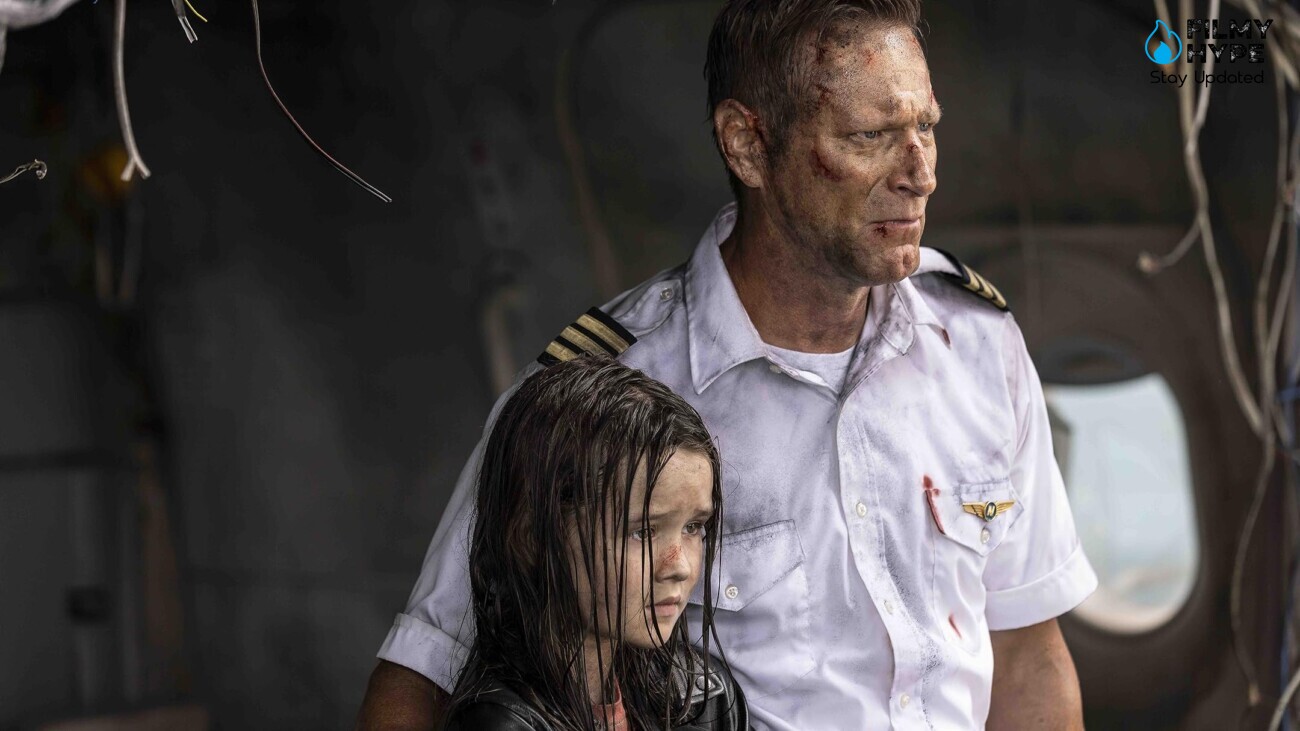
When the baggage catches fire, the fire causes a series of explosions that severely damage the aircraft and force the pilots to attempt a crash landing. The impact divides the aircraft into several sections and leaves only about thirty people alive. As Ben tries to organize the survivors and put the rafts out to sea, someone notices that the emergency signal may not have been sent correctly. The most pressing problem, however, emerges from the water: a pod of mako sharks has spotted the castaways and is beginning to move around the wreckage of the plane.
Deep Water 2026 Movie Review and Analysis
The first part of Deep Water is constructed as a classic airport disaster movie. Harlin quickly introduces the crew, passengers, and personal conflicts destined to explode along with the plane. The structure openly recalls the disaster cinema of the 1970s, in which a diverse community was gathered inside an enclosed space before an accident tested character, selfishness, and self-sacrifice. The problem is that almost no character goes beyond the level of the archetype. Ben is the competent but emotionally wounded driver, Rich the veteran close to retirement, Cora the young woman forced to take on a greater responsibility than herself, while Dan is so insistently obnoxious that he seems built only to push the public to wait for his death.
Relationships are defined through a few functional details, and personal traumas are used as emotional shortcuts, failing to give depth to the group. When the film transitions from a plane crash to a shark attack, no real transformation occurs. The threat changes, but the narrative continues through situations and reactions already seen: people ignoring orders, improvised rescue attempts, heroic gestures, and victims selected according to an easily intuitable logic.
The combination of crashed plane and sharks isn’t entirely new either, especially after No Way Up. For this reason, hybridization would have required greater inventiveness in the way of exploiting the remains of the aircraft, the submerged spaces, and the precariousness of the rafts. The film uses these elements, but rarely turns them into anything truly memorable. Renny Harlin nevertheless retains considerable experience in managing action. The director of Cliffhanger, Die Hard 2, and Deep Blue Sea knows how to build a physical escalation and give movement to a chaotic sequence. It is therefore not surprising that the splashdown represents the most successful part of the film.
The fire in the cargo hold triggers a chain of increasingly destructive events: the fuselage is punctured, passengers are sucked outside, objects in the cabin turn into bullets, and one of the engines catches fire. Harlin orchestrates the entire sequence with spectacular effectiveness that, while not reaching the intensity of his best work, manages to communicate the panic and violence of the accident.
Even the impact of the water is turned with a certain taste for excess. The aircraft breaks apart, the sea invades the remaining intact sections, and the few survivors have to orient themselves among bodies, sheet metal, and electrical cables. This is when Deep Water comes closest to the kind of admittedly over-the-top entertainment that could have underpinned the entire film.
After this sequence, however, the energy is reduced. The wait for the sharks to arrive takes up much of the first hour, but it is not accompanied by enough character work or suspense. By the time the threat finally appears, the film has already consumed much of its time without creating genuine engagement.
The second half focuses primarily on the direct impact of the attacks. Sharks appear through fins, silhouettes illuminated from below, and sudden bursts of violence, but the direction almost always favors visible aggression over waiting. It’s a choice that makes the film more gory than disturbing. Victims are bitten, injured, or dragged underwater, but scenes rarely build the sense of vulnerability that should characterize a tale set on the open sea. The audience sees the danger coming, understands who is most at risk, and can often anticipate the outcome of the sequences.
Harlin had already faced sharks with Deep Blue Sea, a film that was anything but refined but capable of fully understanding its own nature. That work possessed a playful energy, aggressive pacing, and an awareness of the absurdity of the premise. Deep Water, on the other hand, seems uncertain between the desire to be a spectacular B-movie and the desire to give dramatic weight to its characters. The serious tone is not supported by sufficiently solid writing, while the action is not free to fully embrace excess. The result is a film that fails to either truly scare or entertain with the necessary effrontery.
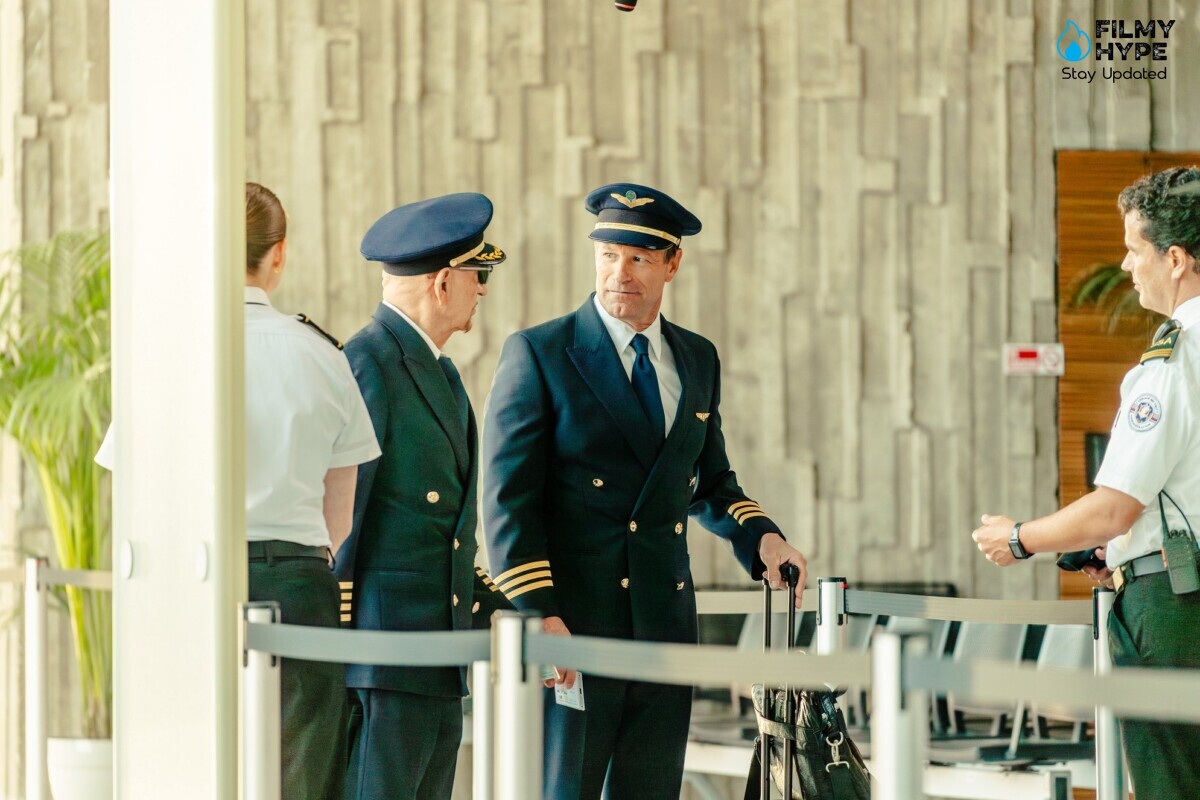
Aaron Eckhart plays Ben with his usual reliability. The actor manages to convey the character’s obstinacy and tiredness, but the script entrusts him with an extremely conventional emotional path. The bond he develops with Cora should push him to reconsider his family situation, but it is built through too rapid passages and dialogues that make the narrative function of each moment evident. Ben Kingsley lends authority to Captain Rich, introduced while singing Fly Me to the Moon at a karaoke bar. It is a deliberately light opening, designed to humanize the character before the catastrophe, but the role remains limited and does not offer the actor particularly stimulating material.

Angus Sampson as Dan makes his mark above all. The character is written in an exasperated manner, but the actor completely embraces his unpleasant nature and at least manages to produce a clear reaction in the audience. Each of his appearances generates conflict, even if the film insists so much on his arrogance that it turns his fate into one of the easiest to predict. The other passengers are presented through minimal characteristics: the awkward boy interested in a flight attendant, the two e-sports companions, the combative grandmother, and the members of a family already marked by tensions. Some of these figures are supposed to elicit empathy, but the number of characters and the limited time spent on each prevent most of the deaths from having any real weight.
Deep Water is not without expertise. Harlin can still handle a major accident; the film has more solid packaging than many shark titles intended directly for the digital market, and some images of the animals moving under rafts retain a fair amount of effectiveness. What is missing is a concrete reason to remember it. The screenplay takes up situations, human types, and dynamics already used countless times, without adding irony, visual inventions, or a psychological tension capable of distinguishing the story. Even the combination of air disaster and marine attack is developed as linearly as possible.
The film seems to trust that two threats are automatically more engaging than one. In fact, the double disaster further highlights the fragility of the writing: the plane crash provides the most spectacular sequence, while the sharks arrive too late and cannot sustain the second part on their own. It remains a loud, bloody, and easily accessible entertainment product, suitable for those looking for a disaster movie without any particular complications. Those familiar with the genre, however, will find little they haven’t already seen in more tense, more inventive, or simply funnier versions.
It’s important to recognize that in moments of violent crack, he knows how to make himself raw and naughty, built on various scenes and situations that are designed like escape rooms in which survivors brave oxygen shortages, the spread of water, and the ravenous agitation in the water. For those who know a little about this grammar, that is, for those who have seen at least one film of this type, however, we recognize too much and from the very beginning the patterns behind those who die, those who sacrifice themselves, those who pay for their arrogance, and those who will remain alive. An open-ended game that clashes with an emotional drag that jostles to take its place on the surface, sinking with excessive speech (and what speech…), tears, and arc music, much of the playful potential that Deep Water has between sufficiently believable CGI sharks and dripping trash buckets of blood.

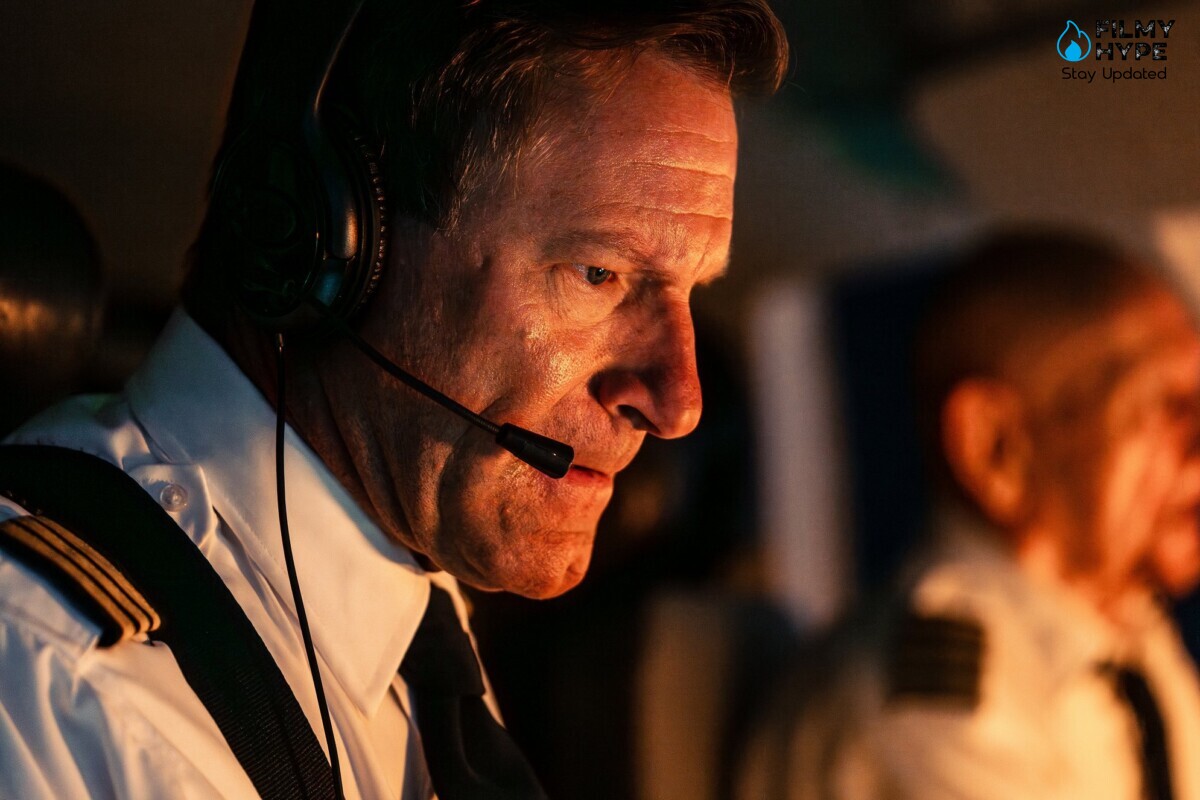
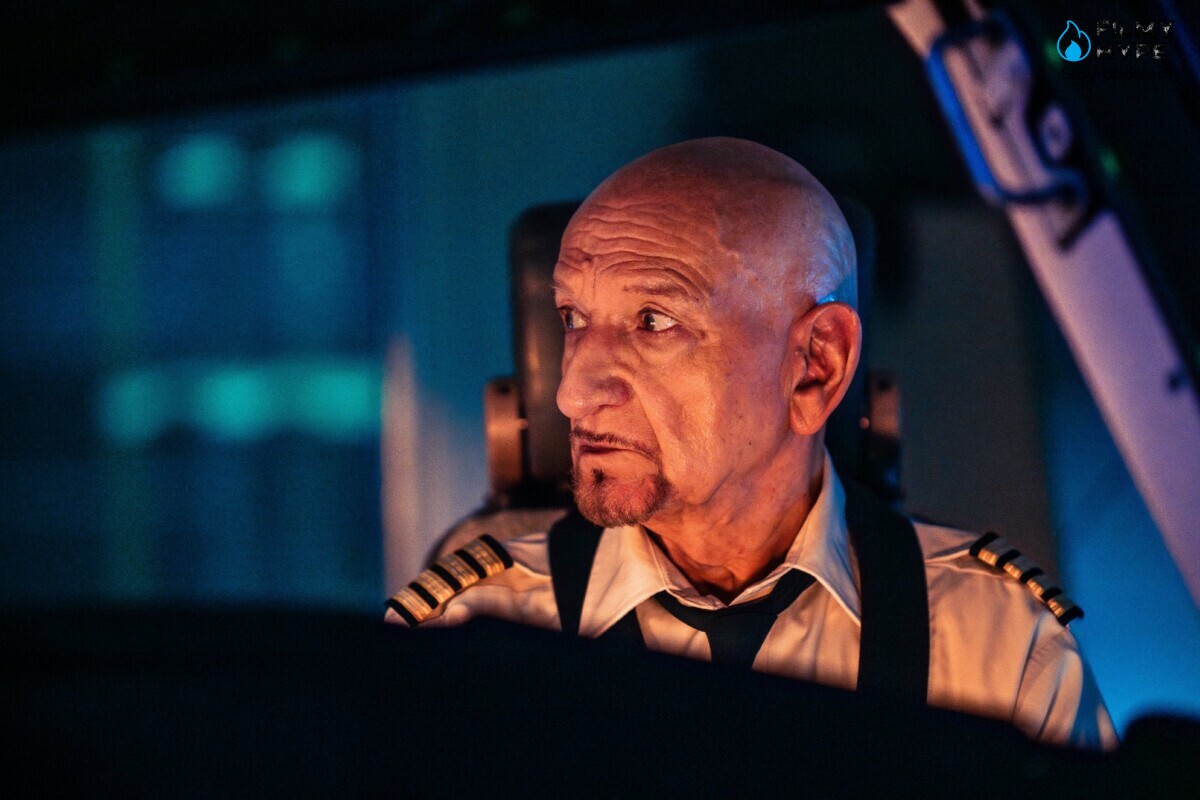
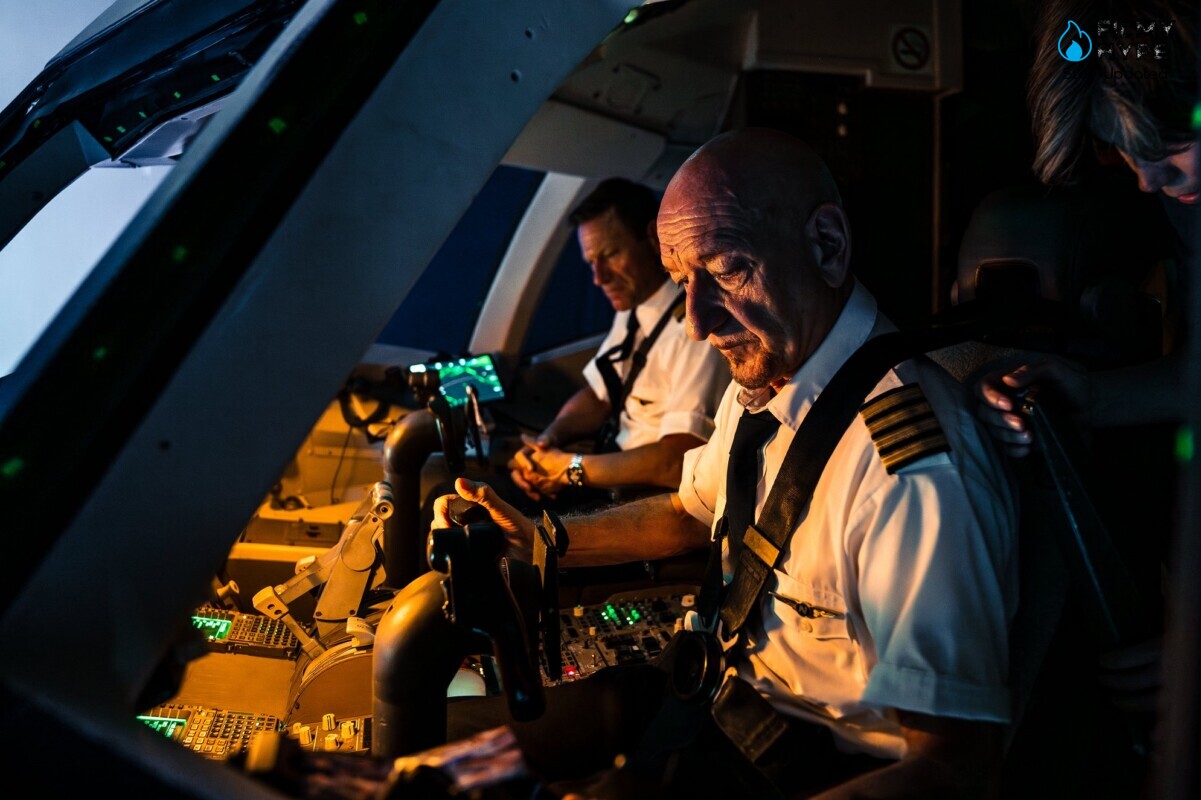



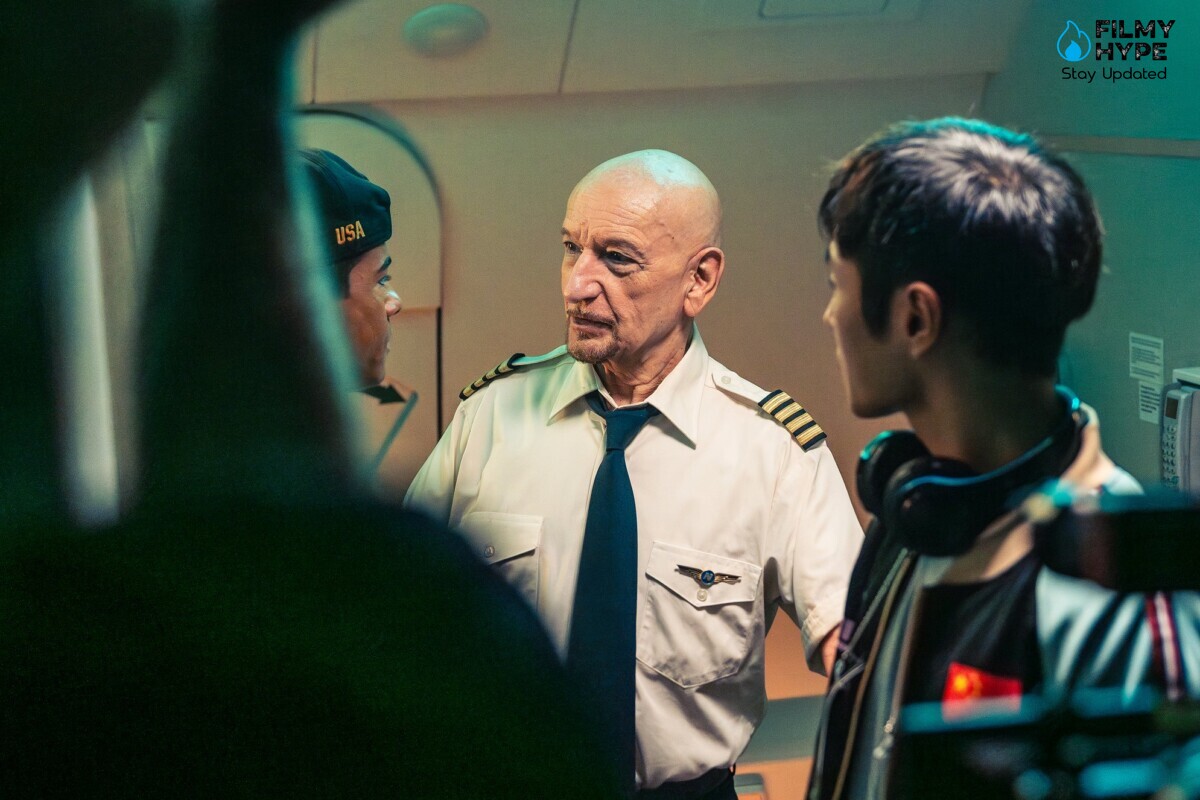
Harlin’s work on the macabre is diligent, but still of Ben’s human troubles, who, in addition to fighting the sharp-toothed creatures, must also fight with his own sense of parenthood, here surrogate in taking a little (and hateful) passenger to heart. We do very little of it. Indeed, doing so paves the way for that cheap ridicule on which one is willing to bargain and shut down synapses. We don’t want drama, we want tension and gurgling! Yet the emphatic close-ups are so desperate to carve out a place for themselves in the sun, so much so that they end up unmasking the slender scaffolding on which a divertissement with a completely limited creative capacity is supported. The duration doesn’t help him: excessive, an hour and forty.
Deep Water 2026 Movie Review: The Last Words
Deep Water combines a plane crash and a shark attack in an action film that finds its best moment in the ditching, but gradually loses tension due to shallow characters, conventional dialogue, and a second half devoid of any real surprises. If you’re looking for a work that revolutionizes cinematic language, you’re probably on the wrong flight. But if your goal is to enjoy wholesome summer entertainment, Deep Water does exactly what it says on the tin, and it does it well. Renny Harlin proves he hasn’t lost the luster of his heyday, crafting a survival thriller that combines claustrophobia and primal terror. Thanks to a solid cast that gives depth to the characters before the shipwreck, the film manages to make us sweat coldly and keep us glued to the armchair. An honest and very tense “popcorn movie” to be enjoyed strictly in the room, ready to hold your breath.