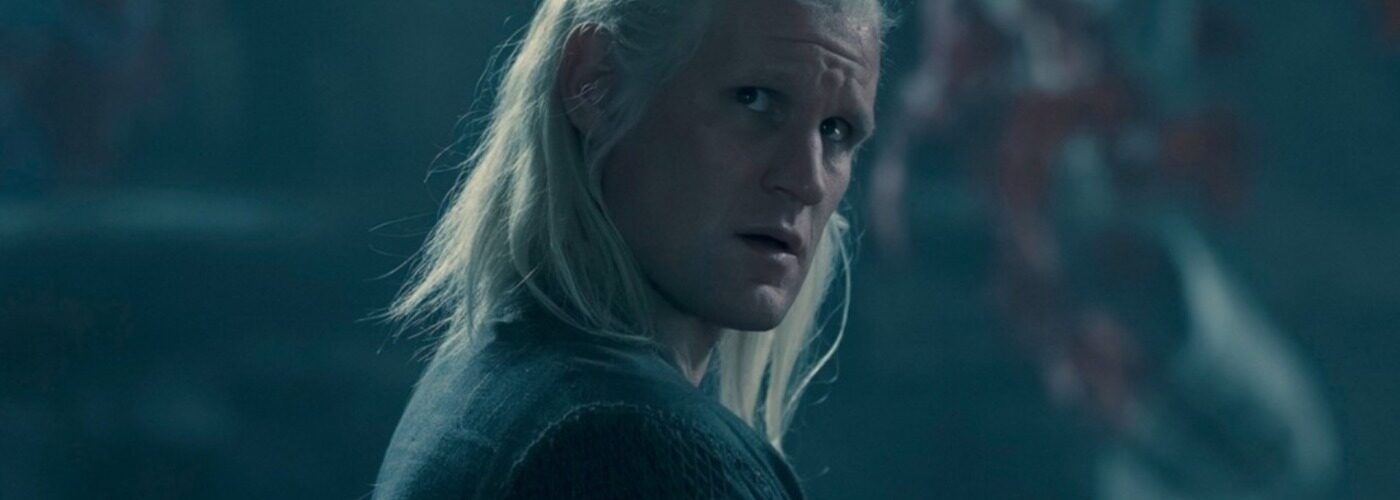
Daemon’s Harrenhal Vision Explained: The third episode of House of the Dragon Season 2 does something the show has been building toward since Daemon Targaryen first set foot in that crumbling fortress. Harrenhal isn’t just a strategic acquisition for the Blacks. It’s the most cursed place in Westeros, a castle built on slaughtered slaves and felled weirwoods, a monument to one man’s vanity that was turned into a funeral pyre by Aegon the Conqueror on the very day it was finished. Every house that has held it since has met with ruin. So when Daemon claims it and spends his first night wandering its leaky, haunted corridors, you know the castle is about to start working on him.
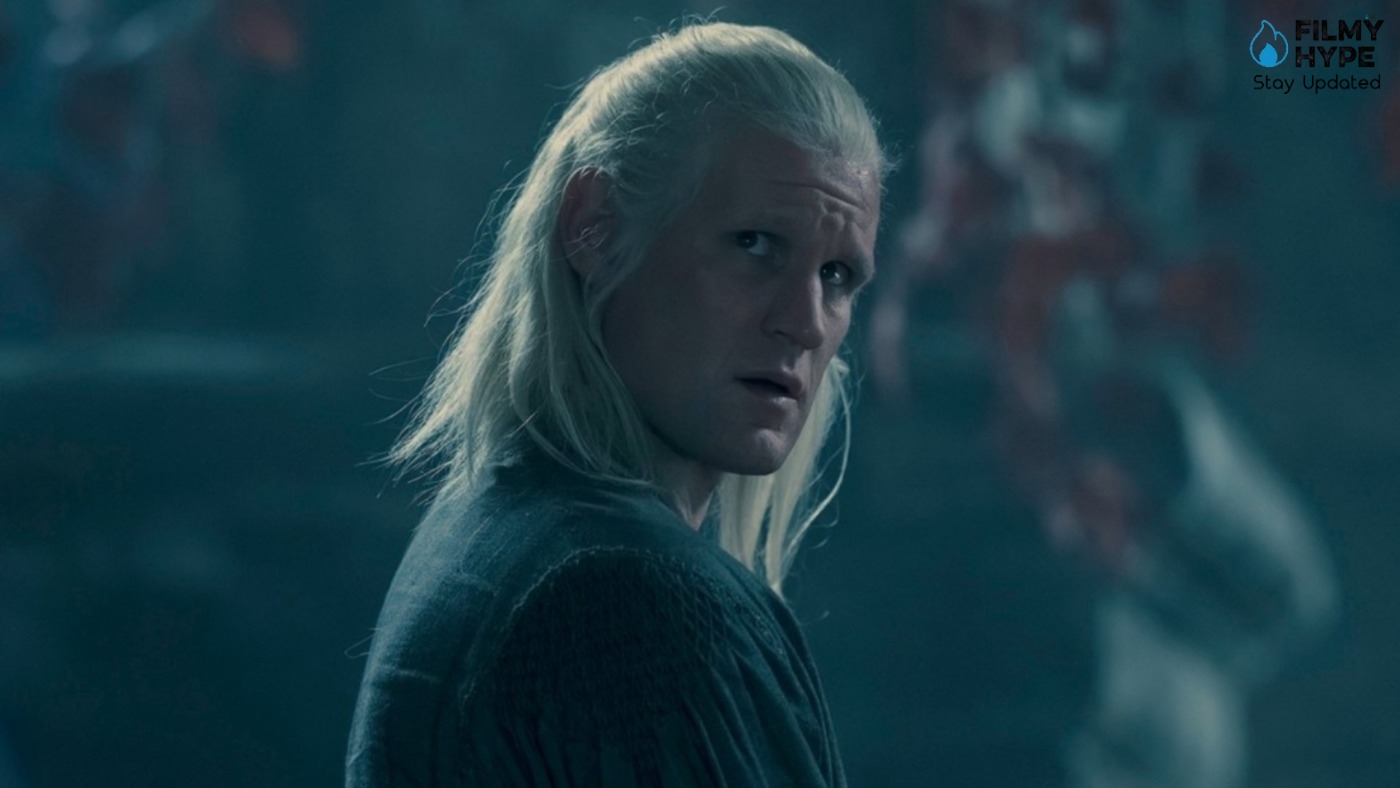
Daemon’s Harrenhal Vision Explained (Image Credit: HBO)
The episode gives us plenty of eerie setup. Something tries to force his door open in the dead of night. Alys Rivers appears with her unsettling calm and tells him, flatly, that he will die here. But the moment that lingers, the one that really gets under your skin, is the vision of young Rhaenyra.
Daemon’s Harrenhal Vision Explained: What Happens in the Vision?
Daemon enters a room and finds Rhaenyra—not the woman he just fought with in Dragonstone, not Emma D’Arcy’s guarded, grief-hardened queen—but the Rhaenyra he knew years ago. Milly Alcock returns to the role, and the casting choice isn’t just a nostalgic callback. It’s the entire point. This is the Rhaenyra who adored him, the one who looked at him with something closer to worship than judgment.
Only now she’s not adoring him. She’s sewing. And what she’s sewing is the severed head of Prince Jaehaerys back onto his tiny body. She hums while she works. She looks up at him, and her voice carries the weariness of someone who has been cleaning up after this man for years. “You’re always going back and forth, aren’t you?” she says. “And then I have to clean up.”
The image is grotesque and intimate at the same time. It’s not a monster accusing him. It’s a girl who once loved him, looking at him like she’s finally seeing who he really is.
What does the Vision Actually Mean?
Geeta Vasant Patel, who directed the episode, has spoken about exactly what this scene was designed to do, and her explanation cuts to the heart of Daemon’s psychology. The older Rhaenyra, the one he confronted in Episode 2, has become someone he no longer recognizes. She defied him. She questioned him. She sent him away. In Daemon’s mind, Rhaenyra has become a stranger. But the young Rhaenyra? That’s the one he fell in love with. That’s the one who truly knew him, or so he believed.
So when his subconscious conjures her, and she looks at him not with admiration but with quiet, exhausted judgment, it cuts deeper than any accusation the older Rhaenyra could level. This isn’t a political rival telling him he went too far. This is the person whose opinion actually matters to him, the one person he ever let his guard down with, telling him he’s become something monstrous.
The vision is Daemon’s conscience finally catching up with him. He ordered the death of a child. Blood and Cheese were following his instructions, and a little boy with no part in the war lost his head because Daemon wanted revenge for Lucerys. He’s been able to avoid fully processing that because he’s been moving, fighting, scheming, projecting strength. But Harrenhal doesn’t let you hide from yourself. The castle’s curse, whatever it actually is, seems to strip away the armor people build around their worst acts and forces them to sit with what they’ve done.
Young Rhaenyra isn’t really there, of course. She’s Daemon’s projection. But the accusation she delivers is real, and it’s the first time in the series we’ve seen him actually absorb the weight of what he’s responsible for. Patel described watching Matt Smith perform the scene repeatedly, going deeper each time, until his whole face was shaking with the recognition of what he’d done. The crew had tears in their eyes. That’s the level of reckoning the vision demands.
Why It Happens at Harrenhal
The setting matters enormously. Harrenhal has always been a place where the boundaries between reality and nightmare blur. The weirwood trees that were cut down to build it have left a scar in the fabric of the place. The countless deaths that went into its construction have soaked into the stone. Aegon burned it, and it’s been half a ruin ever since, but it never really stopped being a monument to suffering.
Daemon arriving here and immediately being forced to confront his own worst act isn’t a coincidence. The castle seems to have a will of its own, or at least a kind of memory. It takes the guilt people carry and makes it inescapable. Alys Rivers tells him he’ll die here, and whether that’s a prophecy or just a quiet observation, it sets the terms for everything that follows. Harrenhal isn’t going to be the place where Daemon wins glory. It’s going to be the place where he comes apart.
The Dream Logic of the Scene?
Patel made an interesting choice in how the vision was shot. A lot of fantasy shows treat dream sequences like they’re happening in a different dimension—foggy edges, ethereal lighting, a sense of unreality. Patel pushed for the opposite. The vision looks like reality. It feels like reality. Because that’s how dreams actually work. When you’re inside one, you don’t know you’re dreaming. The horror comes from how convincing it is.
Daemon doesn’t walk into a hallucination. He walks into a room where the woman he loves is doing something unspeakable, and she’s talking to him in the casual, exasperated tone of someone who’s been dealing with his chaos for too long. The domesticity of it—the humming, the sewing—makes the horror worse, not better. It’s not a nightmare monster chasing him. It’s home, turned inside out.
What Does It Tell Us About Daemon Moving Forward?
The vision doesn’t resolve anything. Daemon doesn’t wake up a changed man, suddenly repentant and ready to make amends. That’s not who he is. But the crack has been made. The young Rhaenyra put her finger on something he’s been refusing to acknowledge, and now that it’s been named, it can’t be unnamed. He killed a child. The woman whose respect he craves most sees him differently because of it. And Harrenhal, with its leaky ceilings and haunted hallways, is only going to keep peeling back the layers.
This is just the beginning of whatever the castle is going to do to him. Alys Rivers has already told him how it ends. The visions are going to get worse. The reckoning is going to get deeper. And the image of young Rhaenyra, humming as she stitches a murdered child back together, is going to stay with him—and with us—for a long time.