


Carrie 1976 Ending Explained: Some movies end, and you walk out of the theater, and you’re fine. Maybe you’re a little shaken, maybe you’re thinking about dinner plans. Then there are movies like Carrie. Brian De Palma’s 1976 adaptation of Stephen King’s first published novel doesn’t let you go that easily. The credits roll, the screen goes dark, and you’re still sitting there, trying to figure out why you feel so unsettled. It’s not just the blood. It’s not just the fire. It’s something deeper, something that’s been crawling under your skin since the opening scene in that high school locker room.
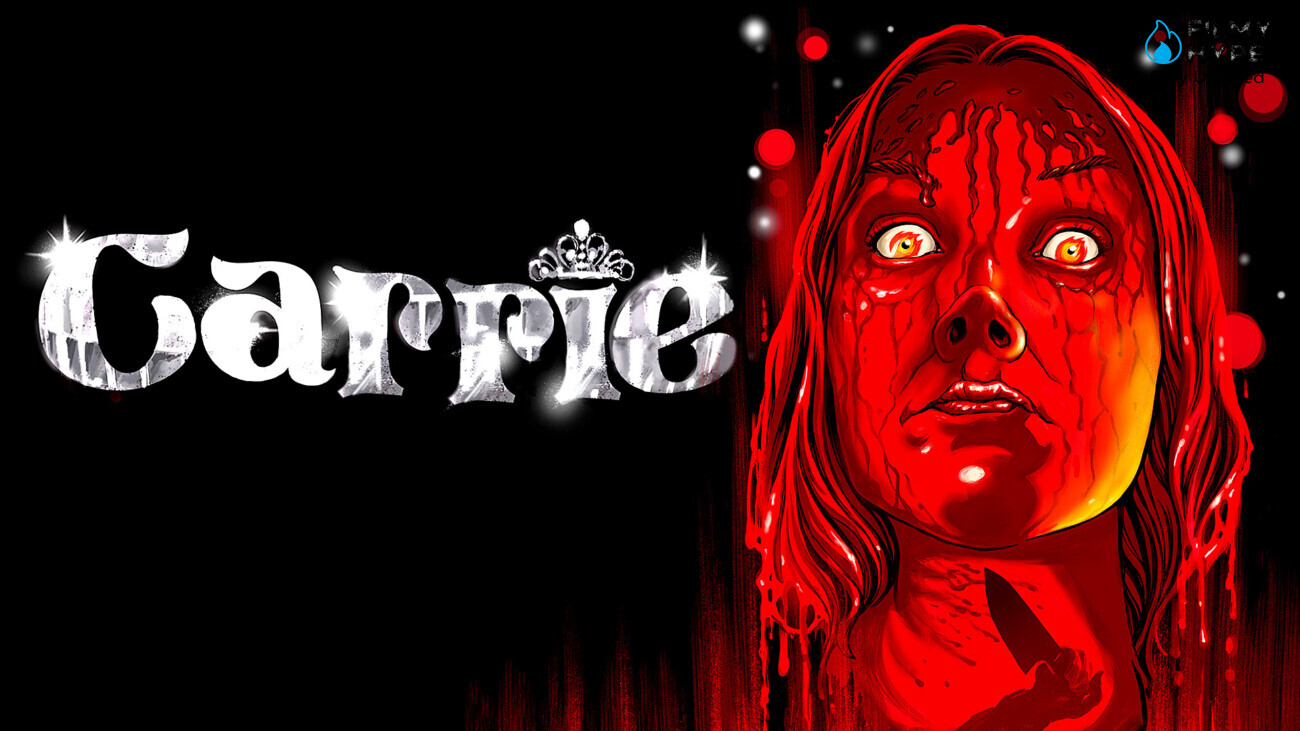
More than four decades later, Carrie remains one of the most effective horror films ever made. It’s getting a new series adaptation on Prime Video soon, which makes sense. Studios keep returning to this story because they recognize there’s something in it that hasn’t aged at all. The telekinetic prom queen. The fanatical mother. The bucket of pig’s blood. These images are burned into the cultural memory. But what makes the ending work isn’t the spectacle. It’s the way De Palma takes a revenge fantasy and complicates it until you don’t know how to feel anymore.
Carrie 1976 Ending Explained: What Actually Happens at the Prom
The setup is almost cruel in its simplicity. Carrie White has spent her entire life being tortured. At home, her mother Margaret treats her body and her existence as something shameful, something sinful. At school, her classmates mock her relentlessly. When she gets her first period in the locker room shower, thinking she’s dying while the other girls chant and throw tampons at her, the scene plays like a horror movie before anything supernatural even happens.
So when Tommy Ross asks her to the prom, and when she actually goes, and when she actually starts to relax and smile, the audience knows it’s a trap. We’ve seen Chris and Billy rigging the bucket. We’ve seen the rope tied to the rafters. The suspense isn’t about what will happen. It’s about waiting for it to happen, watching Carrie experience thirty seconds of genuine happiness while knowing it’s about to be ripped away.
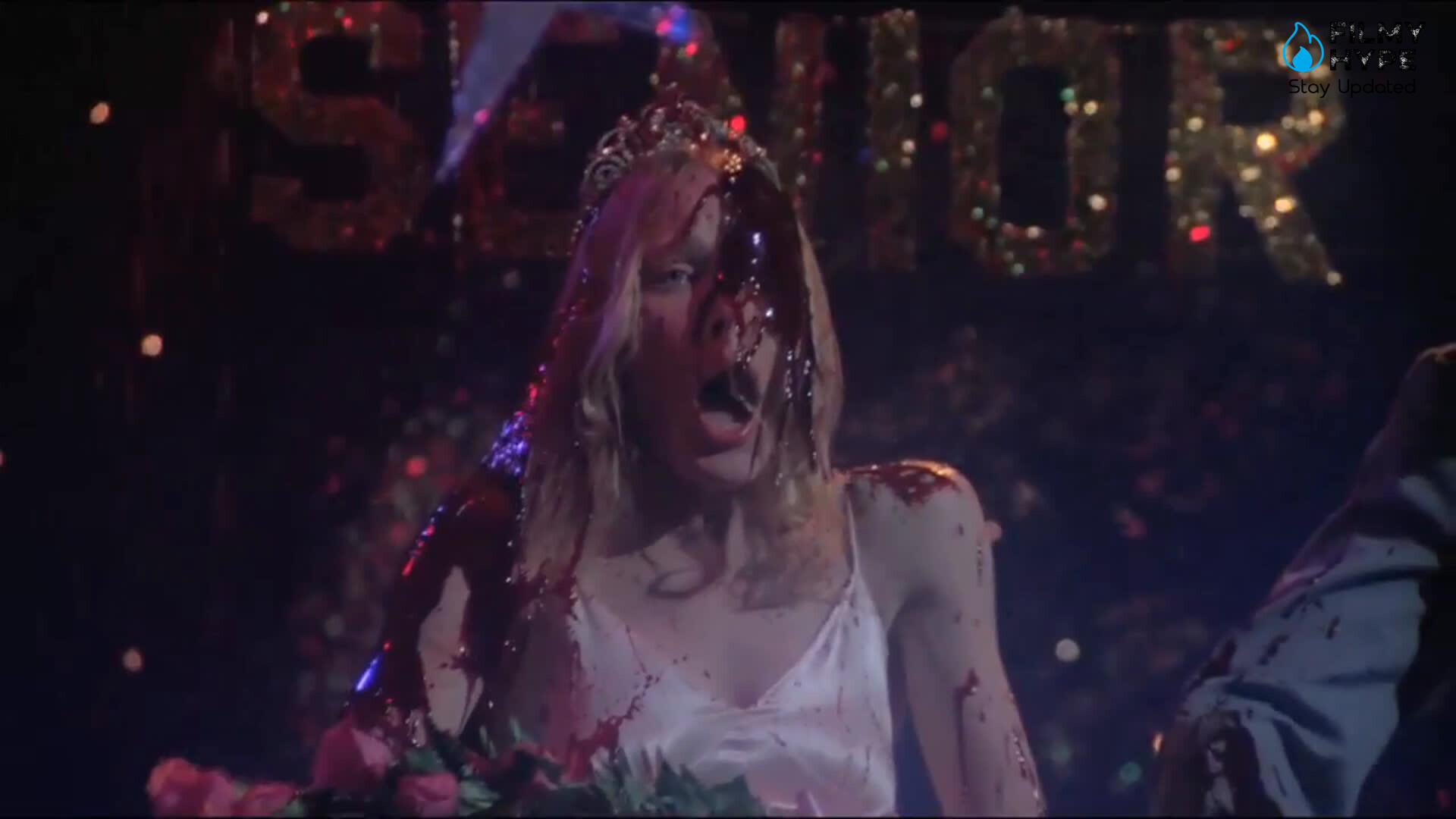
The blood falls. The crowd laughs. And De Palma makes a choice here that defines the rest of the film. The laughter becomes distorted, echoing, almost demonic. The camera spins. We’re inside Carrie’s head now, and in her head, everyone is laughing. Everyone is guilty. The gymnasium isn’t full of a few tormentors and a lot of confused bystanders. It’s full of enemies. Her telekinesis activates, and what follows is methodical. She locks the doors. She unleashes the fire hose. The electricity arcs through the water. The gym catches fire. She walks out without looking back.
Chris and Billy try to run her down with their car. She doesn’t even break stride. The car flips, explodes, and she keeps walking home.
The Crucifixion at Home
The confrontation with Margaret White is where the film’s religious imagery reaches its peak. Margaret, played by Piper Laurie with a kind of unhinged sincerity that’s genuinely frightening, has been waiting for this moment. She believes Carrie is possessed, corrupted, a vessel for sin. When Carrie comes home covered in blood, Margaret doesn’t comfort her daughter. She stabs her.
Carrie’s response is to telekinetically hurl knives and tools at her mother, pinning her to the doorframe in a pose that explicitly evokes crucifixion. This isn’t subtle. Margaret dies with her arms outstretched, a martyr to her own twisted faith. The interpretation writes itself. Carrie is killing not just her abusive mother but the entire system of religious oppression that made her life a prison. The daughter becomes both executioner and liberator, and the image of Margaret crucified in the doorway suggests that this particular demon has finally been exorcised.
Then the house collapses. Carrie and her mother are buried together, which is its own kind of tragedy. She never escapes, not really. The weight of her upbringing literally crushes her in the end.
The Dream That Isn’t a Dream
If the film ended with the house falling, it would still be effective. Tragic. Cathartic. Complete. But De Palma adds one more scene, and it’s the scene that elevates Carrie from a very good horror movie to a masterpiece.
Sue Snell, the one person who tried to help, is having nightmares. She visits Carrie’s grave, places flowers, and kneels in the dirt. And then a hand shoots up from the ground and grabs her arm. Sue screams. She wakes up in her bed, her mother comforting her, the image of the hand still seared into her vision. It was just a dream. Except it wasn’t just a dream.
This is the moment the film tells you what it’s really about. Carrie is dead. The revenge happened. The abusers were punished. But the trauma hasn’t gone anywhere. Sue will carry the guilt of what happened for the rest of her life. She’ll dream about that hand. She’ll wake up screaming. She’ll wonder if she could have done more, been kinder, stopped the machine of cruelty before it crushed someone entirely.
The hand from the grave isn’t a ghost seeking vengeance. It’s the physical manifestation of guilt that never goes away. Sue survived. Carrie didn’t. That fact will haunt her forever. The cycle of abuse and isolation doesn’t end when the victim dies. It lives on in everyone who participated, everyone who stood by, everyone who saw what was happening and didn’t do enough.
What the Film Changed From the Book
Stephen King’s novel is much more expansive in its destruction. Book Carrie doesn’t just destroy the gym. She tears through the entire town. Power lines come down. Gas mains explode. Hundreds of people die. It’s apocalyptic, and Carrie becomes something closer to a force of nature than a wounded teenager.
De Palma scaled this back deliberately. Carrie kills the people in the gym, kills Chris and Billy, kills her mother, and then dies. She’s not a monster. She’s a tragedy. The film makes her more sympathetic by limiting the collateral damage, and that choice has been debated for decades. Does it soften the story too much? Or does it sharpen the focus on what actually matters, which is the emotional truth rather than the body count?
Another significant change involves Margaret’s death. In the book, Carrie stops her mother’s heart telekinetically. It’s clinical, almost clean. De Palma replaces that with the crucifixion imagery, which is messier and more visceral and also more thematically loaded. The religious overtones of Margaret’s death turn it into a statement. This isn’t just self-defense. It’s a rejection of everything Margaret represents.
The book also provides a scientific explanation for Carrie’s powers. There’s talk of telepathy, of genetic mutations, of research into psychic phenomena. The film strips all of that away. The powers just exist. They’re a mystery, maybe a curse, maybe an extension of Carrie’s repressed emotions finally breaking free. The ambiguity makes them scarier. You can’t reason with something you don’t understand.
Why We Still Can’t Look Away
Horror movies from the 1970s often feel dated now. The effects look creaky. The pacing feels slow. The social concerns belong to a different era. Carrie doesn’t have that problem, and I think it’s because the specific horror it’s exploring hasn’t gone anywhere.
Bullying still exists. Religious abuse still exists. The feeling of being an outcast, of being mocked for things you can’t control, of having your body treated as something shameful or ridiculous, is still a daily reality for a lot of people. The film taps into something primal about adolescence, about the cruelty teenagers are capable of, about the ways adults fail to protect the vulnerable kids in their care.
When Carrie takes her revenge, there’s a part of the audience that cheers. If you’ve ever been bullied, ever been humiliated, ever felt like the whole world was laughing at you, there’s a dark satisfaction in watching her burn it all down. But the film doesn’t let you stay in that feeling. It shows you innocent people dying. It shows you Sue’s guilt. It reminds you that revenge doesn’t actually solve anything. It just creates more pain.
The moral complexity of the ending is what makes it endure. Carrie is a victim, but she’s also a killer. Her tormentors are villains, but do they deserve to die? Chris and Billy, maybe. But everyone in that gym? The film doesn’t answer the question. It just asks it and walks away.
The Cycle That Never Ends
Sue kneeling at the grave is the final statement. She tried to make amends. She convinced Tommy to take Carrie to prom. She thought she was doing something good. And maybe she was. But it wasn’t enough. The machine of cruelty had too much momentum. The prank still happened. Carrie still snapped. People still died.
Sue’s guilt is the guilt of anyone who has ever stood by while something terrible was happening and told themselves they were one of the good ones. She wasn’t throwing tampons in the locker room. She wasn’t rigging the blood bucket. But she was part of the culture that made those things possible. The film suggests that’s enough to be haunted forever.
The hand from the grave will keep reaching for her. Every night in her dreams. Every time she lets her guard down. The cycle of abuse doesn’t end with the abuser’s death. It doesn’t end with the victim’s death. It keeps going, passed from person to person like an infection, and the only thing you can do is try to be kinder next time. Try to notice the Carrie Whites before they break. Try to stop the blood bucket before it tips.
De Palma understood that the scariest thing in the world isn’t telekinetic powers or prom night massacres. It’s the knowledge that cruelty is ordinary. It happens in locker rooms and hallways and homes where no one is watching. And the consequences ripple outward forever, long after the fire is out and the house has collapsed, and the grave has settled into the earth. That’s the real ending of Carrie. Not the blood. Not the fire. The guilt that never goes away.