


Furious Season 1 Review and Ratings
Cast: Emmy Rossum, Jake Lacy, Scoot McNairy, Lola Petticrew, Quincy Tyler Bernstine, Larissa Campos, Chloe Carrillo, A.J. Paratore
Director: Brian Kirk
Streaming Platform: Hulu
Filmyhype.com Ratings: 4/5 (four stars)
Furious, the miniseries starting on Hulu on July 27 and running through August 31, is an intense thriller from which men emerge in pieces. Years and years of building a toxic power of the rich, white, power-chasing male costs what it costs, painted in the worst (or best) way. Allowances of males who decide the fate of others and who debase the search for an assassin who kills males, white, rich, like the hunt for a madwoman. Sometimes it happens that the very popular category of thrillers with serial killers and the sub-category thriller with serial killer ‘connected’ to a detective ‘particular’ reveals a little surprise that makes you say: and what is this? And yes, it’s one of those times.

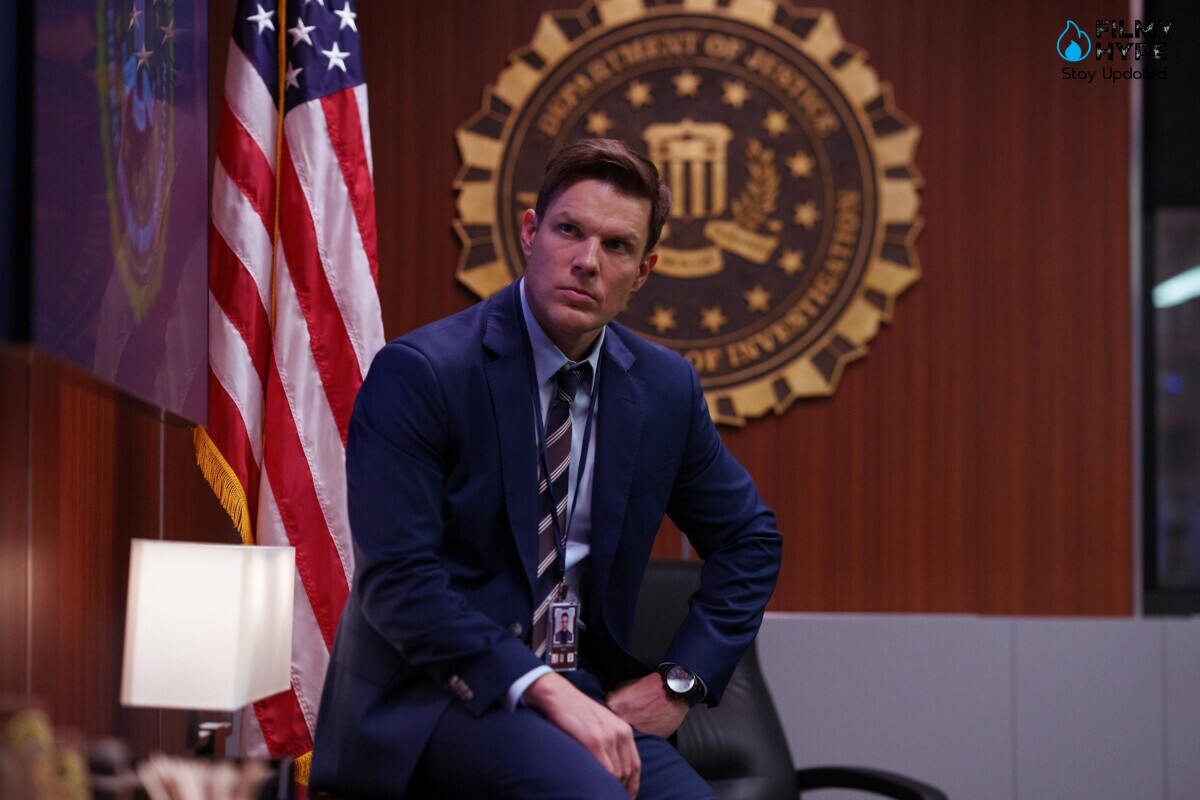
An eight-episode series based on a 1987 film – Black Widow – a film starring Debra Winger, Theresa Russell, Sami Frey, and Nicol Williamson featuring a serial killer who marries and kills her victims and a Justice Department analyst obsessed with capturing her – and directed by Elizabeth Meriwether. The series’ cast includes Emmy Rossum as the protagonist, Alice Black, Lola Petticrew as serial killer Catherine, Scoot McNairy as Danny, Alice’s former colleague, Quincy Tyler Bernstine as Nora, an FBI veteran, and Jake Lacy as Marshall, an FBI agent and Alice’s oppressive former partner.
Furious Season 1 Review: The Story Plot
Loosely based on the 1987 film Black Widow, the series quickly strays from the original story. Catherine does not kill for money, nor does she choose her victims randomly. Behind the succession of murders emerges a system in which wealth and influence allow us to conceal abuses that institutions prefer to ignore. The central question, therefore, does not concern the identity of the murderer, shown from the beginning, but the moral legitimacy of justice obtained outside the law.
It is on this contradiction that Furious builds his own identity. Catherine commits brutal acts, but the series avoids placing her in an easily decipherable position. She is not an antiheroine designed to win over audiences, nor a monster to be watched from a reassuring distance. His motivations make anger understandable, without erasing individual responsibility for it. This is a delicate balance, which writing cannot always maintain. At times, the woman’s traumatic past takes on excessive explanatory weight, as if each of her actions must necessarily originate from a previous wound. The risk is to reduce a disturbing figure to a narrative demonstration: the victim who, having failed to obtain justice, ends up transforming into the executioner.
Furious Season 1 Review and Analysis
Furious is not a miniseries in which to seek consolation; it does not pamper the viewer, it slaps them more than recent TV series do. If we wanted to find a recent comparison, we could place it in the wake of Half Man, quality authorial titles that talk about the psychology of the characters. The series moves vertically, sinking into the souls of the various protagonists. It certainly wasn’t an easy job for the various actors, who had to tackle complex themes that leave deep traces simply by watching. Probably the biggest flaw of Furious is its length; although it wants to delve deeper into all the characters, it is undeniable that at some central moments the series slows down, repeats formulas already seen, and dwells on some aspects that could have been summarized. It’s not a huge flaw, especially because from the fifth episode onwards, everything accelerates, raising emotional and physical tension.
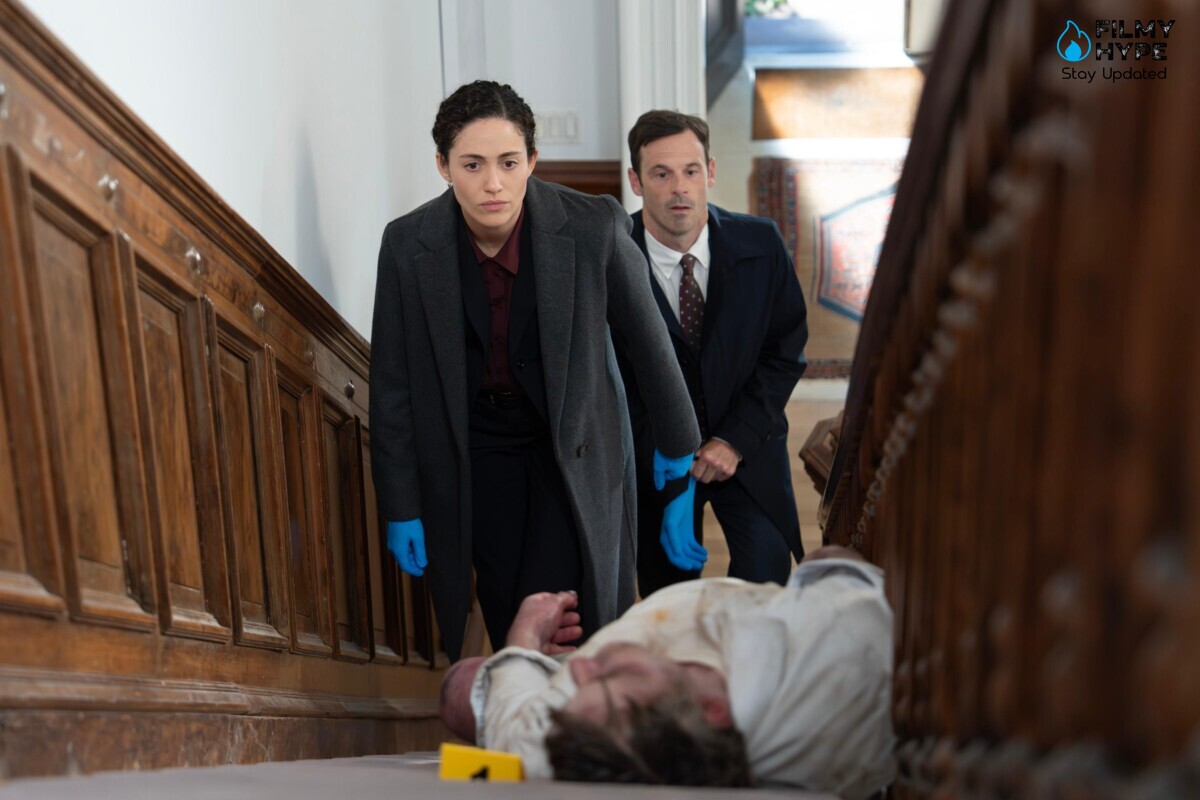
The characterization of the men of power between finance, the FBI, and the police, if we want to nitpick an excellent miniseries, is a bit too stereotypical, with actors who have already played similar roles in the past and are stuck in the imagination of the politician/trafficker/corrupt. Lola Petticrew prevents Catherine from remaining confined within this formula. His performance retains something indecipherable even when the series clarifies the reasons for the crimes. The character’s ability to assume different identities is not just treated as a thriller gimmick. It becomes the sign of a personality who has learned to survive by adapting to the expectations of others, until he no longer knows where the pretense ends.
Catherine can appear fragile when the situation calls for it, but behind that mask, there is always an unpredictable tension. Petticrew does not try to make the character reassuring, nor does he turn the trauma into an easy moral absolution. Even when the series insists on the woman’s suffering, the performance maintains a distance that prevents us from forgetting the ferocity of her actions. The character works especially when Furious gives up on explaining it all the way through. Any attempt to lead Catherine back to a specific cause weakens the mystery. The contradictions left unresolved, on the contrary, reinforce the impression of being faced with someone who cannot be contained in a single definition.
On the opposite side is Alice, an FBI agent from the New York Police Department. Her career was compromised after the end of her relationship with Marshall, an abusive colleague who continues to be protected by the shared professional environment. Alice recognizes in Catherine an anger that belongs to her, but reacts to this awareness by trying to transform it into an investigative method. The closer she gets to the killer, the more evident it becomes how fragile the line is between understanding a crime and being tempted by its justification. Catherine’s search gradually takes on a personal dimension until Alice’s belief that the law can still offer a credible answer cracks.
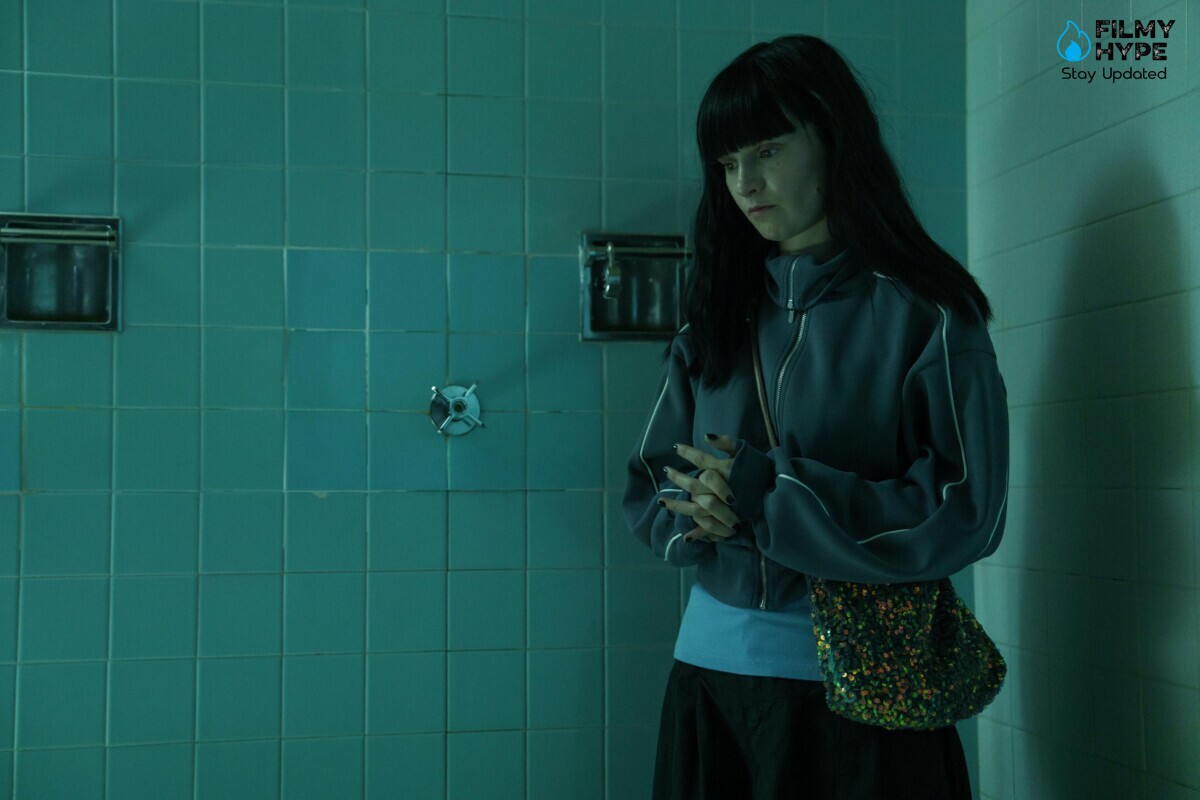
Emmy Rossum restores this tension without turning Alice into an exemplary victim. The character is abrasive and often lies to get what he needs. He doesn’t try to make himself pleasant, while the trauma continues to affect his private life and his relationship with his body. Rossum works mostly on Alice’s difficulty in maintaining control. Even when he appears still, one senses the effort required to prevent anger from emerging. It is an intense test, capable of sustaining the oscillations of a writing that, at times, insists too much on wanting to explain every behavior.
The mirror relationship between Alice and Catherine is the driving force behind the series, but it is not always its most interesting aspect. Furious finds a personal voice when he distances himself from the protagonists and observes who has remained on the fringes of the institutions. Nora Washington, played by Quincy Tyler Bernstine, has been working on sex crimes for years and has now given up any reassuring idea of justice. His cynicism is here a form of defense developed after continuous exposure to violence.
Bernstine dominates many of the scenes in which she appears. His Nora can be unpleasant without losing humanity and introduces a humor that arises from tiredness, not from the desire to artificially attenuate the subject matter being treated. It is through her that the series expresses its pessimism most clearly. Institutions fail not only because they are incapable of protecting victims, but also because they often consciously choose which truths deserve to be recognized.
Scott McNairy instead offers a subtler presence as Danny. His bond with Alice avoids turning him into the sympathetic savior called upon to repair wounds. Danny has no definitive answers, and his support meets precise limits. It is precisely this impotence that makes the tenderness that runs through their relationship credible. More problematic is the construction of Marshall, played by Jake Lacy. The attempt to portray a man incapable of truly understanding the extent of his own violence is interesting, but the character remains tied to an all-too-obvious narrative function.
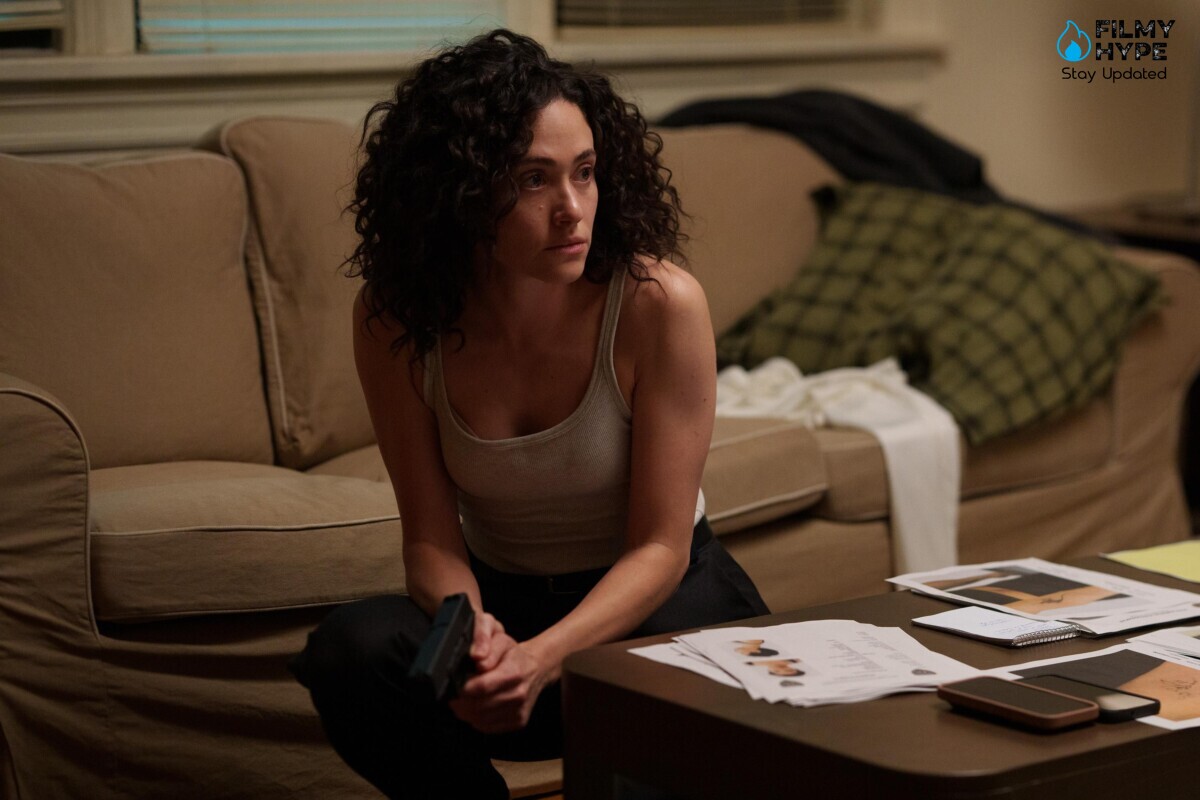
The direction of the first episode does not possess the same complexity as the writing. Dull lighting and oppressive environments immediately place Furious in the imagination of contemporary crime, but fail to define a truly recognizable visual form. Even more controversial is the way some acts of violence are presented. The series aims to question the perspective through which gender has transformed female pain into spectacle, but initially risks reproducing precisely that mechanism. Brutality is not always observed with the necessary distance, and some sequences seem to rely on shock even before meaning.
As the episodes progress, this inclination fades. The second half shifts the focus from the mechanics of the murders to the responsibilities of those who allowed them to happen. The story thus acquires greater coherence, while even the humorous deviations find a less jarring placement. There remain some too convenient coincidences and a tendency towards melodrama that weighs down the more delicate passages. They are significant flaws, but they do not negate the overall strength of the work. Furious works because it doesn’t seek a morally pacifying conclusion. The law does not automatically coincide with justice, but revenge does not therefore become a response without consequences.
Alice and Catherine occupy different positions within the same system. Both are forced to confront institutions that recognize pain only when it can be organized within an acceptable narrative. Their closeness does not erase differences, but makes it increasingly difficult to determine where the victim ends and the perpetrator begins. Meriwether’s series doesn’t reinvent the detective thriller on a formal level. He uses it, however, to undermine some of his most persistent reassurances, starting with the clear distinction between those who save and those who must be saved. When she gives up the most exhibited provocation, Furious becomes a drama capable of observing female anger without taming it. She doesn’t always find the right language to do so, but she has the courage not to reduce it to a simple emancipatory pose.
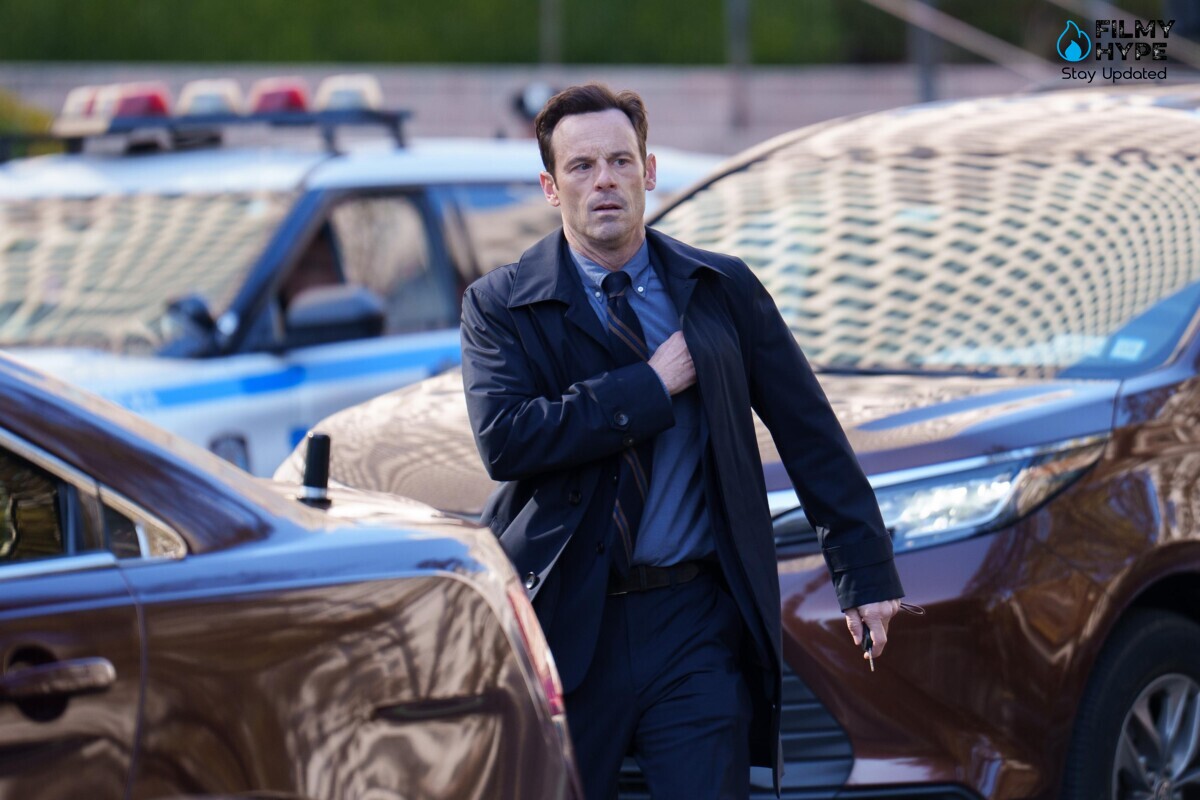
Alice Black is an FBI agent who recently joined the feds after a long stint in the police force, which ended due to a domestic violence incident involving her and her partner, also a police officer. Isolated from colleagues and branded a liar, the woman has no easy life even in her new office, where she is relegated to the call center by a sexist boss. But when a friend of hers involves her in the investigation of a series of murders, everything changes. Several powerful men are, in fact, found murdered in the same manner: an apparent substance overdose. The perpetrator may be a serial killer somehow connected to these people’s pasts, a cunning woman who, as a victim, deliberately decided to be the executioner of her tormentors. Alice will then have to investigate the facts and, at the same time, come to terms with her own demons and the post-traumatic stress caused by the violence she suffered.
Furious is the thriller series that will keep you on the edge of your seat for the next few weeks. Through masterful writing, he stages characters so real and multifaceted that it is impossible not to be passionate about their stories. Alice Black, played by a brilliant Emmy Rossum, is a real, imperfect woman, full of contradictions and dark sides, as is the serial killer played by Lola Petticrew: a character forged in suffering who chooses extreme violence in response to the atrocities she suffered. They are both figures lost in their own pain who each decide to react with their own methods, and it is precisely here that the narrative begins to play with the morality of the spectator.
Can we really firmly condemn those who commit atrocious acts when these are, in some way, the response to violence suffered and affect those who perpetrated that violence? Obviously, the answer is not simple, and it is a topic to which numerous psychology treatises have been devoted; without a doubt, however, the series manages to make us doubt our certainties, opening us to a much broader reflection not only on gender-based violence, but on our social system in general and on hierarchies of power. It’s not just the protagonists who benefit from the quality of the writing: no character is left to chance. Even without explanations or rambling dialogue, each role is explored at the right time, with jokes and gestures scattered with Swiss precision throughout the story. This makes the story not a mere hunt for the killer, but an intricate quest to escape a labyrinth of violence and trauma.
The direction is no less. While following a classic stylistic line, it can support the narrative through well-studied camera shots and movements, making excellent use of the environments to enhance, in some particularly successful scenes, their claustrophobic aspect. Even when the murder is staged, the chamber always focuses much more on the figure of the murderer, because it is her point of view that we want to communicate: even visually, we experience everything through her eyes. This challenge to remain impassive increases that feeling of turmoil that permeates the entire work, making Furious un an extremely profound, reflective, and not at all banal work.
To this we can add a great virtue: the script explains without explanations, and every curve (of plot and character evolution) of the story is there for a reason. The series is born in a primordial “shown, unsaid” broth, and qualifies minute by minute with the choices made. One of them all: the management of female bodies. Brian Kirk’s direction in the first two episodes is very professional. The thriller veteran knows when to tighten, he knows when to widen. It makes you fall into a vortex. Also very interesting is the change of direction with Karena Evans, which takes the series away from the standard of serial killer hunting and where it should be. Depth, complexity, questions, and tension. Eight-level episodes. Too bad I don’t give him a chance.
Furious Season 1 Review: The Last Words
Furious doesn’t pamper the viewer; he asks them for commitment to face collective pain together. He shrewdly and sarcastically destroys men who think they are powerful and ruthless but who come out of it terribly. Excellent performance by Emmy Rossum. Furious stands out as one of the most interesting thriller surprises of recent series, capable of intertwining the theme of gender violence with a sharp moral dilemma. Bolstered by Elizabeth Meriwether’s masterful writing and Brian Kirk’s claustrophobic direction, the series delves into the psychology of flawed and real characters, offering a profound, tense, and never banal work.