The first trailer for Ebenezer: A Christmas Carol has arrived, and it’s clear within moments that this isn’t the Christmas Carol you remember from holiday television marathons. Johnny Depp, buried under makeup that transforms him into Charles Dickens’ famous miser, glowers at the camera with the kind of bone-deep contempt that suggests he’s been waiting decades to play this role. The film, directed by Ti West—the horror auteur behind X, Pearl, and MaXXXine—promises a gothic reimagining of the classic story, one that explores the origins of Scrooge in ways no adaptation has attempted before.
Paramount Pictures has scheduled the theatrical release for November 12, positioning the film as one of the studio’s major end-of-year bets for 2026. The cast alone suggests the scale of the ambition: Rupert Grint, Andrea Riseborough, Sam Claflin, Daisy Ridley, Tramell Tillman, and Ian McKellen round out an ensemble that blends prestige British talent with genuine star power. McKellen, who shared the set with Depp for several days, described him as “brilliant, ironic, and surprisingly generous with his colleagues,” adding that he “fell in love with him as a workmate.” For Depp, whose career has been marked in recent years by legal battles and a retreat from major studio projects, this represents a significant return to the Hollywood mainstream.
Ebenezer: A Christmas Carol Trailer: What the Trailer Reveals
The trailer opens with atmosphere rather than exposition. The streets of Victorian London are rendered in shadows and fog, the production design leaning hard into the gothic possibilities of Dickens’ world. This is not the cozy, snow-dusted London of traditional adaptations. This is a city of sharp angles and deeper darkness, where the line between the living and the dead feels thin and permeable.
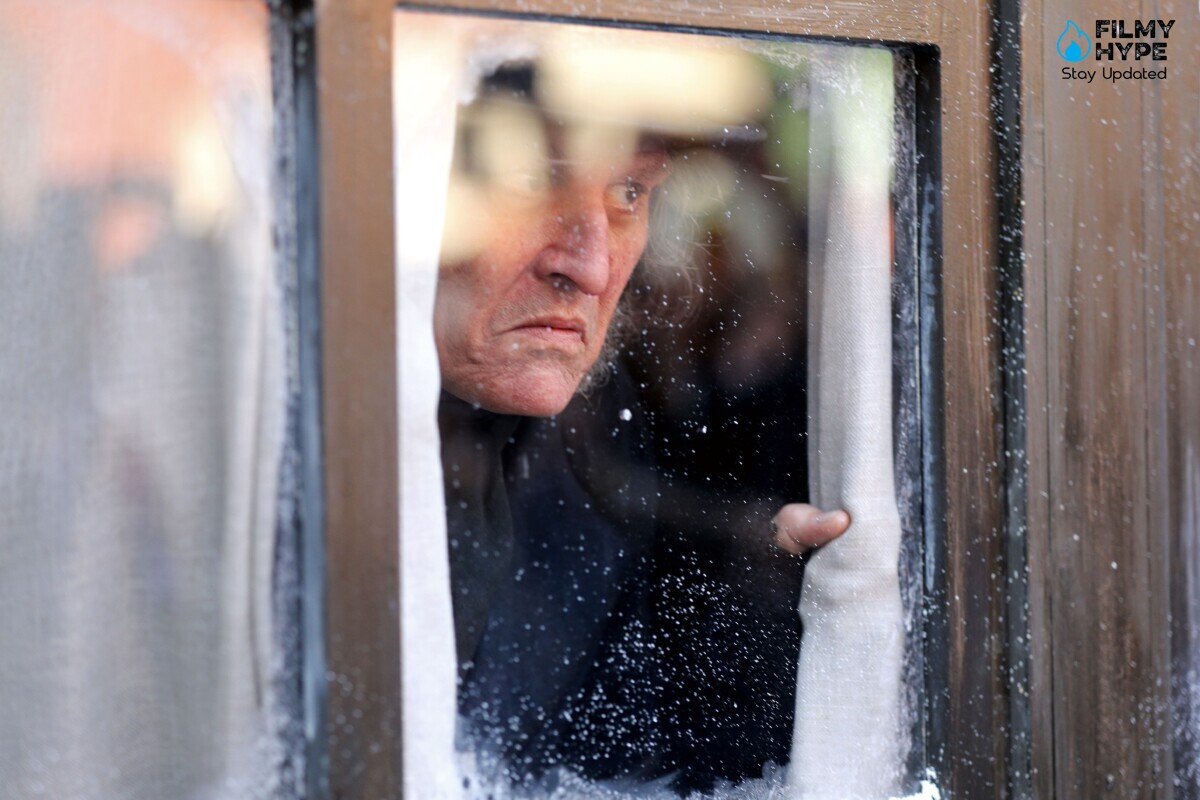
Depp’s Scrooge is introduced not through his famous catchphrase but through his posture—hunched, closed off, a man who has spent decades building walls around himself and has forgotten that the walls were ever optional. When he speaks, the voice is clipped, precise, and utterly without warmth. “Don’t you have a job?” he snaps at someone offscreen. “It seems like you have a lot of free time. I work instead.” It’s a line that could be played for laughs in a lighter adaptation. Here, delivered with Depp’s particular brand of exhausted contempt, it lands as something closer to a diagnosis.
The ghosts, when they appear, are not the gentle guides of adaptations past. The trailer suggests West is treating the supernatural elements with the same horror sensibility he brought to his previous work. The spirits don’t just visit Scrooge. They haunt him. They corner him. They force him to look at things he has spent a lifetime avoiding. Brief flashes show the Ghost of Christmas Past as something almost insect-like, all sharp movements and too-close proximity. The Ghost of Christmas Present looms. The Ghost of Christmas Yet to Come is, as always, silent and inexorable, but West’s camera treats it less like a messenger and more like a predator.
The tagline Paramount is using for the marketing sums up the approach: “You know the name. Not the story.” It’s a bold claim for one of the most adapted narratives in English literature, but the trailer makes a persuasive case that there are corners of Scrooge’s psychology that haven’t been explored on screen.
The Comic-Con Appearance: Depp Stays in Character
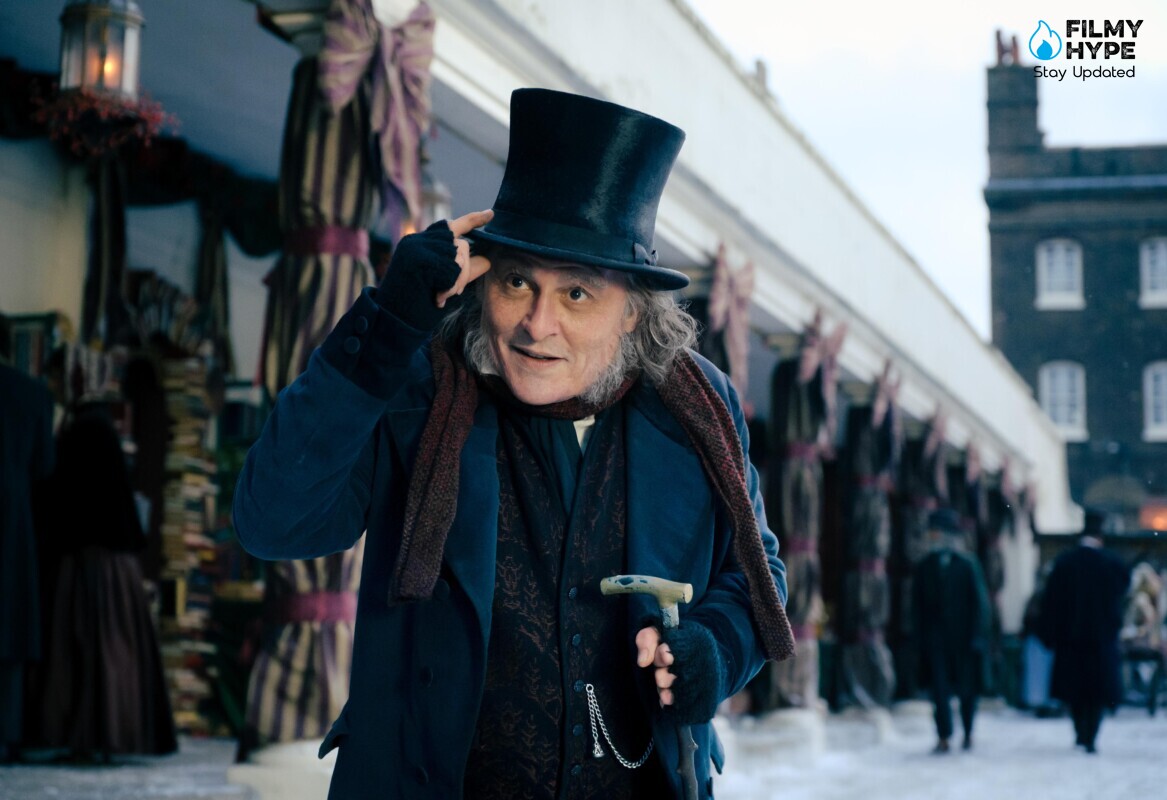
Before the trailer premiered at San Diego Comic-Con, Depp appeared in San Diego’s Gaslamp Quarter—a neighborhood whose Victorian architecture made it an appropriately Dickensian backdrop—in full Scrooge regalia. Hundreds of fans had gathered since noon, drawn by rumors that Paramount had something unusual planned.
A choir performed Christmas carols under the California sun, the seasonal dissonance adding to the sense that something strange was unfolding. Then Depp emerged. The makeup was transformative. The black coat, the top hat, the gaunt, angular face—he was unrecognizable as the actor who once swaggered across screens as Jack Sparrow. More importantly, he never broke character.
“Don’t you have a job?” he demanded of the assembled crowd. “It seems like you have a lot of free time. I work instead.” When a fan shouted “Have a nice day, Mr. Scrooge!”, Depp’s response was immediate and acidic: “What would be pleasant about it?”
He spotted fans dressed as his other iconic characters—Jack Sparrow, the Mad Hatter—and couldn’t resist acknowledging them while staying firmly in Scrooge’s voice. The improvisation lasted nearly half an hour, Depp moving through the crowd, teasing, scolding, and generally behaving like a man who has absolutely no time for anyone’s nonsense. It was a performance that felt both playful and committed, the kind of thing that reminds you why Depp became a star in the first place. He can hold a crowd. He can build a character from the outside in. And watching him do it in real time, without the safety net of editing or multiple takes, was genuinely impressive.
Later, in Hall H, Depp joined Ti West to present the trailer. The room went dark. A single candle illuminated Depp’s face as he entered, still in character, still scowling. “But don’t you have a life?” he asked the audience of thousands. Then he threw handfuls of candy at them. “Take them.” As he exited, a disembodied voice began calling Scrooge’s name, over and over, the sound design building into something genuinely unsettling. It was a seamless transition from performance to presentation, and it set the tone for the footage that followed.
The Creative Team
Ti West directing a Dickens adaptation is, on paper, an unexpected choice. West built his reputation on horror films that are as much about atmosphere and character as they are about violence—The House of the Devil, The Innkeepers, and the X trilogy all demonstrate a filmmaker who understands that the best scares come from prolonged tension rather than sudden shocks. That sensibility, applied to A Christmas Carol, makes a certain kind of sense. Dickens’ story is, at its core, a ghost story. It’s about a man being haunted, psychologically dismantled, and forced to confront the worst parts of himself. West’s skill at rendering internal torment as external horror is exactly what a gothic Christmas Carol needs.
The screenplay is by Nathaniel Halpern, whose work on The Killing and Legion suggests a writer comfortable with moral complexity and psychological depth. Emma Watts produces, bringing studio-level resources to what could have been a smaller, more contained project.
Ian McKellen’s presence in the cast is particularly intriguing. McKellen has his own history with the material—he played Scrooge in a 2017 stage adaptation and has spoken eloquently about the character’s complexity. His comments about Depp suggest a warm working relationship, and the fact that he describes the film as exploring “the origins of the iconic character” indicates that Halpern’s script digs into backstory that most adaptations skip over. Who was Scrooge before he became Scrooge? What made him? The Christmas ghosts have always forced him to revisit his past, but a full exploration of his origins—his youth, his relationships, the specific decisions that calcified into miserliness—is territory that hasn’t been fully mapped on screen.
Depp’s Return to the Mainstream
It’s impossible to discuss Ebenezer without acknowledging what it represents for Depp’s career. The legal battles, the highly publicized personal struggles, the gradual retreat from major studio projects—all of it has kept one of the most distinctive actors of his generation on the margins of the industry for years. This film, backed by a major studio, released during the holiday season, built around a character so iconic that his name has become a synonym for a certain kind of person, is a reintroduction.
The early signs are positive. The Comic-Con crowd was warm, even enthusiastic. The trailer generated genuine buzz rather than the polite silence that sometimes greets comeback attempts. McKellen’s endorsement carries weight. And Depp himself, based on the footage and the Comic-Con appearance, seems energized in a way that hasn’t always been evident in his recent work. The performance is big, theatrical, committed. It’s a reminder that when Depp is engaged, he can do things few other actors can.
Whether audiences are ready to embrace him again is a question the box office will answer in November. But Paramount is betting they will. The studio has given the film a prime release date, a substantial marketing push, and the kind of Comic-Con activation that suggests confidence. For Depp, who has spent years watching his career from the outside, it’s a chance to step back into the light. Appropriately enough for a story about second chances.
Why This Version Matters
A Christmas Carol has been adapted so many times, in so many registers—from the Muppets to Bill Murray to motion-capture Jim Carrey—that the question any new version has to answer is: why now? What’s left to say about a story that’s been told continuously since 1843?
The answer, based on the trailer and the talent involved, seems to be that no one has tried to tell it quite like this before. West’s horror sensibility, Halpern’s psychological depth, Depp’s willingness to disappear into a character’s darkness—these elements suggest a Christmas Carol that takes Dickens’ ghosts seriously as instruments of terror. Not the friendly terror of a holiday ghost story told around a fire, but the genuine, soul-shaking terror of being forced to confront the truth about yourself. Scrooge’s redemption, in most adaptations, feels inevitable from the first frame. You know where the story is going. The pleasure is in the journey. But if West and Depp can make the outcome feel uncertain—if they can make Scrooge’s transformation feel like something that might not happen, that has to be fought for against the weight of a lifetime of accumulated damage—then they’ll have done something genuinely new with one of the oldest stories in the book.
The film opens on November 12. Christmas comes early this year, and it’s wearing a top hat and a scowl.