


Minerva Academy Series Review and Ratings
Cast: Irene Maiorino, Michele Rosiello, Cristiana Capotondi, Massimiliano Gallo, Giulio Brizzi, Biagio Venditti, Andrea Giannini, Raiz, Simone Secce
Director: Ivan Silvestrini
Streaming Platform: Netflix
Filmyhype.com Ratings: 3/5 (three stars)
Minerva Academy (Minerva – La scuola) chooses an unusual setting to tell the story of something very familiar: teenagers trying to understand who they are, what they want to become, and how much they are willing to sacrifice to achieve it. The difference is that here everything happens inside a military high school, where the day begins with the flag-raising, cell phones are prohibited, romantic relationships are not allowed, and the hierarchy regulates practically every aspect of daily life. The result is a solid and easy-to-follow first season, supported by a good ensemble cast and coherent, but less courageous, staging than its premise suggests.
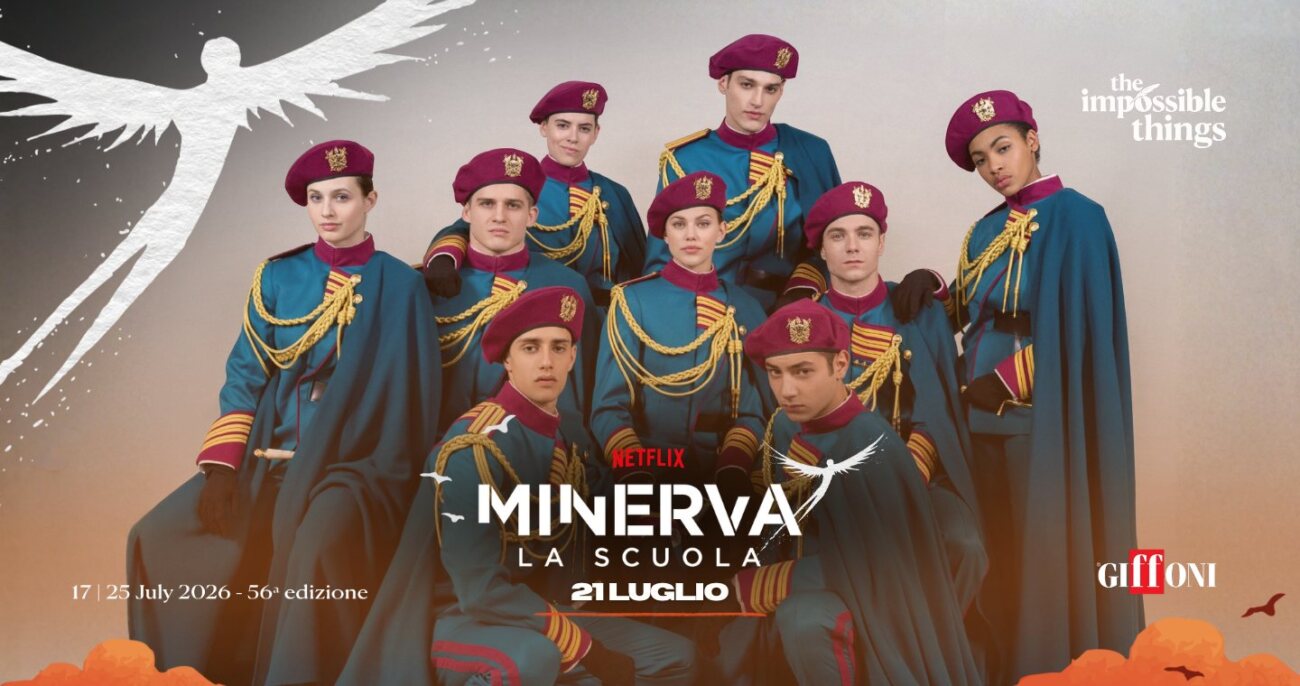
School is the most interesting character in the series: its spaces, its codes, and the conflict between discipline and fragility tell more than a few narrative twists. Available on Netflix from September 22nd, the series directed by Ivan Silvestrini (who also directed the second, third, and fourth seasons of Mare Fuori) consists of eight episodes and mainly follows three freshmen: Camilla, Vincenzo, and Salvo. They arrive at Minerva for very different reasons, but they all have to deal with an environment that promises to train them by demanding discipline and obedience in return. Added to this coming-of-age story is the mystery surrounding the disappearance of Francesco, a former student whose truth Salvo wants to uncover.
Minerva Academy Series Review: The Story Plot
Camilla (Margherita Buoncristiani), Vincenzo (Biagio Venditti), and Salvo (Ciro Minopoli) arrive at Minerva starting from almost opposite situations. Camilla comes from a wealthy family and was sent there in the hope that discipline will contain her rebellious nature; for her, school is initially a punishment, a place from which she would especially like to escape. Vincenzo, on the other hand, already belongs to that world: he comes from a military family and considers Minerva the first step on a path he has always imagined for himself. His problem is not accepting the rules but being able to live up to the expectations he carries on his shoulders. Salvo, on the other hand, comes from the Neapolitan suburbs and grew up in a foster home.
There’s a reason behind his enrollment, however, that others don’t know: he wants to understand what happened to Francesco, a boy who disappeared while attending the same school. They are three different but effective points of view for entering an environment that the series deliberately presents as separate from the outside world. Minerva has its own rituals, its own language, and above all a hierarchy that establishes who can command and who must obey. Visually, the Royal Palace of Portici also contributes greatly to this feeling: the monumental spaces give prestige to the school, but at the same time they seem to crush the children who pass through it.
Minerva Academy Series Review and Analysis
The series does not present military discipline as something automatically negative. Minerva teaches responsibility and team spirit, offering important opportunities and putting young people from very different economic situations on the same level. The problem arises when those same rules become a justification for no longer questioning anything. Hazing inevitably occupies an important part of the story. Older students subject freshmen to trials and humiliations that are accepted because they belong to a tradition that predates them. Those who impose them can say that they have suffered them in turn, and it is precisely this continuity that becomes one of the most interesting issues that are addressed. Adults are also involved in this contradiction.
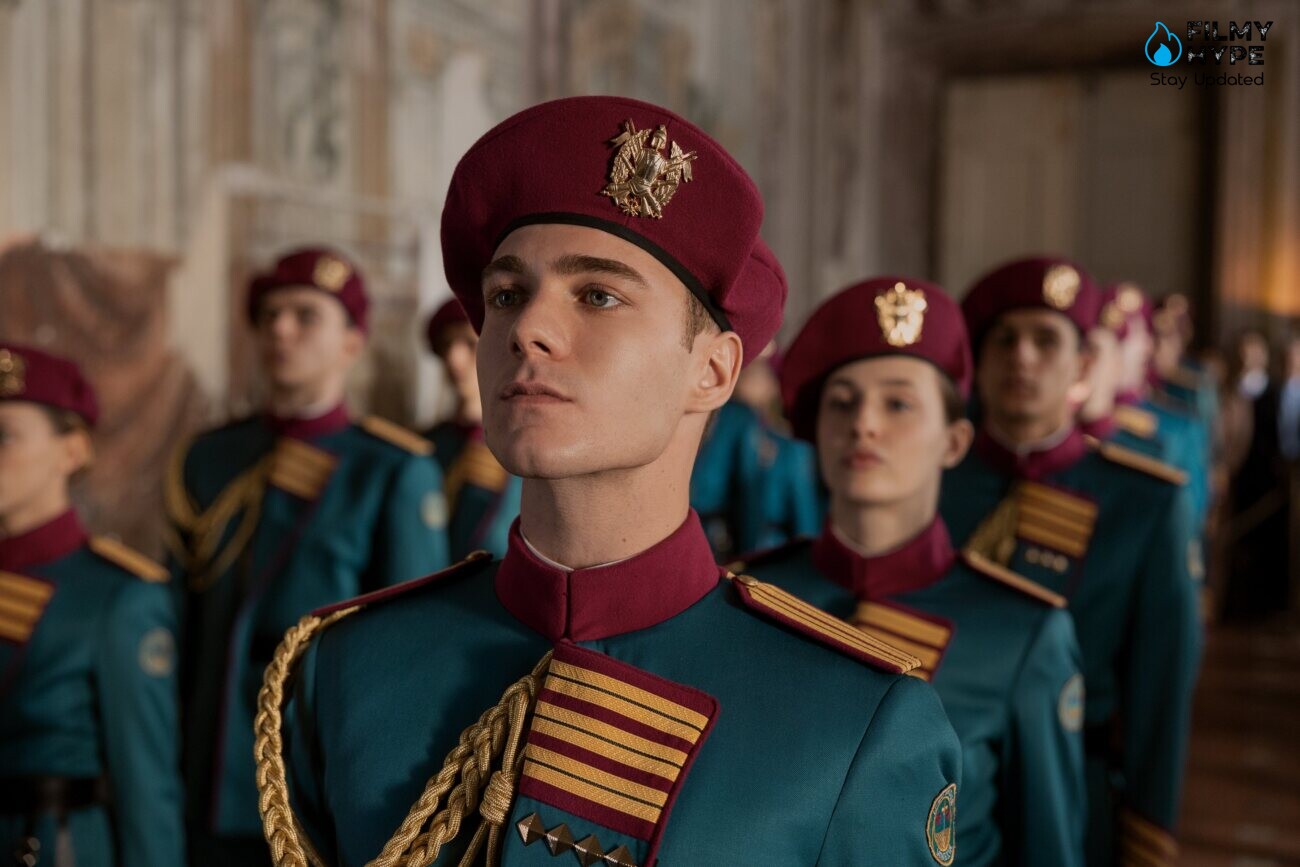
Commander Achille Giordano, led by Massimiliano Gallo, represents an institution whose rules and values he knows perfectly well, while the arrival of the teacher played by Cristiana Capotondi introduces an external perspective, less willing to automatically accept its logic. Irene Maiorino instead plays a character who tries to intervene from within the system, making the comparison between those who think that Minerva must change and those who fear that, by changing it too much, it will lose its identity. The problem with the series is that not all of its elements are developed with the same effectiveness. Alongside the most interesting issues, Minerva Academy often resorts to very recognizable dynamics: rivalries, forbidden attractions, social differences, family conflicts, and secrets. They are elements perfectly consistent with the genre, but at times they give the impression that the series is afraid of straying too far from an already well-tested formula.
The mystery surrounding Francesco’s disappearance serves to hold the eight episodes together and, above all, to bring Salvo ever deeper into the shadowy areas of the school. It’s a good narrative engine, also because it allows you to connect a personal story to much bigger problems. However, the mystery component is not always as subtle as it should be: some suspicions are constructed quite clearly, and the story tends to postpone certain answers to keep the tension high. The characters also sometimes suffer from this setting: the three protagonists start from archetypes that are all too clear, and the series takes a while before making them something more than the rebellious girl, the model son, and the boy who arrived from the suburbs with a secret. The young cast still manages to give spontaneity to relationships, especially when the script stops reminding us what role each should play and simply lets the kids act like themselves.
In the end, Minerva‘s most interesting question is, “School is not about Francis, but about the students who continue to live within those walls.” How much does it take to change to belong to a group? And most importantly, when does adapting to the rules stop meaning growing up and start meaning giving up a part of yourself? This is where the choice of military high school finds its true meaning: adolescence is the moment when one seeks one’s own identity, while Minerva asks its students to wear the same uniform, respect the same hierarchy, and learn to think of themselves as part of a collective body. The tension between these two needs runs through the characters more than mystery and romance, thus representing the most successful part of the series.
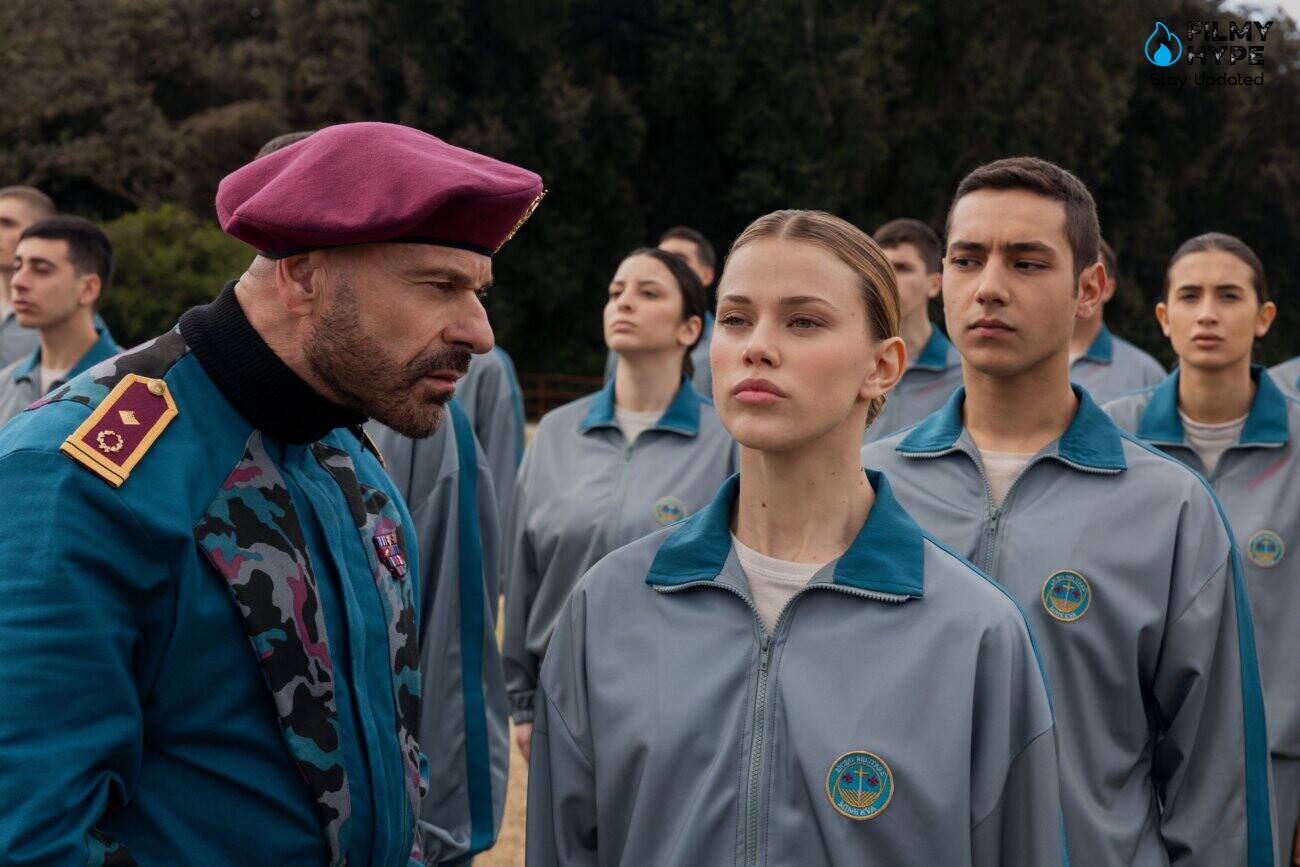
The series builds its entry into Minerva through three very different boys. Salvo enters with a hidden goal linked to Francesco’s disappearance, Camilla experiences the academy as a constraint, and Vincenzo instead comes from a family in which the military world represents a natural continuity. These are three clear and useful points of view for getting your bearings right away. The problem is that this clarity becomes predictability at times. Some conflicts are readable well in advance because the characters are introduced through very clear characteristics: the boy who seeks the truth, the rebel, the student crushed by expectations, the bully, the athlete, and the rigid adult with a private crack. It’s a choice that makes the series accessible but reduces the margin of surprise.
But when the script lets these roles breathe, the cast finds believable moments. Ciro Minopoli gives Salvo a restrained tension that works well in the investigative scenes, while Margherita Buoncristiani manages to prevent Camilla from remaining alone “the rebellious girl.” Biagio Venditti, on the other hand, works well on the weight of expectations, especially when Vincenzo has to choose whether to adhere to the model he knows or question it. Adults have a delicate task: to represent the system without simply becoming the spokesperson for a thesis. Massimiliano Gallo builds Achille Giordano through control and authority but allows us to glimpse enough fragility to avoid the monolithic profile.
Irene Maiorino works on a more restrained toughness, while Cristiana Capotondi brings a civic perspective to the school that serves as a counterweight to the logic of the institution. It is precisely in the relationship between adults and students that Minerva finds some of her best questions: how much of the discipline is training and how much becomes conformity? How much can the group protect, and how much can they crush those who can’t keep up? The series doesn’t always take these questions to the most uncomfortable consequences, but when it lets them emerge without explaining too much, it gains depth.

Francesco’s passing is the driving force that holds the season together and gives Salvo a concrete reason to cross the system from within. The mystery creates tension, produces suspicion, and allows you to observe Minerva from a less official perspective. It is also the element that makes the series more immediately serial and invites you to continue from one episode to the next. At the same time, this very structure ends up taking away space from the most interesting part: the transformation of the boys under pressure. Whenever the series slows down to observe fear, rivalry, or failure, it seems to find a more personal voice. When it pushes back on the twists and turns of the mystery, the story instead reconnects with more familiar mechanisms.
Our exploration of how real the Minerva military high school is helps distinguish the fictional dimension from real Italian military schools. It’s also an important distinction for reading the series: Minerva isn’t meant to be a documentary but a narrative device that takes rules and hierarchies to the extreme to test the protagonists. Ivan Silvestrini chooses a more orderly direction that he displays. The shots highlight symmetries, rows, enclosed spaces, and collective rituals, then open up when the kids manage to momentarily break that structure. It is a simple but coherent solution: the form of the series repeats its central idea, that is, the conflict between a system that tends to standardize and adolescents who are still looking for a personal form.
The photography makes good use of the contrast between the monumentality of the interiors and the vitality of the boys. Costumes also help make hierarchies and affiliations immediately legible. The technical side, on the whole, is safer than writing and rarely seeks effects that do not serve the story. The series is especially convincing when it connects characters and environment. Minerva is not a simple backdrop: it imposes rhythms, hierarchies, and behaviors, and this allows the direction to transform the discipline into narrative tension. The historic locations give the school an immediate identity and distinguish the series from many teen dramas set in more neutral spaces.
The ensemble cast also works. The younger protagonists manage to make rivalries, insecurities, and family pressures believable, while Massimiliano Gallo, Cristiana Capotondi, and Irene Maiorino give weight to adults without reducing them to mere authority figures. At its best, the series shows how students and teachers react differently to the same system of rules. Another successful point is Ivan Silvestrini’s direction, especially when he uses symmetries, corridors, uniforms, and collective rituals to visually narrate the conflict between belonging and individuality. Photography and costumes support this idea without overloading it, while the mystery surrounding Francis provides enough serial drive to keep curiosity high.
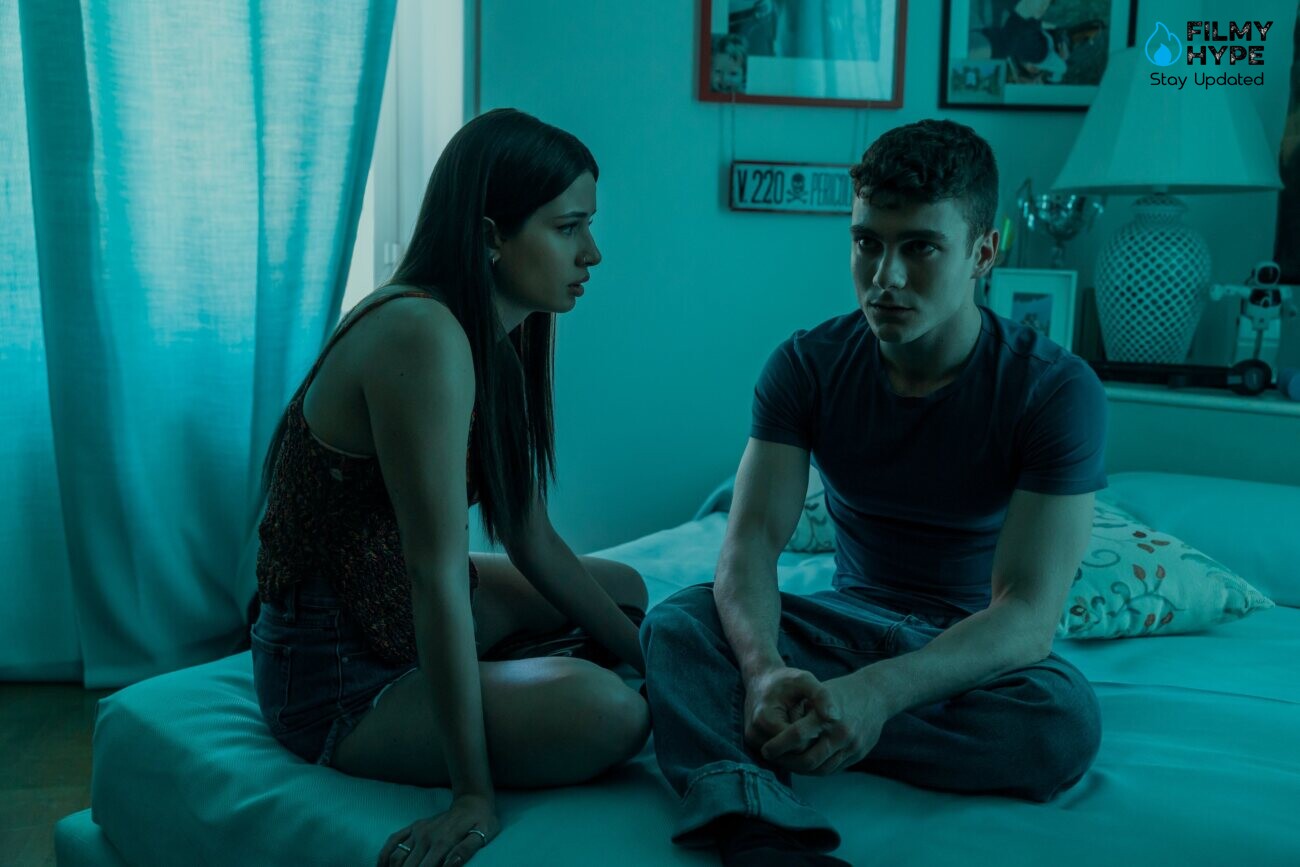
The main limitation is prudence. The series brings potentially powerful themes to the table, such as conformity, hazing, fragility, family pressure, and the relationship with authority, but often brings them back into a highly recognizable teen drama. The romantic dynamics and some rivalries follow familiar paths from the first episodes. The pace is also uneven. The beginning builds the world and its rules well, while the middle part tends to disperse some of the tension between subplots and already readable dynamics. The season regains energy when the mystery returns to the forefront, but the feeling remains that the most original idea was precisely to observe the teenagers inside a structure that claims to define them.
Minerva Academy Series Review: The Last Words
Minerva Academy finds a setting in the military high school capable of giving new strength to dynamics typical of teen dramas. The comparison between discipline and freedom, belonging and camaraderie, is the most interesting part, while the mystery and some adolescent dynamics follow more predictable paths. A series with good insights, but it doesn’t always manage to develop them fully. The most interesting choice remains to transform the school into an active presence: Minerva observes, orders, limits, and shapes its students. When the series focuses on this relationship between space, discipline, and identity, it finds a precise voice. When it relies on the most predictable archetypes and twists, however, it loses some of its strength.