


Spoiler warning: this article covers the full ending of Reacher Season 4.
Reacher Season 4 closes out with a genuinely violent reckoning, but the real meaning behind the finale isn’t just about defeating the season’s antagonists. After a mission built around a biological weapon, a conspiracy tied to America’s past, and a string of deeply personal losses, Jack Reacher comes out the other side noticeably changed from the man we’ve followed through previous seasons. The ending doesn’t hand him a clean victory — instead, it leaves him carrying real weight: the people he couldn’t save, and the growing realization that showing up alone doesn’t always guarantee doing the right thing.
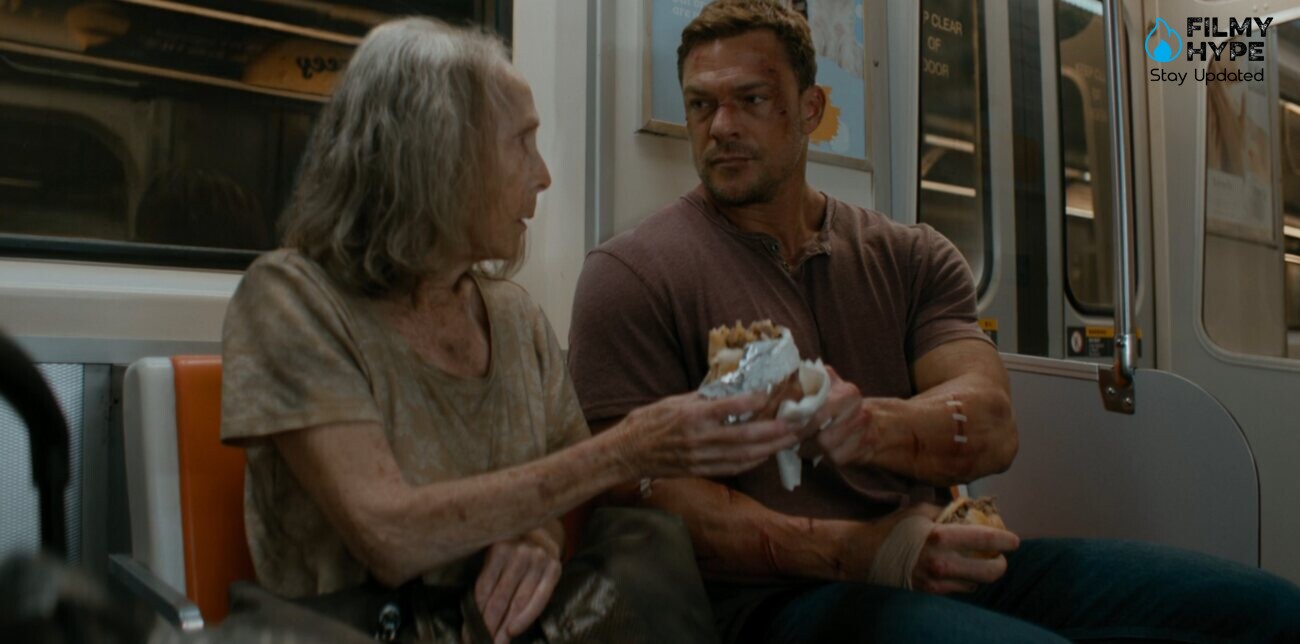
The finale also wraps up the arcs for Jacob, Tamara, Russell, Lila, and Amisha Hoth, while resolving the fate of the drive containing evidence of the season’s conspiracy. But more than anything, the ending circles back to a train, and to a woman named Anna — turning what looks like a small, almost throwaway scene, Reacher splitting a sandwich with a stranger, into the real emotional center of the entire season. It’s there that Reacher stops talking, even internally, about revenge and justice, and starts thinking instead about responsibility.
Reacher Season 4 Ending Explained: What Jack’s Final Choice Really Means?
The season’s most spectacular sequence comes after John Sampson sacrifices himself to stop a suicide bomber and prevent a biological weapon from being released at a fundraising event. Sampson realizes just in time that the event is the actual target — tied directly to Lila and Amisha Hoth’s need for revenge — and drags the attacker underwater, giving his own life to contain the threat. From that point on, the finale becomes a mission of reckoning and closure for Reacher, Tamara, and Jacob.
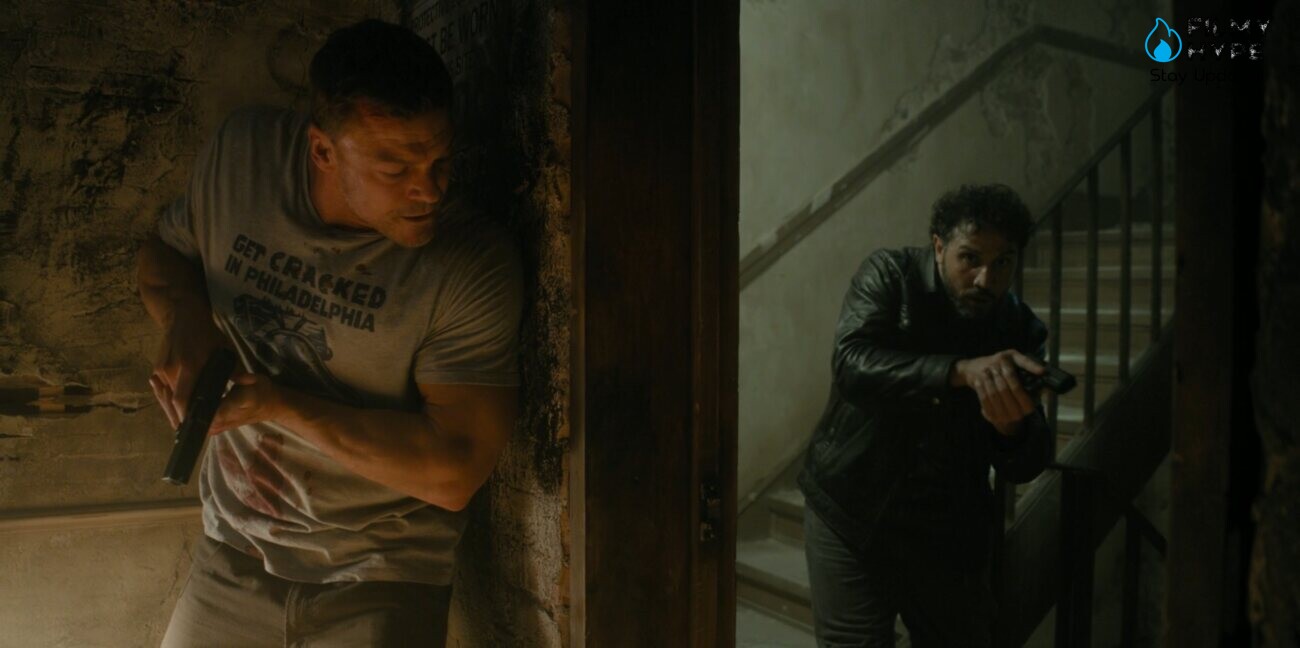
The final confrontation ranks among the toughest fights Reacher‘s faced across the entire series. Lila and Amisha manage to wound him repeatedly with knives, bringing him dangerously close to death. Reacher eventually turns the fight around and kills Lila, using what’s left of the biological weapon against her. Amisha, meanwhile, is stopped through Jacob’s intervention rather than Reacher‘s.
That distinction matters. The two antagonists don’t meet the same fate — Lila dies at Reacher‘s hands, while Jacob, despite having a clear opportunity to kill Amisha, chooses not to. That split builds two entirely different visions of justice within the same ending. Reacher stays true to his own absolute, unbending code. Jacob, on the other hand, comes to understand that turning his grief over Anna and Ben into personal vengeance would make him no different from the people he’s fighting. With Amisha’s own knife in his hand and a clear shot at revenge, he chooses to arrest her instead — a moment that marks him reclaiming not just his identity as a police officer, but his own moral center.
Does Lila Die in the Finale?
Yes. Lila dies in the ending of Reacher 4. During the fight with Jack, he manages to seriously injure him, but then tries to use a syringe containing the chemical at the center of the conspiracy against him. Reacher reverses the attack and injects the compound into Lila. The effect is very rapid, and the woman dies from the same weapon she had helped transform into an instrument of blackmail and destruction.
Amisha Dies After The Fall?
No. Amisha survives the fall. Reacher manages to throw her out of a window during the fight, and for a few minutes it seems her story is over. It is not so. When Jack leaves the building, exhausted by the blood loss, he finds himself in front of Foster, the CIA agent who wants to recover the key. Before Foster manages to kill Reacher, Amisha reappears and eliminates him. The woman is injured, but still lucid enough to attempt one last attack on Jack.
Why Doesn’t Jacob Kill Amisha?
Jacob arrives with Tamara and shoots Amisha, preventing her from finishing Reacher. At that point, he would have a chance to get revenge for everything that happened to Anna and Ben, but he chooses not to. Jacob arrests Amisha instead of killing her. It is one of the most important passages of the ending because it closes its bow without turning it into a copy of its enemies. Revenge leaves room for the possibility of obtaining a public truth about the conspiracy.
The Split Sandwich on the Train Is the Real Meaning of the Ending?
The final sequence shifts tone entirely. Reacher boards a train and sees Anna sitting across from him — a vision that makes visible the guilt he’s been quietly carrying throughout the season. Reacher remains convinced that how he handled things with Anna indirectly contributed to what happened to her, and his inability to save her keeps haunting him even after the mission itself is technically resolved.
That’s where the season delivers its simplest, and arguably most meaningful, gesture. Reacher notices another woman in visible distress on the train, but rather than stepping in aggressively or positioning himself as her rescuer, he simply sits down next to her and offers her half of his sandwich. It’s a small moment, but it captures real character growth. Reacher doesn’t stop being Reacher — he doesn’t suddenly go soft — but he seems to genuinely understand, maybe for the first time, that helping someone doesn’t always mean taking control of the situation or asserting force. Sometimes it just means being present.
His mother’s old line, “You will do the right thing,” resurfaces here too, functioning as a kind of moral anchor for the character. In past seasons, Reacher tended to leave each town clean, having restored order and moved on without looking back. This time, he leaves carrying a wound that can’t be resolved through a fight. The sandwich becomes the symbol of a different, quieter kind of strength — less dramatic than anything he’s done all season, but arguably much harder for a man like him to offer.
Handing the Drive to Russell Confirms Reacher Doesn’t Trust Institutions — Only Truth
The finale also resolves the mystery surrounding the drive containing evidence of U.S. involvement with Putra and the development of the biological weapon. When officers ask Reacher directly if he knows its whereabouts, he lies and says no. His reasoning is simple: he’s convinced that if the drive ends up in official hands, the material will get buried to protect the government from public accountability.
Instead, he hands it over to Russell, an independent journalist he’s come to trust over the course of the season. It’s a choice that fits Reacher‘s character perfectly — he doesn’t put his faith in bureaucracy or institutions as automatic guarantors of justice. He puts his faith in individual people who’ve proven they deserve it. When he hands Russell the drive and tells him to “take your Pulitzer,” he’s not just handing over a scoop—he’s placing the responsibility of exposing an inconvenient truth in the hands of someone he trusts to do it, rather than let it disappear.
That choice pushes the season beyond a simple story of fighting off villains. The real threat was never just the biological weapon — it was the very real possibility that the truth behind it would get quietly erased. Reacher solves that problem the way he always does: by working entirely outside the system. This time, though, he does it through information rather than violence, which is exactly what makes this ending feel more layered than it might initially seem.
What Happens to Tamara, Jacob and Plum?
Tamara is rehabilitated, and her contribution to the case is recognized. Jacob deals with the pain for Anna and Ben without giving in to revenge. Plum, on the other hand, finally receives the material needed to publicly tell the story of the conspiracy. The finale thus allows the season to close not only the physical conflict, but also the theme that runs through the entire story: deciding whether the truth should remain in the hands of secret apparatuses and operations or become public.
How the Ending Sets Up Season 5 and a More Vulnerable Jack
Consistent with previous seasons, the finale doesn’t include any direct cliffhanger pointing toward season five. Reacher says goodbye to his allies and hits the road again, returning to the drifting, nomadic existence that’s always defined the character. There’s no new enemy waiting in the wings, and no mystery deliberately left dangling.
The connection to season five is mostly thematic. The next chapter will adapt Lee Child’s Make Me, taking Reacher to the town of Mother’s Rest, where he’ll encounter a new set of allies and adversaries. What could genuinely shift, though, is how he approaches that next mission. Having learned this season that direct force and unilateral action aren’t always the right answer, the ending hints that future versions of the character might carry more visible vulnerability going forward.
That’s really the core takeaway from season four’s ending. Reacher is still the man capable of surviving brutal, sustained combat and chasing his own uncompromising sense of justice — but for the first time, the show insists he’s capable of getting it wrong too. He isn’t weakened by that guilt. If anything, it makes him more human. And as he leaves town once again, he’s carrying something with him that earlier seasons rarely allowed him to hold onto: an actual lesson.