

I Will Find You Netflix Ending Explained: The Netflix miniseries “I Will Find You” adapts one of Harlan Coben’s most popular novels and starts with a devastating premise. David Burroughs has been in prison for five years for the alleged murder of his son, Matthew. Everyone believes that the boy died and that David was responsible, but he has always defended his innocence. His life changes when a photograph taken at an amusement park appears, where Matthew can apparently be seen alive. From that moment on, David escapes from prison and undertakes a desperate search to discover what really happened that night.
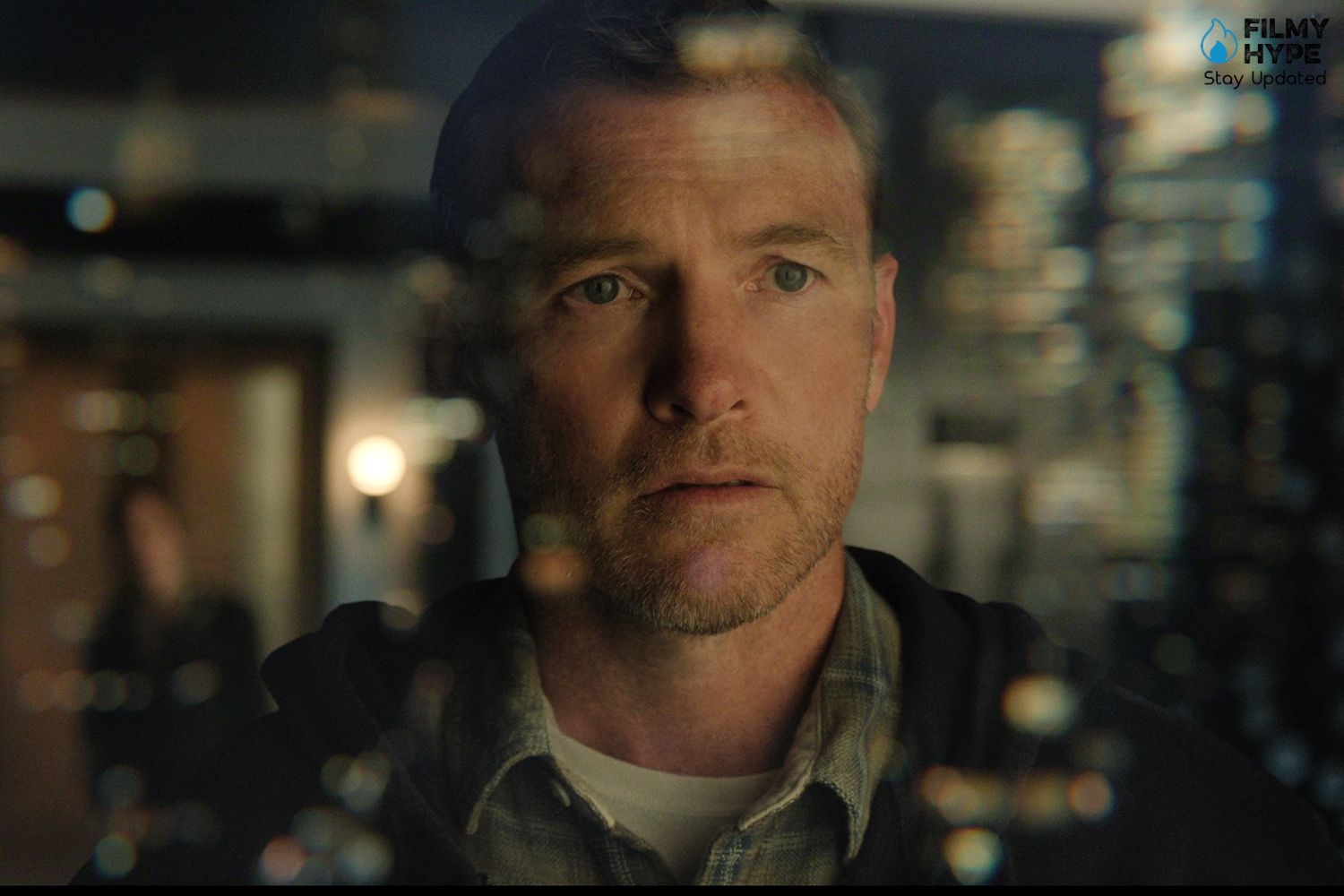
The police drama created and produced by Robert Hull (“Quantum Leap”, “Alcatraz”) begins five years after the sentencing of David Burroughs, who accepted his conviction as a self-imposed punishment for not being able to protect his son. He is not interested in regaining his freedom because that will not give him his son back. However, Rachel (Britt Lower), his ex-sister-in-law and a well-known investigative journalist, shows him a photograph of what could be her son at an amusement park, and the father’s perspective changes. In the first minutes of “I Will Find You,” It is clear that in the penitentiary center where David is serving his sentence, there are corrupt police officers who have the mission of monitoring him, and eventually murdering him. When this becomes evident, he decides to escape and look for Matthew. He achieves this thanks to the help of warden Philip Mackenzie (Peter Outerbridge) and his son, police detective Adam (Jonathan Tucker).
Starring Sam Worthington and Britt Lower– who everyone probably locates for his role in Severance – the series follows David Burroughs, a man who is sent to prison after he is wrongly accused of murdering his own 3-year-old son, Matthew. By the beginning of the series, David has been behind bars for a long time (evidence and testimonies were presented at the trial that seemed to confirm his guilt) and he is sure that this is where he will stay for the rest of his life, until His sister-in-law goes to visit him, and presents him with a photo of a boy who appears to be Matthew and that he is clearly alive. With this, David decides to escape from prison and go out to look for his son, not only to clear his name, but to get the child and his family back. David not only has to find out what happened to Matthew, but also who organized everything to destroy his family and make him look guilty. The end of the suspense series reveals an unexpected twist and confusion that unleashes all the chaos.
I Will Find You Netflix Ending Explained: What Really Happened to Matthew and Who is to Blame?
Everything changes when Rachel arrives at the prison with a photograph taken at an amusement park: in the background, a boy with the same birthmark on his cheek as Matthew.
“He is a character who cannot ignore an uncomfortable feeling. He has that instinct that tells him something doesn’t add up”, Lower told Time. “Go from writing about other people to being directly inside the story”.
The photo is enough for David, with the help of the prison director Philip Mackenzie (Peter Outerbridge) and his son, the sergeant Adam (Jonathan Tucker), to plan the leak.
Coben explained to Time the character’s motivation: “A father’s job is to protect his son… and he failed at that. It’s all about finding that redemption”.
Rachel and David’s investigation discovers that the neighbor who testified against him, Hilde Winslow (Tara Rosling), lied under pressure from the local boss Nicky Fisher (Clancy Brown), who sought revenge against Lenny (Hugh Thompson), David’s father and former police officer, whom he blamed for the death of his own son in prison.
Fisher, however, had nothing to do with Matthew’s kidnapping: his revenge was limited to fabricating the evidence that sent David to prison.
The real person responsible for the child’s disappearance is Hayden Payne (Milo Ventimiglia), heir to the Payne family and Rachel’s ex-boyfriend.
Hayden believed he was Matthew’s biological father: when Cheryl (Erin Richards), David’s ex-wife, went to the fertility clinic Berg Reproductive under the name Rachel, Hayden assumed Rachel was the patient and provided her genetic material.
Years later, upon seeing Matthew at a family reunion, he deduced that the child was Cheryl’s, but remained convinced of his paternity. What he was unaware of —and that his own mother hid from him— is that a paternity test carried out in secret ruled him out as a father.
The child found dead in Matthew’s bed was Martin Bischoff, a Swiss minor with metachromatic leukodystrophy (MLD) who lived in an orphanage run by the Payne family in Switzerland.
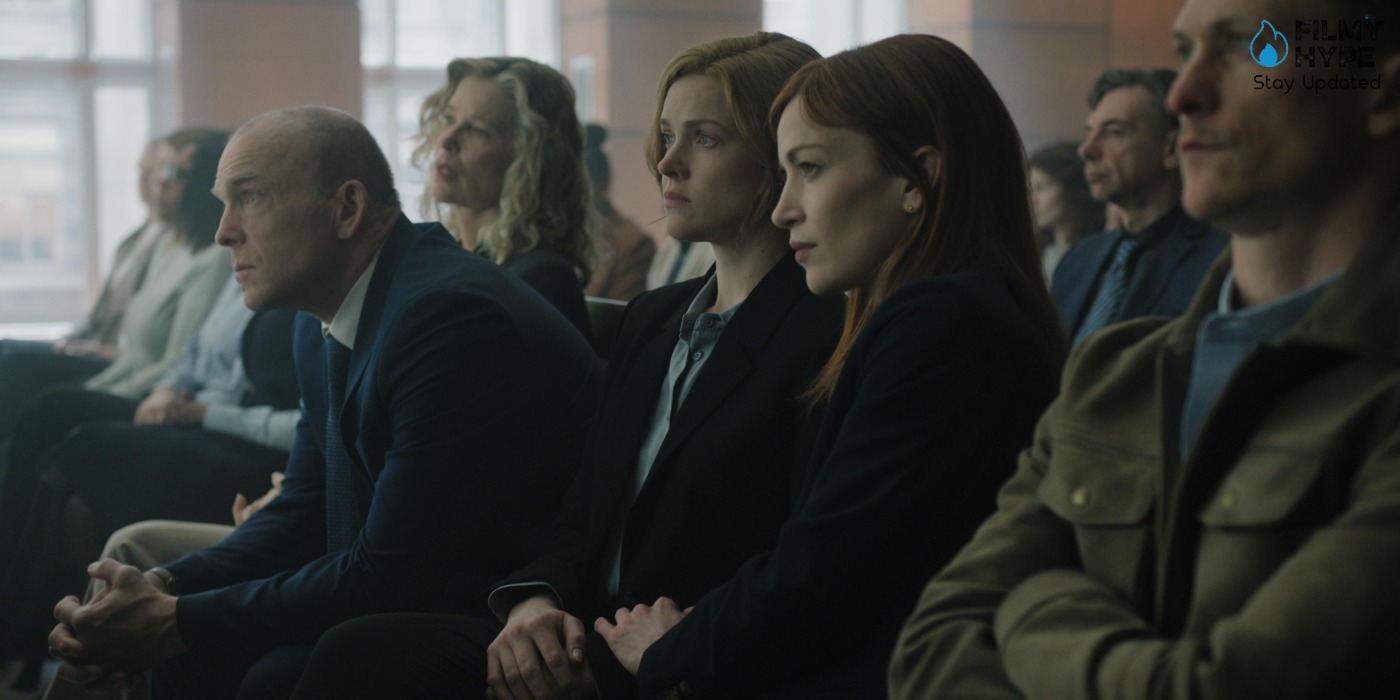
Hayden moved it to Boston, murdered him, and manipulated DNA tests so that the body was identified as Matthew’s. “He is acting from a place of love. Only that love is misdirected and completely inappropriate”, Ventimiglia told Netflix about his character.
Logan Browning, who plays the FBI agent Sarah Greer, and Chi McBride, like the agent Max Williams —father and daughter in fiction—, track David throughout the series, convinced that he is in a spiral of revenge.
It is Greer who ends up believing in David’s innocence and who, in the final confrontation at the Payne mansion, shoots and kills Hayden when he points his gun at Rachel.
“It’s not so much about the ending itself, but about everything that happened before. Of everything he had to go through to get to that moment”, creator and showrunner Hull told Time. “That’s what makes a Harlan Coben series work: the journey you took with David and Rachel”.
Eight months later, David’s sentence is overturned. Rachel publishes a book about the case. Cheryl has a daughter with her current husband, Ronald Dreasen (Aaron Ashmore). Adam loses his job at the police department and opens his own detective agency.
The family gathers at the funeral of Lenny, who died of colon cancer. In the final scene, David and Rachel hold hands as he narrates in voice-over: “I know the road ahead is not going to be easy. Nothing worthwhile deserves to be”.
“I’m glad it doesn’t end with a big romantic gesture. There is a softness and a simplicity. Sometimes power comes through the simple and the soft”, Worthington told Time.
Lower agreed: “They’re just watching their family, finally reunited. They have won that moment”.
What Really Happened to Matthew?
The photo that Rachel presents to David is all the proof he needs to be convinced that his son is alive, and that he must act and go look for him, and for this, he must also evade the FBI agents who are pursuing him to take him back to prison.
And yes, there are betrayals, deceptions, corruption, and a lot of evil here, and many possibilities, from a mafia plan to revenge.
In the end, David discovers that Matthew’s disappearance was caused by Hayden Payne (Milo Ventimiglia), who was Rachel’s boyfriend and was helping her and David look for the boy after discovering the photo.
After discovering this, and that the boy is alive, David and Agent Greer (who was trying to catch David and bring him back), work together to rescue him, both from Hayden Payne and his mother Gertrude, who used her money and resources to keep the truth hidden.
Who Really Was Matthew’s Biological Father?
For much of the series, the possibility that Hayden was Matthew’s real father is played with. Hayden himself was convinced of this due to a series of fertility treatments carried out years ago. However, the reality is much simpler. Matthew was always David’s biological son. Hayden’s obsession was born from misinformation and a belief that no one bothered to verify. In other words, the entire tragedy of the series is built on a lie. When Hayden discovers the truth, he realizes that he has destroyed several lives for a fantasy that was never real.
Who Framed David and Why?
Hayden kidnapped Matthew because he became obsessed with Rachel after the relationship ended.
What happened was that, believing Rachel was seeking fertility treatment, he used his resources to convince the clinic (run by her family) to use her genetic material for insemination (but that’s not what happened). It wasn’t Rachel who sought treatment, but her sister (David’s wife, who used Rachel’s name at the clinic). When she was going to receive treatment, she discovered she was pregnant, and the procedure was no longer performed. Hayden didn’t know this, so when Matthew was born, he became convinced that the child was his biological son.
So Hayden kidnapped the boy and used the body of another boy from an orphanage (run by his family) to make it look like Matthew was dead (and they altered the DNA at the crime scene to make it look like it was Matthew), and to blame to David. Hayden began raising Matthew as his own son, which Theo called (one day, he took Theo to the park, and there the photo was taken that reached Rachel, who, upon investigating finds more images in which she sees that Hayden was with him).
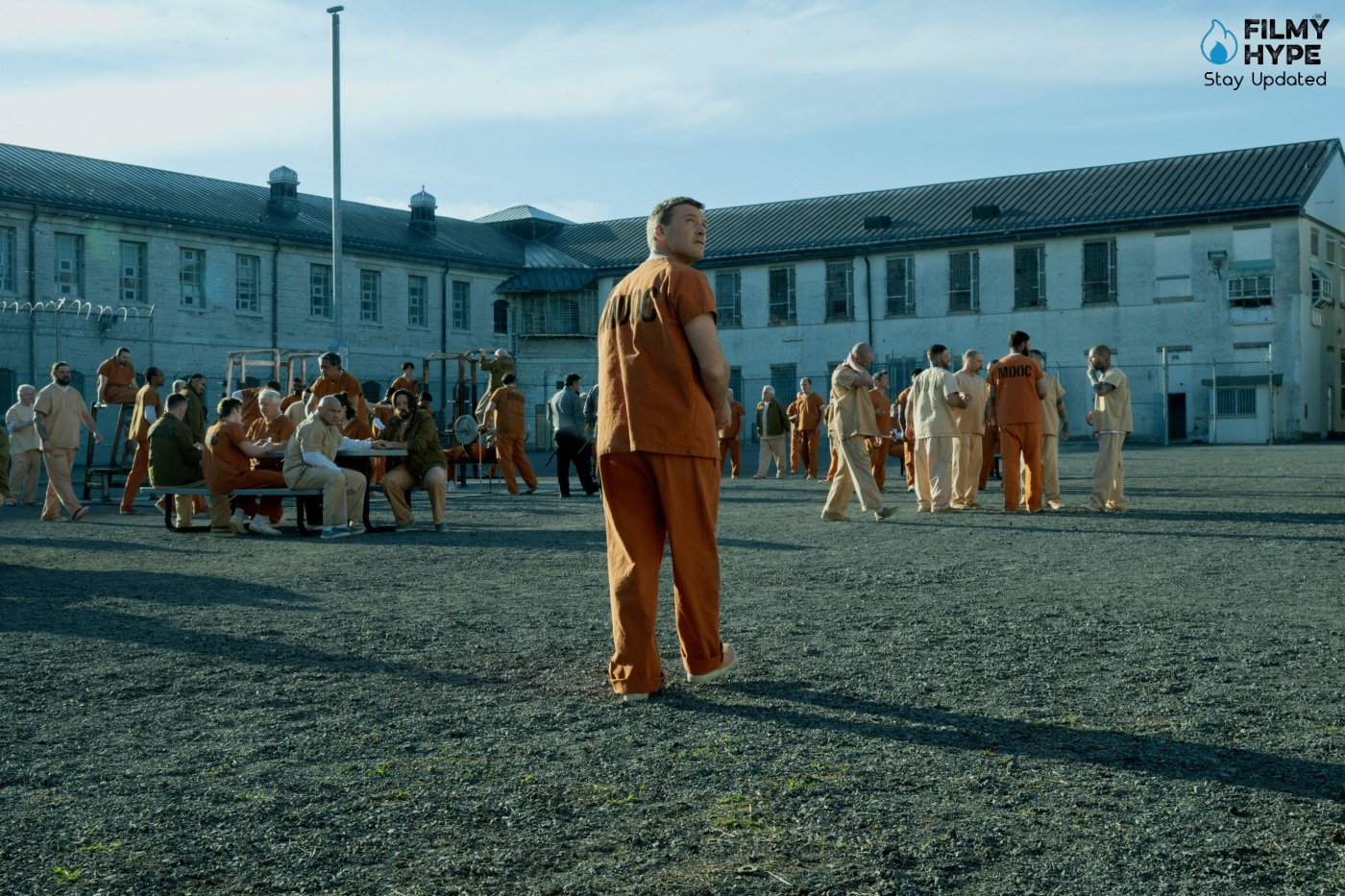
Gertrud, Hayden’s mother, knew that Matthew was not her son’s (she gave him a DNA test), but she never said it, because she wanted Hayden to be able to have a family and to keep the truth hidden.
In the end, Matthew is rescued (with the help of Rachel, who tries to calm Hayden down), Hayden dies, David is exonerated, and, although he does not return to his wife, the two recover their son.
What Happens to Hayden in the End?
After the whole truth is discovered, Hayden completely loses control. He first murders his own mother, Gertrude, when he feels betrayed by her. He then tries to flee with Matthew, but ends up cornered in the woods by David and Agent Greer. During the final confrontation, Hayden shoots David, and seconds later, is shot down by Greer. His death puts an end to Matthew’s kidnapping and the web of lies that had been destroying several families for years.
What About David and Matthew?
The ending is committed to emotional reconstruction. David regains his freedom after Rachel publishes an investigation proving his innocence. Matthew also finally abandons the life of isolation in which he had lived under the influence of the Paynes. One of the most emotional moments comes during the funeral of Lenny, David’s father. There, father and son share a heartfelt conversation about the past and the need to create new memories instead of living trapped by what happened. After five lost years, they both finally have the opportunity to start over.
Do Rachel and David End Up Together?
The series does not explicitly confirm this, but it does leave the door open to a romantic relationship. Rachel was the person who discovered that Matthew was still alive and who never stopped helping David when everyone else had turned their backs on him.
Throughout the investigation, an increasingly deeper connection is created between them. The outcome suggests that they could become a family with Matthew, although the story prefers to leave that future in the hands of the viewer.
More than a story about a crime, “I Will Find You” ends up being a story about second chances. David gets his son back, Matthew gets his identity back, and they can both begin a life that was taken from them for five long years.
The Answer No One Wanted to See
Let’s state it plainly: Matthew was kidnapped by Hayden Payne. The series confirms this in its closing episode by taking us back five years and showing Hayden taking the child, hiding him away in his own house. It’s the scene that slams every open door shut. It wasn’t David, the broken father the system condemned. It wasn’t Nicky Fisher, the man who seemed to be pulling every string. It wasn’t a stranger or a random crime of opportunity. It was Hayden, and his motive was singular. He didn’t take Matthew for ransom or revenge. He took him to raise him as his own son.
This is where the horror of the ending really crystallizes. Matthew was never just a bargaining chip. For Hayden, the child became something more precise and more unsettling: a vessel for his own twisted idea of family, the heir who would finally complete a picture he had been obsessively composing in his mind for years.
Why Nicky Fisher Felt So Right as the Villain
For a long stretch of the series, Fisher’s name sits at the center of the investigation like a puzzle piece that almost fits. His son Liam died in prison after being arrested by Lenny Burroughs and Philip McKenzie, and a man like Fisher doesn’t let that kind of grief pass without answering it. He sets an elaborate revenge in motion. He helps bury David under false evidence. He activates people like Kyle Bergin, gets Hilde Winslow to lie on the stand, and constructs the machinery that sends an innocent man to prison.
So Fisher is absolutely guilty. Just not of the crime the series initially trains us to pin on him. His guilt is a different flavor of poison entirely. He exploited Matthew’s disappearance as the raw material for his vendetta, using the chaos and grief of a missing child to destroy the father of the man he blamed. When David finally confronts him in the sixth episode, Fisher doesn’t flinch. He admits he wanted David to pay, admits he corrupted the process, and then draws a line he claims not to cross. He doesn’t take children. That moment cracks the foundation of the show’s first major theory, and the real hunt begins.
The Fisher storyline serves a crucial purpose beyond misdirection. It demonstrates that David’s destruction came from two separate sources of malice. Fisher provided the external, almost industrial-scale corruption of justice. Hayden provided the intimate, pathological obsession. One buried David under the system. The other took his son.
The Long, Slow Turn Toward Hayden
Hayden doesn’t suddenly become suspicious in the final hour. The clues accumulate so quietly that you might not notice them coalescing until the shape is already formed. He’s connected to Rachel, positioned as the ex-boyfriend who never quite detached, always orbiting her life with a plausibility that feels helpful rather than threatening. He’s Gertrude Payne’s son, which tethers him to the constellation of foundations, clinics, and shadow money that keeps resurfacing in the investigation. He hovers at the edges of every crisis, close enough to know everything, far enough that no one thinks to look directly at him.
Then the concrete pieces start falling: the missing photographs from the park, the trail leading back to the Payne Foundation, the fertility clinic file registered not to Cheryl but to Rachel, and the brutal elimination of Daniel Müller, the one man piecing the truth together. The accumulation is what does it. Hayden stops reading as a slightly ambiguous ally and starts reading as the only person with motive, access, obsession, and the protective umbrella of a powerful family.
Rachel, the Center Hayden Couldn’t Release
The series makes a critical pivot late in its run by clarifying that the emotional gravitational center of Hayden’s fixation isn’t Cheryl. It’s Rachel. For episodes, the assumption lingers that the crime orbits around David’s marriage, around Cheryl’s choices, around the circumstances of Matthew’s birth. Then the clinic file emerges under Rachel’s name, and the geometry shifts.
Rachel represents the life Hayden couldn’t build legitimately. Unable to have a future with her through normal means, he constructs a grotesque substitute. Matthew becomes the child to be inserted into a fantasy that should have included Rachel, but is warped into something unrecognizable. This is what makes Rachel more than the investigator of the story. She’s the emotional exposure point. When the truth finally corners Hayden, he’s forced to confront not just his crimes but the hollow core of his motivation. It was never about protecting a child. It was about possessing one.
The Payne Dynasty and the Horror of Legacy
Gertrude Payne might be the coldest figure in the entire series, and that’s saying something. Hayden is the hand that took Matthew, but Gertrude is the infrastructure that made the long-term lie sustainable. The Payne Foundation, the clinics, the shell companies like REH Holdings—all of it forms a respectable facade behind which documents are falsified, identities are swapped, and a stolen child can be hidden for years without the world noticing.
What makes Gertrude genuinely chilling is her motivation. She doesn’t protect Hayden out of simple maternal instinct. She protects him because she sees Matthew as the last child of the Payne line, the final vessel for a dynasty she refuses to let die. The child isn’t a person to her. He’s genealogical continuity. Blood. A name to preserve. The series hammers this point with a bluntness that suits the material. This isn’t love. It’s legacy worship taken to its most dehumanizing extreme.
The Clinic Is a Door, Not the Destination
The fertility clinic investigation feels, for a while, like it’s going to be the key that unlocks everything. David discovers Cheryl had been to a clinic with a history of scandals tied to Dr. Jacob Heller, and suddenly the suggestion hangs in the air that Matthew’s paternity or biology might be the real secret. Is he not David’s biological son? Was there a genetic reason for his targeting?
Cheryl ultimately clarifies that she was already pregnant when she approached the facility. Matthew is biologically hers and David’s. The clinic doesn’t explain who Matthew is. What it does instead is thread the case directly into the Payne family’s orbit and, crucially, to Rachel. It’s not the answer. It’s the signpost pointing toward the answer.
Martin, the Boy Who Became Someone Else
One of the harshest revelations the finale delivers is the truth about the body. Hayden kills Martin, a sick Swiss boy suffering from metachromatic leukodystrophy, and uses his body to stage Matthew’s death. The two children resemble each other, and Martin’s rare condition complicates the forensic picture enough to make the substitution hold. This solves the question that haunts the entire series: if Matthew was alive the whole time, whose body was found that night?
Martin’s death is the linchpin of the entire conspiracy. It allows David to be convicted. It allows the search to stop. It gives Hayden five years to disappear with Matthew behind a wall of official certainty that no one would think to question. And it’s one more life crushed under the weight of a fantasy that had nothing to do with him.
The Collapse of Hayden Payne
When Rachel finally tells Hayden the truth—that Matthew is not her son, that his entire delusional framework is built on a fiction—something in him breaks apart. This detail matters enormously. Hayden constructed years of his life around a pathological idea of fatherhood, only to discover that even his internal justification was a lie. He didn’t steal “his” child. He stole someone else’s child and projected a desperate, invented meaning onto the act.
He kills Gertrude shortly after. It’s a horrifying but psychologically consistent act. She was the architect of the cover, the mother who enabled and shaped him, and in his unraveling, he severs the last connection to the system that propped him up. Alone and unraveling, he grabs Matthew and runs, wounding David in a final, desperate attempt to hold onto the illusion. Sarah Greer kills him in the woods, saving Rachel, David, and Matthew. His death ends the immediate threat. It does not begin to touch the damage.
What Survives After the Truth
David is exonerated. That’s the headline. The man the world believed was a monster is proven innocent, and the series completes its long arc of vindication. But the finale is too honest to pretend exoneration equals healing. David gets his son back, but Matthew is not the child who was taken. Years of living inside Hayden’s delusion have marked him in ways that no reunion can immediately soothe. The show resists the temptation to turn the find into a moment of pure catharsis. David has the truth, and now he has to rebuild a relationship with a traumatized child who barely knows him. Prison stole years. The lie stole more.
Rachel emerges as the person who did the most to dismantle the false narrative, and by the end, she and David are together. The pairing feels earned because the series built their closeness incrementally across the chaos, but the more important point is what Rachel had to become to get to the truth. She weaponized deception to trap a deceiver. She exposed herself to profound manipulation to break the manipulator. The cost of that is visible on her by the finale.
Cheryl gives birth to a daughter and reunites with Ronald, a choice that sits somewhere between hopeful and morally queasy, which is exactly where the series wants it. Adam loses his badge but keeps his purpose, transitioning into private investigation. Sarah Greer takes on the weight of the case and channels it into leading a task force on missing minors, turning trauma into institutional responsibility. Max Williams gets a few more moments with his daughter before dying, a small mercy in a story that doesn’t offer many.
The Questions the Series Leaves Behind
I Will Find You circles a handful of preoccupations that give its thriller mechanics an emotional weight. Fatherhood appears in multiple, distorted forms: David’s innocent devotion, Fisher’s grief weaponized into vengeance, Hayden’s pathological possession, Lenny’s failure to protect his own. The show examines the space where love curdles into ownership.
Power and truth are locked in constant combat. The Payne Foundation, the clinics, the corrupt officials, the fabricated testimonies—all of it demonstrates that a lie this large requires infrastructure. It can’t survive on one person’s deception. It needs money, institutions, and a network of people willing to look away.
Family emerges as both refuge and trap. The Burroughs are fractured by secrets. The Paynes sacrifice everything to the dynasty. Fisher uses his son’s memory to justify atrocity. Over and over, the series insists that family is not inherently redemptive. It can be the place where the worst damage originates.
And identity runs beneath everything. Matthew has lived a false life for years. Martin dies wearing another child’s identity. David is forced to inhabit the role of a public monster despite his innocence. The show keeps asking the same question in different registers: Who are you when others get to write your story?
What Does the Ending Actually Mean?
The finale of I Will Find You lands on a difficult, unglamorous truth: the truth is not enough to restore what was lost, but it remains the only thing capable of stopping the lie from continuing to spread. David finds his son, but no amount of vindication gives him back the years he spent in a cell. Matthew comes home, but home is a foreign concept to a child raised inside a fabrication. Rachel unmasks Hayden, but she has to walk through manipulation and danger to do it, and the experience leaves its mark.
The series doesn’t offer a clean victory. It offers something more credible. A painful, incomplete, necessary truth that at least makes healing possible, even if it can’t guarantee it. That’s why the ending resonates. It doesn’t pretend the credits can roll on a perfect restoration. It acknowledges that some losses are permanent, and then it shows people choosing to move forward anyway.