

Backrooms to Obsession: In recent years, there was an alarming fact that dominated the film market: the difficulty for original ideas to get noticed, to make their way through the big franchises. A fact that had pushed more and more producers and studios to rely on sequels, remakes, reboots, and revivals of all sorts, apparent certainties with respect to the risk of something new with which the public did not yet have a consolidated and predictable connection.
From Backrooms to Obsession: YouTube’s Effect on Cinema With Huge Profit?
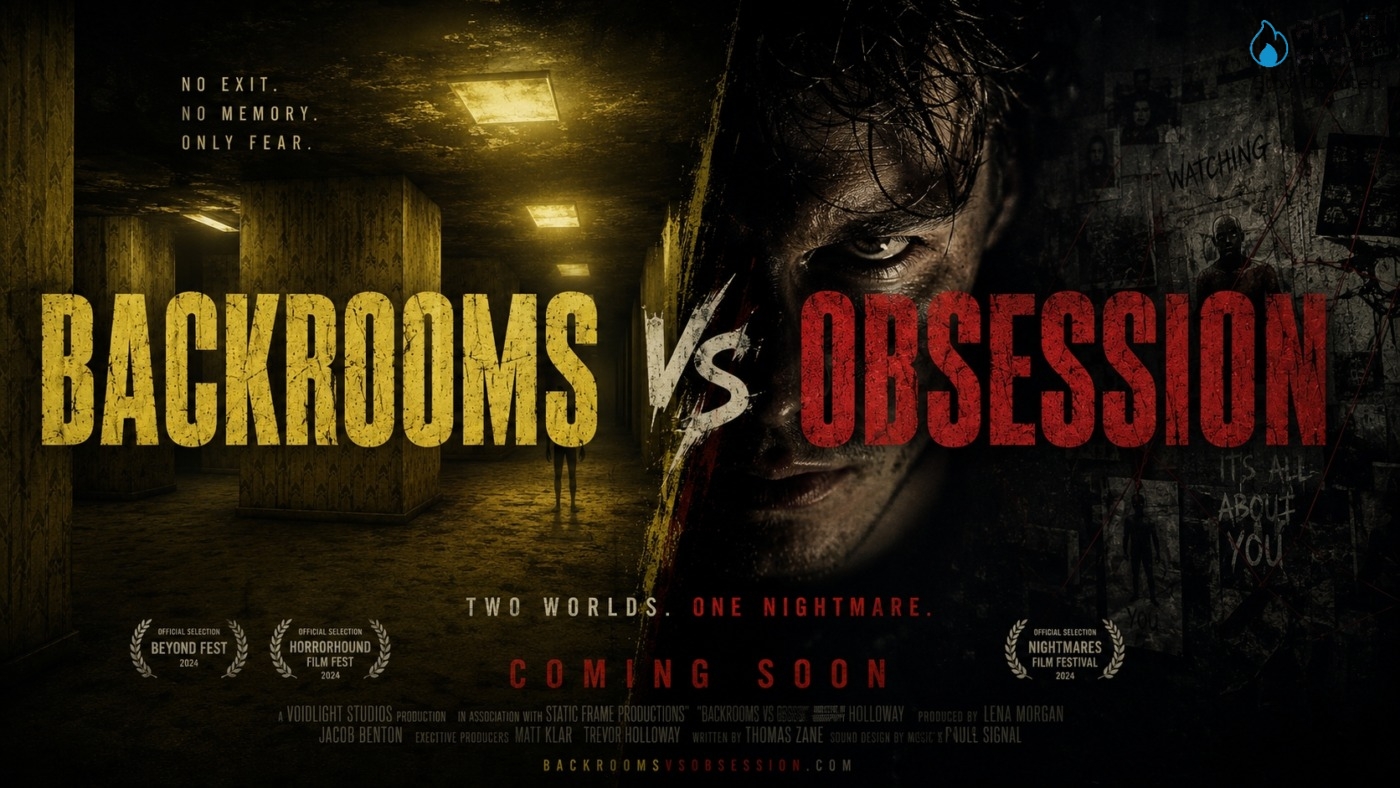
In recent weeks, two films have changed the game by unexpectedly attracting public attention, in one case even miraculously. These are Backrooms and Obsession, which are not only two new ideas, but also another common feature that tells us of an interesting direction the market can take: their directors. Kane Parsons and Curry Barker are both very young and both hail from the world of YouTube, which is proving to be a hotbed of talent and ideas, but also an ability to reach an otherwise distracted audience.
The Talk to Me Case and the Philippou Brothers: From Crazy Stunts to A24 Success
Yet it should come as no surprise, because we have already had warnings of this new trend in recent years. With Danny and Michael Philippou, for example, known on YouTube as RackaRacka, a channel with millions of subscribers on which they experimented with violent and zany videos, and then came to film direction with Talk to Me in 2022. That film was also a case in point for how it had struck the collective imagination with the choice of an iconic object, such as the hand that was the object of the curse and the story.
Even in their case, the YouTuber background had trained the directors with a grammar different from the usual cinematic one, with tight editing that captures the viewer, and the ability to achieve superior results in proportion to the budget available. Two elements to which a third is added, not to be overlooked: the habit of intercepting trends and translating dynamics born on social media onto screens, as in this case, the challenge linked to the hand.
The Backrooms Phenomenon: From Viral Creepypasta to Cinematic Film?
If the Philippou’s was a clue, the case of Kane Parsons (aka Kane Pixels on YouTube) is proof: at just 16 years old, the director created a series of horror/fantasy short films based on the internet-born myth of the Backrooms, amidst endless mazes of empty rooms with yellowish walls and buzzing lights. Videos that have garnered millions of views and convinced James Wan to cast him in a film version.
Regardless of one’s opinion of the film (we expressed some doubts in our review of Backrooms), there is undoubtedly the unique atmosphere that Parsons’ work creates and conveys, exploiting a found footage aesthetic and the so-called Analog Horror, which relies on an old VHS look. Something new that teases the nostalgia of old analog media and the anguish evoked by familiar but empty places like the endless backrooms discovered by the protagonist. Something that the traditional horror genre has consolidated in recent years can no longer generate.
The Success of Obsession: When the Algorithm Dictates the Rhythms of the Contemporary Thriller
Different in yield, but similar in genesis, the case of Obsession. Its director, Curry Barker, also comes from YouTube, where he made comedy videos with his friend/partner Cooper Tomlinson, one of the actors in the current phenomenon film, under the name That’s a Bad Idea. From there, the leap to the feature film: a first work, entitled Milk & Serial, that no one wanted and that they distributed on YouTube. The success, the opportunity to make Obsession with a real budget, however very small compared to today’s big productions, because less than a million dollars.
Result? The first film in twenty years, it went on to gross over $100 million on a budget of that kind; box office growth in the weeks following its premiere; a new work already in development belonging to the same narrative universe. In his case, horror veers into the psychological and addresses a delicate topic like obsession and its consequences, but it is form that makes the difference, because it goes beyond the structure of classic horror cinema by drawing, as with the directors mentioned above, on new technical/artistic ideas capable of speaking to today’s social media audiences.
Why the Film Industry Needs the “YouTube Generation”
What has been said so far makes one thing clear: Hollywood needs this new generation of filmmakers. But mind you, this isn’t just talent scouting to be incorporated into the system to exploit new forces, but a real assurance regarding the life cycle of the film product they will create. The reasons are simple: these authors arrive with a pre-existing community, with an audience that follows them and is already accustomed to their work, willing to go to the cinema to watch what they have to offer again.
Furthermore, these are talents capable of working with little and therefore optimizing ridiculous budgets compared to other productions, but enormous for them. Last but not least, that somewhat anarchic creative drive that ensures something new, different, and not yet pigeonholed into screens that the industry has long since self-imposed. And that they ended up tiring a significant portion of the audience.
Not Just Horror: The Future of Multimedia Entertainment
A trend that shows no sign of stopping, at least for now. We’ve already mentioned Curry Barker’s new work, titled Anything But Ghosts, and we know Philippou will return to the world of Talk to Me after last year’s Bring Her Back, with a sequel and a prequel. We will definitely see Kane Pixels again after Backrooms, too.
But the talent coming from YouTube doesn’t stop at horror, because we have examples of a different nature, like David F. Sandberg, who started with the platform short Lights Out and went on to direct Shazam!, or Dan Tratchenberg who was discovered thanks to the fan-film short Portal and then came to 10 Cloverfield Lane and the world of Predator. In short, recent years have marked a path that is now becoming increasingly broad and directed towards the public and success.