


Silo Season 3 Episode 8 is the kind of hour that reconfigures everything you thought you understood about the show. Titled “Gray Goo,” it delivers answers that have been building for three seasons—answers about what destroyed the world, about the true purpose of the silos, and about the ordinary, heartbreaking reasons people kill each other. It also ends with Juliette Nichols making the most dangerous decision of her life, sacrificing her freedom to give the rebellion one last chance.
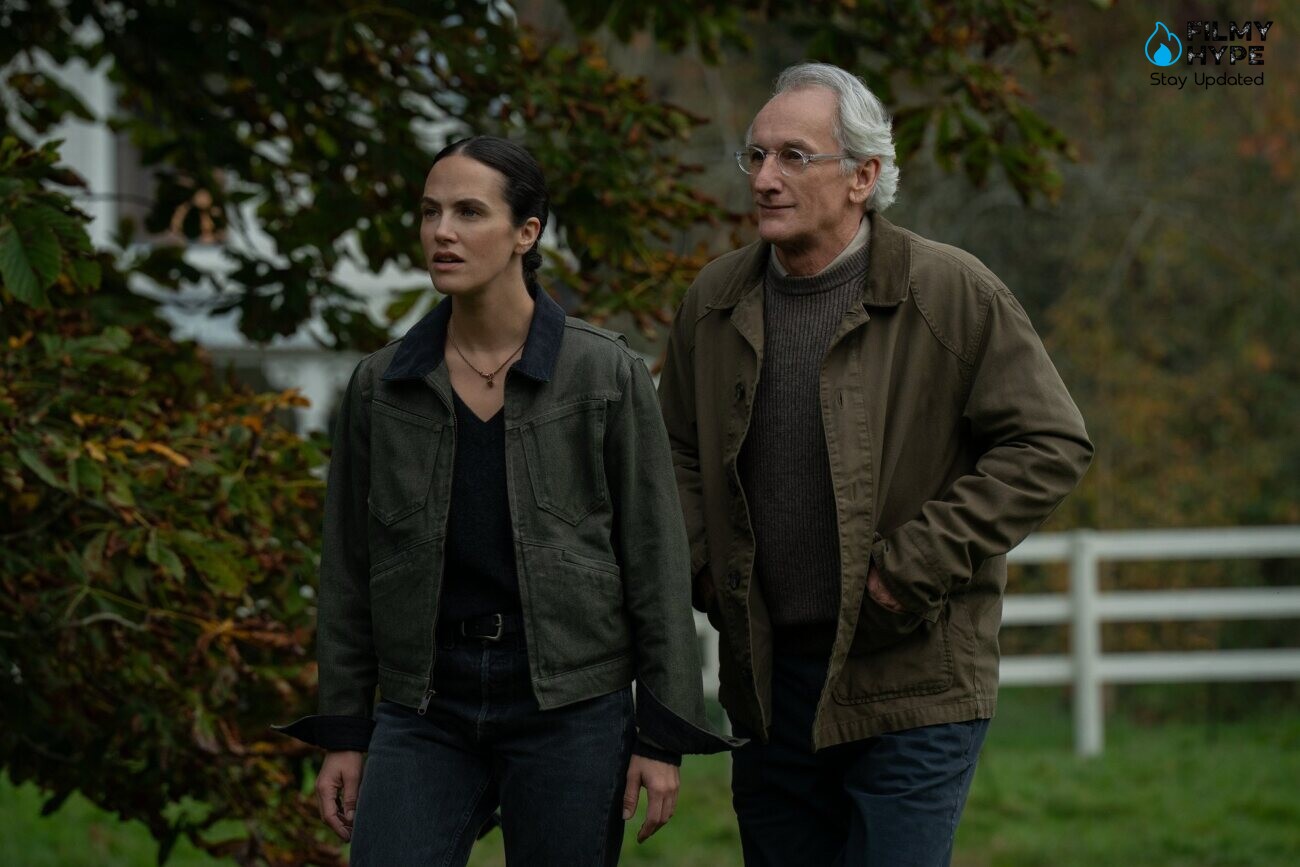
The episode moves between the past and the present, finally connecting the two timelines in ways that make the show’s larger architecture visible. Here’s everything that happened, and what it means for the final stretch of the season. Episode 8 of Silo advances on several fronts at once, but they all end up pointing towards the same idea: the system that governs silos is even more complex and dangerous than it seemed. Juliette and the Outsiders discover that Lukas and Kennedy are still alive, Bernard begins to openly question Silo 1, and the investigation into Orla ends up connecting to the Supply robberies. Meanwhile, the past timeline reveals something important about the origin of the silos and the threat that supposedly justified their construction.
Silo Season 3 Episode 8 Ending Explained: The Apocalypse Explained?
For three seasons, Silo has let us assume the world was destroyed by nuclear war or environmental collapse. The flashback in Georgia reveals something stranger and more intimate: nanotechnology.
At a lavish dinner, billionaire Per Stensen, played by Colin Hanks, explains the truth to a select group. He’s building 50 underground silos—”human seed vaults” designed to repopulate the planet after an imminent collapse. The threats are familiar: nuclear war, climate disaster, viral pandemic. But the most dangerous threat, the one that made Stensen the richest man in history, is something else entirely.
Nanotechnology. Microscopic weapons, invisible and cheap to manufacture, capable of disintegrating organic matter into a destructive cloud. The “gray goo” scenario—a term that’s been hovering over science fiction for decades, now made literal. Stensen explains that enemy governments like Iran could deploy such weapons far more easily than nuclear warheads. An attack could be triggered by “an invader in a basement,” reducing living beings to gray dust.
This revelation connects directly to the season premiere, when Charlotte Keene’s squadron was swallowed by a strange black cloud over Iran. The dinner reveals the cruel truth: Charlotte and her team were sent into Iranian airspace as disposable decoys. They were “canaries in the coal mine,” testing the enemy’s nanoweapons while another allied unit dug a secret tunnel to destroy the facility. The government knew what they were flying into. They sent them anyway.
What Are the Silos Being Built For?
Helen, Daniel, and Charlotte arrive at the huge complex where Stensen is testing the excavators that will be used to build the silos. The plan contemplates 50 installations, distributed by ten enormous machines capable of excavating five silos each. Stensen ends up admitting that these are not simply shelters.
Its goal is to preserve groups of people who can survive a future catastrophe and repopulate the planet when the surface becomes habitable again. The threat, according to him, is nanotechnology. He claims that an enemy power has developed weapons that are much cheaper and more difficult to control than a nuclear bomb and that the world will inevitably end up facing that danger.
Was Charlotte Used As Bait?
Yeah. The conversation ends by bringing to light one of the most uncomfortable truths of the episode.
Charlotte’s air mission was not only a failed military operation. She and her squad were used to provoke a response to justify an attack against an Iranian facility related to nanotechnology. While Charlotte and her companions were exposed to the attack, the United States launched its own operation against the target. Helen begins to distrust Stensen and Thurman even more. For her, the entire silo project seems to be based on a mixture of fear, manipulation, and decisions made by an elite that seeks to choose who deserves to survive. Daniel also does not agree to be part of the project and leaves the facility with Helen, although Charlotte decides to stay.
Are Lukas and Kennedy Alive?
Yeah. The attack that seemed to have killed them near Silo 17 was not fatal.
Kennedy manages to survive practically unharmed and drags Lukas, wounded and with his communications system destroyed, to the entrance of the silo. There they are greeted by Jimmy and the children. The detail is important because it shows that the supposed defense system did not necessarily seek to kill them. Everything indicates that the objective was to cut off their communication with Silo 18 and make the Outsiders believe that the mission had failed. Once inside, Kennedy manages to reestablish contact with Martha and Juliette.
What Do They Discover About Jimmy’s Mother?
The search for the Safeguard pipe leads the group to a room sealed from within. When they open it, they find Jimmy’s mother’s body. The revelation allows us to finally understand what happened during the fall of Silo 17. She had attempted to cut and block the pipe through which the Safeguard Protocol poison entered. The problem was that too much gas started leaking out, and he realized he wouldn’t have enough time to finish the job. His last decision was to completely seal the room from the inside, preventing the poison from spreading to the rest of the silo. Jimmy discovers that his mother died sacrificing herself to protect the survivors.
Daniel Keene’s Choice
The revelation forces Daniel Keene to make a decision. He’s a congressman, a man who’s spent his career serving others. But the invitation to join the silo project—to help build the underground bunkers that will preserve humanity—comes with a moral weight he can no longer ignore.
In an interview with Collider, actor Ashley Zukerman explained his character’s arc: “Daniel has always put himself in a position to serve others. For the first time in his life, he is actually able to ask himself what he wants… and he decides: ‘I want Helen. I want this life. I want this experience.'”
Daniel chooses love over duty. He walks away from the project, from his political career, from everything he’s built. But Zukerman hinted that Daniel’s involvement with the silos isn’t finished: “If I may be quite mysterious, I’d just say that his work with the silo project isn’t exactly finished.”
Solo’s Mother and the Sealed Door
In the present timeline, Lukas Kyle and Patrick Kennedy survive the drone strike from the previous episode by throwing themselves to the ground. Lukas takes a bullet in the shoulder—the shell destroys his transmitter—but they make it to Silo 17, where Solo takes them in.
What they find there solves one of the show’s longest-running mysteries. In the flooded Judicial Section of Silo 17, they discover a door welded from the inside. Behind it is the Safeguard’s protective pipe—the mechanism that distributes poison gas through the silo. And beside the pipe lie the remains of Solo’s mother.
Lukas realizes what happened. Solo’s mother cut the pipe to block the gas, but she knew she wouldn’t have enough time to finish welding before being asphyxiated. So she made a choice: she locked herself inside the airtight room, sacrificing herself so the gas wouldn’t leak into the inhabited levels. She saved the silo. She saved her son.
Patrick helps Solo process the grief, explaining how Silo 18 handles death: “We bury our loved ones in the soil of the farms. They fertilize the land, feed the trees and turn into fruit. And if we ever make it out of that place, we’ll eat those fruits and take a piece of them with us outside.”
After a dignified funeral, Lukas and Patrick analyze the plumbing and relay the crucial information: the Safeguard can be blocked cleanly if the gas pipe is physically sealed.
Who Killed Orla Kent?
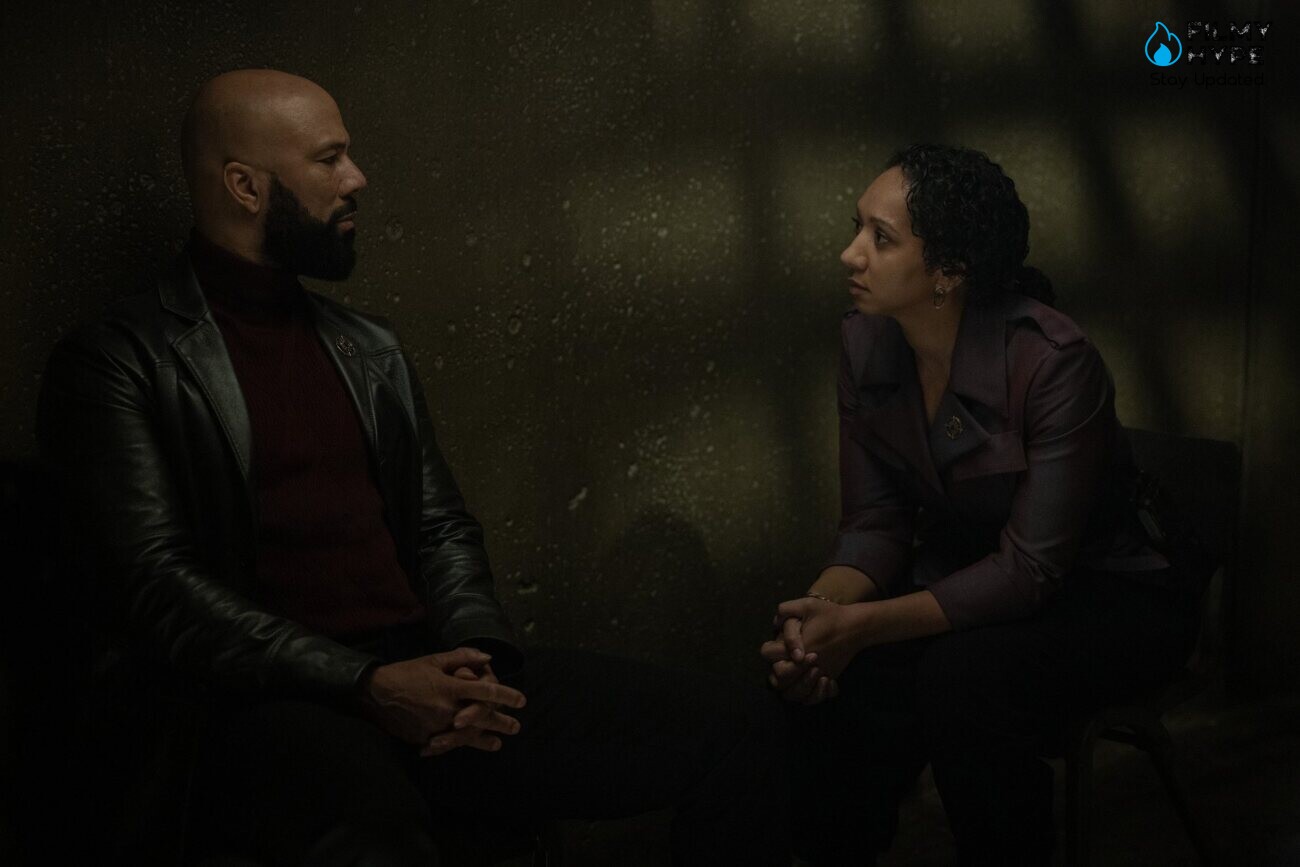
The murder investigation that’s been simmering all season finally resolves. Orla Kent wasn’t killed as part of some grand political conspiracy. She was killed by her boyfriend, Mike Davidson.
The reason is painfully mundane. Mike was stealing critical supplies—light bulbs, resources—during the chaos of the rebellion. Orla caught him. In a moment of panic and desperation, he murdered her. The severe resource scarcity in Silo 18, which threatens to extinguish the lights in as little as two years, has eroded the moral foundations of the community. People are doing terrible things to survive.

The mystery of Knox’s father also resolves. Gus Knox faked his death in the mines years ago. He drew blueprints for a secret elevator for Ed Harwood in exchange for a new identity. The elevator provides direct access to the silo’s critical supply stock, which Harwood has been using to smuggle resources. The rot runs deep, but it’s human rot—not the grand conspiracy Juliette imagined.
Why Juliette Surrendered?
The episode ends with Juliette making a calculated sacrifice. Armed with information from Bernard Holland—who’s now questioning the murders he carried out, including the death of Judge Meadows—she attempts to block the gas pipe in Silo 18. But the team makes a fatal error. Silo 17 and Silo 18 are physically rotated differently. They’ve been working on the wrong panel.
Before they can correct course, the Judicial surrounds them. Sandy, providing outside cover, is captured. She manages to use the emergency code name “Ralph Melby” to warn the team that the mission is compromised.
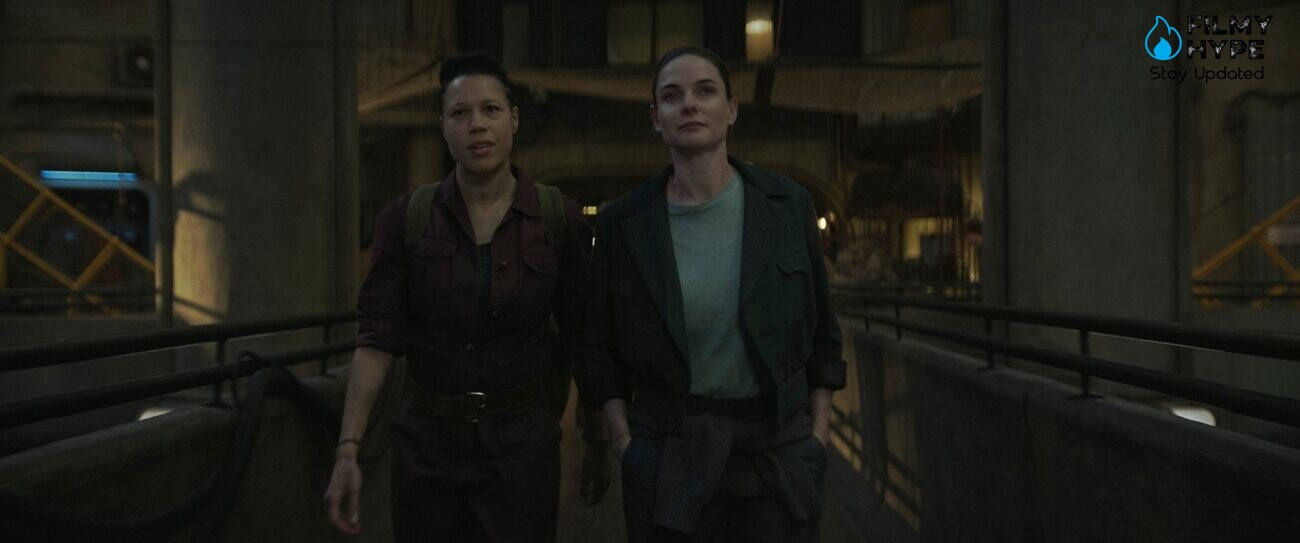
Juliette makes a strategic decision. She orders Shirley to flee with the tools. She directs the team to find the correct panel. And then she gives herself up voluntarily.
By surrendering, she draws the attention of Camille Sims and the entire intelligence apparatus onto herself. She becomes the scapegoat, the visible face of the rebellion, allowing her allies to operate in the shadows. The episode ends with Juliette in the Seclusion Section, locked up with her old opponent, former Sheriff Robert Sims. She’s traded her freedom for one last chance at saving the silo.
What Does Bernard Discover About the Safeguard Protocol?
Bernard tries to reconstruct how the silos are connected. According to your scheme, silo 1 is located in the center, and around it there are seven groups of seven silos. In each group, one of them directly receives the connection from Silo 1 and then distributes the poison to the other six. That would explain how the Safeguard can be activated in a coordinated manner. But what is really important is not the drawing, but Bernard’s change. For years he obeyed Silo 1 without asking too many questions. Now he wants to know why this mechanism really exists, capable of exterminating an entire population. He even acknowledges to Juliette that killing Judge Meadows was a decision that he then believed necessary and that he is now beginning to consider useless.
What Is the Outsiders’ New Plan?
The information obtained in Silo 17 allows us to abandon the idea of blowing up the Judiciary. The plan now involves locating the pipe exactly and sealing it. Bernard believes that if they manage to block the Safeguard, they will force Silo 1 to react. They intend to force a conversation and demand an explanation about the entire system. If there is a legitimate reason for the protocol, you are willing to listen to it. But if there isn’t, it will mean that entire generations have lived under a deliberately imposed threat.
Does Camille Find Out That Robert is Helping Juliette?
Camille begins to connect the dots. The Algorithm confirms that Lukas and Kennedy are still alive, and he makes it clear that the mission to Silo 17 had a deeper objective than rescuing some children. She interrogates Robert and suspects that he is collaborating with Juliette to disable his Safeguard. Robert maintains the version that everything was done to save the survivors, although Camille no longer seems convinced. The tension between the two increases because Camille begins to understand that perhaps she can no longer fully trust even her husband.
Why is Juliette Turning Herself in Again?
The Outsiders need access to the Judiciary with the excuse of repair to be able to work near the pipeline. Sandy is sent to prepare the ground, but Juliette discovers that she is heading towards the wrong panel. Before the error can be corrected, Sandy transmits a signal: Emerson and the Raiders have discovered her. Juliette understands that the only way to protect others is to draw all the attention back to her. That’s why it is delivered voluntarily.
What It All Means?
“Gray Goo” is the episode where Silo finally reveals the full shape of its dystopia. The silos weren’t a response to nuclear war. They were a response to something more insidious—a weapons technology so cheap and so destructive that it made all other forms of warfare obsolete. The people who built the silos weren’t heroes. They were billionaires and politicians who saw the end coming and decided to save themselves.
The episode also reinforces the show’s central theme: the systems that control the silos are maintained by ordinary human weakness. Orla died because her boyfriend panicked. The light bulbs were stolen because people were desperate. The rebellion was betrayed because the geometry of two identical silos didn’t match.
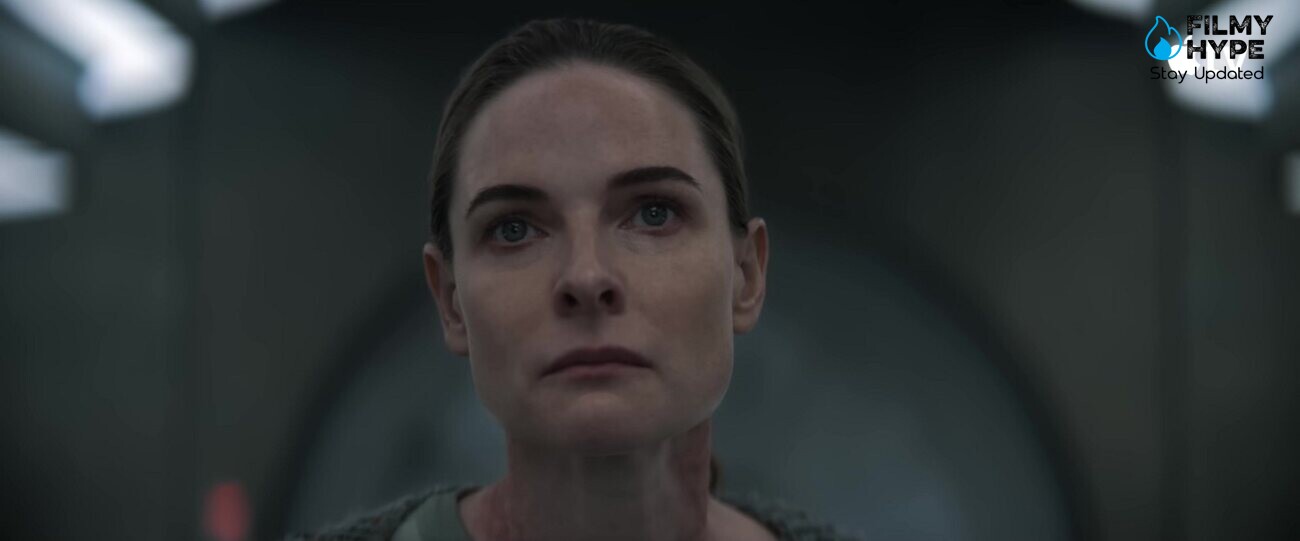
Juliette’s sacrifice is the logical endpoint of her character arc. She’s always been someone who puts the collective above herself. Now she’s in prison, surrounded by enemies, hoping her allies can finish what she started. The season’s final episodes will determine whether that hope is justified. The gray goo destroyed the world once. The question now is whether the silos can avoid destroying themselves.