

S&X Netflix Ending Explained: The new Netflix Japanese series S&X arrives with a premise that could easily have been handled poorly. A sex therapist who helps patients navigate their most intimate problems while struggling with his own—it’s the kind of setup that invites cheap jokes or shallow drama. Instead, the series uses its clinical setting to explore something genuinely thoughtful: the gap between what we know intellectually and what we can actually apply to our own lives. Ichito Shimotori spends his days giving patients the advice they need to hear. But when it comes to his own fears, his own desires, his own inability to be vulnerable, all that professional wisdom collapses.

The ending doesn’t pretend otherwise. It doesn’t offer a magical cure or a sudden breakthrough that makes everything better. What it offers is something quieter and more honest: a man finally willing to acknowledge that he needs help too. The Japanese series S&X arrives with a premise that sounds like it could be played for cheap laughs—a sex therapist who’s repulsed by sex. But the show, based on the manga by Kisei Tada, treats its subject with genuine care.
Kento Nakajima plays Ichito Shimotori, the owner of the Shimotori Clinic, a man who spends his days helping patients navigate erectile dysfunction, sex addiction, virtual intimacy, and fictional attraction, all while harboring his own complicated relationship with the act he’s become an expert in. When his path crosses with Yumi Ichinose, an old friend from his teenage years, everything he’s been avoiding starts to surface. The ending doesn’t offer easy answers. It offers something more valuable: two people learning to be honest with each other, and a therapist finally willing to apply his own advice to himself.
S&X Netflix Ending Explained: The Story
Ichito Shimotori, played by Kento Nakajima, is a psychiatrist and sex therapist working at the Shimotori Clinic. His patients come to him with problems they can’t discuss anywhere else—issues of desire, intimacy, communication, and shame. He treats them with care, listening without judgment, helping them understand what’s behind their difficulties.
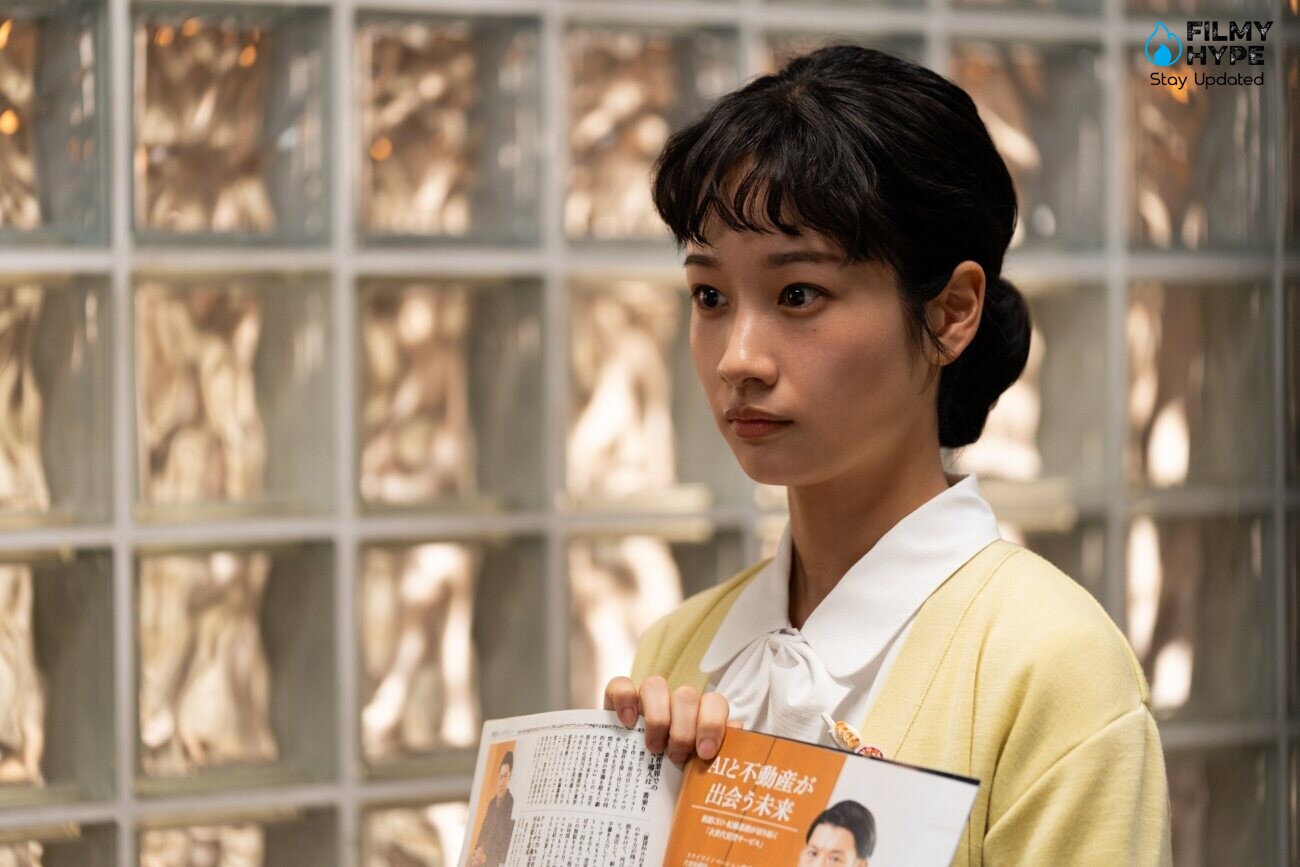
But Ichito has his own history. When Yumi Ichinose, played by Yuko Araki, reenters his life, everything shifts. She was his first love during adolescence, and now she’s a television host. The attraction between them is immediate, familiar, complicated. But as Ichito tries to move the relationship forward, memories start surfacing—memories connected to a trauma from his past that he’s never fully processed.
The series, based on the manga by Kisei Tada, moves between two registers: the clinical consultations with patients, and the developing relationship between Ichito and Yumi. Both threads explore the same themes—desire, self-esteem, communication, and the difficulty of expressing what’s hardest to say out loud.
The Crisis
Things get worse when a stalking reporter photographs Ichito and Yumi together. The images leak to tabloids, and suddenly the beloved television personality’s relationship with a sex therapist becomes public news. The attention threatens both their careers, but especially Yumi’s, as her network struggles with how to handle the story.
The same reporter digs deeper, uncovering a traumatic event from Ichito’s past—something he’s kept hidden for years. Once Ichito realizes the story is about to become public, he makes a drastic decision. He breaks up with Yumi, hoping to protect her from the fallout and from the truth about who he really is.
Yumi is heartbroken at first. But she eventually understands the real reason behind his actions. After a breakthrough with Sion, she decides to confront him, refusing to let the relationship end without a fight.
Do Ichito and Yumi End Up Together?
Yes. But it takes time, and the path is anything but straightforward.
The central problem in their relationship has always been communication. Years ago, when they were teenagers, they made plans to meet at a lantern festival. It was supposed to be their first date. Ichito never showed up. Yumi has spent years feeling abandoned, never knowing the real reason. Shortly after the festival, Ichito changed schools, and they drifted apart.
The truth, when it finally comes out, changes everything. On the day of the festival, Ichito received a call from his father. His mother had gone missing. He and his father found her at a stranger’s house—with another man. What Ichito witnessed that night, through the window, was more horrific than an affair. His father, a surgeon, walked into the house and cut off the lover’s penis with a scalpel. Ichito saw all of it.
That trauma is the root of his aversion to sex. It’s the reason he became a sex therapist in the first place—to understand the act through logic and science, to try to undo the damage his parents did to his psyche. But understanding something intellectually and being able to feel it are very different things.
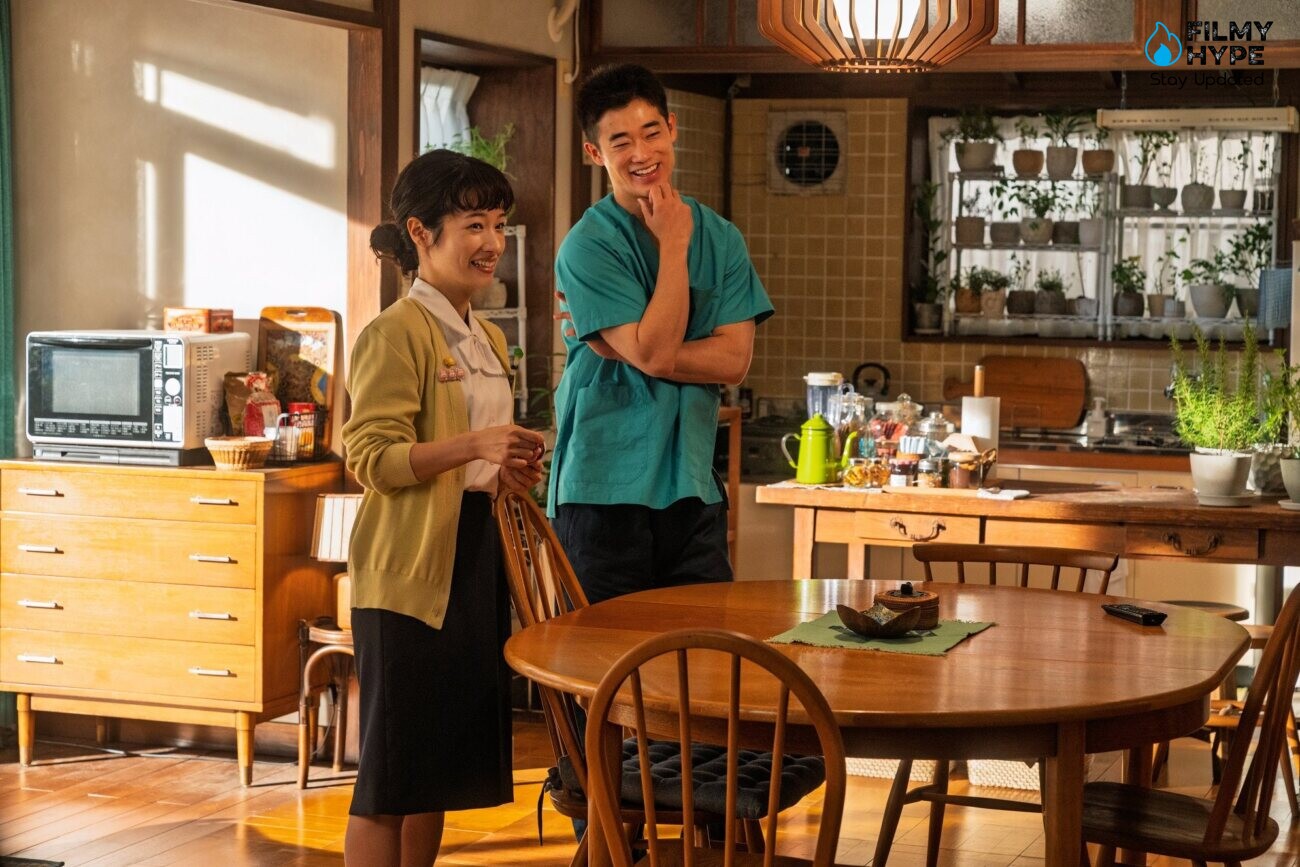
Once Yumi learns the truth, she understands why intimacy has been so difficult for him. And Ichito, for the first time, allows himself to be vulnerable with her. The path back to each other isn’t immediate. Ichito has work to do on his own. Yumi has her career to navigate. But eventually, she asks him to be an expert on her new television program, and the two find their way back.
The final scene shows them visiting the lantern festival together—the one Ichito missed all those years ago. It’s a new beginning, built on honesty and transparency. And with the past finally acknowledged, they’re able to pursue a physical relationship together, on their own terms.
Why Ichito Became a Sex Therapist?
Ichito grew up believing his parents had a perfect marriage. His father was a respected surgeon who seemed to love his mother deeply. The truth was much darker.
After discovering his wife’s affair, Ichito’s father didn’t just confront her lover. He mutilated him. Ichito witnessed the entire event through a window, and the trauma never left him. He grew up repulsed by sex, unable to separate the act from the violence he’d seen.
When he learned about sexology, he saw an opportunity. If he could understand sex through its mechanics—through biology and psychology—maybe he could overcome his own aversion. It was a way of trying to undo the damage, of making sense of something that seemed senseless.
Over time, his motives shifted. He began to genuinely care about his patients. He saw how sex therapy could help people avoid the kind of tragedy that destroyed his family. His father, obsessed with perfection, treated his wife as an object to be sculpted and controlled. If they’d had access to the kind of help Ichito now provides, things might have been different.
The Unanswered Question?
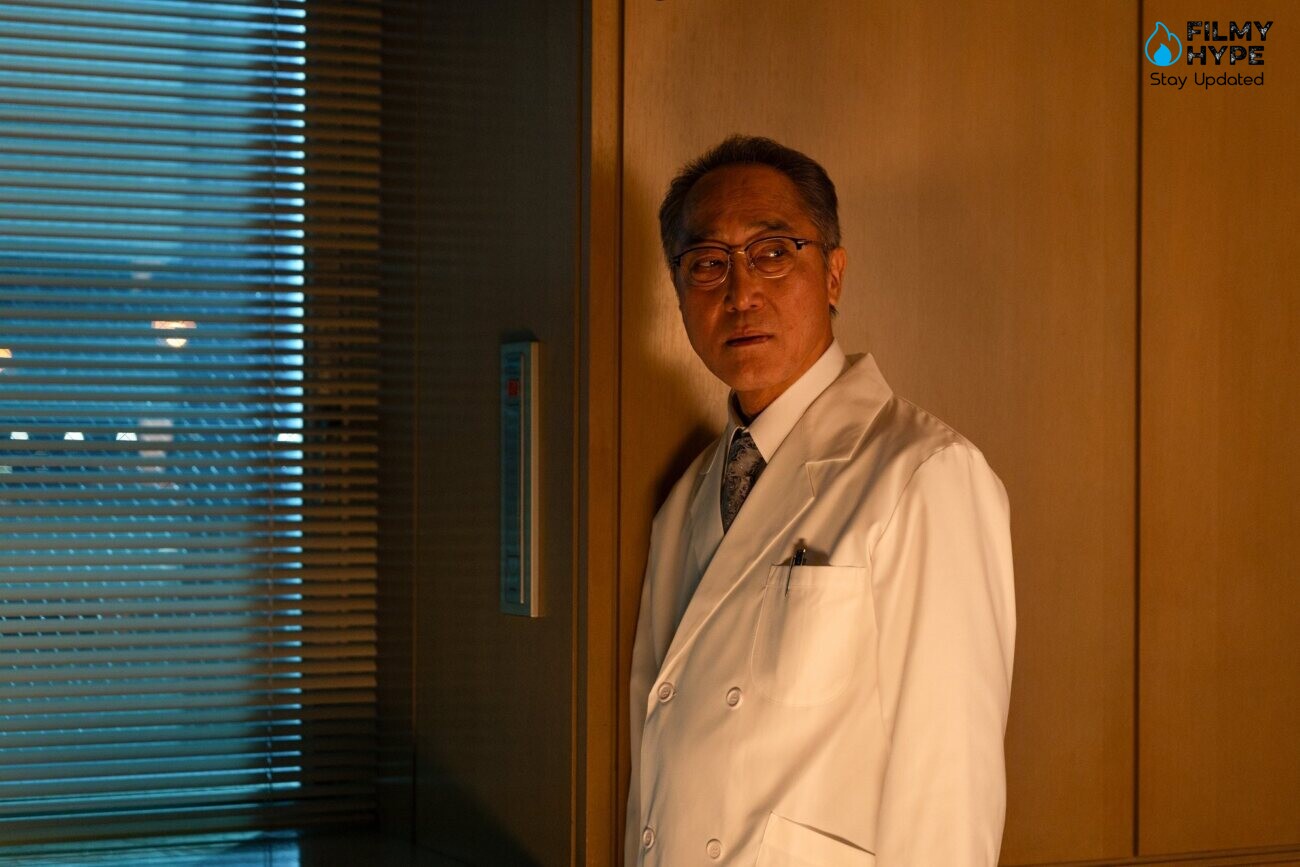
The series leaves one thread deliberately ambiguous. Dean Toyahara, who’s been working against Ichito throughout the season, turns out to have a connection to the family. He’s a frequent visitor to Ichito’s mother’s bedside at the mental health facility where she’s been institutionalized. He was apparently a close friend of Ichito’s father, and after the tragedy, he started visiting the mother.
This raises uncomfortable questions. Toyahara’s interest in Ichito’s life seems too intense for a simple family friend. His collaboration with Sion—receiving reports from her sessions with Ichito—is ethically questionable at best. Is he just a concerned figure from Ichito’s past? Or is he something more? Could he have been the lover in the family’s tragic love triangle?
Season 1 concludes without answering these questions. Toyahara’s characterization remains unresolved, leaving the audience to speculate. The series may return to this thread in a second season, or it may leave it as an intentional ambiguity—a reminder that some things can’t be fully understood, no matter how much we want to make sense of them.
What Happens in the Ending?
The final episode brings Ichito face to face with the thing he’s been running from all season. His relationship with Yumi becomes public, and the consequences ripple through both his professional and personal life. The scrutiny, the gossip, the way his private life suddenly becomes fodder for public consumption—all of it sends him spiraling. He closes off again. He tries to pull away from Yumi, to retreat into the safety of his professional identity, where he’s the one giving advice rather than the one who needs it.
Yumi doesn’t let him disappear. She stays. She accompanies him as he begins to understand that avoiding connection won’t solve what he’s feeling. The pain won’t go away just because he refuses to acknowledge it.
The turning point comes when Ichito visits his mother, accompanied by Yumi. What he discovers during that visit changes how he interprets part of his past. It doesn’t erase the trauma, but it reframes it—gives him a context he didn’t have before. That shift allows him to do something he’s been avoiding all season: appear on live television and defend his work on his own terms. He stops hiding behind his role as a therapist and starts speaking as a person.