


Inside The Trustor Scandal True Story: There’s a particular kind of audacity required to pull off a financial fraud that becomes national news, flee the country, spend nearly thirty years evading authorities, and then—when the dust has settled and the legal consequences have largely expired—agree to sit down for a documentary and tell your side of the story. Joachim Posener has that audacity. Netflix’s new documentary Inside The Trustor Scandal is built around his first extended interview since he disappeared from Sweden in the late 1990s, and his presence on screen is unsettling not because he seems guilty but because he seems so completely at ease with everything that happened.
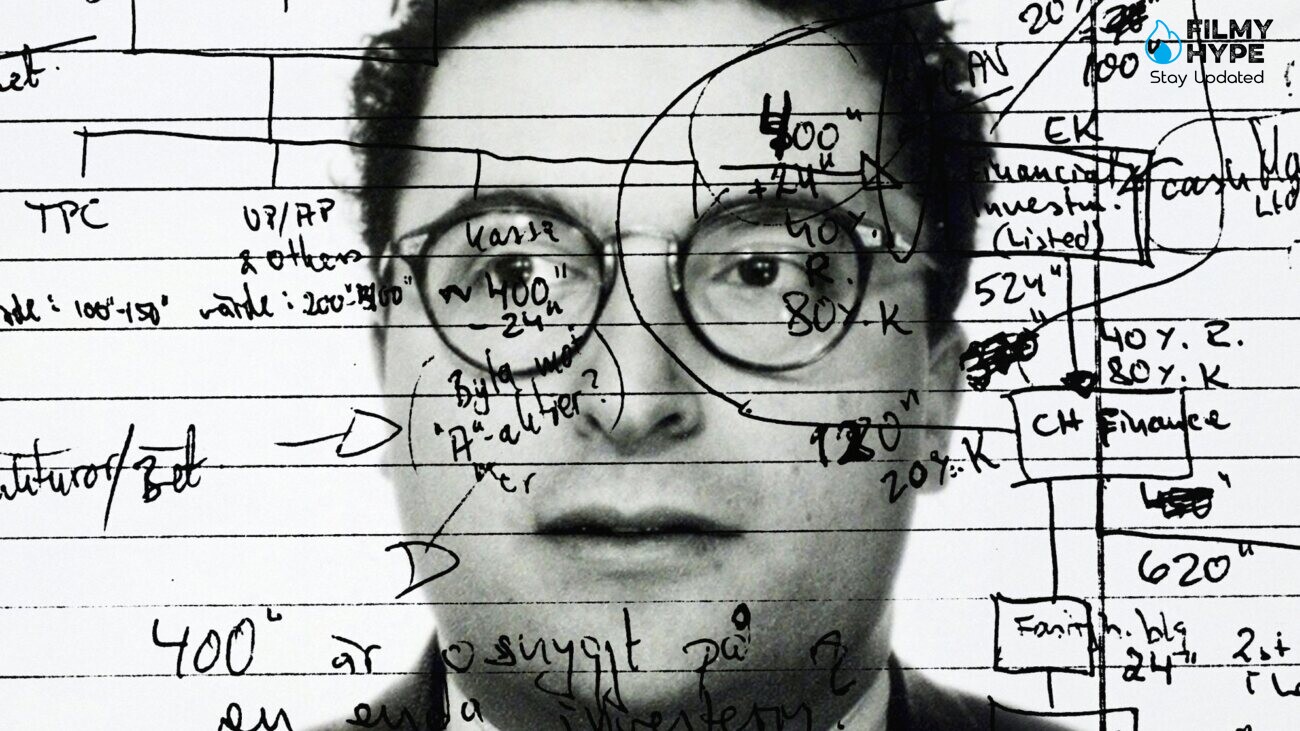
The Trustor case remains one of the largest financial scandals in Swedish history. In 1997, five people acquired the investment company Trustor in what appeared to be a legal transaction. Three months later, approximately 485 million Swedish crowns—somewhere between 45 and 50 million euros at the time—had vanished. The fraud triggered investigations, lawsuits, and a media frenzy that lasted for years. But the man identified as the alleged mastermind was already gone. Posener left Sweden and didn’t come back in any meaningful way for almost three decades.
Netflix has become my favorite place to watch documentaries and learn about cases that surpass fiction. More recently, I saw “The Idaho Murders” and “A Toxic Love Story“, but this week it’s time: “The Trustor scandal from within”. This feature film reconstructs one of Sweden’s biggest financial enigmas and offers an unexpected twist: the appearance of Joachim Posener, noted for years as the mastermind behind the fraud, and who breaks the silence about his life in exile.
Inside The Trustor Scandal True Story: Who Is Joachim Posener?
Posener was born on January 17, 1964, in Lidingö, an affluent island suburb of Stockholm. He became a financier, moving in the kind of circles where large sums of money change hands and the people involved understand the regulatory architecture well enough to navigate around it. When the Trustor scandal broke, Swedish authorities linked him to the missing funds and identified him as the operation’s architect. He fled the country before he could be arrested.
What followed was a life in exile that took on the quality of an international manhunt narrative. Reports placed him in Argentina, Brazil, Spain, Israel, Iraq, Barbados, and Belgium. He lived under different identities. He evaded Interpol. He became, in absentia, the face of a case that symbolized something larger than itself—the vulnerability of financial systems, the ease with which vast sums could be moved across borders, the way white-collar criminals could disappear into a world that lacked the infrastructure to find them.
The documentary, directed by Karin af Klintberg, manages to do what Swedish authorities and international law enforcement couldn’t: locate Posener and convince him to talk. He’s been hiding for almost thirty years. Now he’s sitting in front of a camera, explaining what happened, and the effect is disorienting. This is the man the Swedish public has been reading about for decades, the villain of one of the country’s most notorious financial crimes, and he’s calm, articulate, and entirely unrepentant.
What the Documentary Reveals
The film reconstructs the Trustor case in detail, walking through the acquisition, the discovery of the fraud, and the long aftermath that followed. But its real interest isn’t in the mechanics of the crime. It’s in the human cost. The documentary spends significant time with the people whose lives were affected by the scandal—investors who lost money, employees whose careers were derailed, families who were caught in the fallout. The Trustor case wasn’t just a financial crime. It was a social event, a trauma that rippled outward from a single company into the broader culture.
Posener’s interview is intercut with these stories, and the contrast is deliberate. The victims describe years of stress, financial hardship, and institutional failure. Posener, by contrast, discusses his life in exile with a kind of detached amusement. He doesn’t apologize. He doesn’t express regret. He seems to view the entire experience—the fraud, the escape, the decades on the run—as an adventure that happened to him rather than something he did to other people.
The documentary doesn’t editorialize. It lets the gap between Posener’s perspective and everyone else’s speak for itself. That restraint makes the film more effective than a more overtly prosecutorial approach would be. You’re not being told what to think about Joachim Posener. You’re being shown who he is, and you’re left to sit with the discomfort of watching someone who appears to feel no guilt about the destruction he caused.
The Legal Outcome
Here’s where the story takes a turn that can be hard to accept if you’re accustomed to true crime narratives that end with punishment. Posener was never convicted of any crime related to the Trustor fraud. In 2009, the criminal investigation was closed because the statute of limitations on the main offenses had expired. The man identified as the mastermind of one of Sweden’s biggest financial scandals walked free—not because he was found innocent, but because time ran out.
He still owes the Swedish state significant sums. The debts come from taxes, child support, and student loans—the mundane obligations of a life he left behind. But the fraud itself is legally behind him. He can’t be prosecuted for it. He can sit for a Netflix documentary and discuss what happened without fear of legal consequences. The statute of limitations, designed to ensure that cases are pursued in a timely manner, ended up providing cover for someone who made himself impossible to find.
The documentary doesn’t dwell on this irony, but it’s hard to miss. The system that was supposed to protect investors and punish fraud was outlasted by the man who defrauded them. He just had to wait long enough.
His Return to Sweden
In February 2026, Posener briefly returned to Sweden and was arrested—not for the Trustor case, but for a misdemeanor related to filming a prison without authorization. The arrest brought him back into the news cycle for the first time in years. He was detained, processed, and released. The appearance was brief, but it confirmed something that had been true for nearly three decades: he could come back, and there wasn’t much the authorities could do about it.
The documentary came together in the wake of that return. Klintberg had been working on the film for some time, but Posener’s reappearance in Sweden gave the project its ending. Here was a man who had been a ghost for most of his adult life, suddenly visible, suddenly willing to explain himself. The interview that forms the center of the documentary is the result.
Where Is He Now?
The most recent records indicate that Posener maintains permanent residence in France, though his exact location remains unknown. He’s still a fugitive in the sense that he’s still evading the debts he owes, but he’s no longer a fugitive in the sense that anyone is actively trying to arrest him for the Trustor fraud. The criminal case is closed. The debts remain, but they’re civil matters, not criminal ones. He can live openly in France, travel as he pleases, and participate in documentaries about his life without fear of extradition.

Whether he stays visible or retreats back into the anonymity he maintained for decades is an open question. The documentary has made him a public figure again, at least briefly. The response in Sweden has been significant—seeing the man who embodied a national scandal speak without remorse has reopened old wounds. But Posener has demonstrated over thirty years that he’s willing to disappear when it suits him. The film may be the last time the public hears from him, or it may be the beginning of a new chapter in which he decides that visibility suits him better than hiding.
What the Documentary Leaves You With
Inside The Trustor Scandal is structured less like a whodunit than a character study. The crime is known. The suspect has been identified. What the film wants to understand is the person behind the crime, and what it finds is someone who seems constitutionally incapable of acknowledging harm. Posener doesn’t come across as evil in the interview. He comes across as detached, as someone for whom other people’s suffering registers as an abstraction rather than a reality. That’s a different kind of unsettling than a confession would be. A guilty man might express remorse. Posener doesn’t even seem to think there’s anything to be remorseful about.
The documentary ends without resolution because the real story doesn’t have one. The money is gone. The victims are still dealing with the consequences. Posener is in France, his debts unpaid, his freedom intact. The statute of limitations did what statutes of limitations do: it closed the door on accountability. What remains is a film that serves as a document of what happened, and a record of a man who got away with it, sitting calmly in front of a camera, explaining why he doesn’t feel bad about any of it. Some documentaries solve mysteries. This one just stares at one until the discomfort becomes the point.