

Widow’s Bay Season 1 Ending Explained: Some shows ask questions. Widow’s Bay buries them in the ground and waits to see what grows. The first season of Katie Dippold’s Apple TV series arrived with the kind of quiet confidence that doesn’t bother explaining itself right away. An island. A curse. A town where the past feels less like history and more like something breathing just beneath the floorboards. By the time the finale ended, a handful of mysteries had been dragged into the light. Most of them, however, are still down there in the dark, waiting.
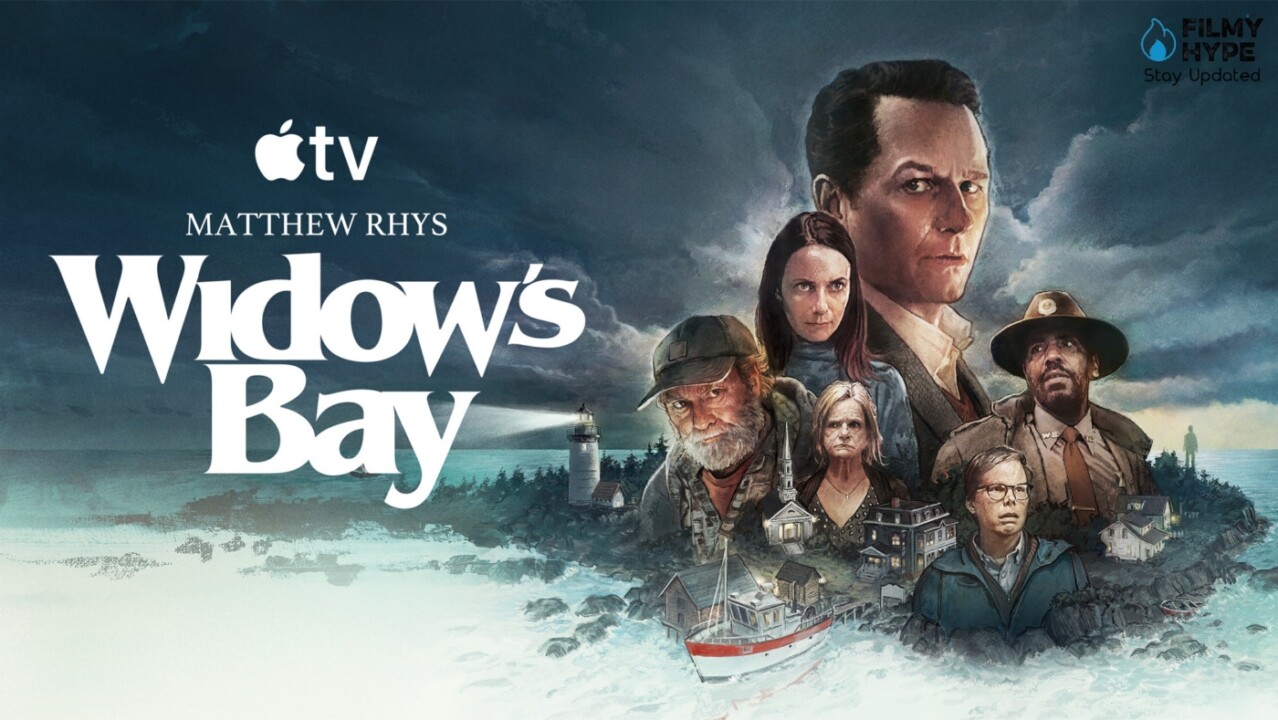
The comparisons to Twin Peaks were inevitable from the first trailer. Isolated community. Inexplicable phenomena. A mythology that expands every time someone tries to answer a question by asking three more. But Widow’s Bay has its own texture. It’s funnier than Lynch, for one thing, and more openly indebted to the macabre playfulness of Stephen King and the practical-effects horror of John Carpenter. The supernatural here doesn’t announce itself with portentous solemnity. It slips in sideways, through hallucinogenic mushrooms and old educational videos and church bells that ring for no reason anyone wants to admit.
The season finale resolved a few major threads, but its real accomplishment was clarifying what the show is actually about. Not just a cursed island. Not just a series of creepy occurrences. But a community that has spent centuries convincing itself that atrocity is just the price of survival. Here’s where things stand after Season 1.
Widow’s Bay Season 1 Ending Explained: The Island Is Alive, and It’s Hungry
The central question of the entire series remains stubbornly unanswered: what exactly is the entity that inhabits Widow’s Bay? The season establishes that the island possesses some kind of consciousness. It communicates. It chooses certain people to speak through. Richard Warren, one of the town’s founders, believed he was receiving divine visions. Later, he recategorized the voice as demonic. But the show is careful never to pin down whether he was talking about a specific creature, a diffuse supernatural presence, or the island itself.
What’s clear is how the contact works. The hallucinogenic mushrooms that grow on the island seem to open a channel. So do the church bells, which function less as a warning system and more as a direct line of communication between the entity and anyone who knows how to listen. The island speaks, and when it speaks, it’s usually asking for something.
The first season deliberately avoids defining the exact nature of this presence. It could be an ancient creature trapped beneath the town. It could be a force tied to the land itself, something that predates human settlement. It could be a collective consciousness born from centuries of tragedy and guilt, given shape by the people who keep feeding it. The show entertains all of these possibilities without committing to any of them. That ambiguity is the point. The townspeople don’t fully understand what they’re dealing with either, and that ignorance is part of the horror.
Why is Evan in Danger?
The revelation poses a terrible moral dilemma. Some residents believe that killing Richard’s last descendant could definitively break the curse. If that theory is correct, Evan could be the key to saving the entire community. The problem is obvious: to achieve this, they would have to sacrifice an innocent person.
Tom immediately understands the danger. If the truth comes to light, many of the inhabitants of Widow’s Bay could begin a real hunt against their own son. That is why the ending makes it clear that the real conflict of the second season will not only be the fight against the supernatural entity, but also the protection of Evan from people who want to use him to end the curse.
Who Really is Richard’s Last Descendant?
The other big revelation revolves around Ruth.
Throughout the season, it seemed that she was the last living descendant of Richard, the man associated with the origin of the curse. That is why several characters believed that his death could put an end to supernatural events.
But Ruth confesses a secret that completely changes history.
Years ago, he had a daughter named Lauren, whom he gave to her biological father. That daughter ended up being Evan’s mother. This means that the true heir to Richard’s blood is not Ruth, but Evan.
Suddenly, the teenager goes from being just another character to becoming the most important piece on the entire board.
The Man Who Started It All?
The origin story traces back to Richard Warren, and it’s as grim as you’d expect. During an epidemic that threatened to wipe out the fledgling community, Warren made a pact with whatever lives on the island. The terms were simple: human lives in exchange for survival. From that moment, the Covenant was born, a contract that binds entire generations to sustain the island through periodic sacrifices.
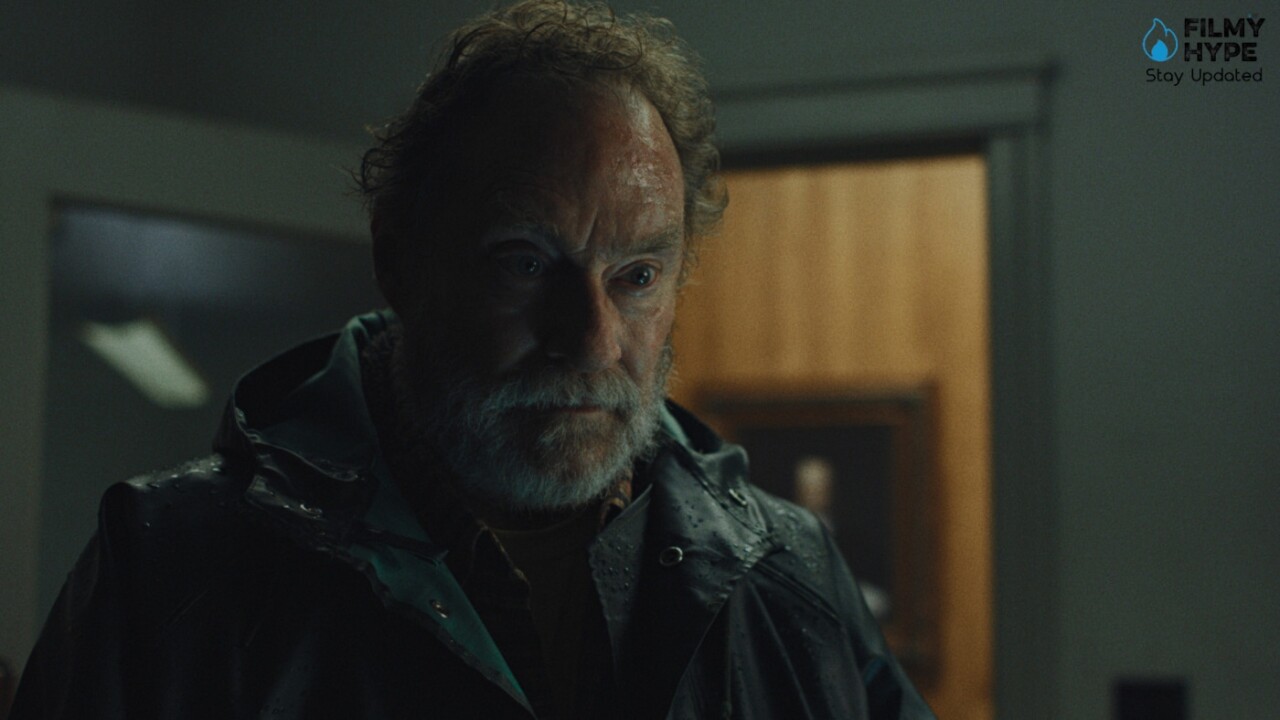
The flashbacks don’t paint Warren as a monster in the conventional sense. He was desperate. His people were dying. The entity offered a solution, and he took it. But the Covenant didn’t end with him. It kept going, passed down through bloodlines and town records, becoming so normalized that the educational videos uncovered later in the season present human sacrifice as a routine administrative procedure.
Warren himself achieved a kind of immortality through the pact, which proves the island can grant benefits as well as demand victims. The question the series raises but doesn’t fully answer is whether Warren was the only one to make such a deal. The implication is that other figures may have established similar agreements across the centuries, each one adding another layer to the debt the town owes.
What the Bells Actually Mean?
Dale’s discovery in the storm shelter is one of the season’s most important reveals. The church bells don’t ring randomly. Each toll represents a soul claimed by the island. When the bells sound, they’re announcing the number of sacrifices needed to complete the current cycle and keep the island in a state of relative calm.
Early in the season, nine tolls are heard. Over the course of the episodes, a series of deaths accumulates that seems to satisfy that number. For a moment, it feels like the cycle might be complete. But the finale undercuts that relief immediately. The storm ends, the situation stabilizes, and then the bells ring again. Eight tolls this time. The message is unmistakable: the curse isn’t done. It’s just starting a new round.
This pattern suggests the island operates on cycles that don’t have a clear endpoint. The sacrifices are never fully paid off. There’s always another bill coming due. The town has been managing this debt for so long that it’s become woven into the fabric of daily life, something people don’t even think to question anymore.
The Electric Chair and What Lives Beneath?
The electric chair room is the physical heart of the horror in Widow’s Bay. For most of the season, it’s treated as a forbidden space, a remnant of old sacrificial rituals that everyone knows about and no one wants to discuss. By the finale, it becomes clear why. Kenny disappears there, seemingly dragged away by whatever lives behind the basement door.
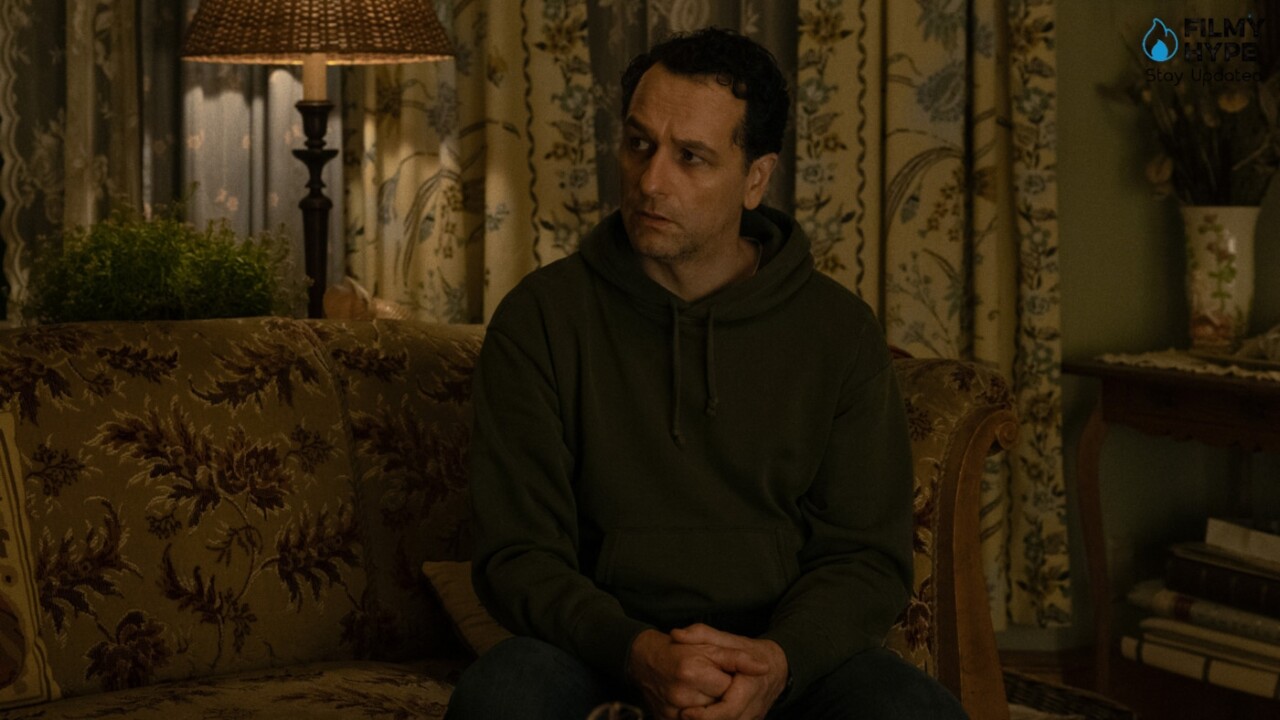
What is it? The show doesn’t say. It could be the physical manifestation of the island’s consciousness. It could be a subordinate creature, something the entity uses to collect what it’s owed. It could be something else entirely, a separate horror that happens to share the same address. The only certainty is that something alive exists beneath Widow’s Bay, and it needs to feed. The door isn’t keeping it in. It’s keeping people out.
The Sacrifices Were Never a Secret?
One of the most chilling revelations of the finale concerns how the town handled the sacrifices for generations. The educational videos Dale finds reveal an organized system for selecting victims, complete with bureaucratic terminology that makes execution sound like a zoning decision. People were chosen because they were “problematic,” or because they owed debts, or because local authorities had determined they were “found insufficient.”
This is the moment where Widow’s Bay shifts from supernatural horror into something more grounded and arguably more disturbing. The curse isn’t just an external threat imposed on a helpless community. The community participated. It built systems to manage the horror. It created euphemisms to make the horror palatable. It told itself stories about necessity and survival until the stories stopped feeling like lies.
The island may be cursed, but the town’s complicity is entirely human.
What Happened to Lauren Loftis?
Lauren’s death, which seemed like a straightforward tragedy early in the season, takes on a darker dimension after the finale. The letters she left during her hospitalization contained references that were initially dismissed as delusions. As the season progressed, more and more of those “delusions” turned out to be accurate information about the island.
This has led to a theory the show seems to be encouraging: Lauren may have been a victim of the sacrifice system. Her declining health, combined with her knowledge of Widow’s Bay’s secrets, fits the pattern of someone who was selected and silenced before she could reveal too much. The series hasn’t confirmed this yet, but the clues are piling up. Her story feels unfinished in a way that suggests it’s going to become much more important.
Evan and the Question No One Wants to Answer?
The most significant revelation of the season is about Evan. Genealogical research uncovers that the last living descendant of Richard Warren isn’t Ruth—it’s Evan. He’s the final heir of the bloodline that made the original pact.
This matters because of what Patricia discovers: Evan’s death would break the curse. The island’s hold on the town is tied to Warren’s lineage, and ending that lineage would sever the connection. In other words, there is a way out of this nightmare. But it requires sacrificing an innocent teenager.
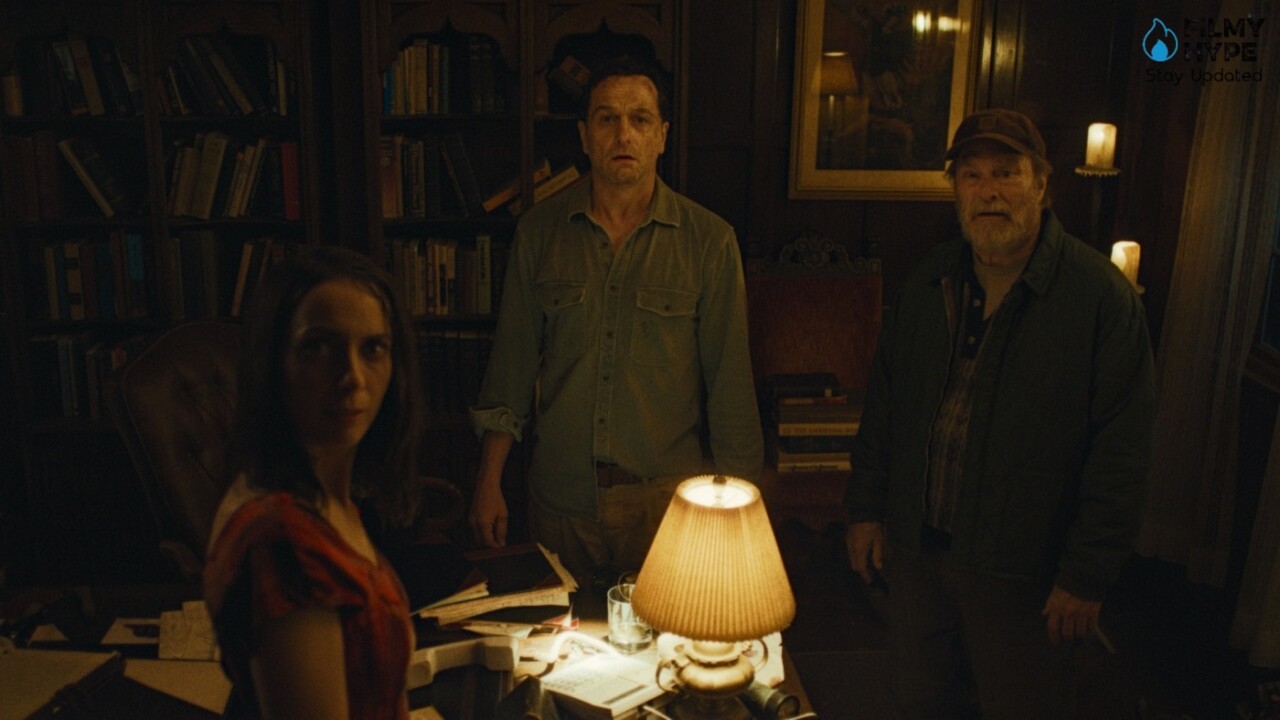
The season ends on this question, and it’s the question that will likely drive Season 2. Some characters would accept the trade. Others would never allow it. The tension between those positions is the engine the show has been building toward. Can a community save itself by repeating the same act of violence that cursed it in the first place? Or does that just prove that the curse was never really about the island at all?
Tom’s Basement and the Questions That Remain?
Among the many loose threads, one of the smallest might end up being significant. When Evan asks Tom what’s hidden in his basement, the scene cuts away without an answer. There aren’t enough clues yet to determine what Tom is keeping down there, but the moment feels too deliberate to be a throwaway detail. Like almost everything else in Widow’s Bay, the question is left hanging.
And that’s the show’s essential rhythm. It answers just enough to keep you oriented, then opens five new doors for every one it closes. The bells keep ringing. The island keeps asking. And the people of Widow’s Bay, like the audience, are left trying to figure out whether survival is worth the cost of what they’ve become.