

The Bear Season 5 has made us believe we were watching a show about a restaurant. About the pursuit of excellence, the grind of the kitchen, the relentless pressure of trying to be the best. And then the finale arrives, and it quietly but firmly tells you that you were wrong. You were never watching a show about Michelin stars. You were watching a show about people trying to figure out how to stop hurting themselves long enough to actually live. The Season 5 finale, titled The Original Beef of Chicagoland, doesn’t end on a cliffhanger or a twist. It ends on something much rarer and much harder to earn: balance. After the most brutal service the restaurant has ever endured, the chaos finally settles. And in that stillness, every major character makes a choice that reflects not ambition or desperation, but something closer to peace.

This isn’t a happy ending in the traditional sense. Nobody rides off into the sunset. But it is a complete ending, the kind that honors everything the show has been building since that first frenetic episode. After five seasons of tension, sacrifice, and personal growth, The Bear ends with an ending that focuses not on twists and turns but on the maturation of its protagonists: the eighth episode of season 5, titled “The Original Beef of Chicagoland,” finally puts a stop to Carmy Berzatto’s journey, giving the characters a peace that seemed impossible to achieve. This is how The Bear Season 5 ends?
The Bear Season 5 Ending Explained: Carmy Walks Away—and That’s Not a Failure
Let’s start with the decision that’s going to spark the most conversation. Carmen Berzatto, the genius chef whose name is synonymous with culinary obsession, steps back from professional cooking. He doesn’t just take a break. He goes and interviews at an architecture firm, of all places, looking for a way to use his creativity that doesn’t involve destroying himself in the process.
On paper, this looks like quitting. But the show has spent five seasons laying the groundwork for exactly this moment. Carmy’s relationship with cooking has been deteriorating for a long time. What started as a passion curdled into anxiety, then compulsion, then a kind of self-annihilation. The kitchen stopped being a place where he created and became a place where he punished himself. Every service was a trial. Every mistake was a verdict. The pressure wasn’t making him better. It was hollowing him out.
The finale doesn’t frame his departure as a defeat. It frames it as the first genuinely healthy choice he’s made in years. Carmy isn’t denying his talent. He’s acknowledging that talent without boundaries is just another form of self-destruction. The detail that lingers is the final image of him still wearing an apron, still cooking, but away from the professional machinery that nearly consumed him. The act of cooking hasn’t left his life. It’s just been reclaimed as something personal rather than obligatory. He can make food without the weight of a star rating pressing down on his chest. That’s not failure. That’s freedom.
Two Michelin Stars and the Victory That Isn’t About Carmy?
The emotional peak of the episode comes in a phone call. Peter Clark, the mysterious diner who’s been floating around the edges of the story since Season 4, finally reveals himself. He’s a Michelin inspector. And he’s calling to tell them that The Bear has just been awarded two stars.
It’s a staggering achievement, the kind of recognition that would have been the climactic triumph in almost any other show. And The Bear does celebrate it. But the celebration isn’t really about the stars. It’s about who earned them. The show goes out of its way to make sure the award doesn’t land as Carmy’s personal vindication. It lands as the triumph of a team—a brigade that spent years fighting, failing, clashing, and slowly learning how to become something more than the sum of its damaged parts.
The hug between Carmy and Sydney in the aftermath of the call is the real payoff. It’s not two people celebrating a trophy. It’s two people recognizing that the thing they built together, through all the chaos and the screaming and the near-collapses, is real and it works and it’s going to survive. Which makes what Carmy does next even more significant. At the exact moment of his greatest professional triumph, he chooses to step back. He lets the restaurant exist without him. He trusts that it can.
Where Everyone Else Lands?
If Carmy’s arc is about learning to let go, the rest of the cast find their own versions of resolution. Sydney takes over as head chef, and her leadership style is a quiet repudiation of Carmy’s. She’s less obsessive, more collaborative, more willing to build people up rather than break them down. The kitchen doesn’t lose its standards, but it loses some of its terror. That’s her gift to the place.
Tina gets promoted to Chef de Cuisine, a moment that lands with the weight of everything she’s overcome to get there. Marcus inherits Carmy’s notebooks, a symbolic passing of the torch that acknowledges he’s ready to carry the creative responsibility forward. Richie, who started the series as the loudest and most lost person in the room, finally gets his talent for hospitality recognized and finds a measure of stability in his personal life that once seemed impossible.
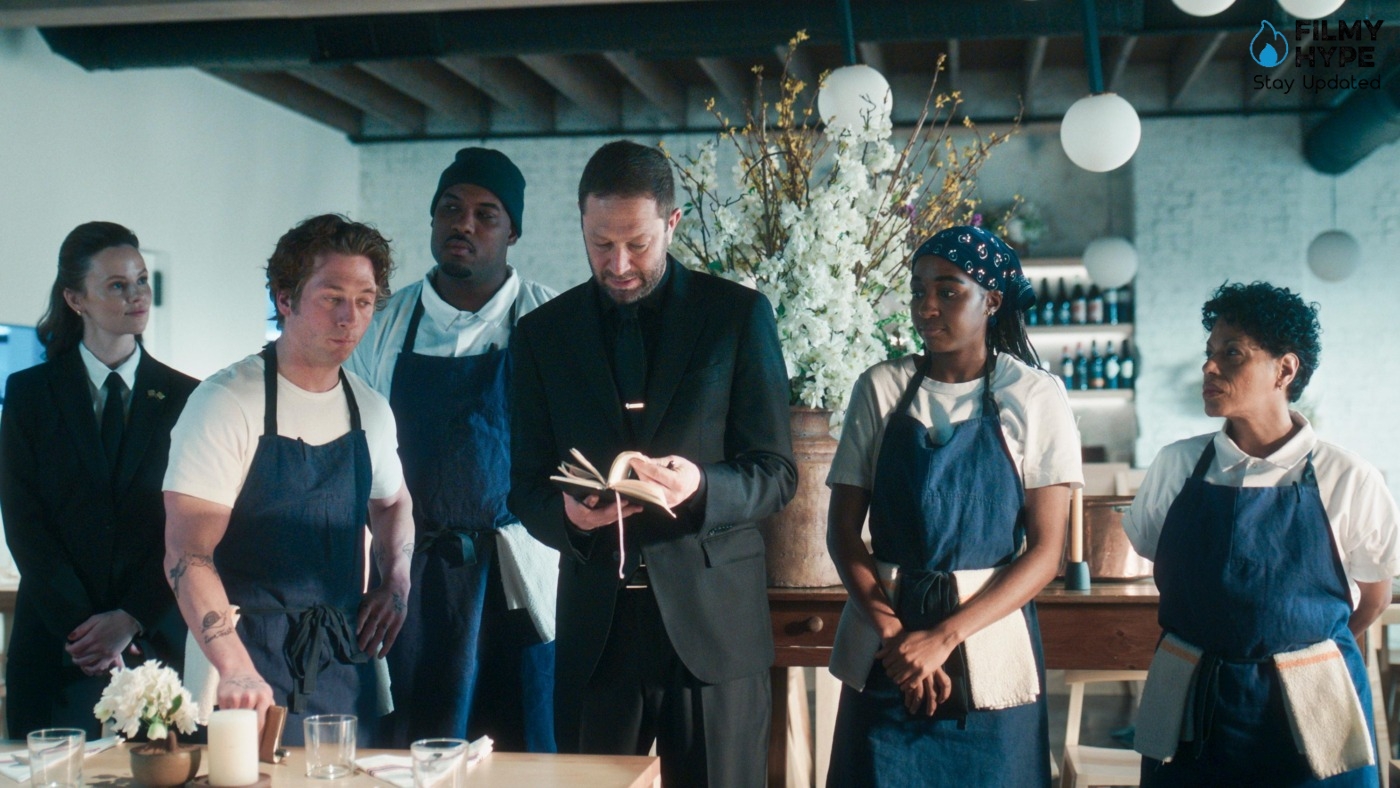
And then there’s the expansion project. The Original Beef of Chicagoland is going to become a franchise, led by Ebraheim, keeping Mikey’s memory alive without letting it become a shrine. That balance—honoring the past without being trapped by it—is what the entire finale is about. Mikey’s ghost has haunted this show from the beginning. The finale doesn’t exorcise him. It just makes peace with his presence.
Carmy sends a text to his dead brother. Two words: “All good.” It’s not a grand speech. It’s not a dramatic goodbye. It’s just a quiet acknowledgment that the past doesn’t have to keep destroying the present. Mikey is still gone. The grief is still there. But it’s no longer the only thing holding the family together.
What The Bear Was Actually About All Along?
From the very first episode, people have described The Bear as a show about the restaurant industry. The kitchen was the language it spoke, and it spoke it fluently—the chaos of service, the hierarchy of the brigade, the specific madness of people who choose to spend their lives in hot rooms making food for strangers. But the kitchen was never the subject. It was the metaphor.
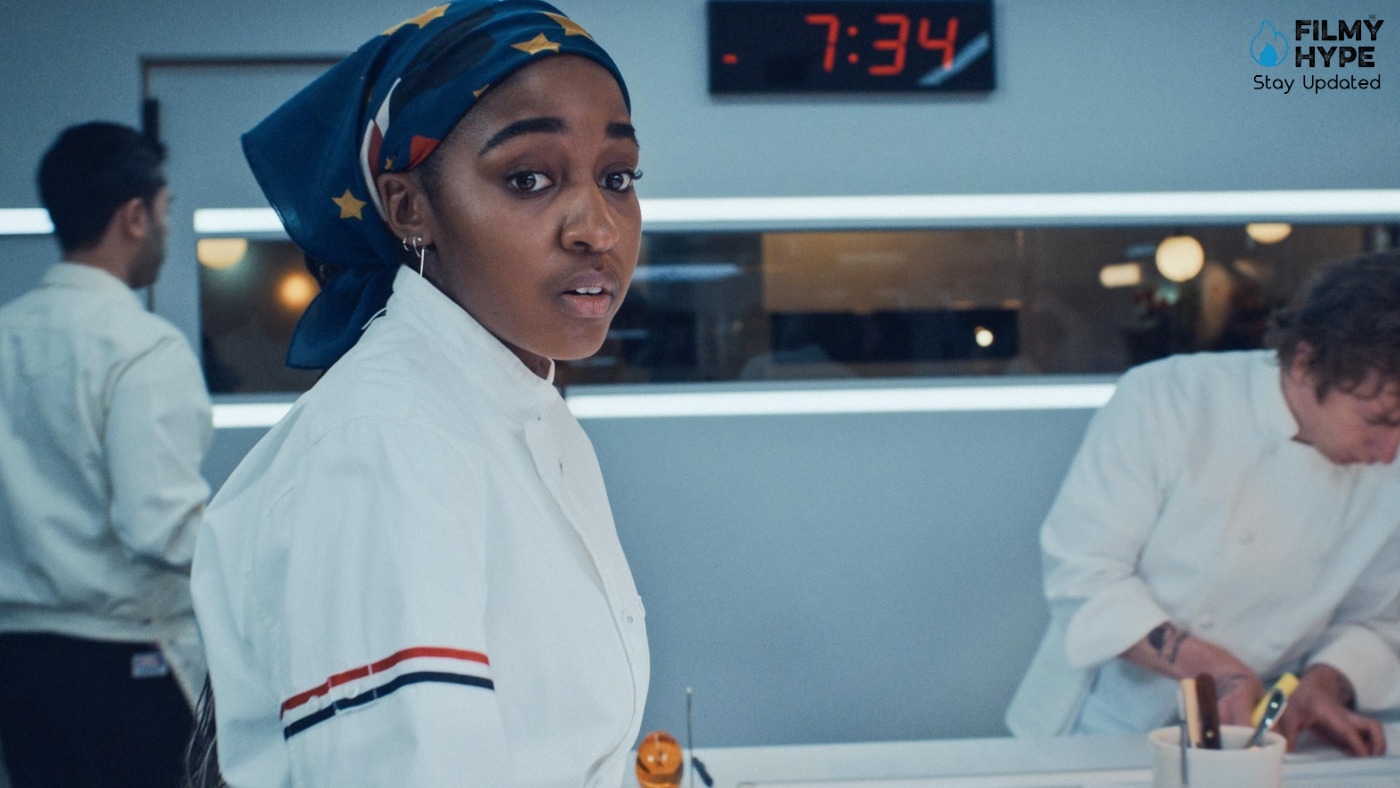
Christopher Storer built this show to tell a story about traumatized people trying to construct a place where they could finally feel at home. Every character arrived at The Beef carrying damage. Family damage. Personal damage. The specific exhaustion of people who’ve been surviving so long they’ve forgotten what living feels like. The restaurant became the container for all of that. The place where they could work through their mess together, badly at first, then better, then well.
The Season 5 finale makes this subtext into text. The Michelin stars matter, but they’re not the point. The franchise expansion matters, but it’s not the point. The point is that every single character finally finds the courage to choose their own path instead of the path that trauma, expectation, or fear laid out for them. Carmy chooses to leave. Sydney chooses to lead. Richie chooses to accept that he’s good at something. The restaurant doesn’t consume them. It frees them.
The long credits sequence, scored to the muffled sounds of a family birthday party, is the perfect ending. Life keeps going. You don’t need to see what happens tomorrow. You already know enough. These characters, after years of barely keeping their heads above water, have finally learned how to swim. The show doesn’t end on a promise of future greatness. It ends on something steadier: the knowledge that they’re going to be okay.
How Does The Bear Season 5 End: Does the Restaurant Get Michelin Stars?
The final chapter picks up right from the dramatic finale of the fourth season. Carmy has announced in Sydney, Richie, and Sugar that he wants to leave the restaurant, while The Bear has now reached the limit of its financial possibilities. With few ingredients, very little money, and time running out in the deal with Uncle Jimmy and The Computer, the staff decides to give everything during what could be the last service in their history.
After a season built around the fear of not making it, the restaurant receives the decisive phone call. Carmy discovers that the mysterious customer who had dined months earlier at The Bear had been deeply impressed by the cuisine, particularly Sydney’s scallop platter. When Sydney asks if they have finally won a Michelin star, Carmy simply responds by shaking her head. For a moment, it seems like a disappointment. Then comes the truth. The Bear even won two Michelin stars. It’s one of the most emotional moments of the entire series.
Why is Carmy Leaving The Bear?
The ending also definitively clarifies the fate of the protagonist. Despite the restaurant’s success, Carmy actually decides to leave. His choice was not born from defeat, but from the awareness that he had concluded a personal journey. During the confrontation with Uncle Jimmy, Carmy explains that she thought long and hard about Uncle Lee’s words: to break certain patterns, you have to have the courage to change your life. For years, the kitchen was both his refuge and his prison. Only now does he understand that he can be happy even away from the stove. Before leaving the venue permanently, Carmy reiterates that he believes Sydney is the right person to lead The Bear.
What Happens to Sydney, Richie, and the Other Protagonists?
The ending also devotes space to the other main characters. Sydney finally accepts her role as restaurant manager and spends a day with her father, who can finally be proud of his journey.
Richie, on the other hand, faces one of his biggest fears. Invited to attend a major international hospitality seminar in Japan, he confesses to Carmy that he has never flown. After a moment of panic, however, he manages to find the courage to leave.

The series also finally delivers what many fans have been waiting for. Richie and Jess make their relationship official, and the final minutes show them hand in hand on the flight to Japan.
The other characters also find their own balance. Marcus inherits Carmy’s treasured cookbooks, Tina is celebrated by her husband for her new job as chef de cuisine, and Ebra sees Mr.’s franchise expansion project approved. Beef.
The Meaning of The Bear Ending?
More than talking about cooking, The Bear has always told the story of people incapable of forgiving themselves. In the finale, each protagonist finally stops fighting against his or her past.
Carmy learns that one’s worth doesn’t depend solely on work. Sydney understands that she is ready to become a great leader. Richie faces his fears and finally chooses to look forward.
The Bear survives, grows, and wins two Michelin stars, but the real success of the series is not the prestigious recognition. It’s showing that, even after the deepest traumas, it’s possible to build a new family, find your place in the world, and finally give yourself the chance to be happy.
This latest episode definitively closes one of the most acclaimed series of recent years, leaving a legacy that will remain on the television scene for a long time to come.