

Lee Cronin’s The Mummy Ending Explained: The new version of The Mummy, Lee Cronin’s The Mummy, directed by Lee Cronin, is not a film that plays with the idea of possession from a more physical, more uncomfortable angle. Since its inception, with Katie’s disappearance in Cairo and her return years later inside a sarcophagus, the mystery centers not on the unknown of where she was, but rather on what came back with her. The ending answers that question, but it does so by leaving several disturbing implications open. Lee Cronin’s The Mummy, by Lee Cronin, takes one of the most iconic monsters in cinema, the mummy, to a current context, to a normal American city, and to a house inhabited by a family that had no idea what awaited them.
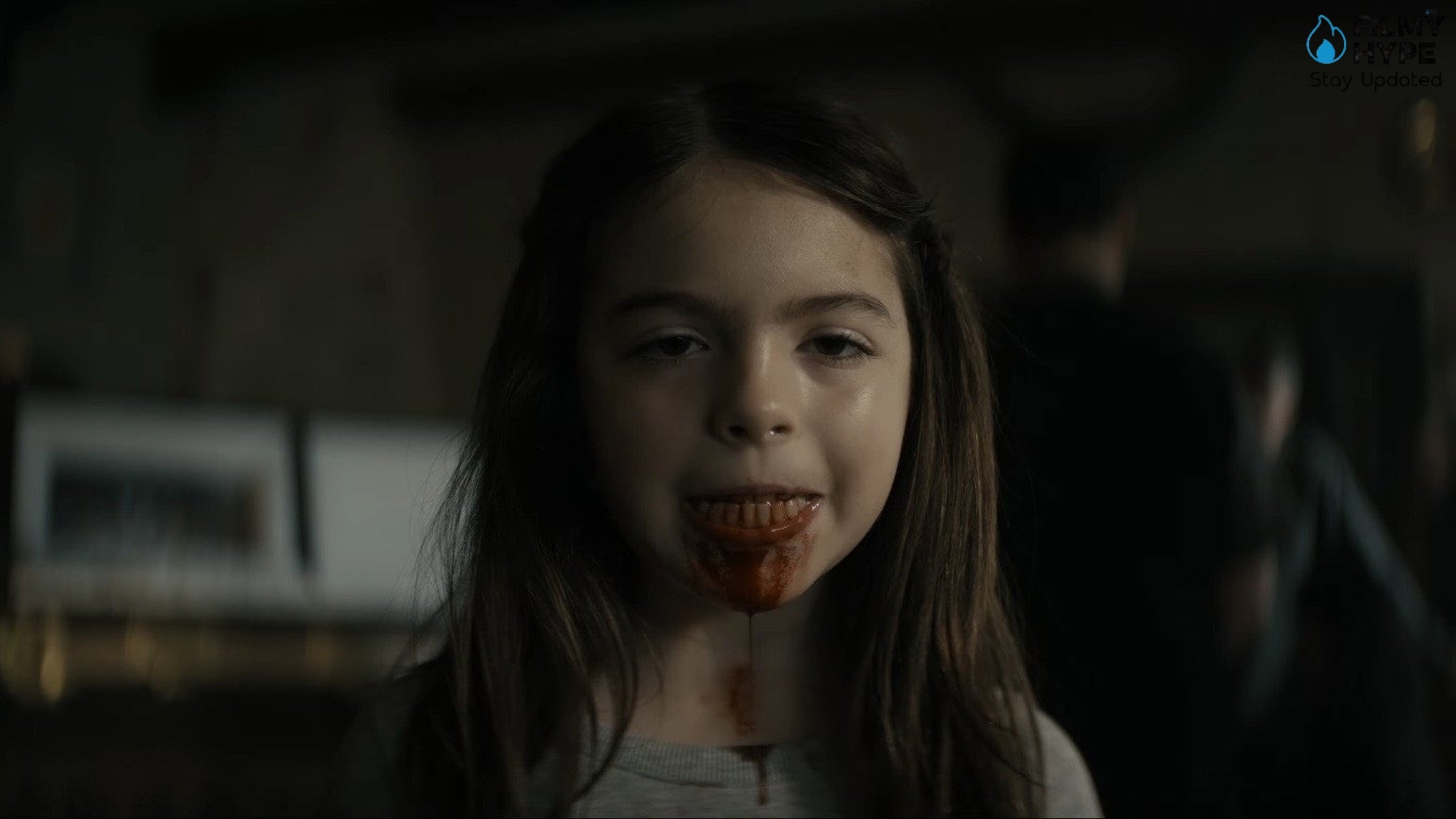
The film follows the Cannon family, made up of the actors Jack Reynor, Laia Costa, Shilo Molina, and Billie Roy, and focuses on a tragedy that happened 8 years in the past. The Cannon family lived in Egypt at the time, and there they experienced one of the worst tragedies parents can experience, the disappearance of their 9-year-old daughter, named Katie. The girl disappears (the case is not real, but it makes us think of a real disappearance, in which the family recovers a very different son) in the desert, and for a long time, no one knew what happened to her until, years later, the family receives the call that their daughter had been found, but inside a sarcophagus, looking terrible and with clear signs of trauma. The Cannons reunite with their daughter and take her back home, where they try to help her remember who she is and heal both physically and emotionally. But the Cannons’ “happiness” is suddenly cut off when they begin to realize that the teenager they have at home is not what she seems and that there is something very bad and very dark inside her, which puts them all in a very dangerous (and traumatic) position.
Lee Cronin’s The Mummy Ending Explained: What Really Happened to Katie?
What Lee Cronin’s movie sample shows is that Katie disappeared in Egypt, but it was no accident. In fact, she was kidnapped by a mysterious woman they call “The Magician.” The magician was traveling with his family (including his young daughter, named Layla) through the desert to return home to Cairo, which is also built on a black pyramid. The magician and his family must perform a ritual to catch a dark call, Nasmarania, a supernatural force that moves from body to body and spends its time destroying families (the entity causes families to destroy each other). The eldest son of the family is the one who must be “sacrificed,” and his body must be used to contain the creature.
For this, a ritual is performed in which the body must be wrapped with special cloths containing protective spells and then buried in a sarcophagus that is placed in the pyramid. But, if they notice that the body containing Nasmaranian is deteriorating, then they must choose another bearer and perform a new ritual (and this is how they begin to plan Katie’s kidnapping).
When the magician’s family realizes that they need to do the ritual again, what they do is go after Katie (who was a friend of their daughter Layla and was in Egypt at the exact moment the family came to need another body to perform the ritual) and transfer that entity to your body, which is also wrapped with the cloths and buried in the sarcophagus (Katie cannot move because there is a beetle inside her, which is also part of the ritual and keeps her motionless and unable to speak). It is Layla (who gained Katie’s trust so she could be kidnapped in the first place) who eventually explains, with the help of a video, that Katie’s body is now inhabited by an entity.
Katie was supposed to stay in that place forever, but a threat of flooding forced the family to move the sarcophagus where she was trapped, and that caused the accident that led the authorities to find Karlie, who is already a teenager. Katie’s spirit is still there, but it is also trapped inside her body and struggles to regain control, which is why we see her try to speak in Morse code and why she behaves in an increasingly disturbing way. In the fight for control of her body, we see how Katie harms herself and how her family resorts to sedating her to protect her and also to protect themselves from her. When Katie is not sedated, she not only harms herself but also any of her family members nearby. And with what she says in Morse code, her father contacts a detective, Zaki, to investigate and find out how to help her.
What Was the Beetle For?
During Katie’s kidnapping, the Magician gives her an orange from his farm, but a beetle emerges and jumps into the girl’s face and enters her throat. This beetle appears to have a sedative effect, which means they can handle Katie, but also keep her trapped inside the sarcophagus.
What About the Cannon Family?
Katie’s parents don’t know how to help their daughter. Initially, they believe that she self-harms and harms others as a response to the trauma she experienced, until her father discovers that she is covered in pieces of the cloth used in the ritual and that these contain mysterious characters. Eventually, with Zaki’s help, we discover that Katie self-harms because she is under the control of Nasmaranian, who needs to destroy the protective spells found on the teenager’s skin to escape from her body, which acts as a kind of prison.
After Katie’s mother removes some of her skin/fabrics when she tries to cut her nails, Nasmaranian, she gains some freedom, and the creature gains more and more power as Katie damages herself and removes the spell that keeps the entity trapped, which in turn causes the teenager to become more and more dangerous. Katie is eventually freed by her brother, and this leads to a brutal final battle, in which Carmen’s body is possessed and brought back to life, the family fights, and, for a moment, it seems that everything is going to end in tragedy.
But Charlie, Katie’s father, learned more about what’s going on with his daughter, about Nasmaranian, and about what they could do to help her, and that leads him to realize that he can transfer that entity into his own body and that it’s exactly what it does. Through a video in which they can see the ritual performed by the magician, Charlie and Detective Zaki, who had been investigating the case, come across a spell that they must recite and that they use to get Nasmaranian out of Katie’s body, to trap him inside Charlie’s, who sacrifices himself to save his daughter.
To prevent Nasmaranian from leaving, Charlie is locked in a trunk and placed in the basement of his own house. Charlie is conscious and alive inside that box, and his family eventually transports him to the prison where The Magician is, and they begin performing the ritual to try to transfer him from Nasmaranian to the body of the woman who caused all his suffering. Katie was already starting to heal by this point, so that ending suggests that the family might have some kind of happy ending, although not completely, because everyone is traumatized and went through a situation that probably changed them forever.
Self-Harm Was Not What It Seemed?
For much of the film, Katie hurts herself. In any other possession story, this would be a classic resource for generating horror, but here it goes the other way: Katie—or rather, the Nasmaranian—tries to break her own prison. Every wound, every piece of skin torn off, is an attempt at liberation. When parents discover fragments of bandages inside their skin, they realize that their daughter’s body is not being destroyed randomly but is being dismantled.
This also explains why the demon becomes stronger as the story progresses. The fewer physical “ties” you have, the more control you gain. One of the most disturbing details is that Katie never completely disappears. He remains conscious within his own body. The Morse code scene, where he communicates with his father through the chattering of teeth, makes it clear that there is an internal struggle. It is not a total possession from the beginning but a progressive invasion. This makes the conflict more tense because they are not trying to save a body; they are trying to rescue someone who is still trapped inside.
The Final Ritual Gives Us an Imperfect Solution?
In the climax, the family manages to transfer the Nasmaranian to Charlie, the father. In this way, Katie is free and begins to recover. However, the film does not present this as a victory, as Charlie becomes the demon’s new container, but without the original security measures. Charlie is conscious and can communicate. In the last scene, Larissa, together with detective Zaki, decides to transfer the demon to the magician, responsible for everything, which, on paper, is fair. But in the logic of the film, it is a dangerous decision.
La Maga is not just any victim. She understands magic, rituals, and rules. Putting the Nasmaranian into your body might not be a solution but a disguised liberation. The film leaves that doubt floating: are they closing the cycle or breaking it permanently?
Does the Film Have Post-Credits Scenes?
No, the last thing we see is Katie’s family in prison, where they seek to transfer the woman who took their daughter from them to the entity.