


Is Sunfyre Actually Dead? For two years, fans of House of the Dragon have been mourning. The image was seared into our minds during the first season: Sunfyre, the most beautiful dragon in the Targaryen stable, a creature of gleaming golden scales and pink-tinged wings, tumbling from the sky in a tangle of limbs and fire. The battle above Rook’s Rest was chaos made manifest. Meleys, the Red Queen, roared her last. Rhaenys Targaryen fell. And then Vhagar, that ancient monstrous beast commanded by Aemond, slammed into both Aegon and his dragon with catastrophic force. Sunfyre hit the ground and didn’t get up. We all assumed the worst.
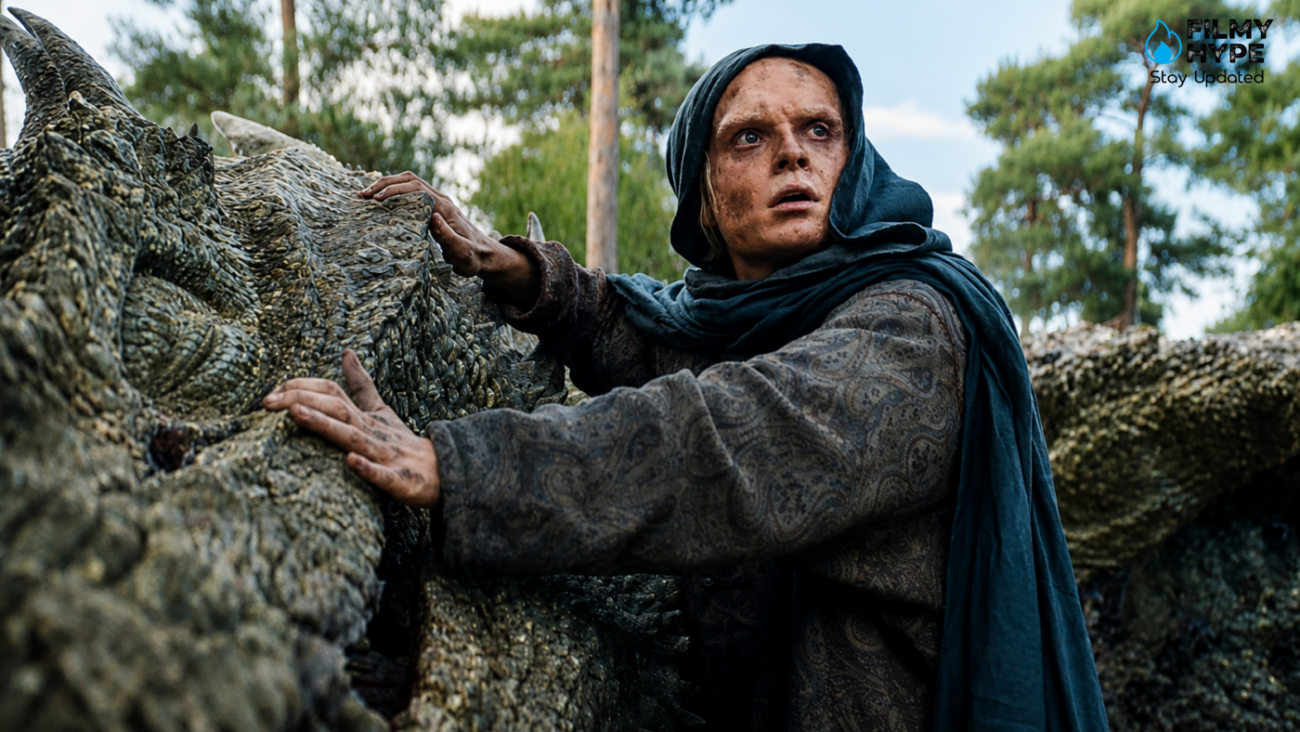
The show did nothing to dissuade us from that assumption. In fact, it leaned into the grief. Aegon himself, broken and burned and barely clinging to life, spoke of his dragon as though he were already gone. Daemon received reports from Baela that painted a grim picture: a rotting carcass, a massive body left to decay on the battlefield. By the time season three rolled around, the narrative seemed settled. Sunfyre was dead. Another dragon lost to the meat grinder of the Dance. Except this is Westeros, and in Westeros, a dragon is never truly gone until you’ve seen the life leave its eyes with your own.
Is Sunfyre Actually Dead? The Truth About Aegon’s Dragon After That Season 3 Revelation
I’ll be honest. I’ve been carrying around a low-grade sadness about Sunfyre for two years now. You know the feeling. It’s the specific kind of grief that comes from watching a fictional animal die, the kind that feels a little silly to admit to but sits in your chest anyway. The golden dragon, the most gorgeous creature in the entire Targaryen fleet, crashed hard at Rook’s Rest. Vhagar’s shadow swallowed him whole. Aegon burned. Meleys died. Rhaenys fell. And somewhere in the middle of all that fire and screaming, Sunfyre tumbled out of the sky and didn’t get back up.
The show really committed to the tragedy, too. Multiple characters have told us he’s dead. Aegon himself said it in the season two finale, his voice hollowed out by pain and loss. Daemon got reports calling the dragon a rotting carcass. By the time we reached season three, the narrative seemed airtight. Sunfyre was gone. Another beautiful thing destroyed by this stupid, endless war. Then episode four of season three happened. And suddenly I’m questioning everything.
A King’s Desperate Whisper
The fourth episode of season three pulls off a pivot that many book readers have been waiting for. Aegon and Larys Strong are on the run, fugitives slipping through the cracks of a kingdom at war. Their path takes them near the field where Rook’s Rest was fought, and there, sprawled in the mud and grass, is the body. Massive. Motionless. To Larys, it’s a corpse, a landmark to be skirted around quickly before enemy patrols spot them. But Aegon doesn’t see a corpse. He sees his other half.
What happens next is the kind of small, intimate moment this show does so well. Aegon, this deeply flawed and often cruel young man, approaches the massive snout of his dragon and whispers to him in halting High Valyrian. The words are simple, the vocabulary of a rider who never quite mastered the ancient tongue of his house. And then he says it. The dragon is still breathing. Larys dismisses it. Wishful thinking, he calls it. The desperate hope of a broken king. But the bond between a dragon and its rider isn’t something Larys Strong, for all his cunning, can ever understand. Aegon feels the life still flickering inside that golden body because the life is actually there.
What the Books Have Always Told Us?
This is where the show’s relationship with its source material gets interesting. Fire & Blood, George R.R. Martin’s fictional history, doesn’t treat Sunfyre’s survival as a twist. It’s simply a fact. In the book, the battle plays out differently in its details but arrives at the same destination. Aemond and Vhagar don’t deliberately target Aegon, but the result is the same. Three dragons fall. Vhagar, too ancient and too massive to be seriously hurt, walks away. Meleys dies. Sunfyre crashes with a wing torn half to shreds, too injured to fly, too heavy to move. He stays there, near the fortress, healing slowly while armed guards are posted to protect him.
The show made a deliberate choice to muddy these waters. By having characters declare Sunfyre dead, by showing us that enormous, lifeless-looking body, the writers created a cloud of doubt that has hung over the story for an entire season. But think about it from a storytelling perspective. Why would the show bring Sunfyre back into frame in season three, show Aegon having this emotional reunion, if the point was just to confirm he’s dead? You don’t waste that kind of dramatic real estate on a corpse. You show the corpse to remind the audience it’s there, and then you reveal the breath. The narrative logic is clear. Sunfyre lives because he has to live. His part in this war is nowhere near finished.
The Attack That Proves His Strength
Lord Walys Mooton doesn’t know what he’s walking into. In the aftermath of Rook’s Rest, Mooton, a staunch supporter of the Blacks, sees an opportunity. A wounded dragon, grounded and vulnerable. If he can finish the beast off, he strikes a symbolic blow against the Greens and removes a piece from the board. He gathers his men and marches on the dragon’s resting place. What happens next is a slaughter, but not the one Mooton envisioned.
Sunfyre, still broken, still unable to take to the sky, finds the strength to fight. His tail alone is a weapon of devastating power, sweeping men off their feet and crushing bones. His flame, even from a grounded position, turns the assault into an inferno. Mooton’s attack fails catastrophically, and the golden dragon proves a point that the realm will learn again and again: a dragon is never helpless. A few weeks later, despite a wing that still won’t work properly, Sunfyre vanishes from the battlefield. He drags himself away, following an instinct that will carry him across the water to the place where his rider needs him most.
The Flight to Dragonstone
The journey itself is a testament to the creature’s will. Sunfyre can’t fly properly. His wing is a ruin. But he moves, slowly, stubbornly, toward Dragonstone. The ancestral seat of the Targaryens becomes his destination for reasons no maester can fully explain. Perhaps the bond with Aegon pulls him there. Perhaps it’s simply where his instincts lead. Whatever the cause, he arrives and immediately makes his presence known.
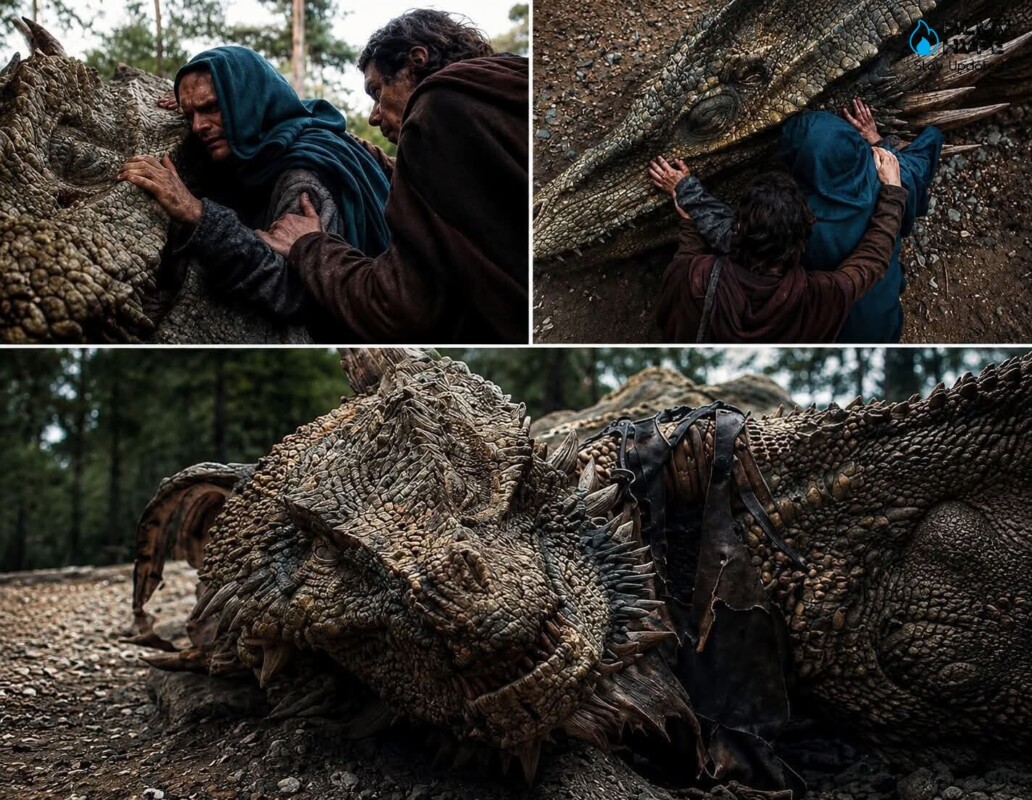
Dragonstone has its own wild dragons, creatures unclaimed by any rider. One of them crosses paths with Sunfyre, and the resulting battle is brutal. The golden dragon, already wounded, already exhausted, fights and kills the wild beast. The commotion doesn’t go unnoticed. Whispers start spreading. A dragon with golden scales has been seen on the island. Those whispers eventually reach Aegon, who has secretly made his way to the same fortress, a fugitive hiding in his own ancestral home. The reunion between rider and dragon on Dragonstone is one of the emotional high points of the entire Dance, and it sets the stage for everything that follows.
Baela and Moondancer: The Cost of Victory
Once Aegon has Sunfyre back, he doesn’t sit idle. He plans to take Dragonstone, and that means confronting whoever holds it in Rhaenyra’s name. Baela Targaryen is there with her dragon, Moondancer, a young and agile creature who hasn’t yet reached full size. The fight that erupts between Moondancer and Sunfyre is not a fair one. Moondancer is smaller and faster, but Sunfyre is a war-hardened survivor who has already killed more than once.
The golden dragon wins. Moondancer dies, and Baela is captured. But victory comes at a cost that almost destroys Aegon completely. During the battle, Aegon falls from his saddle and shatters both his legs. Sunfyre sustains fresh wounds that tear open the half-healed injuries from Rook’s Rest. The two of them, rider and dragon, are a matched set of broken things. They are both limping toward an ending, but they aren’t there yet. One more horrible, iconic task awaits them.
The Death of a Queen?
Rhaenyra Targaryen flees King’s Landing. The city has turned against her, the smallfolk rising in a fury that even Syrax can’t suppress. She makes her way to Dragonstone, believing it’s safe, believing it’s still her stronghold. She doesn’t know that Aegon has taken it. She doesn’t know that Sunfyre is there, waiting. The betrayal is absolute. She is captured, and what happens next is one of the defining moments of the entire Targaryen saga.
Aegon feeds Rhaenyra to Sunfyre. His golden dragon, the creature he whispered to in High Valyrian on a muddy battlefield, devours the rightful queen while Aegon watches. It is a death so brutal, so loaded with symbolic weight, that the story echoes down through the centuries. Joffrey Baratheon, that sadistic little monster, recounts the tale to Margaery Tyrell in Game of Thrones with obvious delight. It’s a party story for him, a bit of lurid family history. But for the people who lived it, it was the moment the Dance of the Dragons reached its point of no return.
The Final Fall?
Sunfyre doesn’t survive the war. The wounds he took fighting Moondancer never fully heal. His body, which has been through too much trauma to ever truly recover, finally gives out. The golden dragon dies, but he dies having fulfilled his purpose. He carried his rider to victory, such as it was. He killed a queen. He burned his name into the history of Westeros in a way that no maester could ever erase.
The show’s decision to keep his survival ambiguous for so long was a gamble, but it’s a gamble that pays off. When Aegon kneels beside that massive golden head and feels the faint stir of breath, the audience isn’t just learning a plot point. We’re being reminded of what this story is actually about. The Dance of the Dragons is a tragedy, and tragedies don’t let their characters go easily. Sunfyre still has work to do, and now that we know he’s alive, the countdown to the darkest moments of the war has officially begun.