


Inside The Trustor Scandal Ending Explained: There’s a particular kind of audacity that stays with you. Not the audacity of violence, which announces itself and then recedes, but the audacity of a financial crime so elegantly structured that by the time anyone figures out what happened, the money is already in another country and the architect is already on another continent. Joachim Posener didn’t just defraud Trustor. He used Trustor’s own money to pay for the privilege of defrauding Trustor. The company financed its own acquisition, and by the time Swedish authorities understood the mechanics of what had happened, the man they believed was responsible had vanished.
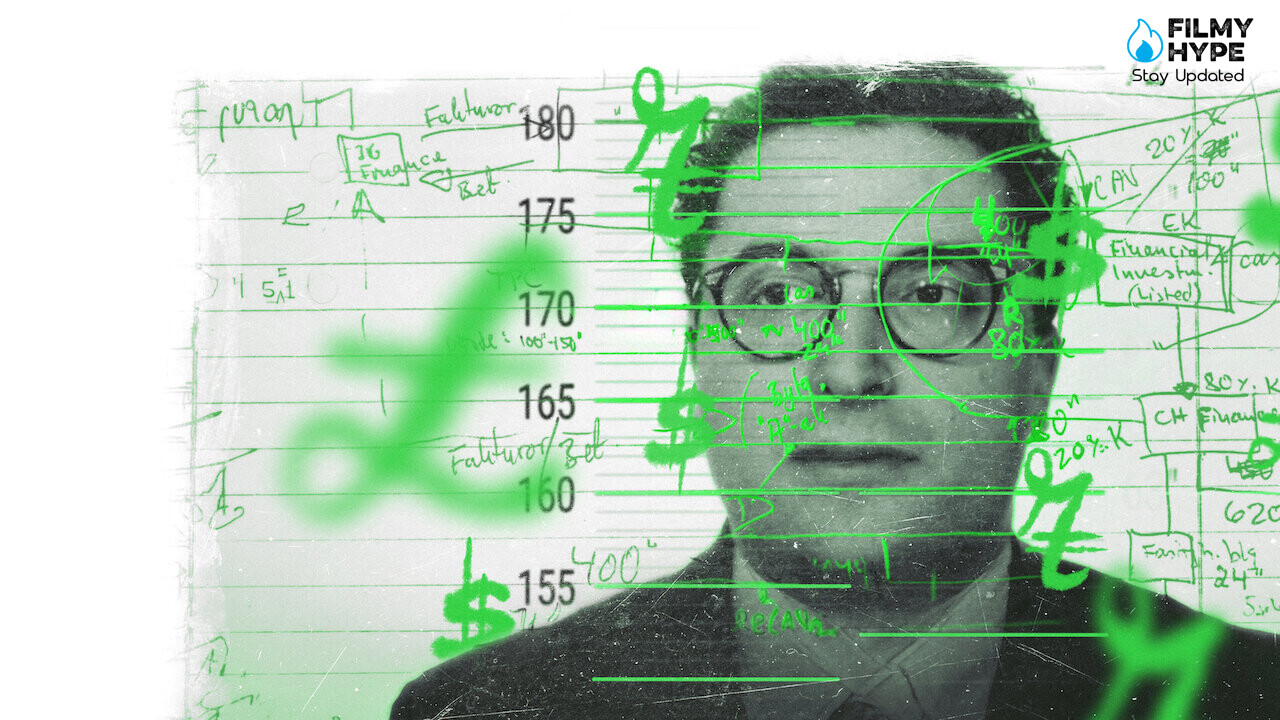
Netflix’s documentary Inside The Trustor Scandal reconstructs one of the most unusual financial operations in Swedish history. In 1997, a group led by Posener gained control of Trustor, a publicly traded company, without actually having the money to buy it. The maneuver was simple in concept and devastating in execution: acquire the company using its own funds, transfer hundreds of millions of crowns to private accounts in London, and use some of that money to complete the purchase. Trustor paid for its own theft. The documentary walks through the mechanics of the fraud, the investigation that exposed it, and the decades of consequences that followed. But the question that lingers after the credits roll is simpler: what actually happened to the people who did it?
Inside The Trustor Scandal Ending Explained: How the Scam Worked
Posener couldn’t appear directly in the operation. He’d already been convicted of financial crimes and was legally prohibited from participating in investments of this type. So he built a structure of intermediaries—people whose names and reputations could make the purchase look legitimate.
His cousin Thomas Jisander was one. Peter Mattsson was another. And then there was the key figure: Jonathan Guinness, known as Lord Moyne, a British aristocrat whose title and connections gave the entire enterprise a veneer of respectability. Lord Moyne acquired the shares that granted control of Trustor with a commitment to pay 241 million Swedish crowns a few days after the transaction closed. Once the group was inside the company, they transferred approximately 730 million crowns to Barclays Bank in London. Of that amount, 600 million ended up in a Jisander account and then moved to Lord Moyne. Some of those funds were then used to pay the Trustor’s former owner.
The circle was complete. Trustor’s own money had been used to purchase Trustor. The new owners hadn’t invested anything. They’d simply moved funds around in a pattern designed to look, from the outside, like a legitimate transaction. The company, now under their control, was significantly poorer than it had been before they acquired it. And the people who had orchestrated the operation were already planning their exits.
Who Discovered the Fraud
The operation began to unravel when people outside the group noticed that something didn’t add up. The journalist Gunnar Lindstedt started investigating after Trustor’s new managers repeatedly refused his interview requests. He dug into Lord Moyne’s background and discovered that the British aristocrat didn’t have the business fortune attributed to him. Several of his partners, Lindstedt found, carried suspicious financial histories. The story didn’t hold together under scrutiny.
At the same time, private investigator Nigel Krishna Iyer was examining the company’s accounts while looking into Lindsay Smallbone, Trustor’s newly appointed CEO. Iyer detected that the purchase had been paid for months after it was completed and that the money appeared to come from the company itself. When he shared his findings with the Swedish financial crimes unit, the police investigation began in earnest.
The pattern that emerged was clear. A group of people with no significant capital had acquired a company worth hundreds of millions of crowns. They had used the company’s own money to do it. And by the time the authorities started putting the pieces together, the man at the center of the operation was already gone.
The Trial and Its Limits
The legal process began in late 1997, but Joachim Posener had already left Europe. Authorities identified him as the architect of the scheme, but they never managed to bring him into a courtroom. According to his own account in the documentary, he first fled to Brazil, lived in hiding for some time, and then returned clandestinely to Europe. By the time the Swedish legal system was ready to prosecute, the person they most wanted to convict was beyond their reach.
Thomas Jisander was initially sentenced to five years in prison, but the conviction was overturned on appeal due to a lack of evidence. Years later, he did serve time for a separate matter—a different financial crime, a different set of charges. But the Trustor case, the one that had made headlines and shaken Sweden’s financial establishment, didn’t ultimately result in his imprisonment.
Peter Mattsson received a three-year sentence that was also revoked on appeal. The legal system, confronted with a complex financial crime and defendants who could afford capable representation, struggled to make charges stick.
Lord Moyne filed for bankruptcy. His defense was straightforward: he maintained that he had been unaware that Posener and his collaborators were using Trustor to finance the purchase. He presented himself as a figurehead, someone whose name had been used without his full understanding of the operation. In 2001, he was acquitted.
Lindsay Smallbone, who served as Trustor’s CEO during the operation, is the only one of the principal figures who has since died. The rest survived the legal process largely intact. Some saw their convictions overturned. Some were never charged at all. The statute of limitations, ticking forward throughout the investigation and appeals, eventually closed the door on prosecuting the central crime.
Why Posener Was Never Convicted
Posener remained hidden while the judicial proceedings played out. Although he was identified as the primary architect of the fraud, authorities couldn’t locate him, and extradition proved impossible. He moved between countries, lived under different identities, and stayed ahead of the efforts to bring him back to Sweden.
The legal deadline for prosecuting the crimes expired in 2007. After that date, Posener could no longer be tried in Sweden for the Trustor case, regardless of what evidence might emerge or what confessions he might make. The statute of limitations, designed to ensure timely justice, had become a shield. The man who had orchestrated one of the largest financial frauds in Swedish history was free—not because he’d been found innocent, but because time had run out.
The documentary manages to interview him in Belgium, but Posener is careful not to reveal where he currently lives. He speaks about the operation with a kind of clinical distance, as if describing a bold business maneuver rather than a crime that destroyed livelihoods and damaged Sweden’s financial credibility. He says he fled because he wasn’t willing to return to prison, even if it meant abandoning his wife and daughters. There’s no apology in his account. No regret. Just the faint, unsettling impression of a man who views the entire experience—the fraud, the escape, the decades of exile—as an adventure that happened to him rather than something he did.
Where Everyone Is Now
Posener remains outside Sweden. His permanent residence is believed to be in France, although his exact location is a secret he has successfully kept for decades. With the crimes having passed the statute of limitations, he no longer risks prosecution for the Trustor case. He still owes the Swedish state significant debts—taxes, child support, student loans—but those are civil matters, not criminal ones. He can live openly in Europe, participate in documentaries about his life, and face no legal consequences for the fraud that made him infamous.
Thomas Jisander appears to be living comfortably in Monaco. The documentary portrays a man who has landed on his feet, the kind of figure who survives financial scandals with his lifestyle intact. Peter Mattsson declined to participate in the film, and, according to the information presented, resides in Europe, with his current circumstances largely unknown.
Jonathan Guinness, Lord Moyne, continues to live on his family’s property in England. He also declined to participate in the documentary, citing health problems. The aristocratic name that lent credibility to the operation remains attached to a man who was acquitted of any crime but whose involvement was essential to the fraud’s success.
Lindsay Smallbone, the CEO installed after the acquisition, is dead. Of the main figures involved in the Trustor operation, he’s the only one who didn’t live to see the documentary’s release.
What the Ending Means?
The documentary concludes with a feeling that’s harder to pin down than outrage. Most of the people responsible for the Trustor fraud avoided significant convictions. The primary organizer was never tried. The case, for all its notoriety, resulted in very little accountability.
What the film makes clear is that the fraud succeeded not just because of a clever financial structure but because of the social architecture surrounding it. Prestigious names created credibility. Intermediaries insulated the architect. The assumption that someone with a title and connections must necessarily have the wealth they claimed to possess did the rest. Posener understood something about how trust operates in elite circles: people don’t check what they believe they already know.
The scandal endures in Swedish memory not because of the legal consequences—there were hardly any—but because of what it revealed. A publicly traded company was acquired without capital. Its own funds were used to pay for the acquisition. And the man who designed the operation disappeared before anyone could stop him. Trustor paid for Trustor. The theft was hiding in plain sight, dressed up as a legitimate transaction, signed by people whose names suggested they didn’t need to steal. The documentary leaves you with Posener’s face on screen, calm and unrepentant, decades after the crime, still free, still somewhere in Europe, still not saying where. The money is gone. The case is closed. The man who took it is still talking, and still not sorry.