

Who Is Alamo Brown: It’s been 4 years since the previous season of Euphoria, and now Rue, Jules, Lexi, Cassie, Maddy, and company are in a very different stage. These are no longer the high school teens we met in season 1, but adults who must deal with the real world, with work, relationships, and the full weight of the decisions they’ve made so far. In the case of Rue (interpreted again for Zendaya), after taking the suitcase full of drugs that belonged to Laurie, life took her down a really complex path full of dangers. The series opens with Rue trying to cross the border into Mexico, but not for a vacation or pleasure, but because Laurie reappeared in her life, informing her that she owes him hundreds of thousands of dollars, and that now her only option is to work for her, crossing drugs back and forth inside his own body (like a mule), and that’s just the beginning.
Euphoria Season 3: Who Is Alamo Brown And the Hidden Symbols In The First Episode?
With this, the series of Sam Levinson (which never stops sparking controversy) becomes something that feels different. It is still that series that stands out for its photography, style, and soundtrack, but with a story that moves away from that closed core that could only exist in high school, and presents much darker (and very questionable) situations. And within all this, we can find many references, symbols, and elements that not only talk about Levinson’s style, but also about what he wants to tell us about each of his characters in this context. These elements are visible from the first moments of the chapter.
Euphoria returned to the lives of many who waited patiently for its third season. It seems that the series will not disappoint, but we will have to wait for its development. Meanwhile, episode 1 brought interesting details that we will talk about. It’s been four years since Euphoria left its characters on the brink of collapse. Rue, Jules, Cassie, and company are now treading more hostile terrain, where money, power, and consequences weigh heavily.
In that new scenario, Rue —performed by Zendaya— starts in an extreme situation. Laurie’s threat pushes her to cross the border with drugs inside her body. Sam Levinson maintains the series’ polished aesthetic, but takes the story into darker, almost criminal territory. For example, the scene with the suspended car tells us that Rue is divided into two worlds: you cannot move forward or backward without assistance, and any movement can be fatal. This image makes clear the character’s mental state, which lacks balance. It seems that for her, everything depends on external forces that can save or sink her.
Who Is Alamo Brown, and What Role Does He Play In The Story?
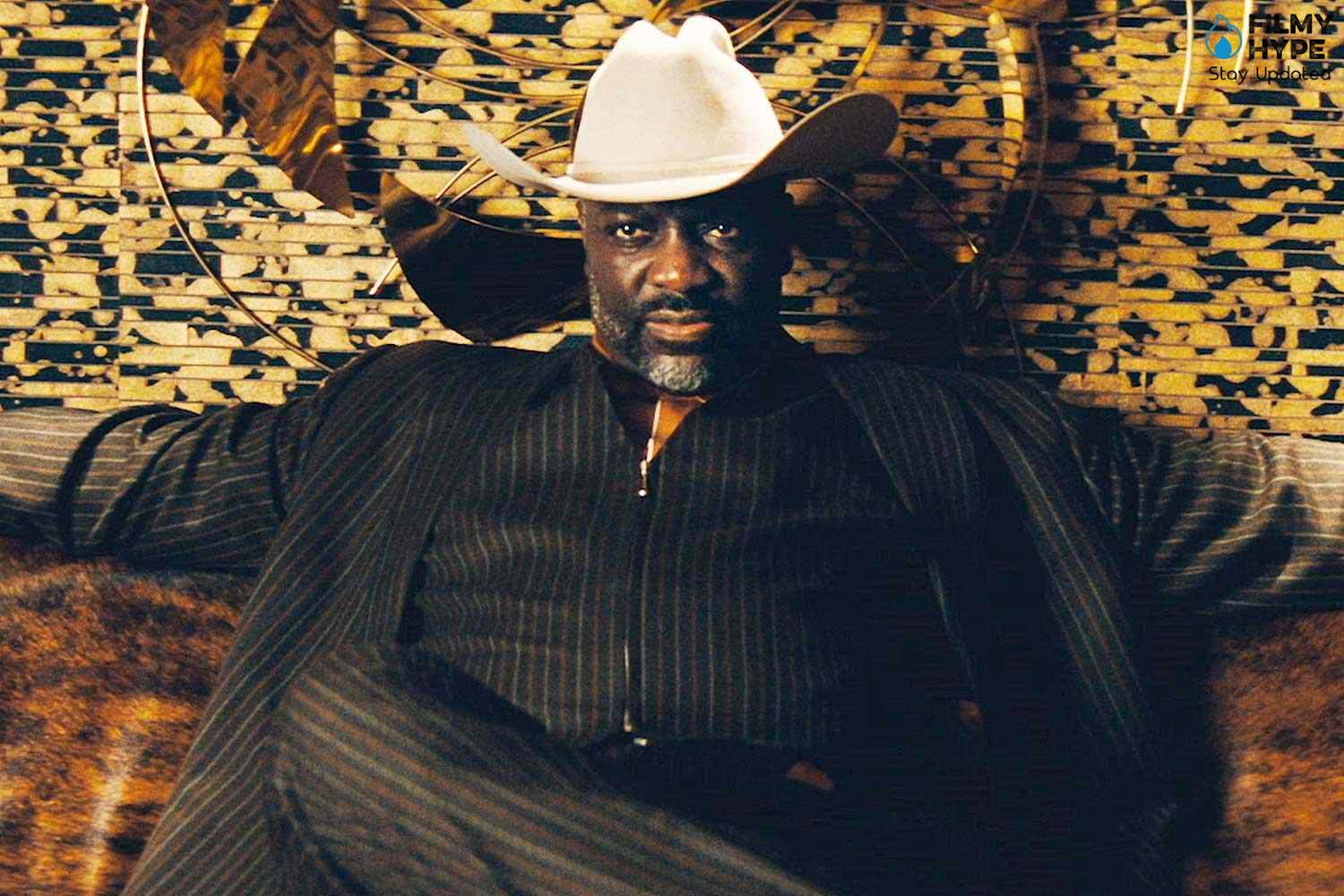
The big addition to the series is Alamo Brown, interpreted by Adewale Akinnuoye-Agbaje. He is a character that imposes from the first moment; He is a criminal leader, businessman, and almost mythological figure within his own empire. In his figure, there are many fascinating mixtures and references: there are echoes of Sergio Leone’s classic western and a strong link with the culture of the Black Cowboys, African American cowboys who sought independence in the West after slavery. Alamo presents himself as a “modern cowboy”, someone who built power from scratch, but who also manipulates, exploits, and tests those around him. When Rue and Alamo meet, she sees in him a distorted version of success as synonymous with independence, money, and control. He will be a kind of dark mentor to her.
William Tell and Psycho, By Alfred Hitchcock
The scene with the apple on Rue’s head refers directly to the story of William Tell, that is, an act of extreme precision where an error means death. Rue voluntarily submits to demonstrate courage, but also to negotiate her place. It is a scene that condenses the power of risk and the illusion of control. There is also a tribute to Alfred Hitchcock in a contemporary key. The dancer’s death functions as a mention of the film Psycho. The composition is reminiscent of the destiny of Marion Crane, played by Janet Leigh, and of the universe of the murderer Norman Bates.
The Nod to Hunter S. Thompson
Last but not least is one of the most obvious details of Rue’s wardrobe. The jacket he wears refers directly to Hunter S. Thompson and to the movie Fear and Loathing in Las Vegas, starring Johnny Depp. That story revolved around a chaotic journey, full of drugs and delusions, while questioning the death of the American dream. Rue no longer believes in a “normal” life, so she begins to move on the margins of the law.
Even his attempt to become an impromptu journalist reinforces the parallel with Thompson, who practiced that same profession with the call of gonzo journalism. The first episode of this new stage of Euphoria makes it clear that the series no longer revolves around adolescent identity, but rather a darker terrain where survival, power, and real consequences are at stake.
Hunter S. Thompson and Fear and Loathing in Las Vegas
One of the details that draws attention from the first moments of the season is the jacket that Rue appears wearing, which is the same (or very similar) to the one Johnny Depp used in the movie Fear and Loathing in Las Vegas, which is based on the novel of the same name.
The film takes place during a trip full of drugs and hallucinations, made between Hunter S. Thompson and his lawyer, who head to Las Vegas to cover a motorcycle convention and drug event. The story is a kind of reflection where it asks if the American dream is dead (and culture), and this is what connects with the situation of Rue, who increasingly seems to move a little further away from a “typical” and happy life.
In fact, Rue pretends to be a journalist upon arriving at a farm (which belongs to a family that appears to be in a religious cult) after her failed attempt to cross the border, and Thompson is a journalist in the story (and he was in real life).
The Irony of the Car Trapped in the Border Wall?
When Rue tries to cross the border, she decides to do it in the most complicated way possible, which leaves her trapped on the wall, with half of her car on either side of the dividing wall. This is also a clear symbol, which speaks to the fact that Rue is trapped in an impossible situation and that, to get out of there, she is going to need someone to give her a push. But the chance of things going wrong is huge, as the car can fall when you least expect it, or the push can cause it to move in the wrong direction.
A Dangerous Cargo?
Laurie informs Rue that she owes him more than $43 million, and, because she doesn’t have that money, decides to turn her into a mule to cross drugs across the border. With this, Rue carries a dangerous cargo inside her (dozens of balloons filled with fentanyl), which puts her at risk of death if the balloons filled with drugs burst inside her. This also represents that Rue is experiencing an extremely dangerous situation, where any carelessness could be fatal for her, and also for Faye, who, for some reason, agreed to help her in this “mission”.
Alamo Brown and Black Cowboys Culture
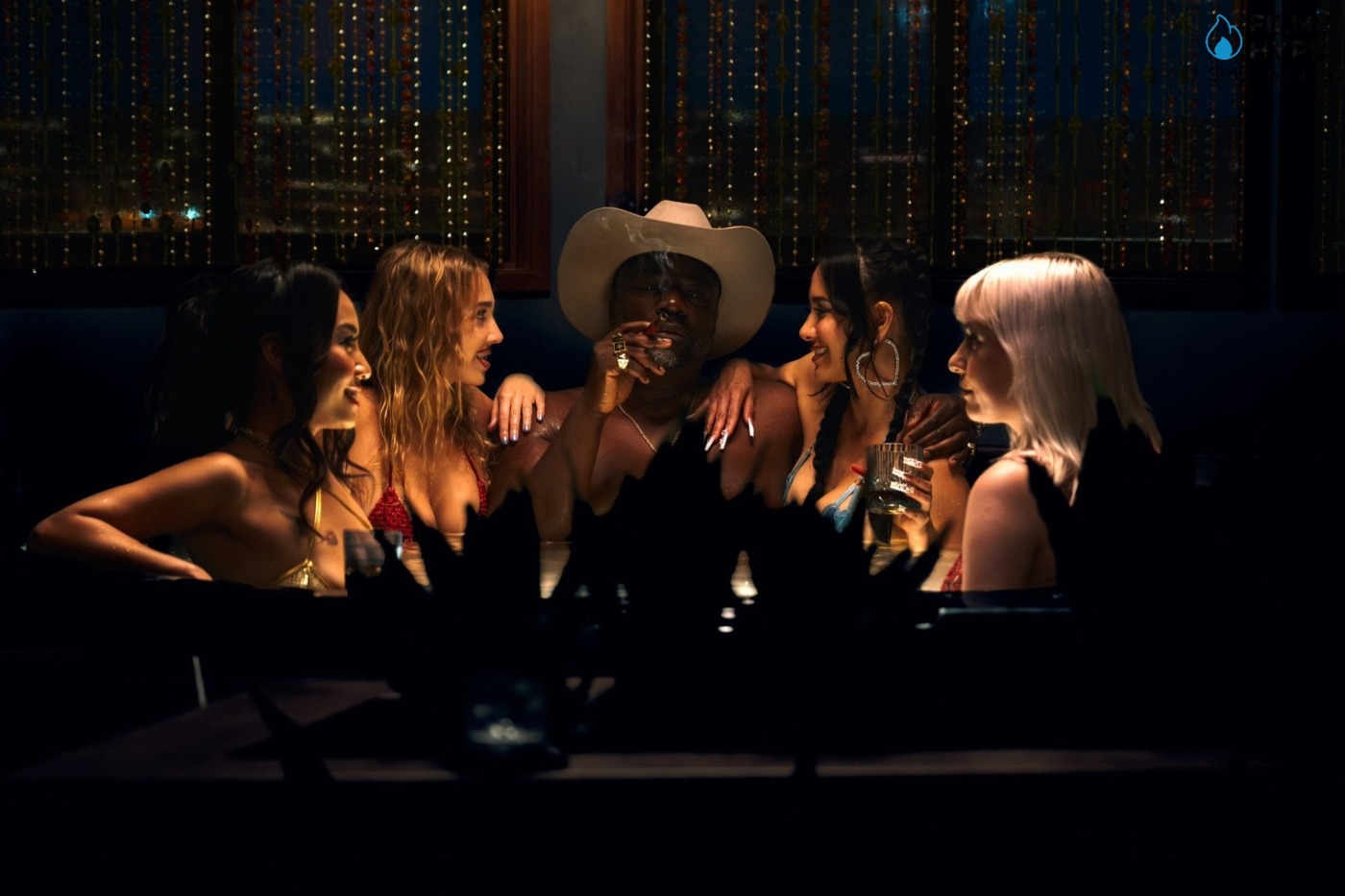
Adewale Akinnuoye-Agbaje interpret to a new character called Alamo Brown, who is the leader of a huge criminal empire. Alamo has several exotic dancer clubs in the city, and is a man feared and respected by those who work for him.
If this character came with a warning, the actor thinks he should say, “Do not enter, or enter at your own risk”.
Rue meets Alamo when Laurie sends her to deliver a package (drugs) and, after they talk a little, she asks him to hire her and “save” her from continuing to work with Laurie. Alamo agrees, but that’s not necessarily safe for Rue.
The interesting thing about Alamo is that he is a character who seems to be a big fan of Alamo culture, Black Cowboys, which are the African American cowboys of the early 19th century. Many of these cowboys came from families that were in situations of slavery, and who eventually moved to the West in search of autonomy, opportunities, and jobs. These Cowboys were experts at working in the fields and with livestock, and according to Smithsonian Magazine, “that would make them an invaluable resource for the postwar Texas livestock industry”.
“Alamo is Sam Levinson’s creation,” says Akinnuoye-Agbaje. “He drew inspiration from the Western iconography of Sergio Leone, and from characters who appeared in those films—Jim Brown, Eli Wallach, Woody Strode. Alamo became an amalgam of those characters, but filtered through my own interpretation of them, grounded in Western culture and the legacy of Black Cowboys. He is a man who has built his fortune on strip clubs and by selling everything from guns to drugs, alcohol, and women; consequently, he is ruthless. Yet, through all of that, he has cultivated a distinct style and philosophy—what I call ‘Cowboy Chic.’ He possesses rather extravagant tastes: gold-plated guns, gold suits, taxidermy, and sprawling mansions perched atop hills—places where everyone can see him, and he can see everyone.
He is a man who feels like the emperor of his own empire, yet simultaneously views himself as a cowboy philosopher; he is deeply profound and possesses an uncanny ability to discern a person’s true character—he can see right through people, and he puts them to the test at every turn, much as he does with Rue. There is a profound depth to his words, and that was something I found very compelling; he asks, ‘Do you believe in God? Well, let’s see if He believes in *you*’—and then he proceeds to put that very notion to the test. In a way, he serves as a harsh dose of reality for these young individuals who have just graduated from high school and are trying to find their way in the world; when you cross paths with someone like him, he’s going to show you exactly what the consequences are for dancing on the wrong side of the law.
He is a charismatic, manipulative, exploitative, ruthless, and alluring cowboy—yet he is also vulnerable. What makes this season so incredible is that it reveals the *making* of such a character—what shaped this man, his traumas, his childhood, and the circumstances that led him to make the choices he makes today. That is truly exciting, because we rarely get to see the origins of a villain; perhaps this allows you to side with him just a little—to feel a sense of empathy for him—even while simultaneously hating him.”
Rue and Her Speech About “Freedom” and “Good Fortune”
While trying to convince Alamo to give him a job, Rue gives an impromptu speech, where she talks a little about her own version of the “American dream” and concepts like freedom and good fortune, which sounds somewhat ironic to someone in her situation, but it has a key meaning.
About these concepts that Rue talks about, Akinnuoye-Agbaje says that, for Alamo, “as a black man, succeeding in America as a Cowboy, that means power”. Once you get the power, you have the voice and the choice to make the decisions; That’s when people listen to you. For him, that gives him a feeling of freedom; It’s important to be an entrepreneur, build your own path, conquer the “western frontier”, the American dream of becoming your own boss. That is freedom for him, because coming from ancestors who experienced slavery, and becoming this cowboy, this successful businessman, living according to what you believe and how you see life, that is freedom, and I think that is what Rue wants to establish as a young adult, and that builds a mentor-disciple relationship between them. She is seeing what he has achieved and wants something like that for herself, but, obviously, he is a man who is going to exploit and manipulate for his own benefit, so let’s see the result of that dance between the two, if she really gets what she wants, or if she succumbs to his exploitative tactics”.
William Tell and the Apple
At the end of the first chapter, we can see Rue with an apple on her head and Alamo pointing a golden gun at her. The challenge is for her not to move, to demonstrate her bravery, while he tries to shoot the apple, with a very high chance that the bullet will hit her.
This scene is a reference to the story of William Tell, a hero of Swedish legends who was supposedly a master with the crossbow, which at one point he used to shoot an arrow at an apple that was on the head of his own son (who could die if the shot went wide), even a little. Tell was forced to do this, and the event led to a rebellion.
The legend depicts the fight for freedom, which is exactly what Rue seeks, and what she believes she will achieve if she starts working for Alamo (at least she could stop risking her life by transporting drugs for Laurie).
The Reference to Psychosis by Alfred Hitchcock
The drugs that Rue takes to Alamo cause the death of one of her dancers, and we see that with a scene reminiscent of one of the most famous scenes in the film Hitchcock. We see the dancer dead, with her eyes open and lying on the bathroom mat, in a very similar way to the death of Marion Crane (the character of Janet Leigh), although this character was killed by Norman Bates.
In both situations, those deaths set in motion a series of larger events within each story, such as the search for Marion, which leads to Norman’s discovery, and the beginning of a new path for Rue.