


Spoilers Alert! House of the Dragon Season 3 Episode 7 Ending Explained
Ormund Hightower has been smiling too much. Throughout House of the Dragon Season 3 Episode 7, the man who’s positioned himself as the Greens’ most dangerous strategist has been practically buoyant—an unusual emotional register for someone whose army is camped outside a town that offers almost no strategic advantage. Tumbleton isn’t a fortress. It’s not even particularly defensible. By all rights, Ormund should be worried. Instead, he’s been dropping hints about a new piece on the board, some advantage that will shift the entire balance of the war in his favor. The episode’s final moments reveal exactly what he’s been talking about, and the answer solves a mystery that’s been sitting in George R.R. Martin’s Fire & Blood for the better part of a decade.
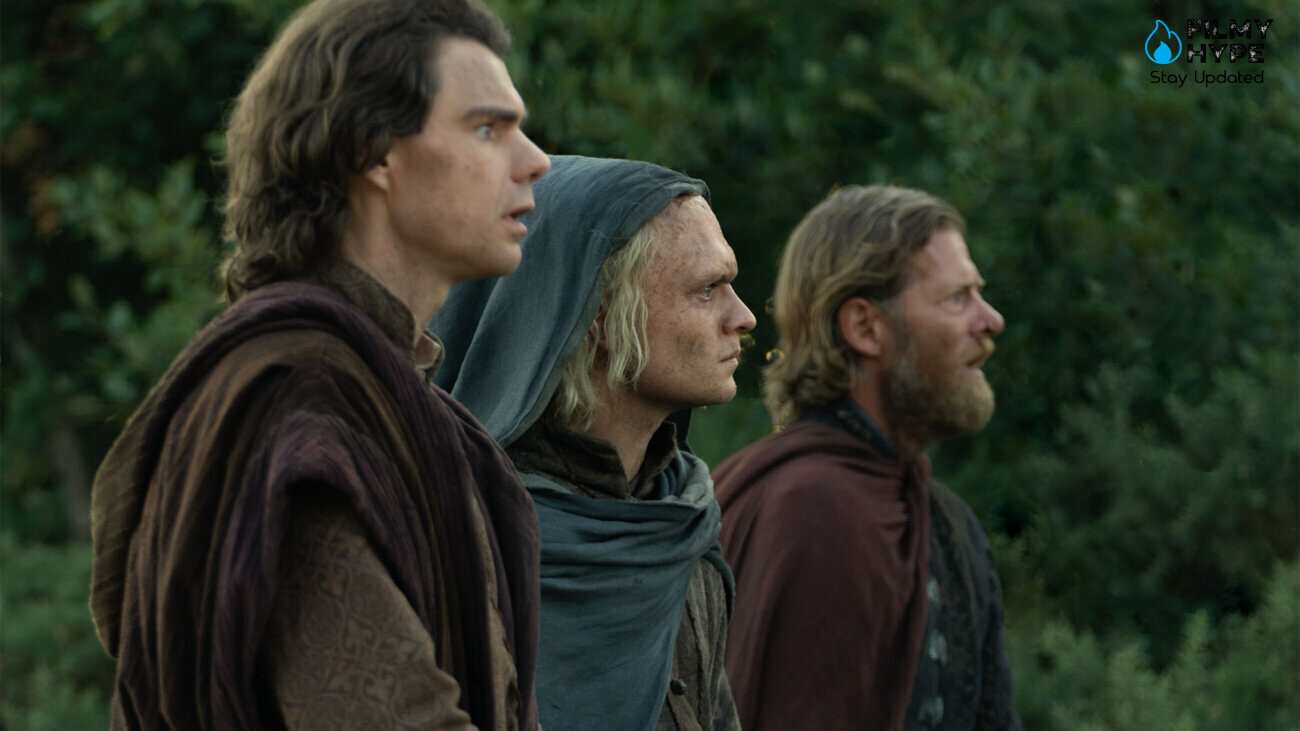
Ulf the White is going to betray Rhaenyra. Ormund got to him. And the way the show has constructed this turn—building it out of character beats that have been accumulating all season—turns what could have been a simple plot mechanic into something that feels genuinely tragic, even for a character as fundamentally ridiculous as Ulf. In fact, to be clear, we can say that The Winter Dragon is, at least for now, the most spectacular episode of the most spectacular season of House of the Dragon so far: between dragon fights and betrayals that shocked those who haven’t read Martin’s book and haven’t browsed the various fan wikis, a lot happened in this episode. So let’s delve as always into our recap, where we analyze curiosities, details, and divergences with the source material.
House of the Dragon Season 3 Episode 7 Ending Explained: Summary
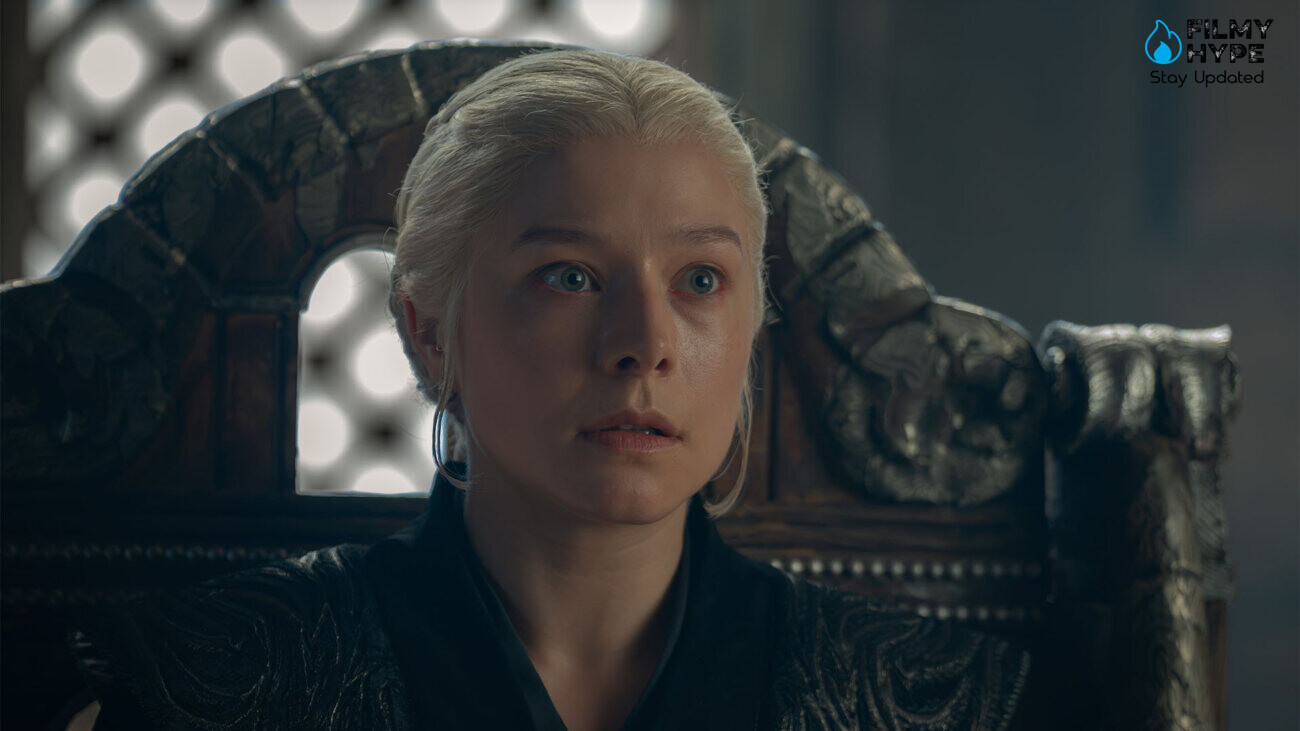
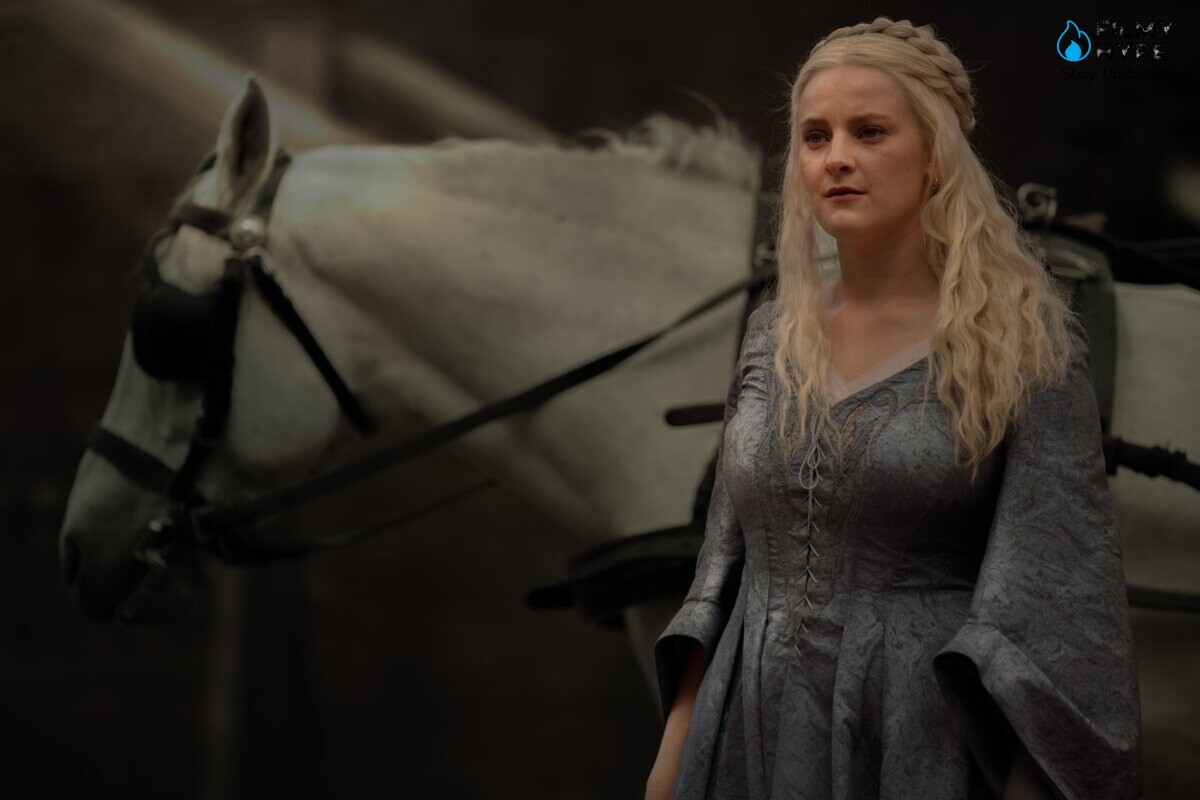
After a theme song that now also depicts the death of Criston Cole, the episode begins with Helaena’s bucolic dream abruptly interrupted by Rhaenyra‘s call. The Queen came to explain the obvious to her half-sister, designating her as a “dreamer”. It’s a shame, though, that he mistakes her for a fairground fortune teller, forcing her to portend a bright future for her and her loved ones, when Helaena sees nothing but “a gray day”. In fact, shy Helaena teaches her older sister a lesson in dignity, refusing to play along and showing her how living with dragons has changed the sovereign’s soul, unlike what happened to her and their father, Viserys, who at one point preferred to stay away from those mighty creatures.
The Recruitment of Ulf the White
The seeds of this betrayal were planted long before Ormund ever entered the picture. Ulf has been miserable since he claimed Silverwing. He thought becoming a Dragonrider would mean wealth, status, and the freedom to do whatever he wanted. Instead, Rhaenyra has kept him on a short leash. He’s been stationed at Tumbleton, ordered to guard a town he doesn’t care about, denied the pleasures he assumed would come with his new position. And then Daemon found him in the streets of King’s Landing and humiliated him publicly—knocked him to the ground, threatened him, treated him like a dog rather than one of the six most valuable military assets in the entire Black faction.
Ormund‘s informants wouldn’t have needed to work very hard. Everyone in King’s Landing probably heard about Ulf’s humiliation within hours. The information reached Tumbleton quickly, and Ormund—who has demonstrated repeatedly that he understands how to exploit weakness—saw an opening.
In the final moments of Episode 7, Ormund and Ulf meet. The conversation is direct. Ormund mentions Daemon‘s lack of respect. He promises that Ulf would be treated differently if he switched sides. And then he makes the specific offer that changes everything: with Corlys Velaryon now a prisoner, the seat of Driftmark is vacant. Ulf could become Lord of the Tides.
It’s a blatant manipulation, and it works because Ormund understands exactly who he’s dealing with. Ulf is not a complicated man. He wants recognition. He wants comfort. He wants people to treat him the way he believes a Dragonrider deserves to be treated. Rhaenyra and Daemon gave him none of that. Ormund is offering all of it. The lordship is probably an empty promise—Ormund doesn’t have the authority to grant Driftmark, and even if he did, the Velaryon fleet isn’t going to accept a tavern-dwelling DRAGONSEED as their lord—but Ulf doesn’t need the promise to be real. He just needs it to feel real enough to justify doing what he already wants to do.
Ulf agrees to burn Ormund‘s enemies. The betrayal is set.
How This Differs From the Book
Anyone who’s read Fire & Blood knew Ulf was going to turn. The book is explicit about what happens: at the Battle of Tumbleton, Ulf pretends to be fighting for the Blacks, then suddenly turns his dragon on the city itself, burning it and officially joining the Greens. What the book never made clear was how this happened. Martin’s history is written as an in-world document, compiled by a Maester working from contradictory sources long after the events in question. Private conversations between Ulf and any Green operatives wouldn’t have been recorded. The exact mechanism of the betrayal was left to the reader’s imagination.
The show has now filled in that gap, and the solution is character-driven in a way that Martin’s broad historical strokes couldn’t be. Ulf’s betrayal makes sense not just because he’s greedy and ambitious—the traits the book emphasizes—but because the show has spent all season demonstrating exactly why those traits made him vulnerable. He’s been publicly humiliated. He’s been denied the rewards he was promised. He’s been treated as expendable by people who don’t respect him. Ormund didn’t have to work very hard because Rhaenyra and Daemon did most of the work for him.
There are some differences worth noting. In the book, Ulf’s betrayal is what allows the Greens to take Tumbleton, and it happens after Ormund has already died in the battle. The show appears to be merging the First and Second Battles of Tumbleton into a single event, with Ormund very much alive and orchestrating the defection personally. This compression makes dramatic sense—television doesn’t have the luxury of spacing out two separate battles across multiple seasons—but it means the sequence of events is going to look different from what readers expect.
The larger question is whether the show’s Ulf will follow his book counterpart all the way into atrocity. In Fire & Blood, Ulf doesn’t just switch sides. He burns the city itself, killing innocent men, women, and children in an act of indiscriminate violence. The show’s Ulf has been presented as more sympathetic than his literary counterpart—a bit pathetic, yes, and certainly self-interested, but not a monster. Whether the series will have him cross that line, or whether it will find a way to limit his betrayal to military targets, remains to be seen.
The Hugh Hammer Problem
Ulf isn’t the only Dragonseed who betrays Rhaenyra in the book. Hugh Hammer does too, and the show has set up a more complicated situation for him than it has for Ulf.
In Fire & Blood, Hugh’s motivations are essentially identical to Ulf’s: wealth, position, prestige. The promise of rewards that Rhaenyra couldn’t or wouldn’t deliver. But the show’s Hugh is a different character. He’s not a tavern braggart looking for an easy path to comfort. He’s a blacksmith. He has a wife who’s currently a refugee in Tumbleton. In Episode 6, he risked his life sneaking into the city to find her, only to be met with anger and rejection. She wasn’t grateful that her husband had become a Dragonrider. She was furious that he’d disappeared, that he’d left her alone, that he’d chosen the queen’s war over his family.
That’s a much more emotionally complex setup than the book provides, and it creates a narrative problem. Why would Hugh, having finally reconnected with his wife, do something that would put her in direct danger? If he turns on Rhaenyra and starts burning Tumbleton—the city where his wife is currently living—he’s not just betraying his oath. He’s potentially killing the person he risked everything to find.
The show will have to find a motivation that the book didn’t provide. Maybe Hugh’s wife dies in the crossfire before his betrayal. Maybe Ormund gets to him through some other pressure point. Maybe the show deviates from the book and has Hugh remain loyal, transferring his canonical betrayal to a different character. Whatever happens, the groundwork being laid here is more intricate than the simple greed narrative Martin’s history records.
Addam of Hull and the Isle of Faces
While Ulf and Hugh are being positioned for betrayal, Addam of Hull is moving in the opposite direction. In Fire & Blood, Addam plays no part in the treachery of his fellow Dragonseeds, but Rhaenyra—paranoid and spiraling—refuses to believe him. To prove his loyalty, Addam undertakes a mysterious journey to the Isle of Faces, where he meets with the Green Men. Whatever happens there, he returns with renewed purpose and leads the Blacks to victory at the Second Battle of Tumbleton, dying in the process.
The show has already laid the groundwork for this arc. Addam glimpsed a Green Man earlier in the season, the horned figure watching from the shore. The connection has been established. In Episode 7, Corlys—now Ormund‘s prisoner—is in no position to legitimize his son the way he does in the book. That means Addam remains Addam of Hull rather than Addam Velaryon, which only increases the suspicion he’ll face from Rhaenyra when the other Dragonseeds turn.
The pieces are in place for Addam‘s story to become one of the season’s emotional anchors. He’s the Dragonseed who stays loyal. He’s the one who pays for the betrayal of others with his life. And his journey to the Isle of Faces—a place the show has been referencing since Daemon‘s visions in Season 2—promises to connect the political machinations of the Dance to the older, stranger magic that exists beneath the surface of Westeros.
The Stage for the Finale
This was the penultimate episode of Season 3. The finale is going to be carnage.
The Battle of Tumbleton—whether the show treats it as the First, the Second, or some combination of both—is clearly set to unfold in Episode 8. Rhaenyra‘s dragons still outnumber the Greens’ forces, but the defection of Ulf and Hugh would narrow that gap considerably. Add Silverwing and Vermithor to the Green column, and suddenly the fight looks very different. Aemond is recovering at Harrenhal under Alys Rivers’ care, and Vhagar—wherever she is—will presumably return when the moment demands it. Daemon, desperate to redeem himself after Rhaenyra discovered his lie about the Sheepstealer incident, is spoiling for a fight with the man who killed Lucerys.
But military victory may be beside the point. Rhaenyra‘s position in King’s Landing is crumbling. The City Watch has collapsed. The Gold Cloaks are resigning. The smallfolk are hungry and angry. Winning at Tumbleton won’t refill the treasury or feed the population. It won’t stop Aegon—wherever he is—from pressing his claim with his newly awakened dragon, Sunfyre. The show has been building toward Rhaenyra‘s fall all season, and the finale seems poised to deliver it, whether or not she wins the battle.
Alicent is on her way to Harrenhal, sent by Rhaenyra to lure Aemond into a trap. Helaena is alone in the Red Keep, pregnant and fragile, her mental state deteriorating. The pieces are converging. The finale will have to balance the spectacle of dragon combat with the intimate tragedy of characters who’ve been making terrible choices for so long that they’ve forgotten how to do anything else.
Martin’s history tells us how the Dance of the Dragons ends. But House of the Dragon has proven, again and again, that the path to that ending can take unexpected turns. Ulf’s betrayal, set in motion by Ormund‘s manipulation and Rhaenyra‘s failures, is the latest reminder that in this war, the most dangerous weapons aren’t always the dragons. Sometimes they’re the people who’ve been given every reason to stop believing in the side they’re supposed to be fighting for.
Alicent Arrives in Harrenhal From Aemond and Alys?
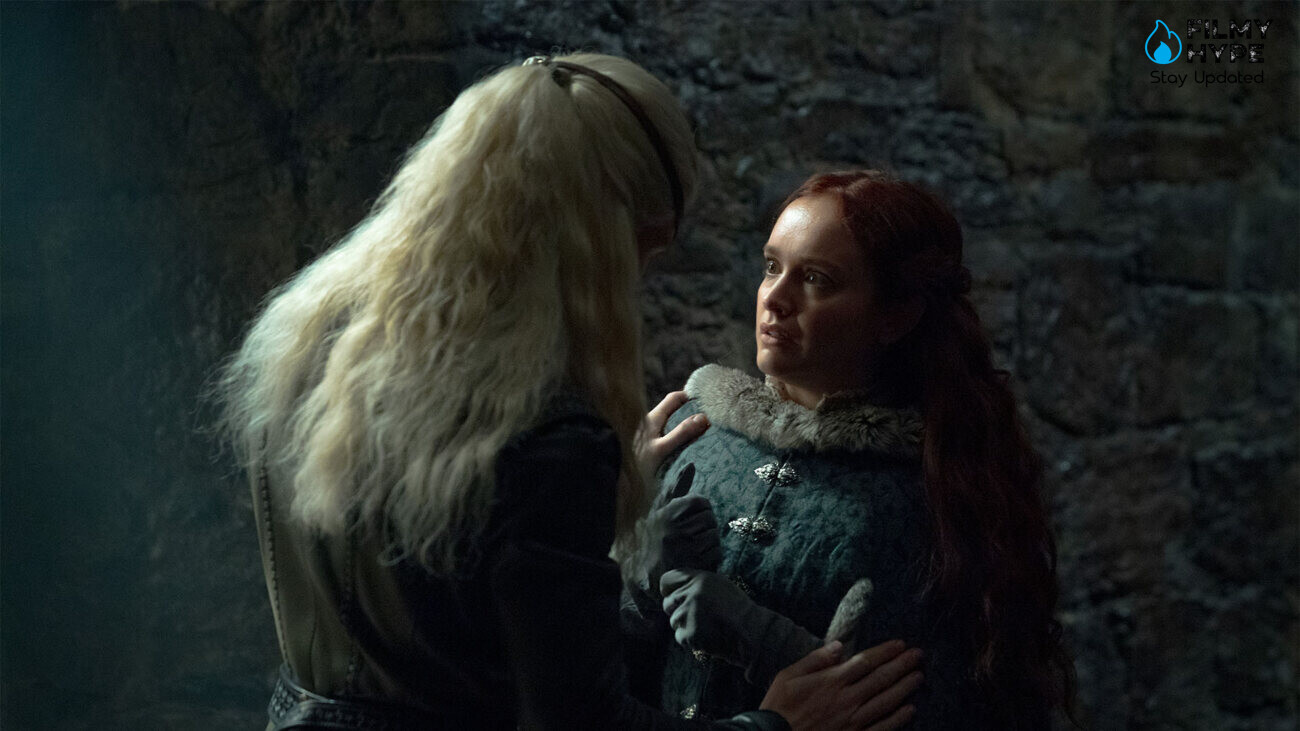
Alicent, meanwhile, arrived very quickly in Harrenhal, sent on a mission by Rhaenyra to kill Aemond. Their reunion immediately becomes very intimate, obscenely intimate if it weren’t for the Targaryens‘ story, but then it turns out that the mother-son intercourse is a hallucination, because in reality Aemond is in bed with Alys, eager to give him a child. The exchange that makes a normal person sigh shocks Aemond, who goes for a breath of fresh air.
And who does he find outside? The real Alicent, who actually arrived with that suspicious speed of the later seasons of Game of Thrones, was escorted only by Adrian Redford, the Queen’s bodyguard. Which, predictably, will immediately come to a bad end, because Aemond slits his throat without thinking too much to avoid leaks, rightly trusting little of his mother’s story of a solitary escape. And it is under these circumstances that Alicent meets her aspiring daughter-in-law, Alys.
Rhaena and the Sheep Thief Come Out into the Open, Addam Too, But It Goes Badly for Him
After a brief passage to Tumbleton, where Gwayne’s worried report on the rapidly approaching twenty thousand northern men does not shock the cunning Ormund, who we know has kidnapped Corlys, Rhaena, and her rowdy Sheep Thief end up in the spotlight.
Daemon goes to hold Jeyne Arryn to account, who rightly admits she doesn’t quite know how to confine a girl to a dragon, and then agrees to postpone informing the queen to allow the king consort to find his daughter and her dragon fluttering around Fairmarket in the Riverlands. (Fun fact: Jeyne talks about nettles at one point, in English “nettles”: it’s definitely a hidden reference, perhaps a tribute to Nettles, the sheep thief’s rider in Fire and Blood, as previously mentioned, completely cut from the series.)
And it is in those parts that they are spotted by Baela and Addam, who, at least, this way better masks the amazement after his attempted courtship of the girl (who would later be his niece) is exchanged for an intercession for Alyn, with whom there was a kiss in the last episode.
Ormund Torches (and not only) Corlys, but Daeron is Disgusted?
As we were saying, Ormund is not at all worried by the arrival of the northern men. But, as he explains to Corlys himself, his plan is not even to hold the Tide Lord hostage to keep Rhaenyra‘s fury at bay. No, he wants to destabilize Driftmark‘s soldiers, leave them without a leader, and thus leave King’s Landing still without a city guard, given the murders and the resignations of the surviving golden hoods.
“And what good will all this do when twenty thousand northern men arrive here?” asks a confused Daeron, who then privately confesses his anguish to Gayne, first of all that he has no intention of becoming king nor of hiding like a coward with his dragon Tessarion. As for Corlys, who is not shocked by Ormund and his words of disgust for the Targaryens, that knife brandished at the end of the scene by Lord Hightower is a painful anticipation of what we will see next. For those curious, let’s remember that in Martin’s book, this story of Corlys‘ kidnapping at the hands of Ormund was not there.
Rhaenyra is Increasingly Alone, and Everyone is Taking Advantage of It
In the capital, a Rhaenyra already wounded by the sword throne suffers another series of blows to morale. No one knows where Daemon is, no one knows if Alicent‘s mission was successful, but Sabitha Frey already claims Harrenhal, and then the queen sends her to get that mess. Lord Manderly laments the trouble caused by Tyland Lannister’s disappearance of the treasure, and to top it all off, Baela and Alyn also arrive, returning from the river lands, where they spotted Sheepstealer being ridden by someone.
Shocking news for Rhaenyra, who believed her uncle-husband when he swore to her that he had burned alive the person responsible for Jaecerys’ death. And in this moment of weakness, Mysaria also takes advantage of her, rightly inviting her to distrust Daemon but ultimately plotting for her own gain.
The Cheerful Aegon-Larys-Tyland Trio Must Reconsider Their Plans?
We find the unexpected eori of these last episodes, namely Aegon the burned, Larys the lame, and Tyland the resurfaced. Having escaped from Crow’s Rest after Aegon had killed – with a flake of his dragon Fire Sun – Janos, the three are still arguing about what to do. Or rather, the Lannister continues to plead the cause of a retreat to Casterly Rock for the fleeing king, who, however, continues to prefer Larys’s heady proposal (thanks to the sweet wines of Volantis) to cross the narrow sea to go to Bravos, on the eastern continent of Essos.
When they arrive near the port town of Miadenpool, however, the three and their escort discover that the town has been occupied by the Mootons, a house whose name is worth remembering because – spoilers – they will return to show up. And dead. Faced with the exodus of people, Tyland suggests returning to Rook’s Rest, waiting to understand how the Black-allied Mootons discovered that Aegon is in those parts. But, in reality, the wanted man is Tyland, whose presence Corlys had warned his son Addam about.
Aegon Proves More Valiant and Smarter Than Aemond
And so we get to two scenes that, one after the other, overturn the perception we all had of the brothers Aemond and Aegon.
Because, in Harrenhal, the one-eyed man doesn’t understand that his fiancée Alys is right when she says that her mother is deceiving him, to the point of going to collect poisonous herbs at a time when, like two old spouses, Aemond and Alys discuss their mother-in-law and the witch reiterates that “the Targaryen boys always want the same thing”, with a clear reference to the Oedipus complex.
Not far away, however, Aegon realizes that there is no point in fleeing, even if the Mootons are not looking for him but for his traveling companion. The deposed king acts as king for the first time and decides to face his fate, facing the opposing troops to die standing, erasing the ignominious rumor of his death at the hands of his brother. Faced with the choice of war, Larys takes a limping step back, while Tyland decides to join his majesty at the hardest hour, demonstrating that he has forgotten when he threatened to make him play the horse of his son and proving that even among the Lannisters, now and then, there is someone honorable.
The Breathtaking Fight Between the Dragons of Rhaena, Daemon, Rhaenyra, and Addam
The highlight of the episode has arrived: the great Targaryen-Velaryon dragon fight match. First of all, Daemon and Caraxes find their daughter with Sheepstealer-Sheep Thief, who confesses that she ran away from the Valley to look for Vaghar and try to kill him, thus obtaining a partial pardon from Rhaenyra if successful and the consolation of death if defeated.
But while Daemon offers to help his daughter, Rhaenyra and Alyn arrive on the scene, riding Syrax and Seasmoke respectively (it is not clear why it was translated into Italian as Fumasmoke). Alyn immediately joins her niece, who had attempted to escape on foot on her father’s advice.
Then comes the epic moment when Rhaenyra discovers that her stepdaughter-cousin (if we’ve done the right genealogical calculations) was responsible for Jace’s death in the Gullet, and also discovers that her husband-uncle has been lying to her the entire time she’s kept a poor shepherd’s skeleton on her nightstand, believing it to be that of her son’s killer.
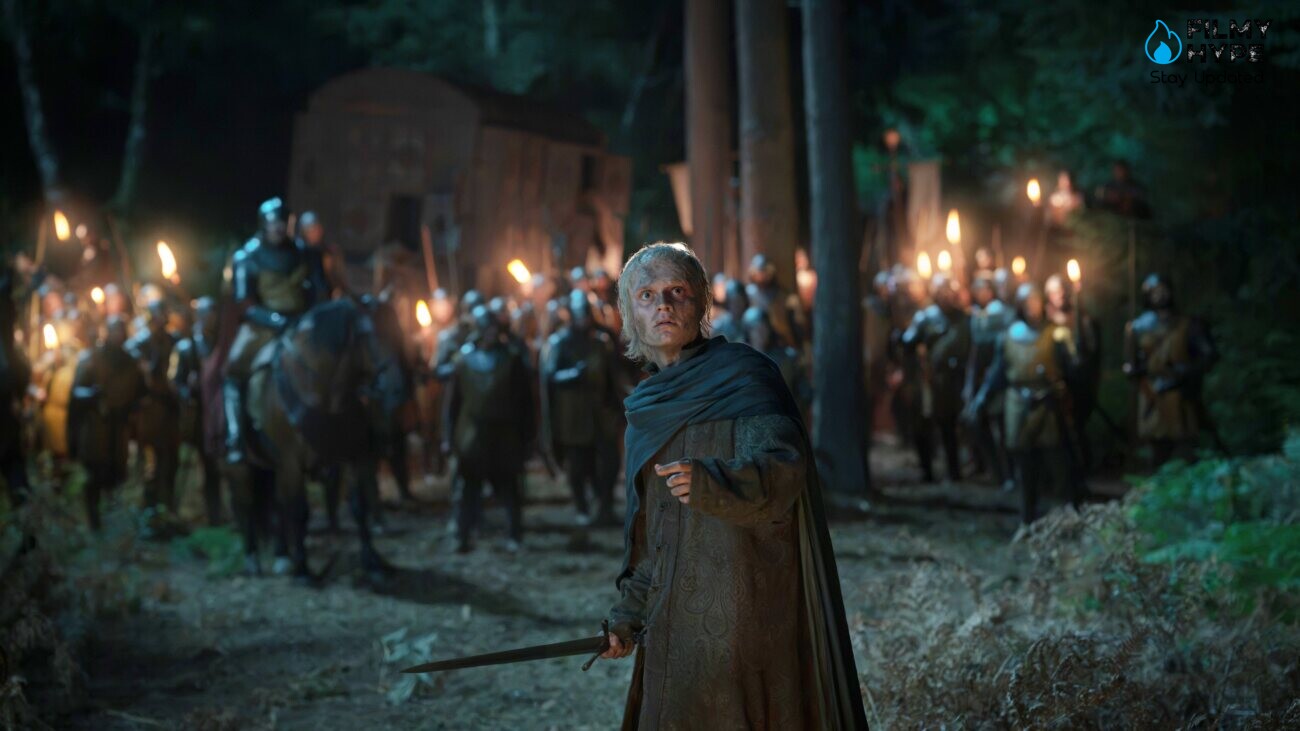
But as the humans confront each other in words, the gruesome verses of their respective dragons herald the beginning of the most beautiful scene of this stupendous episode: the fight between these fire-breathing beasts. Rhaenyra takes Rhaena, and with Syrax having just escaped Sheepstealer‘s blows, they move away, while the other two dragons of the royal stable team up to kill their rebel rival.
Between bites to the neck and dilating claws, Sheep Thief gets the worst of it, so Daemon orders Addam to escort the queen and Caraxes to finish off the enemy, but when he is unseated, his faithful dragon puts the derelict Sheep Thief to flight (with Rhaena screaming in despair from afar) without giving him the final blow, preferring to reassure herself about her master’s well-being. In short, Sheep Thief or Sheepstealer, if you will, is still alive.
Interlude: Mysaria Pulls It, One of Her Most Loyal Followers Puts It Back?
After so much tension, a lighter scene. Mysaria takes Sylvi, the woman we saw last season at that rally at Ulf’s inn, around the red fortress, and in this third season, pleading the people’s cause at the first audience as queen of Rhaenyra.
Sylvi is not enchanted by the pomp and magnificence, but rather reproaches the woman who, for years, admired having lost her ideals of defending the least fortunate on the streets. Mysaria tries the timid defense of those who know they have betrayed themselves and their history, but her old friend invites her to prove with facts that she has not rested on her laurels. “These people are not like you, remember,” admonishes her, “because within the walls of the nobles, a prostitute will always and only be a prostitute”.
Alicent Gives Poisoned Wine to Aemond, Family Reckoning at King’s Landing
In Harrenhal, Alicent shows nerve and no remorse when, with a serene face, she reassures her son Aemond of the love she feels for him, clouding his mind with words even before with the “spiced”, or rather, poisoned, wine that she makes him drink without even trying too hard to indulge his incestuous instincts.
Meanwhile, in King’s Landing, it’s time for family discussions. First of all, the one between Rhaenyra and Daemon, who does not obtain the forgiveness of his wife-nephew for having effectively protected his daughter from paying the consequences of her actions. And then the one between sisters, with Baela instead having no hard feelings towards Rhaena, who killed her second cousin’s boyfriend.
Alyn and Aemond Falter Over a Father’s Finger and a Wine Finger
At this point, another comparison of “staggering” reactions and relationships with parents. Within the walls of the capital, Alyn receives a package with Dad Corlys‘ finger and ring (here’s that knife Ormund raised for what it was used for).
Amid the mists of Harrenhal, Alys realizes he has lured another idiot Targaryen when Aemond arrives before him, wavering from the poison he ingested directly from his mother, who, in the meantime, closes the castle door behind her, to go who knows where.
Helaena Dreams of Winter, Rhaenyra Gets Screwed By Mysaria
Towards the end of the episode, we return to explore Helaena’s dreams, who has dream visions of parts (not parties), houses in the countryside, and of her riding her Fire Dream to which she orders the famous fire command “dracarys”. But first, a solar eclipse arrives in the house in the countryside, and then a blast from the Starkian winter.
Rhaenyra, on the other hand, can’t sleep and decides to go and have a late-night chat with his sighing teacher and former lover, whom he accuses of manipulating her the whole time. Yet, all it takes is for Mysaria to make a sweet voice and tell her, “how beautiful you are, how good you are,” and the queen is manipulated, and not only that, once again by Mysaria.
Surprise Number 1: Sunfyre is Alive and Fighting Alongside Aegon
And here we are at the closing lines, with the first big surprise: Sunfyre, or Sun of Fire if you prefer, is still alive. Aegon finds out at the end of a scene that seems to have come out of Tom and Jerry: faced with the Mooton troops, the deposed king decides not to run away and to go together with Tyland to meet an honorable death. He then begins a speech imbued with pride, and when he sees the terror in the eyes of his enemies, he thinks he has frightened them.
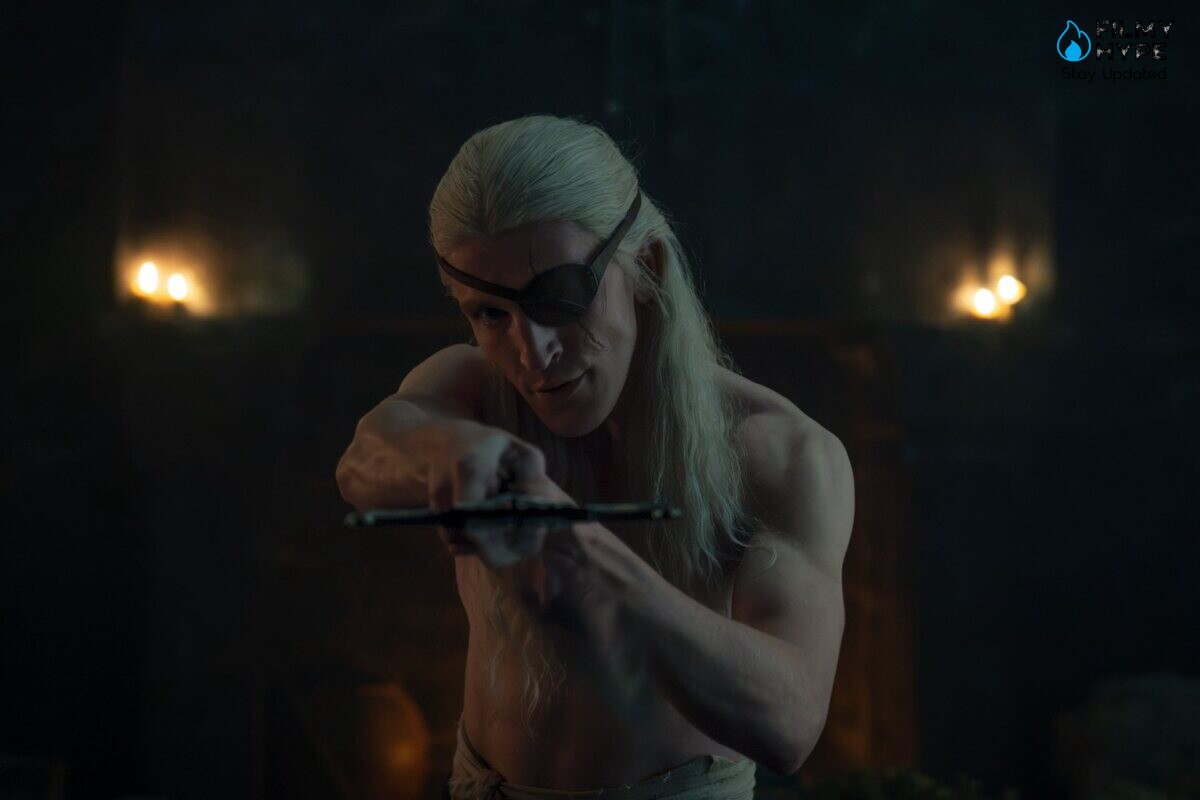
Then, however, he discovers that his beloved dragon has arrived behind him. Which, therefore, was not dead, as Larys believed and as everyone except him believed a little. He may have battered wings, but when his master yells at him “dracarys” he obeys and breathes fire on the unfortunate soldiers who try a desperate escape.
In case you were wondering: yes, even in the book Sun of Fire, he did not die in the fratricidal clash at Rook’s Rest, unlike meleys, which, in fact, we had seen in a state of decomposition on the city walls. Sunfyre, on the other hand, seemed to be only comatose. And whether it was the use of one of his scales to kill Janos, or the perception of grave danger to Aegon, the fact is that the dragon returned to his knight at the best time.
Surprise Number 2: Ulf Gets Bribed by Ormund and Betrays Rhaenyra
Finally, another surprise that Fire and Blood readers have been waiting for for a season: Ulf’s betrayal. Outside Tumbleton, Ormund and White converse with each other, and from what they say, we find that it’s not even the first time.
Ulf is notoriously annoyed by the low regard the queen and king have for him by lot: they have prevented him from going to the tavern, beaten him in the street, and not even given him a little garden to reign over. Ormund, for his part, knows that all it takes is a little beer and a promise to have him installed in Driftmark to convince him to betray the queen and join her side. A promise he has no power to keep, but that’s enough for Ulf to be bribed and side with the enemy with his dragon Silver Wings. And that’s why, despite everything, Ormund wasn’t worried at all. In a week, we’ll see if his peace of mind has been well-motivated.