


Differences in Criston Cole’s Death in Book vs Series: Criston Cole has been one of the most divisive figures in House of the Dragon from the very beginning. Some viewers have hated him since the moment he turned on Rhaenyra. Others have found him tragic, a man whose rigid sense of honor curdled into something bitter and destructive. Whichever side you land on, there’s no denying that his death was always going to be a pivotal moment in the Dance of the Dragons. Episode six of season three finally delivered that moment. But if you’ve read Fire and Blood, you probably noticed that the show took some significant liberties with how the Kingmaker met his end.
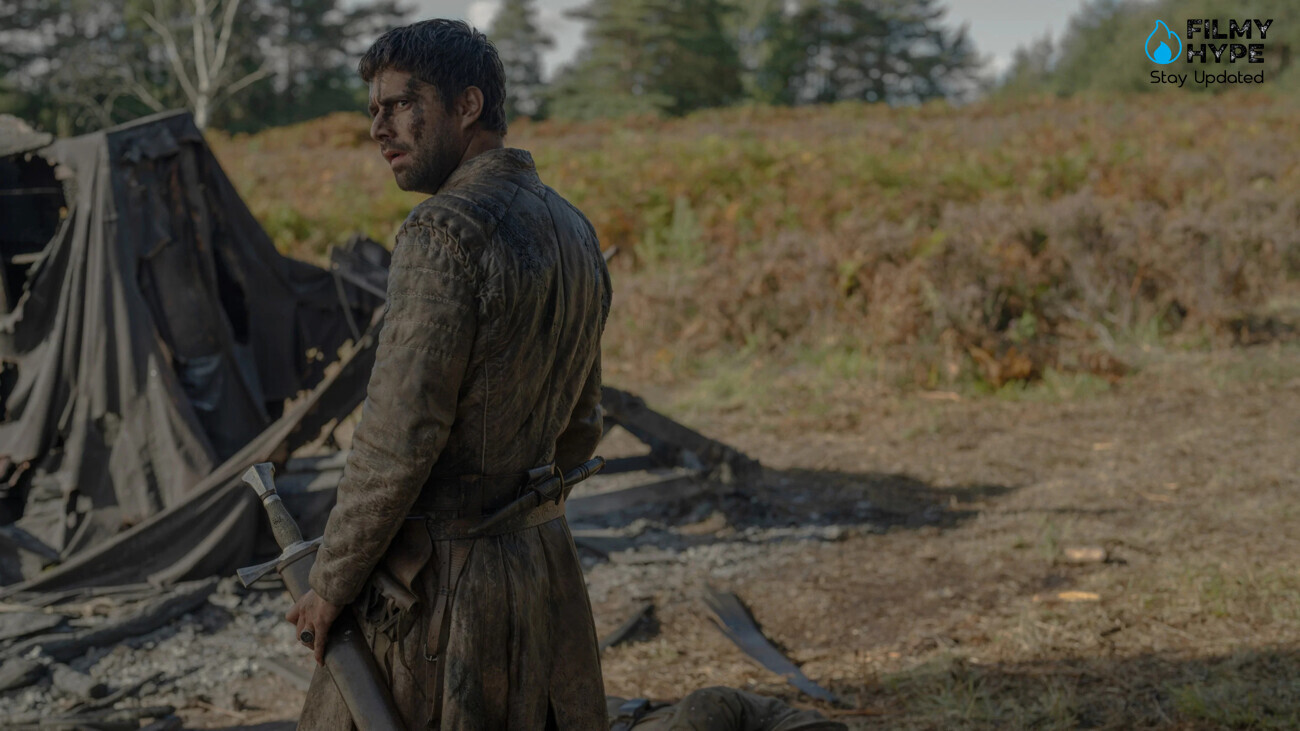
The broad strokes are the same. Criston Cole dies in the Riverlands, ambushed by Rhaenyra’s forces, denied the honorable death he craves. But the details, the buildup, the execution, and even the meaning of his final moments have all been reshaped for television. Some of these changes work. Others flatten the complexity that made the book version so memorable. Let’s walk through what happened, what changed, and what those changes do to the story.
Differences in Criston Cole’s Death in Book vs Series: How It Plays Out on Screen
The episode is called “Men Without a Face,” and it finds Criston Cole at the end of his rope. His campaign in the Riverlands has fallen apart. His army is diminished, exhausted, and surrounded. He knows there’s no escape. So he does what a man like Criston Cole would do. He offers to settle things the old-fashioned way. A duel. Single combat against the enemy commanders. If he wins, his men go free. If he loses, at least he dies with a sword in his hand.
It’s a pitch that makes sense for the character. Criston has always defined himself through martial prowess. He rose from nothing to become Lord Commander of the Kingsguard because he was better with a sword than almost anyone else in the Seven Kingdoms. Offering a duel is his way of asserting control over a situation where he has none left. It’s also his way of trying to secure a death that means something.
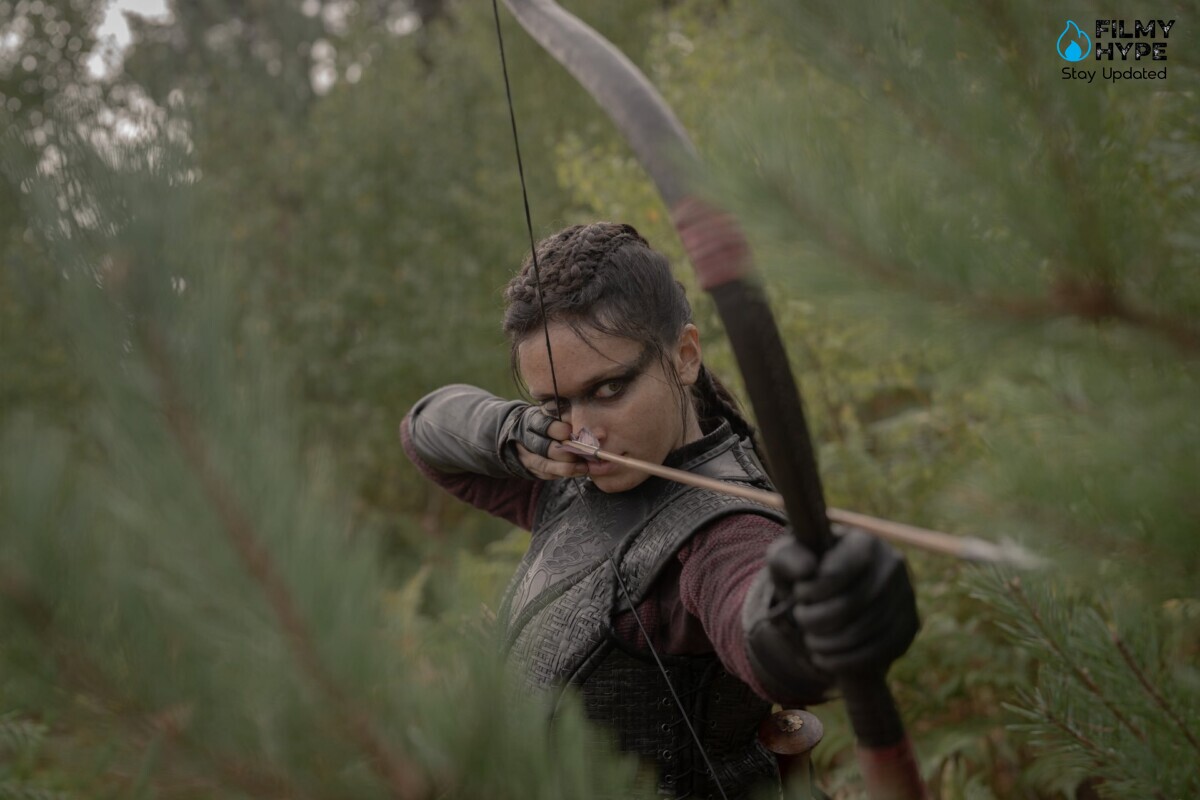
The show doesn’t let him have it. Before he can fully draw his weapon, arrows strike him from a distance. He falls. The battle ends. The Kingmaker is dead, killed not in a blaze of glory but in a quick, efficient execution that denies him the dignity he was reaching for.
The archer who takes the shot is Alysanne Blackwood, known as Black Aly. In the series, she handles the kill alone, firing the arrows that bring Criston down. It’s a clean, visually striking moment that gives a relatively minor character a memorable beat. But it’s also a significant departure from the source material.
What the Book Does Differently
George R.R. Martin’s version of this scene is more elaborate and, frankly, more brutal in its psychological dimensions. In Fire and Blood, Criston Cole faces three commanders: Ser Garibald Grey, Ser Pate of Longleaf, and Roderick Dustin, who everyone calls Roddy the Ruin. He offers them the same deal. Single combat. Let the gods decide.
The response he gets is devastating. Ser Pate refuses outright. He tells Criston that he won’t be getting any songs written about his courage. Too many people have died because of the choices Criston made. Thousands are dead. The realm is burning. And now the man who helped set it all in motion wants to go out like a hero? No. That’s not how this works.
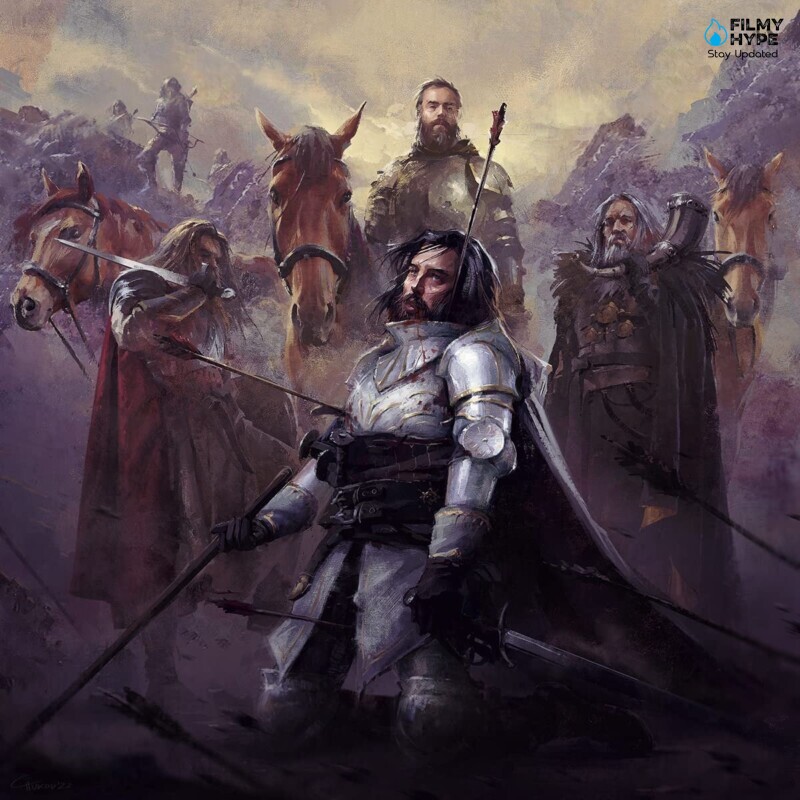
Instead of accepting the duel, Ser Pate summons Robb Rivers, one of the finest archers in Westeros, along with two other bowmen. Three arrows are loosed almost simultaneously. One hits Criston in the chest. One in the neck. One in the abdomen. He dies without ever drawing his sword, killed from a distance by men who refused to give him what he wanted most.
The deliberate humiliation of this moment is the point. Criston Cole‘s death in the book isn’t just a military necessity. It’s a moral statement. The commanders of the Black faction don’t just want him dead. They want him to die knowing that his reputation is ruined, that his legacy is one of shame, that the world will remember him not as a great warrior but as a man who started a war and couldn’t finish it.
The Butcher’s Ball Has Been Simplified
The ambush itself is another area where the show and the book diverge sharply. In House of the Dragon, Criston’s forces are lured into a trap set by the Tullys in what appears to be an abandoned camp. It’s a functional sequence. It gets the job done. But it’s a pale shadow of what Martin wrote.
The book version of this event is called the Butcher’s Ball, and it’s one of the more disturbing pieces of psychological warfare in the entire Dance. After the Battle of Fish Lake, Rhaenyra’s forces spent weeks terrorizing the Riverlands. They burn crops. They poison water sources. They leave corpses strewn along the roads. Criston’s men march through this nightmare for days, passing mutilated bodies and scenes of horror that gradually numb them to shock.
The culmination of this campaign is a grotesque piece of theater. Criston’s soldiers come across a banquet table where corpses have been posed as if they’re sitting down to eat. By this point, they’ve seen so many dead bodies arranged in so many macabre displays that they don’t even investigate. They just keep marching.
What they don’t realize is that some of those “corpses” are actually living soldiers in hiding, waiting for the signal to attack. When the trap springs, it eliminates a significant portion of Criston’s forces. The survivors flee directly into the waiting arms of the main enemy army. The siege is complete. The Butcher’s Ball has done its work.
The show doesn’t include any of this. The psychological erosion, the weeks of attrition, the corpse banquet, the hidden soldiers. It’s all been streamlined into a single straightforward ambush. The result is a sequence that moves faster but loses the sense of inevitable, grinding doom that made the book version so haunting.
What These Changes Do to Criston Cole
This brings us to the question of characterization. In the books, Criston Cole remains a capable and respected military commander right up until his death. He’s not brought down by incompetence or carelessness. He’s brought down by an opponent who executes an extraordinarily sophisticated operation designed to break his men psychologically before finishing them physically. His defeat is, in a strange way, a testament to his reputation. It took something this elaborate to bring him down.
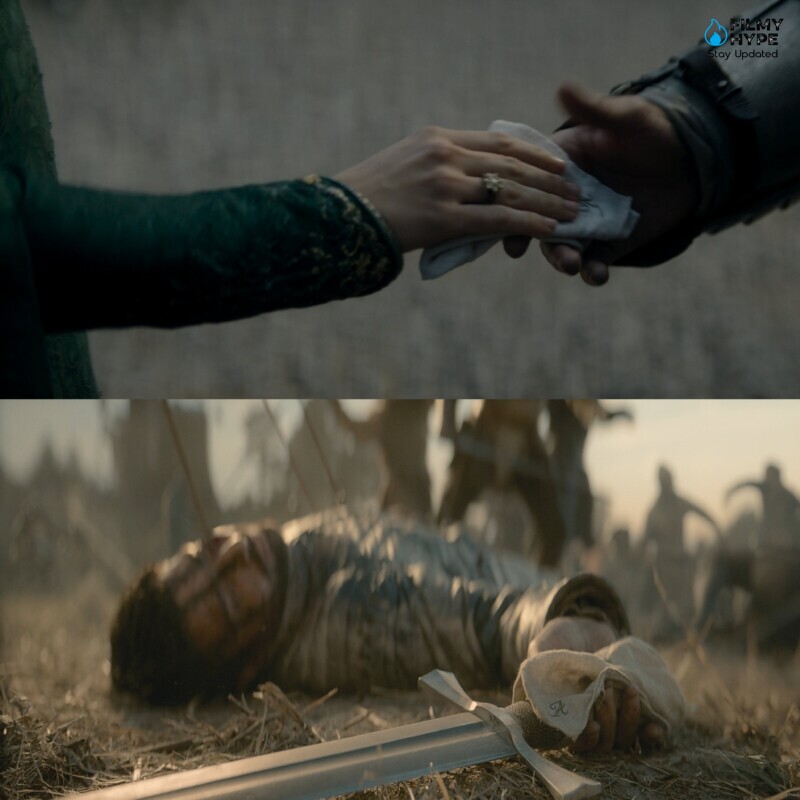
The show presents things differently. The ambush that kills Criston feels relatively straightforward. A trap is set. He walks into it. He dies. The implication, whether intentional or not, is that Criston was less cautious than he should have been, less perceptive, less the master strategist he’s supposed to be. Some of the military intelligence that defines him in the source material gets diminished in translation.
There’s also the matter of Black Aly taking sole credit for the kill. In the book, the refusal to duel and the use of multiple archers are a collective decision made by the commanders. It represents a unified rejection of Criston’s attempt to control his own narrative. Giving the moment to a single character concentrates the dramatic impact but loses the sense that this was a systemic condemnation, not just one person’s choice.
The Emotional Register Is Different
Fabien Frankel has done consistently interesting work as Criston Cole, and his performance in the final episodes adds layers that the book version of the character doesn’t really have. Book Criston is a figure seen mostly from the outside, through the accounts of maesters and historians. We don’t get his interiority. We don’t see him reflecting on his choices.
Show Criston gets something the book never gives him: a genuine reckoning with his own legacy. In the episodes leading up to his death, he thinks about honor. He thinks about what it means to die well. He thinks about whether any of it was worth it. Frankel plays these moments with a weariness that makes Criston more sympathetic than Martin’s version ever was.
When he dies on screen, the dominant emotion is melancholy. Regret. Resignation. This is a man who made terrible choices and is finally being consumed by their consequences, but he’s facing that end with a kind of exhausted acceptance. It’s tragic, in the classical sense. A fall brought about by flaws that were always visible if you knew where to look.
The book doesn’t give him that grace. His death is not a tragedy. It’s a punishment. Ser Pate’s refusal to let him die gloriously is the text itself passing judgment on everything Criston represents. The Kingmaker doesn’t get a moment of quiet reflection. He gets three arrows and a grave that no one sings about.
Which Version Works Better
This is genuinely hard to answer because the two versions are trying to do different things. The book is delivering a thematic point. Criston Cole helped start a war that killed tens of thousands of people. He doesn’t deserve a noble death. He deserves to be executed like a criminal, denied even the satisfaction of fighting back. It’s a harsh, uncompromising ending that fits the brutal logic of Martin’s world.
The show is more interested in character than in theme. It wants you to feel something when Criston dies, even if that something is complicated. You might still despise him for what he did to Rhaenyra, for his role in the coup, for the years of violence he helped unleash. But you’re also watching a man who knows he’s about to die, who’s trying to salvage some scrap of meaning from the wreckage, and who can’t even have that. The pathos of that moment is real, even if you think he earned every arrow.
I think there’s a version of this scene that could have had both. You could keep the psychological warfare of the Butcher’s Ball. You could keep the collective refusal of the duel and the multiple archers. And you could still give Criston those quiet moments of reflection before the trap closes. The streamlining isn’t a disaster. The scene works on its own terms. But something was lost in the translation, and readers who know what the book version contains will probably feel that absence.
The Legacy Question
One of the most fascinating things about Fire and Blood is its structure. It’s written as a history, compiled from multiple conflicting sources. This means the “truth” of any event is always up for debate. The show, by necessity, has to pick a version and commit to it. But in doing so, it flattens some of the ambiguity that makes the book so rich.
Criston Cole‘s death in the book is remembered as humiliating because the victors got to write the history. The show, by making his final moments more introspective and less deliberately shaming, tilts the scales slightly. It’s not a full rehabilitation. Criston still dies before he can fight. He still doesn’t get the duel he wanted. But the tone is less “good riddance” and more “what a waste.” That’s a meaningful shift.
Whether you prefer one approach over the other probably depends on what you want from this story. If you want moral clarity, the book delivers it. Criston Cole was a villain, and villains don’t get heroic deaths. If you want moral complexity, the show’s version has its merits. Even people who do terrible things are still people. Their deaths can still be sad, even if they’re deserved.
The Dance of the Dragons is a story without clear heroes, and Criston Cole‘s death is one of those moments where the adaptation’s choices reveal what it thinks the story is ultimately about. The book thinks it’s about justice catching up to the guilty. The show thinks it’s about the human cost of choices that can never be unmade. Both readings are valid. Both leave a different taste in your mouth when the arrows fly, and the Kingmaker falls.