

The Dink Movie Review and Ratings
Stars: Jake Johnson, River Beier, Ed Harris, Robert Rebetsky, Boone Nelson
Director: Josh Greenbaum
Streaming Platform: Apple TV
Filmyhype.com Ratings: 3/5 (three stars)
The Dink, the new sports comedy that arrived on Apple TV+ on July 24th, is the first major film to feature pickleball as the true protagonist of the story, and it tries to tell the story of this growing sport with the same lighthearted spirit as old comedies like Dodgeball. Perhaps to avoid repeating similar errors, The Dink remained in English, forcing the writer of these lines (after having seen the film in the original version with English subtitles) to do a brief search to grasp the different meanings with which this term is used in the original version of the film.
And so it has nothing to do with the acronym for Double Income No Kids, an acronym that means Double Salary No Children, and which indicates couples without children. However, the ambiguity between the adjective dink, which means soft, but also stupid, and the term sporty has something to do with it, which in Italian we could translate as lobbed, or soft touch. In both ways, it fits perfectly with the story of Dusty Boyd, the protagonist of Jake Johnson’s film, known as Nick from New Girl, and recently on Apple TV with Maximum Pleasure Guaranteed.
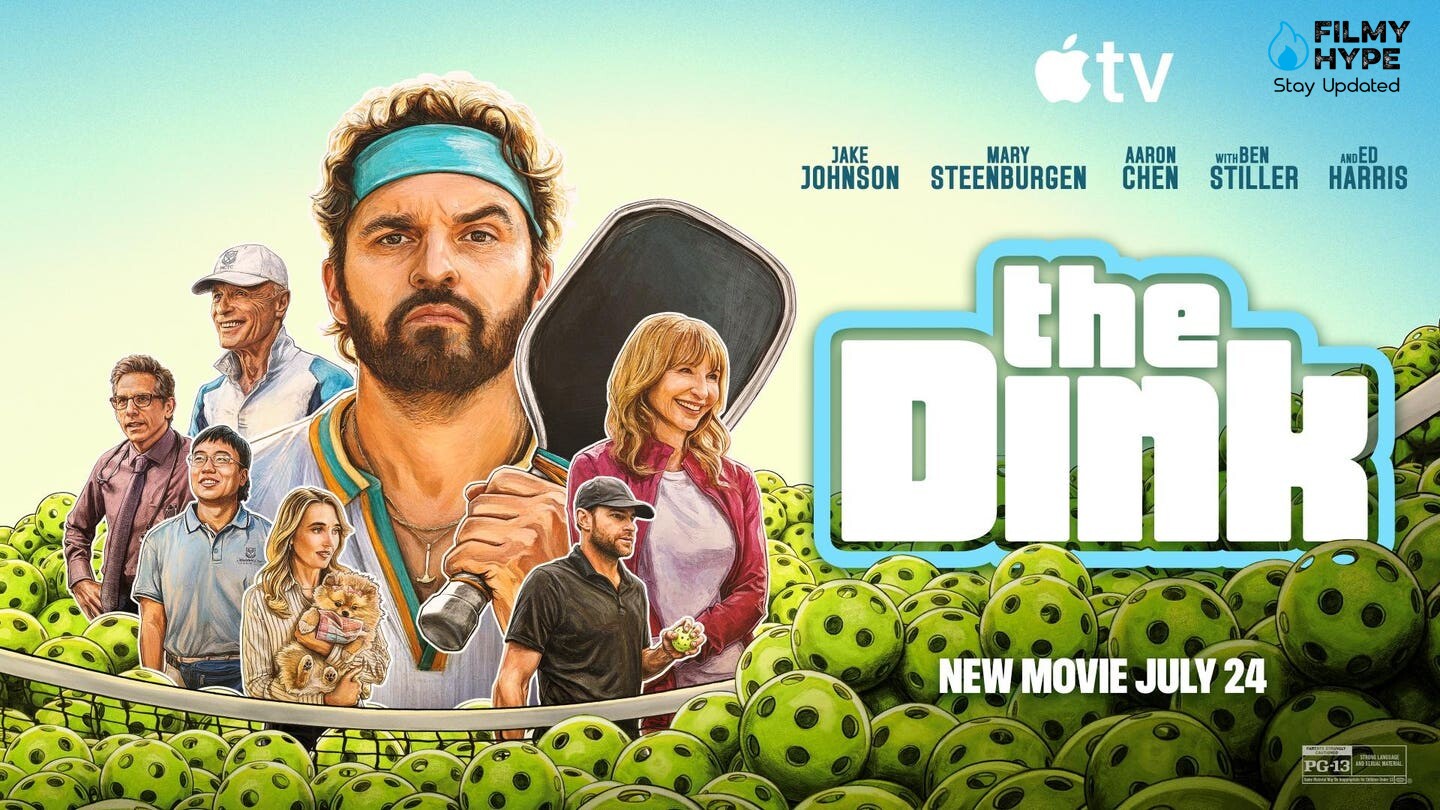
At this point, it will have become clear that The Dink is about pickleball, the sport most played by Americans in recent years, and that it actually represents a further simplification of tennis compared to the one that has been in fashion in Italy for a few years now, Padel. Let’s then look at the plot of The Dink, before expressing our questionable judgment (after all, as always, the trailer). The film follows Dusty Boyd, nicknamed “The Hammer”, a former tennis prospect played by Jake Johnson, now reduced to coaching unruly children at the family country club run by his father, Chuck, played by Ed Harris.
Chuck hates pickleball, the new sport that is slowly taking over the club instead of tennis, and Dusty blindly supports this battle to gain his father’s approval. When an old injury prevents him from playing tennis again, Dusty is forced to rehabilitate himself with pickleball, discovering to his surprise that he is having much more fun than expected, also thanks to the match with Candace, played by Mary Steenburgen. The journey will lead him to confront his own past sporting failures, including childhood rival Andy Roddick, who plays himself, until a final challenge that will decide the fate of the club.
The Dink Movie Review: The Story Plot
Dusty Boyd, known as The Hammer (the hammer), was once the greatest prospect in American tennis. He then faced peer Andy Roddick (who appears in the film himself, as does the great John McEnroe), and his career was nipped in the bud. Today, Dusty is a 40-year-old tennis instructor for kids at the prestigious club owned by his father, Chuck (Ed Harris), who has never let up on the disappointment of that son he trained more than he coached from an early age. Dusty’s only true friend is PJ (Aaron Chen), who worships him beyond merit, even when Dusty tells his boring stories of a glorious past that bores all his students.
One day Dusty at the club meets Candace (Mary Steenburgen, Oscar winner in 1980 for “I Once Met a Billionaire” but for us she will always be the Clara Clayton from Back to the Future 3), a charming seventy-year-old pickleball player who Dusty bans from the club because, like any tennis purist, despises those who play these simplified versions of the noble sport to be within the reach of people who no longer want or can run for a normal course.
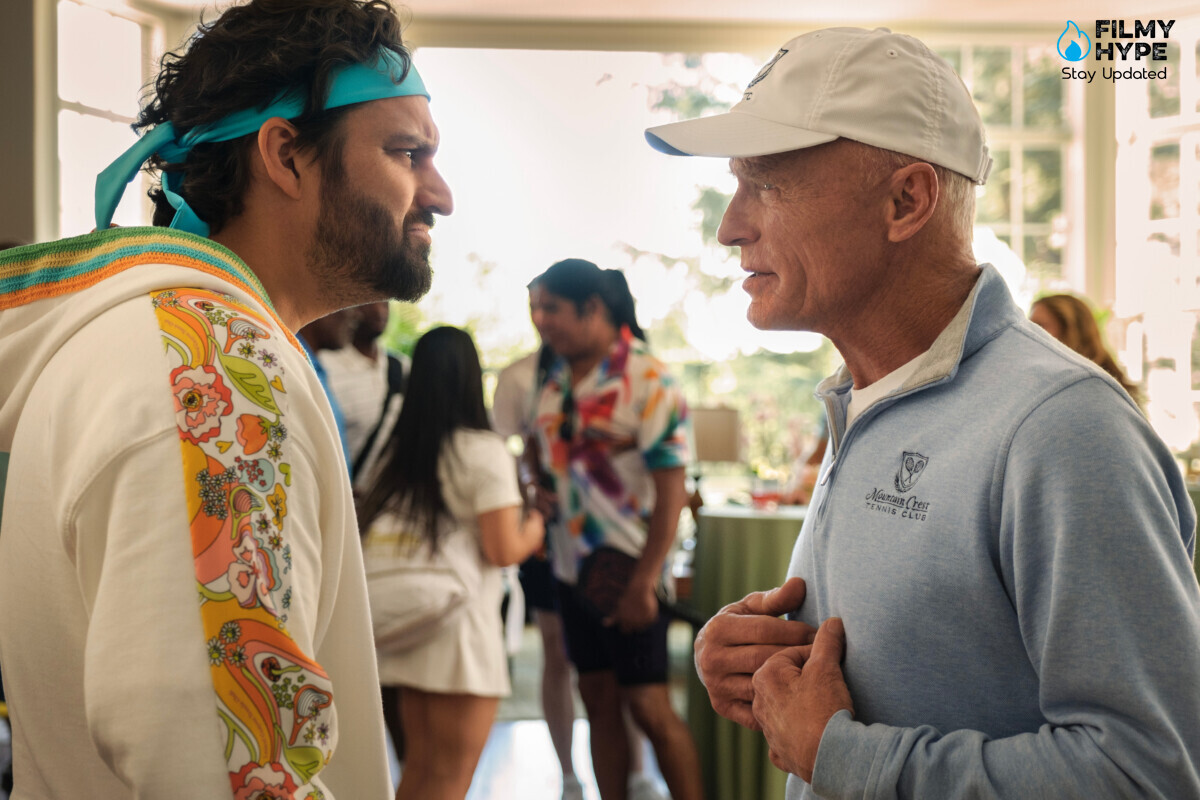
Despite the disdain of Dusty, Chuck, and the other racquet conservatives who are members of the club, pickleball players demand more courts and better conditions, so Chuck tries to avoid a vote among the members by invoking an ancient club rule that allows disputes to be resolved through duels, or in this case, a match.
Dusty would love to regain his father’s trust by representing the tennis faction, but a wrist injury leads his doctor, Dr. Stone (Ben Stiller), to advise him to regain his form by playing pickleball. Our ex-Hammer somehow manages to overcome his prejudices and secretly starts practicing it at a club where he sees Candace again, from his father. And in addition to establishing a strong bond with her, he finds himself passionate about this sport, which he himself has so reviled, and which will actually lead him to face all the insecurities and traumas of his past.
The Dink Movie Review and Analysis
At the beginning of this review, we joked about the decay of American sports films demonstrated by the production of a pickleball film. But, jokes aside, pickleball is truly an overseas craze, and courts dedicated to this game are sweeping from east to west of the United States. A bit like what has been happening in Italy for a few years with padel, which is supplanting not only tennis but also five-a-side football as the most popular sport among those over 35 and beyond. Watching this film, then, we wondered if The Dink would be able to help spread this link between ping pong and tennis here too. Luckily for those, like the late Nicola Pietrangeli, who think that all modern tennis variations are degenerations for the inept, this film, produced by Apple, is unlikely to have enough visibility in Italy to make it a driving force (just to name another sport with rackets).
Having cleared the field of the risk that seeing The Dink could somehow facilitate the contagion of yet another Americanata, this film remains a beautiful story packed with classic content, from self-acceptance to the discovery of one’s passions, as well as, of course, the bonds that each sport creates between people. The cast is spot on in every role, and guest stars Roddick and McEnroe are brilliant, especially the latter, of course. There are several passages original enough to surprise, and the choice to stuff it all with a generous dose of country music is interesting for how it’s staged.
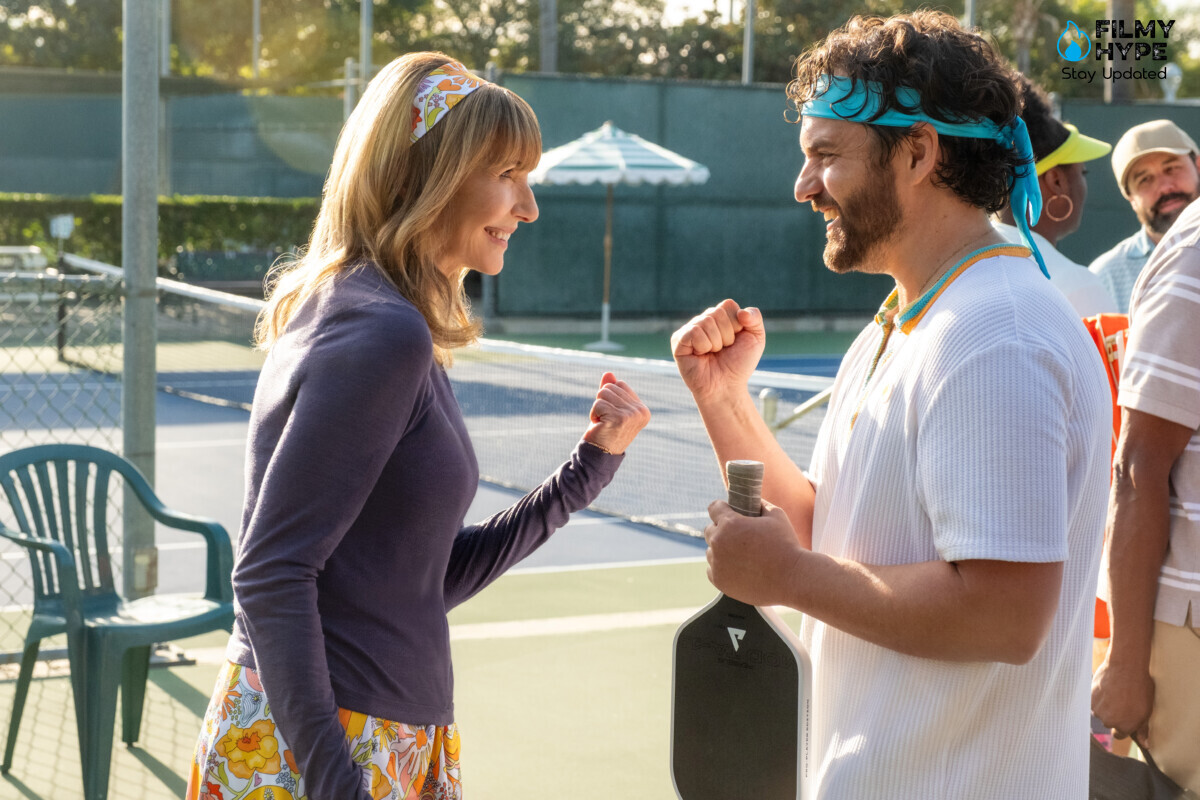
In my opinion, the film works best when it focuses on the relationship between Dusty and her father, a bond told lightly but still capable of giving a minimum of emotional depth to an otherwise simple and predictable plot. Jake Johnson proves himself good as the likable loser, a character that fits him perfectly, while Ed Harris brings a believability to the film that helps balance the lighter moments of the script. Ben Stiller, who also produced the film, also had a good presence here, only in a supporting role, but still recognizable in the overall tone of the operation.
The main problem, however, concerns the writing of the comic scenes, often built on interesting ideas that, however, never get to the end. Several gags remain halfway through, as if the film is afraid to really push itself to find the biggest laugh, settling instead for light, predictable humor that flows without too many peaks. The result is a pleasant but rarely memorable comedy, which entertains but does not leave its mark with the same force as the classics of the genre from which it seems to draw inspiration. Worthy of note, as a small final gem, is the participation of John McEnroe, who, in the final match of the film, comments on the match as if he were actually at Wimbledon, a moment capable of bringing more than a smile to the face and closing the film with the right tone.
The Dink is a film about redemption, of course, but also about identity, expectations, the cumbersome paternal burden, and the undiscounted value of friendship, in this case expressed through an original relationship in its splendid and sweet dysfunctionality. According to the humorous track, it addresses the sense of loss that one feels “afterwards”, going beyond the syntax of victory or defeat.
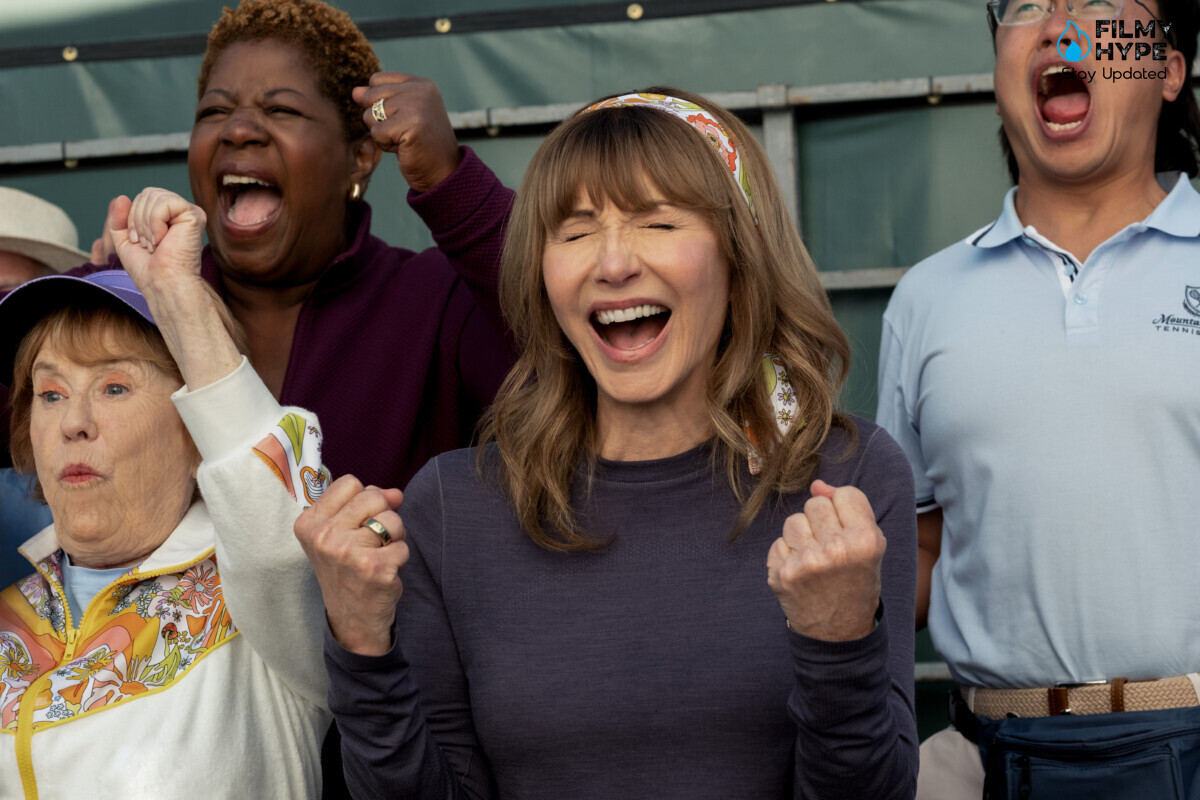
The one directed by the talented Josh Greenbaum (who has none other than Spaceballs 2 on his hands) is a fun title that with a certain ease crosses the dynamism of pickleball – a cross between tennis, ping-pong and badminton, it has existed since the 60s – speaking of us, of how much every certainty, even the granite one, be destined to collapse in the face of the inevitability of a fate full of surprises.
For this reason, as in other genre titles, the structure and emotional impact of a classic sports film are applied to a game in which you passionately fight over a perforated plastic ball. Underneath it all, there’s the story of a boy who’s spent his life looking back and finally finds out his second chance has arrived, waiting for him in the last place he ever thought he’d look.
In short, The Dink is an excellent sports film that, at the same time, enhances the language of comedy also thanks to the inspiration of a decidedly partial cast, well inserted into a script that makes few mistakes. A witty and brilliant script, capable of summarizing the equation: sport can truly explain life, while also helping to find the right community to win with and, why not, lose with.
Beyond the sports facility, The Dink uses the conflict between tennis and pickleball to reflect on the relationship that each of us has with change. Tennis is, for Dusty, an idealized past, made up of expectations unrealized and of the constant need to prove something, especially to the father. Pickleball, on the other hand, becomes progressively the symbol of the possibility of starting again, of rediscovering the pleasure of play without the burden of obsession with victory. In this sense, the film does not really put in contrast two sports disciplines, but two different ways of experiencing success, failure, and personal identity, suggesting how it is often precisely prejudices that prevent us from seizing new opportunities.
To suggest this, Josh Greenbaum maintains a convincing balance between irony skillfully and feeling skillfully, however, also avoiding that the most emotional component ends up stifle that comedian. When the story focuses on the truth regarding what happened in Dusty’s past, for example, the film slows down the pace slightly without losing its own lightness, allowing a subtext to emerge on the weight of the family expectations and the need to emancipate oneself from a judgment pursued throughout life. In a film that avoids some paths that are too well traveled, is perhaps this a path that is more predictable in its main stages, but told with enough sincerity to be engaging.
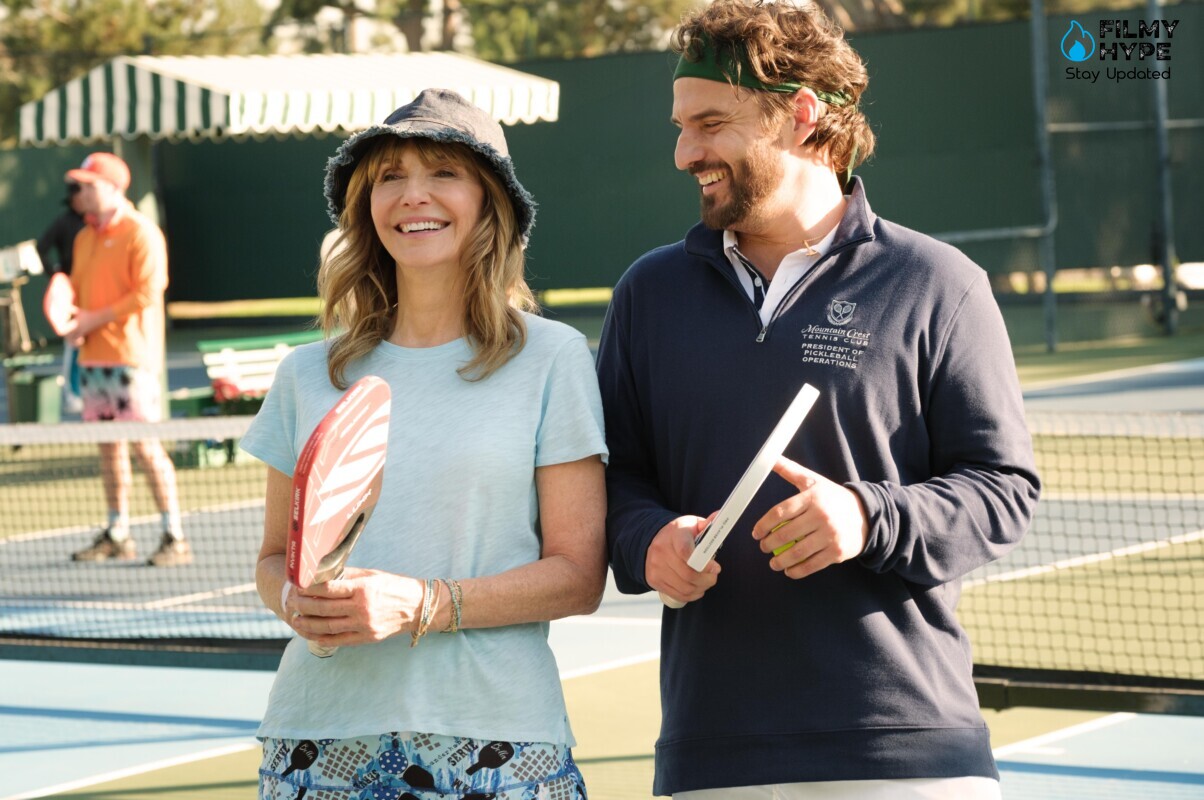
It is not by chance that the clash between tennis and pickleball is told in an almost “ideological” tone. In the United States, the debate between supporters of the two disciplines has become a small cultural phenomenon in recent years, fueled by the very rapid spread of pickleball. The Dink exploits this rivalry with intelligence, transforming it into a satire of the sports parochialism and the tendency to defend one’s own passions as if they were an integral part of one’s identity, even at the cost of burying other people’s. A dynamic that, despite starting from a very American context, is easily recognizable (and funny) even for the Italian public, especially in light of the recent padel boom.
The Dink Movie Review: The Last Words
In short, The Dink is a funny and at times even touching film, and if anyone is shocked that Hollywood nowadays produces films about a game for seniors and people with limited mobility and breath, we can only answer: it is the sign of the times. The Dink is a pleasant sports comedy and is well interpreted, although moving within some narrative schemes of family, finding ways to have fun, and reflecting on the value of change. Not at all surprising, but the close-knit cast and the balance between irony and feeling make the film a light and genuinely engaging vision.