

I watched 23,000 Lives last weekend and couldn’t stop thinking about it afterward. Not because it’s a perfectly polished film—it has the rough edges you’d expect from a production trying to condense years of real-world complexity into two hours—but because the story it tells is still unfolding. The legal battles, the political debates, the questions about who has the right to save lives at sea… none of this is settled history. It’s happening right now, and the film drops you directly into the middle of that ongoing conversation.
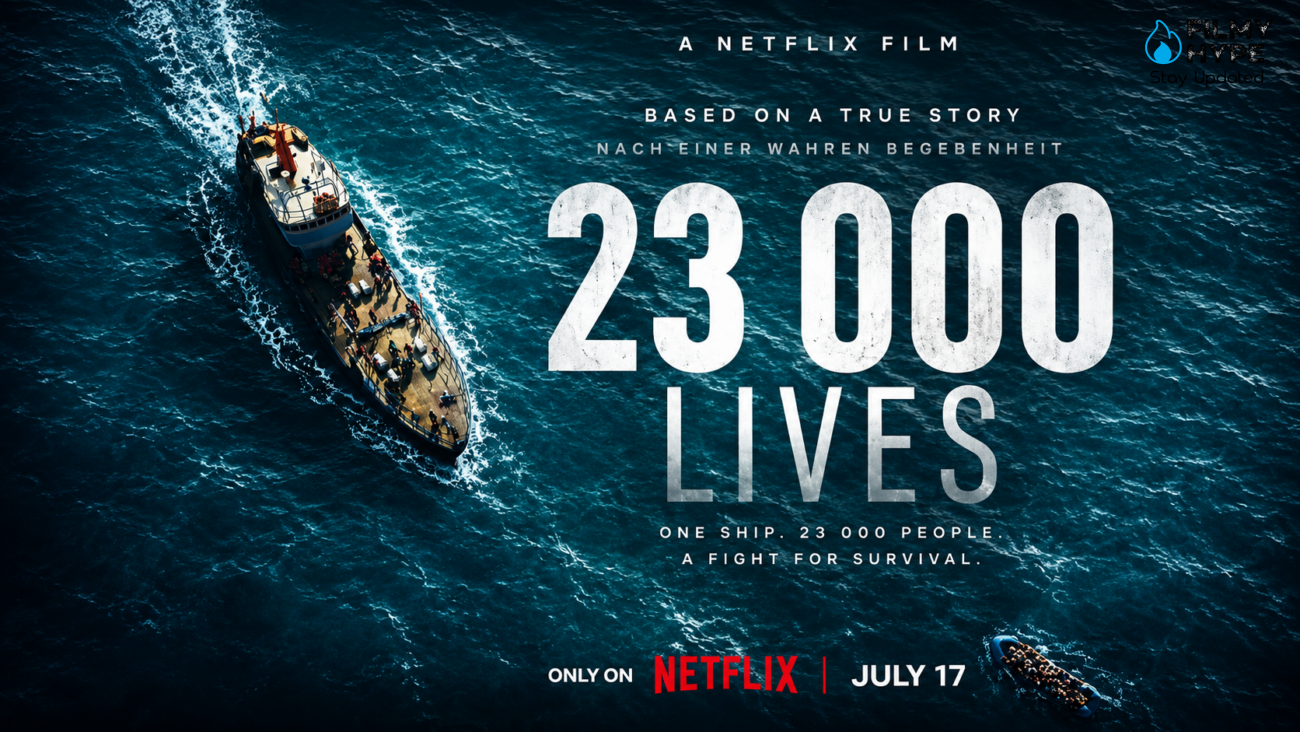
What struck me most was how the movie walks this careful line between dramatization and documentation. It’s not a documentary, but it’s also not a purely fictional story with a “based on true events” label slapped on for marketing. The real ship, the real organization, the real trial—they’re all there, just filtered through fictionalized characters who represent the experiences of dozens of actual volunteers. Let’s unpack what really happened, what the film changes, and why this story matters so much in contemporary Europe.
23,000 Lives Movie True Story: The Origins! How a Group of Berlin Kids Decided to Do Something
The story starts in the summer of 2015, which anyone following European politics will remember as a watershed moment. The migration crisis was dominating headlines. Images of overcrowded rubber dinghies, of bodies washing ashore, of desperate rescues and failed crossings were playing on news channels across the continent. The central Mediterranean, particularly the route from Libya to Italy, had become one of the deadliest migration corridors in the world.
In Berlin, a group of young people watched these reports and felt something shift. Not just sympathy or horror—those are passive emotions—but a conviction that watching wasn’t enough. They didn’t have maritime experience. They didn’t have institutional backing or government funding. What they had was a sense that if you see people drowning and you have the capacity to help, the moral calculus isn’t complicated.
So they started fundraising. The goal was audaciously simple: buy a ship, take it to the Mediterranean, and pull people out of the water. The organization they founded was called Jugend Rettet, which translates literally to “Youth Rescue” or “Young People Save.” The name itself was a statement—this wasn’t being done by governments or established humanitarian giants. This was ordinary citizens, many of them very young, deciding that the refugee crisis was their problem too.
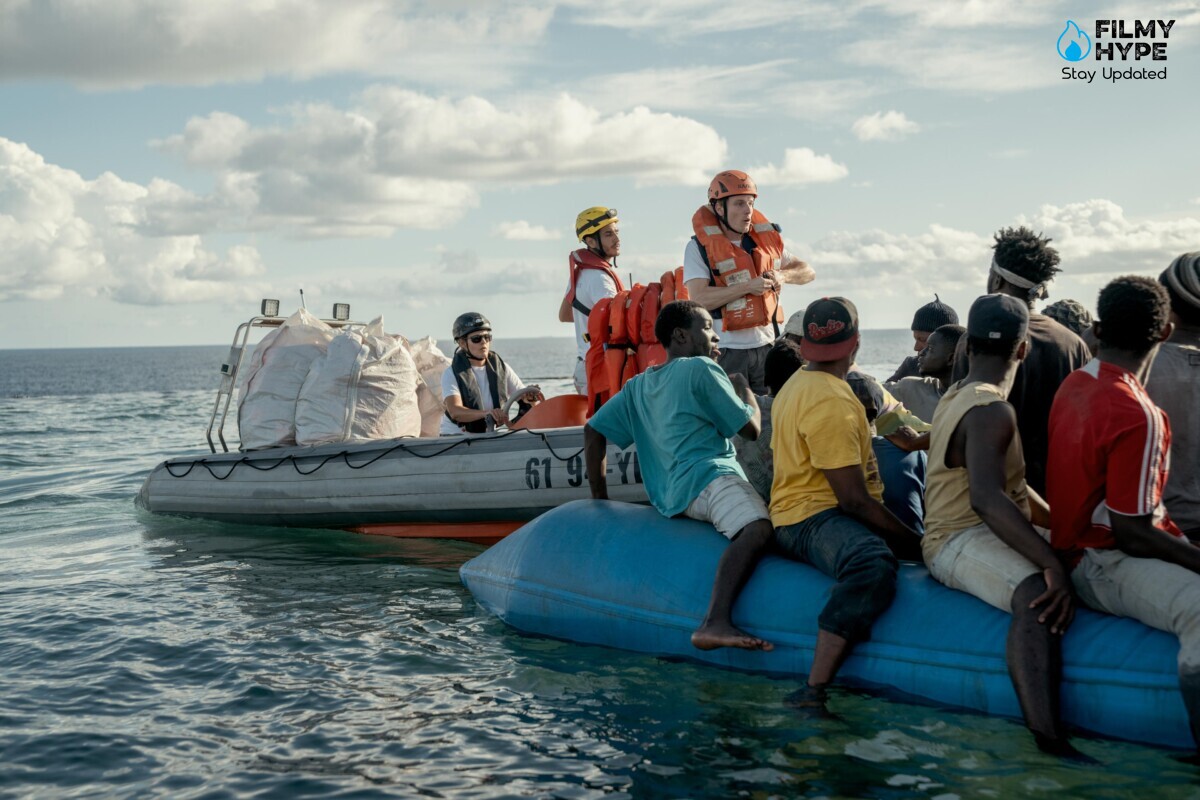
The ship they purchased was an old fishing vessel. They renamed it Iuventa, and in 2016, it began operations. Between 2016 and 2017, the Iuventa participated in sixteen missions in the central Mediterranean. The number that gives the film its title—23,000—represents the lives the organization estimates it helped rescue during that period. It’s a staggering figure when you consider that this was a single ship operated by volunteers who had learned search-and-rescue techniques on the fly.
How Accurate Is the Film’s Portrayal?
This is the question that always comes up with films based on real events, and the answer with 23,000 Lives is nuanced. The film follows a character named Lukas and the volunteers who rally around him, tracing the birth of the project, the logistical nightmares of running a rescue operation with limited resources, the emotional toll of pulling bodies from the water, and the eventual political and legal backlash.
Lukas himself is a composite character. He’s not a direct portrait of any single real person from Jugend Rettet. Instead, he condenses the experiences, motivations, and struggles of multiple actual volunteers into one narrative thread. This is standard practice in dramatization, and the film is upfront about it. The screenplay was co-written with input from Michele Cinque, who directed the 2017 documentary Iuventa and had extensive access to the real crew and operations.
The key historical beats, however, are accurate. The ship really was purchased through grassroots fundraising. The crew really did consist largely of people without professional maritime backgrounds who trained themselves out of necessity. The missions really did save thousands of lives. And the legal nightmare that followed—the seizure, the investigation, the years-long trial—all of that happened.
What the film compresses, necessarily, is the sheer scale of the bureaucratic and political pressure the organization faced. Reading between the scenes, you get a sense of it—the growing hostility from certain political figures, the media scrutiny, the constant threat of prosecution—but the reality was even more grinding. The investigation alone generated a file of approximately thirty thousand pages. The preliminary hearings stretched past forty sessions. This was not a quick ordeal; it was a seven-year legal war of attrition.
The Seizure and the Trial: What Actually Happened in August 2017
In August 2017, the Iuventa docked in the port of Lampedusa and was seized by Italian authorities. The charge was aiding and abetting illegal immigration—a serious accusation that reframed humanitarian rescue as criminal activity. The implication was that by pulling migrants from unseaworthy vessels, the Iuventa‘s crew was effectively facilitating their journey, acting as a kind of taxi service for irregular border crossing.
The case was developed by the Trapani Prosecutor’s Office and eventually named twenty-one individuals and three organizations as defendants. It became one of the most significant legal cases in Europe concerning civilian search-and-rescue operations. The central question was profound: Does saving lives at sea constitute humanitarian work, or does it enable human trafficking by making the crossing less dangerous than it would otherwise be?
For nearly seven years, the case ground through the Italian legal system. Volunteers lived under the shadow of prosecution. The ship remained impounded. The organization’s work was effectively frozen.
Then, on April 19, 2024, the judge for the preliminary hearing at the Court of Trapani issued a ruling of “no grounds to proceed.” The case was dismissed. The court found that the charges lacked sufficient basis to warrant a trial, effectively vindicating the crew and the organization after years of legal uncertainty. International human rights organizations, including Amnesty International—which had awarded Jugend Rettet its Human Rights Prize in 2020—welcomed the decision.
The film incorporates this verdict, and knowing that the real story ends in acquittal adds a particular weight to the courtroom scenes. You’re watching people fight charges that you know will eventually collapse, but they didn’t know that. They lived for seven years not knowing if they would be convicted for trying to save lives.
The Numbers Question: Was It Really 23,000?
One detail that deserves attention is the number in the title. Jugend Rettet’s own accounting credits the Iuventa with contributing to the rescue of over 23,000 people across sixteen missions. Other estimates, including those cited when Amnesty International recognized the organization, put the figure closer to 14,000.
The discrepancy isn’t a matter of dishonesty but of methodology. Search-and-rescue operations in the Mediterranean often involve multiple vessels coordinating efforts. A single rescue might see the Iuventa stabilizing a sinking dinghy while another ship takes people aboard. How do you count that? Who “saved” those lives? The film uses the higher figure, which reflects the organization’s own assessment of its impact, but it’s worth understanding that both numbers exist in the record.
What’s not in dispute is that the Iuventa was one of the most active civilian rescue vessels operating during the peak years of the Mediterranean migration crisis. The scale of the operation, given its origins as a crowdfunded project by inexperienced volunteers, remains remarkable regardless of which statistic you prefer.
Why the Film Matters Now
23,000 Lives arrives at a moment when the questions it raises are still fiercely debated. European migration policy remains fractured and contentious. The Mediterranean continues to be a graveyard for people seeking safety or opportunity. Civilian rescue organizations still operate in a legal gray zone, facing varying degrees of cooperation and hostility from different governments.
The film doesn’t try to resolve these debates. It’s not a policy paper. What it does, effectively, is personalize them. Through Lukas and the other volunteers, you see what it actually looks like when ordinary people decide that a crisis is their responsibility, even if their government isn’t acting. You see the adrenaline of a rescue, the trauma of pulling bodies from the water, the bureaucratic exhaustion of fundraising and maintenance, and legal threats. You see idealism colliding with reality and somehow persisting anyway.

The choice to use fictionalized characters while remaining faithful to the factual skeleton of the story serves a specific purpose. It makes the narrative accessible to viewers who might not know much about Mediterranean migration routes or Italian legal procedure. You don’t need background knowledge to understand what’s happening on screen. The human stakes—will these people survive, will these volunteers be prosecuted, will this mission continue—are universal.
But the film also doesn’t sand away the complexity. The legal arguments against civilian rescue are presented, not caricatured. The political pressure the volunteers face is shown as a real force with real power. The moral question at the center of the trial—does rescue encourage more dangerous journeys? is left for the audience to wrestle with, because the film knows there’s no clean answer.
The Broader Context: Civilian Rescue in the Mediterranean
Understanding 23,000 Lives requires understanding the environment in which the Iuventa operated. After 2015, several European governments scaled back or ended institutional search-and-rescue missions in the central Mediterranean. The reasoning varied—cost, political pressure, the argument that rescue operations acted as a “pull factor” encouraging migration—but the practical effect was the same. Fewer official ships were looking for boats in distress.
Into this gap stepped civilian organizations. Jugend Rettet was one of several NGOs that launched rescue missions during this period. Others included Médecins Sans Frontières, Sea-Watch, and SOS Méditerranée. These organizations argued that they were filling a vacuum left by governments, performing a humanitarian function that shouldn’t be necessary but absolutely was.
Critics, including some European politicians and prosecutors, argued that these NGOs were complicating migration management and effectively collaborating with smugglers by making the crossing less deadly. The logic was chilling: if the crossing is more dangerous, fewer people will attempt it, so making it safer encourages more attempts. This argument became the foundation for legal actions against multiple rescue organizations, not just Jugend Rettet.
The Iuventa case became a flashpoint precisely because it tested this logic in court. The eventual acquittal was seen by human rights advocates as a vindication of the principle that saving lives at sea cannot be criminalized. But the legal victory doesn’t necessarily mean the political debate is settled, and the film captures this tension without pretending it’s resolved.
What the Film Leaves Out
No adaptation can include everything, and 23,000 Lives makes choices about where to focus. The film prioritizes the emotional journey of the volunteers over the legal and political minutiae. You don’t see the full thirty-thousand-page case file. You don’t get detailed breakdowns of Italian maritime law or the specific arguments made during the forty-plus preliminary hearings.
What you do get is a sense of what it costs to do this work. The sleeplessness. The fear. The moral weight of decisions made in seconds that will determine whether someone lives or dies. The creeping dread of prosecution. The isolation of returning home to a country where most people can’t really understand what you’ve experienced.
The film also doesn’t delve deeply into the experiences of the migrants themselves, though they are present in the story. The focus remains primarily on the rescuers. This is a legitimate narrative choice, but it’s worth noting that the full story of the Iuventa also includes the thousands of people who climbed aboard from rubber dinghies, each with their own history of flight and loss and hope. The film touches this, but doesn’t center it.
Conclusion: A Story That’s Still Being Written
23,000 Lives ends with an acquittal, but the real story doesn’t have an ending yet. The Mediterranean remains dangerous. Migration continues. The legal and political battles over who can rescue whom and under what circumstances are far from settled. The film captures a chapter in an ongoing story, one that asks fundamental questions about borders, humanity, and the obligations we have to strangers in danger.
The fact that the main characters are fictionalized doesn’t diminish the power of the true story underneath. If anything, it makes the film work as cinema rather than as a documentary reconstruction. You’re watching people, not case studies. Their fears and hopes and exhaustion feel real because they’re drawn from reality, even if the names have been changed.
Jugend Rettet still exists. The Iuventa is still a symbol of what a group of young people can accomplish when they decide that distance doesn’t absolve them of responsibility, and of how easily humanitarian work can become politically controversial. The film invites you to sit with that tension, to feel the weight of those 23,000 Lives, and to ask yourself what you would have done. It doesn’t provide easy answers, and honestly? It shouldn’t.

