


The Map of Longing Ending Explained: I finished The Map of Longing on a Thursday night and sat there in the dark for a good fifteen minutes afterward, not quite ready to let the characters go. You know that feeling when a story lands so precisely that you need to just sit with it? That was me, staring at the credits, thinking about Greta standing in front of Klimt’s The Kiss in Vienna, about Will finally visiting Juan’s grave, about Lucy’s voice echoing through letters written by someone who knew she was running out of time.
The Map of Longing Ending Explained: How the Series Concludes and What It’s Really Trying to Tell Us About Grief
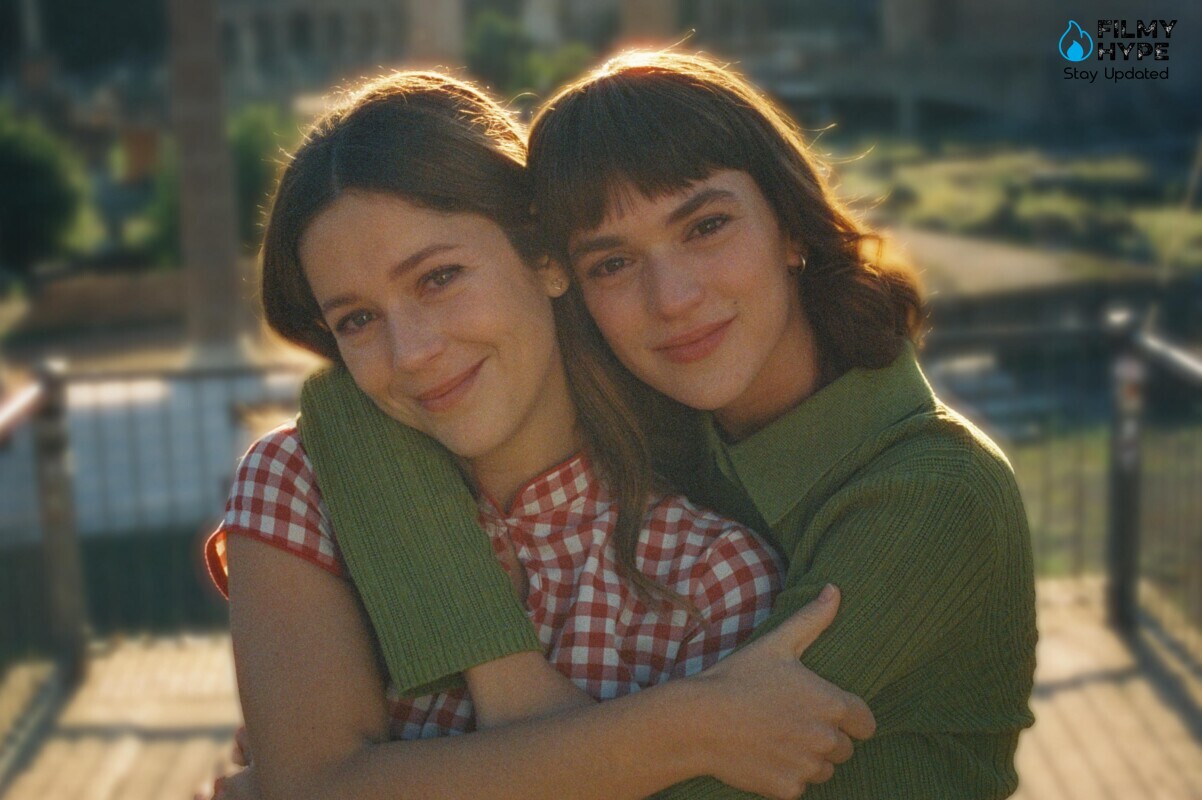
The end of “The Map of Longing” shows Greta in Vienna, the city her sister Lucy dreamed of visiting. There, he meets Will again and decides to continue the journey with him, but the reunion occurs after they both learn to move forward separately. The map had forced Greta to take actions that she had avoided since Lucy’s death- attend a grief group, get your driver’s license, take off your sister’s clothes, and leave the safety of your home.

This isn’t a series that relies on shocking twists or last-minute revelations to make its impact. Instead, it builds toward something quieter and, honestly, much harder to pull off—an emotional resolution that feels earned. Every thread that was introduced in the first episode gets pulled taut by the finale: Greta’s paralyzed grief, Will’s suffocating guilt, the Alvarez family’s collective inability to move forward, the mysterious boxes Lucy left behind, and that central, terrifying question the show keeps circling back to. Can you actually come back to life after loss hollows you out? Or do you just learn to fake it better? Let’s walk through what the ending really means, piece by piece, because this show deserves a closer look than a casual “they end up together” summary could ever provide.
What Is The Map of Longing Really?
It would be easy to describe Lucy’s map as a scavenger hunt or a posthumous game, but that undersells it completely. The boxes she leaves for Greta—the support group assignment, the wish list, the prompts to seek beauty, the letters hidden in unexpected places—aren’t random challenges from a dying girl trying to stay entertained. They’re something far more deliberate.
Lucy understood something that Greta couldn’t see yet. Grief wasn’t just making her sister sad; it was making her still. Frozen. Greta had organized her entire existence around Lucy’s illness for so long that when Lucy died, there was nothing left to organize around. Just absence. Just a void where purpose used to be.
So the map has a specific function: it forces motion. Not the metaphorical kind—actual, physical, emotional motion. Each box pushes Greta to do something she would never choose for herself. The grief support group makes her confront pain directly instead of wallpapering over it. The wish list makes her imagine a future, which is the one thing she’d completely stopped doing. The challenges about beauty force her to recognize that the world still contains things worth noticing. And the tasks involving old friendships, her mother, her father, Lucy’s belongings—they’re all about restoring order to relationships and spaces she’d let freeze in place the moment Lucy died.
The map isn’t a melancholic keepsake. It’s the opposite of that. Lucy didn’t leave Greta something to hold onto; she left her a path to walk. An active inheritance designed not to preserve grief but to push through it.
Why Did Lucy Choose Will Tucker of All People?
This question nagged at me for several episodes. Will shows up as this vaguely unsettling stranger, a courier for Lucy’s boxes who inserts himself into Greta’s life with a persistence that feels almost intrusive. Why would Lucy pick him? Why trust this random guy with something so precious?
The answer arrives in layers. Before the accident that killed Juan, Will was the kind of person who glided through life without friction—charming, careless, never really absorbing the consequences of his actions. The illegal street race changed everything. He survived. Juan didn’t. And survival became its own kind of prison, because Will couldn’t figure out how to keep living when he believed he deserved to be dead instead.

Lucy met him at the clinic during her treatments, and something clicked. She recognized a particular kind of brokenness in him because it mirrored what she saw in her sister. Different wounds, same mechanism. Greta was trapped by loss, unable to imagine wanting anything again. Will was trapped by guilt, unable to accept that he still had the right to exist. Both of them had stopped participating in their own lives.
Lucy put them next to each other, not because she was playing matchmaker in some cutesy, manipulative way. She did it because she understood that certain people can recognize each other’s damage. They speak the same language. They see the same invisible weight. Will could understand Greta’s paralysis in a way that someone who’d never been shattered simply couldn’t.
It’s a narrative choice that could have felt forced, but the show earns it by making Will’s own journey just as substantial as Greta’s. He’s not there just to be her love interest. He’s there because he needs the map as much as she does, even if he doesn’t realize it at first.
Grief Is the Engine, But It’s Not the Whole Story
Grief sits at the center of The Map of Longing, but the show is smarter than just being “about” Lucy’s death. It’s about what death does to everyone left standing in its wake. The Alvarez family becomes a case study in how loss can fracture people in completely different directions.
Greta responds with immobility—she stops making decisions, stops wanting things, stops moving forward. Jacobo, the father, responds with a kind of absence-in-presence; he’s physically there but emotionally checked out, orbiting the geography of Lucy’s illness like a ghost haunting his own life. Rosi, the mother, hardens into anger and avoidance—she can’t touch Lucy’s things, can’t open those boxes, can’t let herself feel anything soft because softness might break her entirely. The whole family is frozen, just in different postures.
This is what the series does so well. It refuses to present grief as a neat five-stage process or a clean arc toward acceptance. Instead, it shows something messier and more truthful: grief as a closed room that everyone gets locked inside, where the only way out is to find your own door.
Lucy’s final letters and the last box of the map serve as keys for each family member. Not to erase the pain—the show is too honest to suggest that’s possible—but to transform it into something they can carry without being crushed under. There’s a crucial distinction here between forgetting and saying goodbye. The series never asks anyone to forget Lucy. It asks them to finally, actually say goodbye to her, which is an entirely different thing.
Greta’s Arc: From Surviving Sister to Person in Her Own Right
Greta’s journey is the spine that holds the whole series together, and it’s worth tracing carefully because the ending doesn’t work unless you understand where she started.
In the beginning, Greta isn’t just a young woman mourning her sister. She’s someone whose entire identity has been defined by Lucy. She was the one who was supposed to save her. She lived alongside illness for so long that it became the organizing principle of her existence. After Lucy dies, Greta keeps living as though the center of her life is still that relationship—as if she’s still Lucy’s sister first and herself second, even though Lucy is gone.
The entire series works to detach her from this single definition. Greta has to stop being just “the one who survived Lucy” and start being Greta again, whoever that turns out to be. This is why the desires that surface throughout the map challenges matter so much. Driving. Studying art history. Traveling. Seeing Klimt’s work in Vienna. They seem like simple goals, maybe even cliché ones, but in context, they’re monumental. They represent the return of an imagination about the future. Greta starts being able to picture herself in a life that hasn’t happened yet.
There’s a scene that I keep coming back to—the one where Greta looks at herself naked in the mirror and slowly, hesitantly, recognizes that beauty isn’t just something external, something she can appreciate in art or landscapes, but something that exists in her own body. It’s a watershed moment. For the first time, Greta sees herself not as a vessel for grief or a support system for someone else’s illness, but as a living, breathing, desiring person who deserves to exist on her own terms.
The finale confirms that this arc has reached its destination. Greta actually leaves. She gets on a plane and goes to Europe. She learns how to be alone in a foreign city. She experiences the world without Lucy’s ghost as her constant companion and without Will as her emotional scaffolding. When we find her in Vienna, standing in front of The Kiss, she’s finally whole. Not healed in some magical sense—the grief is still there, it always will be—but free enough that loss is no longer the only thing defining her.
Will’s Arc: Guilt as a Life Sentence
Will’s story mirrors Greta’s but inverts it. Where she can’t imagine a future, he can’t tolerate his past. After Juan’s death, Will lives under the conviction that he doesn’t deserve anything good. Not love, not peace, not even the basic right to keep drawing breath. Every day becomes a form of self-imposed punishment.
The legal proceedings with Juan’s family matter, but they’re not the real battleground. The real fight is internal. Will cannot make peace with himself. Even when the justice system reaches its own resolution, even when other people start suggesting he should move on, it keeps collapsing inward. This is what leads Greta to leave him, and it’s a decision the show handles with real narrative courage.
Here’s the hard truth the series isn’t afraid to articulate: love is not enough if it becomes dependency. Greta realizes that Will has made her his only anchor, the single thread keeping him from drowning. That’s not sustainable, and it’s not fair to either of them. She can’t be his salvation. And Will can’t build a real recovery by outsourcing it entirely to another person.
Their breakup before the finale isn’t melodrama for the sake of tension. It’s the logical, necessary conclusion of everything the series has been saying about the difference between healing and just finding a new crutch. Greta has been learning to stand on her own. Will hasn’t. And until he does, their relationship can only ever be a form of mutual avoidance.

The turning point for Will comes through Lucy’s letter—her voice reaching him from beyond the grave, telling him something he couldn’t tell himself. What follows is a series of concrete actions: going home, facing his family, apologizing to Juan’s parents, visiting the grave he’d been too ashamed to approach. These aren’t grand gestures. They’re quiet, brutal, necessary steps toward the thing Will has been running from since the accident: forgiving himself.
Only after he’s walked through that fire does he stop being a man who exists only to self-destruct. And only then can he reach for Greta without using her as a life raft.
Why Do Greta and Will Break Up Before the Finale?
This deserves its own section because it’s the part of the ending that seems to confuse people the most. After everything they’ve been through together, after the connection they’ve built, after the actual relationship—why does Greta walk away?
The answer is that their love, at that particular moment, is unbalanced in a way that would eventually destroy them both. Greta loves Will. That’s not the question. But she can see clearly that he’s clinging to her like she’s the only thing keeping him above water. Meanwhile, she’s been doing the hard work of learning to live without needing anyone else as her reason for existing. Those two trajectories are incompatible.
This separation accomplishes two things at once. For Greta, it’s the final step toward genuine autonomy—proving to herself that she can choose her own path even when it hurts. For Will, it’s the push he’s been avoiding his entire life. He finally has to do the work. No shortcuts, no substitutions, no Greta-shaped bandage over a wound that requires surgery.
It’s a painful breakup, and the show doesn’t pretend otherwise. But it’s also the moment where The Map of Longing proves it’s serious about its themes. This isn’t a story about love as a magical cure. It’s a story about two people who can only truly meet each other once they’ve learned to stand up separately.
How the Ending Actually Plays Out
The finale moves on two parallel tracks. Greta takes the money Lucy left in the final box—an amount that isn’t just practical but deeply symbolic, a last authorization from her sister to actually go live—and leaves for Europe. She studies art. She walks through unfamiliar streets. She makes her way to Vienna, to the painting she’d learned to desire, to the life she’d stopped being able to picture.
Will stays behind and does the unglamorous, grinding work of facing what he’s done. He repairs what he can with his family. He sits down with Juan’s parents and says the words he’s been choking on. He visits the grave and doesn’t let himself look away. He learns to sleep with his nightmares without letting them be the only story he tells about himself.

When they finally find each other again, in front of The Kiss, the meaning is clear. These are different people from the ones who separated. Greta arrives, having become someone who can want things for herself. Will arrives no longer needing her to save him. They come together not because they’re incomplete without each other but because they’ve each become complete enough to choose each other freely.
The series doesn’t overexplain this moment, and it doesn’t need to. The image does the work. Two people, a painting about intimacy and love, a city far from everything that broke them, and the unspoken understanding that they’ve both finally earned the right to be here.
How All the Narrative Threads Close
Let me lay this out clearly, because the finale is juggling a lot of balls and it doesn’t drop any of them.
The mystery of the map resolves when we understand it was never a game but a structured path toward rebirth—for Greta directly, for Will indirectly, and for the whole family by extension.
The family’s frozen grief thaws through the final letters. Rosi finally lets go of Lucy’s belongings. Jacobo accepts that life has to continue. Greta stops living as a reflection of her dead sister.
The question of Will’s past resolves completely. We learn about the accident, the race, Juan’s death, and the trial. He’s no longer an opaque figure with unclear motives. The series explains exactly why he is the way he is and what he’s been running from.
The relationship between Greta and Will resolves in two necessary stages—the breakup that forces them both to grow, and the reunion that proves they’ve actually done it.
Greta’s personal desire—the thing she lost when Lucy died—returns gradually and then all at once. She leaves. She travels. She studies what she loves. She arrives in Vienna as someone who chose her own life.
And Will’s self-forgiveness only becomes possible when he stops hiding. When he faces Juan’s parents, visits the grave, and accepts that guilt cannot be the only form his existence takes.
What the Ending Actually Means
The deeper message of The Map of Longing’s conclusion is deceptively simple. Pain doesn’t disappear. It’s not supposed to. Lucy doesn’t come back. Juan doesn’t come back. The past doesn’t get rewritten. Nobody gets a perfect life wrapped in a bow.
But Greta and Will both reach a point where pain is no longer running the show. It’s present, it’s acknowledged, but it’s no longer in charge.
The series is saying something that feels true even if it’s uncomfortable: loving someone is not the same as saving them. Surviving a loss is not the same as coming back to life. Those things require choice. Active, daily, sometimes agonizing choice. Greta makes that choice when she gets on the plane. Will makes it when he stops treating punishment as his only viable identity.
That’s why the final scene in front of The Kiss works. It’s romantic, sure, but it’s also symbolic in a way that cuts deeper. Two people meet after having genuinely completed their own separate journeys. Lucy, from the beginning, had aimed them both toward this moment—not toward each other as a shortcut past their problems, but toward the possibility of a life that could actually be lived.
Final Thoughts
The Map of Longing closes its story without cheating. Greta processes her grief and builds a future she can actually imagine inhabiting. Will confronts his guilt and begins the long, ongoing work of forgiving himself. The Alvarez family finally, collectively, says goodbye to Lucy. And the map reveals itself as what it was all along: not a treasure hunt from a dying girl, but a carefully designed journey toward healing, drawn by someone who loved her sister enough to push her forward instead of holding her back.
The series ends on a reunion, but the real ending isn’t that moment—it’s everything that made that moment possible. Greta and Will can only find each other again because they first separated from the roles that had imprisoned them. She stopped being just the sister who survived. He stopped being just the culprit who couldn’t be forgiven. Only then could they actually meet.
The Map of Longing doesn’t promise that wounds disappear. What it shows, with more honesty than most stories manage, is that you can learn to carry them without letting them steer. And sometimes, if you’re lucky and stubborn enough, you can find someone else who understands the weight.