

Other Mommy Movie Review and Ratings
Cast: Jessica Chastain, Jay Duplass, Dichen Lachman, Karen Allen, Travis Nelson, Arabella Olivia Clark, Adam Silver, Carrie Dimaculangan, Sean Kaufman, Alec Secareanu
Directed by: Rob Savage
Filmyhype.com Ratings: 3/5 (three stars)
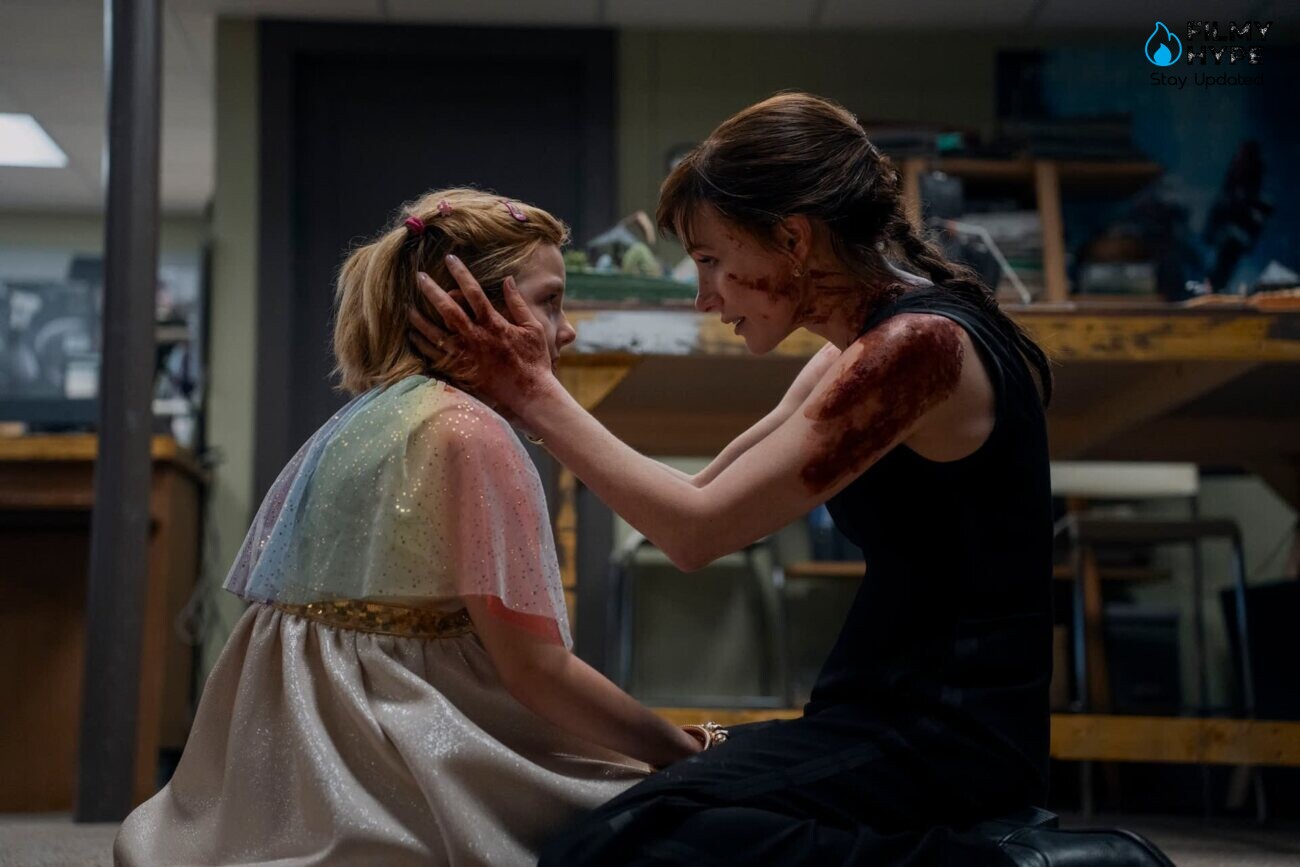
A seven-year-old girl discovers that something is hiding in her house. She looks like her mother, but she’s not her mother. It’s a disturbing premise that of Other Mommy, the new horror film by Rob Savage, director of Host and The Boogeyman, based on the novel Incidents Around the House by Josh Malerman. (And not Coraline by Neil Gaiman …). Starring Jessica Chastain, the film has an idea capable of insinuating itself into childhood fears, but it disperses it in a succession of mechanical scares and visual gimmicks that end up neutralizing it. The idea of a supernatural presence that takes the form of a mother to gain the trust of her daughter already contains all the elements necessary to build a disturbing horror. There is the fear of no longer recognizing a loved one, the childish need to feel protected, and above all the suspicion that one’s home, the place that should provide greater security, could become a threat.
Other Mommy, Rob Savage’s new film starring Jessica Chastain, builds on this premise, adapting Josh Malerman’s novel Incidents Around the House to tell a story of possession and family tension through the eyes of a little girl. On paper, the project seems to have everything it takes to work: a director who has already demonstrated his understanding of the mechanisms of fear with Host and The Boogeyman, a protagonist capable of moving from vulnerability to threat, and an entity that exploits the emotional fragility of a family. Yet Other Mommy fails to transform these premises into a truly frightening experience, relying on a succession of sudden appearances and visual effects that end up suffocating the psychological component of the story. There remain some interesting insights, and Jessica Chastain is fully involved in her dual role, but the film seems more interested in provoking immediate reactions than building a fear that will last.
Other Mommy Movie Review: The Story Plot
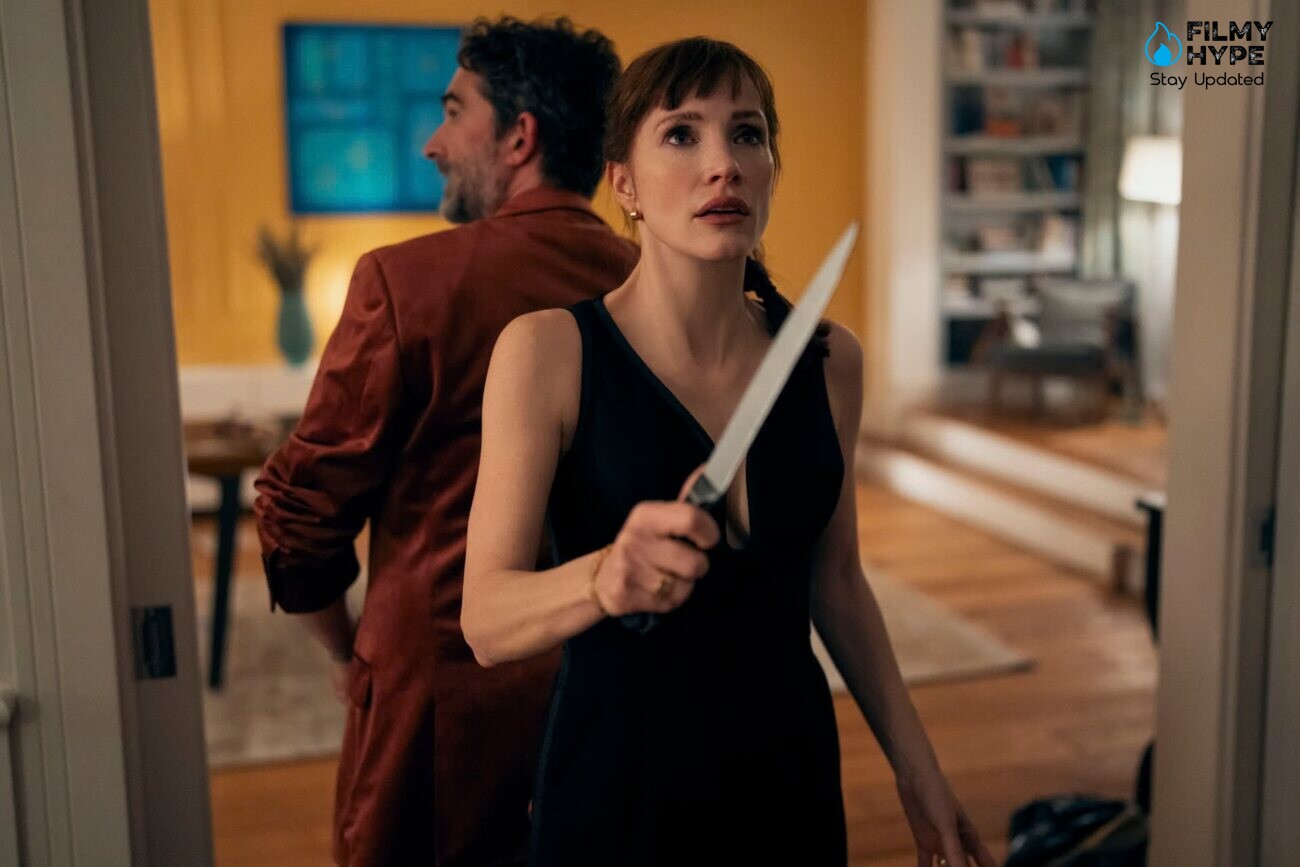
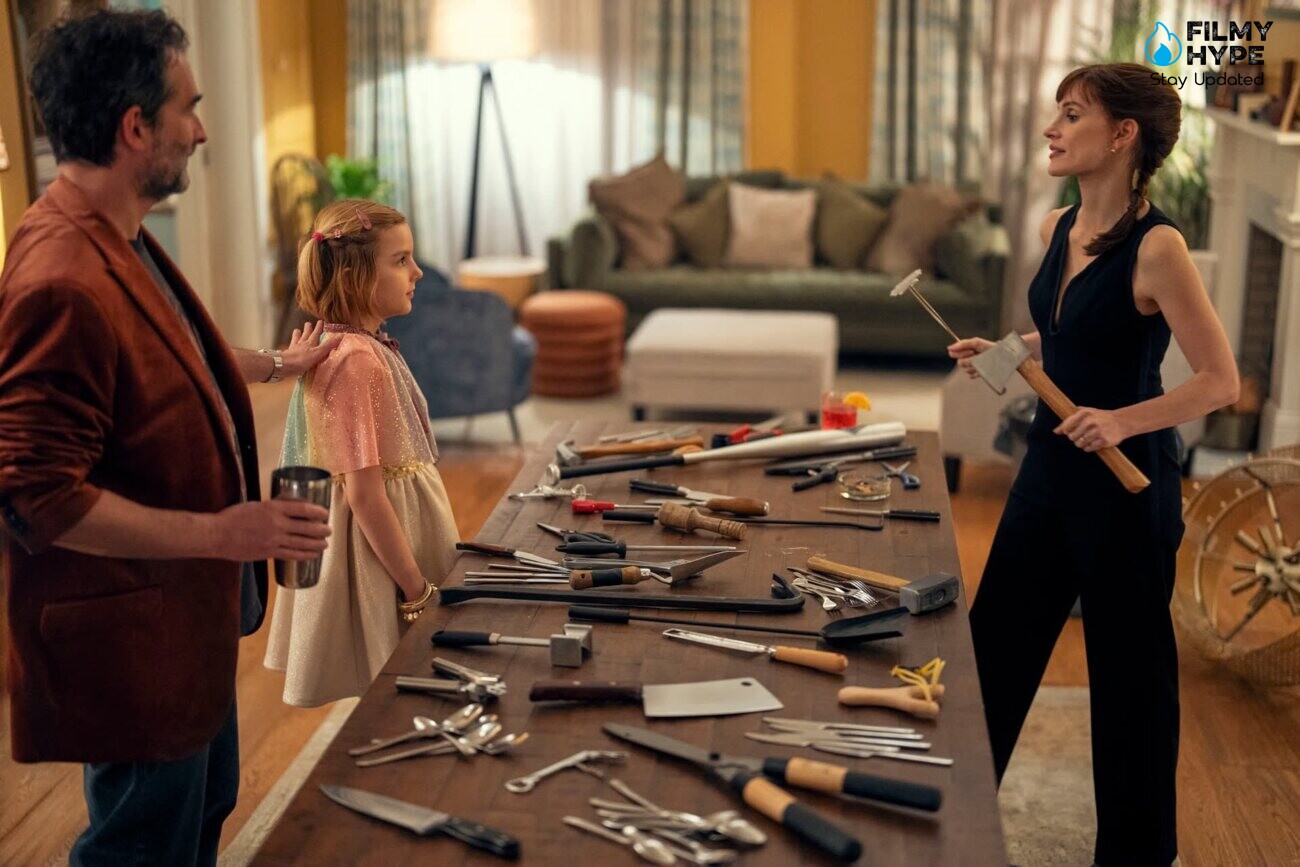
At the center of the story is Bela (Arabella Olivia Clark), a seven-year-old girl who lives with her parents, Ursula (Jessica Chastain) and Russell (Jay Duplass). Theirs is a seemingly normal family, but behind their daily lives lie tensions that Bela perceives without being able to fully understand them. Ursula is often absent, absorbed in work and something that seems to progressively distance her from her husband and daughter, while Russell tries to compensate for that distance with an affectionate and protective attitude. Bela, however, is not alone. For some time now, she has been speaking with a presence she calls Other Mommy, a mysterious entity who has the appearance of Ursula and who seems to offer her the very maternal attention she misses.
The creature, however, is not content to keep her company: she insists that the little girl agree to let her enter her heart, a seemingly innocent request that hides decidedly more disturbing intentions. The starting point is interesting because it links the supernatural threat to something deeply concrete. Other Mommy is not only a monster who wants to take possession of a little girl but also the manifestation of an emotional need that her parents are unable to satisfy. Bela doesn’t have the tools to interpret the difficulties of her parents’ marriage, but she feels the consequences and seeks comfort in a figure who promises to always be available.
Other Mommy Movie Review and Analysis
One of Other Mommy’s main problems concerns managing tension. Savage almost immediately introduces the disturbing nature of Other Mommy, without giving the viewer the time necessary to understand the relationship the creature has built with Bela. It is suggested to us that the presence initially represented reassuring company, but the film immediately shows it as something openly threatening. Thus, one of the most interesting possibilities of the premise fails: observing the moment in which a figure perceived as loving slowly begins to reveal his or her nature. The adults’ reaction also contributes to weakening the story. Russell and Ursula relatively soon accept the existence of a supernatural threat, and the story turns into a continuous escape from one place to another, without the environments managing to acquire a truly disturbing identity.
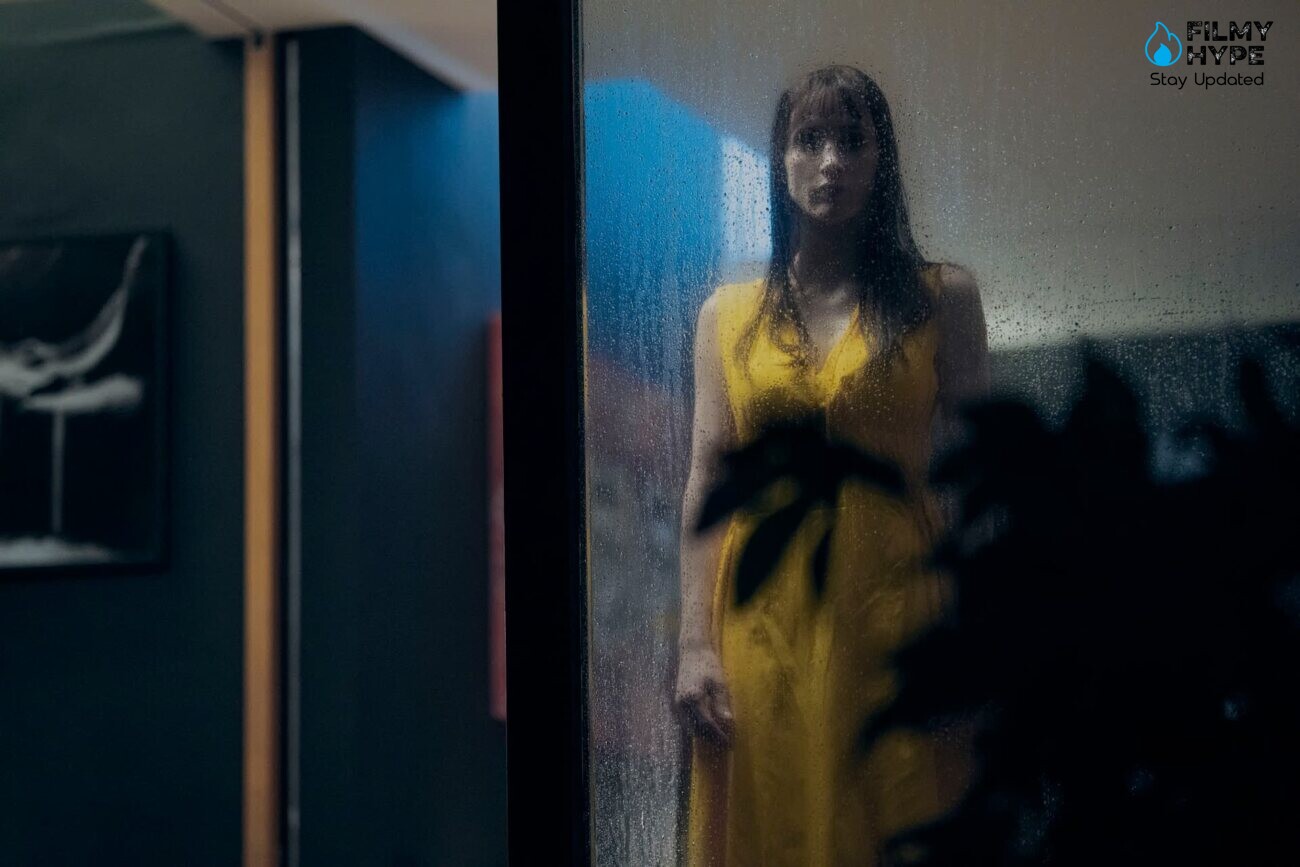
The film proceeds as if it had constantly reached its climax, accumulating appearances, distortions of reality, and sudden changes of scenery. But when each sequence tries to be scarier than the last, the effect inevitably ends up diminishing. The numerous jump scares become progressively predictable, also because Savage often resorts to similar visual solutions: the camera moves around the characters, something appears behind them, and a sudden noise accompanies the revelation. A formula that may work occasionally but loses its effectiveness when it becomes the main narrative tool.
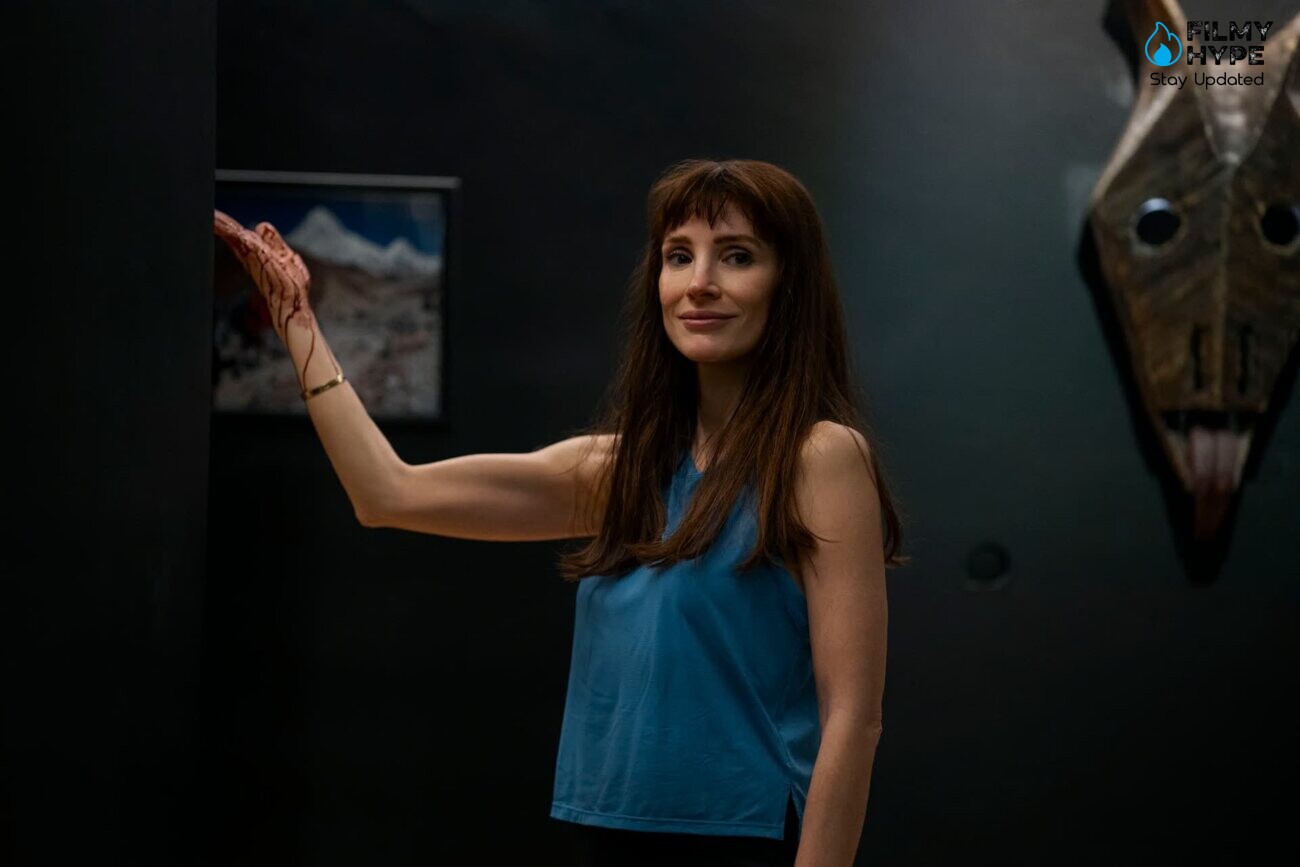
If Other Mommy retains an element of constant interest, this is certainly Jessica Chastain, called upon to interpret two profoundly different versions of motherhood. On one side is Ursula, an emotionally distant woman, unable to always respond to her daughter’s needs and plagued by contradictions that the film only hints at. On the other is Other Mommy, a creature that uses her mother’s face to build a dependent relationship with Bela, alternating artificial sweetness with increasingly aggressive displays. Chastain approaches the dual role with considerable commitment, especially when she can work on the creature’s physicality. Excessive smiles, unnatural movements, and sudden transformations in expression suggest a presence that attempts to imitate human behavior without truly understanding it.
Unfortunately, the direction does not always enhance this interpretation. Digital effects frequently deform the actress’s face and body, replacing her ability to appear disturbing through small gestures with a spectacularization that often appears artificial. The problem also concerns Ursula’s writing. The character could have offered a complex portrait of a woman who experiences motherhood with mixed feelings but too often remains confined to the role of the absent mother. Without a deeper characterization of the real Ursula, even the contrast with her supernatural imitation loses some of its meaning. Alongside Chastain, Arabella Olivia Clark deserves special attention, supporting a considerable part of the film through a surprisingly natural performance. Bela is not simply a little girl frightened by a mysterious presence. She is a daughter who tries to understand what is happening around her, interprets the words of adults through her own experience, and continues to long for affection even as the situation becomes increasingly dangerous.
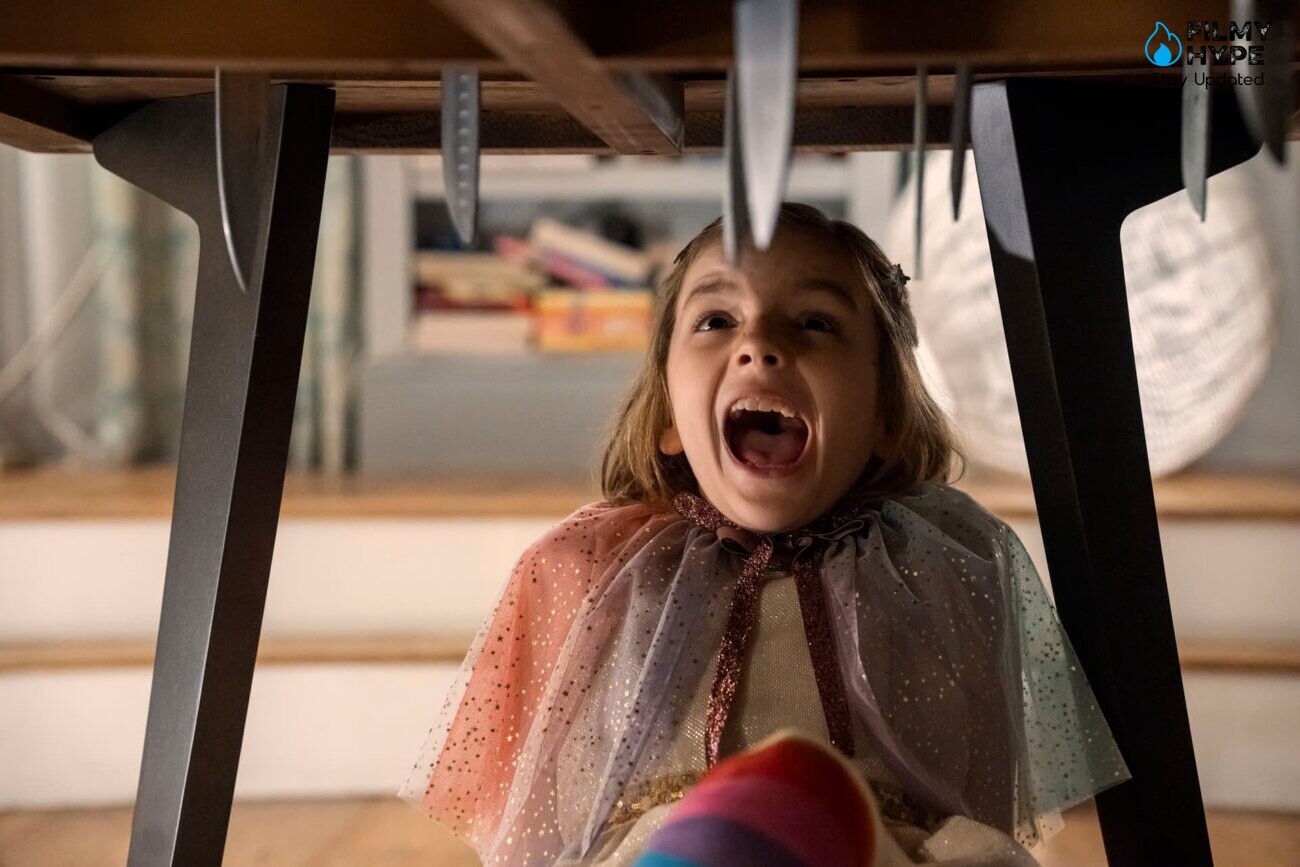
Clark manages to convey this combination of naivety, curiosity, and vulnerability without resorting to overreactions. In the moments when Savage allows her to remain center stage, Other Mommy finds a much more effective emotional dimension than that produced by supernatural manifestations. Less convincing, however, is Russell, played by Jay Duplass with a register that often tends towards lightness and that does not always accord with the tone of the more dramatic sequences. The problem isn’t just with the actor but with a script that constantly oscillates between family tragedy, demonic horror, and almost grotesque moments, failing to find a satisfying balance.
Visually, Other Mommy alternates successful insights with decidedly less convincing solutions. In some scenes, Savage demonstrates his ability to use frame composition to convey the emotional distance between characters, transforming everyday objects and domestic spaces into elements capable of suggesting deeper discomfort. These are moments when the film finally seems interested in what truly makes its story disturbing: the impossibility of distinguishing protection from control and love from a form of possession. Too often, however, these insights are interrupted by invasive digital effects. Other Mommy writhes, modifies her own body, alters space, and takes on increasingly monstrous forms, but the transformations do not follow rules clear enough to construct a coherent threat.
The entity’s capabilities appear to change as a function of the needs of the individual scene, making it difficult to understand its limitations and why it chooses certain behaviors. The more the film shows what Other Mommy is capable of doing, the less dangerous the creature seems, because the visual spectacle ends up replacing the mystery. Even the few more successful body horror moments hint at an approach that could have been developed with greater conviction, without constantly relying on digital deformations and frantic assembly. If in the novel the physical and monstrous dimension of Other Mommy works, because the reader is forced to imagine her starting from more vague and nuanced descriptions, in the film the viewer finds himself faced with a grotesque being with nothing mysterious and therefore much less frightening.
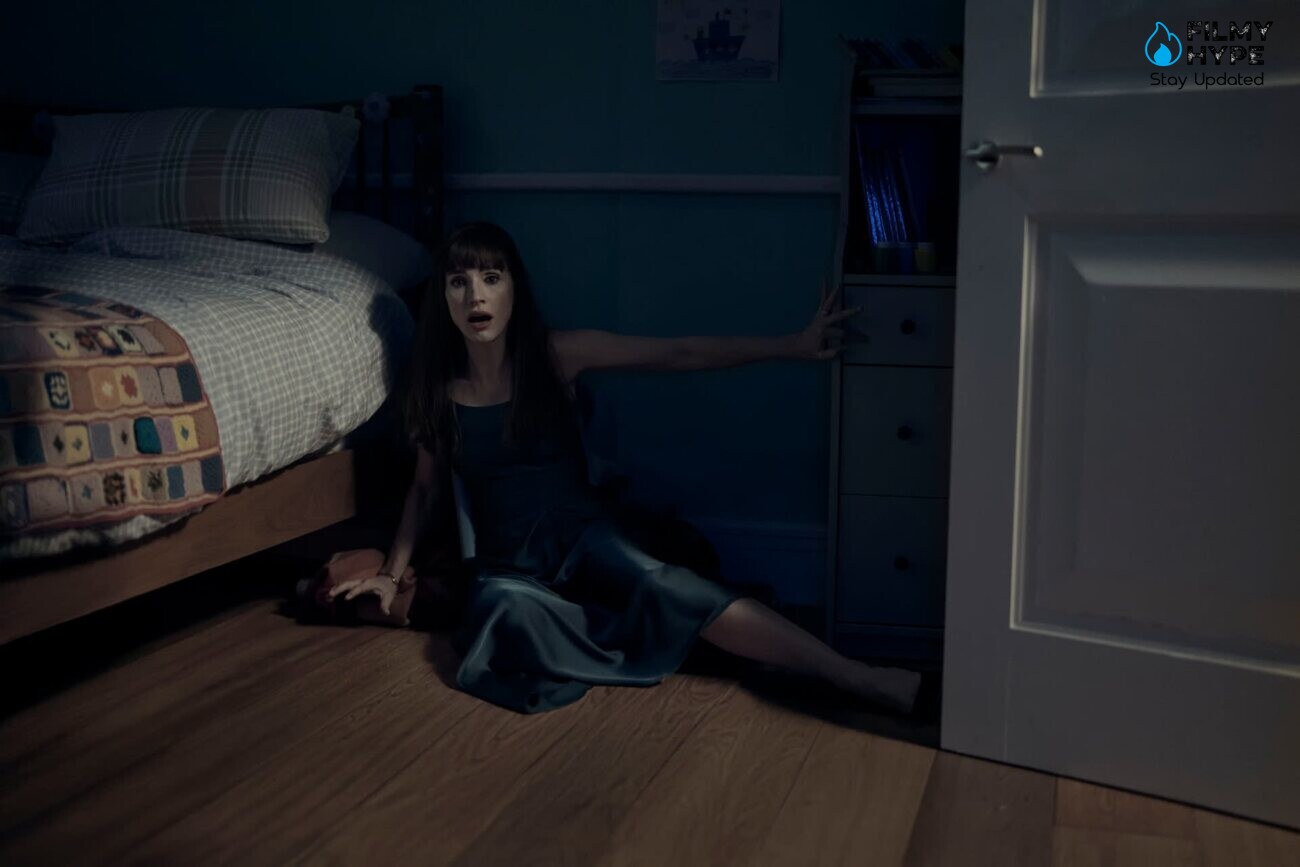
The film’s biggest limitation, however, isn’t just its inability to scare. Other Mommy starts from a premise that could have supported a very interesting reflection on motherhood, guilt, and the difficulty of recognizing that being a parent does not necessarily mean feeling fulfilled or capable of loving in the way others expect. The relationship between Bela and Ursula already contains all these contradictions, just as the existence of Other Mommy could represent a monstrous version of maternal love, seemingly unconditional but in reality deeply possessive.
The film touches on these issues, especially when the family’s frailties emerge, but it doesn’t give them the time they need to become the true center of the story. Even the revelations that are supposed to give meaning to the supernatural presence come too late to restore depth to what we have seen. The result is a horror that has several interesting elements but never manages to organize them into a truly personal vision. The influences of films like It, Smile, and The Conjuring are recognizable, while there is no image or sequence capable of imprinting an equally precise identity on Other Mommy. Jessica Chastain and Arabella Olivia Clark manage to lend credibility to a story that would have needed more character attention, but they can’t fully compensate for a fragmented script and direction that relies too heavily on sudden scares.
The most interesting assumption concerns children’s perception of adults’ contradictions. Bella catches her parents’ reticence and senses that her mother is hiding something from her. The monstrous double could embody the rift between the reassuring image of the mother figure and the discovery that even adults lie, desire more, and can become emotionally inaccessible. It’s fertile ground for a psychological horror built on uncertainty. Savage, however, almost immediately gives up growing it. The supernatural presence manifests itself too early, making itself visible even to adults and transforming the progressive deterioration of home security into a series of spectacular assaults. The question is no longer whether Bella can trust what she sees, but what new appearance the creature will come up with.
The director nevertheless demonstrates a talent for disturbing images. Other Mommy alters the proportions of the body, appears in the empty spaces of the frame, and modifies the physical laws of the environments. A family party and a ball pit become scenarios of supernatural incursions, amidst machine movements and perspective distortions. The problem is that visual invention does not translate into tension. The sequences follow a recognizable pattern: apparent tranquility, anomaly in the environment, sudden and inevitable jump-scare movement. Repeated without variation, the mechanism loses effectiveness. Savage keeps the film in a state of permanent alarm, forgetting that fear also needs anticipation and uncertainty.
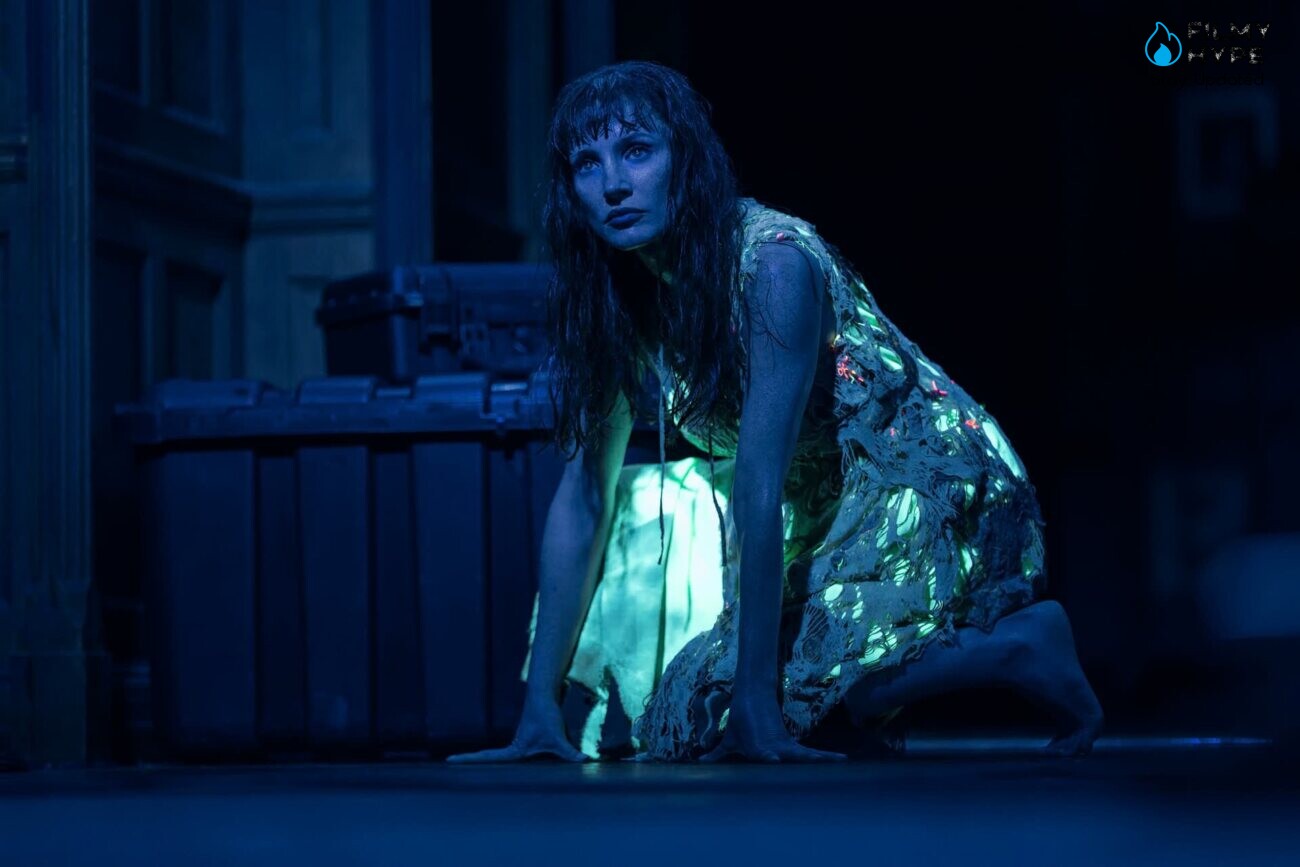
The management of point of view contributes to weakening the story. The story should belong to Bella, yet the camera focuses on the little girl without really giving us back her way of processing events. Even after traumatic episodes, his reactions appear superficial. Nathan Elston’s script moves from one extreme situation to another, sacrificing emotional continuity to the need to introduce new scares. The family component suffers. The relationship between Ursula and Russell, with omissions and resentments, should fuel the horror, but remains schematic. The creature appears to represent Bella’s fears without the film establishing a convincing link between those fears and her manifestations. It is not necessarily necessary to explain the origin of a demonic entity; however, its behavior must acquire meaning within the story.
In this context, Jessica Chastain is the most interesting element. The actress distinguishes Ursula’s coldness from the sinister exuberance of her double, indulging in exasperated expressions and an unnatural physicality. Her performance suggests a more ambiguous film, in which horror may arise from the impossibility of distinguishing an authentic mother from a presence that reproduces her affectionate gestures. But the creature’s almost caricatural register, amplified by digital effects, often causes disbelief rather than discomfort. Arabella Olivia Clark offers spontaneous proof, despite having to endure reactions that aren’t always credible, while Jay Duplass plays a loving and disoriented father, whose behavior oscillates between worry and lightheartedness. The tone also remains unstable: some scenes seek painful family horror, others border on grotesque comedy that doesn’t seem fully intentional.
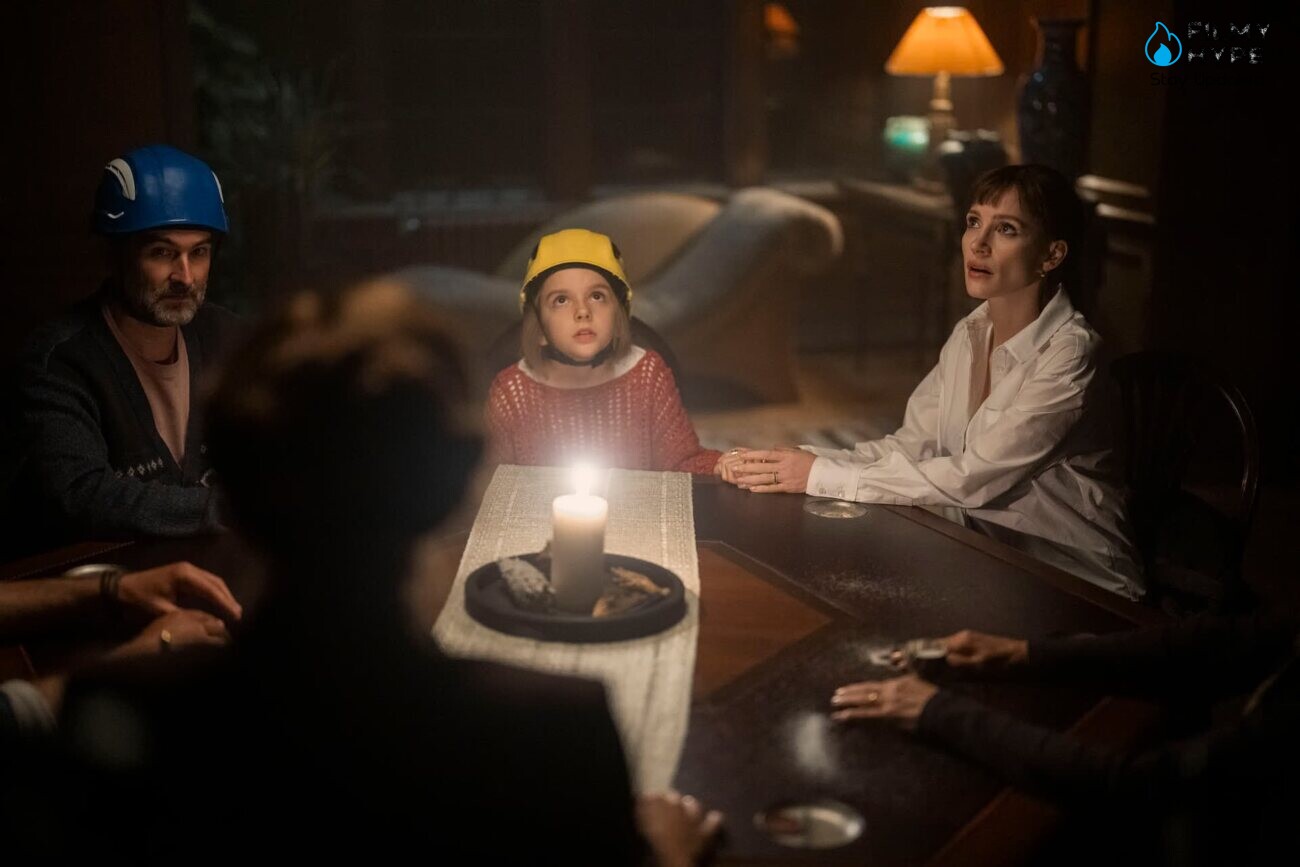
Other Mommy limitation is therefore not the lack of ideas, but the inability to develop them. The mother figure becomes terrifying when she ceases to be recognizable, but the film prefers to transform this insight into a catalog of bodily deformations and sudden appearances. The more the creature shows what it can do, the less mysterious it becomes. The result is a fast-paced horror film, at times visually ingenious, but incapable of constructing an authentic experience of fear. With Host, Savage had demonstrated how effective it was to work on the limits of space and what remains off-screen. Here he has greater means, but he seems to have lost that discipline. Other Mommy keeps showing us the monster, when she should have made us fear recognizing it.
Other Mommy Movie Review: The Last Words
Ultimately, Other Mommy is a film that promises to explore one of the deepest fears of childhood, that of no longer being able to recognize or emotionally reach one’s mother, but prefers to transform her into a succession of monstrous apparitions. A missed opportunity, especially since behind the creature you can glimpse a family history far more disturbing than any face distorted by special effects. Other Mommy starts from a disturbing premise, transforming a little girl’s need for affection at the front door into a supernatural presence that takes on the appearance of her mother. Jessica Chastain takes on the dual role with conviction, and Arabella Olivia Clark delivers a surprisingly natural performance, but Rob Savage progressively sacrifices psychological tension in favor of repetitive jump scares and invasive digital effects. The result is a horror film that possesses interesting insights into motherhood and family fragility, without being able to fully develop them.