
The Map of Longing Series Review and Ratings
Cast: Alícia Falcó, Pablo Álvarez, Georgina Amorós, Laia Marull, Mario de la Rosa, Ramón Barea, Nicolás Illoro, Candela González, Óscar Kapoya, and Marta Aledo
Directors: Laura M. Campos and Gemma Ferraté
Streaming Platform: Netflix
Filmyhype.com Ratings: 3.5/5 (four stars)
Among the most anticipated Netflix titles of the month, The Map of Longing (original title: El mapa de los anhelos), a 6-part Spanish miniseries based on the book of the same name by Alice Kellen, is available for streaming starting today. The story tells the journey of two young people wounded by life who, following a game bequeathed by a special person, learn to face pain, rediscover themselves, and open themselves to love. The Map of Longing brings one of Alice Kellen’s most beloved novels to Netflix and builds its story around a loss that’s hard to overcome. At the center is Greta, stranded after the death of her sister Lucy, and forced to get back on her way through a series of trials that the girl had left her. tells the story of Greta, a young woman marked by the loss of her sister.

When he seems unable to move forward, an unexpected trip and meeting new people force her to face her pain and to rethink your way of seeing life. Between romance, drama, and the search for oneself, the series explores how to learn to live with absence without stopping looking to the future. The miniseries, therefore, starts from a family grief even before a love story. And it is precisely when she focuses on grief, the relationship between the two sisters, and the struggle to start over that she finds her best moments. The romance with Will accompanies Greta’s journey, but follows much more predictable paths.
The Map of Longing Series Review: The Story Plot
Greta (Alícia Falcó) still lives in the shadow of her sister Lucy (Georgina Amorós), who died after a long illness. Before leaving, Lucy leaves her a sort of path made up of messages and small tests to overcome. Accompanying her is Will (Pablo Álvarez), a boy who had met Lucy and who is responsible for making sure Greta completes that journey. Each stage thus becomes a way to deal with pain from a different point of view. It’s not just about grieving, but about learning to accept a life that continues even when you just want to stay still. The series builds this part of the story well, without rushing to get to the love story.
Since Lucy (Georgina Amorós) died, the life of her younger sister Greta (Alícia Falcó) seems to have stopped. Since she was a child, Greta has grown up with the belief that she was born to save her sister, who was suffering from leukemia, and she has always lived by putting aside her desires, walking on tiptoe, and feeling almost invisible. After Lucy’s death, however, the role that had given meaning to her existence vanishes, leaving her alone, lost, and unable to imagine a future.

Everything changes when she receives one last, precious gift left to her by Lucy: a box containing “The Map of Longing”, a game made up of trials, puzzles, and stages to follow with absolute precision. Her first education pushes her to look for Will Tucker (Pablo Álvarez), a boy with a closed character, marked by a difficult past and deep emotional wound, whom Greta has never met before, and who, by Lucy’s will, will have to become her traveling companion.
Initially, their relationship is one of mistrust, silence, and misunderstanding, but, clue after clue, Greta and Will begin to really get to know each other. Lucy’s journey leads them to face fears they had always avoided, to come to terms with the pain, guilt, and dreams they had learned to stifle. Each stage of the map represents not only a challenge to overcome, but also an opportunity to rediscover the value of life, learn to let yourself be helped, and find the courage to start over.
The Map of Longing Series Review and Analysis
The heart of the miniseries, in fact, is not the romance, but the bond between Greta and Lucy. Even after her death, Lucy continues to occupy an important space in the protagonist’s life. Her presence not only serves to move, but also becomes the way Greta slowly learns to look forward without feeling guilty. Consequently, the scenes between Alícia Falcó and Georgina Amorós are the ones that leave the most impression during the viewing: the two actresses make the relationship between the sisters believable and give the story an emotional weight that goes beyond melodrama.
When, however, the relationship between Greta and Will becomes the center of the narrative, the series loses some of its originality. Their relationship follows almost every typical stage of contemporary romance: the difficult encounter, the initial mistrust, the growing attraction, the secrets emerging from the past, and the inevitable obstacles to overcome. The chemistry between the two protagonists works, but rarely surprises. Even Will’s character, who initially seems to hide something more complex, ends up fitting the model of the tormented boy that audiences in this genre know very well.

One of the greatest successes of ‘The Map of Longing’ is in its ability to address grief and emotional reconstruction. The series follows Greta’s path to learn to live with her sister’s absence. The game it leaves him before he dies serves as the driving force of the story and gives meaning to a journey that maintains interest from beginning to end. In addition, topics such as loss, guilt, or second chances are treated sensitively without leaving aside the weight that family relationships have.
However, the series loses some of that strength when it focuses on the love story. The romantic plot follows an all-too-known path and draws on many of the genre’s usual clichés. It’s easy to anticipate where the relationship between the protagonists is headed, which takes away the surprise of some of its most important moments. Added to this is a fairly conventional development of conflicts, with situations that are resolved predictably and with little risk. In his attempt to excite, fiction also falls into an excess of melodrama on several occasions. Some scenes seem designed to search for the viewer’s tear rather than to let emotions arise naturally.
As an adaptation, ‘The Map of Longing’ manages to transfer a good part of the essence of Alice Kellen’s novel to the screen. The series respects both the most important events in the story and its message. However, the transition from paper to screen also requires changes to be made. To fit the story into the television format, the series simplifies part of the emotional development of the characters. Some thoughts, doubts, and internal conflicts that have more space in the novel remain here summarized or take a backseat.
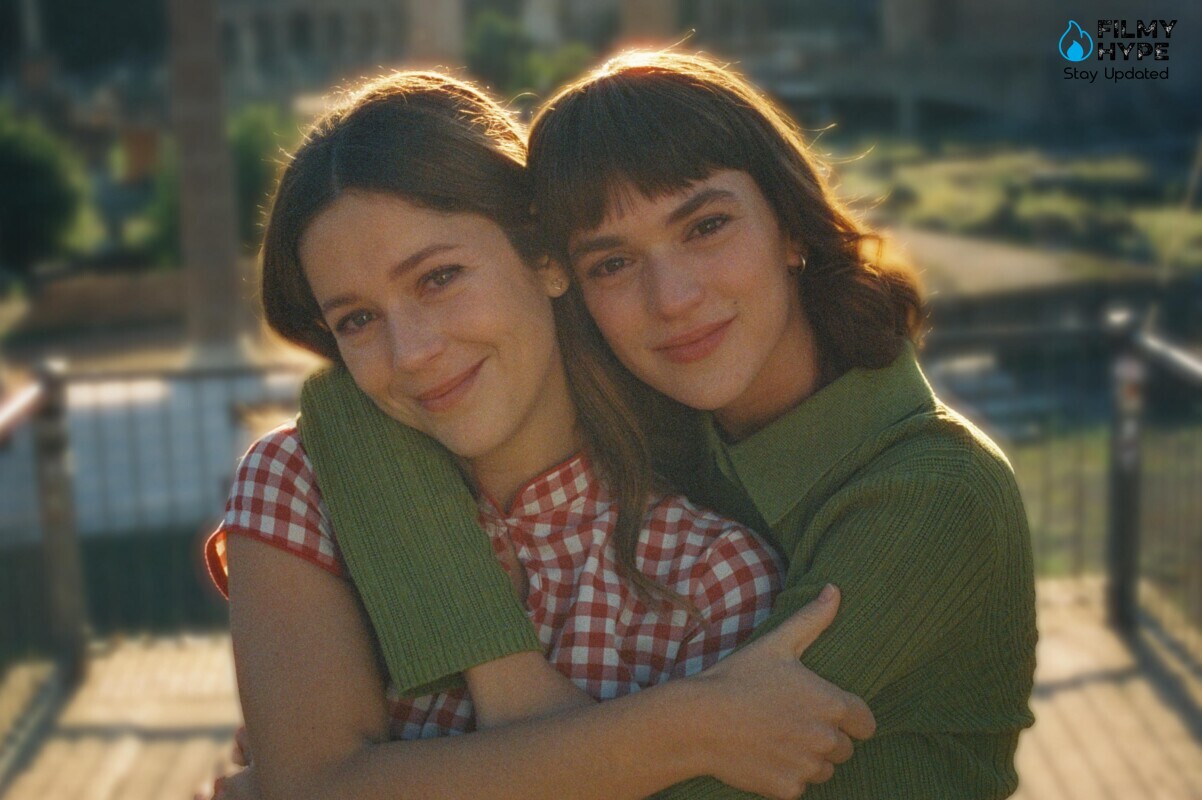
Alícia Falcó convinces like Greta and manages to convey so much the fragility of the character as his evolution as he learns to face pain. Her interpretation brings naturalness to a protagonist who carries much of the weight of history. At his side, the chemistry between the protagonists helps make the relationship credible and gives strength to the most intimate moments. Although less screen time appears, Georgina Amorós leaves an important mark. His character is the starting point of the entire story, and his presence is maintained throughout the series, even when he is not physically there. The actress makes that bond with Greta feel close and have a constant emotional weight.
The same does not happen with some secondary characters, who barely have room to develop. Its function ends up being to accompany the protagonist’s journey. Furthermore, at certain moments, the interpretations are seen as limited by a script that insists on seeking emotional impact. That need to provoke tears makes some scenes feel more forced than they should, and it takes away the naturalness of the work of the distribution. Beyond romance, ‘The Map of Longing’ invites you to reflect on how pain changes people and the importance of finding reasons to continue moving forward. This is where fiction leaves its best moments. Although some narrative decisions undermine its strength, its message manages to remain present until the end. Turn adaptation into a proposal that connects with those who enjoy stories marked by emotions.
Directed by Laura M. Campos and Gemma Ferraté, The Map of Longing is a six-part miniseries lasting about 50 minutes each that is prepared to climb the rankings of the most-watched series at supersonic speed. The main reason is that it is based on the bestseller of the same name by Alice Kellen, one of the most read romance novels of recent years. While allowing itself some narrative freedom, the series is very faithful to the source text, and the emotional atmosphere manages to convey the pain of mourning and the path of rebirth, without ever becoming excessively melodious.

Despite a first episode that struggles to get going, over the course of the subsequent episodes, The Map of Longing becomes an absolutely enjoyable and compelling product. It is true that some secondary characters have been sacrificed, and that some evidence of the “wish map” is less incisive than in the novel, but the result is a non-trivial and pathos-rich series. But above all, it is also capable of reflecting, between the lines, on important issues such as assisted reproduction and grief processing.
The Map of Longing Series Review: The Last Words
The Map of Longing finds its strength in the relationship between two sisters and in the story of grief. When it leaves room for romance, it becomes more predictable, but retains a sensitivity that accompanies the viewer until the end. One of the best aspects of the series is the choice of format. With six episodes available, The Map of Longing can take the time to tell the story of Greta, her family, and the path Lucy left behind. Many moments work precisely because they are not resolved within a few minutes, as would probably have happened in a movie. Secondary characters also contribute to the story’s credibility, even without having particularly complex story arcs. Despite everything, the credibility of the performances, the background on grief management, the agility of the rhythm, and the indiscriminate use of songs make ‘The Map of Longings’ an entertaining, dignified, and industrially perfect production to enjoy this summer.