

Who Is Roddy the Ruin? There’s a moment in the early episodes of House of the Dragon Season 3 that tells you everything you need to know about Roderick Dustin before he even speaks. He walks into Daemon Targaryen’s presence and tosses something onto the ground. It thuds. It rolls. It’s the severed head of Jason Lannister. No ceremony. No grand speech. Just a man with a battle-axe and a grimy beard, delivering the kind of message that doesn’t need words.
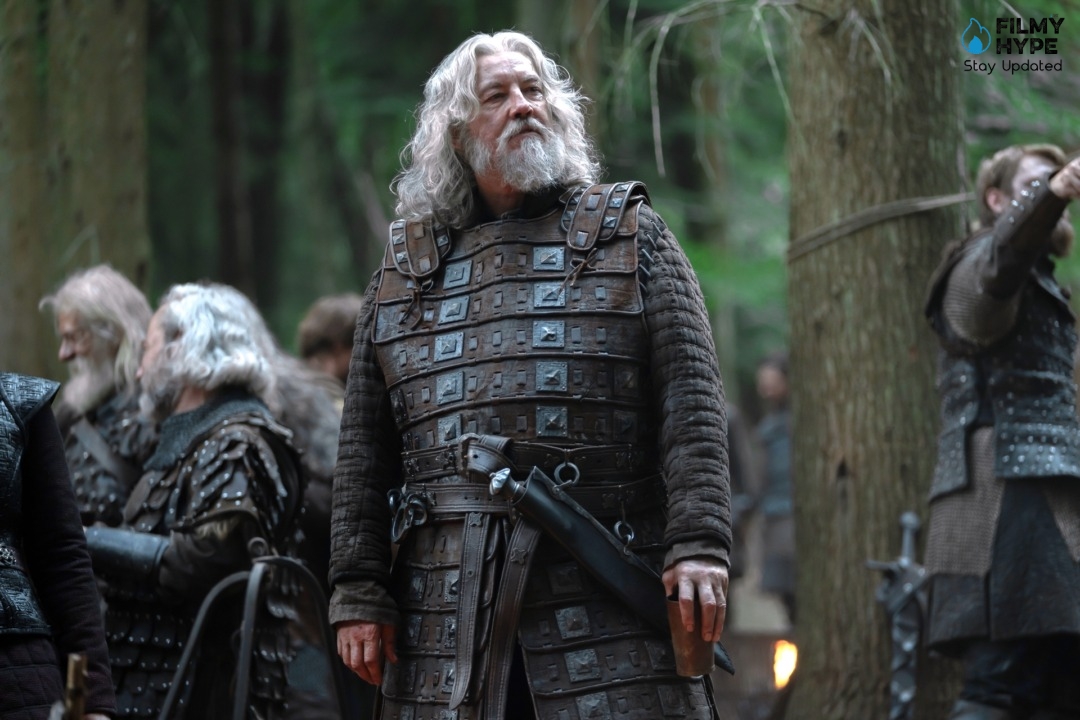
Tommy Flanagan plays him with the weathered calm of someone who figured out the meaning of his life a long time ago and isn’t especially interested in debating it. In a show dominated by dragons and dynasties, by people clawing for thrones and legacy, Roderick Dustin arrives as something entirely different: a man who has already made peace with dying. And that makes him more dangerous than anyone with wings.
Who Is Roddy the Ruinous? The Winter Wolves and the Logic of the North
To understand Roderick Dustin, you have to understand where he comes from and why his men are marching south in the first place. The Winter Wolves are the vanguard of the force Cregan Stark promised to Jacaerys Velaryon. They’re not young soldiers hungry for glory. They’re veterans and outcasts, gray-bearded men who have lived long enough to know exactly what winter means in the North.
And winter in the North isn’t a season. It’s a death sentence. The snows last for years. Harvests fail. Villages disappear. The old and the weak don’t survive. So when war comes to the south, these men don’t see it as a tragedy. They see it as an opportunity. Marching south means they won’t be a burden on their families when the food runs low. They’ll eat from the army’s stores instead of their children’s plates. And if they die in battle, well, that’s a better end than starving in the cold.
George R.R. Martin has always understood that the North produces a different kind of person. The southern lords talk about honor like it’s a quality you can wear. The northerners talk about winter like it’s a debt you pay with your body. Roderick Dustin embodies that philosophy in its purest form. He didn’t come south to win glory or titles or land. He came south to die usefully.
What Makes Roddy So Different
Most of the major characters in House of the Dragon are obsessed with the future. Rhaenyra is fighting for a throne she believes is hers by right. Aegon is fighting to stay alive. Alicent is desperately trying to protect her children from the consequences of a war she helped start. Daemon wants to carve his name into history so deeply that no one can ever forget him.
Roderick Dustin has already settled all of that. He has no future. He knows it. He’s an old man in a world where old men don’t last long, and instead of clinging to whatever years he might have left, he’s decided to spend them on something. That radical acceptance of his own mortality is what makes him so unsettling to the people around him. You can’t threaten a man who’s already accepted the worst possible outcome. You can’t bargain with someone who doesn’t want anything you have.
Martin has written characters like this before. Eddard Stark had a version of this certainty, though it was wrapped in a rigid moral code. Jeor Mormont, the Old Bear of the Night’s Watch, carried himself with the same weary acceptance of an unpleasant fate. Cregan Stark himself belongs to this tradition. But Roderick is something else. He lacks Ned’s idealism. He lacks the Watch’s solemn sense of sacred duty. His worldview seems to come from a place beyond honor, beyond morality, in that quiet zone where a man has simply lived too long to keep believing in the promises power makes.
The Head of Jason Lannister
The show makes a deliberate choice in how it introduces Roderick. It doesn’t show the Battle of the Red Fork. It shows the aftermath. Jason Lannister’s Westermen have been massacred by the combined forces of the Riverlords and the Northmen. In the book, Lannister is killed by a squire named Longpate. In the series, his end is an off-screen decapitation delivered by Roderick Dustin himself.
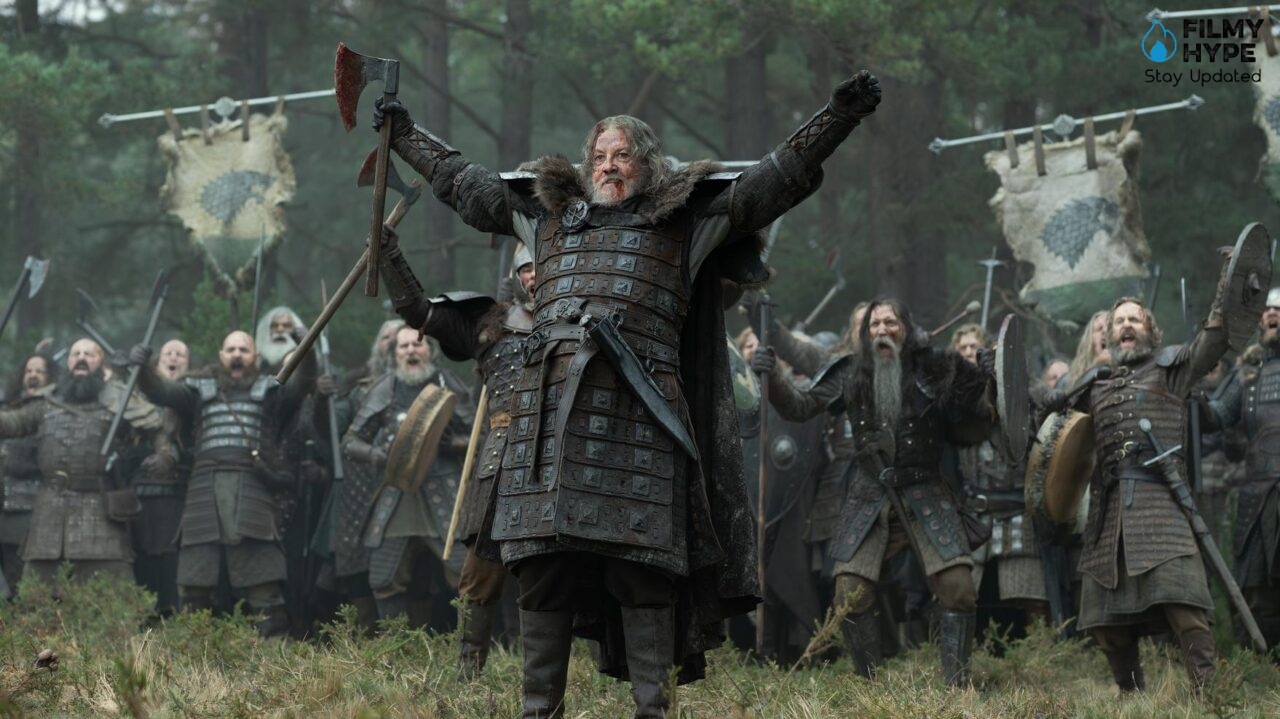
The change matters. It condenses the entire spirit of the Winter Wolves into a single gesture. Roderick doesn’t bring news of the victory. He brings physical proof. He throws the head of one of the most powerful lords in Westeros onto the floor like it’s a sack of grain. His words are simple: “We have come to die for the Dragon Queen.”
That’s not a boast. It’s not a plea for recognition. It’s a statement of fact. He’s telling Daemon exactly what he’s getting: men who aren’t fighting for rewards, who aren’t calculating the political angles, who have already written themselves off and are now just looking for the most useful way to go.
His Fate in the Books
If the series follows Roderick Dustin’s literary trajectory, what’s coming is some of the most brutal and memorable combat in the entire Dance of the Dragons. At the Battle by the Lakeshore, the Winter Wolves throw themselves against the Lannister lines again and again, breaking the western army at the cost of their own blood. They don’t retreat. They don’t regroup. They just keep going until the job is done.
Shortly afterward, at the Butcher’s Ball, a defeated and surrounded Criston Cole begs for mercy. Roderick Dustin is not the man to give it to him.
But his final moment comes at the First Battle of Tumbleton. Surrounded by Hightower forces, wounded, outnumbered, Roderick takes a blow that severs his left arm. Anyone else would collapse. He doesn’t. He keeps advancing, axe in his remaining hand, cutting a path through the enemy vanguard. Before he dies, he drags Lord Ormund Hightower and Ser Brynden Hightower down with him.
That’s the death he came south to find. Not a quiet one. Not a peaceful one. A death that matters, that buys something for the people he swore to fight for.
The Man Who Already Won
In a story full of dragons and prophecies and people who think they’re the main character of history, George R.R. Martin keeps giving some of his best moments to men who walk toward the end of their story with their eyes open. Roderick Dustin didn’t come to the war to conquer anything. He came because he’d already done the math and found nothing to gain and nothing to lose.
That’s a terrifying kind of freedom. The lords of Westeros play their game of thrones, scheming and betraying and sacrificing other people’s lives for their own ambitions. Roderick Dustin just picks up his axe and walks toward the enemy line. He’s not trying to win the war. He’s trying to make his death count for something.
And in the brutal logic of Westeros, a man who no longer fears losing is the most dangerous piece on the board. When the dragons are grounded, and the crowns are in the mud, and the great lords are calculating their next move, the war is going to be decided by men like Roddy the Ruinous. Men who bite down on the dirt and keep swinging. Men who came south to die, and who intend to make the bill as expensive as possible for whoever has to pay it.