

There’s a particular shade of green that keeps appearing throughout House of the Dragon. It’s not the green of grass or spring or anything gentle. It’s the green of a dress worn at a wedding, a silent declaration of war stitched into silk. It’s the green of House Hightower’s beacon, burning across the water from Oldtown, a flame that’s been watching Westeros for generations. It’s the green of ambition when ambition has no other outlet, when it has to disguise itself as duty because the world doesn’t allow women to want things openly.
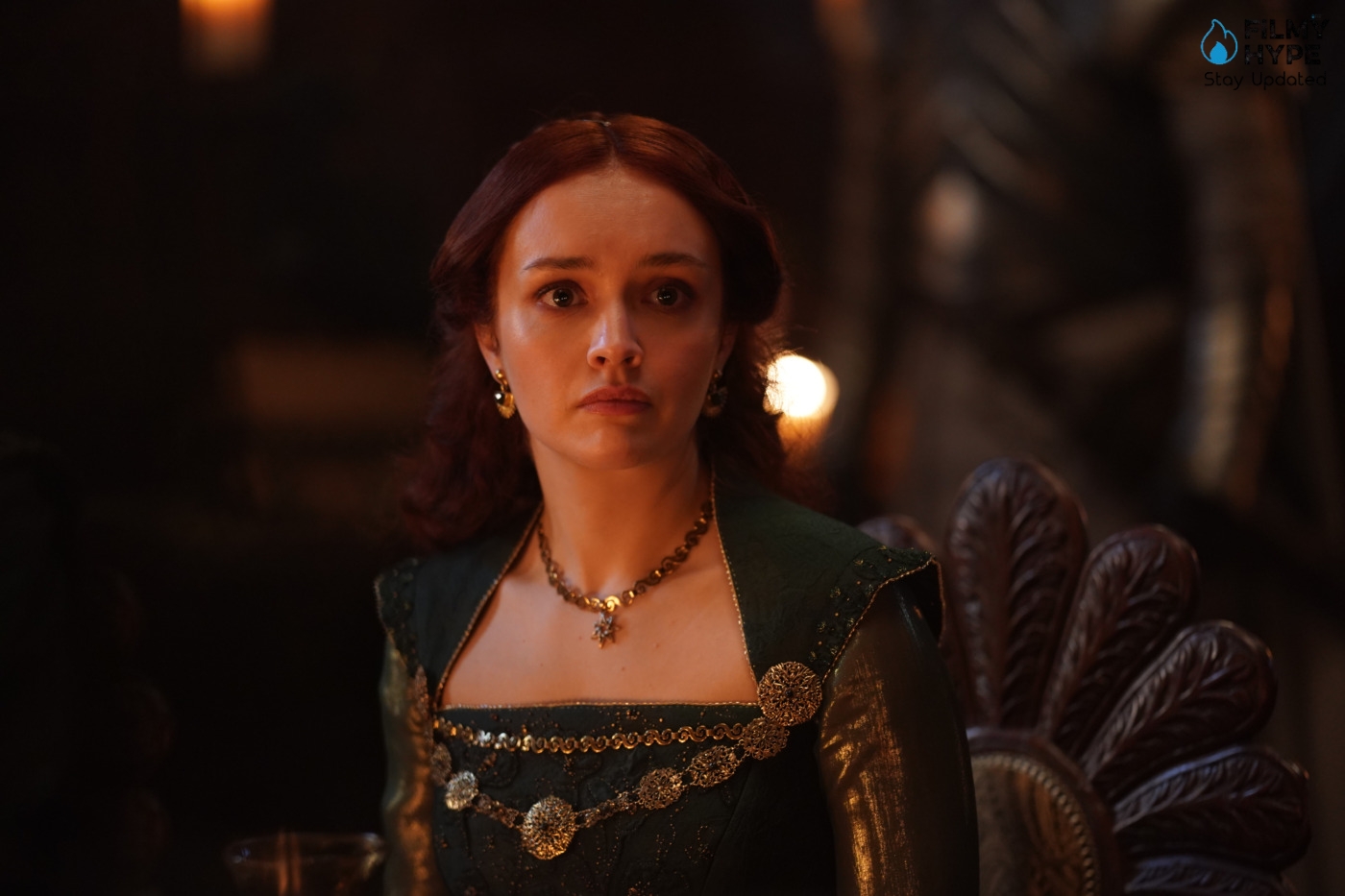
Who is Alicent Hightower? In House of the Dragon, The Woman Who Divided a Kingdom?
Alicent Hightower is one of the most difficult characters to pin down in the entire Song of Ice and Fire universe. Played first by Emily Carey and then by Olivia Cooke in the series, she resists easy categorization. She’s not a hero. Calling her a villain feels too simple, too dismissive of the forces that shaped her. She exists in that uncomfortable middle ground where most real people actually live—the space where love and resentment, duty and ambition, sacrifice and self-interest all tangle together until you can’t pull them apart anymore. She never rode a dragon. She never swung a sword. But she helped break a kingdom anyway, and she did it using the only tools the world allowed her to have.
The Girl Who Learned to Listen?
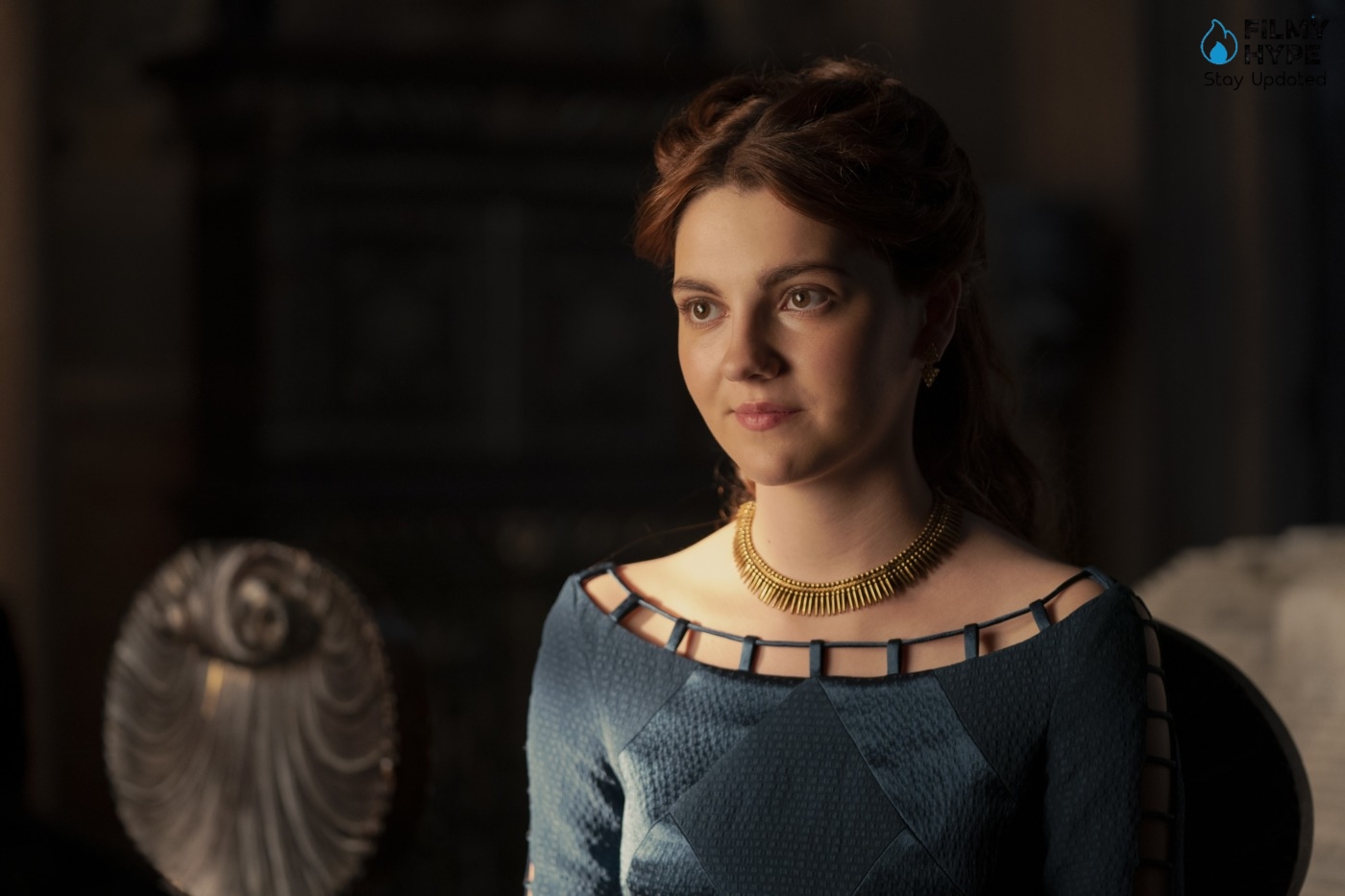
Alicent was born in Oldtown in 88 AC, the daughter of Ser Otto Hightower, a man who would serve as Hand of the King to two different monarchs. Her mother is absent from the records entirely, a blank space that tells its own story about what was considered worth documenting. Like most noble daughters of her era, Alicent wasn’t raised to be powerful in any direct sense. She was raised to be valuable. A bargaining chip. A womb. An alliance waiting to happen. She learned early that her worth was tied to what she could provide to men, not to anything she might want for herself.
But Alicent was also precociously intelligent. The books describe her as one of the most beautiful maidens in Westeros, but the beauty was almost incidental to what really set her apart: she paid attention. When she was sent to King’s Landing as a child and assigned as a companion to the aging King Jaehaerys I, she didn’t just sit quietly in the corner. She listened. For three years, she combed the Old King’s hair, read to him, and absorbed the wisdom of a reign that had spanned more than five decades. She learned how power worked not from a Maester’s lectures but from the murmured confessions of a dying man who had held it longer than anyone else.
That education shaped everything that came after. Jaehaerys died, but Alicent never left the court. Her father became Hand to the new king, Viserys I, and Alicent stayed in the Red Keep, watching, listening, learning the rhythms of influence.
Becoming Queen, Losing Control?
Viserys was a man who confused kindness with weakness. Affable, conciliatory, desperate to be loved, he was widowed young when his first wife, Aemma Arryn, died in childbirth. He had one surviving child: Rhaenyra, whom he named his heir in an unprecedented move that defied every precedent the realm had established. The chronicles say he loved his daughter above all else. The chronicles say a lot of things.
Alicent, by this point, had grown into a cultured, composed young woman who understood court life better than almost anyone. Her father was Hand. The king was lonely. What happened next was predictable in the way these things always are. Viserys married her. She was eighteen. He was twenty-nine. Whether it was love or just convenience doesn’t really matter. Royal marriages rarely turn on affection.
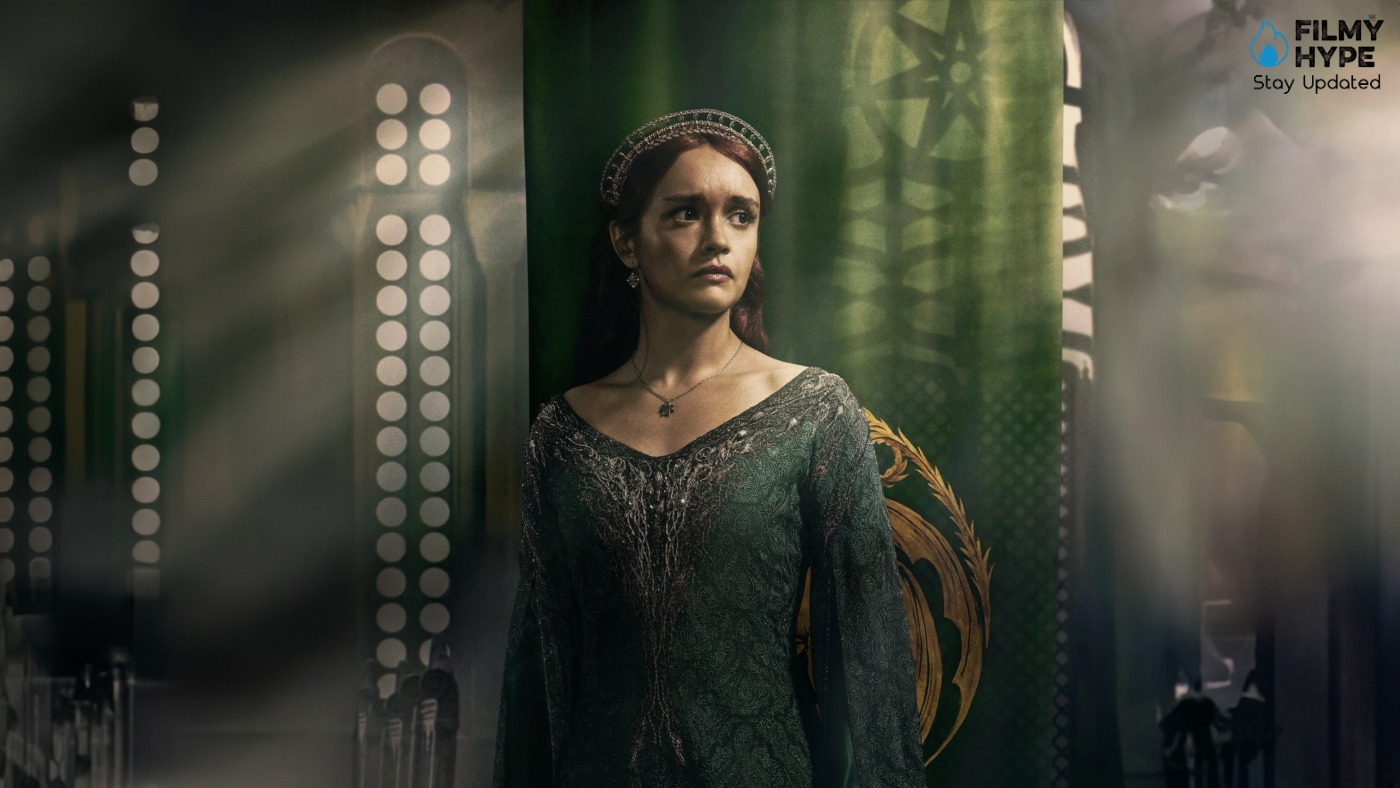
Alicent did what was expected of her. She gave Viserys three sons—Aegon, Aemond, and Daeron—and a daughter, Helaena. Four children with Targaryen names and Hightower blood. Four living arguments against Rhaenyra’s claim. Because if Viserys had a son, why should a daughter inherit? The realm had already answered that question at the Great Council of 101, which set the precedent that the male line always comes first. Viserys might have named Rhaenyra his heir, but precedent is a heavy thing, and Alicent knew how to use it.
The initial friendship between Alicent and Rhaenyra, such as it was, curdled slowly. It didn’t happen all at once. It happened in small slights and sideways glances, in the way Rhaenyra’s children looked nothing like their supposed father, Laenor Velaryon, in the way Viserys refused to see the chasm opening beneath his feet. Two factions formed around the two women: the Blacks for Rhaenyra, the Greens for Alicent. Green. The color of House Hightower. The color of the dress Alicent wore to Rhaenyra’s wedding was a statement made without a single word spoken aloud.
The King Dies and Everything Burns?
Viserys I Targaryen died, and what happened next is the defining moment of Alicent’s life. She and Otto concealed the king’s death for days. While his body rotted in his bed, they convened the Small Council, sealed the city gates, arrested dissenters, and crowned Aegon II as king. Rhaenyra, pregnant and isolated on Dragonstone, wasn’t informed until it was too late.
The official histories, written by maesters who served the established order, frame this as pure ambition. Alicent wanted power. She hated her stepdaughter. She manipulated her way into usurping the throne. And there’s truth in that reading. But it’s also too clean.
Alicent had spent her entire life in the Red Keep. She understood better than anyone what happened to rival claimants in Targaryen successions. If Rhaenyra took the throne, what would happen to Alicent’s sons? To Aegon, who had the stronger claim by every tradition the realm recognized? To Aemond and Daeron? To Helaena? She had watched enough politics to know that the answer was probably violence. Maybe she acted out of ambition. Maybe she acted out of fear. Maybe, for a woman in her position, those two things had become impossible to separate.
When Rhaenyra learned of her half-brother’s coronation, she responded by crowning herself on Dragonstone. Two monarchs. Two factions. One throne. The Dance of the Dragons had begun, and Alicent Hightower was standing at its center, a queen without a dragon in a war fought with fire.
What Did the War Cost Her?
The Dance was a catastrophe. Dragons, those living weapons, tore each other apart in the sky. Armies marched and burned and died. The realm bled. And Alicent, who wielded no sword and commanded no troops, saw everything she had tried to protect get consumed anyway.
She lost two of her children during the war. Aemond, the fierce second son with the sapphire eye, died fighting Daemon above the Gods Eye. Helaena, gentle and haunted, took her own life after watching her son be murdered in front of her—a death that traces directly back to the bloodshed Alicent’s choices helped unleash. Aegon II survived, but barely: burned, maimed, reduced to a bitter shell of the man who was crowned. Otto Hightower, her father, the architect of so much of her strategy, was executed for treason.
She won the war in the narrowest sense—Aegon II ended up on the throne, Rhaenyra was devoured by his dragon—but the victory was hollow. Aegon was poisoned shortly after, likely by his own men. The throne passed to Rhaenyra’s son, Aegon III. The Blacks won in the end, but at a cost so steep the word “victory” feels obscene.
Alicent survived. She outlasted almost everyone. But survival isn’t always a mercy. She was confined to her chambers in the Red Keep under constant guard, the woman who once navigated the corridors of power now restricted to a handful of rooms. The chronicles say she lost her mind in those final years. She talked to herself. She tore at her hair. She accused the shadows of conspiring against her. She died during an outbreak of winter fever, alone and hated and already becoming a footnote in the histories she had tried so hard to shape.
The Question That Doesn’t Have an Answer?
So who was Alicent Hightower? A villain who helped tear a kingdom apart for the sake of her own ambition? A mother who did terrible things because she genuinely believed her children would die if she didn’t? A victim of a system that gave women only one path to power and then punished them for taking it? The truth is probably all three, and none of them cleanly.
What makes Alicent so compelling is that she refuses to resolve into a simple moral. She played the game of thrones with the tools available to her—beauty, intelligence, emotional labor, an understanding of when to speak and when to stay silent—and for a while she played it brilliantly. But the game doesn’t care about your intentions. It doesn’t care whether you’re acting out of love or hatred or fear. It just keeps grinding forward, and eventually it grinds you down too.
Her bloodline, interestingly, survived her disgrace. Through her cousin Ormund Hightower, the family line continued down through the generations. Lady Alerie Hightower eventually married Mace Tyrell, which means Alicent is distantly related to Loras and Margaery Tyrell, two characters who would play their own ill-fated games of power generations later. The green thread keeps weaving through the tapestry of Westeros long after the woman who wore it is gone.
Alicent Hightower never rode a dragon. She never needed to. She found other ways to leave her mark on the world, and the world is still trying to decide what to make of her. Probably it always will be. The best characters don’t give you the comfort of a final verdict. They just keep asking the same uncomfortable question: what would you have done, in her place, with the choices she was given? The answer, if you’re honest with yourself, is rarely as clean as you want it to be.