
Spider-Noir Review and Ratings
Cast: Nicolas Cage, Lamorne Morris, Li Jun Li, Karen Rodriguez, Abraham Popoola, Jack Huston, and Brendan Gleeson. Lukas Haas, Cameron Britton, Cary Christopher, Michael Kostroff, Scott MacArthur, Joe Massingill, Whitney Rice, Amanda Schull, Andrew Caldwell, Amy Aquino, Andrew Robinson, and Kai Caster
Directors: Harry Bradbeer, Nzingha Stewart, Alethea Jones, Greg Yaitanes
Streaming Platform: Prime Video
Filmyhype.com Ratings: 3.5/5 (three and a half stars)
There is a moment, during Spider-Noir, where it becomes clear that the series doesn’t really want to be “a new version of Spider-Man”. Yes, it really happened. There are Spider (without the man), Nicolas Cage, pulp and hard-boiled literature, and cinema in full force. And yes, you shouldn’t lose her. It will debut on Prime Video on May 27, 2026, as Spider-Noir, a live-action series based on/inspired by/reinterpreting (take your pick) the Marvel comic and produced by Sony Pictures Television exclusively for MGM+ and Prime Video. Among the new features is also the (fundamental) choice of how to view it: black and white or “True-Hue Full Color”. It wants to be an operation of stylistic contamination, an almost stubborn attempt to blend the classic hard-boiled detective with the language of superhero comics. It is precisely this ambition, even more than the Marvel component, that defines the series developed by Oren Uziel and Steve Lightfoot for MGM+ and Prime Video.
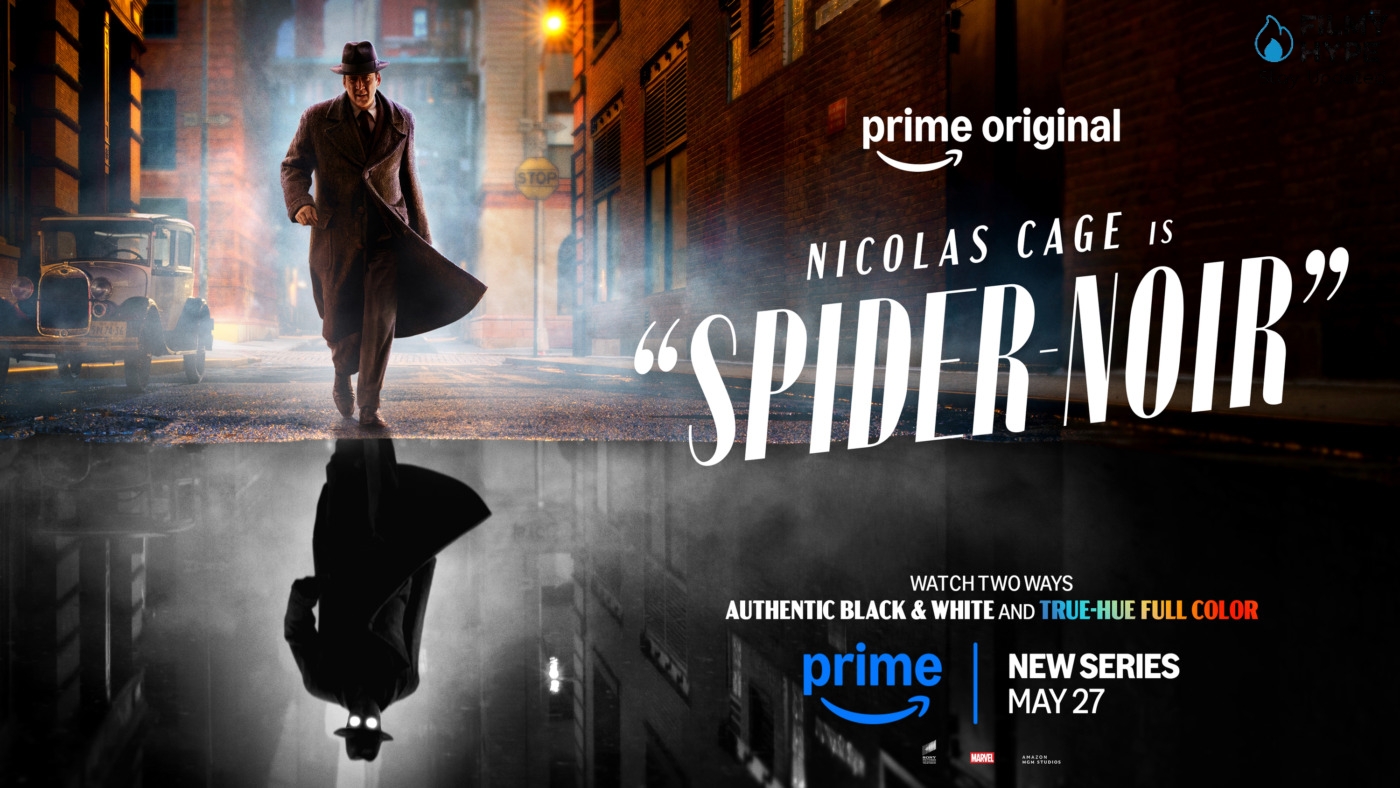
The result is far from perfect. Narratively predictable and not always able to support the weight of its own aesthetic suggestions, Spider-Noir still manages to stand out within a now-saturated superhero television landscape. And it does so mainly thanks to Nicolas Cage, who transforms Ben Reilly into a melancholic and deliberately artificial creature, suspended between Humphrey Bogart and a crazed cartoon. The cast includes Nicolas Cage, Lamorne Morris, Li Jun Li, Abraham Popoola, Karen Rodriguez, Jack Huston, and Brendan Gleeson. Guest stars include Lukas Haas, Cameron Britton, Cary Christopher, Michael Kostroff, Scott MacArthur, Joe Massingill, Whitney Rice, Amanda Schull, Andrew Caldwell, Amy Aquino, Andrew Robinson, and Kai Caster. So, what’s this spider like in black? In short, a good variation on the superhero theme and big problems.
Spider-Noir Review: The Story Plot
In eight episodes, Spider-Noir tells the story of Ben Riley. We are in the New York of the 1930s. The city begins to rise around Midtown, traffic increases, meanwhile, the barrels of whiskey decrease. At least the legal ones, given the tightness of the prohibition. Ben, wrinkled and bruised, thinks back to the days when he was The Spider, The Spider. He was good at keeping outlaws at bay. Now, carrying with him the shadow of great trauma, he has abandoned the idealistic mask to indulge in cynicism and alcohol. He runs a private detective agency, kept afloat almost exclusively by his assistant, Janet (Karen Rodriguez).
Things take an unexpected turn when Ben is hired by nightclub singer Cat Hardy (Li Jun Li), an archetypal hatching of the femme fatale. The detective must track down the woman’s bodyguard, who, it seems, is consumed by her strange superpowers. The investigation leads him to the Irish boss Silvermane (Brendan Gleeson), who, thanks to Prohibition and criminal turmoil, is experiencing a truly golden age. The investigator, therefore, discovers that in New York, he is not the only one to have “great powers and great responsibilities”. To get to the bottom of the mystery and prevent Silvermane from gaining the upper hand, he just has to go back to being The Spider. Helping him is his journalist friend Robbie Robertson (Lamorne Morris).
Spider-Noir Review and Analysis
Let’s state it right away: it’s not easy, but it deserves it. However, some precautions must be followed to enjoy it to the fullest. The first is to choose the original language, although Cage’s Old Hollywood accent, the same one he used to voice Spider-Man Noir in the film Spider-Man – Into the Spider-Verse (hence the opening line about the universe, to be clear), is not the best thing in life. The second is to choose the black and white version: a decision that values the noir-pulp-hard-boiled grammar more than the recolored. The third is to be patient. The series is thought of as a ‘mystery’, with the pieces fitting together a little by force, but you have to give the mechanisms of classic noir time to activate.
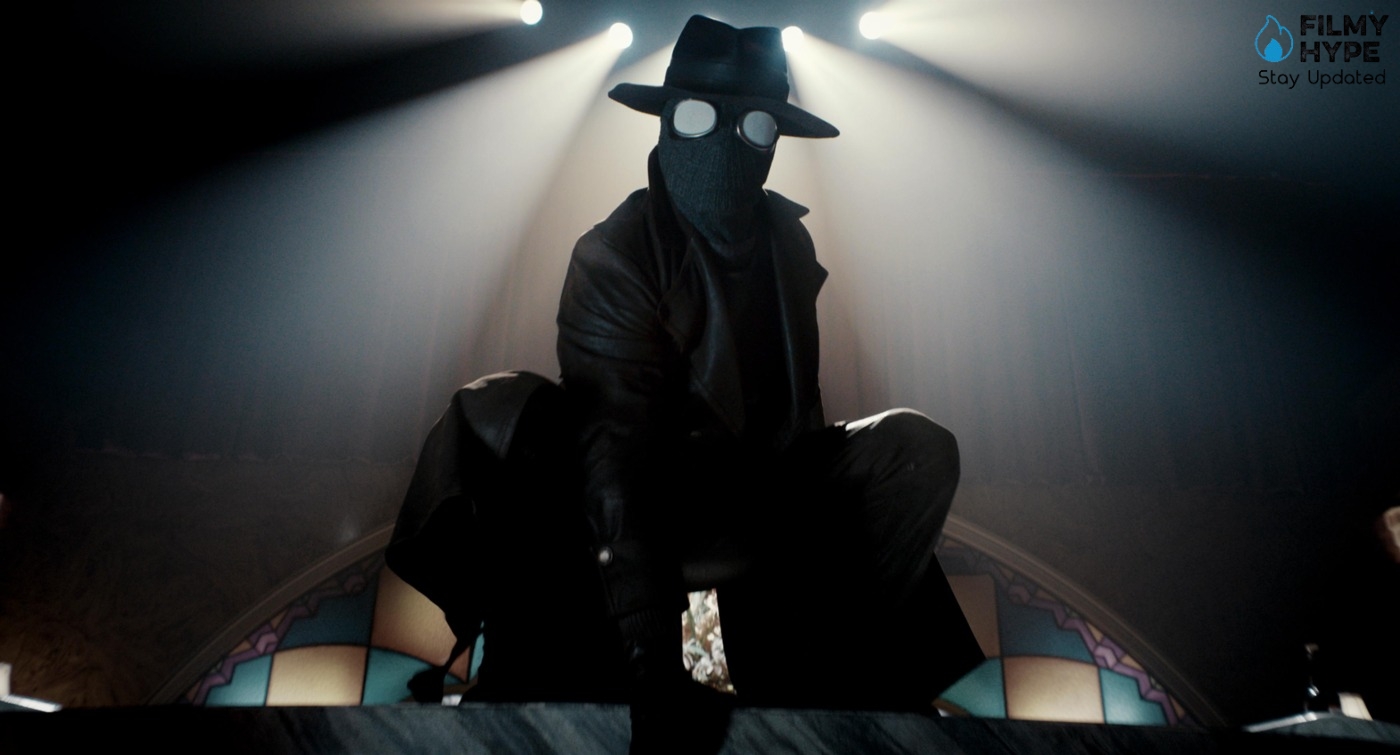
Once this is done, we’re done: the show can begin. Nicolas Cage drinks, Nicolas Cage takes a lot of punches, Nicolas Cage makes Nicolas Cage faces, Nicolas Cage abounds in self-irony, sarcasm, and cynicism, Nicolas Cage in one way or another fixes everything. The series is Nicolas Cage. She’s sewn on him, for better or worse. The writing – between genre cornerstones and a vision that can be summed up in the joke “no power, no responsibility” – works, in the end, even if it leaves aside important things that were heavy in the comic (racism, the Great Depression, a ruthless city, and a big cloud on the horizon called Nazism). The idea of a fractured, disillusioned, and life-chewed hero isn’t brand new, but it holds up when paired with the basic superpowers waning between bosses and Prohibition and whiskey for breakfast.
If Spider-Man (and Spider-Noir) can’t exist without New York City, it’s exciting to watch the work done in recreating the metropolitan setting, capturing the timeless charm of a place that, from comics to cinema, made the character great – including his alternate versions. In this sense, the technical discourse (and one cannot help but mention Darran Tiernan’s photography) plays a fundamental role in the economy of the series, which, as per tradition (and without inventing anything new, will it be a flaw?), reasons about the sins to be atoned for, the torments, and the sense of oppression of a human hero and vulnerable. Short breath, chewed speech, vampiric gaze, so much so that it recalls a certain Bela Lugosi.
Inside, in a carousel of tones and moods, in which the action is there but in low dosage, the show plays on the verticality of the scene (from the Art Nouveau spires of the Chrysler Building to the wet asphalt that reflects the lights of Broadway) and, in parallel, on the very concept of noir and pulp, painting a fresco expressionist and unusual. Sometimes, it feels like reading Raymond Chandler, or, why not, it feels like seeing The Lady from Shanghai by Orson Welles. Other times, Spider-Noir It almost looks like a B-movie by Edgar G. Ulmer. Comparisons of a certain caliber that raise the bar and, in fact, make the show worth watching. Clear: as written at the beginning of our opinion, the authors did not look for the easiest path, aiming for a total and, if you like, deliberately (too) composed story (even a dull thread, at times), leaning on the lashes ironic and, again, to an extremely recognizable imagery.
The superhero component, paradoxically, is almost secondary. Spider-Noir seems much more interested in shadows, smoky corridors, jazz clubs, and alcoholic detectives than in the idea of expanding the Spider-Man myth. And this is precisely where the series finds its most convincing identity. New York in the 1930s is built through a’avowedly artificial aesthetics, almost theatrical. The slanted shots, aggressive backlights, rain-soaked alleys, shadow-carved faces, and deliberately unnatural characters don’t seek realism: they seek the language of classic noir. In this sense, photography is one of the most successful aspects of production.

The black and white version is clearly the format in which the series acquires the greatest visual coherence. Nightclub scenes, backlit silhouettes, New York scenery, shadows on faces, and even special effects take on a more believable texture within the monochrome. The version “True-Hue Full Color”, on the other hand, often tends to highlight the artificiality of digital effects and to weigh down sets that are decidedly more elegant in black and white. The double distribution remains an interesting idea, but it is difficult not to perceive black and white as the form actually conceived for this project. Editor’s note: For the review, I watched the series alternating between the black and white and color versions.
The main problem of Spider-Noir emerges when you look beyond the aesthetic surface. The investigative plot rarely really surprises: many twists and turns are readable well in advance, while some episodes noticeably slow down the pace without adding any real depth to the characters. The series loves to evoke noir more than it really understands its tragic component. There is a substantial difference between quoting noir and actually possessing its moral pessimism. Spider-Noir often remains suspended in an ambiguous balance between sincere homage and stylized imitation. Also, several secondary characters suffer from this setting. Silvermane, played by Brendan Gleeson, has a stage presence, but remains confined to rather conventional dynamics. Cat Hardy, played by Li Jun Li, works much better iconographically than psychologically, although the actress still manages to lend charm and vulnerability to a character that the script sometimes tends to treat as a simple archetypal figure.
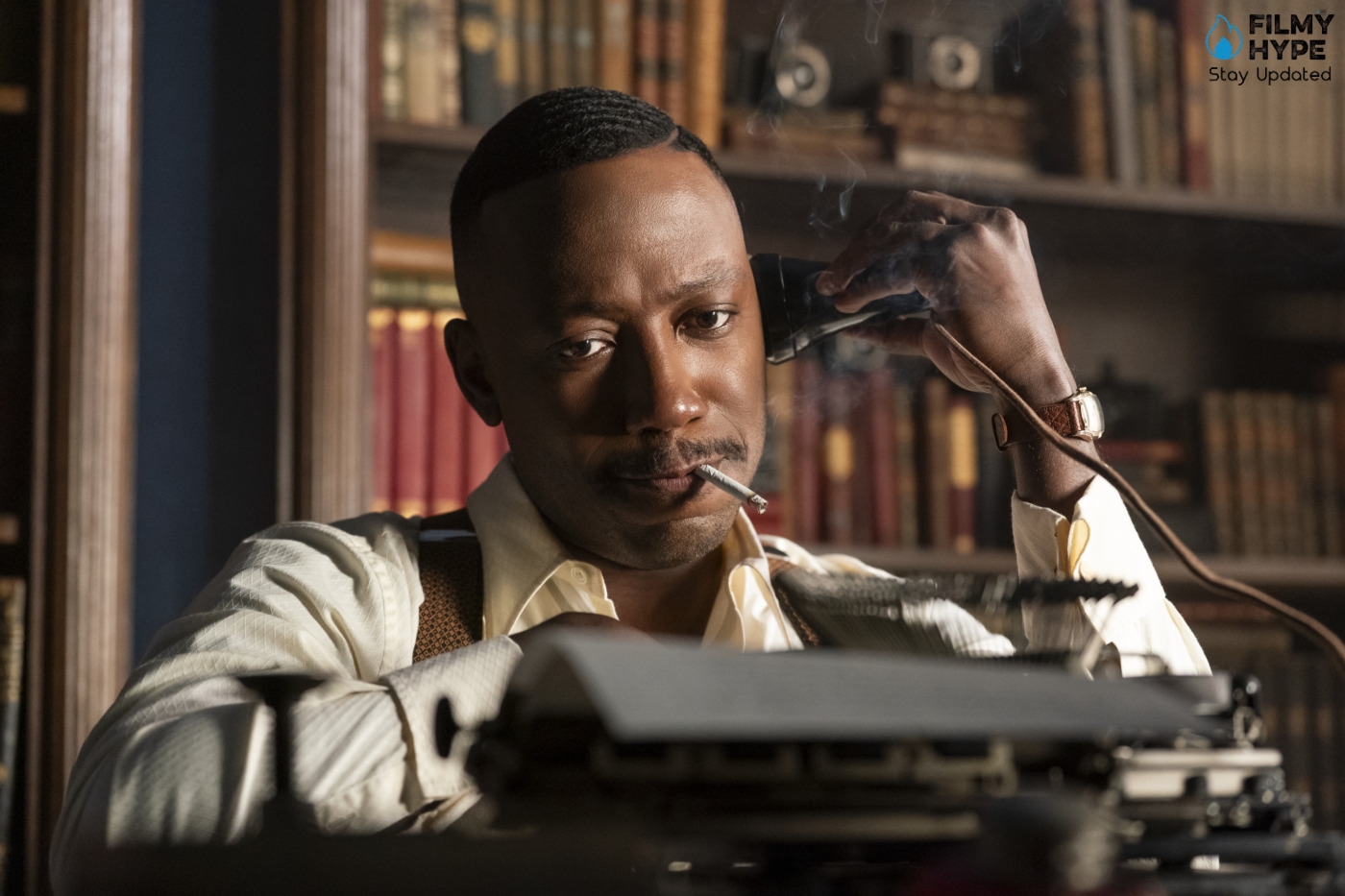
Karen Rodriguez and Lamorne Morris are much more effective. Janet and Robbie are the only characters who seem to own a life outside of the main plot. Their humanity helps the series not to sink completely into its own style exercise.
The most interesting thing about Spider-Noir is that it never attempts to look like the Marvel model, typical of the MCU. He prefers to lock himself into a precise aesthetic and work on an extremely defined tone. It’s a risky choice. Sometimes it produces truly inspired sequences; other times it reveals all the limitations of a writing that doesn’t always manage to support the weight of its cinephile ambitions. But even in its most fragile moments, Spider-Noir maintains a recognizable personality. Spider-Noir is a series deeply irregular: often indulgent towards herself and narratively less incisive than she would like to appear. Yet, it possesses something that many Marvel productions have long since lost: a true aesthetic identity.
The approach of Spider-Noir is much softer. The murders tempered by tough guy jokes, the comical gags with Reilly’s secretary, Janet (Karen Rodriguez), called upon to liven up some exchanges, and act as a counter-field to Nicolas Cage’s faces. Cage is making his face all the time like, uhm, Nicolas Cage. There is no trace of the poverty and desperation of America in those years. The theme of racism is barely touched upon through the figure of Robbie Robertson (Lamorne Morris), but it’s just a hint, lacking the ferocity of the second, brutal Spider-Man Noir comic book miniseries, Eyes without a Face.
Let’s also consider that here we make sufficiently casual use of superpowers, giving everyone a common origin, as well as superspegons to effortlessly fit together all the pieces of the mystery. A slippery slope, in short, because it’s a moment that, from the noir atmospheres of films with Bogart or James Cagney, you can slip into farce, and from the mood of Public enemy find yourself in a new Who Framed Roger Rabbit. It doesn’t happen, but in a couple of places, you really run the risk of.
However, once they come to terms with this approach, and after choosing to enjoy the entire series in the black and white version – because the super saturated hues of the color version, which looks like an old colorized black and white film, do too much Dick Tracy, the noir fades there don’t work, and the scenes that side by side with light and rain seem too fake. According to Uziel, this second version exists for younger audiences, unfamiliar with black and white – Spider-Noir, he lets himself be watched.
Cage’s Ben Reilly is a walking wreck that no one seems to believe in at first, and who, in his civilian clothes, doesn’t look at all like the same person you see twirling here and there in costumed episodes, hanging from walls, or facing villains with elemental powers. But to Cage – who has always had the surname of a Marvel hero as his stage name –I love him, maybe we want him a little’ everyone. And if you play along, the very long game that now covers a good part of his career, hearing him pose here as a tough guy with his voice mixed in, between a glass of whiskey, a little self-deprecation, and a dick in the face, is ultimately funny. For the record, that accent would be Cage’s version of the transatlantic, or “good American speech”, the 30s Bogart-esque dialect, already used by good old Nic to dub Spider-Man Noir in the film Spider-Man: A New Universe. And okay, here he looks like he has a potato in his mouth, without even doing the Swedish accent. But let’s not thin it out.
In summary, nothing truly memorable or with the atmosphere it might have had by adhering more closely to the source material, but entertaining in its often ironic tone. After all, it’s not Spider-Man Noir, the one we see on screen with his bright glasses or bruises on his face, who studies movie actors to speak like them, but the Spider, a pulp hero in line with the 1930s characters in magazines and radio series that inspired many of the first superheroes, starting with Batman. Like the Shadow Man (The Shadow) or, to stay on the subject of arachnids, Harry Steeger’s The Spider. Creatures of the night in years when everyone in America, rather than rereading the gray present in fiction, hoped for a better future.
Spider-Noir Review: The Last Words
Spider-Noir is a flawed, but surprisingly personal, television experiment. The series struggles to always keep its narrative structure compact, but makes up for it with a very strong aesthetic identity and a Nicolas Cage completely immersed in the character. More pulp noir than classic Marvel history, MGM+ and Prime Video’s production finds its strength in its atmosphere and ability to transform Ben Reilly into a tragic and grotesque figure. Not everything works, but when the series stops chasing the superhero myth and embraces its own weirdness to the core, it really manages to stand out in the contemporary television landscape.