


RoboCop TV Series: The search for the next Alex Murphy is over. Dan Stevens, the British actor who has spent the past decade building one of the most eclectic careers in Hollywood, has been cast as RoboCop in Prime Video’s upcoming television adaptation of the iconic franchise. The announcement, confirmed by Deadline, brings one of science fiction’s most enduring characters back to the screen with a performer uniquely suited to the role’s strange blend of tragedy and action.
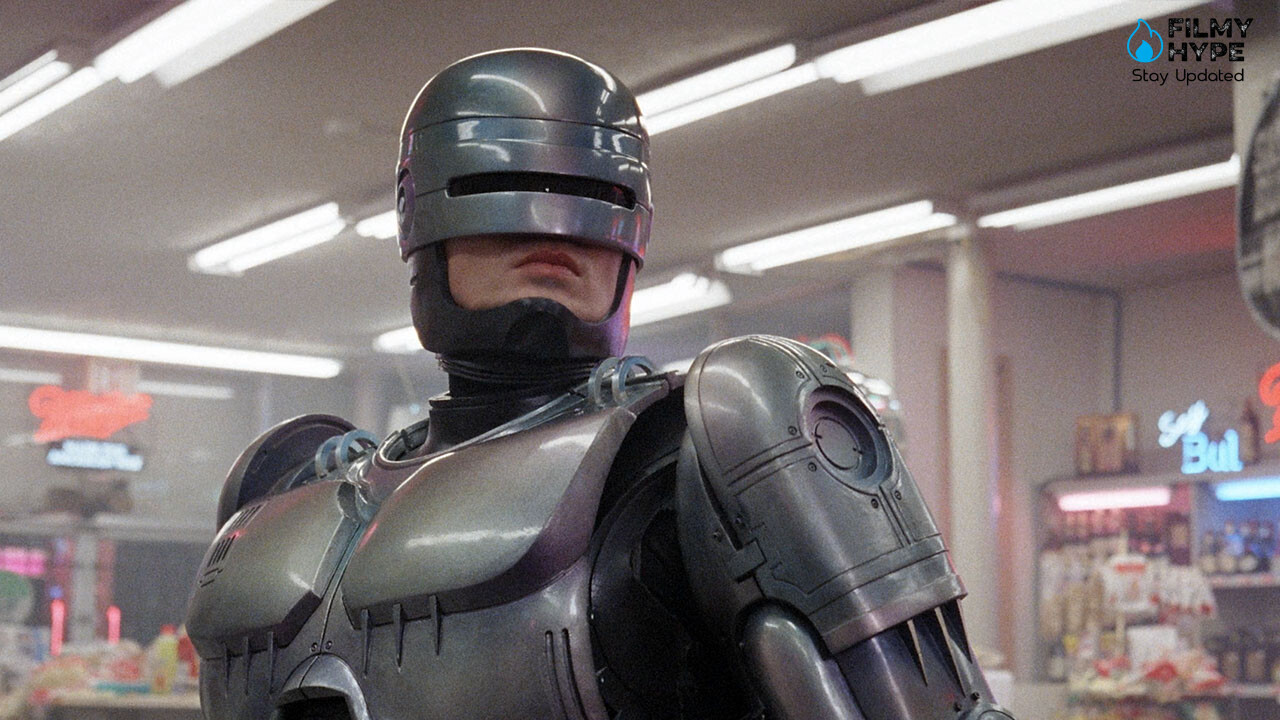
Stevens takes over a legacy that includes Peter Weller’s unforgettable original performance, Robert Burke’s brief tenure in RoboCop 3, and Joel Kinnaman’s 2014 reboot. Each actor brought something different to the character—Weller’s eerie stillness, Kinnaman’s physical vulnerability—and Stevens will now have the opportunity to define the role for a new generation. The eight-episode series comes from Amazon MGM Studios, with Peter Ocko serving as writer, showrunner, and executive producer.
RoboCop TV Series Prime Video: A New Version of Alex Murphy
The series will return to the central premise of Paul Verhoeven’s 1987 original, updating it for the present moment. A powerful technology corporation convinces a city to incorporate a robotic officer into its police force—a machine that houses the consciousness of Alex Murphy, a beloved fallen cop. The story follows Murphy’s transformation from human to machine and the questions that transformation raises.
The synopsis mirrors the original film’s themes: technology, identity, and the unchecked power of corporations. Those ideas were radical in 1987, when Verhoeven used them to satirize Reagan-era America, corporate greed, and the militarization of police. They’re no less relevant today. If anything, the questions RoboCop raised have become more urgent. The series has the opportunity to explore them with the depth that long-form television allows.
The Creative Team
The involvement of James Wan adds significant genre credibility. Wan, one of the most successful horror directors of the past two decades, will serve as executive producer through Blumhouse Atomic Monster alongside Michael Clear and Rob Hackett. His presence suggests the series won’t shy away from the body horror inherent in the RoboCop concept—the horror of having your body replaced piece by piece, of losing your humanity to machinery.
Equally significant is the return of Ed Neumeier and Michael Miner, the screenwriters of the original 1987 film. They’ll participate as executive producers, providing a direct link to the source material. Their involvement suggests the series wants to honor what made the original work while updating it for contemporary audiences.
Peter Ocko, the showrunner, has a background that spans genres. His credits include Pushing Daisies, The Leftovers, and Lodge 49—shows that balanced strange premises with genuine emotional depth. That’s exactly the register RoboCop requires. The character is absurd on the surface—a cyborg cop with a gun built into his leg—but the best versions of the story treat his condition with complete seriousness. Ocko’s experience suggests he understands that balance.
Why Dan Stevens?
Stevens has built a career on playing characters who exist in the space between human and something else. His breakout role in The Guest was a performance built around wrongness—a man who seemed perfect on the surface but was something much more dangerous underneath. His work in Legion explored identity, power, and the fragmentation of self. Even his more mainstream roles, like the Beast in Beauty and the Beast, required him to play a character trapped in a body that wasn’t his own.

That’s the core of RoboCop. Alex Murphy is a man who lost everything—his body, his identity, his connection to his family—and was rebuilt as a weapon. The tragedy is that fragments of his humanity remain. He remembers being a husband, a father, a cop. But those memories exist alongside programming that treats him as a tool. The conflict between man and machine is the engine of every great RoboCop story.
Stevens has the range to play both sides of that conflict. He can be imposing and physical when the role requires it. But he’s also capable of the vulnerability that makes Murphy’s situation tragic rather than just cool. His casting suggests the series wants a RoboCop who’s more than just a walking tank—a character whose suffering is as important as his firepower.
The Legacy
The original RoboCop remains one of the defining science fiction films of the 1980s. It works on multiple levels: as an action movie, as a satire, as a tragedy. Verhoeven’s direction balances ultraviolence with genuine pathos, and Peter Weller’s performance creates a character who’s both terrifying and heartbreaking. The image of Murphy returning to his abandoned family home, remembering the life he lost, is one of the most affecting moments in genre cinema.
The franchise has struggled to recapture that magic. The sequels became increasingly cartoonish. The 2014 reboot, directed by José Padilha, attempted to modernize the story but lost the satirical edge. A television series in 1994 and a 2001 miniseries both failed to find an audience. The property has always been difficult to get right because it requires balancing so many tones at once—action, horror, comedy, tragedy—without letting any single element overwhelm the others.
Prime Video’s series has the advantage of time. Eight episodes give the story room to develop Murphy’s transformation gradually, to explore the world’s corruption, to build the relationships that make his loss meaningful. If Ocko and his team can capture what made the original special—the rage beneath the satire, the humanity beneath the machinery—this could be the adaptation the franchise has been waiting for.
What Comes Next
No release date has been announced. The series is still in development, with production presumably beginning in the coming months. Stevens, meanwhile, continues to build his genre resume. He’ll appear in Onslaught, his new collaboration with director Adam Wingard, and will return as Trapper in Godzilla x Kong: Supernova.
The new RoboCop arrives at a moment when the original film’s themes feel more relevant than ever. Corporate power has only grown. The militarization of police has only intensified. The questions the 1987 film raised—about who controls the machines, about what happens when profit drives law enforcement, about the cost of losing your humanity—are no longer speculative. They’re part of everyday life.
Dan Stevens as Alex Murphy. A machine built to serve, haunted by the man he used to be. The character has been waiting for a new interpretation. The actor has been waiting for a role this strange. The pieces are in place. Now we wait to see what kind of monster they create.