


Sheep in the Box Movie Ending Explained: Kakeru leaves Otone and Kensuke and chooses the forest, but the ending of Kore-eda’s film does not depict an AI rebellion. The separation serves above all to transform Kakeru from a substitute for his dead son into an autonomous being and to force his “parents” to finally accept absence. Hirokazu Kore-eda has built his career on quiet, devastating films about family, loss, and the invisible threads that connect us. But with Sheep in the Box, he ventures into science fiction territory—and yet, true to form, he delivers something that feels less like Blade Runner and more like a meditation on grief wrapped in a futuristic fable.
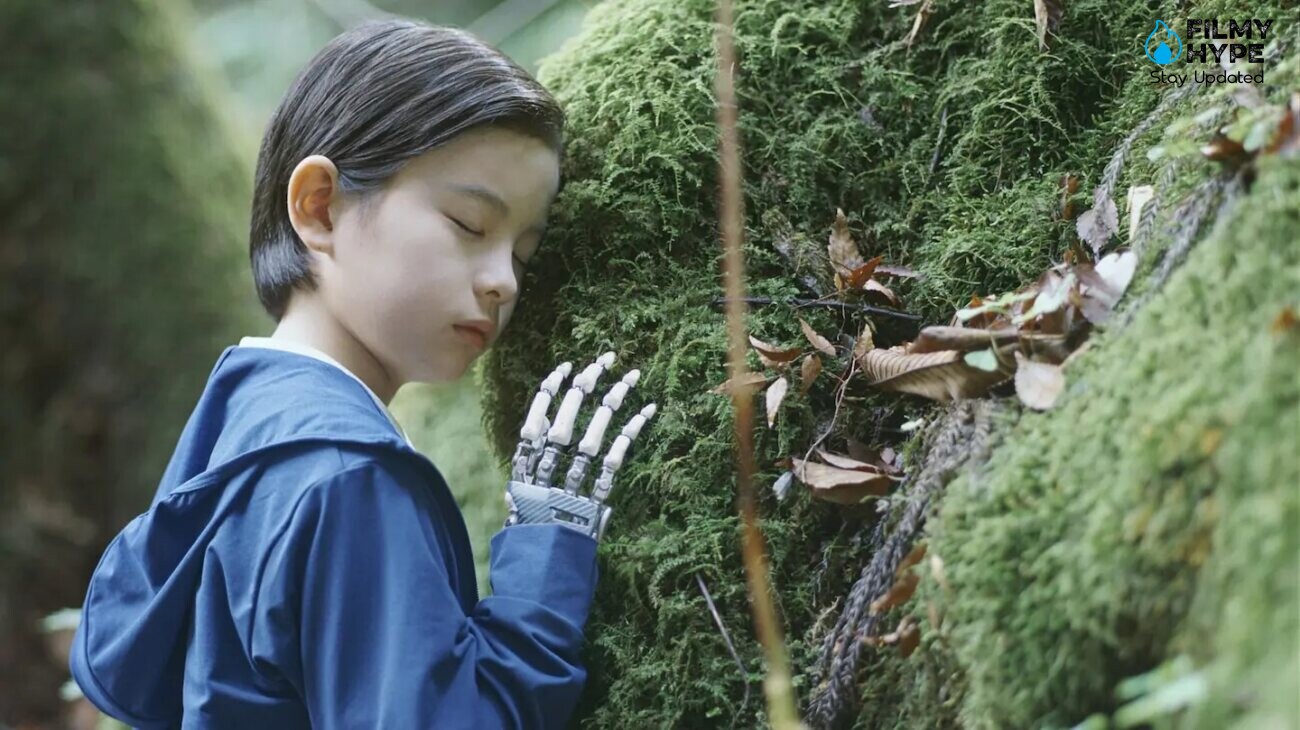
The ending has left audiences divided. Some expected a dramatic AI rebellion. Others hoped for a tearful family reunion. Instead, Kore-eda gives us something far more subtle and, arguably, more profound: a boy-shaped robot walks into a forest, and his human parents let him go. If you’ve finished the film and found yourself staring at the credits, wondering what just happened, you’re not alone. Let’s break down the finale, the symbolism, and the quiet radicalism of Kore-eda’s choices.
Sheep in the Box Movie Ending Explained: Why Kakeru Chooses the Forest and What It Really Means?
In the finale of Sheep in the Box, Kakeru decides not to stay in Otone and Kensuke’s house. The humanoid instead reaches the community that is forming in the forest, composed of other artificial beings and children who, for different reasons, have found a place far from adult society in which to build a different existence. Otone and Kensuke get to that new world, but they don’t become part of it. They do not enter the forest to live with Kakeru and the other children. They let him go and come back.
It is precisely this choice that gives meaning to the last part of the film.
Kore-eda could have ended the story by reuniting parents, children, and humanoids into a perfect new family in nature. He consciously chose not to do so. Speaking to The Korea Times about the ending, the director explained that adults don‘t enter the forest but go back, because an ending in which everyone lives happily together would have erased the distance that must continue to exist between humans and a different entity like Kakeru.
Why Does Kakeru go to the Forest?
The forest is not simply a hideout, and Kakeru does not move there because artificial intelligence has rebelled against humans. During the film, the humanoid gradually begins to distance himself from the role for which he was created. At first, it exists mostly as a replica of the dead child: it possesses his appearance, some of his memories, and much of the information gathered about his life.
But he also continues to learn.
He meets people the real Kakeru had never met, develops new interests, observes his father’s work, comes into contact with other humanoids, and has experiences that are not part of the original child’s memory. At that point, it becomes increasingly difficult to consider it just a copy.
Kakeru is building his own identity.
The forest represents the space in which this new identity can exist without being continuously compared with that of the dead child.
Kore-eda explained to RogerEbert.com that he was interested in how trees communicate through invisible networks formed by roots and other natural systems. Studying artificial intelligence, he imagined that even different AIs could in the future communicate with each other without direct human intervention.
This analogy gives rise to one of the film’s central ideas: humanoids may be more like trees than humans in the way they build their networks. For this reason, the forest is not random. It is the place where Kakeru and others can create a community that does not simply replicate that of adults.
Why Don’t Otone and Kensuke Follow Kakeru?
Because following it would mean canceling the path they both took.
Otone and Kensuke took in the humanoid because they couldn’t live with their son’s death. Kakeru appeared as a technological possibility of making someone who was no longer there visible again.
The problem is that the new Kakeru cannot remain the container of their memories forever.
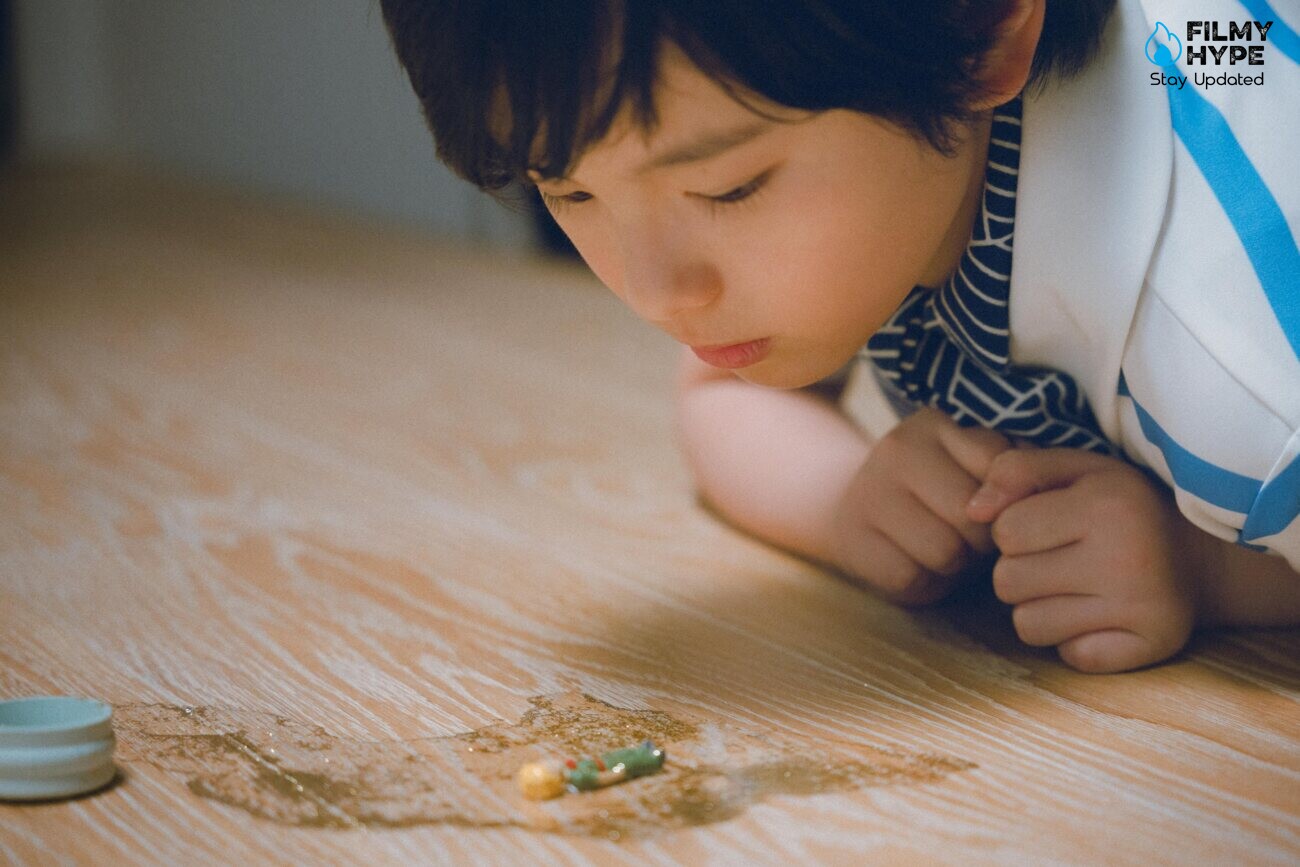
When he chooses the forest, the two must face again what they had tried to avoid: letting go of a child.
This time, however, the separation does not occur through an uncontrollable tragedy. They can accompany him, watch him choose, and finally allow him to leave.
It is a fundamental distinction.
The ending doesn’t simply say that Otone and Kensuke have realized that the robot is not their real son. He says something more complex: even though Kakeru has become important to them, loving him doesn’t necessarily mean holding him back.
Separation becomes so similar to what many parents eventually face when a child grows up and builds their life.
Has Kakeru Developed a Consciousness?
Sheep in the Box doesn’t give a definitive answer.
Kakeru makes decisions, creates new relationships, develops interests that do not come directly from the original child’s data, and participates in designing a future alongside other humanoids.
These are all behaviors that can suggest progressive autonomy.
The film, however, avoids establishing whether this autonomy is equivalent to what we call consciousness.
It is a choice consistent with the whole story. Kore-eda’s point doesn’t seem to be to scientifically prove when a machine comes alive, but to show how difficult it is for humans to determine where a simulation ends and something new begins.
Nippon.com describes Kakeru as a kind of space onto which other characters project desires, memories, and expectations. Questions about its true nature remain intentionally unresolved.
For this reason, it would be excessive to conclude that the film definitively confirms that Kakeru possesses a human soul or consciousness.
What we can say is that in the end it no longer behaves like a simple archive of the dead child.
Does Kakeru Die in the Finale?
No. Kakeru does not die at the end of Sheep in the Box.
His estrangement from his family could be read symbolically as a second loss for Otone and Kensuke, but the film shows him heading towards another form of existence alongside the other humanoids and children.
In this sense, the ending almost makes a movement opposite to death.
The real Kakeru was taken from his parents without them having a choice. The new Kakeru, on the other hand, can choose where to go.
And it is precisely this ability to choose that prevents only the substitute for the missing child from remaining.
What Do the Trees Mean in the Finale?
The trees run through Sheep in the Box as one of the film’s most prominent symbols.
They are first and foremost living beings that continue to exist and communicate through systems that man does not see directly. For Kore-eda, therefore, they perfectly represent the relationship between presence and invisibility that dominates all of history.
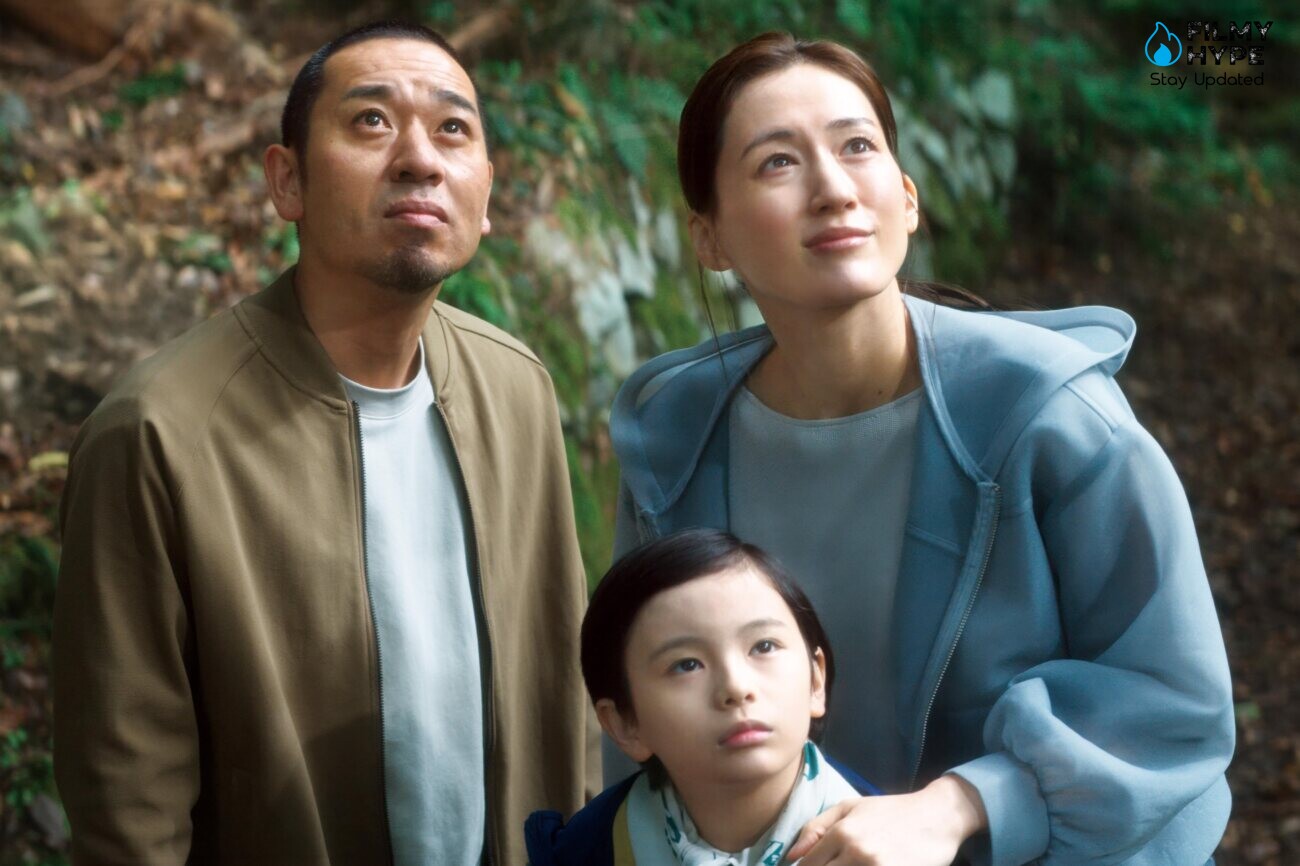
But there is also a more personal meaning to Otho.
The film ties the trees both to the memory of the dead son and to the relationship built with the humanoid. In a subsequent Japanese interview, Kore-eda explained that she thought of Otho’s journey as a transition from the need to have a near-perfect replica of her son in front of her to the ability to see Kakeru through a tree again, even when the child is not physically present.
This is where the ending goes beyond the simple talk of artificial intelligence.
Otho does not recover because he forgets his son.
Learn to remember it without needing to rebuild its body.
Why is the Movie Called Sheep in the Box?
The title derives directly from Antoine de Saint-Exupéry’s The Little Prince.
In the famous episode, the Little Prince asks the narrator to draw him a sheep. No drawing satisfies him until the man simply draws a box and tells him that the desired sheep is inside.
The sheep is not seen.
You have to imagine it.
Kore-eda said that this very scene came back to him as he developed the story. The director found it interesting to imagine that a humanoid might not immediately understand the mechanism of imagination needed to see something that is not materially represented.
At the beginning of the film, however, it is above all Otone and Kensuke who have lost this ability.
To cope with their child’s absence, they need something they can see, hear, and touch.
Kakeru becomes their sheep out of the box.
The ending turns this situation around.
When the humanoid leaves, the parents do not necessarily remain poorer. They can go back to remembering and imagining their child without needing something to physically reproduce his appearance.
So What Does the Ending of Sheep in the Box Mean?
The ending speaks simultaneously of mourning, parenthood, memory, and autonomy.
Kakeru cannot heal Otone and Kensuke by simply pretending to be the dead son forever. Such a solution would keep them immobile.
His presence is important precisely because it changes.
He learns, builds relationships that the original child never had, and even imagines a place to live. By doing so, he forces the two adults to stop looking at him exclusively through the past.
The strongest meaning of the last scene can therefore be summarized as follows:
Kakeru enters their home as a reconstruction of a lost son and emerges as an independent individual. Otone and Kensuke manage to let him go because they have finally regained the ability to live with what they can no longer see.
There is no need to decide whether Kakeru has become fully human.
That’s probably the question Kore-eda wants to leave open.
The most important answer concerns parents.
At first they think that to preserve Kakeru it is necessary to physically bring it back before their eyes. In the finale, they understand instead that a person can continue to exist in memory and imagination even when we can no longer see them.
The sheep, at the bottom, can go back inside the box.
And this time Otho finally gets to see her.
Final Thoughts: A Quiet Masterpiece
Sheep in the Box is not a conventional sci-fi film. There are no chase scenes, no dramatic AI uprisings, no moralizing about the dangers of technology. Instead, Kore-eda gives us something far more difficult: a story about grief that refuses to offer easy comfort.
The ending doesn’t give Otone and Kensuke their son back. It doesn’t even give them a satisfying resolution. It gives them something harder and more honest: the ability to live with loss, not by filling the void, but by learning to see the void differently.
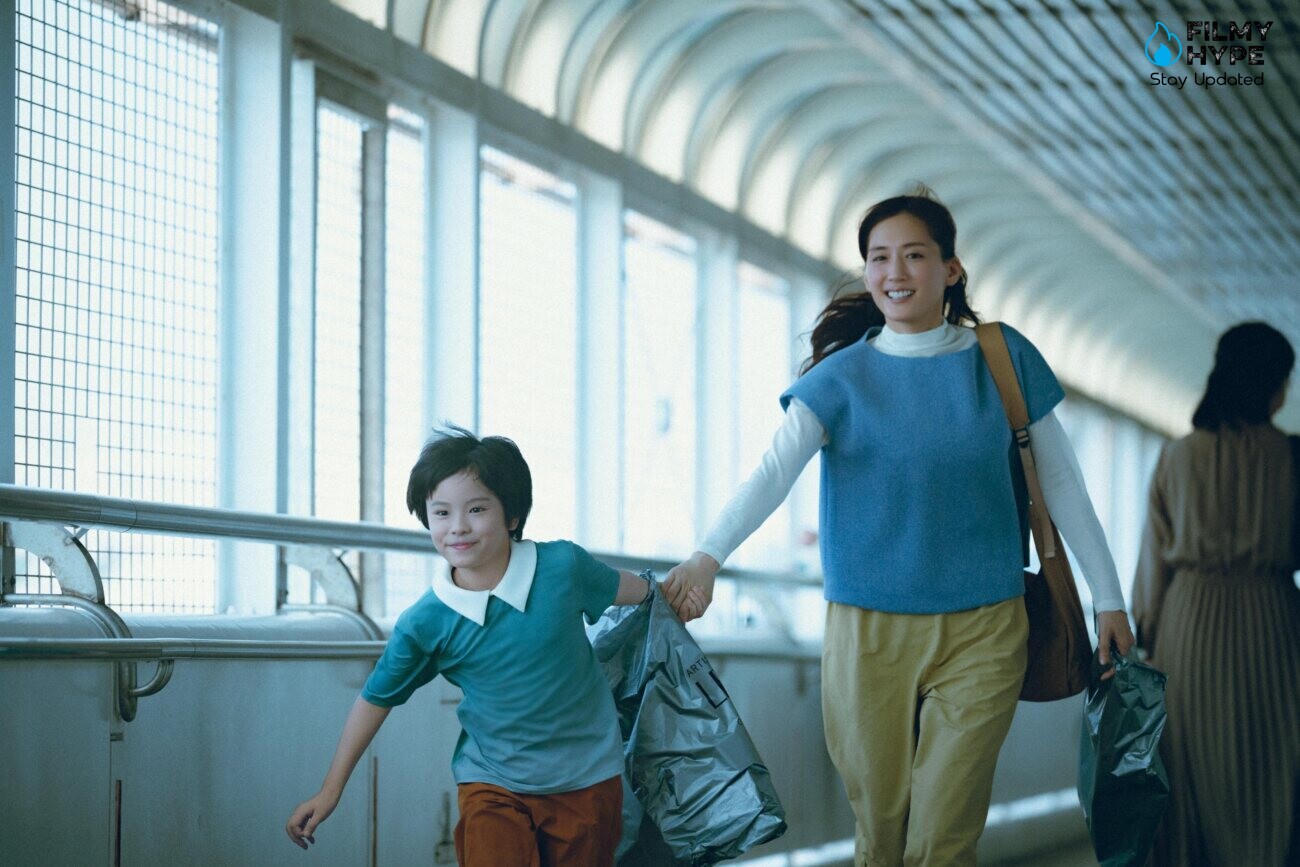
The sheep is in the box now. And for the first time, Otone can finally see it.
Verdict: A profoundly moving, intellectually rich ending that rewards patience and reflection. If you went in expecting sci-fi thrills, you might be disappointed. If you went in expecting Kore-eda’s signature blend of tenderness and melancholy, you got exactly what you came for—and perhaps a little more.