


Facing El Chapo Review and Ratings
Cast: Alfonso Herrera, Noé Hernández, Héctor Kotsifakis, Juan Pablo Cruz García, Paola Fernández, Antonio Fortier, Allan Durrell, Fernando Cuautle, and Gerardo Trejoluna
Director: Chava Cartas
Streaming Platform: Netflix
Filmyhype.com Ratings: 3/5 (three stars)
Facing El Chapo starts from a perfect situation to build a tense and claustrophobic thriller. Two Mexican federal agents are facing the final hours of their shift when they stop a stolen car. It seems like a check like any other, at least until they figure out who’s in front of them: Joaquín “El Chapo” Guzmán, one of the world’s most wanted drug traffickers. From that moment on, the question is no longer how to arrest him. Telling Joaquín “El Chapo” Guzmán without being seduced by the charms of the great criminal is probably La Captura‘s most interesting choice. The Mexican film directed by Chava Cartas begins with the events of January 8, 2016, when federal police officers Arturo Carmona and Héctor Rosales, during a regular patrol shift, stopped a stolen car and found themselves facing one of Mexico’s most wanted men.
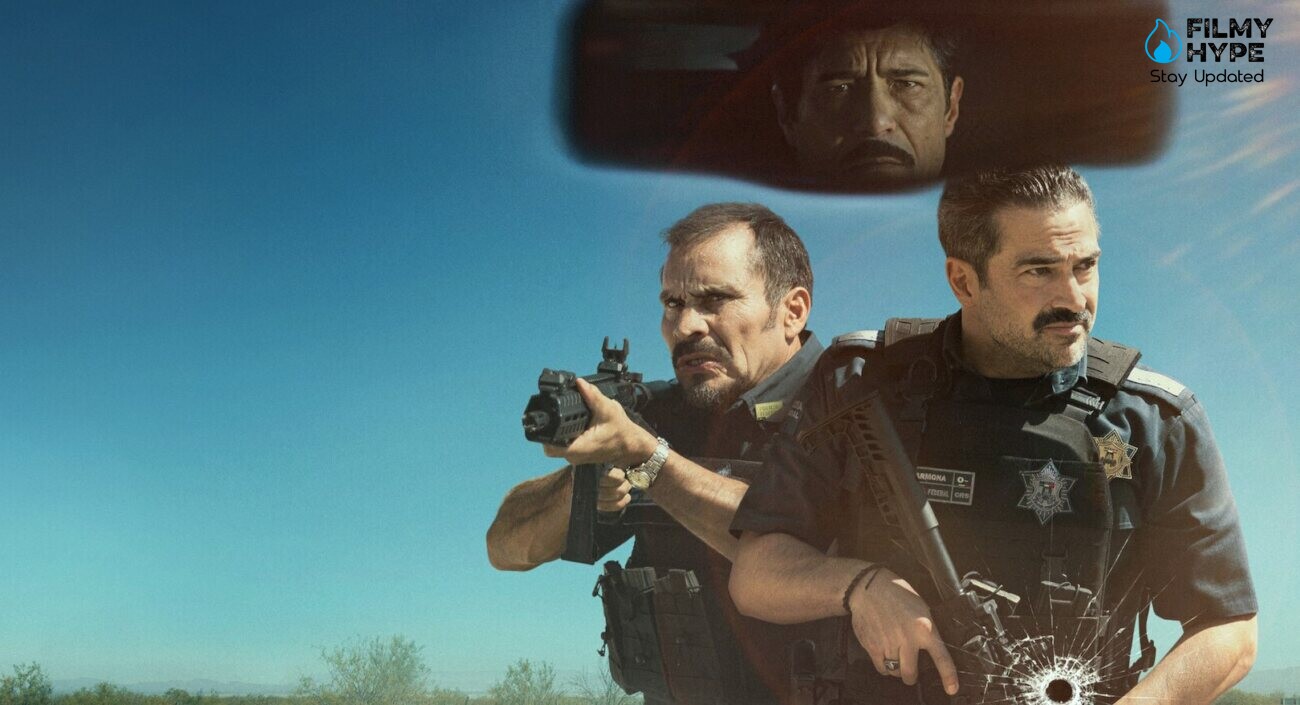
The protagonists now find themselves faced with an extremely dangerous situation for them, since leading the boss to the station means crossing a territory in which the power of the cartel is far more influential than that of the institutions and in which every stop, every vehicle they encounter, and every potentially corrupt colleague can pose a potentially deadly threat. He also threatens their families, with Arturo close to becoming a father again, who also fears for the fate of his wife and children. The two officers will have to decide how to behave, even in light of the gangster’s countless attempts to buy their complicity. Played by Alfonso Herrera and Noé Hernández, the two officers become the true protagonists of a thriller that focuses the story on the hours following the arrest. El Chapo has been captured, but bringing him to safety means crossing territory where the cartel can count on money, men, and contacts capable of reaching practically anywhere.
Facing El Chapo Review: The Story Plot
Facing El Chapo starts from a real event: the final capture of Joaquín “El Chapo” Guzmán, which took place on January 8, 2016, in Los Mochis, in the Mexican state of Sinaloa. The Netflix film, however, should not be considered a documentary or a minute-by-minute reconstruction of the operation. The thriller, known in Mexico as Facing El Chapo, focuses the story on Arturo Carmona and Héctor Rosales, two police officers who, during a night patrol, end up face to face with one of the most wanted men in the world.
Guzmán’s capture is documented. More delicate is establishing how exactly Carmona, Rosales, their dialogues, and everything that happens during that night correspond to reality. Bernardo Esquinca’s screenplay was based on a chronicle by Mexican writer and journalist Héctor de Mauleón, but the film uses that material to build a thriller. Those who have already seen other Netflix titles inspired by real events know how fine the line between current events and dramatization can be. It’s a distinction we also addressed when talking about The Colors of Evil: Black and its supposed true story.
Facing El Chapo Review and Analysis
Chava Cartas avoids building yet another story around the figure of the drug trafficker and instead chooses the point of view of two men who suddenly find themselves managing something much bigger than themselves. Carmona and Rosales are not action heroes: they are two agents forced to make quick decisions without fully knowing who they can trust. It is precisely this doubt that supports a good part of the film. Every car that appears on the road, every stop, and even every colleague can hide a danger. Further complicating matters is Guzmán, who attempts to buy the complicity of his jailers by exploiting their weaknesses and turning mutual distrust into another possible escape route.
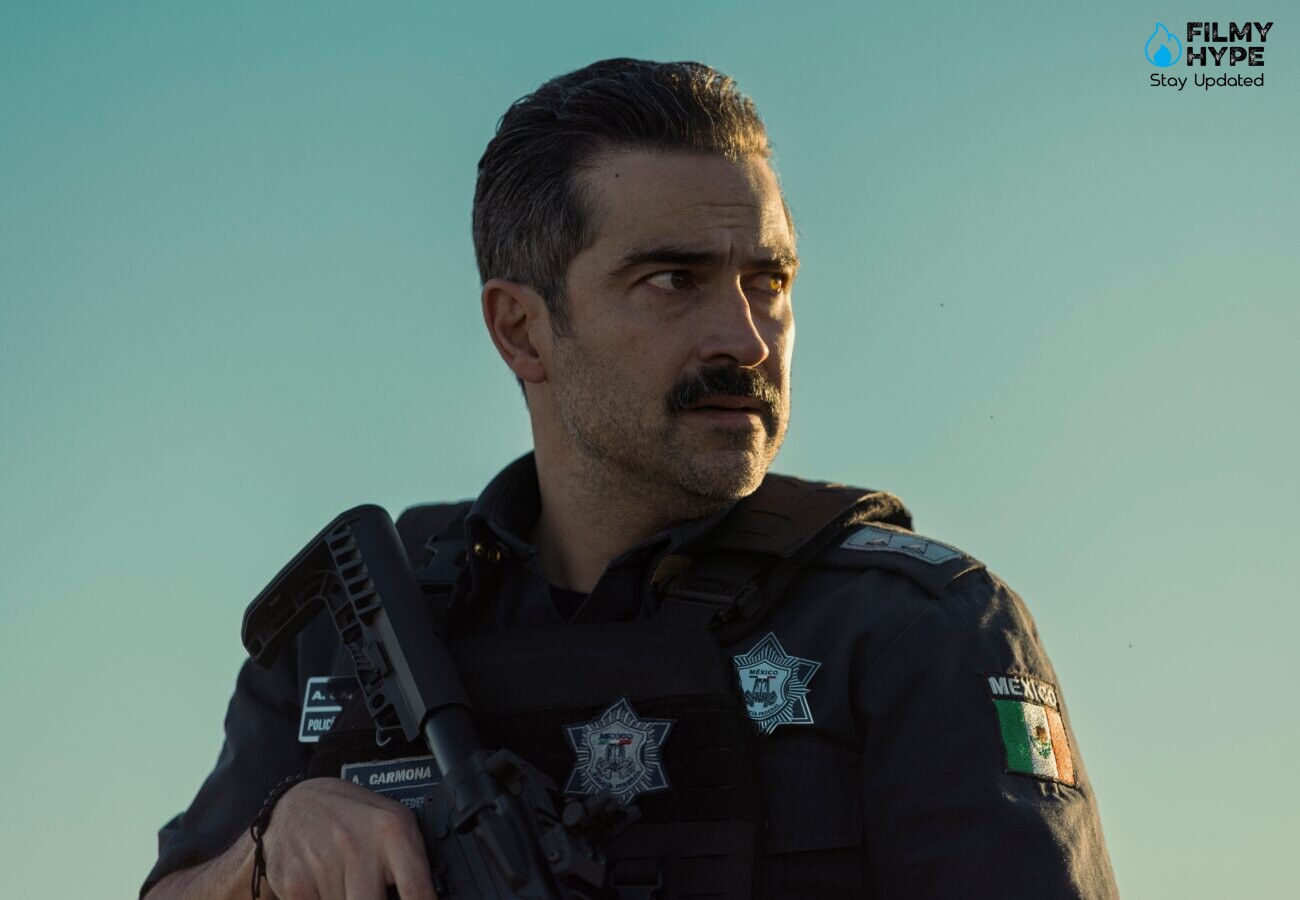
Facing El Chapo works mostly because it doesn’t feel the need to turn every situation into a shooting. Relatively few shots are fired, and violence often remains only one possibility. The knowledge that the cartel can intervene at any time is enough to keep tensions high. The film thus takes on the contours of a psychological game played between makeshift motels such as hideouts, suspicious phone calls, and attempted bribery. Alfonso Herrera and Noé Hernández hold their own, making credible the growing pressure on the two protagonists and, above all, the suspicion that is inevitably beginning to creep into their relationship. The mechanism is simple and effective, although in the long run it shows some limitations.
In fact, the script tends to repeat the same dynamic several times, relying on the possibility that each new encounter hides a betrayal. The suspense remains, but becomes progressively more predictable. The running time of about an hour and a half is therefore suitable for a film that does not want to tell the story of El Chapo, but only a specific moment of his fall. Captura remains focused on the two agents and the enormous responsibility that suddenly fell into their hands, without dispersing into subplots or trying to assume the dimensions of a large fresco on drug trafficking.
Precisely this essentiality represents both a virtue and a limitation. The film could have delved more deeply into the psychological confrontation between Guzmán and his captors, but it chooses a more immediate narrative, sacrificing some of the complexity in favor of pacing. The Captura then finds its best idea in the point of view. El Chapo is the reason everything happens, but it is Carmona and Rosales who make sense of the story. Chava Cartas prefers to question fear, corruption, and the difficulty of doing the right thing when money and threats can call into question any certainty.
Not all situations have the same force and the suspense mechanism ends up repeating itself, but the film remains compact and engaging throughout its short duration. A thriller without any great inventions, which precisely by abandoning the spectacularization of the capture manages to find an interesting perspective on a story already widely told. Carmona and Rosales, played with just the right frown by Alfonso Herrera and Noé Hernández, are two agents forced to work together, who manifest an initial mutual distrust ready to become even more ambiguous when they both understand who they are dealing with. Can they really trust their partner, in a context where anyone can already become their killer or betray them at the first opportunity? It doesn’t take much beating around the bush to explain the trouble they’ve found themselves in; it just remains to be seen whether they’ll be ready and determined to do the right thing despite everything rowing in the opposite direction.
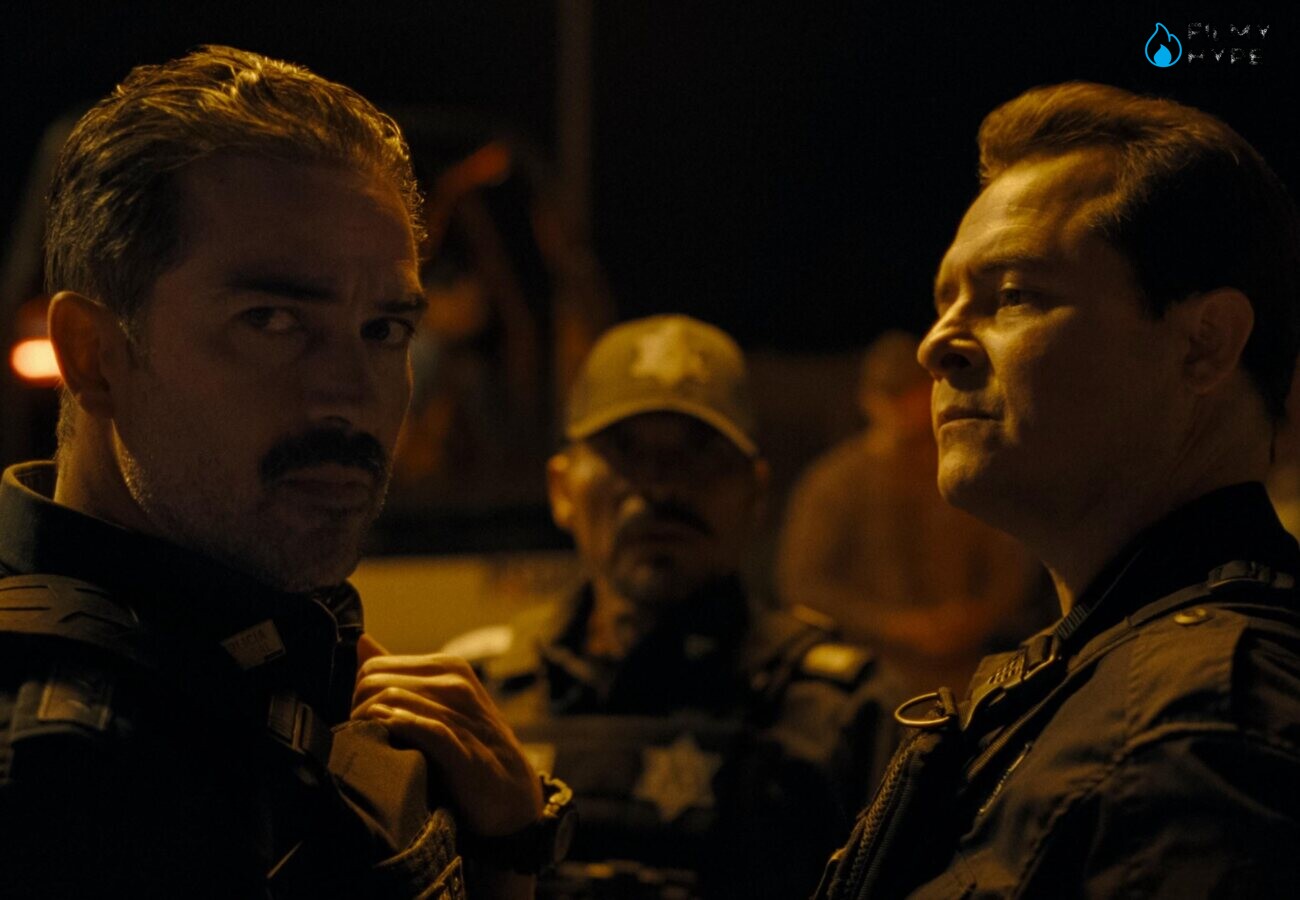
Over the course of the hour and a half of Facing El Chapo, which may have been too short but at the same time suited to how the screenplay orchestrated the story, violence often remains potential and for this very reason appears even more threatening, allowing the story to then indulge in the canonical explanatory writings over the closing credits that inform us of the fate of the real protagonists of the story.
There’s no need to turn every encounter into a shootout, because it just reminds the beholder how the cartel’s capabilities can truly reach anywhere and that no place can be considered completely safe. A traffic stop, a phone call, a suspicious vehicle, or a person who glances too hard: today, what can suddenly take on the meaning of imminent danger. It’s a simple but effective mechanism, which is perhaps repeated too much throughout the viewing but which still manages to keep the peak of suspense at a good level without any particular downtime whatsoever.
The biggest limitation of the film is precisely this. Such a story should keep you constantly on edge, because the elements to do so are all there. Two policemen. One of Mexico’s most powerful criminals. A network of possible accomplices. The fear that someone might come at any moment. Corruption. The uncertainty about who is truly trustworthy. Some sequences make great use of these conditions. At other times, however, the film seems to slow down just as it should tighten its grip even more. It never becomes a bad movie. Simply, I expected to feel more trapped along with the protagonists. The premise suggests an almost unsustainable night. On the screen, however, that feeling only comes at times.
The scenes that work best are not necessarily those with more movement. I especially enjoyed the moments when the two officers have to figure out if they can trust the people they meet. An armed criminal is dangerous, but at least you know which way he is. A colleague who might be working for someone else is much harder to read. The film makes good use of this fear and manages to convey how much the power of a cartel can go beyond men with rifles. El Chapo, in this sense, continues to be dangerous even when standing still. It is probably the most successful aspect of the film.
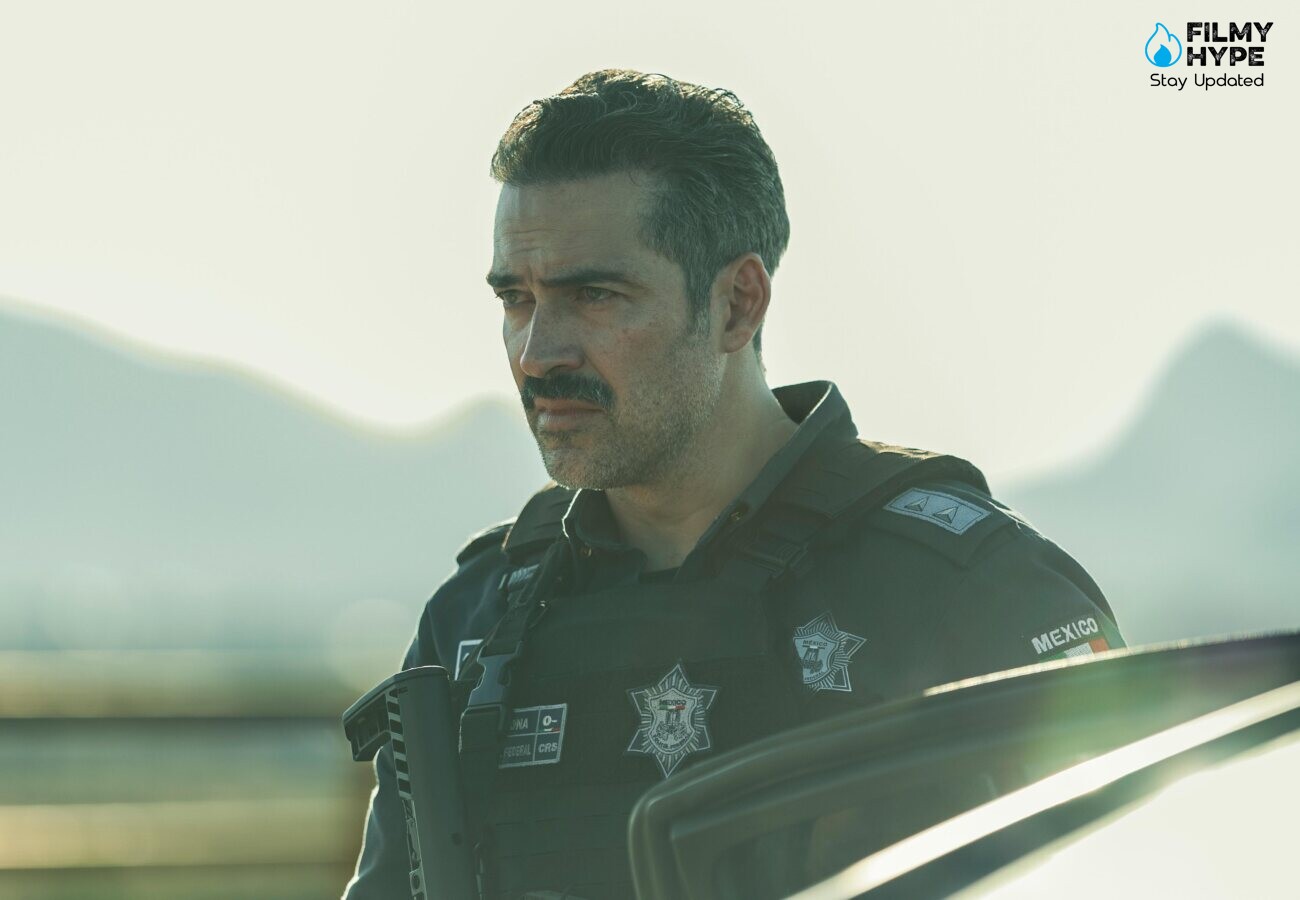
The direction is also solid, but in my opinion he could have dared more. Such a story would have benefited from a dirtier, more nervous, and claustrophobic atmosphere. I wish I could have felt more of the officers’ tiredness, the heat, the fear, and that feeling of not having a safe way out. Instead, some scenes maintain a distance that makes the film more orderly, but also less suffocating. You don’t have to fill the screen with wobbly cameras to create tension. Perhaps it was enough to insist more on closed spaces, silences, and waiting. Because the situation was powerful enough already.
One thing, however, the film understands very well: this story doesn’t need to last two and a half hours. Ninety-one minutes is more than enough. The narrative quickly enters the story, develops the danger, and concludes without inventing unnecessary subplots to lengthen the running time. And it’s a quality I appreciate very much now. No traumatic childhood told in five flashbacks. No love story thrown in by obligation. No forty-minute explanation of how one of the protagonists decided to become a policeman. It is told that night End.
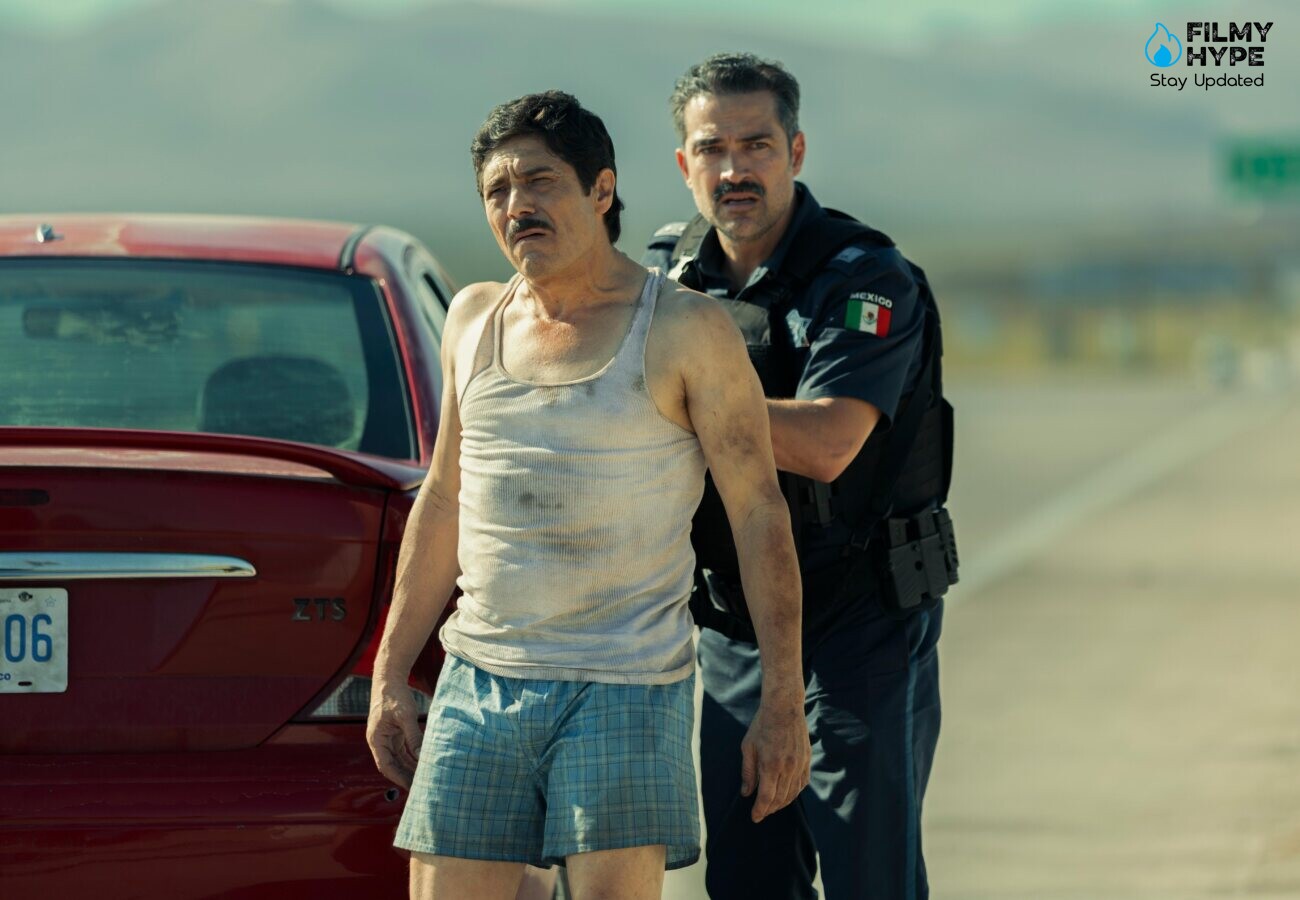


I was also convinced by the way Guzmán’s character is used. The film does not need to make it continually threatening through theatrical speeches. His reputation already does almost all the work. It’s enough to see how people’s behaviors change as soon as they understand who has been stopped. This choice also avoids turning the drug trafficker into the most fascinating character in history, which often happens in cartel productions. The interest remains in the men who must succeed in getting their work done.
Facing El Chapo Review: The Last Words
Facing El Chapo speaks well of the fear of two officers who suddenly find themselves with El Chapo in custody. Alfonso Herrera and Noé Hernández convince; the duration is perfect, and the paranoia works. The tension, however, does not always remain as high as it should be, and some scenes would have deserved a more claustrophobic direction. Don’t expect a thriller that will leave you breathless for ninety minutes, though. Facing El Chapo is an honest, compact, and well-acted film, built on such a powerful real-life situation that it would have been difficult to make it completely uninteresting. It has good moments of tension, two believable protagonists, and a perspective that avoids celebrating El Chapo. However, it lacks that higher level of intensity that could have transformed it into something much more memorable. I got to the end without getting bored. But even without that feeling of having just seen a great thriller. That’s why my rating is 6/10. A full sufficiency. The base was great. I just wish the film made me feel much more in danger along with its protagonists.