

It Ends Movie Review and Ratings
Cast: Phinehas Yoon, Akira Jackson, Noah Toth, Mitchell Cole, Jon Linstad, Jenny Doyle, Ian Weir
Director: Alexander Ullom
Where to Watch: In Theaters
Filmyhype.com Ratings: 4/5 (four stars)
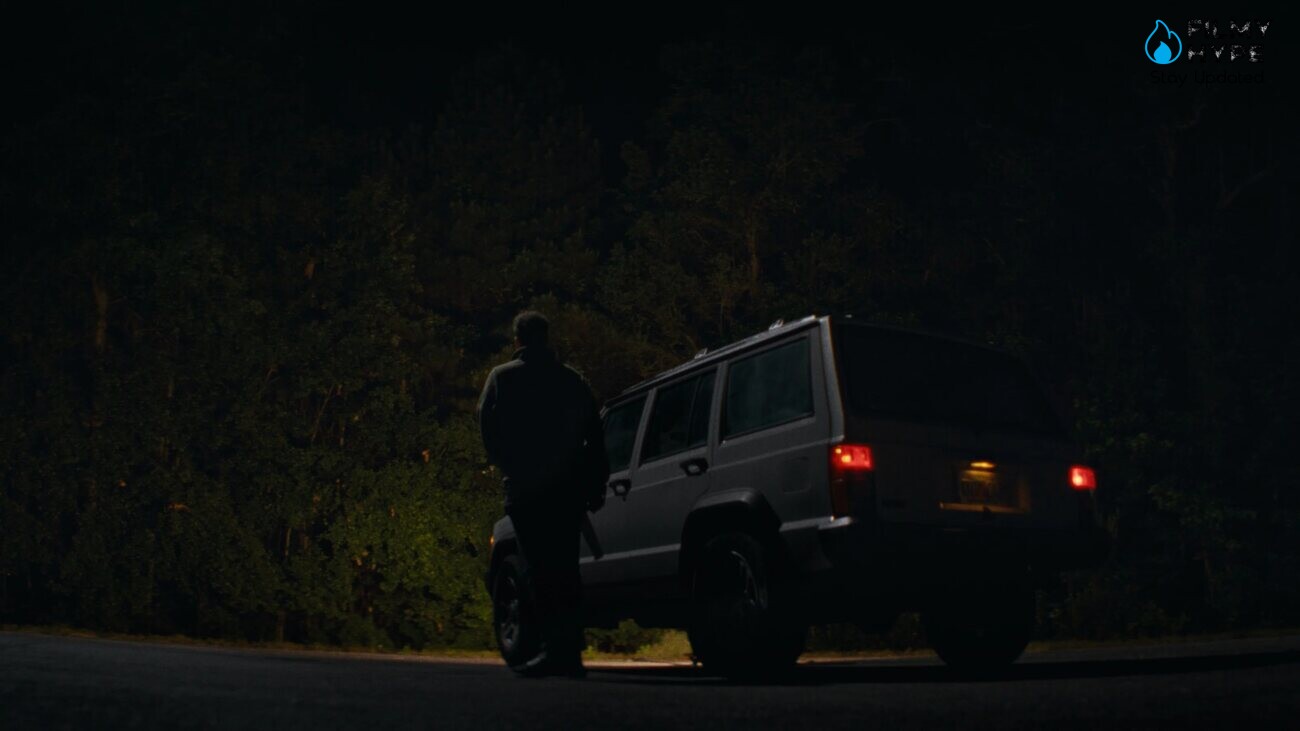
There’s a moment in It Ends when the full weight of what’s happening settles over you. Not because anything dramatic occurs—no jump scare, no sudden violence—but because the characters finally stop trying to explain their situation and simply accept it. Four friends, driving down a road that never ends, in a car that keeps moving even after the gas runs out. They don’t need food. They don’t need water. They just drive. And the horror isn’t in what’s chasing them. It’s in the realization that nothing is coming to save them, because there’s nothing to be saved from. This is just where they are now.
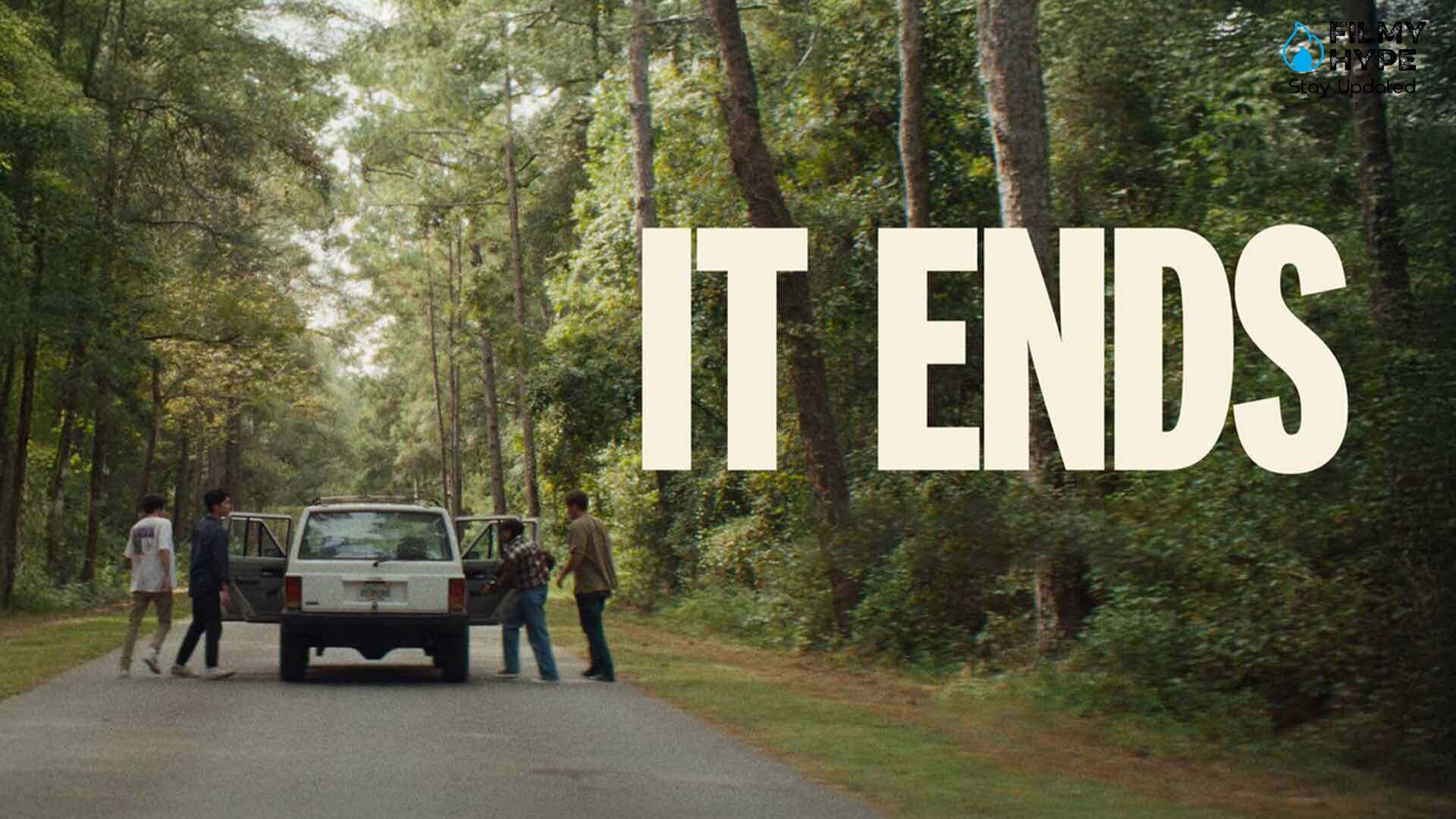
Alexander Ullom’s feature debut arrives with the kind of buzz that’s rare for a first film. After premiering at SXSW 2025 and circulating briefly on the Letterboxd Video Store, It Ends has finally reached nationwide theatrical release through NEON. The hype is justified. This is a horror film that operates on a different register than almost anything else in the genre this year—quieter, more patient, and ultimately more disturbing than films that rely on spectacle. It’s an existential nightmare dressed up as a road trip, and it lingers long after the credits roll.
It Ends Movie Review: The Story Plot
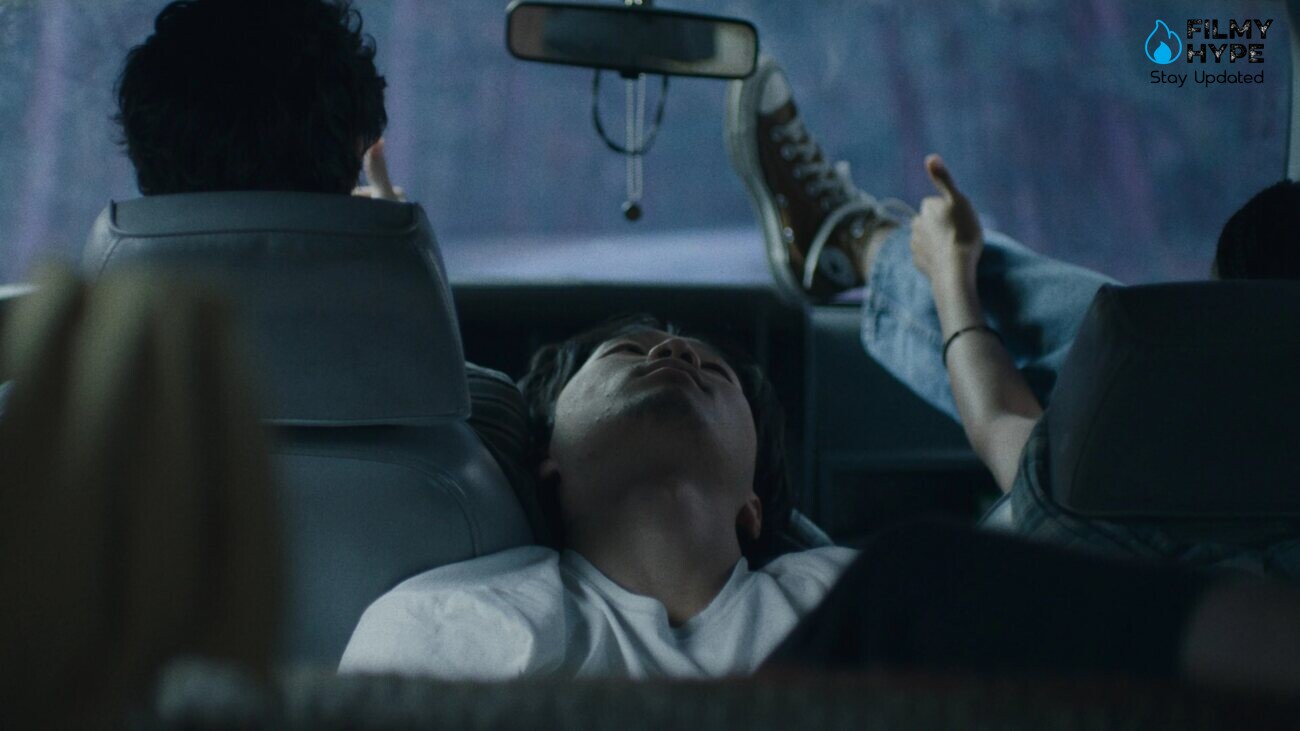
Four friends in their twenties-Tyler (Mitchell Cole), Day (Akira Jackson), Fischer (Noah Toth), and James (Phinehas Yoon)-just helped out with a move and are now driving off to get something to eat. The four have known each other for a long time, but their lives are slowly taking different directions, and they don’t date as often as they used to. As they play amicably with each other and exchange the latest news, night falls. At some point, they start to wonder: shouldn’t they have already found a detour? Why does the road go on forever? As a grueling odyssey begins, in which neither turning back nor getting out of the car is an option, the question increasingly arises: should we continue driving endlessly or give up?
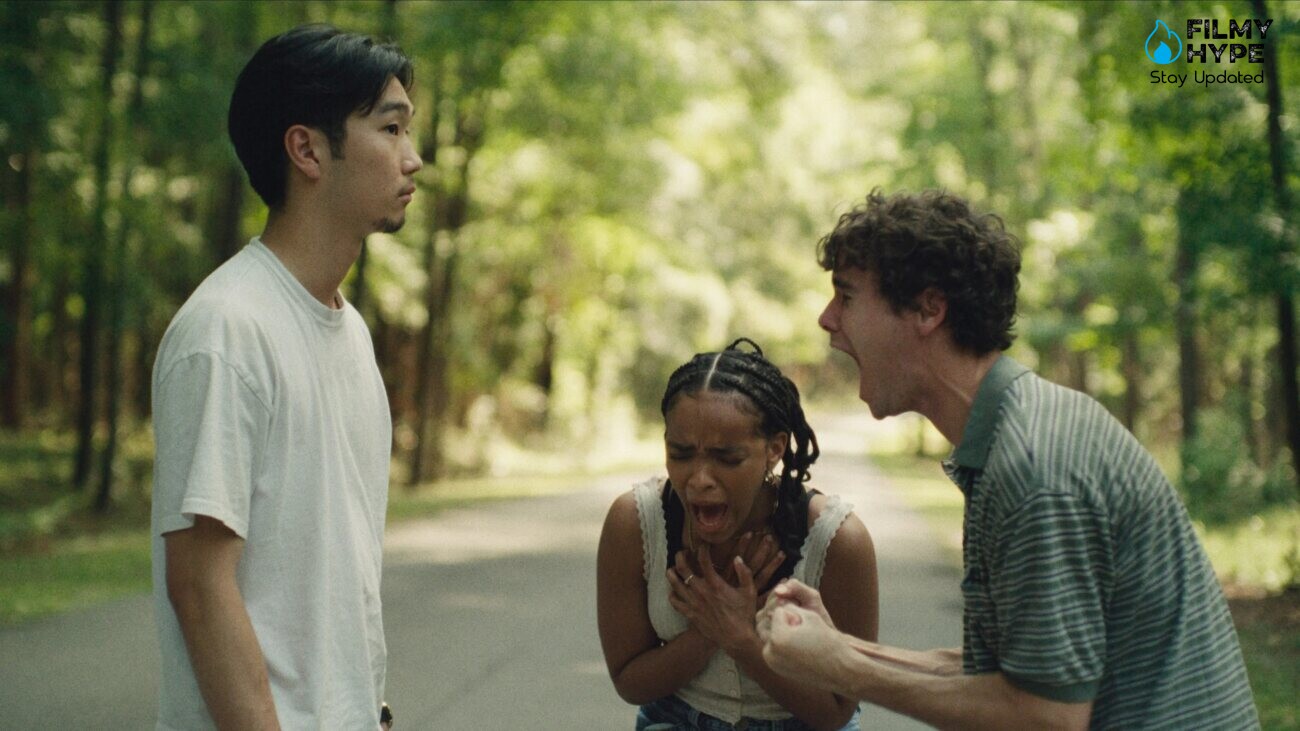
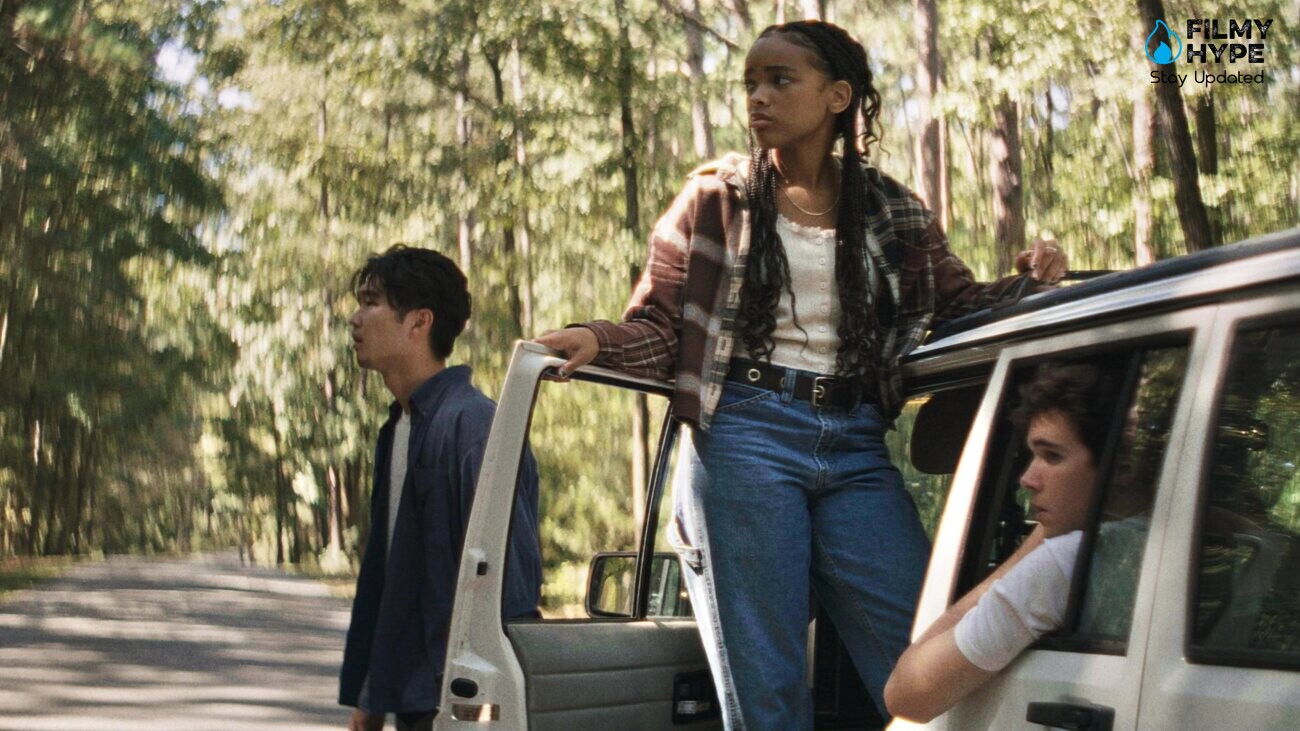
The concept is elegant in its simplicity. Four friends who’ve drifted apart—James, Day, Fisher, and Tyler—reunite for a road trip. They turn onto a road that leads into the deep woods, expecting to hit a highway within miles. The highway never comes. When they try to turn around, they find the road back has disappeared. They’re at a dead end, and then the horde comes—people clawing at the car, desperate to get in. They hit the gas and don’t stop. Days pass. Then weeks. Then months. The road stays the same. The trees stay the same. The only thing that changes is the passengers’ grip on sanity.
It’s a premise that could easily collapse into repetition or tedium. Instead, Ullom uses the repetition as the point. The endless road becomes a meditation on being stuck—not just physically, but emotionally, existentially. These are people who were already trapped in their lives before they ever got in the car. Now their external circumstances match their internal reality.
It Ends Movie Review and Analysis
The fact that it was not possible to find a traditional distributor is surprising, as It Ends is actually quite accessible and combines a pleasant combination of several strengths. There is, of course, the compelling basic idea of a never-ending road, which lends itself to a cheerful guessing game for both the film’s characters and the audience. What does the street represent and why did the four protagonists find themselves in this surreal situation?
Director Alex Ullom, making his feature film debut, stages this somewhat different road trip as the realization of a strange thought experiment. In fact, the beginning of the film until the title appears would suggest that it is a horror film. But while the car in the film continues to race non-stop, the film slows down a bit in terms of content. Rather than scares or events outside of the car ride, the narrative focuses primarily on the four protagonists, their conjectures, and their emotional evolution during their traumatic journey.
The workings of this Kammerspiel on wheels are largely to be attributed to an exceptional and almost indecently sympathetic cast, who, with a few exceptions, are almost always alone in the frame throughout the film. The young actors manage to create a complex group dynamic between them, which is all the more impressive as it provides almost no backstory about the characters for viewers to cling to.

For a horror film with only four speaking roles, the characterization has to carry enormous weight. Ullom’s script, combined with four excellent performances, delivers dimensionality that’s rare in the genre.
James, played by Phinehas Yoon, is the rational one. He tries to find logic in everything, to impose order on chaos, to believe that if they just figure out the rules, they can find a way out. His descent is the most gradual and the most painful to watch, because he’s the one who holds onto hope longest.
Fisher, played by Noah Toth, is irreverent to a fault. He jokes because that’s what he’s always done. After all, humor is his defense mechanism. After all, if he stops laughing, he’ll have to face what’s actually happening. His comedy becomes increasingly strained as the months drag on.
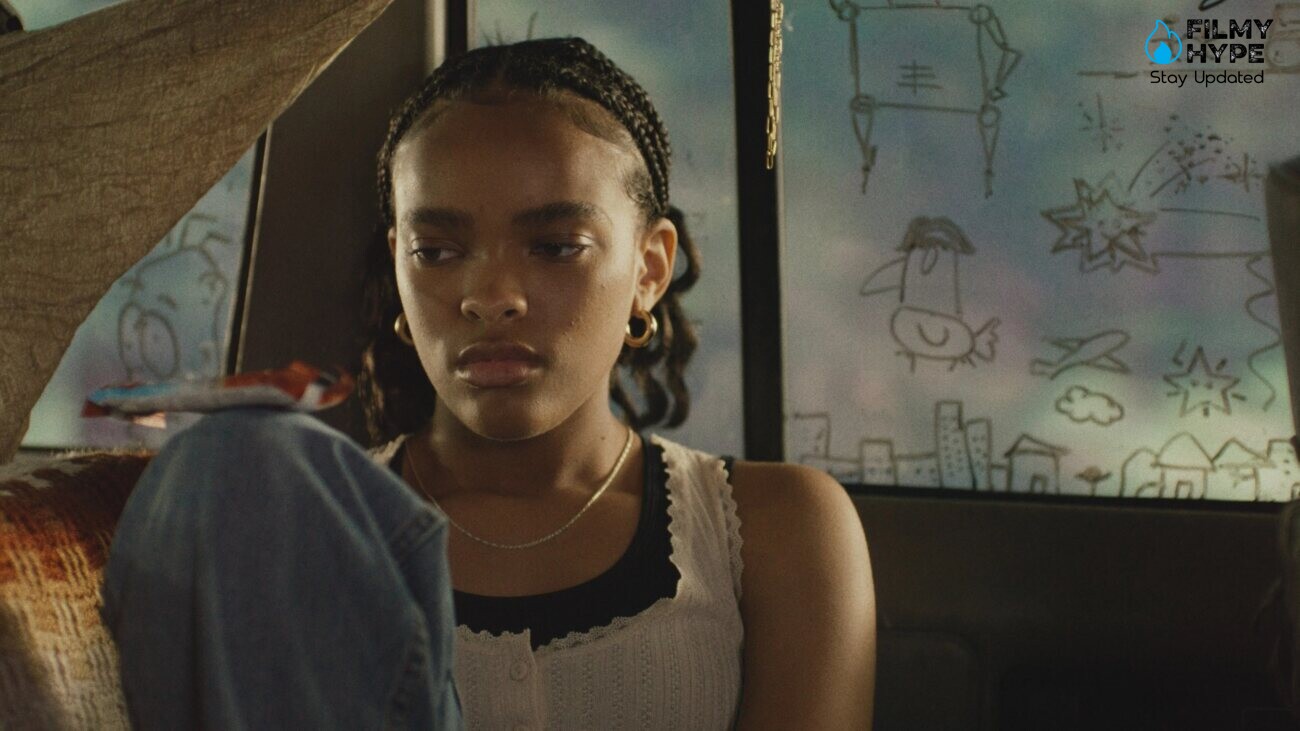
Day, played by Akira Jackson, shrinks into herself. She’s spent her life letting other people’s needs take precedence over her own, and that pattern continues even in this impossible situation. She’s the emotional barometer of the group, absorbing everyone else’s distress while suppressing her own.
Tyler, played by Mitchell Cole, is simple in a way that’s both endearing and frustrating. He doesn’t overthink. He doesn’t philosophize. He just exists, moment to moment, which makes him both the most adaptable and the most vulnerable.
The dynamics between them are painful in their specificity. Day and Fisher want to keep the peace. Tyler resents James for drifting away from the group years ago. James, meanwhile, seems ready to move on entirely. They were already on the precipice of change—relationships fraying, futures uncertain—and now they’re forced to confront all of it in a car that never stops.
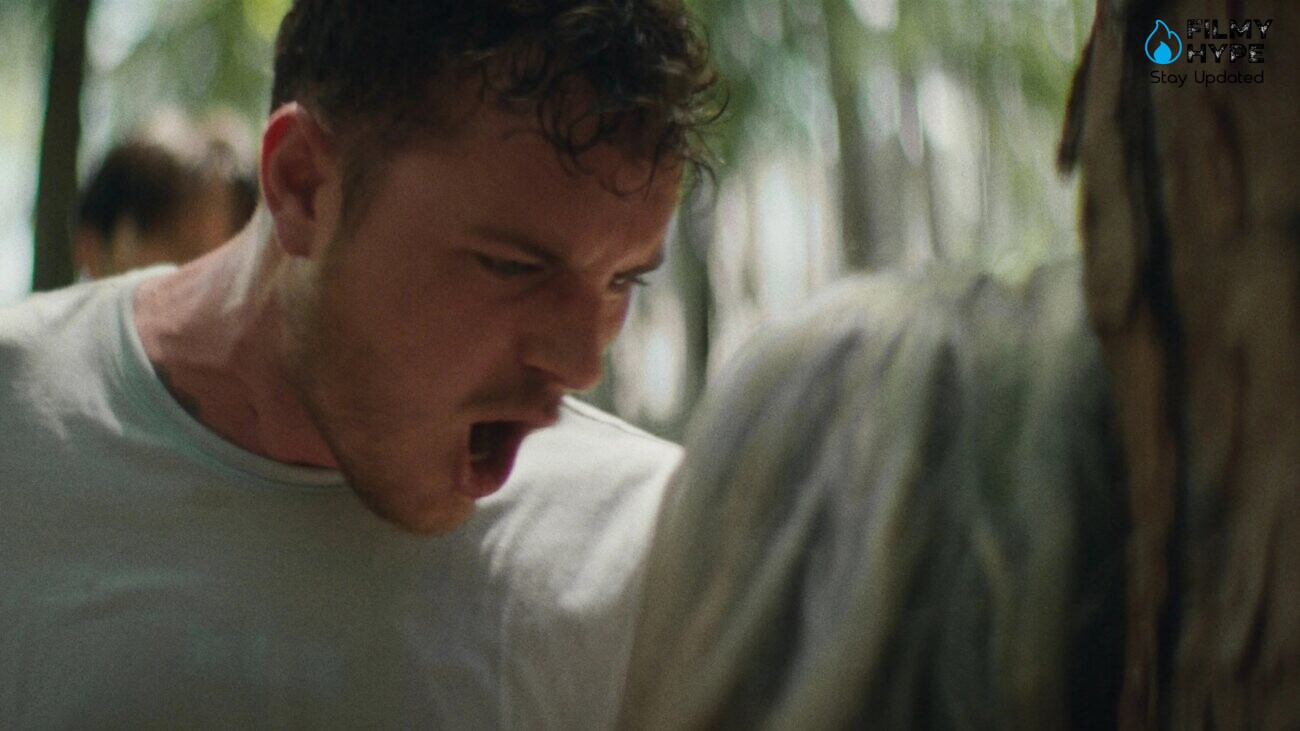
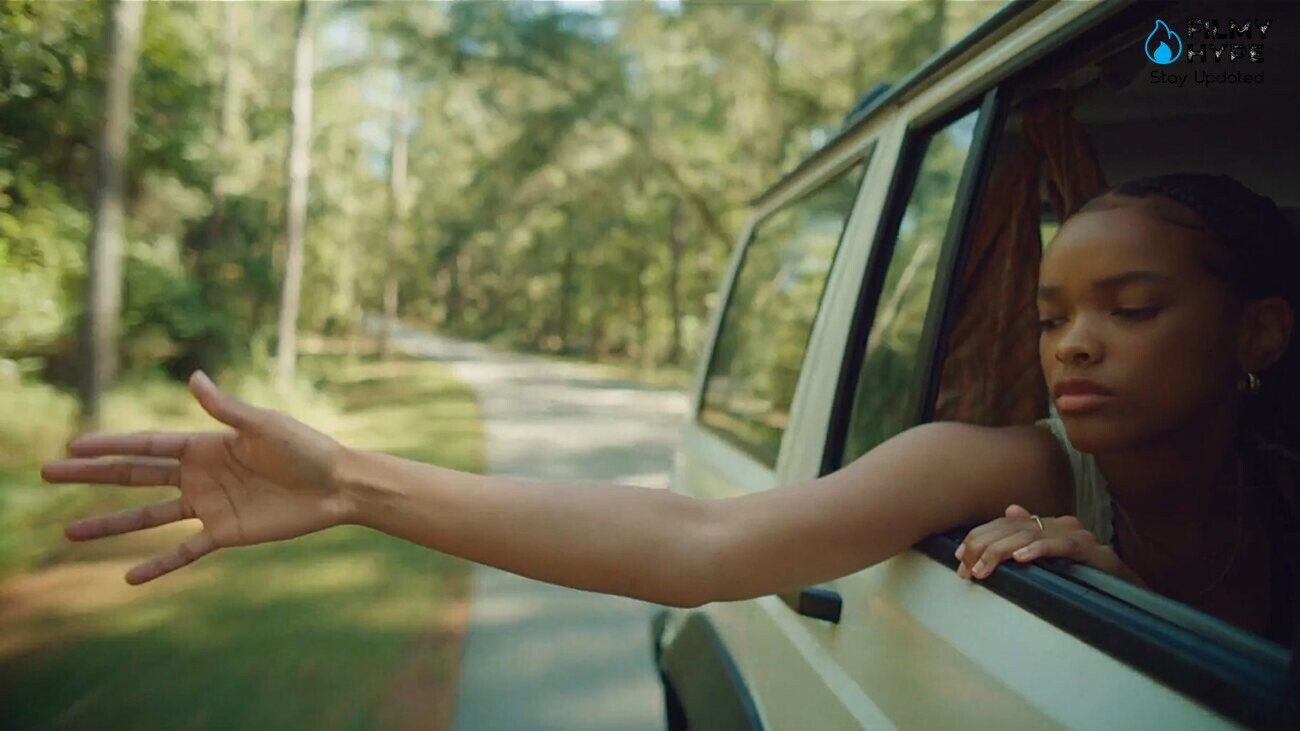
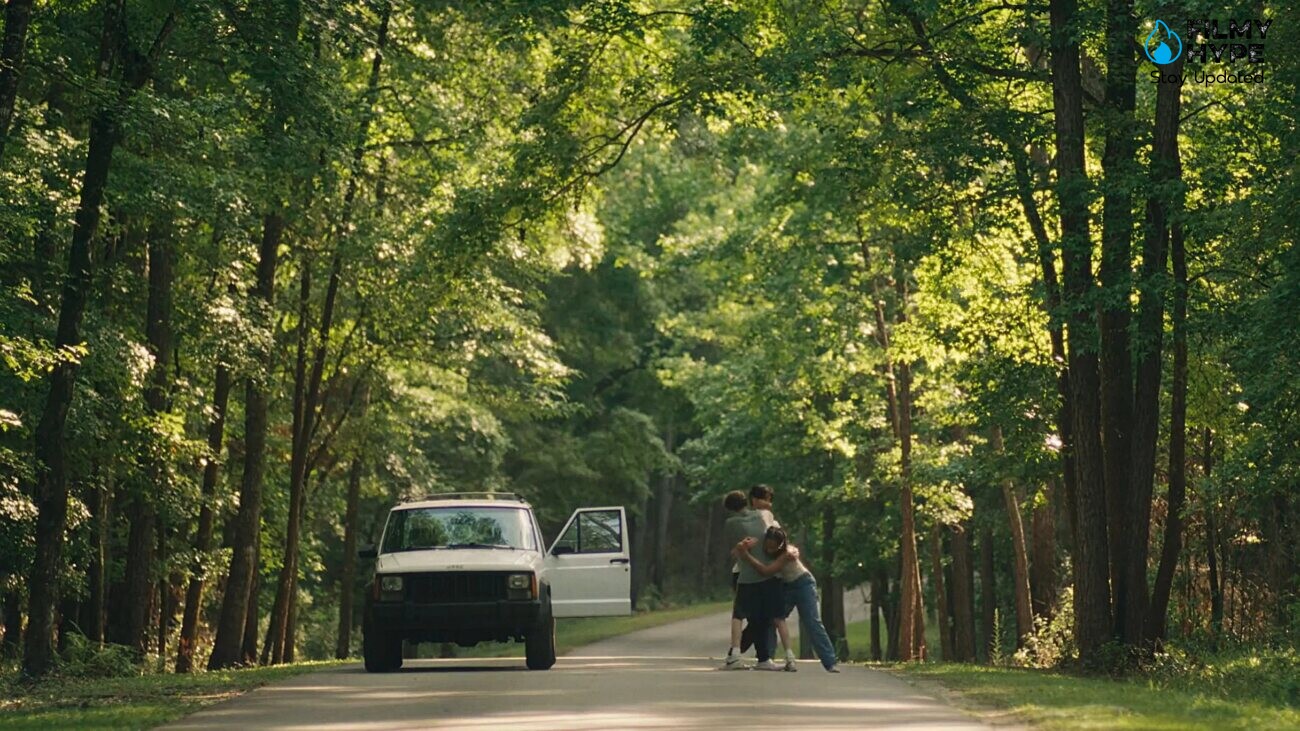
The film’s aesthetic approach is deliberately restrained. Cinematographers Evan Draper and Jazleana Jones start with a natural, almost cozy visual language. The two-lane road flanked by trees looks like any backroad in America. The inside of the car feels warm, familiar. It’s the kind of setting that normally signals a peaceful road trip, and Ullom lets that comfort establish itself before slowly dismantling it.
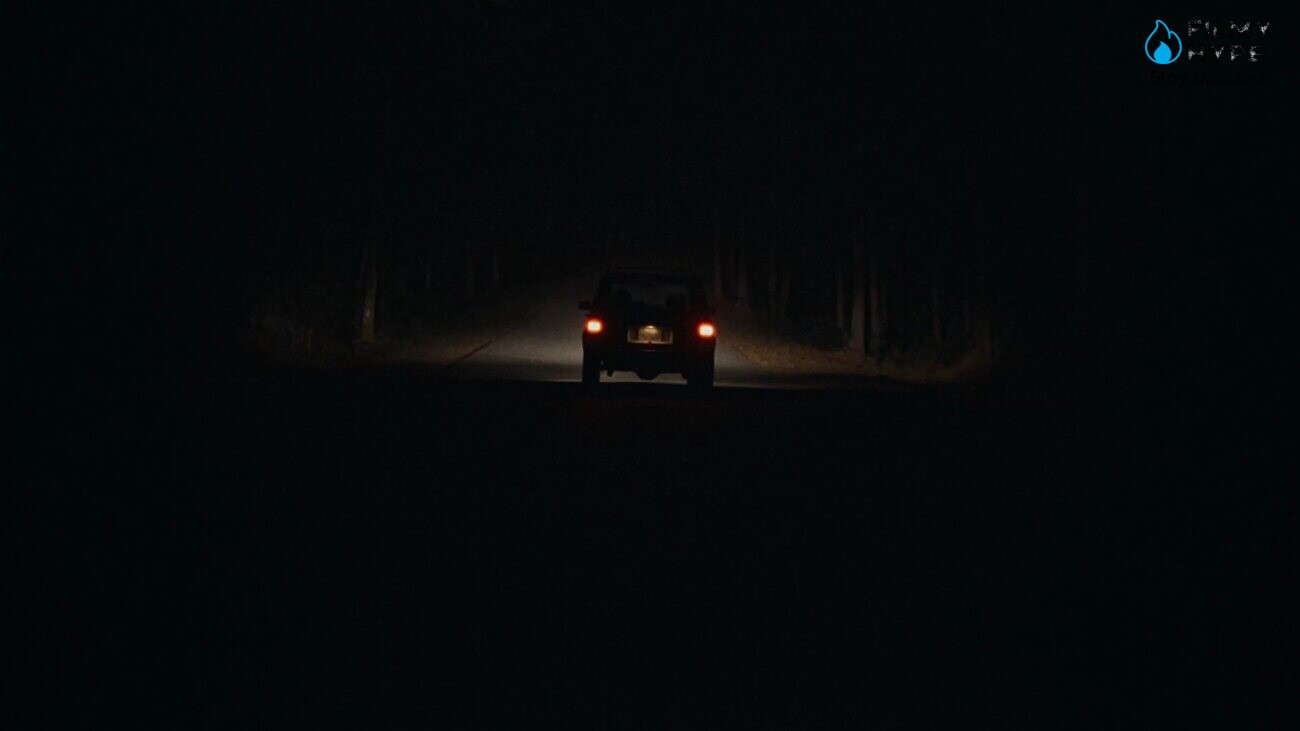
As the story progresses, the visuals become more claustrophobic. The camera lingers on the pavement, on the endless stretch of trees, on tight close-ups of faces in the car. The repetition becomes oppressive. The same curves, the same branches, the same patch of sky overhead. The characters start to crave anything different—a fallen tree, a clearing, anything that breaks the monotony. The absence of change becomes its own kind of horror.
The supernatural elements are handled with careful ambiguity. The car keeps running after the gas runs out. The characters stop needing food and water. They question whether they’re in purgatory, or hell, or some form of afterlife. The film doesn’t provide answers. It just lets the questions hang, growing heavier as the miles accumulate.
What makes It Ends so compelling is how the characters respond to their situation. They establish rules—designated screaming time, music time, venting time. They time their stops to see how long it takes the hordes to emerge from the woods. They try to impose structure on an unstructured nightmare, because structure is all they have left.

James starts looking for signs. He needs to believe this all means something, that there’s a purpose behind their suffering, that the road will eventually lead somewhere. His search for meaning becomes its own kind of madness. Meanwhile, Tyler starts wondering if joining the people in the woods might be the better option. If the car is futile, maybe surrender is the only rational choice.
The film doesn’t judge any of these responses. It just shows them, letting the audience feel the weight of each decision. There’s no right answer. There’s just the road, and the car, and the four people inside it, trying to figure out how to keep going when going seems pointless.
It Ends works because it’s not really about the supernatural. It’s about the horror of living. The endless road is a metaphor for everything—for life itself, for the daily grind, for the slow process of growing older and realizing that the future you imagined might never arrive. The four friends were already stuck before the road trip began. They were stuck in jobs they didn’t love, in relationships that were fraying, in patterns they didn’t know how to break. The car just made their stagnation literal.
The title is doing a lot of work. It Ends—the “it” is ambiguous. Life? The road? The friendships? The pain? The film suggests that everything ends eventually, but the ending isn’t always the one you wanted. Sometimes things just stop. Sometimes the road doesn’t lead anywhere. Sometimes you’re left sitting in a car with people you used to know, wondering where it all went wrong.
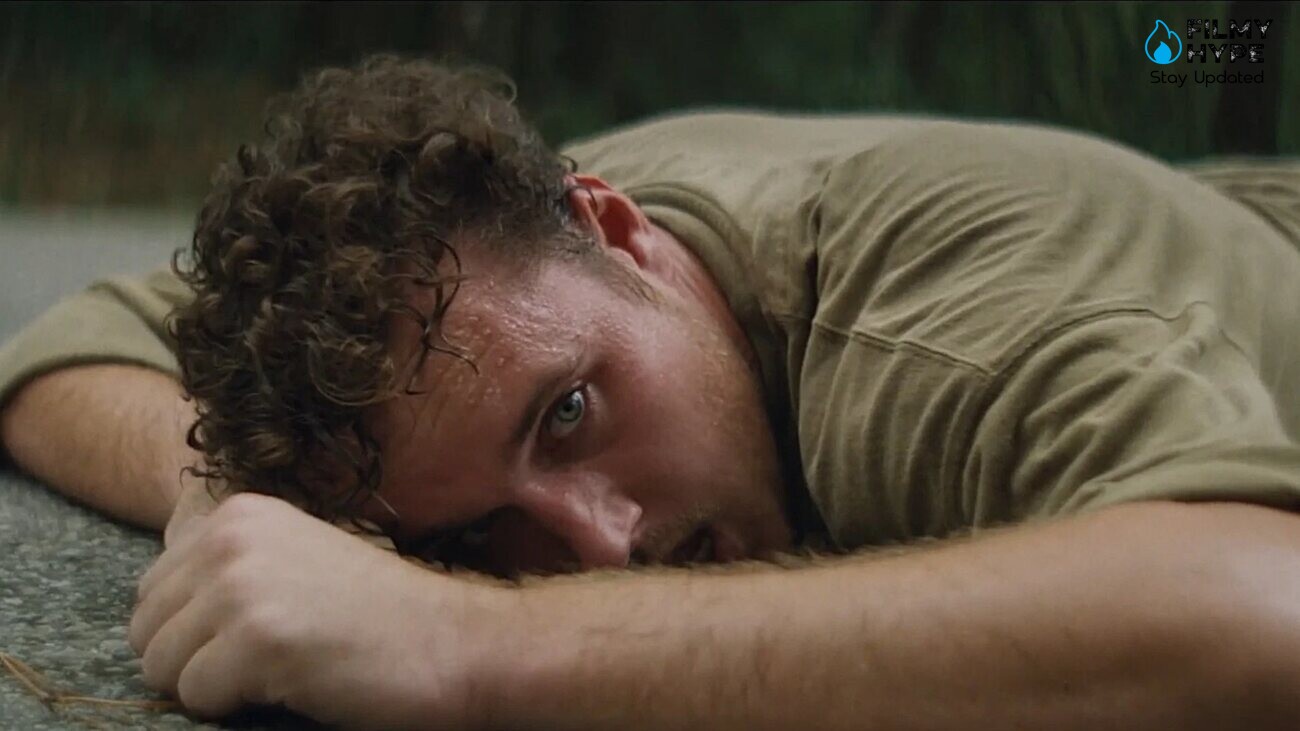
Ullom has made something that feels genuinely new. It’s not flashy like Backrooms or Obsession, the other horror films generating buzz this year. It’s quieter, more patient, more willing to sit with discomfort rather than chase the next scare. But it leaves a mark. The image of that endless road, stretching toward a horizon that never gets closer, is going to stay with people. It’s the kind of horror that doesn’t come from monsters or violence. It comes from the realization that some traps don’t have exits. Some roads don’t end. Some questions don’t have answers. And the only thing you can do is keep driving, keep talking, keep finding ways to pass the time until whatever comes next finally arrives. If it ever does.
It Ends Movie Review: The Last Words
It Ends movie is a cinematic masterpiece? Probably not, and since he couldn’t be seen for so long, he was simply subjected to excessive hype. However, it presents an interesting thought experiment, developed consistently until the end. With a little thought, we quickly come up with some ideas about what the road might represent (to avoid spoilers, we’re giving up on a concrete interpretation here). But while the metaphor is quite simple, the film is effectively crafted, has a great cast, and, last but not least, expertly balances mystery, mindfuck, philosophy, and comedy.