


Pixar has finally started showing its cards for Coco 2. At D23, the studio announced that the sequel to the Oscar-winning 2017 film will arrive in theaters in November 2029, and the first image of the protagonist has already generated conversation. Miguel is no longer a child. He’s a teenager, with a new look and the same unmistakable guitar that accompanied him on his first journey to the Land of the Dead. But the bigger revelation involves the villain.
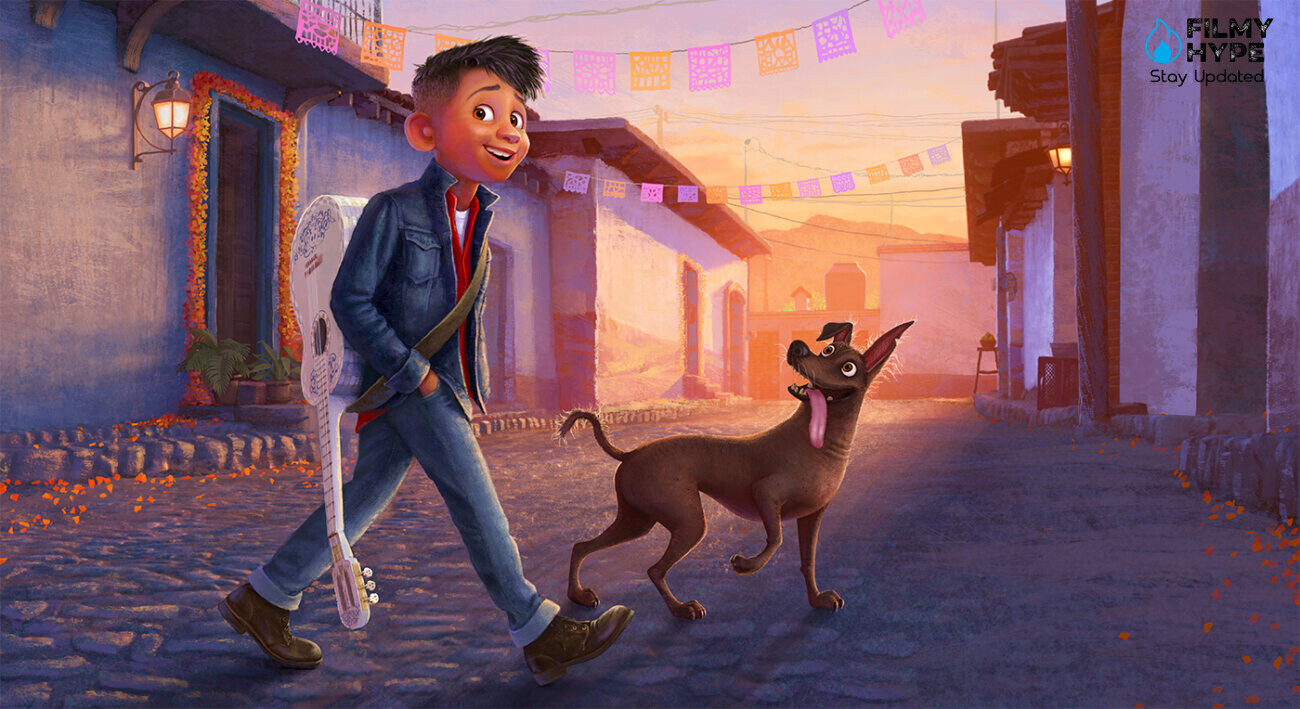
Benjamin Bratt confirmed that Ernesto de la Cruz is coming back. The man who murdered Héctor, stole his songs, and built an entire legacy on a lie will once again play a central role in Miguel’s story. And this time, the dynamic is different. Ernesto wants revenge. The consequences of his actions will pull Miguel back into the Land of the Dead. But here’s the twist: the two of them will be forced to work together.
That’s not a typo. Miguel and Ernesto de la Cruz, the man who destroyed his family, will have to cooperate. Pixar is betting that the friction between them—the rage, the distrust, the history of betrayal—will be the engine that drives the entire film.
Coco 2: A Miguel We Haven’t Seen Before
The first Coco was, at its core, a story about a child discovering who he is. Miguel was curious, determined, and a little reckless—qualities that got him into trouble but also allowed him to uncover the truth about his family’s past. The film worked because Miguel’s journey was universal: the search for identity, the struggle to be understood, the discovery that family is more complicated than it seems.
A teenage Miguel is a different proposition. The sequel is set several years after the original, and Bratt jokingly described the new Miguel as a “threat”—suggesting a protagonist who’s grown into his own, with all the confidence and arrogance that adolescence can bring. The boy who once snuck into the Land of the Dead to find his great-great-grandfather is now a young man with his own identity, his own ambitions, and his own complicated relationship to the legacy his family left behind.
That’s rich territory for Pixar. The studio has always been at its best when it’s exploring the emotional complexity of growing up—Toy Story, Inside Out, Turning Red—and Coco 2 seems poised to continue that tradition. Miguel’s first adventure was about discovering who he was. His second might be about what happens when that identity is tested.
The Return of Ernesto de la Cruz
Ernesto de la Cruz was one of Pixar’s great villains. Not because he was powerful or menacing in the traditional sense, but because his evil was so mundane. He was a man who wanted fame, and he was willing to kill his best friend to get it. When Héctor tried to go home to his family, Ernesto murdered him and stole his songs. Then he spent decades building a legend on top of the lie.
At the end of Coco, the truth came out. Ernesto was exposed in front of the entire Land of the Dead. His reputation was destroyed. And then, in a moment of darkly comic irony, he was crushed by a giant bell—the same way he’d died the first time.
The sequel now has to explain how he’s back and what condition he’s in. Bratt has teased that Ernesto returns seeking revenge, which suggests the exposure didn’t humble him so much as enrage him. And the forced alliance with Miguel introduces a dynamic that Pixar hasn’t explored before: two characters who genuinely hate each other, forced to work toward a common goal.
Miguel knows what Ernesto did. He knows the man murdered his great-great-grandfather. He knows every song Ernesto ever performed was stolen. There’s no version of this story where Miguel trusts him. But if the stakes are high enough—if something in the Land of the Dead is threatening both of them, or if Ernesto holds some knowledge that Miguel needs—then the unlikely alliance becomes a pressure cooker for drama.
What We Don’t Know Yet
Pixar hasn’t confirmed whether Héctor will return. That’s a significant omission. Héctor was the emotional core of the first film—the forgotten ancestor whose memory was slipping away, the musician who just wanted to be remembered by his family. His absence from the announced cast raises questions. Is he still in the Land of the Dead? Has he been forgotten again? Is he somehow involved in whatever crisis forces Miguel and Ernesto to work together?
The casting of Miguel is also unresolved. Anthony Gonzalez, who voiced the character in the original film, hasn’t been announced for the sequel. It’s possible he’ll return and the announcement is simply being held for later. It’s also possible Pixar is recasting, which would be a significant decision given how closely Gonzalez is associated with the role.
Behind the camera, the original creative team is returning. Lee Unkrich and Adrian Molina, who directed the first film, are back for the sequel. That continuity matters. Coco was a deeply personal film for its creators, rooted in Mexican culture and the specific traditions of Día de los Muertos. Bringing back the people who shaped that vision suggests Pixar wants to honor what made the original special rather than simply exploiting the brand.
The Legacy of the First Film
Coco was one of Pixar’s defining achievements of the 2010s. It grossed over $800 million worldwide. It earned a 97% rating on Rotten Tomatoes. It won two Oscars—Best Animated Feature and Best Original Song for “Remember Me.” But its real legacy is cultural. The film was embraced by Mexican audiences and by Latin American communities around the world, who saw their traditions and their families reflected on screen with a care and specificity that Hollywood rarely achieves.
Any sequel has to contend with that legacy. The first film was so complete, so emotionally self-contained, that the question of whether a sequel is necessary has hovered over the announcement since it was first made. Pixar’s answer seems to be that the time jump allows for a genuinely new story rather than a retread. This isn’t a film about a child discovering his heritage. It’s about a young man reckoning with it.
The forced alliance with Ernesto is the key. It’s a narrative device designed to generate conflict, but it’s also thematically rich. Miguel’s story has always been about the tension between individual ambition and family obligation. Ernesto represents the dark side of that tension—the person who chose ambition over everything else and destroyed his family in the process. Forcing Miguel to work alongside him is a way of asking: what happens when you’re confronted with the person you might have become?
What Comes Next
November 2029 is a long way off. The wait between Coco and Coco 2 will have been twelve years by the time the sequel arrives. That’s an eternity in animation, but it’s also a sign of how carefully Pixar is approaching this. The studio didn’t rush a sequel out in the wake of the first film’s success. It waited until there was a story worth telling.
The initial details suggest that story is ambitious. A teenage Miguel. A revenge-seeking Ernesto. A journey back to the Land of the Dead. And an alliance that neither character wants but both need. It’s a setup with real dramatic potential, and Pixar has the track record to pull it off.
The first Coco taught audiences about memory, family, and the power of music to connect generations. Coco 2 now has the chance to explore what happens after the happy ending—when the child who found his place in the world has to figure out what to do with it. That’s a story about growing up, and Pixar has always been the best in the business at telling it.