


Silo Season 3 Episode 6 is the kind of hour that reconfigures everything you thought you understood about the story. Juliette finally has her memories back. Bernard is alive, and he’s talking. The Algorithm is no longer an abstract threat but a negotiating partner with its own agenda. And in the flashbacks, the origins of the silo project snap into focus with the arrival of a character whose name has been hovering over the narrative since the beginning: Senator Thurman.

The episode doesn’t just move pieces around the board. It reveals that the board itself was designed by people who are only now stepping into the light. Here’s where everything stands, and what the ending means for the episodes to come.
Silo Season 3 Episode 6 Ending Explained: Juliette’s Deal With the Algorithm?
After voluntarily surrendering to prevent Bernard from fleeing again, Juliette finally gains access to the Vault. Her conversation with the Algorithm is the scene the entire season has been building toward. She asks for what she’s been fighting for since she first learned about the other silo: a rescue mission for the survivors of Silo 17. The Algorithm refuses immediately. There’s no negotiation on that point—the system sees those survivors as a contamination risk, a variable it can’t control.
Juliette finds another way in. She agrees to take the memory-erasing drugs again, the same drugs that kept her docile and confused for months, and proposes extending the same treatment to the children of Silo 17. If their memories are wiped, the Algorithm reasons, they’ll no longer pose a threat. The deal is struck. A rescue mission is authorized, but with a significant limitation: only two people will be allowed to leave the silo.
Juliette initially wants to send Knox and Shirley. The Algorithm rejects them. She pivots to Lukas and Kennedy, and that candidacy is approved. The mission is on, but the terms are the Algorithm’s, not hers.
Camille’s Betrayal?
Camille has been the most unpredictable figure in the silo’s power structure, and Episode 6 makes clear that her loyalty isn’t to Juliette or the resistance. It’s to control. When Juliette leaves the Vault, the Algorithm speaks to Camille alone and confirms what Camille already suspects: Juliette’s real goal isn’t just the rescue. She wants to find a way to permanently deactivate the Safeguard Protocol—the mechanism that can wipe out the entire population of a silo through the Judicial system. The Algorithm sees this as an existential threat.
So Camille acts. She reveals that she’s already introduced the memory-erasing compound—the so-called “Vitamin D”—into the water supply. The process is underway. Juliette, who just fought to recover her own memories, is about to lose them again. And the rest of the silo will forget the rebellion, forget what they were fighting for, forget why any of this mattered.
It’s a devastating twist. The Algorithm doesn’t need to kill the resistance. It just needs to make everyone forget there was ever a reason to resist. Camille, by enabling that erasure, has positioned herself as the most dangerous kind of antagonist—one who believes she’s maintaining order, not destroying it.
Paul’s Investigation
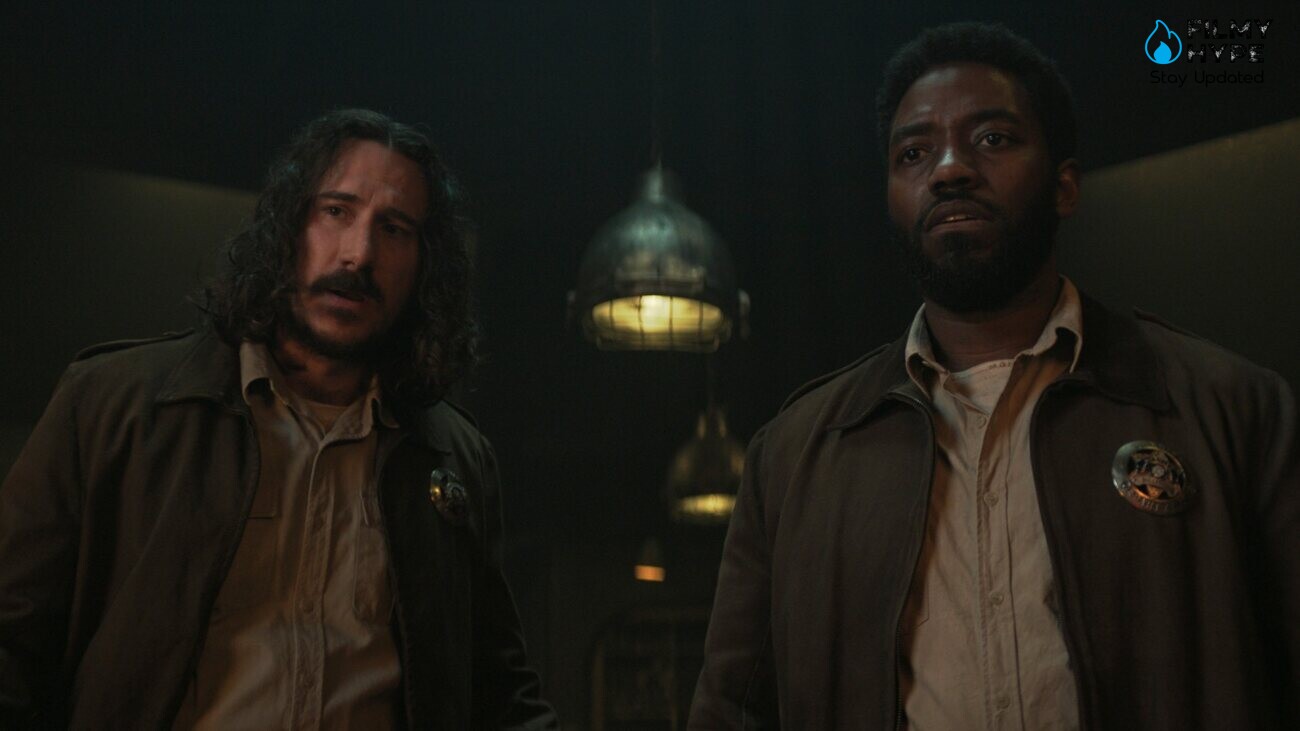
While the power struggle plays out at the top, Paul and Hank continue working on the murder of Orla Kent and the theft of the light bulbs essential to food production. The surveillance footage yields two unsettling discoveries. First, Camille and Emerson were behind the gas released at the mines. Second, Glenda Harwood traveled a physically impossible distance in just a few minutes—appearing in the mines and then in the supply area within a timeframe that shouldn’t be possible.
The implication is clear: there’s infrastructure in the silo that no one fully understands. Hidden passages. Secret routes. The silo was built with layers of access that the people living in it were never meant to discover, and Glenda seems to know how to use them. Paul’s investigation is edging closer to a truth that Camille and the Algorithm have been keeping buried.
Knox, meanwhile, gets his own piece of closure. He goes to the mines and learns that his father died two years ago. It’s a quiet moment in an episode full of noise, but it matters. Knox has been carrying that uncertainty for the entire series. Knowing the truth doesn’t fix anything, but it closes a wound that’s been open too long.
Bernard Explains the Safeguard Protocol
Bernard, still alive thanks to Robert and Martha, finally explains in detail how the silo really works. The Safeguard Protocol isn’t just a threat. It’s a fully operational system connected to Judicial, capable of eliminating an entire silo’s population if the Algorithm determines that the silo is no longer viable. It’s the ultimate control mechanism—the thing that makes rebellion not just dangerous but potentially suicidal. If the Algorithm decides a silo is lost, it doesn’t send troops. It just activates the protocol, and everyone dies.
This is what Juliette is trying to prevent. It’s why the Algorithm is so threatened by her. And it’s why Camille’s decision to drug the water supply is, from the Algorithm’s perspective, a measured response rather than an act of war. The system isn’t emotional. It’s calculating. And it’s calculated that erasing everyone’s memories is more efficient than killing them.
The Flashbacks: Thurman Arrives
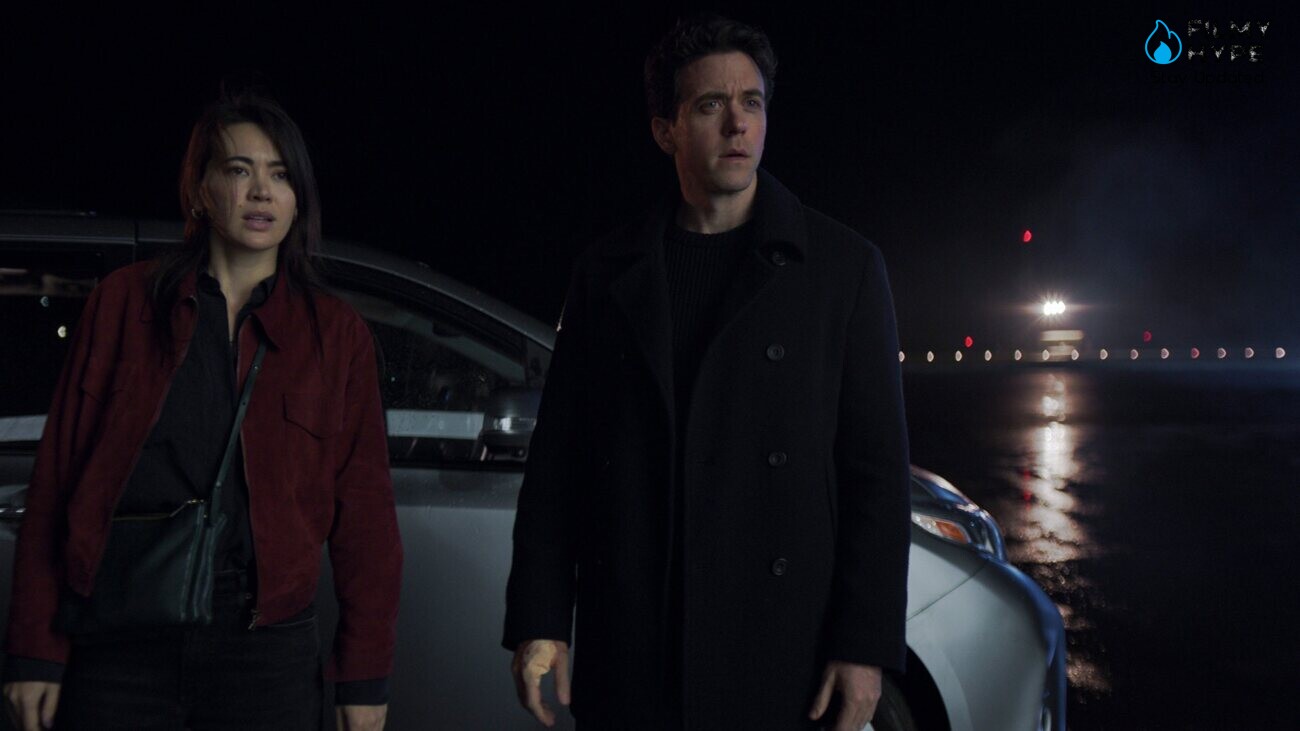
The flashback storyline has been building toward this moment all season. Daniel and Helen, whose investigation into the conspiracy behind the silos has cost them everything, are finally brought into the fold. Their car is remotely hijacked and escorted to a hangar, where a private plane waits. And on that plane is Senator Thurman.
Thurman asks them a single question: Are they prepared to save the world?
The scene doesn’t provide all the answers. The series hasn’t yet explained the full scope of the project that will eventually lead to the construction of the silos. But the pieces are falling into place. Daniel, a drilling expert, is clearly being recruited for his technical knowledge—the kind of expertise required to build fifty underground bunkers capable of sustaining human life for centuries. Helen, a journalist, is being brought in to manage the communication and propaganda necessary to sell the project to the people who will be asked to live inside it, or to keep the people who won’t be selected from learning the truth.

Thurman’s presence confirms what the series has been hinting at since the flashbacks began. The silos weren’t an improvised response to catastrophe. They were a carefully designed project, planned and directed from the highest levels of power. The catastrophe that made them necessary may have been real, but the response was organized. The people who built the silos knew what they were doing. They selected who would survive. They designed the systems that would control those survivors for generations. And now, in the present timeline, Juliette is fighting against the descendants of that original design.
What the Ending Means
Episode 6 is the moment the two timelines finally converge. Juliette, in the present, discovers that the real enemy isn’t Camille or even the Algorithm. It’s the system itself—the architecture of control that was built into the silos from the beginning. The flashbacks show the birth of that system, the moment when ordinary people were recruited into a project that would determine the fate of humanity.
The connection is devastating. Juliette is fighting against something that was designed to be unbeatable. The Safeguard Protocol, the memory-erasing drugs, the surveillance, the rigid social hierarchy—all of it was planned. The people who built the silos didn’t just create shelters. They created a prison that would manage its own inmates for centuries.
The rescue mission authorization looks like a victory, but it’s actually part of the Algorithm’s strategy. By allowing Juliette to save the children of Silo 17, the Algorithm gets to observe her methods, identify her allies, and prepare its countermove. The memory erasure Camille has already set in motion is that countermove. Juliette won the battle—she got her rescue mission—but she may be about to lose the war. If she forgets who she is again, if the silo forgets what it was fighting for, then nothing she’s accomplished will matter.
What to Expect in Episode 7
Thurman’s arrival in the flashbacks means Daniel and Helen are no longer observers. They’re participants. Episode 7 will likely show the early stages of the silo project—the planning, the construction, the decisions about who would be saved and who would be left behind. The moral weight of those decisions has been hanging over the series since the beginning, and the flashbacks are about to make it concrete.
Inside Silo 18, Camille’s water supply gambit is the most immediate threat. If the drugs take effect quickly, Episode 7 could show the beginning of the memory loss—characters forgetting conversations, relationships, and the reasons they joined the resistance. Juliette’s window to act is closing. She needs to move before she loses herself again.

Lukas and Kennedy’s mission to Silo 17 is the wild card. Jimmy is still out there, still guarding the survivors, still waiting for help that may or may not arrive. If Lukas and Kennedy reach him, the dynamics of both silos shift. If they don’t, Juliette’s deal with the Algorithm was for nothing.
Billings’ investigation into Glenda Harwood is also approaching a breaking point. The impossible distance she traveled suggests knowledge of the silo’s hidden infrastructure—the same infrastructure that allowed Camille and Emerson to gas the mines. Glenda may be a conspirator, or she may be a key to understanding how the silo actually works. Either way, Billings is getting closer to something the Algorithm would prefer stayed hidden.
And Camille’s relationship with Sims continues to fray. She’s having him watched by her own guards. She’s freezing him out of decisions. The man who was once the most feared enforcer in the silo is now being treated as a liability, and Sims doesn’t strike anyone as the type to accept that quietly.
The episode closes with the series’ two great mysteries aligned. The past shows how the silos were born. The present shows how they might end. And Juliette, standing at the center of both timelines, is running out of time. The water is already drugged. The memories are already fading. The Algorithm is already planning its next move. The only question is whether Juliette can outrun the erasure long enough to finish what she started.