

The Shards Series Review and Ratings
Cast: Igby Rigney, Kaia Gerber, Homer Gere, Hayes Warner, Graham Campbell, Evan Rachel Wood, Wes Bentley, Jordan Roth
Creators: Ryan Murphy and Bret Easton Ellis
Streaming Platform: FX Network, Hulu and Disney+
Filmyhype.com Ratings: 3.5/5 (three and a half stars)
It’s amazing how every time Ryan Murphy puts his finger directly into his own TV series, instead of entrusting them to his collaborators, he causes a half-disaster. At least when it comes to writing, rather than directing, he manages to get noticed instead. It will be because he works too hard, or it will be because his themes are trite. Yet we continue to welcome all his news with curiosity and some hesitation. The Shards, the new FX series coming from August 6, adapts the latest novel by Bret Easton Ellis, one of the iconic authors of contemporary American fiction, to the small screen. Produced by Ryan Murphy, the series stars Igby Rigney, Homer Gere, Graham Campbell, Kaia Gerber, and Sean Conrad. A thriller that moves between a coming-of-age novel, mystery, and horror, immersing the viewer in early 1980s Los Angeles, amidst privilege, obsessions, and an evil that seems to creep into every corner of everyday life.

Ryan Murphy lights up the end of summer with an ultra-pop bomb that promises to make headlines: The Shards. A concentration of style, tension, and blood… but will it be an absolute masterpiece or a hole in the water? Although it had the opportunity to preview the entire season, the series will follow the current trend for audiences: one episode a week. This enjoyment, “in a nutshell,” could be the real salvation of The Shards: diluting the wait, in fact, helps to turn a blind eye to several plot twists that made me turn up my nose, quite a bit. So let’s get into the details of the series, without giving away any spoilers.
The Shards Series Review: The Story Plot
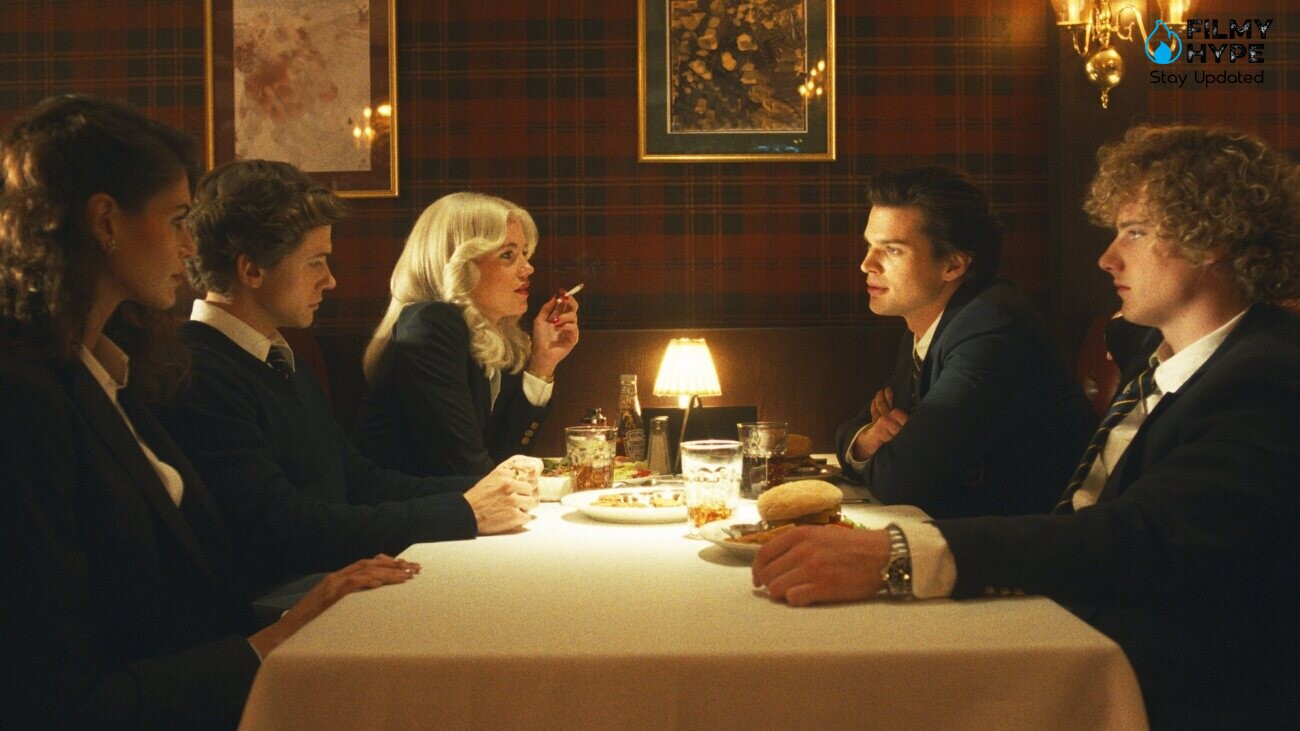
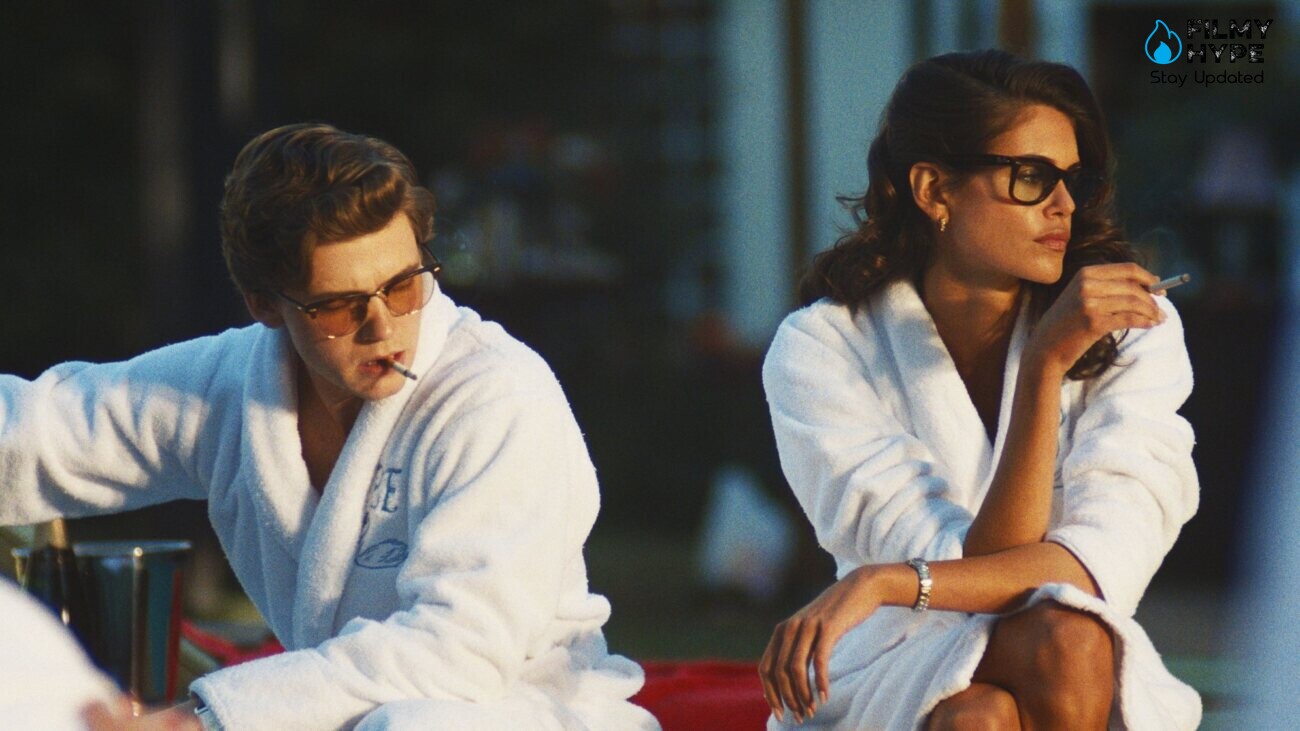
The Shards presents itself as a coming-of-age thriller. The protagonists are beautiful, unabashedly wealthy teenagers in textbook 1981 California. The 1980s ’80s aesthetic is explosive: the warm, saturated, and energetic colors create a perfect contrast to the story’s extremely dark and violent soul. The cliché of the time is inevitable: a seemingly idyllic community is terrified by the shadow of a serial killer (actually more than one). It’s a shame that an infinite number of subplots make the vision indigestible: many of the dynamics between the characters are unclear, others are far too repetitive, and some, unfortunately, borderline ridiculous.
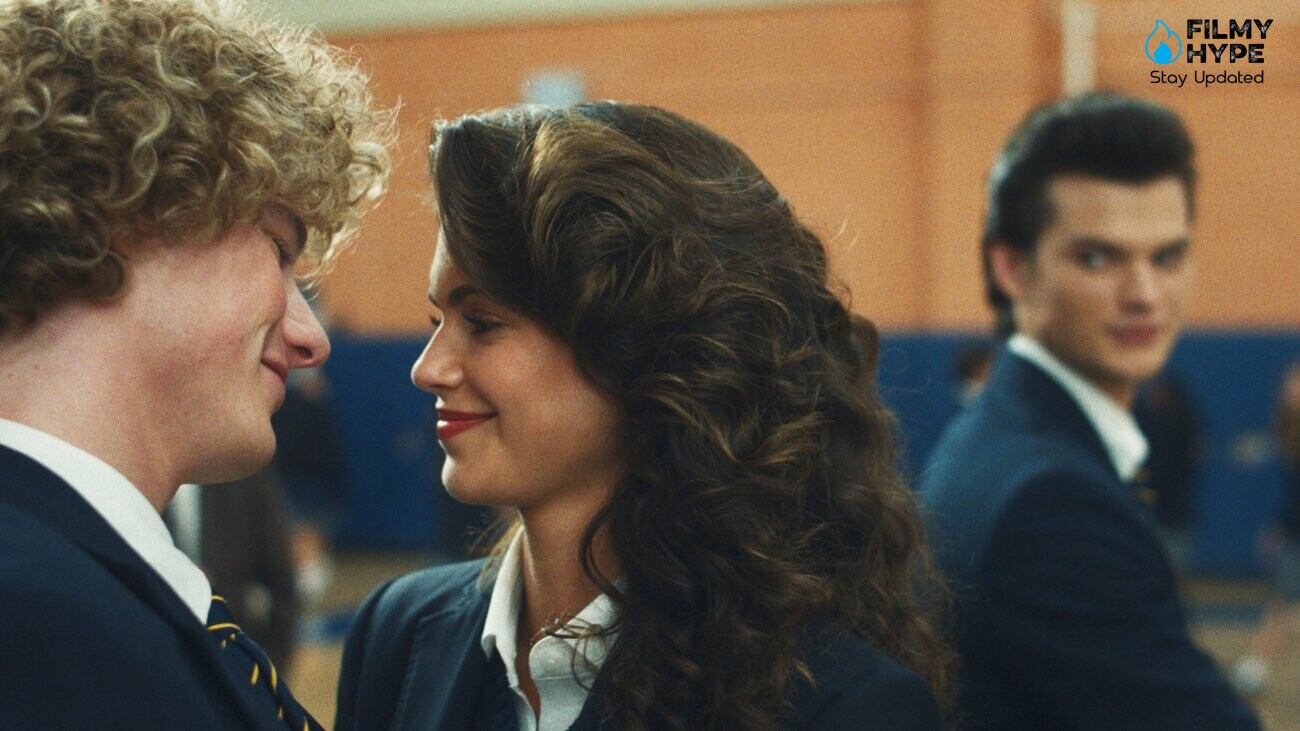
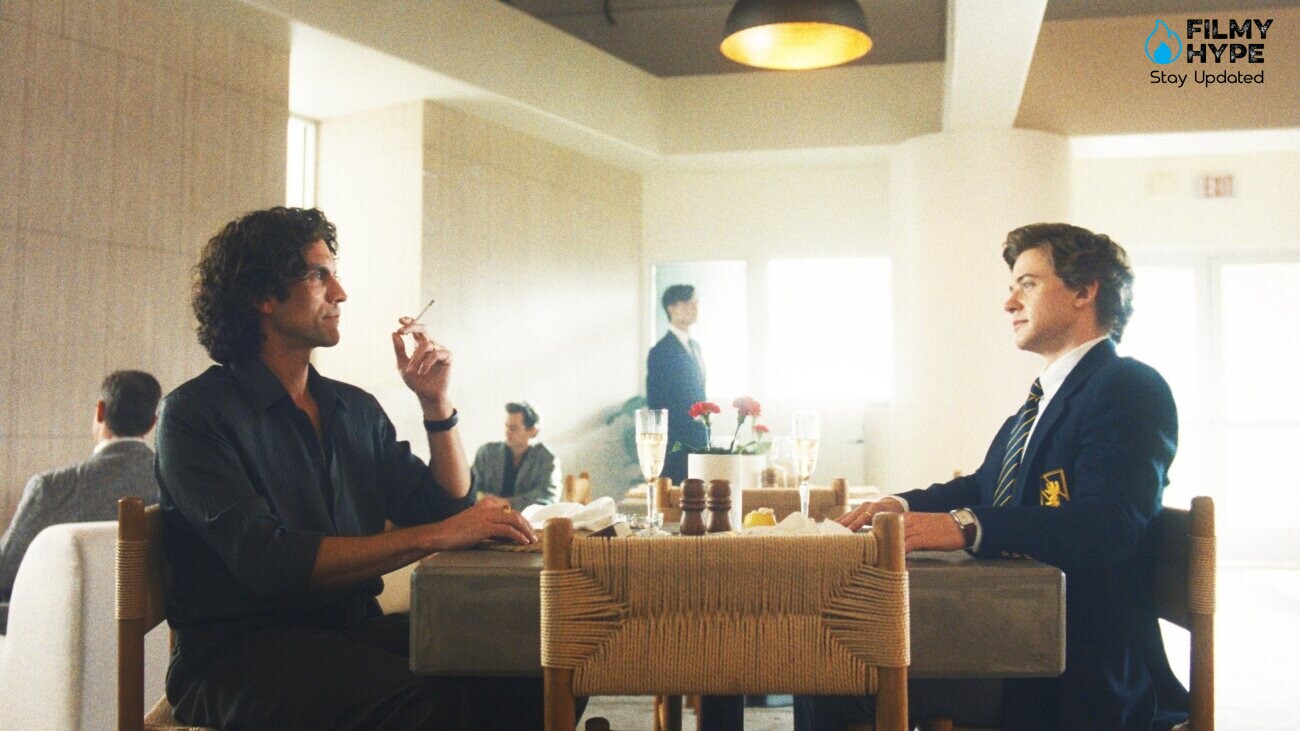
Almost always paired with another screenwriter (usually Ian Brennan), this time Murphy chose writer Bret Easton Ellis as his partner, and for obvious reasons: The Shards is based on his latest novel, which combines elements of fiction with others that are strongly autobiographical. Set in Los Angeles in 1981, the series chronicles the senior year of high school for Ellis (played by Igby Rigney) and his friends, between the arrival of a new student, Robert Mallory (Homer Gere, Richard’s son), and the first murders of the serial killer “The Trawler”, who targets high school students in the city’s affluent suburbs.
Murphy’s poetics often includes the idea of taking a cross-section of American society, with a strong central core placed in a specific era, and revealing its contradictions, secrets, and hypocrisies. Even when we’re not talking about multiple murders and schizophrenics, what emerges above all are the perversions of the psyche and its paranoia, which translate into portraits of repressed characters, incapable of expressing themselves, and whose damaged minds are nothing more than the symptom of a deeply ill social body, whose traumas are transmitted from generation to generation.
The Shards Series Review and Analysis
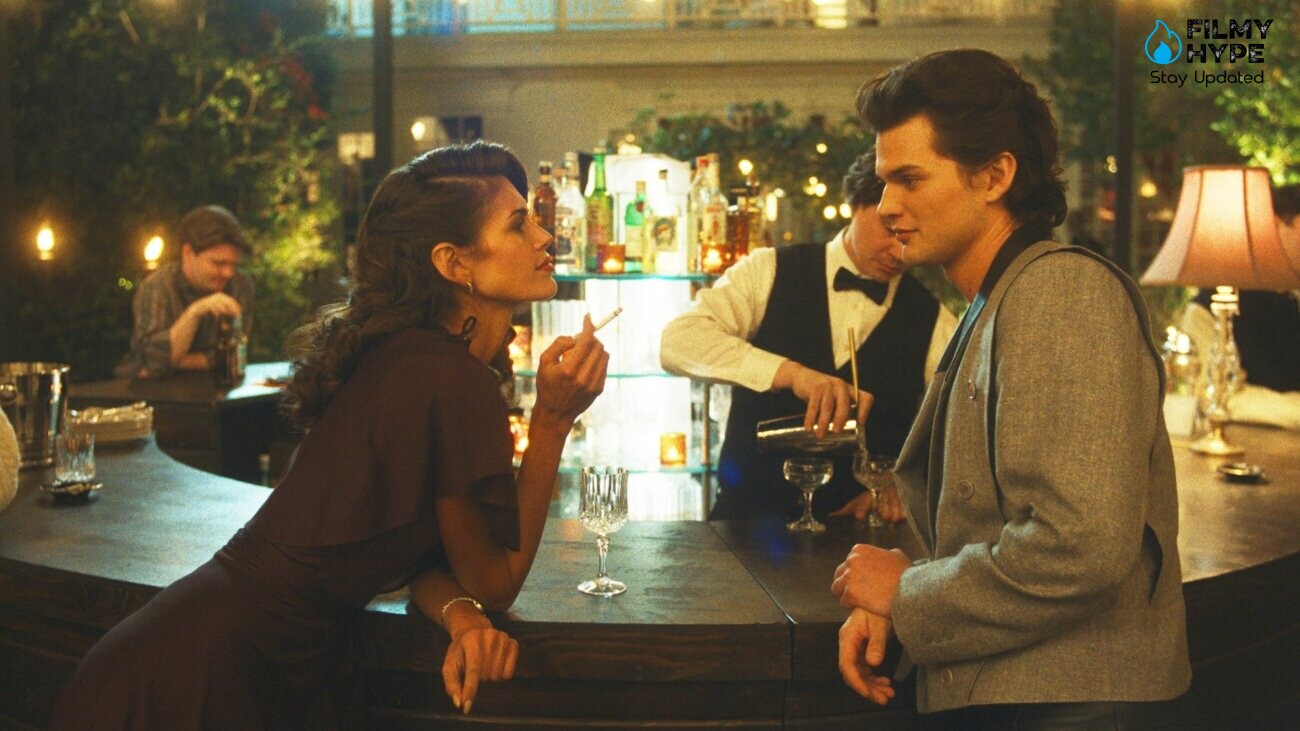
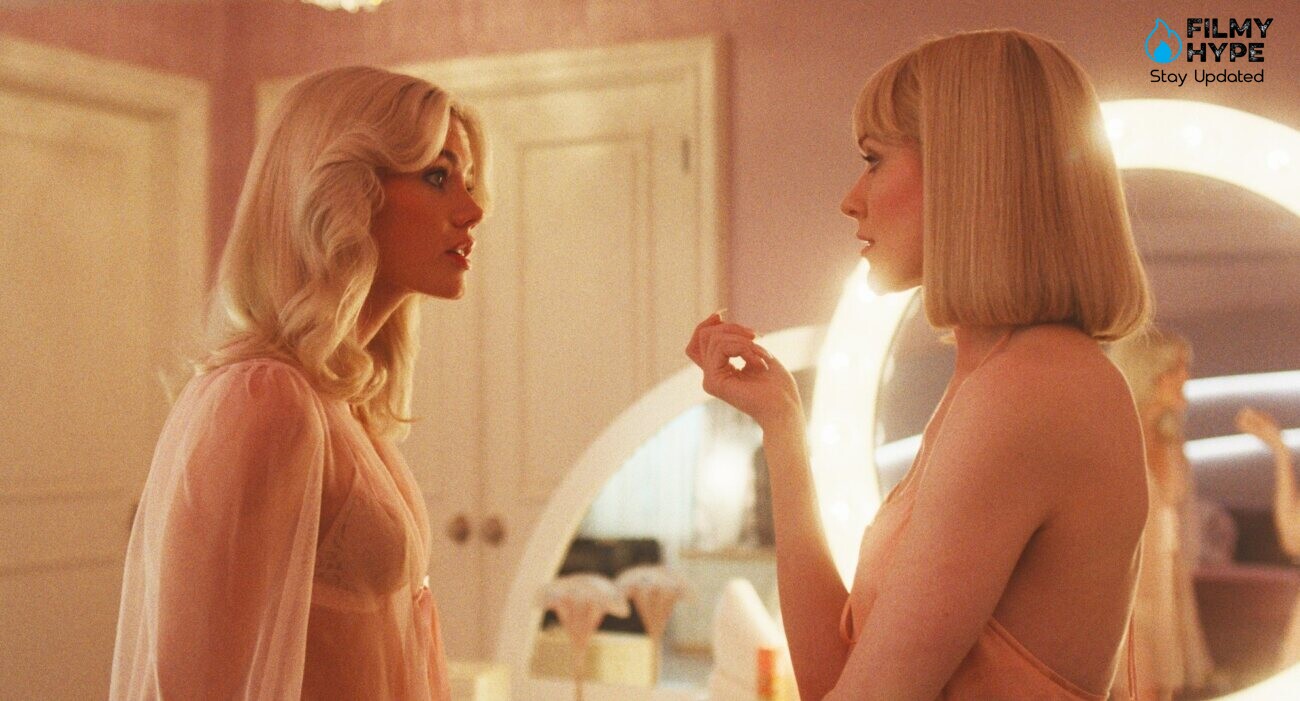
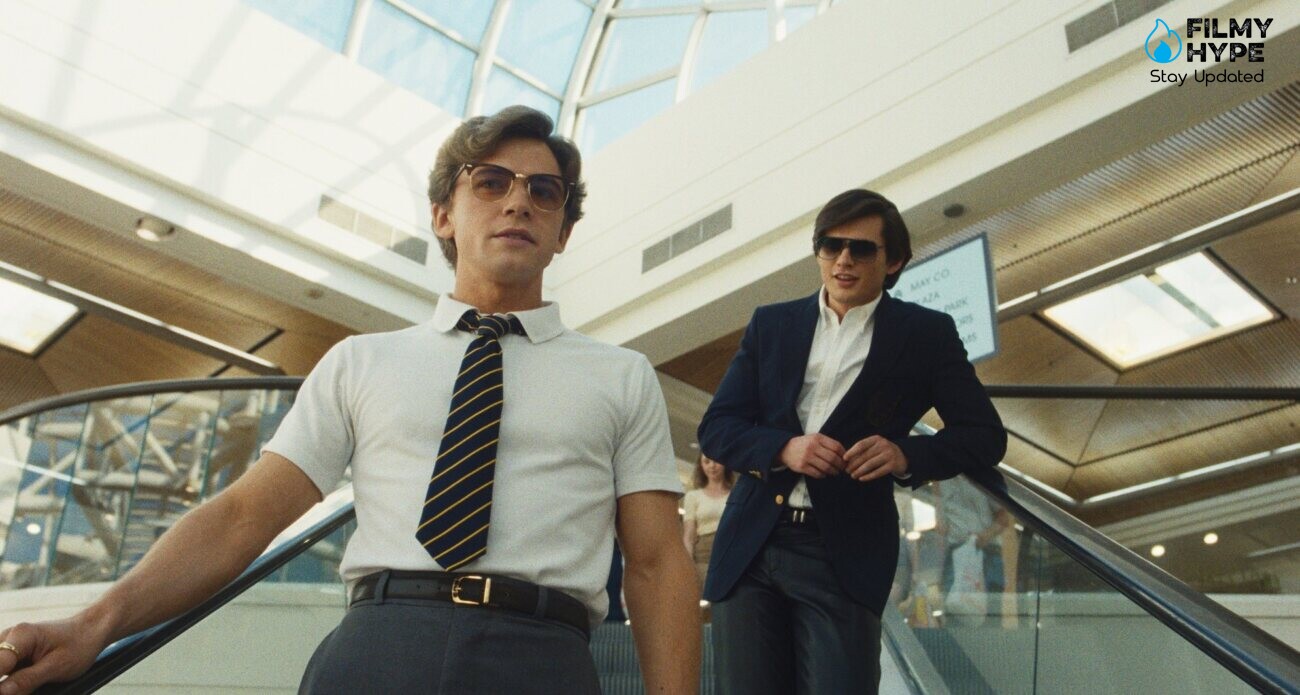
The reconstruction of the era is one of the greatest strengths of the series. Costumes, hairstyles, sets, every single detail is recalled with such accuracy that it not only tells the spirit of the eighties but makes that decade alive again on screen. And a memorable and never-for-granted soundtrack also contributes to all this. And while it recalls the visual elegance of series like “Mad Men”, beneath that refined patina, there is a restlessness made of obsessions and violence. And you can recognize Ryan Murphy‘s entire stylistic signature in this.
“The Shards” is not just a thriller with a serial killer in the background. It’s mostly a story about the exact moment you stop being a boy. Ryan Murphy, in fact, starts from the typical elements of the teen drama (sex, desire, friendships, and obsessions) and transforms them into something deeper: a reflection on the moment you enter adulthood and nothing is like before. And the transition to adulthood is brought to the screen with a mixture of dream and fear, sex and blood, love and destruction. And this is perhaps the most interesting aspect of the whole story, along with a perfectly cast and all the charm of the 80s. Compared to contemporary TV series, it may be a bit slow, but the extended pace represents the stylistic hallmark of this series.
“The Shards” will appeal to Ryan Murphy fans, those looking for psychological thrillers and ’80s atmospheres, but especially to those who love those titles where the aesthetic component has the same weight as the story, and in this, it recalls series like “Mad Men”. It is less suitable, however, for anyone looking for a fast-paced crime with lots of twists and turns. With this series, Ryan Murphy signs one of his most elegant productions in recent years. A series that seduces with its aesthetic but remains impressed above all by the way it tells the more ambiguous side of youth: when carefree gives way to the awareness that adolescence, once it’s over, never returns.

The Shards encompasses all of this, within a bright, flamboyant, luxurious aesthetic package. We are in the years ‘80, the period of Reagan’s rebirth and reaffirmation of the American dream. And what’s more, we’re in Los Angeles, which in the film world is synonymous with Hollywood, the place where that myth that seemed to have been lost with the Vietnam War and the 1968 protests was being reconstructed through stories of heroism and redemption. The lines between good and evil, between black and white, were becoming clear again – were the years of Star Wars and Indiana Jones -, in an attempt to hold together the fabric of reality, which was beginning to shatter with the postmodernism of Blade Runner and The Shining.
It’s no coincidence that the series opens with Bret entering a cinema to see Stanley Kubrick’s horror, where he meets for the first time the boy who will become his obsession, Robert Mallory. Who, some time later, will claim that he never entered that room. It’s the first step towards destroying that perfect, glitzy, princely bourgeois world, which can turn even the weirdest girl in school, even bullying here is done in style, into the prom queen. But when the sun goes down, the proverbial (and almost literal) skeletons in the closet emerge instead.
The beautiful, young, and sensual bodies of the protagonists thus risk being tortured, deformed, and mutilated by the newborn serial killer, who promises his victims phone calls in the middle of the night where he lets only his own breath be heard. But is it a real presence, or a simple collective delusion? The Shards know how to be more than just a hunt for the culprit, leaving behind more clues than answers, risking disappointing someone, but basking in the power of mystery. After all, it is, at least on paper, a first season, and not a self-contained miniseries like many of Murphy’s recent works.
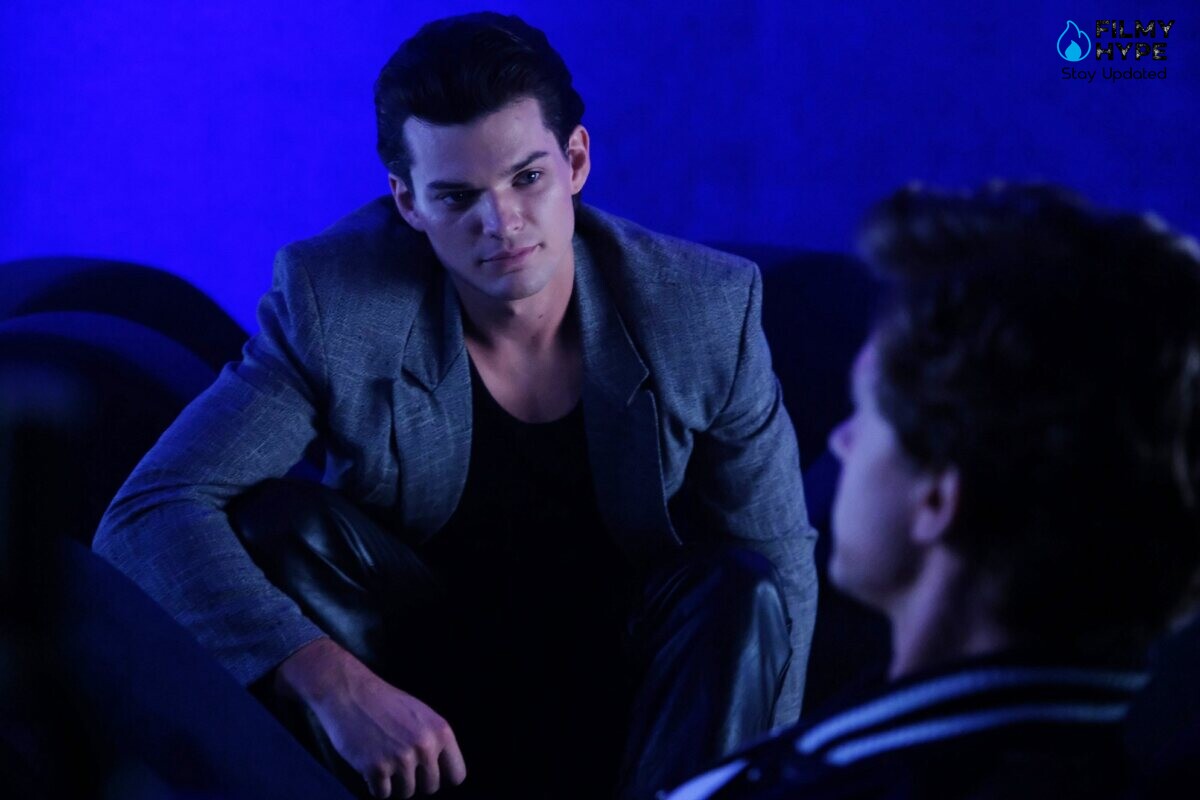
The FX series prefers to conduct its own investigations into the moral decline of the characters, who stoop lower in their personal psychological spirals, and the more charming their attractiveness. In this, The Shards does a really good job on the cast, starting with Igby Rigney, who manages to support the weight of a very complex character, juggling admirably between his hidden homosexuality, his need to be recognized in his (apparent) precocious intellectual maturity, and the dilemma between his attraction to Robert and suspicions about him.
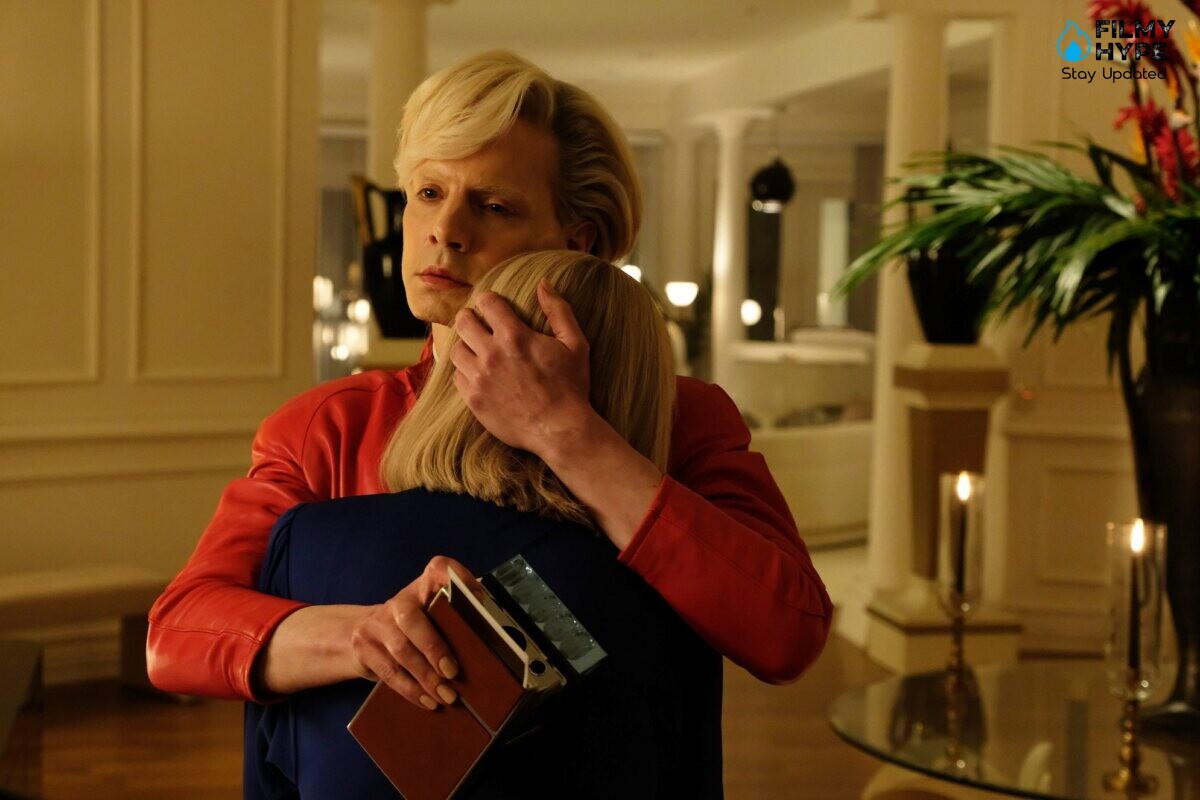
If he and Homer Gere are magnetic, they also don’t disfigure Kaia Gerber, Graham Campbell, and Hayes Warner as Susan Reynolds, Thom Wright, and Debbie Schafer. The latter, by the way, is the only one whose parental figures we see, played by Wes Bentley and Evan Rachel Wood, perhaps the most fascinating character of all, a decadent specter of the past and oracle of a possible future. There is little trace of other adults, as if the only legacy left to these children were the enormous villas in which they live, so empty that they must be constantly filled with social parties, and an incurable addiction to drugs and sex.
In fact, the series chooses to move away from the original material almost immediately. More than an adaptation, The Shards becomes a very free reinterpretation of the novel, preserving its most recognizable elements: the narrative premise, the main characters, the setting, and the mystery linked to Robert Mallory and the Trawler, but losing along the way what made Ellis’s book such a fascinating work: its deeper meaning. In the novel, the thriller was above all a tool through which to explore the construction of identity, the relationship between reality and fiction, and the very nature of the story. The investigation into the serial killer almost ended up taking a back seat to the progressive dissolution of the protagonist’s certainties, in a continuous short circuit between memory, invention, and paranoia. The series, on the other hand, seems to prefer a more traditional narrative, favoring mystery and more explicitly thriller elements, but failing to replace that thematic richness with an equally strong vision.
And this is where the greatest weakness of the operation emerges. Even looking at it as a standalone work, thus without constant comparison with the novel, The Shards struggles to find its own identity. The construction of suspense proceeds discontinuously, the story accumulates suggestions without fully developing them, and several passages seem more interested in creating atmosphere than in giving real weight to events. If there is one element that more than any other ends up distorting The Shards, it is the choice to transform it mainly into a teen drama. This decision is understandable from a production point of view, considering how the coming-of-age story represents one of the strongest and most popular genres on television today, but it ends up downplaying the very nature of Bret Easton Ellis’s work. Because The Splinters was never a novel about adolescence in the traditional sense, it is a dark, disturbing, and profoundly perverse investigation of obsession, desire, memory construction, and the ability of fear to alter the perception of reality.
The series, however, shifts its focus to romantic relationships, group dynamics, first loves, jealousies, and conflicts typical of coming-of-age, relegating the thriller soul to an almost accessory role. The tension is there, but it almost never becomes the driving force of the story. In doing so, the mystery loses centrality, and the sense of uneasiness that ran through each page of the novel is replaced by a much more conventional narrative, almost reassuring in its structure.
It’s a surprising choice, especially considering Ryan Murphy‘s involvement. In recent years, the producer has constructed an extremely recognizable imagery: impeccable aesthetics, young protagonists with an almost unreal appearance, polished photography, glamorous atmospheres, and a taste for excess that, for better or worse, has become the trademark of his productions. But it’s as if each new series now belongs to the same visual universe, characterized by the same patina, the same perfect faces, and an aesthetic as seductive as it is artificial, almost as if the same filter is always applied to the images. Precisely for this reason, it seems strange that The Shards choose such a prudent path. If there was one novel that seemed tailor-made for Murphy’s more provocative side of film and television, it was Bret Easton Ellis’s. The source material approaches sex with disarming explicitness, stages disturbing desires, manipulation, psychological violence, and an erotic tension that continually intertwines with that of the thriller. The series preserves these elements only on the surface, suggests them, touches them, but does not have the courage to cross them.
But the most obvious limitation probably concerns the way doubt is handled. In the book, uncertainty is the true protagonist: each page forces the reader to question what is real, what is the fruit of the narrator’s memory, paranoia, or manipulation. In the series, this component exists, but loses its structural function. It becomes one of many narrative lines rather than the principle that holds the entire story together. Define The Shards teen drama is not a problem in itself. However, it would be reductive to do so in this specific case, not because the teen drama represents a minor genre, but because it ends up imprisoning a work that, already on the page, was trying to escape any label. The fact that the protagonists are teenagers does not mean that the novel automatically belongs to that narrative category.
Of course, adapting also means betraying. Each transposition is called upon to make decisions, eliminate, add, and reinterpret. The problem, in this case, is not so much the distance from the novel, but the impression that the series never manages to fully clarify which identity it wishes to assume. The feeling is that of being faced not with a finished work, but with a long prologue. More than telling a story, The Shards seems to be continually preparing something that has yet to arrive, postponing development, developments, and consequences to a future that, at least for now, remains only hypothetical. It’s a trend that now unites many productions in Ryan Murphy‘s creative universe, increasingly constructed as the beginning of a franchise rather than as seasons with real narrative autonomy. Just think of The Beauty, which ended with a very open ending and was subsequently put on hold, leaving numerous narrative lines suspended.
Increasingly, series appear to be designed as market tests: a first season designed to measure audience response before even telling a full story. If the numbers reward the project, the story continues; otherwise, it is interrupted without much hesitation, leaving unfinished story arcs and viewers with more questions than answers. It’s an understandable (unacceptable) industrial logic in the streaming age, but it also ends up influencing writing. The real limitation of The Shards is not so much that it is an unfaithful adaptation. The history of film and television shows that the best adaptations are often those capable of moving away from the original material to find their own voice. The problem is that the FX series seems to be losing that very voice, hovering between the desire to tell a contemporary teen drama and the desire to stage the perverse and ambiguous psychological thriller imagined by Bret Easton Ellis, failing to fully excel in either direction.
Trivially, The Shards could be relegated to the context of a typical thriller, yet behind the blanket of campy, sexy noir (if you love Murphy, this is the series for you), stretches an examination of what it’s supposed to be (really?), a writer. Bret, an (ir)real transposition of Easton Ellis, who drives a Mercedes convertible and chases Joan Didion’s “precise and casual” periods along Cielo Drive, between the ghost of Charles Manson and the infinity pools, then becomes the observation point of a “false and perfect” world distorted by a random violence that tarnishes the ephemeral identity of a society devoted to consumerism.
Vodka and grapefruit juice, Ralph Lauren shirts, the car radio playing Blondie, the dream of an earthly paradise, exclusive and elitist. The surface, precisely. America that radiates and dazzles. Below, according to Murphy and Easton Ellis, are the most hidden desires. Those who deal with flesh, with ambiguity, with fear. There, the series continues, is the primary resource for transforming everything into great literature, going beyond images to connect beauty with horror. In between, the breaking point, the variable you don’t expect: a killer who sows panic. For this reason, the value of the thriller, which somehow respects its own stylistic features by giving the episodes a sprint (which never gets boring), becomes secondary to Bret’s role and his storytelling inclination.
A character in the making, who grows by sharpening his words, taking inspiration from a metric that will become his narrative key. Bret is the forerunner of a paranoid, hypochondriacal time, in which imagination surpasses inspiration by taking the forms of a strange refuge. It is always Bret, in retrospect, who tells the story off-screen, like an omniscient narrator, catching those fragments of memory suspended between reality and fiction. Piece by piece to compose the memory of something that perhaps never lived. For this, and thanks to the value of the writing, The Shards takes the form of a disjointed memory, which resonates and vibrates under the patina of a sun that burns until it burns.
The Shards Series Review: The Last Words
Ultimately, The Shards is yet another interesting Ryan Murphy series, despite an uncertain ending whose doubts have been postponed until the next season. Curated in writing and staging – Murphy also directs two out of nine episodes – and convincing in performances. Disturbing when needed but still measured in gore and violence, it brilliantly combines the imprint of the most powerful showrunner on modern television (as Wikipedia puts it) and that of Bret Easton Ellis, maintaining the constant internal monologues that characterize his style. As in American Psycho, his most famous novel, The Shards at times almost seems like a spiritual prequel. Or just her teen version.