


One Hundred Years of Solitude Part 2 Review and Ratings
Cast: Claudio Catano, Susana Morales, Marco Gonzalez, Viña Machado, Ruggero Pasquarelli, Moreno Borja, Ella Becerra, Leonardo Soto, Jeronimo Baron, Carlos Suaréz, Santiago Vasquez
Directors: Laura Mora Ortega and Carlos Moreno
Streaming Platform: Netflix
Filmyhype.com Ratings: 4/5 (four stars)
Eighteen months after the first eight episodes debuted on Netflix on December 11, 2024, the second and final installment of the Colombian series One Hundred Years of Solitude arrives on the same streaming platform. The distribution follows a staggered strategy: the first seven episodes will be released on August 5, 2026, while the epilogue, intended to definitively close the Buendía family saga, will be available on August 26, 2026. This work is an ambitious adaptation of the 1967 literary masterpiece, One Hundred Years of Solitude, by Nobel Prize winner Gabriel García Márquez, while allowing for some narrative variations appropriate to the audiovisual language.
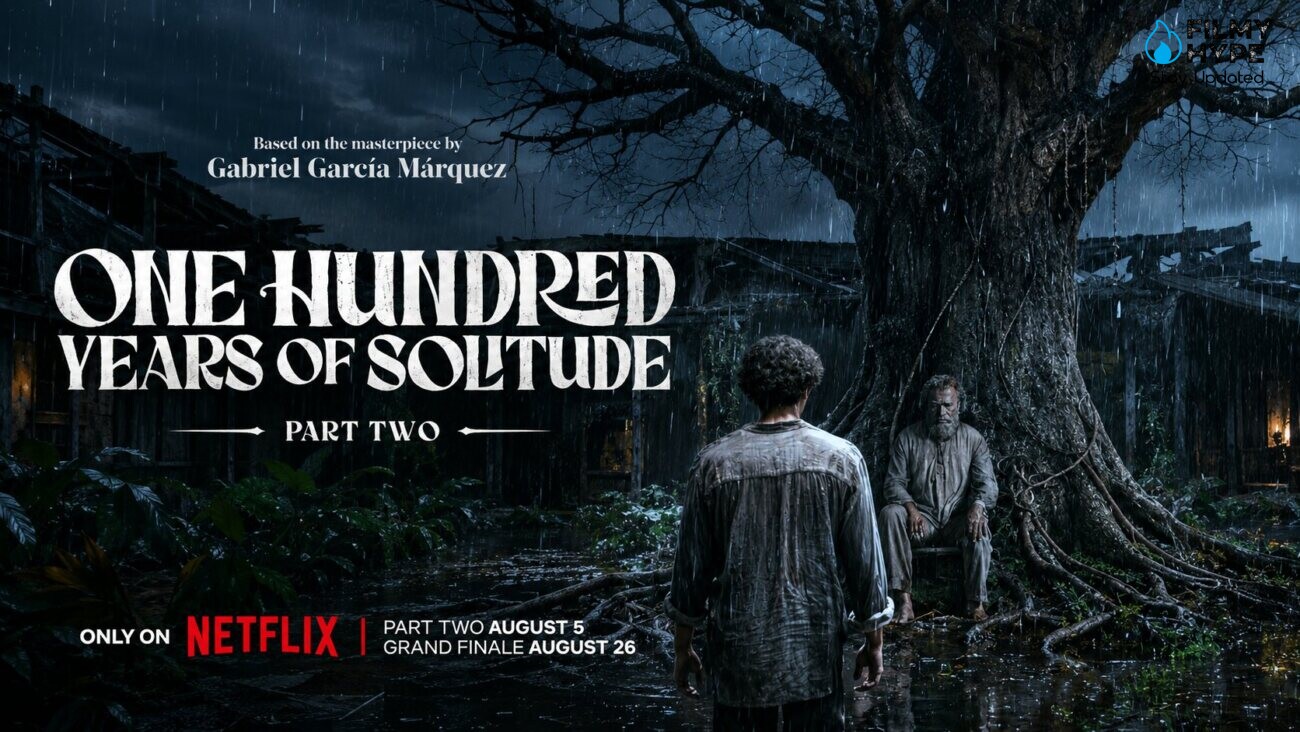
Adapting One Hundred Years of Solitude meant engaging not only with one of the most important novels of the twentieth century, but with a work that Gabriel García Márquez himself considered difficult to translate into images. The first part of the Netflix series approached the challenge with an almost reverential fidelity, portraying the birth of Macondo, the ambitions of José Arcadio Buendía, and the progressive entrenchment of a family destined to repeat loves, mistakes, and solitudes across generations. This second part takes up that legacy and leads it to its inevitable unraveling. While the first episodes were dominated by the promise of a place still separate from the rest of the world, One Hundred Years of Solitude Part 2 tells the story of the moment when Macondo opens itself to modernity and discovers that progress can become another form of conquest.
The railway, foreigners, capital, and the banana company arrive, but along with prosperity come the exploitation, repression, and erasure of collective memory. The series thus becomes more overtly political, without abandoning the family melodrama, magical realism, and that feeling of fate that accompanies each new generation of Buendía. The transposition continues to fail to fully reproduce the ambiguity of Márquez’s writing, because what remains suspended on the page between reality, legend, and imagination takes on an inevitably concrete form on screen. Yet the productive grandeur, visual care, and strength of some performers allow the series to overcome many of the difficulties inherent in the adaptation, transforming this second part into a more compact, painful, and politically incisive work than the previous one.
One Hundred Years of Solitude Part 2 Review: The Story Plot
The story picks up after the civil wars that transformed Aureliano Buendía from a reserved and sensitive young man into a feared colonel, isolated and unable to truly abandon the conflict. Even when the weapons seem silent, war continues to live within him, progressively consuming his ideals and leaving him a prisoner of a power that offers him no real victory. As the colonel retreats further and further into his own solitude, it is twins Aureliano Segundo and José Arcadio Segundo who lead the new phase of the family history. The first chooses a life dominated by pleasure, excess, and the relationship with Petra Cotes, before marrying the rigid Fernanda del Carpio.
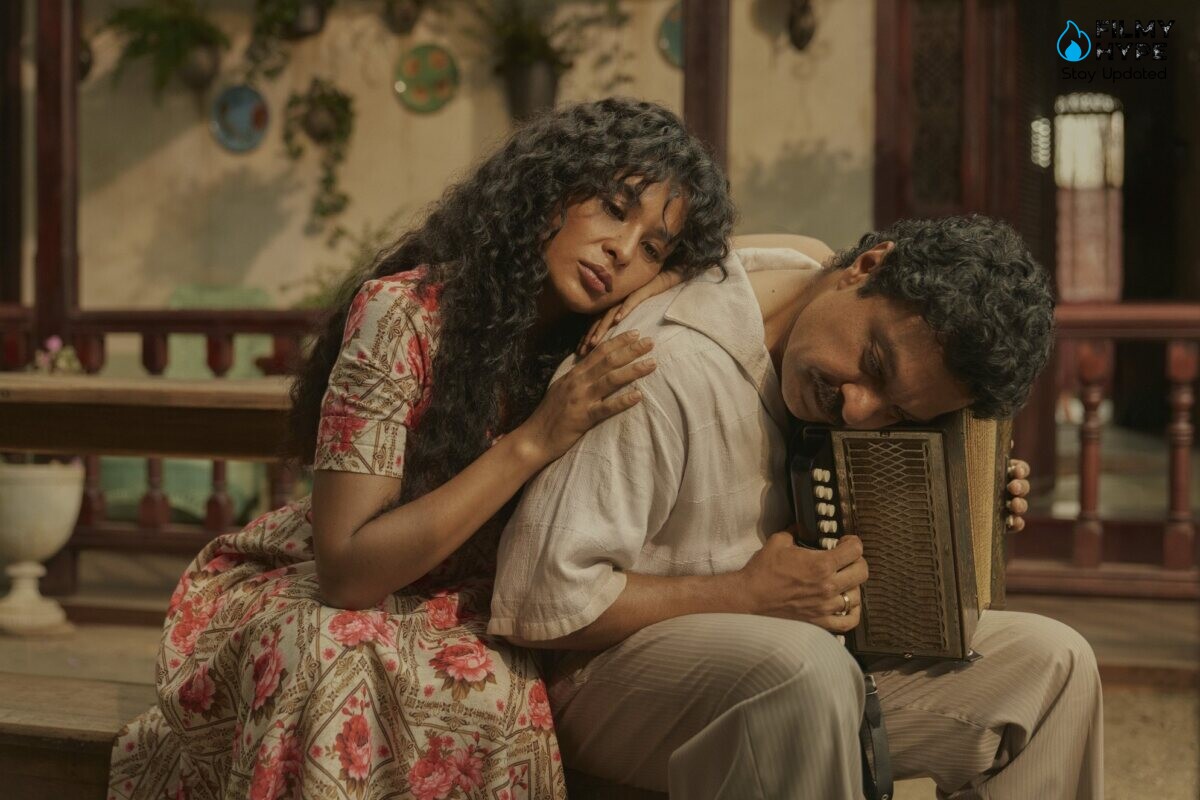
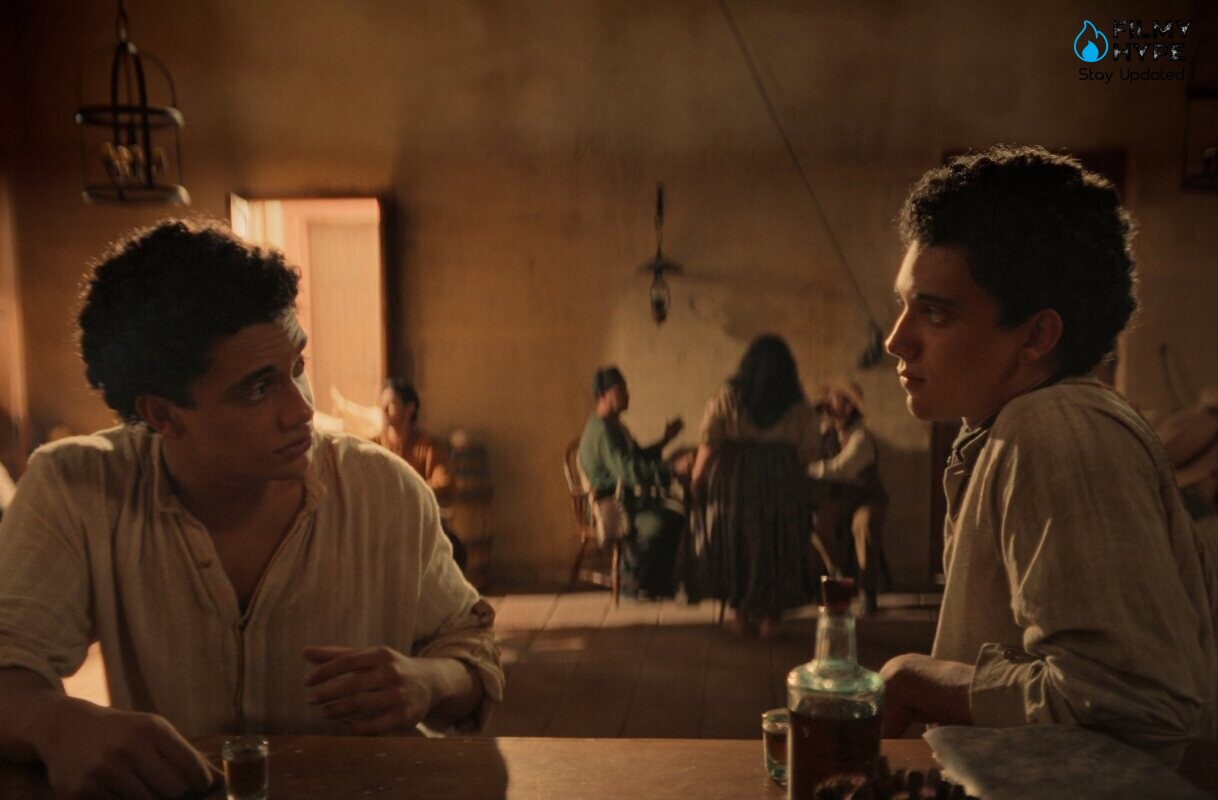
The execution also deeply affected his great-grandchildren, twins José Arcadio Segundo and Aureliano Segundo, sons of Arcadio and Santa Sofía de la Piedad. José Arcadio Segundo feels a deep aversion to war, takes refuge in the church, and chooses a life away from weapons. Not even the colonel finds peace. His enemies attempt to assassinate him by poisoning him with strychnine, but Úrsula manages to save him thanks to a remedy made from eggs, vinegar, and herbs. The passion for knowledge overwhelms Aureliano Segundo, who, in the room where his great-grandfather José Arcadio Buendía once worked, meets the soul of the patriarch’s devoted friend, Melquíades. Together, they study the enigmatic manuscripts that guard the family’s fate, destined to be deciphered only after a hundred years. Meanwhile, attempts are being made to realize the founder’s dream of opening Macondo to the world.
The arrival of the railway brings prosperity, electricity, and modernity, but it also introduces the banana company, a dark force that will contribute to its oblivion. As progress forever changes the face of their world, Melquíades’ papers reveal that the fate of the Buendía had been written from the beginning. From the first of the lineage, tied to a tree, to the last descendant. The second instead looks at the transformation of Macondo, contributing to the arrival of the railway and the opening of the city to the outside world. What initially appears to be the beginning of a new era of prosperity, however, is preparing for catastrophe. The arrival of the banana company changes the economy, social relations, and even the identity of the city to the point of making Macondo unrecognizable. Meanwhile, the Buendía home continues to fill with new children, forbidden loves, silences, grudges, and names already belonging to those who came before them.
One Hundred Years of Solitude Part 2 Review and Analysis
The second part finds its strength above all in the way it connects the disintegration of the Buendía family to the political and economic transformation of Macondo. The railway is welcomed as a symbol of a finally attainable future, but it paves the way for external interests that view the city only as a resource to be exploited. The banana company brings work and wealth, but also new hierarchies, inhumane conditions, and economic power capable of bending institutions. The promised progress thus turns out to be a process of colonization, through which the fate of the community is decided by men who do not belong to that place and do not share its memory.
The series makes explicit the political dimension of the novel without turning it into a lesson. Industrial expansion creeps into everyday life, changes the landscape, and changes the way residents perceive their city. Macondo is not destroyed suddenly: she slowly loses her identity, until she becomes alien even to the people who built it. It is precisely in this part of the story that One Hundred Years of Solitude shows its full relevance. The dynamics of exploitation, the repression of workers, the manipulation of truth, and the power’s ability to erase events from public memory are not unique to early twentieth-century Colombian history. The series recalls how easily the language of progress can conceal forms of economic and political violence.
The arrival of the banana company inevitably leads to the most dramatic sequence of the second part: the reworking of the massacre of striking workers, inspired by the real events that occurred in Colombia in 1928. The series avoids turning the moment into a simple, spectacular explosion. Directed by Laura Mora and Carlos Moreno, it prioritizes anticipation, silence, and the growing awareness that the crowd is now trapped. When the violence begins, the scene strikes precisely because it is not treated as a climax of action, but as an irreparable fracture in Macondo’s story.
Even more devastating is what happens next. The massacre is not only carried out, but denied. Bodies disappear, documents are manipulated, and the official version even erases the existence of the victims. José Arcadio Segundo thus remains one of the few custodians of a memory that everyone else is led to consider false. Loneliness is no longer just about individual characters. It becomes the condition of those who have seen the truth but live in a society that has decided to forget it. It is in this passage that the series manages to transform one of the central themes of the novel into something deeply concrete and painful.
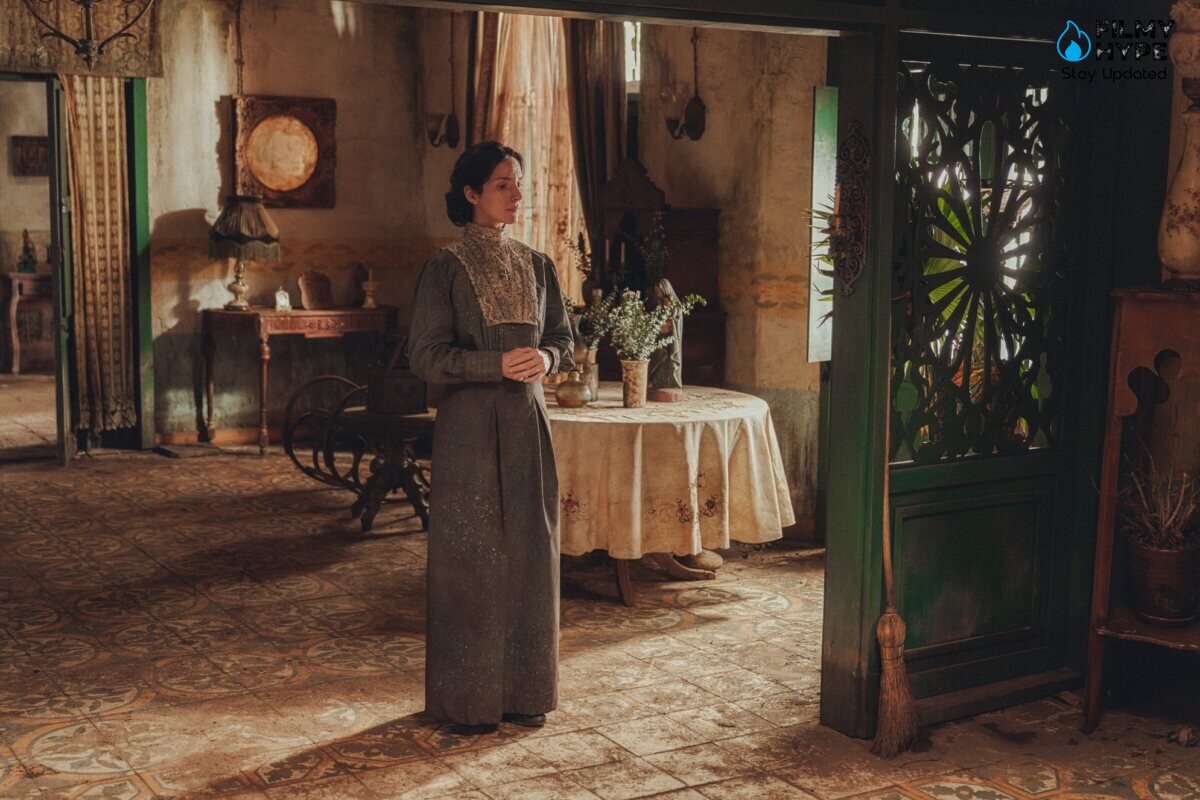
The family story remains constructed as a cycle from which no one seems to be able to escape. The names repeat themselves, but along with the names, the same temperaments, passions, and forms of isolation return. Aureliano tends towards closure and reflection, while José Arcadio is often driven by impulse, body, and desire. The series retains this structure, although the number of characters and the repetition of names require the viewer to pay particular attention. Aureliano Segundo represents excess and pleasure, but his marriage to Fernanda introduces a rigidity into the house that is completely alien to the original Buendía spirit. Their union is devoid of real intimacy and continually crossed by the man’s relationship with Petra Cotes. Fernanda attempts to impose her own rules, religion, and an aristocratic conception of respectability on the family, transforming the home into an increasingly repressive space.
However, the series does not reduce Fernanda to a simple hostile presence. Especially thanks to Carla Baratta’s performance, the pain, isolation, and sense of alienation of a woman who can never truly feel part of the family she has entered also emerge. Her choices have terrible consequences, but they also stem from an upbringing that has prevented her from understanding any form of life other than her own. The conflict between desire and repression also runs through subsequent generations. Loves continue to be impossible, clandestine, or marked by tragedy, while family members seem incapable of breaking a destiny built long before their birth.
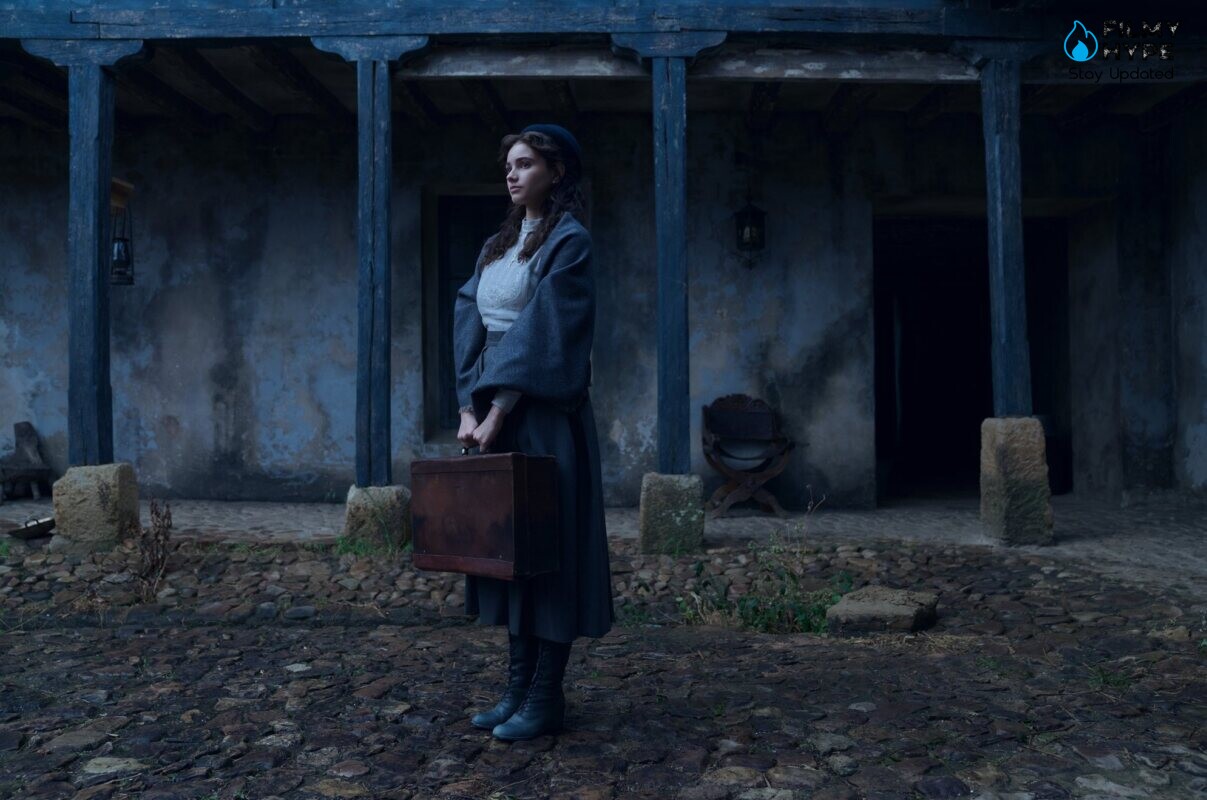
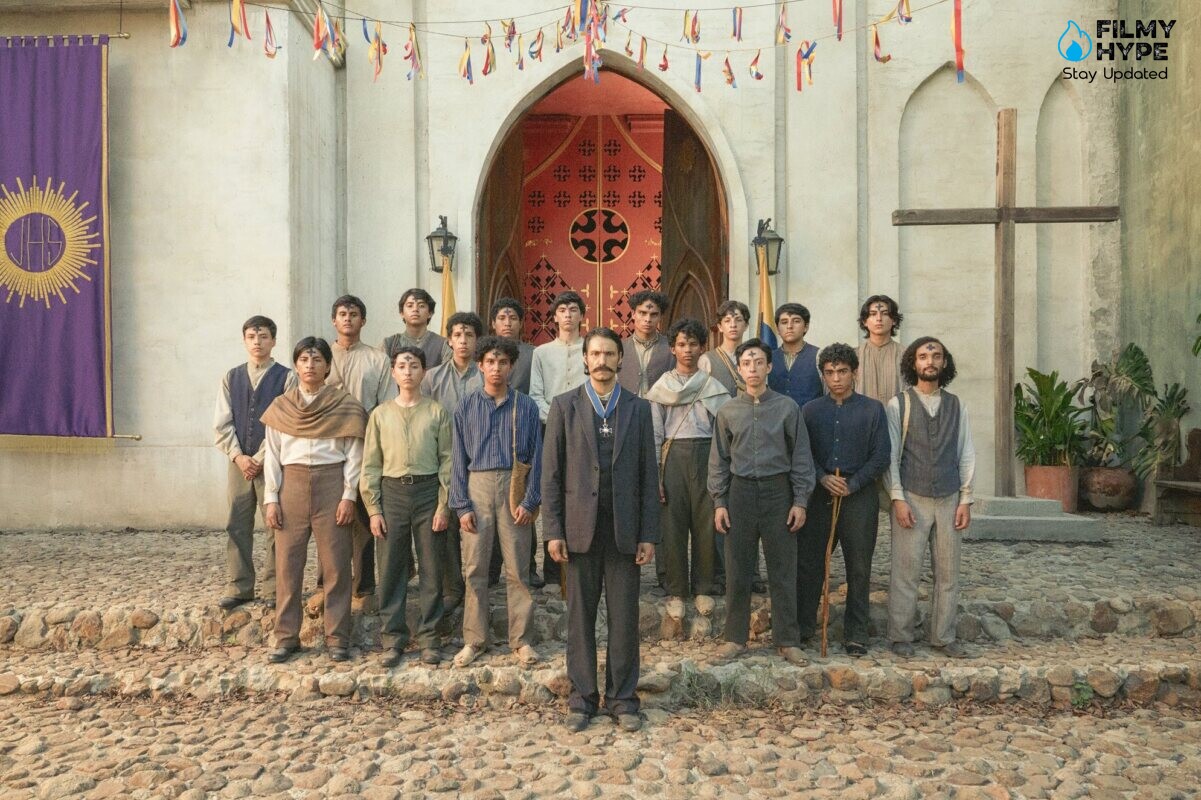
Although it is often men who start wars, build railways, and bring about great transformations, it is women who support the home and cherish family memory. Úrsula Iguarán continues to be the moral and emotional center of history, even as age progressively takes away her strength and autonomy. Marleyda Soto offers an extraordinary test, restoring Úrsula’s old age without erasing her determination. Her body weakens, her sight disappears, and the world around her changes, but the matriarch retains a lucidity that almost all of her descendants lack. She is the one who recognizes the repetition of mistakes, even if she no longer possesses the power necessary to prevent them.
Very different figures emerge next to her. Petra Cotes represents a form of vitality free from convention; Fernanda embodies religious and social repression; Meme experiences the enthusiasm of rebellion and the tragedy of forbidden love. The series finds some of its most successful nuances in the female characters, avoiding treating them only as appendages of the male Buendía. Remedios the Beautiful also retains a radically different strength. Her innocence doesn’t really belong in the world around her, and the famous ascension represents one of the most visually evocative moments of the season. The scene, however, also highlights one of the inevitable limitations of adaptation.
In García Márquez’s writing, impossible events are told as naturally as everyday actions. There is no clear separation between real and fantastic, because both belong to the same experience of the world. It is precisely this fusion that makes magical realism so disorienting and fascinating. The series faithfully reproduces many of these moments: Remedios the Beautiful ascends to heaven, yellow butterflies accompany Mauricio Babylon, premonitions anticipate death, and endless rain falls on Macondo for four years, eleven months, and two days. The quality of the images is indisputable, and some sequences possess extraordinary beauty.
Visual translation, however, inevitably ends up defining what the novel left open. Seeing Remedios physically rise towards the sky makes the event concrete, while on the page, his ascension can retain multiple meanings and remain suspended between miracle, myth, and memory. The narrative voice, which directly takes up many passages of the novel, allows the series to retain at least part of its literary quality. At times, however, the relationship between what is said and what is shown appears redundant. The image illustrates the words without always managing to generate that mysterious third dimension that arose from Márquez’s prose. It is not so much a manufacturing error as the structural limit of any adaptation. The series can show magic and can tell reality, but it struggles more to reproduce the exact point at which the two become indistinguishable.
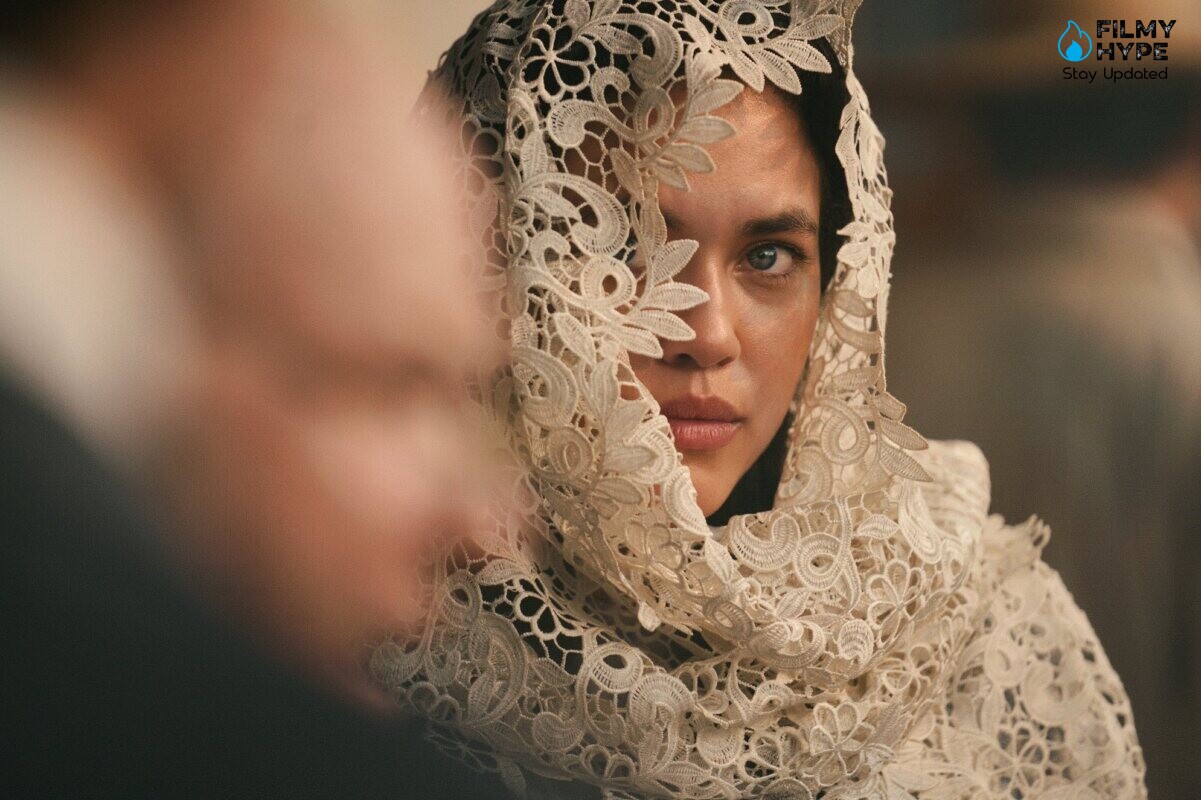
Visually, One Hundred Years of Solitude Part 2 maintains the very high level of the first part. Macondo continues to be a living space, built with impressive care for the sets, costumes, and transformation of the environments. The difference is that the bright colors of the foundation progressively leave room for duller hues. The vegetation, houses, and streets begin to show the signs of time, while the elements coming from outside modify the face of the city. The decay is not only told, but made perceptible through tissues, light, and architecture.
The direction manages to manage the intimate and collective dimensions, moving from the rooms of the Buendía house to the great political transformations without completely losing its emotional thread. The pace remains uneven, especially when the narrative has to go through many years and introduce new characters, but this second part generally appears more direct and less dispersed than the previous one. One Hundred Years of Solitude Part 2 does not resolve the impossibility of completely translating the novel into images, but demonstrates how fertile even an undertaking destined to remain incomplete can be. Fidelity to the source is both the greatest quality and the main limitation of the series: it allows for the preservation of the historical, political, and family complexity of the work, but it makes some passages overloaded and prevents the adaptation from always finding full cinematic autonomy.
This second part, however, manages to give greater cohesion to the story. The decline of the Buendía and that of Macondo proceed together, united by the same inability to learn from the past. Individuals forget their mistakes, families repeat their tragedies, and power even erases massacres, condemning the entire community to relive what it could not remember. Netflix makes a respectful, ambitious adaptation deeply connected to Latin American culture, without simplifying the story to make it more accessible to an international audience. It is not the novel and never could be, but it is one of the rare productions capable of confronting a work considered unrepresentable without reducing it to a succession of events or a simple dynastic drama.
This season continues the stylistic path laid out by the previous one, preserving its many strengths and reiterating its rare dramatic limitations. It presents itself as an exact continuation of the first eight episodes, both in its solid narrative structure and in the sophistication of its photography and production design. Special praise goes to the attention to detail in the costumes, which prove to be extremely effective narrative tools, capable of immediately conveying to the viewer, visually, the distinctive traits of the characters’ inner world. From a purely stylistic perspective, it would be almost inappropriate to describe them as two distinct seasons: during viewing, one senses no break in continuity between the two parts, which seem to have been conceived as a single unit. This perception likely reflects the original intent of directors Laura Mora Ortega and Carlos Moreno, who, despite the absence of the main director of the first part, Alex García López, were able to honor the vision. Ortega and Moreno remained rigorously faithful to the pre-existing directorial and dramaturgical approach, also drawing on the experience gained from directing several episodes in the first block of the series.
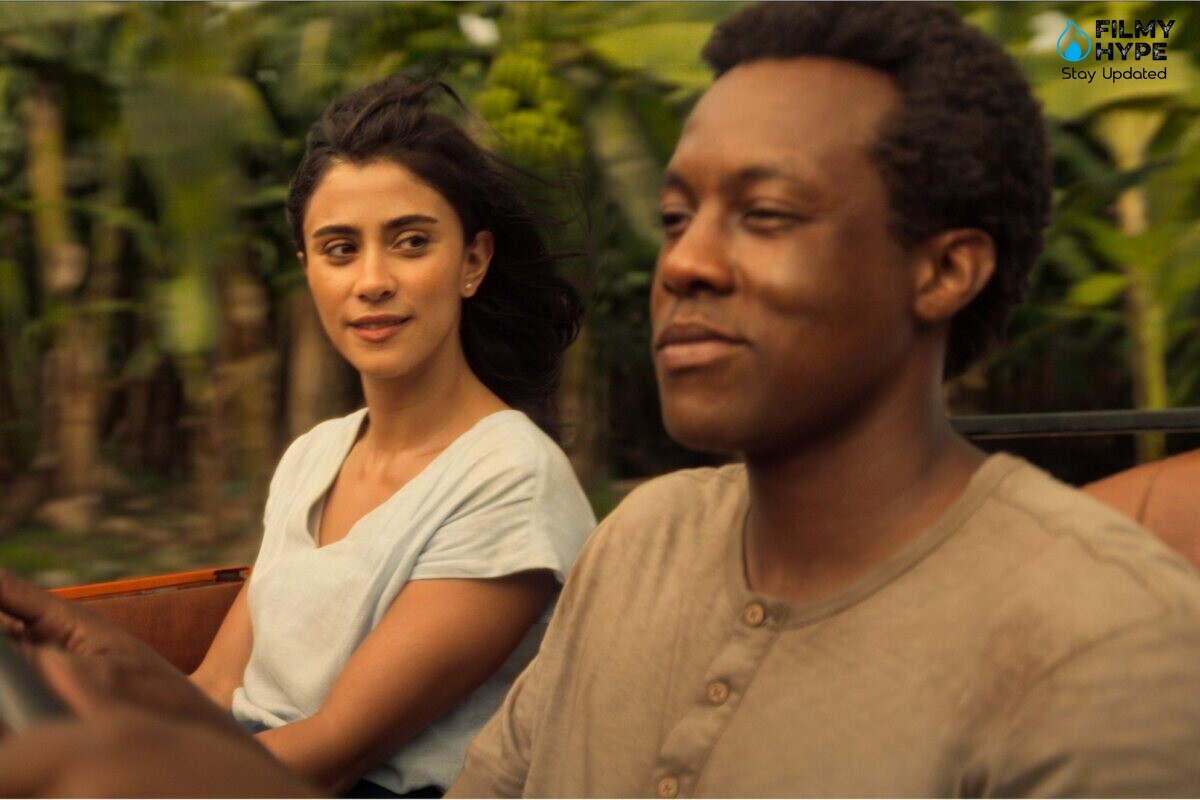
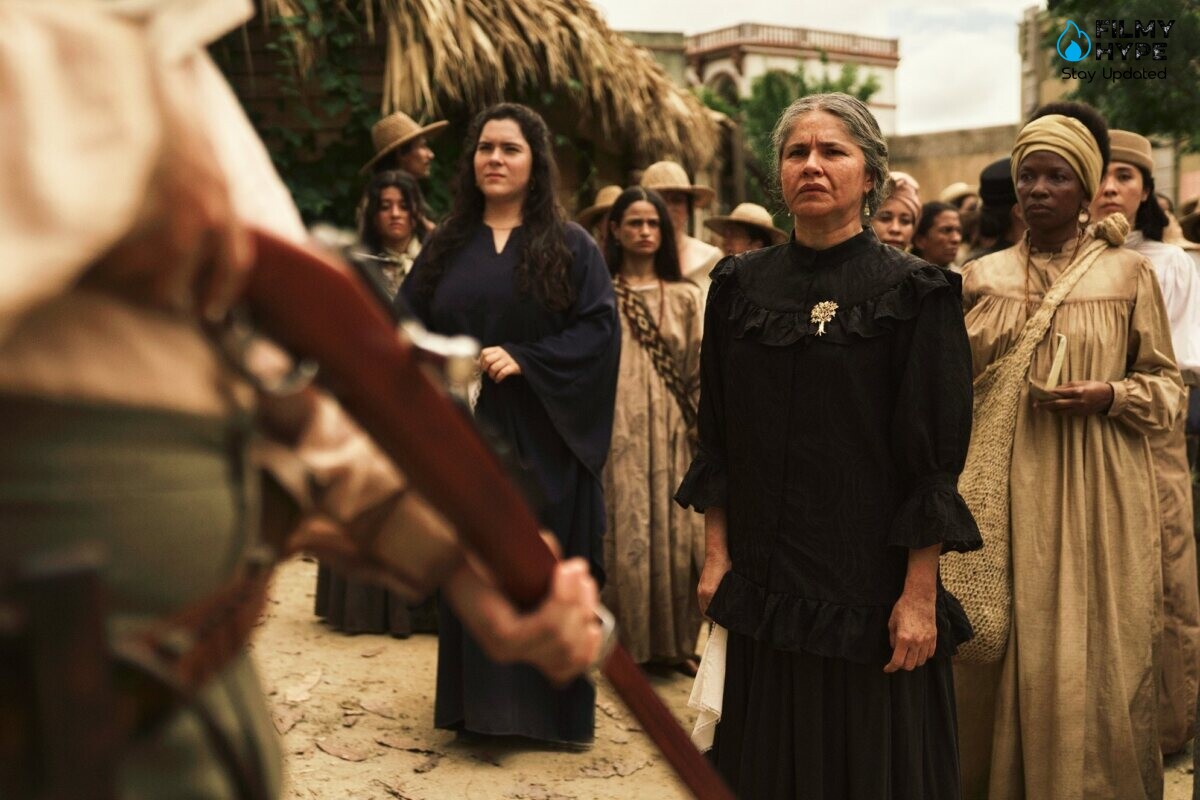
By virtue of its unique form and structure, One Hundred Years of Solitude could be considered, in all respects, a miniseries; it would have been interesting to see it distributed directly as a single narrative, since Part 1 and Part 2 appear to be members of a single dramatic body. In fact, we are faced with a sixteen-episode miniseries that, solely for reasons of distribution strategy and production convenience, has been split into two segments of eight episodes each. Beyond this commercial fragmentation, the coherence of the direction, photography, and all the technical departments is such as to eliminate any perception of separation between the first eight episodes and the subsequent ones: the aesthetics and atmosphere remain unchanged, while only the narrative dynamics evolve. We witness the natural succession of characters, with older generations giving way to new ones, in a cyclical search for one’s place in the world that is typical of family sagas.
Thus, while continuing to follow the Colonel’s adventures, Part 2 outlines, albeit at a markedly brisk pace, the third generation of Buendías, represented by Aureliano José and the seventeen Aurelianos. The latter, however, due to the events dedicated to them and a screenplay that allows them limited scope, occupy a marginal position within the narrative. If the third generation appears as a sort of “dramatic crumb” in the vast family fresco, the fourth generation instead occupies a significant scenic center. This allows the viewer to develop a deep empathy with the new characters, unlike what happened with their predecessors (except José Arcadio, extensively explored in the first season). The beating heart of Part 2 is, in fact, the exploits of this fourth generation, particularly those of Aureliano Segundo and José Arcadio Segundo, twin sons of Santa Sofía De la Piedad and Arcadio Buendía.
These two characters hold the reins of the drama and local history of Macondo, occupying almost the entire narrative space alongside Fernanda del Carpio. The latter, a conservative wife and guardian of rigid traditionalism, assumes an increasingly prominent role as the story progresses, becoming the linchpin of domestic and family conflicts. Within this fourth generation, however, we note a certain contraction in the space dedicated to Remedios la Bella, an undoubtedly magnetic character and the bearer of the magical realism that permeated the first eight episodes. In this second part, this fantastical component seems to fade somewhat, giving way to a narrative tinged with darker tones, marked by decadence and cruelty.
While the story’s core revolves around the stories of Aureliano Segundo, José Arcadio Segundo, and Fernanda del Carpio, the fifth generation also finds significant space. In particular, the tragic narrative arc of Fernanda’s daughter, Renata Remedios (known as Meme), stands out, a character with whom audiences establish an immediate emotional connection. This success is also thanks to the remarkable performance of the young Juanita Molina, who sensitively conveys the inner vibrations of her character, the talented and passionate harpsichord player.
Only in the final epilogue, represented by the eighth episode of the second season, does the narrative devote the necessary space to the analysis of the sixth and seventh generations, focusing on Aureliano Babilonia and, finally, Aureliano Buendía. These last descendants bear the burden of bringing an end to the story of a lineage of revolutionaries and visionary inventors, figures perpetually projected toward a future that, unfortunately, has not guaranteed Macondo’s prosperity. On the contrary, the Buendías, with their relentless desire for evolution and their drive to look beyond the confines of the known, reveal themselves to be, in part, the primary cause of the suffering plaguing their land; it is precisely the openness to the outside world, once coveted by the patriarch, that allows the infiltration of colonialism through the United Fruit Company.
This company, actually founded in 1899 by Minor C. Keith, Bradley Palmer, and Andrew W. Preston, is used as a powerful dramatic device to reveal to the audience, both in the novel and in the series, the predatory nature of these colonialist apparatuses. In sociopolitical terms, the United Fruit Company embodies a veritable cancer for the indigenous populations, representing a system that placed economic profit above the human dignity and health of workers. Reduced to a state of de facto slavery and deprived of fair pay, the workers become the symbol of the human sacrifice required by economic imperialism. The work’s critical stature is deepened by the representation of colonialism not only as a territorial invasion but as a form of identity eradication. The arrival of the multinational transforms Macondo from a place of magical realism to a scene of systematic exploitation, where technological progress—embodied by the railroad—becomes the vehicle for silent and destructive occupation. The series, in this sense, highlights with analytical rigor how colonialism acts through the dehumanization of the worker, transforming the lush Colombian land into a resource to be plundered, leaving behind a legacy of blood and existential anguish that will inexorably mark the decline of the dynasty.
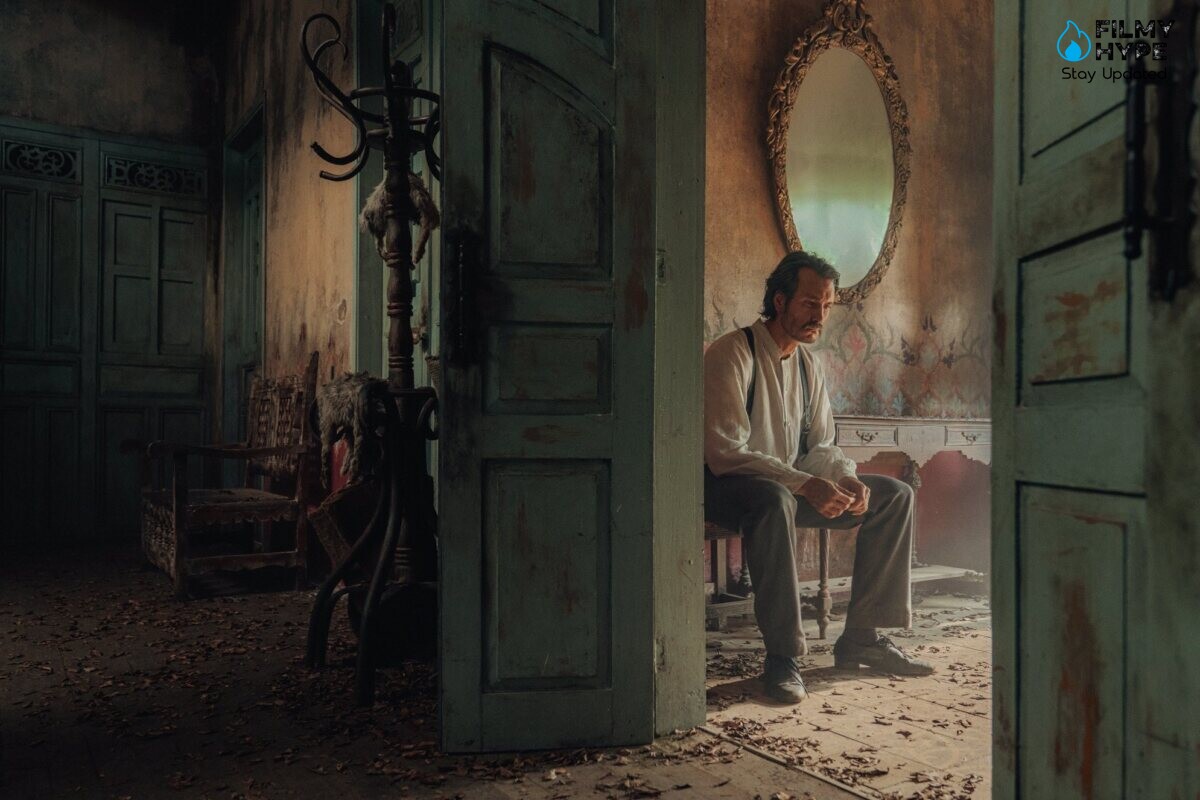
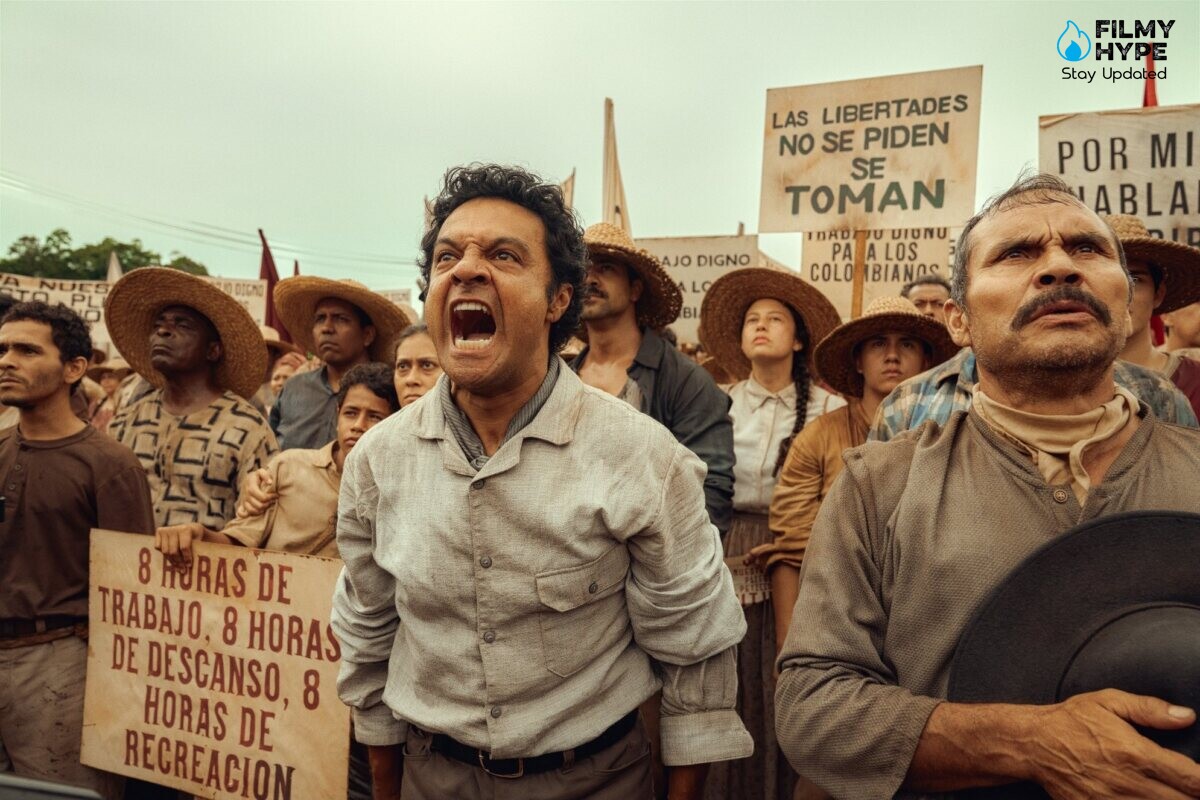
This second part, like the previous one, consistently focuses on the conflictual dialectic between liberals—ideally represented by the Buendías—and conservatives, whose hegemony is embodied here both by the United Fruit Company and by the markedly rigid and traditionalist conduct of Fernanda del Carpio. The narrative traces a turbulent historical period of revolution and bloodshed that profoundly shook Colombia, finding the country at a crucial moment of transformation: a time when, despite the advent of colonialism, the nation was beginning to look toward the future, forging the identity we know today as the Colombian state. If the historiographical element is admirably transposed into the series, albeit with sporadic didactic cadences, a similar effectiveness is found in the staging of the characters, capable of constantly capturing the viewer’s attention even in those characters who appear deliberately more two-dimensional or less in-depth by the writing, as in the case of Amaranta Úrsula and Remedios la Bella.
While the series works, not every aspect of it delivers, as some concerns arise regarding specific structural choices. Specifically, there is an excessively abrupt aging and recasting of characters in the transition from the final episode of the first part to the opening sequence of the second block, where an unexplained time jump seems to sap some of the narrative’s sense of wonder, obliterating the clash that had been foreshadowed in the first season’s finale. In this scenario, almost all the characters undergo a marked chronological metamorphosis, except the Colonel and his mother, who appear to be the only figures not affected by a change in acting; this choice, while justified by the charismatic performances of Claudio Cataño and Marleyda Soto, creates a visual dissonance compared to the abrupt transformations undergone by the other actors, even recognizing that the cast selected for the second block exhibits a good physiognomic affinity with their predecessors.
Within this developmental process, while the transition from adolescence to adulthood occurs with the same naturalness as in the first block, some anomalies are noted in the handling of the characters’ physical continuity. Aureliano Segundo’s sudden weight change is emblematic: he transitions to obesity and then back to a normal weight without this transformation being adequately contextualized or explained by the narrative, leaving the viewer uncertain about the actual time elapsed between these stages. Ultimately, the most significant criticism that can be leveled at the series lies precisely in its less-than-always-clear handling of historical time; in this sense, the inclusion of precise chronological indications through the rather omnipresent narrative voice would have benefited the understanding of audiences less accustomed to Colombian affairs, facilitating the placement of fictional events within the real national context. Beyond these minor critical issues, One Hundred Years of Solitude confirms itself as a work of superior caliber, configuring itself as one of the best serial products ever distributed by Netflix.
One Hundred Years of Solitude Part 2 Review: The Last Words
Ultimately, One Hundred Years of Solitude Part 2 confirms itself as a work of extraordinary aesthetic and narrative value, honoring the complex literary legacy of Gabriel García Márquez. Although there are some critical issues with the time jumps and, at times, too abrupt recasting, the stylistic coherence and powerful performances make the viewing experience immersive and all-encompassing. The tale of Macondo’s decline, overwhelmed by the Buendías’ ambitions and the predatory shadow of colonialism, finds a tragic resolution with great emotional impact. Despite its slight rhythmic imperfections in its treatment of certain generations, the series stands as one of the pinnacles of contemporary TV production, leaving an indelible mark on Netflix’s audiovisual landscape.