
Weapons Movie Review: Horror That Appeals Even to Those Who Don’t Like Horror Films!
Weapons Movie Review: The long-awaited new horror film “Weapons” arrives in cinemas, a film not to be missed that combines the tension and thrill of horror-mystery with biting humor that explodes especially in the second part. The film by Zach Cregger, former creator of Barbarians, stars Josh Brolin as Archer, a father looking for his mysteriously missing son, and Julia Garner, who plays the teacher of the class where all the children disappear and is therefore put under suspicion. Alden Ehrenreich is Cop Paul, Austin Abrams plays Jake, Benedict Wong is Principal Mark, and Amy Madigan is Gladys. The inexplicable disappearance of some children in the American province opens up a mystery that shakes to the core, if one dares to investigate beyond the appearances of chance. From thriller to unbridled terror, Weapons cuts its narrative in two and, in some way, it reflects on the contemporary world of its protagonists, between psychosis and hidden violence, weaknesses and animal instinct. Finding questions and answers in the most classic horror dimension, the feature film signed by Zach Cregger plays with its spectators, giving a precise style to a narrative that continually mixes, while remaining tidy and accessible.
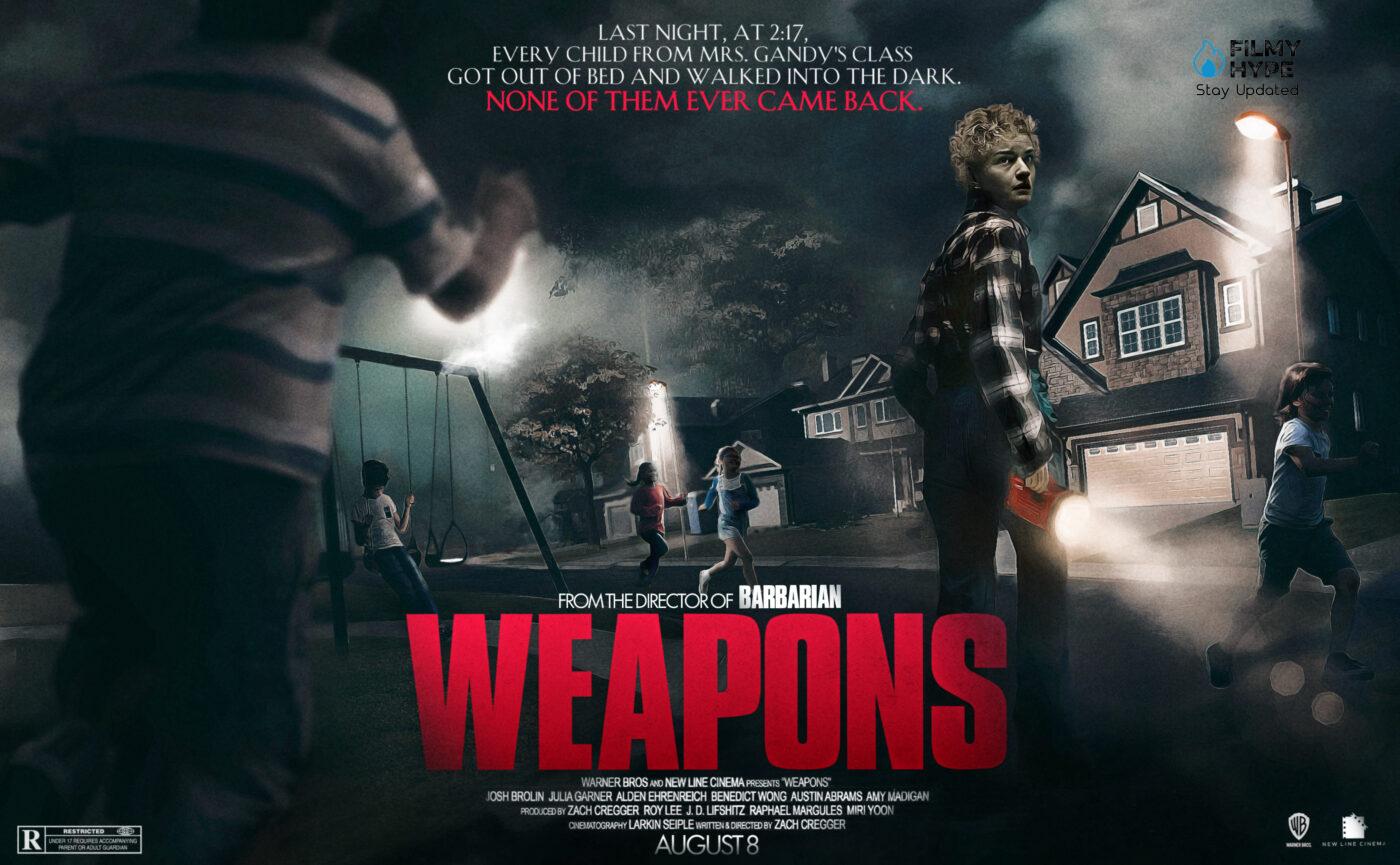
It is a day like any other in the anonymous and quiet town of Maybrook when teacher Justine Gandy enters the classroom and discovers that all the students are absent. All but one, Alex. Inexplicably, at precisely 2:17 am the previous night, all his classmates left their homes, called by an inexplicable attractive force echoing through the darkest night ever. They have simply disappeared since then. Opens like this, Weapons, the horror written and directed by Zach Cregger, a new generation filmmaker, and still maturing, but still not new to directing (Barbarian, of which you can find our review here). Among the cast of the protagonists, the names of standouts are Josh Brolin, Julia Garner, June Raphael, and Alden Ehrenreich. As we will tell you better in our review of Weapons, the film is a horror-thriller that immerses the viewer in grotesque and disturbing sequences, with mysterious and surreal atmospheres very close to Lynch’s cinema. At times, it seems to marry the stylistic signature of Jordan Peele’s direction (Violations), with an unsustainable growing tension, sudden surreal situations that pierce the veil of normal life, and adrenaline-filled action. Many elements enrich an articulated and ambitious work, supported by solid writing in support of a complex narrative arc made up of intertwining stories, main and secondary characters. Everything, though, in Zach Cregger’s small universe it ultimately has an order and a precise location.
Weapons Movie Review: The Story Plot
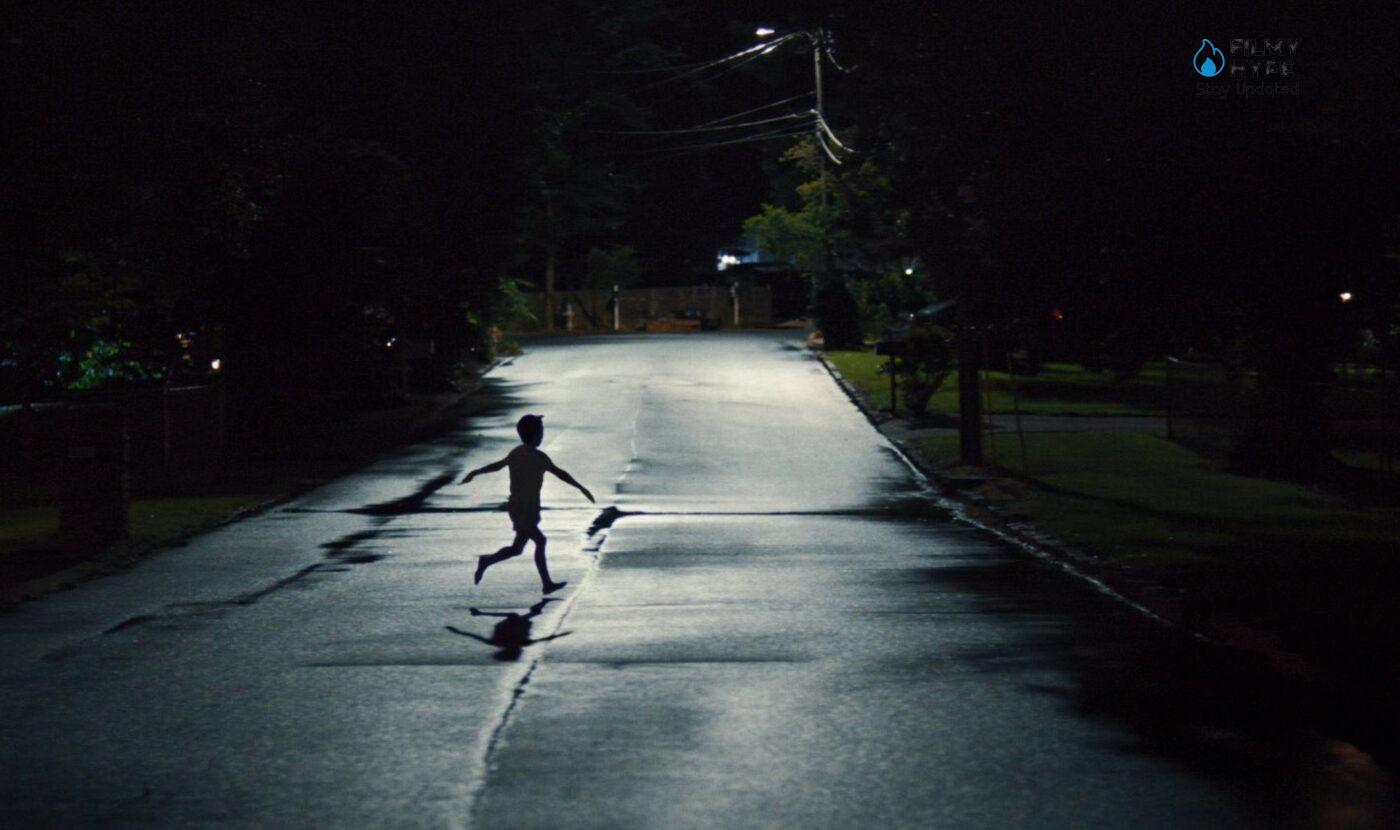
In a quiet, provincial town in the United States, an entire class at the local elementary school disappears. Seventeen children wake up in the middle of the night, at 2:17 a.m., reach the front door, open it, and run into the night. No trace of them remains. The story told in the film begins in the days following this traumatic event. In teacher Justine Gandy’s class, only one student remains, the introverted Alex. The teacher is immediately accused by his parents, led by Archer, who lost his little Matthew on that mysterious night and has been obsessed with finding him ever since. Justine, it turns out, is a woman with a complicated past and prone to bold initiatives, and she sets out to investigate on her own. Her inquiries repeatedly lead her to the house where little Alex lives, which from the outside is impenetrable. Archer, convinced that Justine is somehow responsible for the children’s disappearance, also begins investigating on his own. Meanwhile, disturbing events multiply in the small town, involving figures close to them: a policeman, the principal, and a wayward boy. Until they realize they’re both looking for the same thing and join forces to uncover a terrifying truth.
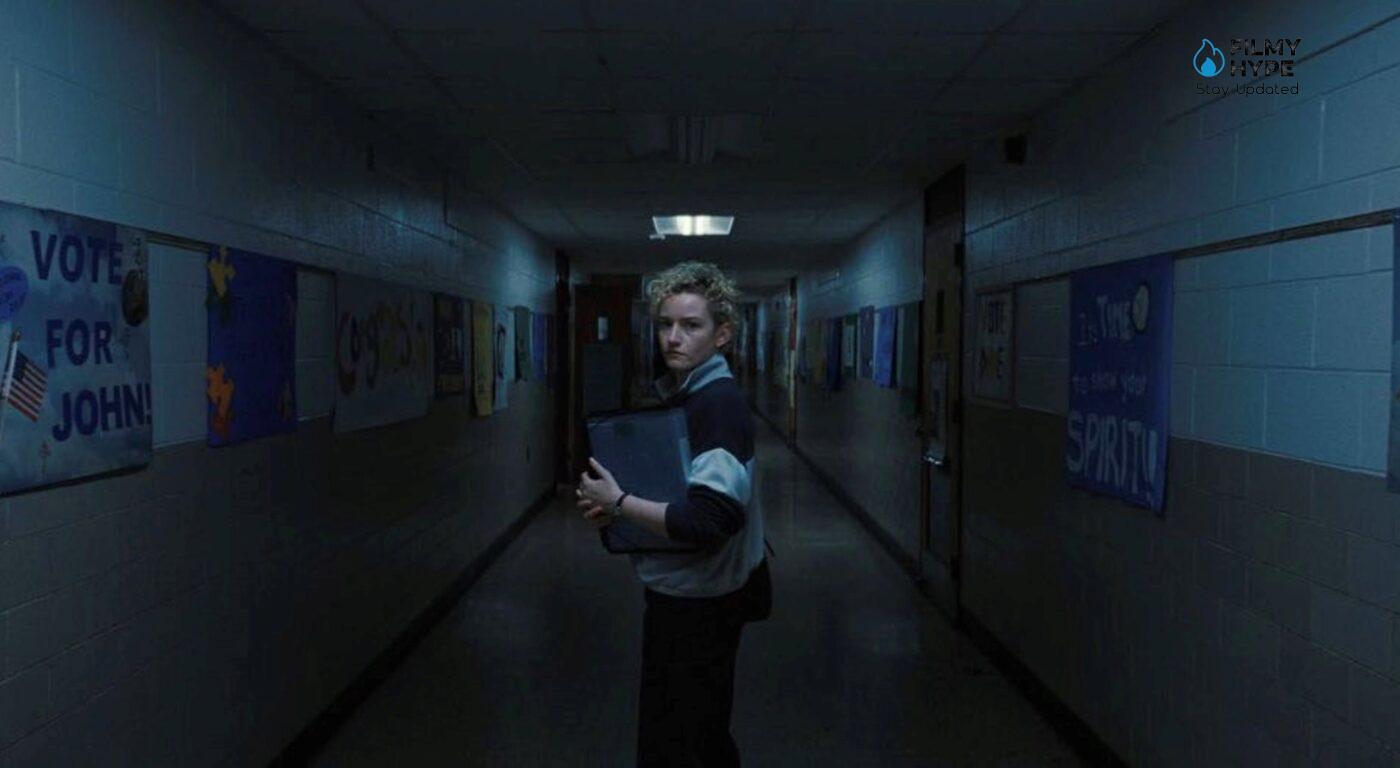
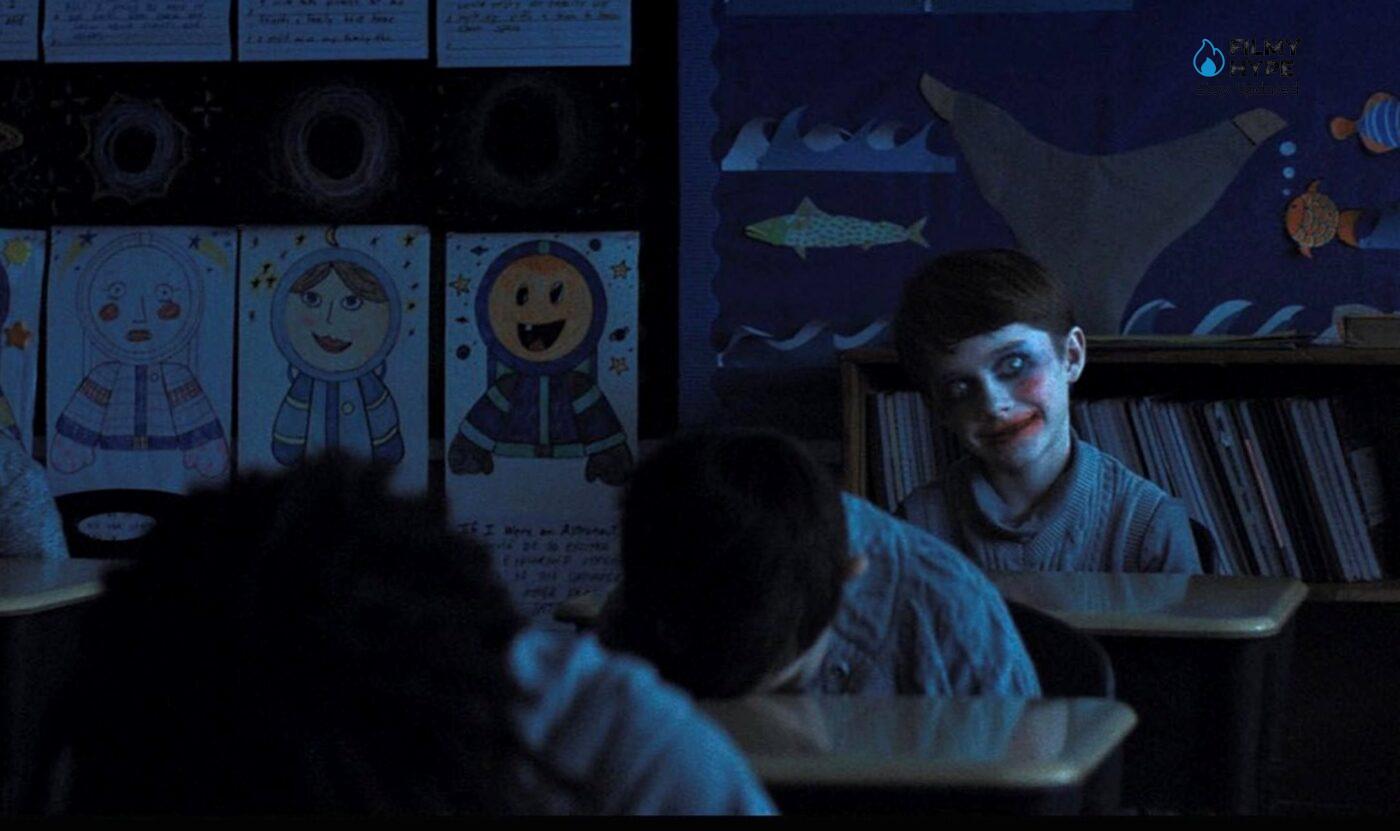
Cregger tells the story like a puzzle, built through self-contained chapters named after the protagonists. Each retraces events from a different perspective, offering fragments of truth that gradually recompose. There is the chapter of Justine, a determined teacher but marked by personal problems, accused by parents looking for a culprit. It follows Archer Graff (Josh Brolin), a desperate father of one of the missing children, ready to turn grief into anger and action. Then, policeman Paul (Alden Ehrenreich), linked to Justine by a complicated relationship, and principal Marcus (Benedict Wong), who tries to manage the school and the collective panic. One of the most intense chapters is that of Alex, who takes us into his suspended daily life, made up of silences and small gestures, and shows us up close the alienating climate of his home: windows covered in newspapers, parents sitting in the dark in a catatonic state. Finally, there is James (Austin Abrams), a drug addict who sees the case as an easy money-making possibility thanks to the promised reward, and who, with his unruly energy, introduces moments of dark humor.
Weapons Movie Review and Analysis
“Weapons” is truly a film not to be missed, and you don’t have to be a horror lover to appreciate it, because it puts so many elements on the table, well mixed and harmonized, that it is much more than a genre film. It is a work that certainly tells a dark story, with mystery features and capable of causing numerous jumps in the chair for spectators, but not only. Weapons is a film that does not skimp on explosions of ferocity and offers all the time that anguished tension destined to explode at any moment, which is what the horror-loving public is looking for, but it is also a film full of references, subtexts, of narrative subtleties and tinged with a humor that makes the entire second part of the narrative even more alienating and powerful. 17 children disappear into the night manipulated by some dark call, there is, on the other side, a mysterious and ferocious puppeteer looking for pure souls, there is a small provincial community where chatter and suspicions run quickly and converge on the “stranger”, the outsider who with her non-conformist life certainly has a lot to hide, there are good people, esteemed members of society and in prestigious positions who all go crazy together, and then there is a house, metaphorically “a house in the woods” to which they bring all the traces and clues of those looking for lost children.
Classic elements of the darkest fairy tales, mixed with the poetics of placid provincial life, in which the most brutal evil acts silently and is hidden. And it doesn’t end here because, in this engaging, disturbing and twisted story, at a certain point comes the element that shuffles the cards, that of bizarreness and sarcasm: a biting humor that explodes in the finale, making a clean sweep of everything that was before in a clash that can also be read as a clash and generational revenge. A surprising film, which manages to be both disturbing and funny. Not to be missed. The initial atmospheres recall the darker pages of Stephen King: a small community threatened by an inexplicable event, relationships worn out by fear and suspicion, powerful symbols such as the empty classroom and the vision of a huge firearm looming in the sky. But, true to what now seems to be his trademark, Cregger gradually abandons linear tension to veer towards the grotesque and horror comedy, introducing eccentric figures and deliberately over-the-top moments.
This change of tone –already present in Barbarian – can come across as divisive: anyone looking for a constant atmosphere of pure terror may find it a flaw, while others will appreciate the courage to take the story into unpredictable and visually excessive territory. Weapons touch on profound and current themes: violence in schools (the very American phenomenon of school massacres), the need to find a scapegoat, and the fragility of community relations in the face of a crisis. The parallels with real tragedies are evident, especially in the image of the empty classroom and the desperate faces of parents. However, the film doesn’t dig all the way: these ideas remain suggestions; they do not become the heart of the narrative. The result is a work that, while not without its flaws, functions as a black fable for adults – a kind of Goosebumps laced with blood and violence – capable of entertaining and surprising more than stimulating deep reflection. The cast is one of the winning cards in the film. Julia Garner outlines an ambiguous character, divided between vulnerability and determination.
Josh Brolin gives an intense and painful interpretation, while Alden Ehrenreich is convincing in the role of a tormented and morally ambiguous policeman. Austin Abrams confirms himself as a talent capable of moving between drama and black comedy, while Cary Christopher, in the role of Alex, manages to make his silence and his gestures minimally full of meaning. Amy Madigan, despite not having a chapter of her own, leaves her mark with an exuberant and disturbing performance. On a technical level, Larkin Seiple’s photography creates rich and evocative images, with fluid camera movements and a use of space that amplifies tension. The soundtrack, written by the Holladay brothers together with Cregger, alternates moments of dark minimalism with sound explosions that make the viewer vibrate. In the concluding act, tension erupts in a whirlwind of violence and chaos. Here, the title Weapons is fully revealed: in a community manipulated by dark forces, anyone, everyday people, or objects, can turn into a weapon. The final explanation narrows it down from the many possibilities imagined during the film, which can disappoint some of the audience.
However, the final sequence, with its frenetic pace and visual choreography, remains one of the most memorable of recent horror cinema. It’s an epilogue that confirms Cregger’s penchant for upsetting the viewer, pushing storytelling beyond the confines of conventional horror. Weapons is a film of details, a work in images that involves first with mystery and immediately afterwards with an enveloping direction, capable of carrying even in the classic of a black fairy tale disguised as a thriller. The investigation, not surprisingly, becomes the perfect pretext not only to talk about the locals, but to sink into the shadows of a horror that also looks beyond logic. Where one would expect a “more scholastic” tale, Weapons mixes the cards on the table, working the underlying narrative material with writing that tends towards the intersection.
There are many faces of this film, many points of view of a feature film that becomes an alternating human account, in which everything moves and touches, even before colliding through horror. In this sense, the film proceeds quickly, keeping suspended thanks to a fundamental credibility that transforms the weaknesses of the protagonists into a pretext for investigation, even internal, but also and above all, contact. Weapons is a choral story, a set of “paths” that meet and are lost, in a game of points of view that do not clash, but continually enrich. The inspiration for works like Magnolia and Fight Club is clear in terms of writing, mixing events in such a way as to gradually discover what is happening. All the appeal of Weapons is not so much in the very identity of the underlying horror, how much in the way it is presented, dragging into a series of questions that do not always find clear answers. Suspension is another fundamental element of the film, which never weighs down events too much with explanations, preferring to invest in an exclusion process that affects the same horror differently.
Such a procedure can occur above all thanks to the various glances involved in an intertwining that looks at reality in many different ways. Zach Cregger’s camera also moves in the same way, always moving and always aligned with the character she is framing. Between sequence shots and Vertigo effect, in some moments Weapons we exercise style but not an end in itself, instead careful to directly communicate the sensations during the event, together with a montage that enhances and rhythms even the most dramatic moments. Following such a look, Weapons meanders in the meanders of an extremely classic and clean, orderly province, insinuating within it the shoots of a dark fairy tale, which draws directly from the lowest imagination of human nature. Beyond the precise reasons behind the mystery, it is once again local society that fills the scene, made up of terror, guilt, and daily torment, but also of anger and ignorance.
Weapons are weaving horror. The director uses a typical model of the most childish and storytelling fear to tell about many different things. In a work through images with many nuances, a dark and hidden, subcutaneous hunger stands out, which affects the entire plot without sparing anyone, giving a story that certainly keeps you in suspense, and which does not require previous explanations. The story is told to us using the point of view of different characters, thus dividing the film into different chapters, certainly not new in both the cinematographic and literary fields. Every time we start with a new character, we take on a different perspective, a different look at the story; time rewinds to an unspecified zero point, and thanks to the change of protagonist, we learn new information that connects us with the stories of the other characters. Everything fits together perfectly, ultimately outlining a single, complex story, full of twists and ramifications which then converge coherently in the same ending.
The characters and their point of view are the distinctive feature (and more successful) than Cregger’s work, net of all those technicalities necessary to have a definitive hold on the public. The protagonists of Weapons are deep, complex, dark, full of fears, and so human that they immediately channel the empathy of the viewer (another fundamental element). The more time passes, the more we understand that there is so much negativity in the seemingly quiet and anonymous Maybrook. Many of the protagonists are not at peace with themselves and their emotions. Some of them are pervaded by that darkness that we find in the citizens of that fictitious Derry of Stephen King (IT). There is little room in the film for joyful emotions; even love is in a corrupt light. Let’s conclude our review of Weapons by summarizing in a few lines our experience at the film preview. What can I say… We sat down with very few expectations and instead went out with that feeling of having seen something tremendously well done, but above all, fun, probably among the best horror films of the year. But comparisons aside, there is a lot in Weapons: story, structure, characters, direction, splatter, action, twists, fun, and fast pace.
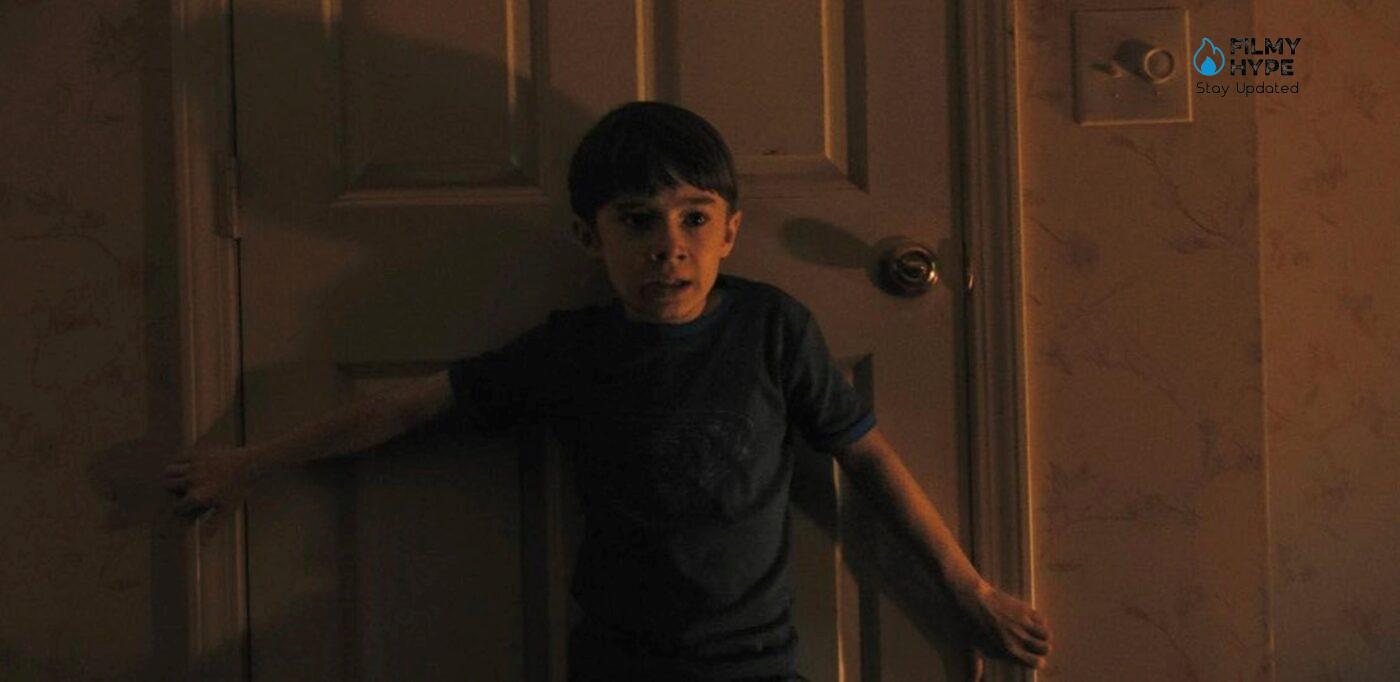
But above all, a crazy tension which, combined with the mysterious events, will lead the viewer to fix his eyes on the screen without getting bored, keeping his breath suspended for a good part of the footage. The numerous shots that followed (with which Kubrick taught in Shining), in addition to the above tracking shots, give us the feeling that something can always come out around the corner, or even worse, behind us. The downside of such an authorial film is that it may not appeal to everyone. You have to be a horror lover, the real one. Being passionate about thrillers and detective stories is not enough; there are too many splatter or conceptually disturbing elements that would ruin the vision. Those who do not see horror would have serious difficulty digesting the narrative structure of Weapons. As far as we are concerned, however, we performed with flying colors. Zach Cregger, do we happen to have a new master of suspense?
Weapons Movie Review: The Last Words
Weapons is a choral horror, layered and full of points of view, which builds a narrative interlocking between mystery, tension, and dark fairy tale suggestions. Through fragmented but coherent writing and always moving direction, Zach Cregger’s film explores the deepest fears of the human soul, turning the disappearance of some children into a pretext to investigate society, its neuroses, and its silences. Between psychological horror, social criticism, and enveloping staging, the film gives up clear explanations to make room for disturbance, building an experience that disturbs, involves, and remains under the skin. Weapons by Zach Cregger is an ensemble horror that starts as a Stephen King mystery and turns into a grotesque and camp nightmare. Charming and well-shot, he prefers to entertain rather than dig deep into his themes, while still delivering an intense and unpredictable viewing experience.
Cast: Julia Garner, Josh Brolin, Alden Ehrenreich, Austin Abrams, Cary Christopher, Benedict Wong, Amy Madigan, Toby Huss, June Diane Raphael, Whitmer Thomas, Callie Schuttera, Justin Long
Directed: Zach Cregger
Filmyhype.com Ratings: 4/5 (four stars)



One Comment