
Weapons Movie Ending Explained: What is the Truth Behind the Disappearance of the Children?
Weapons Movie Ending Explained: “Weapons” is a film by Zach Cregger that has received almost unanimous acclaim from critics, which makes it one of the essential productions of terror to enjoy on the big screen. So, if you’ve already seen it, perhaps you were left with some doubts about its outcome. Therefore, in the following lines, I present to you your ending explained. After the success of Barbarian, it captures the viewer from the first scene with a mystery as simple to enunciate as it is disturbing to explain. On a night like any other, at 2:17 in the morning, seventeen children from the same third-grade class abandon their homes without saying a word, cross the streets of little Maybrook, and disappear into the dark. No one will see them again, at least for weeks. The only one who does not join this silent procession is Alex Lilly, a boy who, from that moment, becomes the center of suspicion and morbid attention. For the community, and in particular for Archer Graff – father of little Matthew, one of the missing children – the person who must have answers is their teacher, Justine Gandy. But what begins as a desperate search becomes, progressively, a nightmare imbued with supernatural horror.
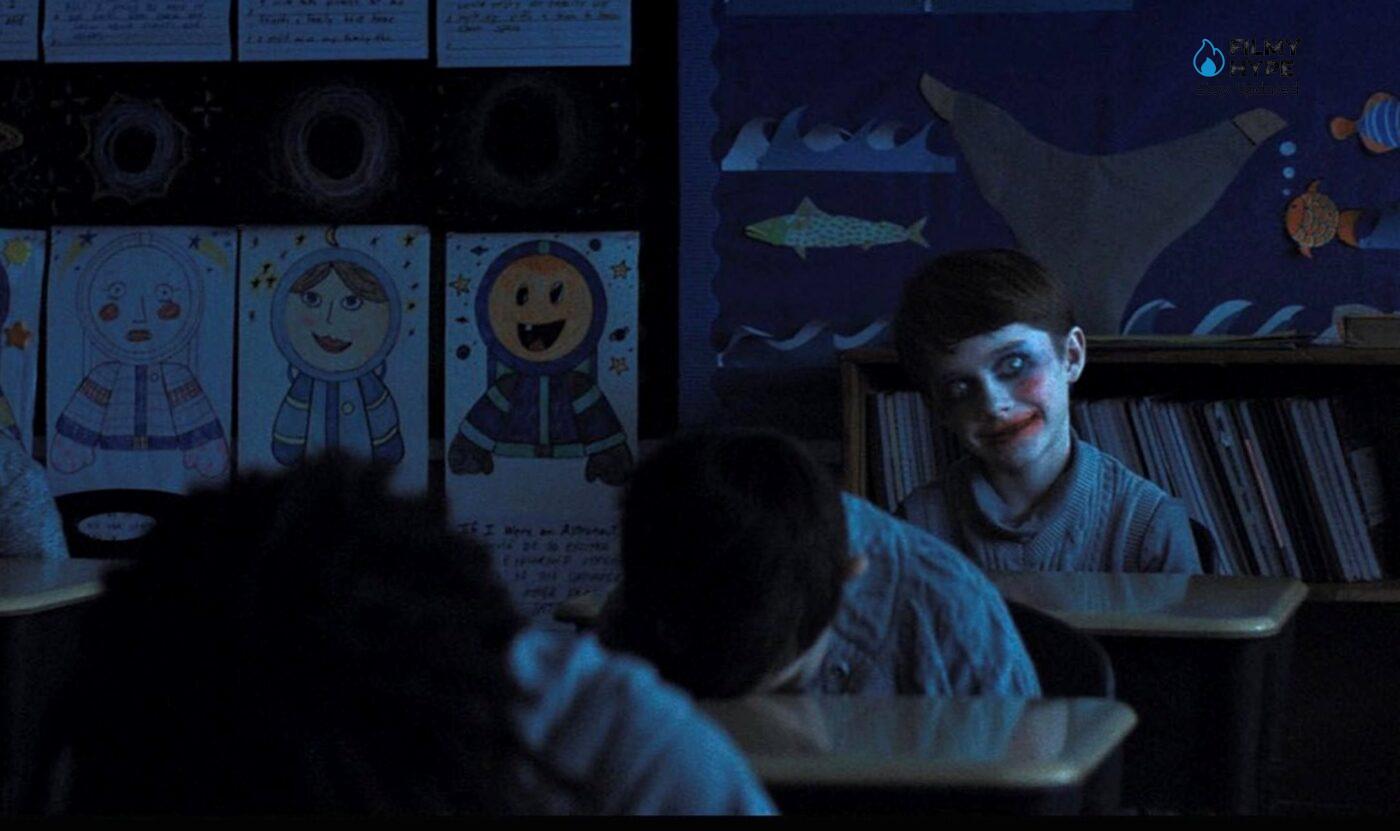
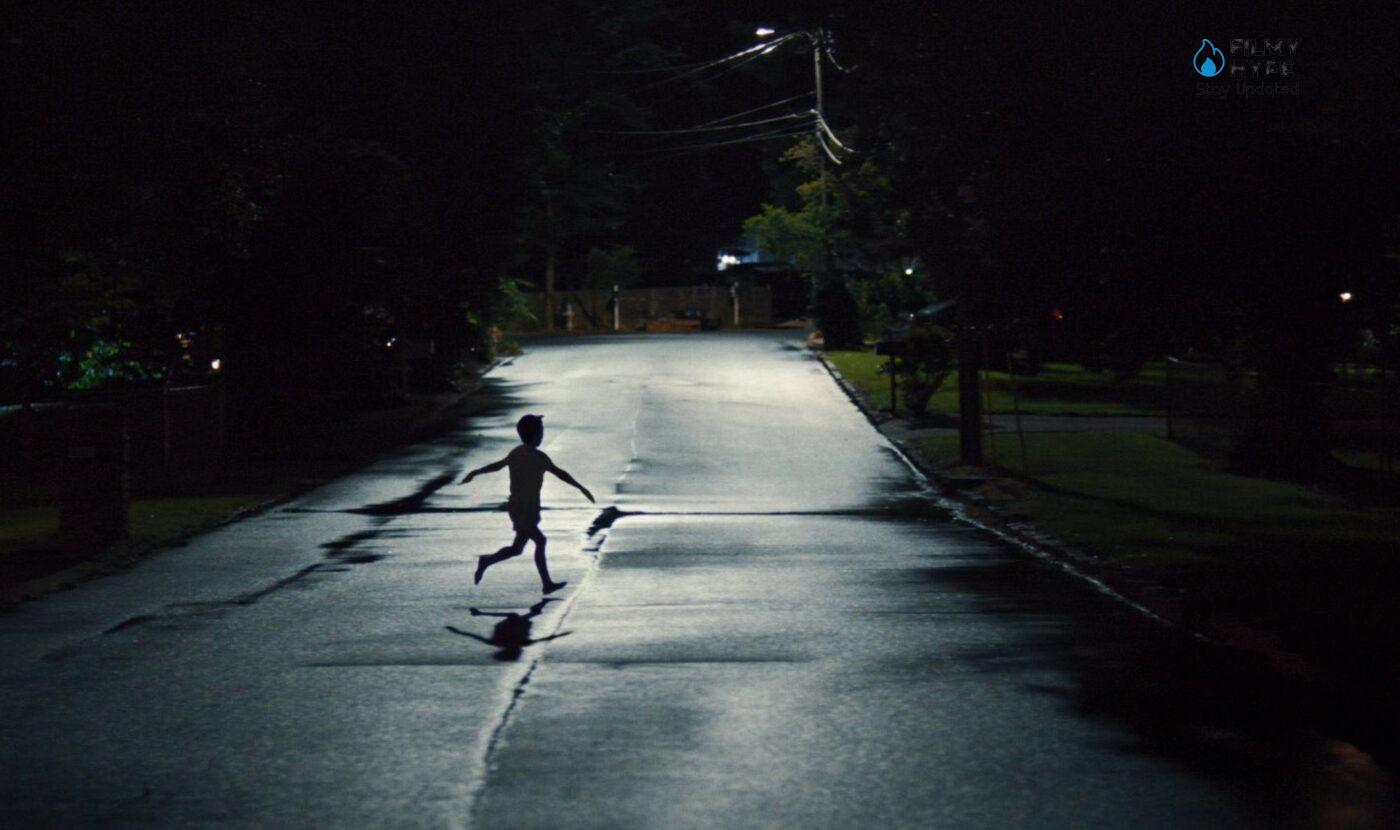
Weapons tell the story of a town that finds itself faced with the inexplicable mystery of the disappearance of 17 children from an elementary class of 18 pupils: one night, suddenly, 17 out of 18 children got out of their bed at 2:17 am, went out into the street and disappeared into the night, all running in the same strange way. The narrative, through a revealed screenplay, unfolds in different chapters, each told from the point of view of one of the protagonists: the teacher of the missing children’s class, the father of one of the vanished children, a local policeman, a stray street criminal who had just arrived in town, the school principal and, finally, the 18th child, the only one left in his class.
Weapons Movie Ending Explained: Why Did the Children Disappear?
Alex Lilly, the only child left in the class, is interrogated after his classmates disappear, but he says he knows nothing, is not aware of any games or plans between the children. In the absence of answers, suspicions fall on teacher Gandy (Julia Garner), whom a father even accuses of being a witch. At first, no one knows what happened to the children or why they ran like this, and many theories begin to form, but none come close to the truth. What happened? Things begin to become clearer when a woman named Gladys appears, who claims to be Alex’s aunt, who is taking care of him because his parents are sick.
The film is told through the perspective of various characters, and that is what helps put the puzzle together. Little by little, The time of disappearance (which is based on real events and urban legends), he explains who Gladys is and how she connects with the disappearance of children. The mysterious woman who wears red wigs and excessive makeup that gives her a terrifying appearance is the aunt of Alex’s mother, the only child who did not disappear, but she is also a kind of witch who uses branches from a small tree, a little blood, and objects from his victims to perform mind control rituals.
The Reason Behind the Kidnapping
Alex’s story reveals that Gladys arrives home in a nearly dying state, and soon after, her parents are reduced to a vegetative existence as she regains strength. There is no mystery: it steals their vital energy. When that source runs out, he extends his hunt to Alex’s entire class using a synchronized spell at 2:17 a.m. He holds them motionless in the basement, fed by the boy himself to keep them alive while the witch slowly consumes them. After his death, a childish voice, two years later, reports that the children returned to school, although some took months to speak, while the parents remain hospitalized, fed as if they were still captives. Physical and emotional damage is not erased by simply defeating the enemy.
Gladys’ True Identity
The kinship that Gladys proclaims is deliberately ambiguous: sometimes Alex’s “aunt”, sometimes her mother’s “aunt”. Archaic references, such as calling a disease “consumption”, suggest that it has lived long before it appears. His strategy is always the same: infiltrate as a relative to gain access to objects and emotional ties that allow him to fix his curses.
Some Are Weapons and Others Are Victims
The Gladys ritual has two possible outcomes: when a personal object is taken from a person, this person is left with less and under Gladys’ complete control. When a little of a person’s hair is taken, it is marked to die, since Gladys’ “soldiers” attack and do not stop until they achieve their goal. This is how Gladys controls Alex’s parents (whom she can also force to hurt themselves), the children, teacher Gandy’s boss, and even police officer Paul, after he enters her house.
In the case of children, Gladys is a nurse, so she asks Alex to bring her items from her classmates to help her heal, and then uses those items to perform a ritual, where she controls the minds of the children. Children, who run out of their houses and head to Alex’s, where they are hidden in the basement. To keep them alive, Gladys forces Alex to feed them. Those children don’t feel, and they don’t think, they don’t speak, and they don’t move, they become Weapons, and they only activate once Gladys performs the ritual with the hair of people he wants to eliminate, or when he gives them an order. In English, the film is named after Weapons, and we also see Archer, the children’s father, have a vision in which he sees a giant rifle floating above his house, and these two elements are references to what happens with children, who lose the ability to think or make decisions, and they only follow the orders of a brutal woman.
The Meaning of the Ending and Its Message
The film portrays the town’s adults as negligent or dangerous, and Gladys as their monstrous exaggeration: a predator who overrides wills to survive. The chapter structure shows how small acts of selfishness or indifference open the door to that kind of horror. The final shot, with Matthew’s eyes, leaves in suspense whether Archer has recovered his son as is or just his body. The message goes deep: ignored suffering transforms and returns, and anyone, even a child, can be turned into a weapon.
A Brutal But Revealing Closing
Alex breaks the cycle using the same witch rules, and the final chase is as violent as it is liberating. However, victory leaves behind irrecoverable parents, fractured childhoods, and a community more comfortable burying the truth than facing it. That is the macabre irony that *Weapons* poses: the real monster is created in routine and in what we prefer not to look at.