
Tron: Ares Review: We Didn’t Expect All This Enjoyment
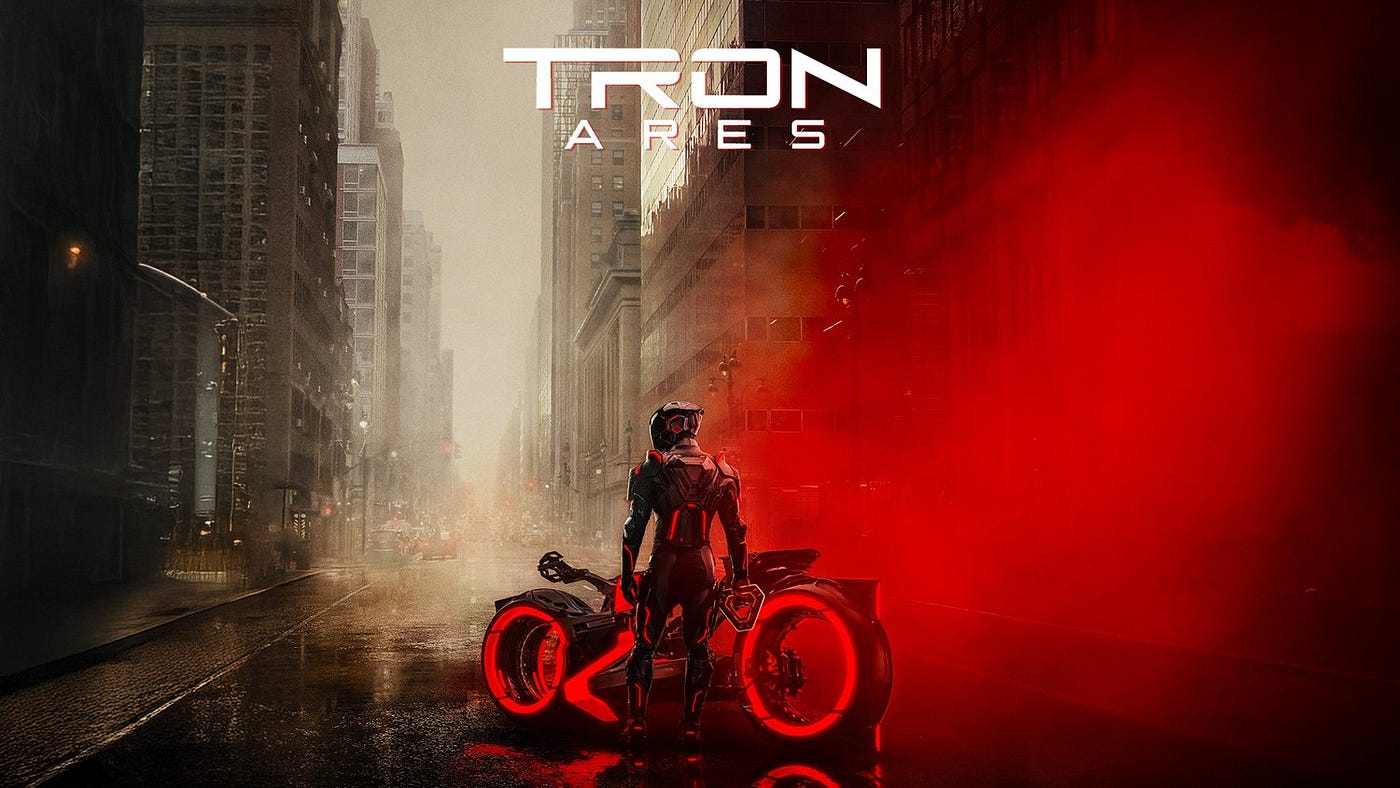
Tron: Ares Review: Filmed in IMAX and directed by Joachim Rønning, Tron: Ares marks the return of one of the most iconic sagas of contemporary science fiction. Jared Leto plays the role of Ares, a program created by the Dillinger system, intended to embody the idea of an artificial intelligence capable of feeling emotions. Next to him, Greta Lee (Eve Kim), Evan Peters (Julian Dillinger), Gillian Anderson (Elisabeth Dillinger), and Jodie Turner-Smith (Athena) damage life to a cast in balance between new generations and references to the 1982 classic. The question that drives the film is so simple, how universal: What is the future of AI? Is it a promise of progress or a threat to humanity? In Hollywood, you never really throw anything away. It is the country where, deep down, dreams are never allowed to die, and it so happens that sagas to cannibalize, such as that of Tron, who returns to the cinema from 9 October with, often, emerge from nowhere “Tron: Ares”. The first film dates back over forty years, to 1982, it starred Jeff Bridges, and at the time, it was a fairly revolutionary work for how he imagined the advent of the internet and virtual in full eighties aesthetics, among noise, sound bites, and neon lights.
The second chapter, a direct sequel to the original, arrived in the middle of the 2000s, in 2010, with an update on the theme of its predecessor and directed by Joseph Kosinski, who would later also be behind Top Gun: Maverick. Tron: Ares is different. It seems to accept the fact that today, imagining the future is an almost impossible undertaking, surrounded as we are by a technological innovation that surpasses us by ten hundred thousand steps. Then he looks to the present, spins, and picks up in the past of the saga, finding his matrix: being cool. It’s a really strange franchise embodied by Tron, who, with Ares it achieves enviable trilogy status over forty years after its founding chapter, but it’s hard to define a real franchise. Not so much because Tron’s three films lack an aesthetic and construction of the sci-fi world in which the coherent and relatable story is set: in fact, it is exactly the opposite. Ares, for example, not only starts where the Tron: Legacy baton left him in 2010, making the design of his vehicles and the Grid even more stylish, even more seductive and refined (there is a monumental work of visual effects behind it, as evidenced by the endless credits).
Tron: Ares Review: The Story Plot
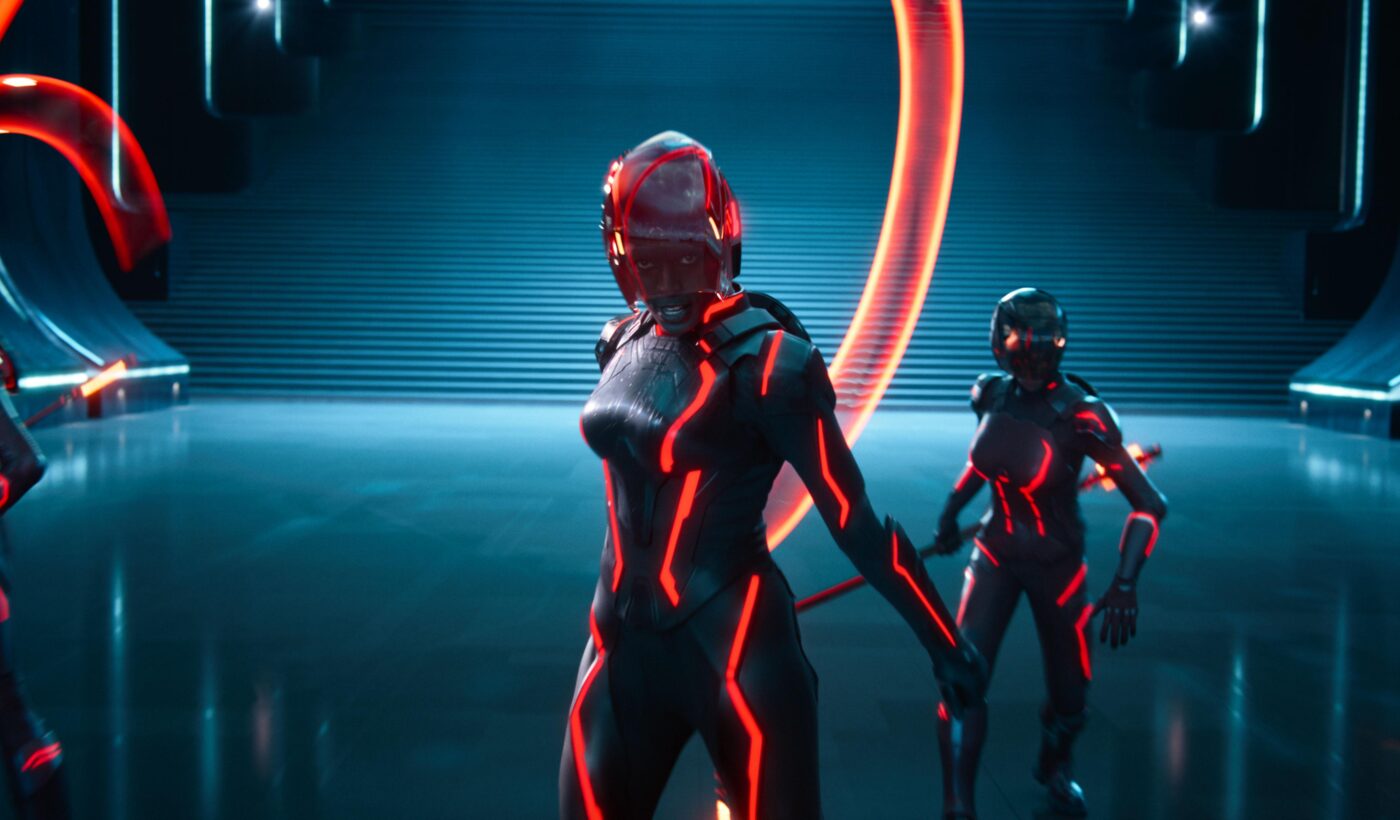
Immersed in CEOs, cloud, AI, and a whole bevy of tech terms with which we have now willy-nilly become familiar, Tron: Ares is not interested in inventing anything for real. The plot (with screenplay by Jesse Wigutow) won’t seem very original to you. On either side are Eve Kim (the Greta Lee of Past Lives), ambitious but enlightened CEO of ENCOM, an IT development company, and Julian Dillinger (Evan Peters), scion of Dillinger Systems, another IT company but rival of ENCOM, a very classic baby boy thirsting for power with eye-catching tattoos attached to plastering his arms and a mother (Gillian Anderson) always ready to beat him. Both rival each other in the search for the Permanence code, a hidden string of code that will allow those who gain access to materialize programs from their respective virtual worlds in the physical world and permanently. In short, imagine them both in the effort to develop a super 3D printer. Eve to cure the world’s ills, Julian to develop super weapons. And speaking of super weapons, at its core is Jared Leto’s Ares, a highly sophisticated sentient program created by Dillinger as an instrument of offense. In short, we move by clear identity. The blues are the good guys, the reds are the bad guys, and a hybrid identity passes between the two poles, namely Ares, a program that turns out to be malfunctioning and that ends up asking questions about the meaning of its programming and also that of life. First, he follows the orders of one, then realizes that perhaps he prefers the philosophy of the other.
Tron: Ares Review and Analysis
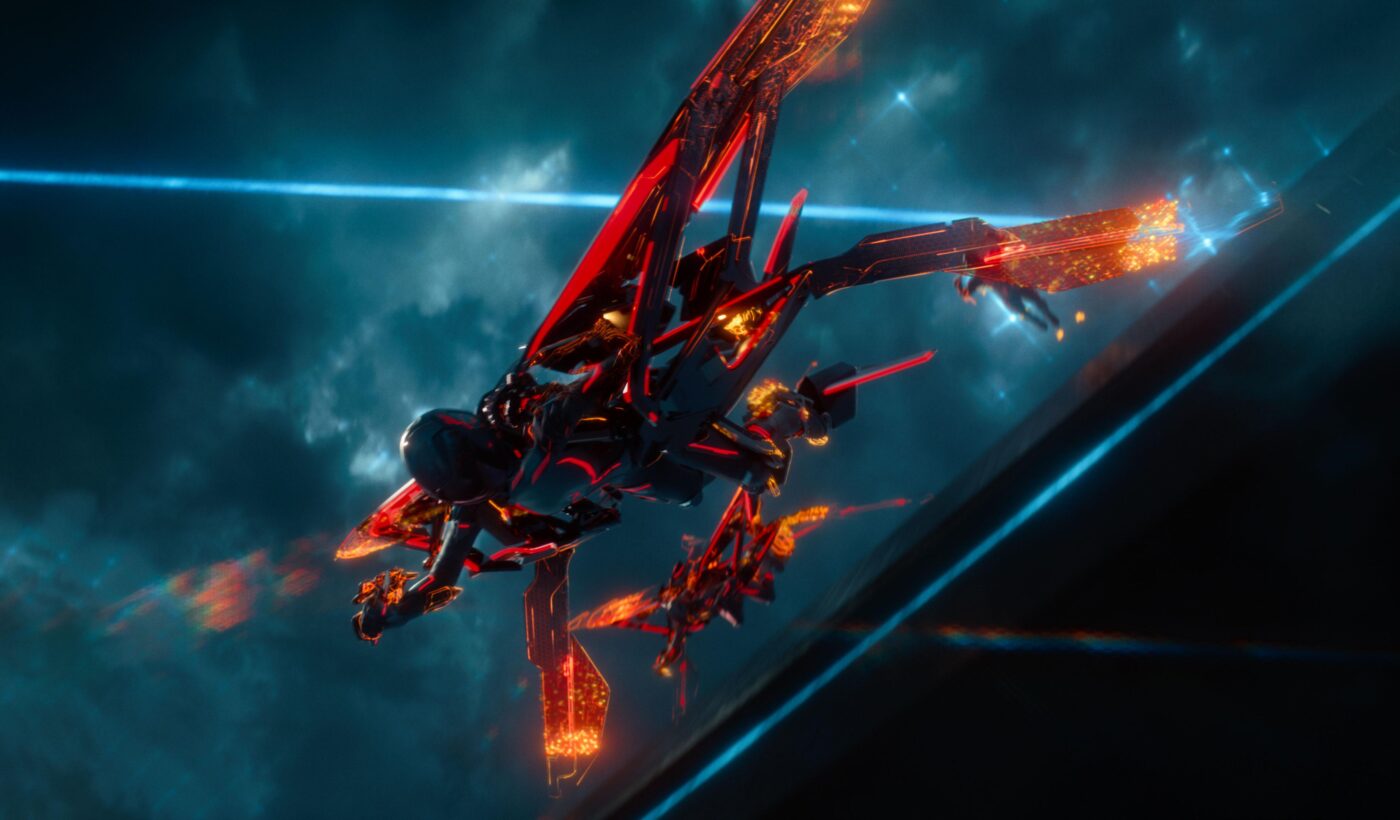
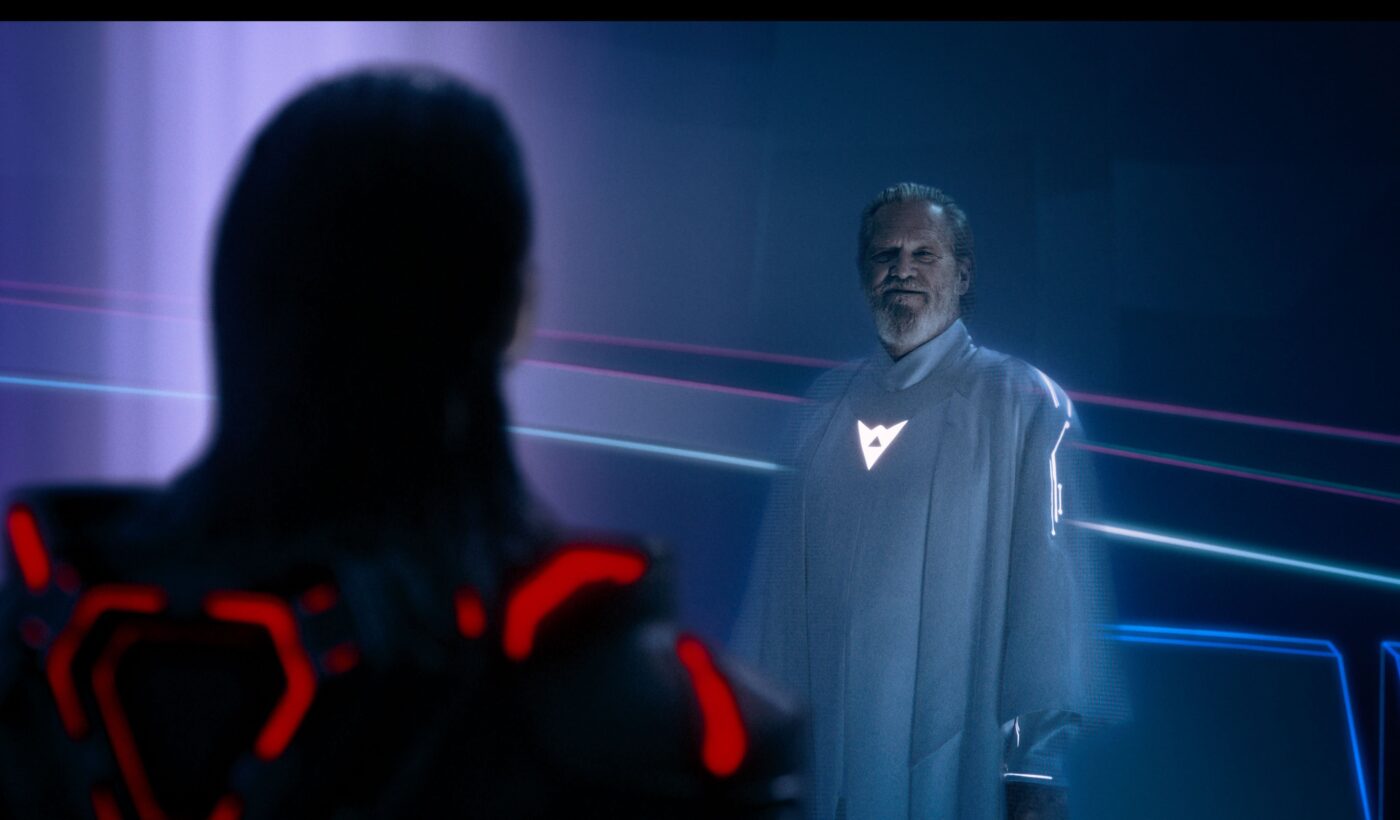
Between materializations and de-resolutions, that is, the fairly bloody way in which programs from the real world disintegrate into the virtual, and between metamorphoses of present and past (needless to say, Jeff Bridges also returns in a digital version), director Joachim Røning takes the legacy of the franchise, extracts it, and wallows in it. The maximum reflective mechanism on which it pushes is to reverse the trajectories: this time, it is the artificial intelligences that arrive between us; it is not us who are entering their world. From Tron: Ares, you must then let yourself be carried away. It is a playful film, it is a stroboscope that rotates frenetically, where the spy is always contrasted with an electric shock with which to make his gaze gloat. We haven’t seen such astonishing visual effects in a while (real Marvel?), with some solutions capable of turning heads. Two noteworthy in the two worlds into which the film splits: the spectacular sequence of escape inside the Grid, that is, the techno-acid virtual environment in which, so to speak, the programs live, and then a cat and mouse hunt along the night of a city entirely reflected in glass buildings, on which at a certain point the red trails of some drones descend as if they were the filaments of a chip (what an image!).
But that’s not all. In the film, we run away and chase each other continuously, and to mark the heart-pounding rhythms, there is the electronic musical soundtrack of Nine Inch Nails, namely Trent Reznor and Atticus Ross, who take up the baton from Daft Punk, behind that of Tron Legacy. The two, both double Oscar winners for their work on The Social Network and Soul, as well as snubbed at awards for the wonderful soundtrack of Challengers, are a guarantee of added value (not surprisingly, they appear as executive producers), and in fact, they make half the enjoyment. That from Tron: Ares, we didn’t expect. Aesthetically, Tron: Ares is a visual experience of an extremely high level. The sequences shot in IMAX enhance the photography by Jeff Cronenweth, which melts the neon aesthetic of the original film with a more contemporary visual language. The design of digital worlds, light vehicles, and combat arenas keeps the saga’s legacy alive, updating it to the languages of today’s cinema. The soundtrack is God’s Nine Inch Nails, with Trent Reznor and Atticus Ross, who curate music, arrangement, and production, amplifying the feeling of being immersed in a realistic and engaging digital world.
If, from a technical point of view, Tron: Ares it’s impeccable, the narrative isn’t; he always manages to keep up. The plot follows already-known patterns: the discovery of power, corruption, rebellion, and the taking of consciousness. Everything is built with precision, but without real shots scene: What is expected from the beginning of the film happens. Maybe it’s the price you pay to keep the story accessible to a wide audience. However, the narrative simplicity allows the film to clearly convey a universal message on risks and AI potential. With his passion for the ’80s, references to Depeche Mode and digital aesthetics increasingly refined, Tron: Ares manages to melt nostalgia and modernity. It is not a revolution, but a confirmation: the world of Tron is still able to speak to the present, facing lightly, profound themes such as cybersecurity, the ethics of coding, and the fragility of artificial consciousness.
And yet Tron: Ares struggles to reinforce the idea that there is a Tron franchise and that someone cares about it, instead giving the impression that it is dusted off like a program saved on an old floppy disk whenever needed, but for practical reasons, without real narrative reasons, and above all, without the minimum emotional transport. Starting with who Ares produces, finances, and distributes it, you don’t feel passion behind the project, except in theory. In itself, it is not a flaw; on the contrary, in recent years, the evolution of directors, screenwriters, and producers into enthusiasts in creative control has done a lot of damage. Ares, however, lacks lifeblood, communicative urgencies, leaving behind in the viewer’s mind a luminous trail that vanishes as he leaves the room. Tron: Ares also finds himself having to dust off very dusty memories: it comes fifteen years after the previous one, which he references in the long initial recap and the final mid credit scene, then focusing on brand new characters starting with heroin Greta Lee, suspended between the role of forward-thinking CEO, capable hacker and potential action heroine She is the head of ENCOM when the company is about to develop a revolutionary technology, which brings into the world of Tron not a futuristic gaming dream, but the technological anxieties of the present: artificial intelligence and the potential that it can become sentient and be weaponized by some unscrupulous company.

Embodying a defense software called Ares is Jared Leto, in his perfect way, with his person and his appearance never damaged by the passage of time, to interpret software that has become corporeal, entered the real world. This is the reversal on which Tron’s main innovation is based: this time it’s the world of the Grid that colonizes reality, which cuts fast aboard his futuristic motorbikes as they speed through the city on their luminous trails. The Norwegian goes around these long night trips through the streets of an American metropolis, Joachim Rønning, which cites the inevitable side-slip of Akira’s motorcycle, which pays homage to the first Tron, and generally gives sequences of an undeniable, but empty, sci-fi elegance. There are two problems: characters are like software, well programmed to perform the functions of a minimal and very specious story, but completely incapable of complex emotions. What’s more, the film suffers from that Pacific Rim effect in which to build a romantic tension between its protagonists, only to then ignore it altogether, leaving them hanging there in the finale, looking and questioning whether perhaps… With the aggravating circumstance, then that this much-suggested but never-explored relationship would also be an interesting plot twist that the film blatantly needs: a human programmer who falls in love with software developed by the rival company.
But no, Tron: Ares continues in a direction that moves from dystopia to utopia, without emotional impact, without any impact upon closer inspection, relying totally on the fact of being beautiful, but not caring about being empty. A surface beauty made up of many high-quality elements, that it is sometimes turns out to be a double-edged sword: just think of the much-publicized soundtrack signed by NIN. It is not surprising that the aforementioned is enthralling and capable of amplifying the atmosphere of the film, but such an enthralling beat, such a protagonist, is not easy to manage. In short, not everyone has the personality and charisma of a Luca Guadagnino, capable of standing up to an amazing soundtrack like that of Challengers (signed by the authors themselves, which has already become cult), of exploiting its strength but bending it to his will. Joachim Rønning often undergoes the protagonism of the soundtrack, whose musical charisma is eaten alive in many scenes of pursuit and action, as if disempowering them, slowing them down.
Technology, once the balance of power has been overturned, is now the mother, indeed stepmother, of man. The future is here, and we must take measures; so he whispers, between one very close pursuit and another, Tron: Ares. It is the strange example of a commercial cinema that asks the right questions, that understands when to answer and when it is best to avoid, but that does not have the courage to take its premises to the extreme. The direction of Joachim Rønning it cooks a non-stop, adrenaline-pumping, bloody, pressing action, backed by the ubiquitous soundtrack of Trent Reznor and Atticus Ross – below is the banner of the Nine Inch Nails, industrial electronic symphony not always matched by the power of the image, too conventional despite the aesthetics of a certain elegance conveyed by the photography of Jeff Cronenweth.
Tron: Ares tries to re-discuss the relationship between man and technology in an unsettling way, in contrast with common feeling, but he doesn’t have the strength to superimpose depth on entertainment. It’s not that I don’t try; on the contrary. That reflections on AI, feeling, and reality vs. the virtual world lack momentum is not the reflection of a film that has no reason to exist beyond a perimeter of action, insistent spectacularity, and basic narrative/sentimental dynamics. The problem is another. The main, unavoidable, disheartening problem of Tron: Ares it’s just that it tries to be too many things: intelligence and entertainment, technology and human warmth, reflection on the future and a return to the past.
He talks about the world of today (and tomorrow), but he does so by insisting, in a visibly calculated manner, on the nostalgic fixation on pop imagery and the aesthetic coordinates of a world that no longer exists. And so, the ’80s are once again the trap that cannot be escaped, the aesthetic and cultural leitmotif (absolutely unnecessary) of a cinema that tries to do both, look forward and look back, without enough time to ensure that the two sides – nostalgia and the mysterious future – develop in full autonomy and without stepping on their toes. The film could have dared more without betraying its commercial vocation and congenital lightness. Despite the solidity of the action and an above-average bill for American commercial cinema, Tron: Ares accumulates potential but is unable to translate it into the explosive force of ideas and images.
Tron: Ares Review: The Last Words
Tron: Ares comes out 15 years after Tron: Legacy and, in fact, it is the soft reboot: forget Sam Flynn and Quorra, now Ares is the rebel program. Jared Leto, also a producer, is a fan of the saga, and you can see how committed he is to the part, giving the character the innocence of a child who discovers the world for the first time, despite being a war machine. However, the great cast and the powerful soundtrack of Nine Inch Nails fail to hide a cumbersome film, which does not shine with inventiveness and directorial ideas. Tron: Ares is a cold, perfect beauty, apparently seductive but who never extends her hand towards the viewer, trying to involve him emotionally. It can be admired as a perfect sculpture exhibited in a museum, but hollow, before text, context, and meaning. It’s hard to imagine anyone who becomes passionate about the intricate science fiction and corporate events of this story, which has an interesting cast and even supporting actors of the caliber of Hasan Minhaj and Gillian Anderson on their hands and gives them absolutely nothing to do.
Cast: Jared Leto, Evan Peters, Greta Lee, Jodie Turner-Smith, Cameron Monaghan, Sarah Desjardins, Hasan Minhaj, Arturo Castro, Gillian Anderson, Jeff Bridges
Director: Joachim Rønning
Filmyhype.com Ratings: 3.5/5 (three and a half stars)