
The Witcher Season 4 Ending Explained: What Happened To Geralt, Yennefer and Ciri After They Separated?
BEWARE, SPOILER ALERT. After the momentous events of the third installment, The Witcher Season 4, A fierce war and countless enemies have separated Geralt of Rivia (Liam Hemsworth), Yennefer of Vengerberg (Anya Chalotra), and Princess Cirilla of Cintra (Freya Allan). As their paths veer and their goals intensify, unexpected allies emerge, eager to join their adventures. So, what happened to the protagonists in the new episodes of the Netflix series created by Lauren Schmidt Hissrich? The new episodes of the popular series (at least when it starred Henry Cavill) begin with a 100-year time jump, where an old man named Stribog (Clive Russell) tells the legends of Geralt, Yennefer, and Ciri to a group of children. Shortly after, a girl named Nimue (Eve Ridley) points out that she is telling the story wrong and mentions that Ciri is important to her, as is the saga, and that she feels that she can be important too. Back to the main story of season 4 of “The Witcher”, in his search for Ciri, Geralt joins a ragtag group that includes his new allies: Milva (Meng’er Zhang), a resourceful archer; Zoltan (Danny Woodburn), a loyal dwarf; and Regis (Laurence Fishburne), a mysterious barber-surgeon who turns out to be a superior vampire and becomes Geralt’s healer and mentor.
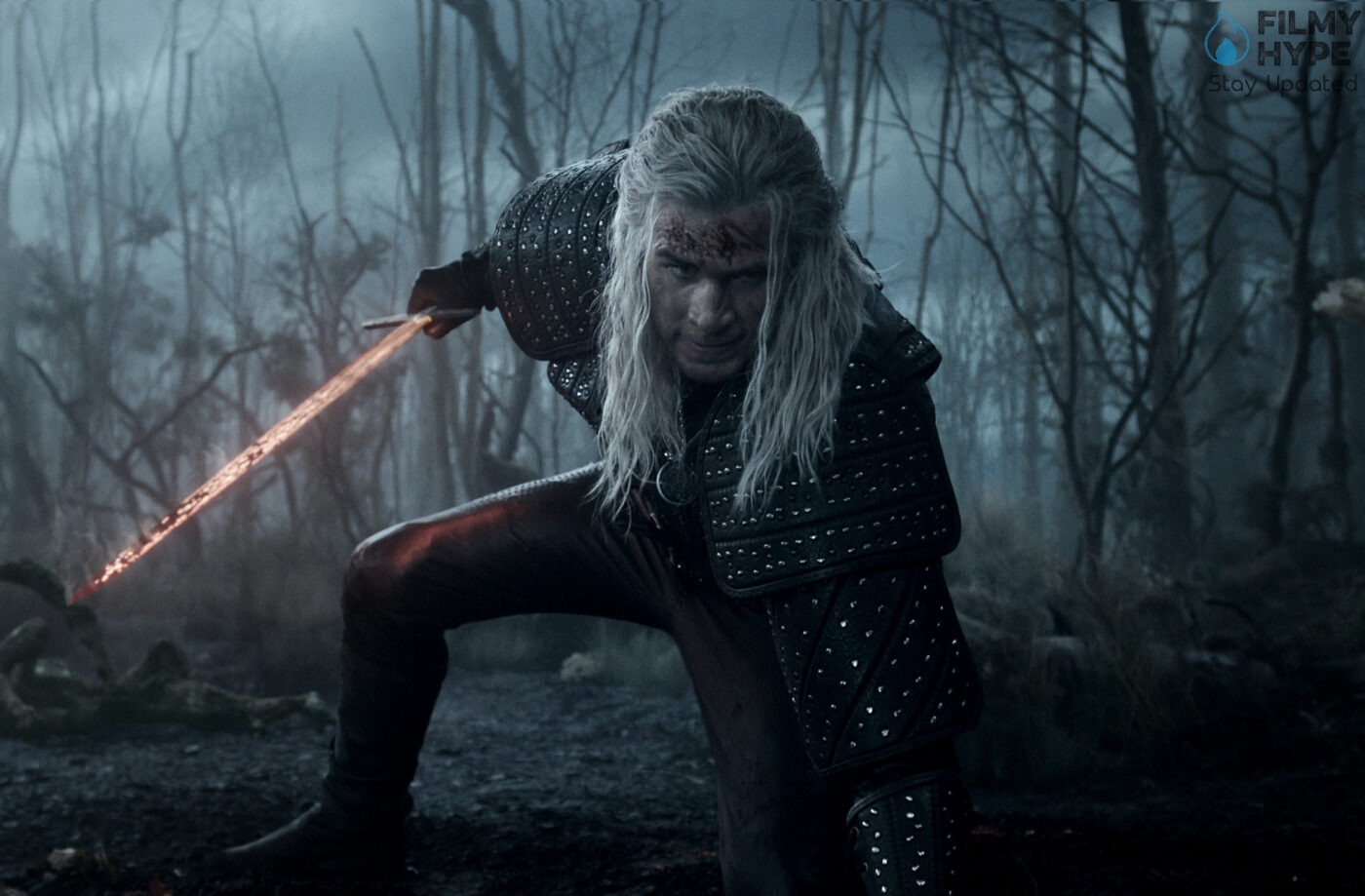
The Witcher Season 4 Ending Explained: Knighthoods, Betrayals, and a Shattered Family
The Witcher has never been a story about fairy-tale endings. As showrunner Lauren Schmidt Hissrich aptly told Tudum, “It wouldn’t be The Witcher if everything ended happily.” Season 4, the first to feature Liam Hemsworth as Geralt of Rivia, takes this mantra to heart, delivering a brutal, game-changing finale that fractures our central trio and sets the stage for an epic final chapter.
This season, the family of Geralt, Ciri, and Yennefer—though bound by destiny—is physically and emotionally torn apart, each thrust onto a “very different journey than anything they’ve done before.” As the dust settles on a continent plunged deeper into war and magical tyranny, we’re left with burning questions. Let’s break down the monumental ending of The Witcher Season 4.
The Framing Device: Stribog, Nimue, and a Story from the Future
One of the most significant narrative shifts in Season 4 is the introduction of a story-within-a-story. We experience the saga through the eyes of a storyteller, Stribog (Clive Russell), and a precocious young girl, Nimue (Eve Ridley). The season opens not with Geralt, but with Stribog recounting the tale of the Butcher of Blaviken to a group of children. When Nimue corrects him, he reveals a bombshell: these events happened over 100 years ago.
This framing device accomplishes two crucial things:
- It Establishes Legend: It shows us that the deeds of Geralt, Ciri, and Yennefer have passed into myth, their stories warped by time and retelling.
- It Hints at Nimue’s Role: The adult Nimue (Sha Dessi) is deeply connected to the legend, believing herself to be the “Lady of the Lake” from Jaskier’s book, Half a Century of Poetry. Stribog’s final words to her, “How this saga ends may depend on you,” are a direct tease for her importance in the coming conflict, suggesting the past and future are inextricably linked.
Geralt’s Journey: The Knight Who Lost Everything
Geralt’s primary mission this season is a solitary one: find Ciri. He’s joined by a fantastic new crew—the archer Milva, the dwarf Zoltan, and the mysterious barber-surgeon Regis (a stellar Laurence Fishburne), who is revealed to be a higher vampire and becomes a crucial mentor.
The season pays off a long-running character detail in a profoundly bittersweet way. In a flashback, we see a young Ciri and Geralt bonding at Kaer Morhen, where he confesses he once dreamed of being a knight. The name “Geralt of Rivia” was always a fabrication, a moniker he invented to sound more official for witcher contracts.
In Episode 8, after his heroics in the Battle of the Bridge, Queen Meve officially knights him, making “Geralt of Rivia” a reality. But as Hissrich explains, this moment is not the happy ending it seems. “It feels like it should be the perfect happy ending… but the truth is, his dreams have changed.” His dream is no longer about title or glory; it’s about finding his family. Now, bound by his knightly vows, Geralt may be forced to serve a crown instead of his own heart, complicating his search for Ciri at the worst possible time.
Yennefer’s Sacrifice: The Lodge and a Perilous Leap of Faith
Yennefer’s arc this season is about reclaiming power and building a new world order. She leads the charge against Vilgefortz, whose control over the continent’s portals has made him a near-unstoppable threat. The brilliant, sacrificial teamwork of Fringilla (acting as a double agent) and Istredd (who uses a powerful spell from the Book of Monoliths) successfully restores the portals during the Battle of Montecalvo.
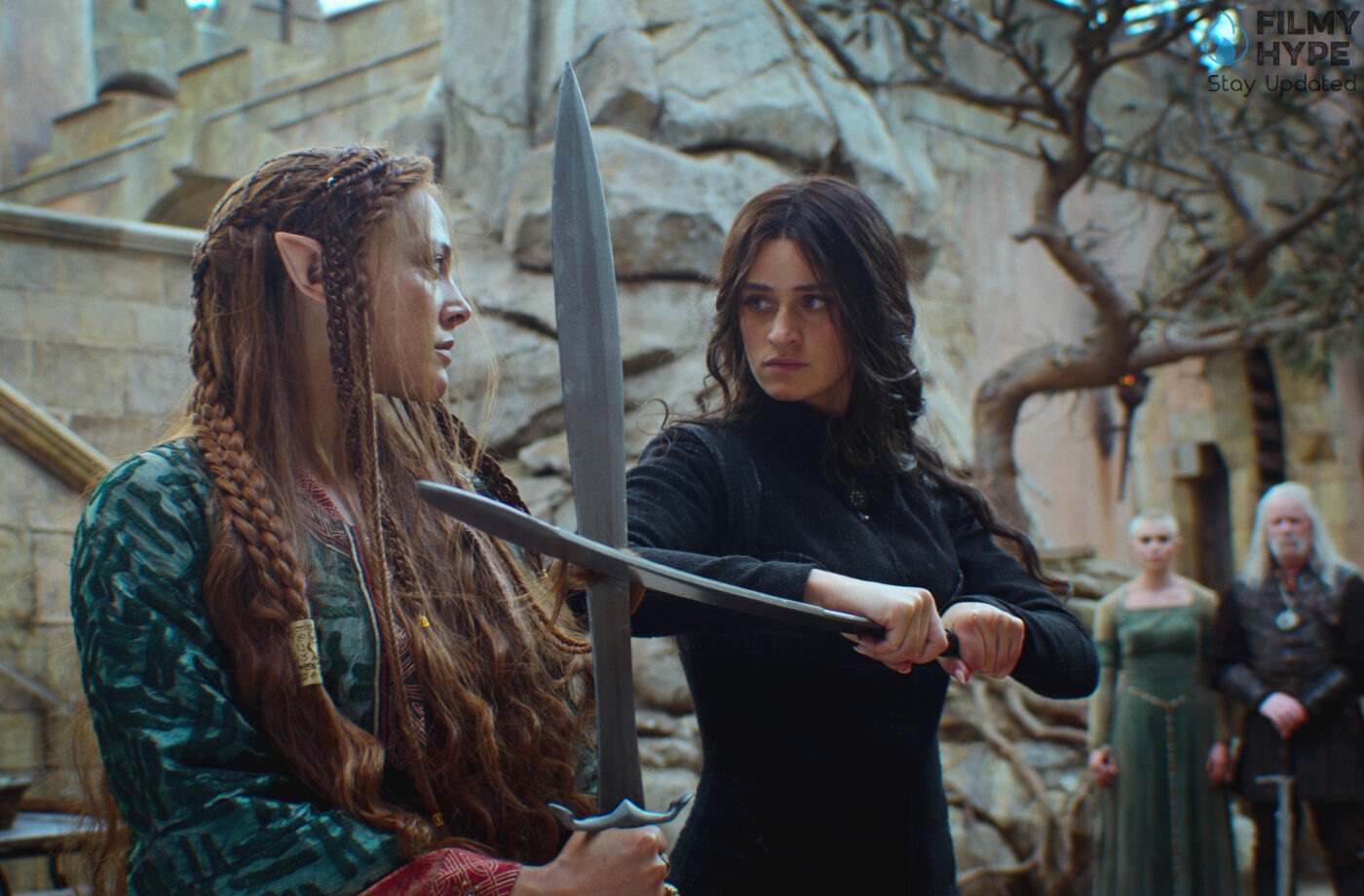
This victory leads to a pivotal moment: the formation of the Lodge of Sorceresses. Yennefer unites the mages—Philippa, Fringilla, Francesca, Sabrina, and Triss—by acknowledging the failures of the old Brotherhood and proposing a new, female-led alliance to protect magic.
But for Yennefer, the Lodge is a means to an end. Her ultimate goal is to make the world safe for Ciri. Executive producer Tomasz Bagiński frames her final choice: “What is more important for her: magic and her friends… or Ciri?” She chooses Ciri.
In a desperate, final move, she convinces a reluctant Triss to use a tracking spell to find a weakened Vilgefortz. Triss warns her that stepping through the resulting portal will send her to a place “he knows well and you not at all.” Ignoring the danger, Yennefer steps through and is immediately plunged into the middle of a stormy, violent ocean, dragged down by a whirlpool. Her fate is left entirely unknown, setting up a desperate rescue mission for Season 5.
Ciri’s Descent: Falka, the Rats, and the Monster, Leo Bonhart
Ciri’s story is a classic, if brutal, coming-of-age. Adopting the name Falka, she finds a twisted sense of belonging and freedom with the Rats, a gang of young thieves who become her surrogate family. This persona represents her embrace of her own darkness, a way to escape the pain and guilt she carries.
As Freya Allan notes, “What Falka represents is this darkness… There’s a part of her that’s leaning into this to escape the pain.”
This newfound “family” is brutally ripped away by the terrifying Leo Bonhart (a chilling Sharlto Copley), hired by Emperor Emhyr to capture Ciri. In one of the season’s most harrowing sequences, Bonhart systematically butchers the Rats, ensuring Ciri witnesses every death, including that of her romantic interest, Mistle.
So, why does he spare Ciri? According to Copley, it’s a twisted form of recognition. “He sees her as a strange kindred spirit and is excited by her talent… He wants her to see if she has the stomach to be the fighter he thinks she can be.” Bonhart doesn’t just see a prize; he sees a prodigy with an immense “potential for violence” that he aims to mold and harness for his own purposes. He spares her life not out of mercy, but to break and remake her into a weapon.
The Final Verdict: What Does It All Mean for Season 5?
The Season 4 ending leaves the Continent’s most powerful players scattered and vulnerable:
- Geralt is a knight bound by duty, physically farther from Ciri than ever.
- Yennefer is missing, presumed dead, lost in an unknown and deadly location.
- Ciri is captured, psychologically shattered, and in the clutches of the continent’s most sadistic killer.
- Vilgefortz is wounded but still a massive threat, while Emhyr’s plan to marry his own daughter for power is now within reach.
The stage is set for a final season of reckoning. Geralt’s new crew will likely be key to rescuing both Yennefer and Ciri. The Lodge of Sorceresses must solidify its power without its founder. And Ciri must find a way to survive Bonhart’s torment without losing the last shreds of her true self to the darkness of Falka. One thing is certain: the path to any kind of happy ending for the Wolf, the Swallow, and the Sorceress is darker and more treacherous than ever before.