Monster: The Ed Gein Story Ending Explained: How was Ed Gein Captured? What Happened to Ed Gein in the End?
With Monster: The Ed Gein Story, Ryan Murphy brings back the man who inspired some of the most haunting faces in horror film history: Norman Bates, Leatherface, Buffalo Bill. Set in 1950s Wisconsin, the series follows the descent of Ed Gein (played by Charlie Hunnam) into madness: a childhood marked by an obsessive and ultra-religious mother, a brother who died under suspicious circumstances, and a series of crimes that transform his home into a horror museum. But Monster is not just a crime chronicle: It’s also a disturbing portrait of how violence intertwines with popular culture and collective fascination with evil. BEWARE, SPOILER ALERT. “Monster: The Ed Gein Story”, the third season of the anthology series created by Ryan Murphy and Ian Brennan, tells the story of Edward Theodore Gein, known as the Butcher of Plainfield, a serial killer, grave robber, psychopath driven by isolation, psychosis and an absolute obsession with his mother committed perverse crimes and who served as an inspiration for many of Hollywood’s most macabre and iconic villains.
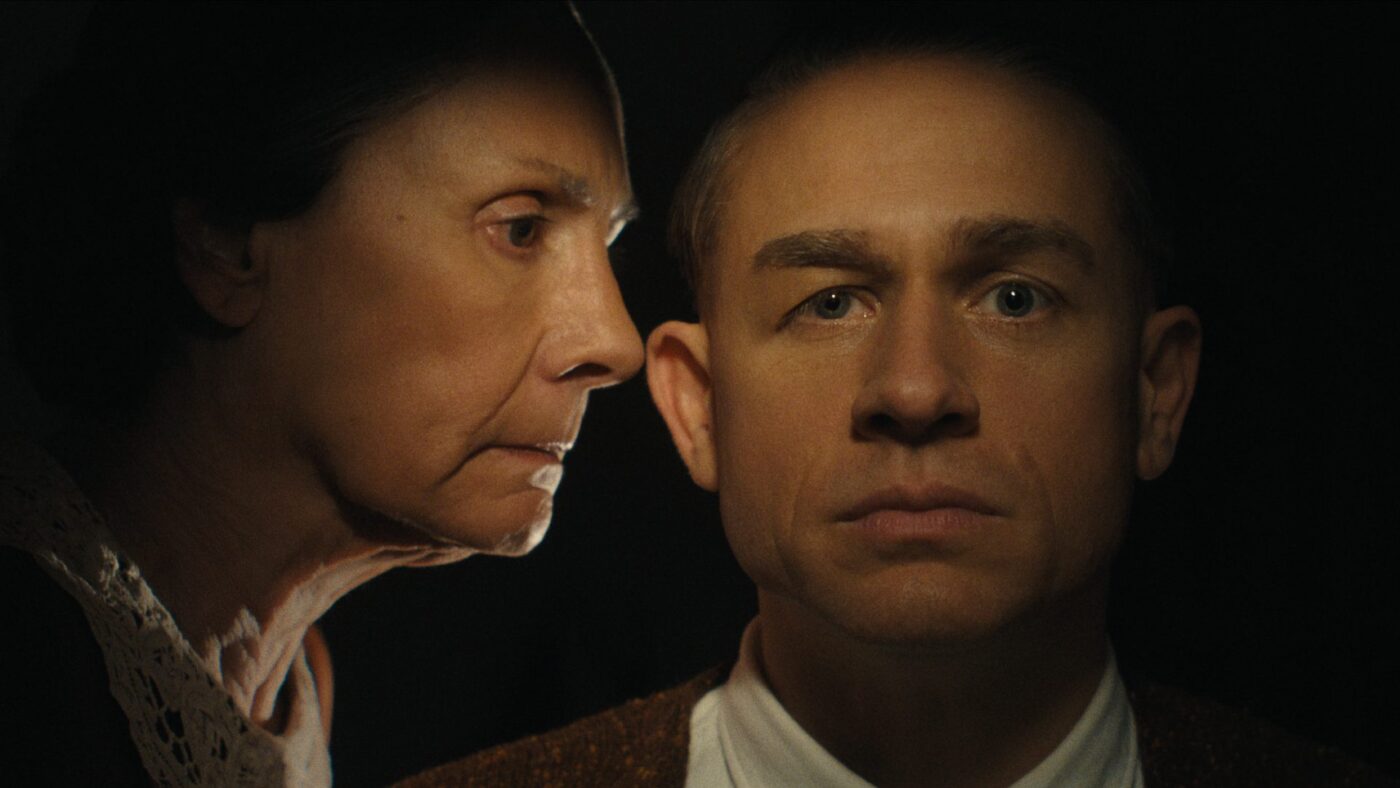
The first episodes show how an ordinary man from Plainfield (Wisconsin) became the most sinister figure in history. Mainly, the unhealthy relationship that Ed Gein (Charlie Hunnam) had with his mother, Augusta (Laurie Metcalf), an extremely religious woman who subjected him to her orders and pressured him not to follow in his father’s footsteps. Because of this, Henry Edward Gein tries to leave the farm, but ends up dead at the hands of his younger brother. To hide his first crime, the protagonist of “Monster: The Ed Gein Story” starts a fire. Henry’s death leaves Augusta devastated, who suffers a stroke and soon dies. When he is left completely alone, Ed begins to hear his mother’s voice, revealing that there is a way to bring her back: dig up her body. When he fails, he takes another corpse and dresses it like Augusta.
Monster: The Ed Gein Story Ending Explained: How was Ed Gein Captured? What Happened to Ed Gein in the End?
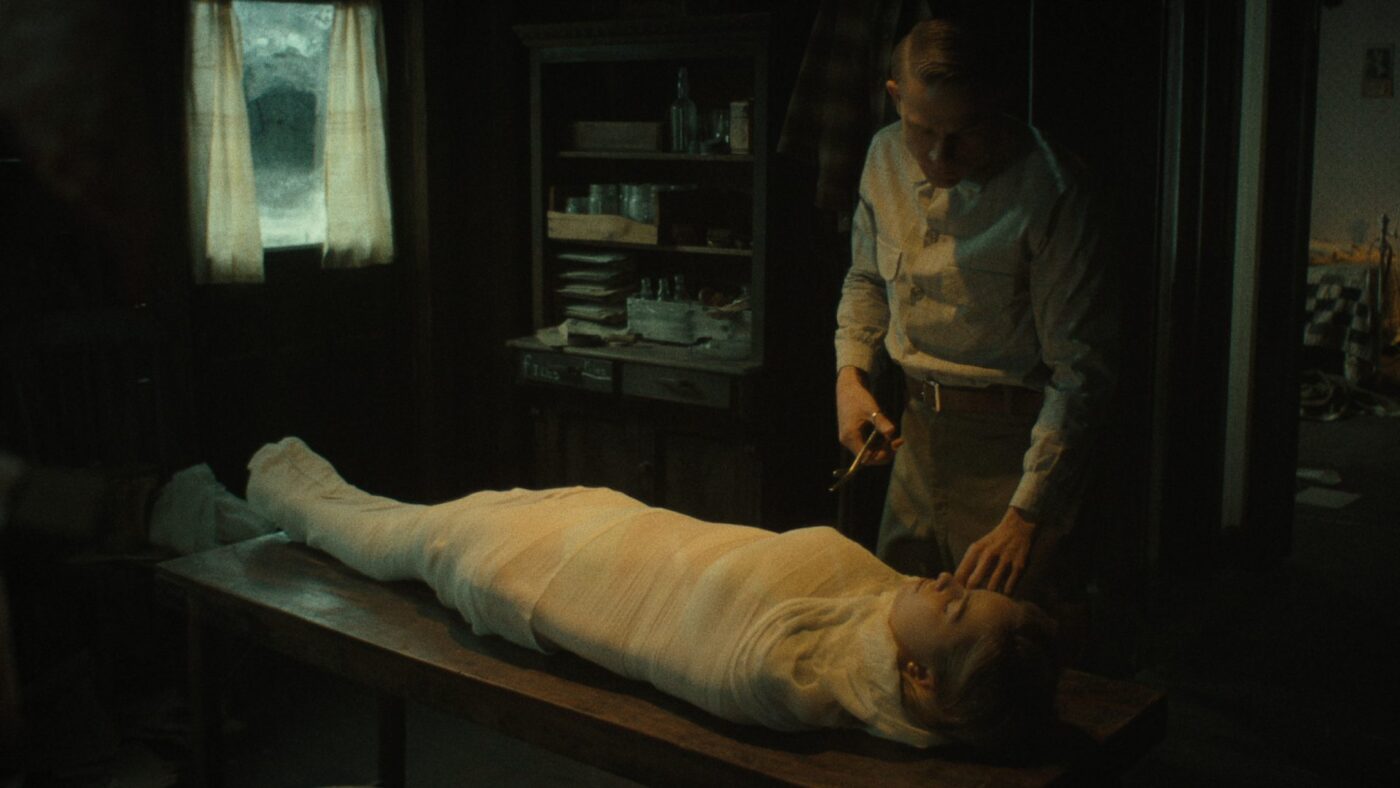
Adeline Watkins (Suzanna Son), Ed’s neighbor and romantic interest who also feels a strange fascination with death, is in charge of showing Gein the disturbing images of the Nazi concentration camps, and also gives him a comic based on the story of Ilse Koch (Vicky Krieps), the war criminal known as Buchenwald’s Bitch, who becomes a kind of heroine for him and his inspiration. After exhuming his first body, Ed Gein doesn’t stop. He gets more and starts making different artifacts with human skin and bone remains. He also makes human skin masks and suits that he uses to adopt different personalities. His next victim is Mary Hogan, a woman who works at the local tavern and whom he murdered because she reminded him of his mother.
He later kidnapped babysitter Evelyn (Addison Rae) for allegedly taking the job Adeline got him, although in reality, he was the one who overstepped the limits when he took the children he cared for to his house of horrors. Adeline also arrived at that house, but after the terrifying first impression, she returned to take photographs. “Monster: The Ed Gein Story” also shows the great influence that the Butcher of Plainfield had on horror films. Therefore, in parallel, it tells the story of how Alfred Hitchcock (Tom Hollander) worked on his horror classic, “Psycho”, and what it meant to the actor who played Norman Bates, Anthony Perkins. It also features Tobe Hooper (Will Brill), who worked on a film called “The Texas Chainsaw Massacre” and was behind the scenes of “The Silence of the Lambs”.
How Was Ed Gein Captured?
After beginning a brief romance with Bernice Worden (Lesley Manville), the owner of a local hardware store, Ed agrees to move in with her, but when he returns home, his mother’s voice torments him and leads him to murder the woman. The victim’s son reports the disappearance, and thanks to a clue, the police arrive at Gein’s farm and discover his house of horrors. During interrogations, Ed admits that he stole bodies from the cemetery, but assures that he does not remember murdering women. He even passes the polygraph test. Due to his mental state, the judge determines that he be sent to a psychiatric center, where he continues to hear voices and hallucinate.
What Illness Did Ed Gein Have?
During his confinement, Ed gets radio machines to communicate with some people he admires, war criminal Ilse Koch, and then with Christine Jorgensen (Alanna Darby), the first widely known person to undergo sex reassignment surgery in the United States. The latter points out that Ed is not transgender, but gynephilic: a man who feels so excited about the female body that he wants to be inside it. However, in his next conversation with his psychiatrist, it is revealed that all those conversations were only in Ed Gein’s head, since the radio was offline. The doctor also informs him that he suffers from schizophrenia, allowing Ed to finally explain the voices in his head and his hallucinations.
Monster: The Ed Gein Story – The Disturbing Bond Between Ed and His Mother?
A Fractured Relationship: The Beginning of Madness
Ed Gein’s disturbing story begins with his strained relationship with his mother, Augusta. When Ed accidentally kills his brother Henry, he sets their home ablaze to hide the evidence. This act devastates Augusta, who blames Ed and grows distant. Her resentment becomes the defining factor in Ed’s life, shaping his lonely, delusional world.
Actor Charlie Hunnam, who plays Ed, describes him as a man trapped in his imagination — a recluse whose only connection to reality was his mother. Everything Ed did revolved around her expectations. Even his voice and behavior mirrored Augusta’s desire for a daughter rather than a son. Her cruel words — “I should have castrated you at birth” — haunted Ed and fueled his transformation into one of history’s most infamous killers.
A Voice Born from Obsession
Hunnam’s portrayal of Ed draws heavily on a rare audio tape recorded after Gein’s arrest. Although the tape was never made public due to legal issues, it revealed a soft, mumbling tone — an imitation of the gentle voice Ed believed his mother wanted him to have. This eerie affectation made Gein appear timid, even childlike, masking the horror that lurked beneath.
After Augusta’s death, Ed’s world collapses completely. Consumed by loneliness, he begins robbing graves, crafting macabre trophies from human skin and bones. The series graphically depicts this obsession — showing Ed’s gruesome “creations,” including furniture and household items made from corpses.
Adeline Watkins: Real or Imagined?
Ed’s only emotional connection after his mother’s death is with Adeline Watkins, his mysterious neighbor. Though she appears supportive and even joins him in grave robbing, her true existence remains uncertain. Writers Brennan and Murphy debated whether Adeline was real or merely a product of Ed’s deranged mind. While some scenes suggest she was inspired by a real woman from Plainfield, others imply she was a fantasy — a manifestation of Ed’s need for companionship.
Charlie Hunnam interprets Adeline as largely imaginary, a reflection of Ed’s yearning for understanding. She becomes both his comfort and his curse, drawing him deeper into his delusions. Through Adeline, the series explores how loneliness and suppressed desires can morph into terrifying fantasies.
From Reality to Hollywood: The Legacy of Ed Gein
Ed Gein’s crimes didn’t just shock his town — they changed Hollywood forever. His gruesome acts inspired Alfred Hitchcock’s Psycho, with Norman Bates modeled after him. Robert Bloch’s novel and Hitchcock’s film introduced the concept of the “neighborly monster,” transforming horror cinema.
Beyond Psycho, Gein’s influence extended to The Texas Chain Saw Massacre and The Silence of the Lambs. Each borrowed from his twisted use of human skin and furniture, turning his real-life horrors into cultural nightmares. Murphy calls Gein “one of the most influential figures of the 20th century,” despite his anonymity among the general public.
The show also portrays the making of Psycho and its legendary marketing campaign, highlighting how Gein’s crimes birthed America’s obsession with serial killers. Through Hitchcock, Tobe Hooper, and Jonathan Demme, Monster: The Ed Gein Story connects real murder to cinematic myth.
Ed’s Arrest and Trial: A Descent into Insanity
As Ed’s delusions worsen, his crimes escalate. He murders local women, including Bernice Worden, whose body is found mutilated in his barn. Her son, a deputy sheriff, uncovers the horrifying scene that finally ends Gein’s reign of terror.
Despite the brutality, Ed avoids the death penalty due to his mental instability. Diagnosed with schizophrenia, he’s committed to a mental institution instead of prison. There, he spends his final years in eerie peace, haunted by fantasies and phantom voices on his ham radio.
Schizophrenia and Society’s Failure
The series doesn’t just tell a horror story — it exposes society’s neglect of mental health. Hunnam and Murphy highlight how proper treatment might have prevented Gein’s crimes. During his confinement, Ed finally understands his disorder, realizing his reality was built on delusion.
Murphy uses this arc to criticize modern mental health systems. He recalls a time when the mentally ill received structured care in hospitals — a system now dismantled by budget cuts. The message is clear: neglect breeds tragedy.
A Dark Farewell: Ed’s Final Moments
In the finale, a dying Ed imagines himself helping the FBI catch Ted Bundy, symbolizing his longing for redemption. He meets Adeline one last time, urging her not to continue his dark legacy. This moment contrasts the monstrous figure we’ve seen — offering a glimpse of remorse.
As cancer claims him, Ed envisions himself ascending a staircase toward his mother. Augusta greets him proudly, telling him he has finally made something of himself. The haunting irony captures the twisted love that defined his life.
The closing scene shows teens attempting to steal Gein’s gravestone, echoing real events. Frightened by visions of Leatherface, Buffalo Bill, and Norman Bates, they flee — leaving Ed’s ghost smiling faintly in the dark.
Final Thoughts: The Monster Who Changed Horror Forever
Monster: The Ed Gein Story redefines true-crime storytelling by blending fact, psychology, and pop culture. It portrays Ed not just as a killer but as a product of obsession, neglect, and delusion. His story is unsettling yet fascinating — a reminder that real monsters often begin as broken humans.
From his mother’s cruel love to his posthumous influence on film, Ed Gein’s shadow looms large. His crimes may have ended decades ago, but his legacy continues to shape every scream that echoes through modern horror.