The Last Frontier Season 1 Review: Apple Tv’s Dense and Tragic Thriller on The Ice of Alaska!
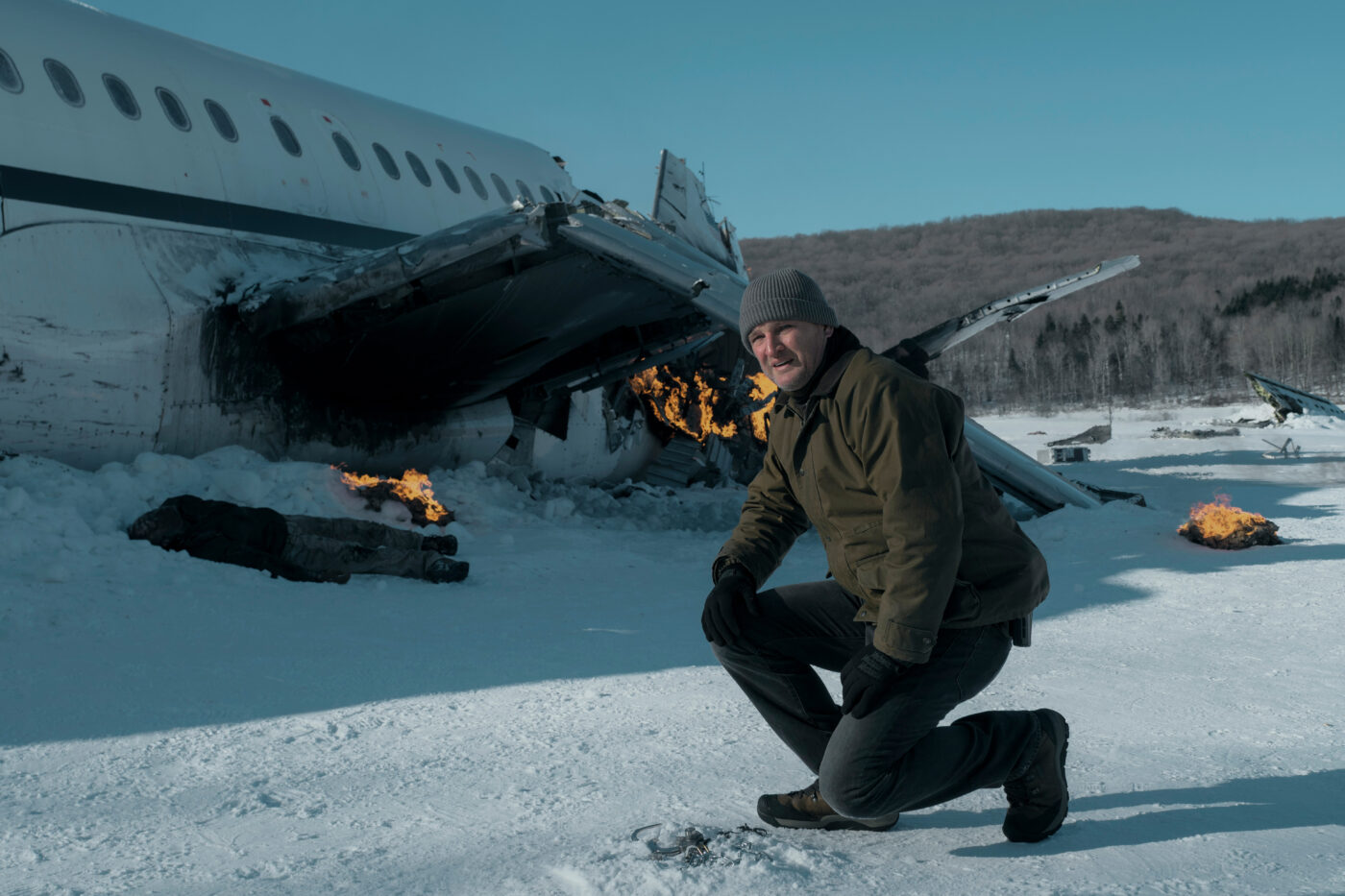
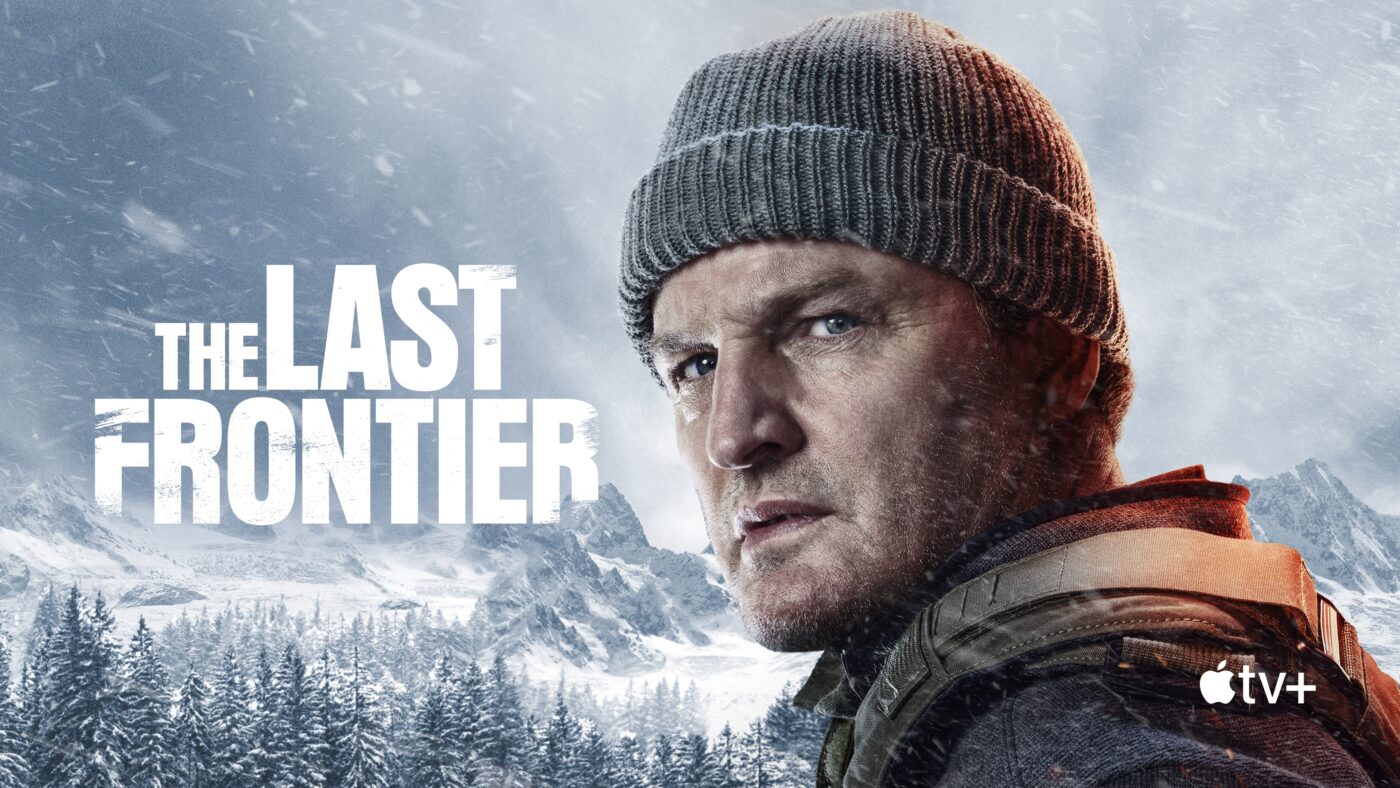
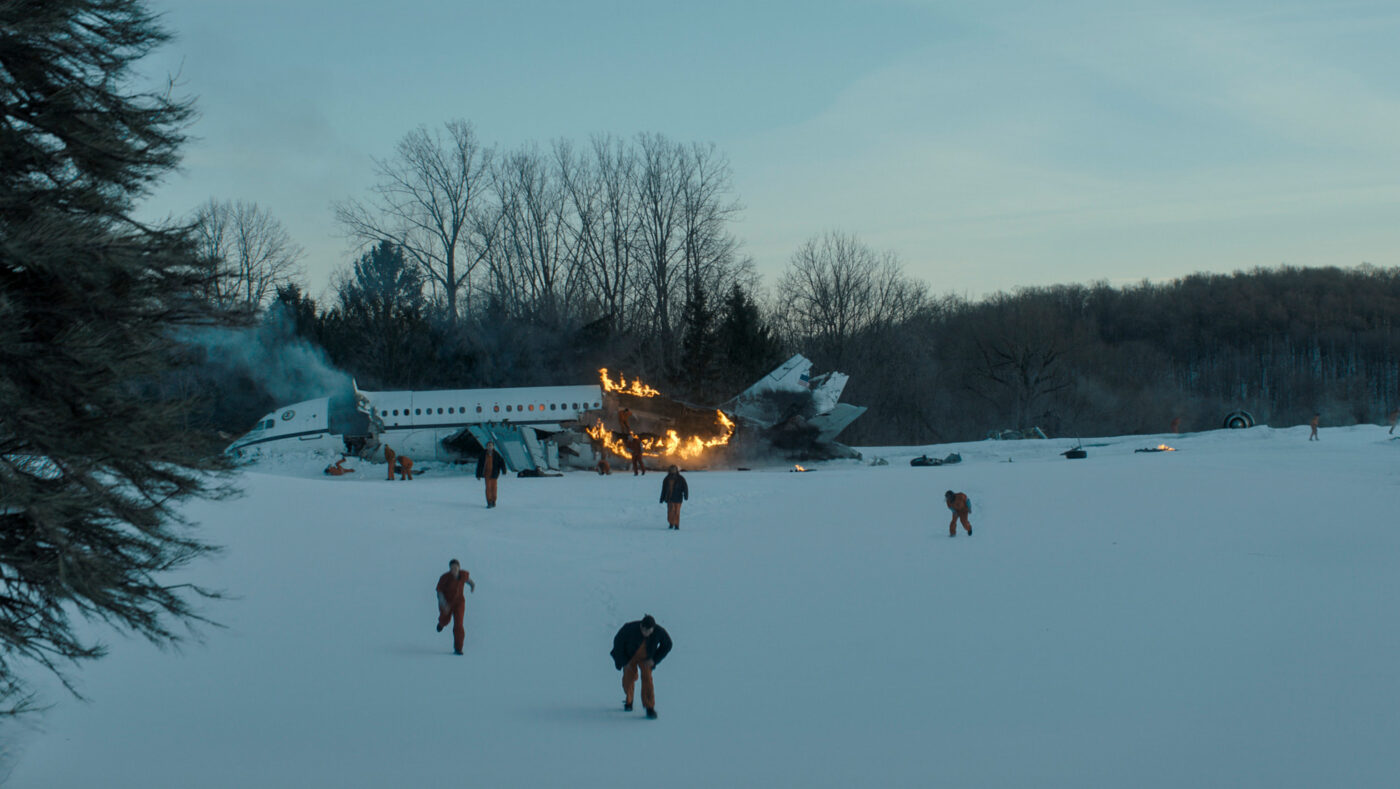
The preambles of The Last Frontier – the brand-new thriller on Apple TV with Jason Clarke protagonist – fuse a potentially explosive material that combines the elements of the opening scene of Lost, the pitfalls of Prison Break, and the tricks present in The Blacklist. On the other hand, these shows have the originator in common. The TV series The Last Frontier unwillingly crashes into a major crash, with a giant burning plane flying downhill over a stretch of snow lost in the Alaskan tundra. Passengers, however, are not people ordering but dangerous detainees who do not seem very impressed by what happened. In fact, the fact is looked at, rather, as the perfect opportunity for freedom, a kind of “way of salvation” and escape. The series The Last Frontier, signed by Jon Bokenkamp (The Blacklist) and Richard D’Ovidio, starts from an irresistible idea: a plane full of inmates crashes through the ice of Alaska, freeing a host of criminals ready to wreak havoc. Dealing with the crisis is federal agent Frank Remnick (Jason Clarke), a tired man marked by the past, who would only like to retire with his wife (Simone Kessell) and son to an isolated cabin.
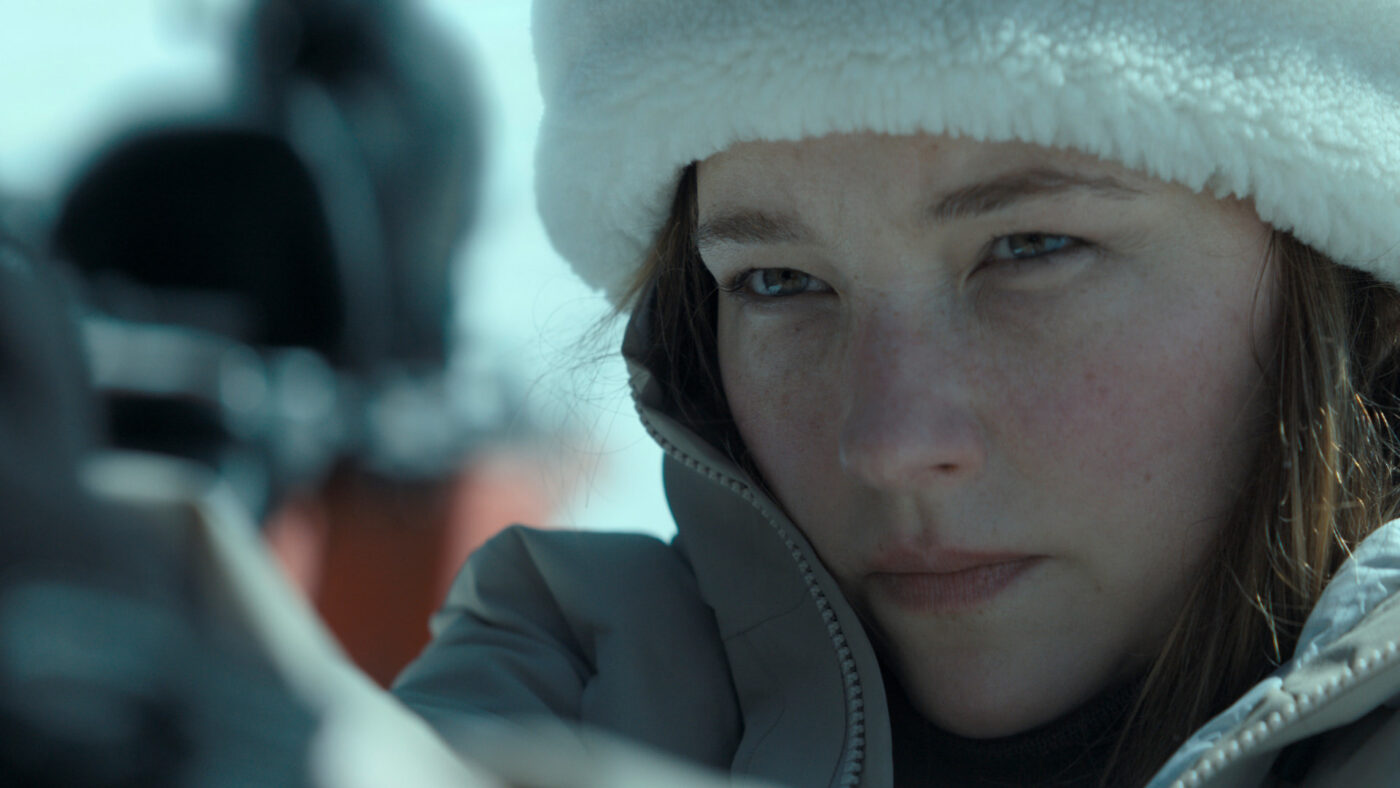
The arrival of CIA agent Sidney Scofield (Haley Bennett) and the hunt for the mysterious Havlock (Dominic Cooper) turned what could have been a race against time into a complex espionage affair. On paper, it is Con Air that meets Yellowjackets. But the initial energy of confrontations, explosions, and thriller-like tension soon fades into a slow narrative, weighed down by subplots that don’t keep up with the pace promised by the pilot. A series that, despite the icy settings, alternates chills of fear with a hand-sweating tension, but if you’re not ready to engage in a bloody and desperate manhunt, think carefully. For others, let’s get to the heart of this review with a summary of the plot and our opinion on The Last Frontier, of which we report the official trailer in Italian at the bottom.
The Last Frontier Season 1 Review: The Story Plot
A plane of JPATS – Justice Prisoner and Alien Transportation System, the US system that deals with the transport of prisoners (also known as Con Air, hence the title of famous film), calls at an Alaskan military airport to pick up, along with female and male inmates guilty of serious crimes, a mysterious hooded prisoner who is more chained than the others. The precautions seem justified but also unnecessary when, shortly after takeoff, he somehow manages to free himself just as the plane explodes on its side and crashes through snow and ice. Almost all the detainees survive and, of course, use the opportunity to free themselves and escape. A few dozen miles of ice and snow away begins the day of Franck Remnick, federal sheriff of Fairbanks, the city where he was born and raised and where he has always remained apart from a brief period of work in Chicago, from which he soon returned home with his wife Sarah (Simone Kessel), and teenage son, Luke (Tait Blum).
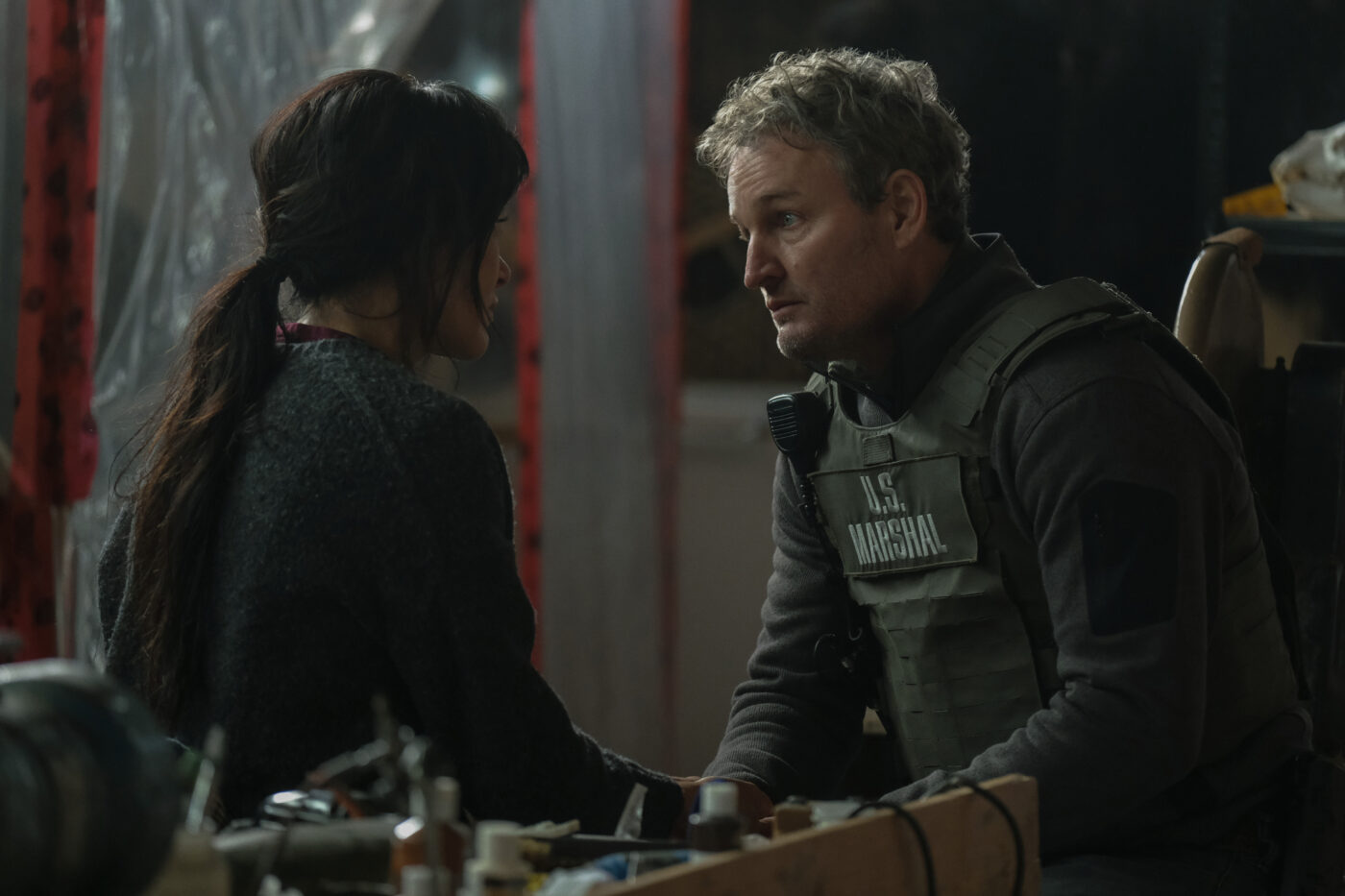
Frank, who has signs of some dramatic event from the past on his body, plans to leave the US Marshals to help Sarah realize her dream of opening a bed and breakfast in the out-of-town cottage they just bought, but the plane crash that has sparked a mass prison break of dangerous inmates comes to upset both their plans and the tranquility of the area. Meanwhile, in Langley, at CIA headquarters, there is a high alert for that plane crash. Attention, of course, is focused on the hooded prisoner (Dominic Cooper), and for this reason, special agent Sidney Scofield (Harry Bennett) is sent to Alaska, where he has the task of recovering the mysterious prisoner and collaborating with Frank without making him understand too much about the danger to national security. But, as seen in the trailer, the fugitive himself will personally involve Frank, kidnapping his wife and thus triggering a series of intricate and bloody events.
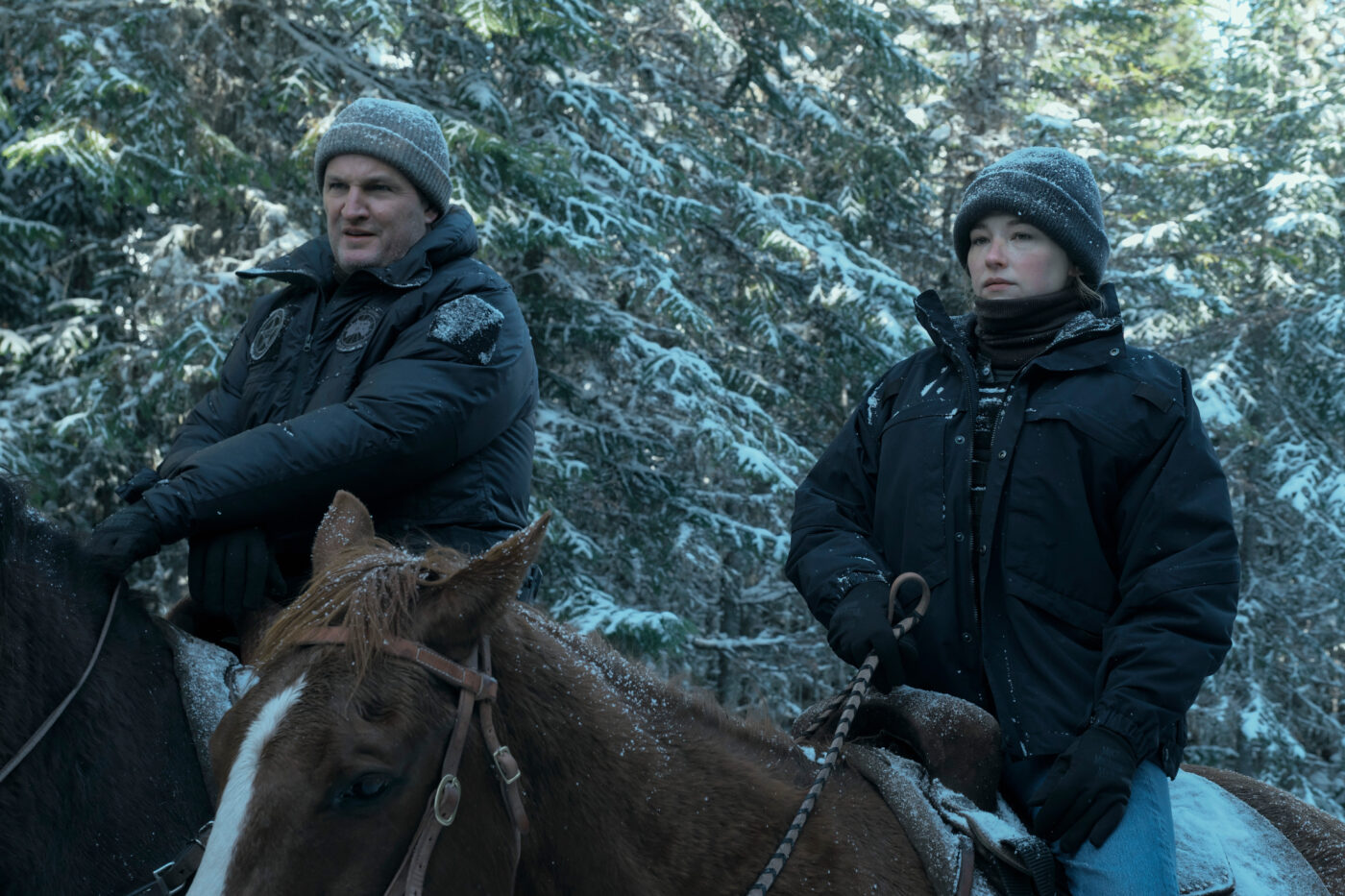
The plot of the show in ten episodes is as simple as it is intriguing. In snowy forests, an Alaska plane crashes. This is a special flight that contains rather dangerous prisoners. At US Marshall Frank Remnick (Jason Clarke), the task of capturing and returning to the he reads the surviving criminals and is now lost in the snows of the region. Among these, we also find a code-named spy Havlock (Dominic Cooper), an ultra-trained man who knows secrets capable of bringing the CIA to its knees. Sulle special agent Sidney Scofield also sets out on his trail (Haley Bennett), which hides a mysterious past with its prey… Remember a cult movie from the ‘90s, what is the adrenaline-pumping and all in all well-orchestrated Con Air con protagonist Nicolas Cage? Here, The Last Frontier could be the ideal sequel to that feature film, not just for the plot but also for the idea behind the project. Like in the movie directed by Simon West, we are also in the case of the series, in fact, when faced with a product that aims for pure entertainment but without forgetting the consistency of the plot and characters.
In fact, since the pilot episode, The Last Frontier promises action, spectacular moments that combine with emotional situations, effective, and above all, characters that the public can embrace psychological level. Especially the Remnick played by Clarke is the classic, always effective lawman, divided between love for his family and a sense of duty that drives him towards danger, even the most extreme. The actor in the past was very appreciated in films like Zero Dark Thirty, Erotic, in which case, at least the Oscar nomination as not non-actor. Public Enemy also offers in The Last Frontier a test as charismatic as it is capable of highlighting the most common traits of a man who possesses his weaknesses. See, the show maintains a good level of emotional tension, you have to above all to its ability to give back to the public in every moment the humanity of the protagonist. They are less effective, unfortunately, Haley Bennett and Dominic Cooper, but it should be written that to them the two characters that are mainly used for are touched, develop the action/thriller dimension, so they must ultimately count to be more functional to the plot than directed to empathy with the public.
The Last Frontier Season 1 Review and Analysis
The Last Frontier is not a series that can be seen in one go: even between the two initial episodes that come out together, it is good to take a break. Because the story written by Richard D’Ovidio (The Call) and Jon Bokenkamp (The Blacklist), she’s dense, intense, tragic, and violent. It tells of loves that overcome enormous difficulties without being able to find peace, of good people who succumb, and of bad people who impose pain and suffering. It is the “usual” struggle between good and evil, but in which evil seems to want to infect rather than defeat good. And Alaska, with its ice (along with those of Canada, where the series was filmed) and its people who, as Frank points out, live there by choice, is a perfect theater for this story in which the feelings of the people and the destinies of the United States are explored. The Last Frontier is therefore a dark TV series like the winter in Alaska, but also like the secret CIA plots, suitable for occasional consumption, which is followed by weekly breaks for reflection. Possibly dedicate yourself to something lighter.
Jason Clarke confirms himself as a reliable interpreter, capable of giving humanity even to a conventional character like his border sheriff. Haley Bennett, on the other hand, struggles to convince as the troubled CIA agent with a cumbersome past, while Dominic Cooper appears stuck in a role as mysterious as it is directionless. What stands out are the supporting actors, unfortunately wasted: Alfre Woodard and John Slattery, confined behind CIA desks, carry a specific weight that the series cannot enhance. Dallas Goldtooth, on the other hand, could have represented a cultural bridge with the indigenous reality of Alaska, but he is relegated to simple jokes of support. The charm of wild nature, which in True Detective: Night Country became a narrative and symbolic element, here remains only a digital background. Filmed in Quebec, the series never conveys the sense of isolation or danger typical of the Arctic landscape. Even the moments that should convey epic Ness – chases on snow, shootouts in the ice, helicopter scenes – are suffocated by less-than-credible visual effects and messy editing. The Alaska of The Last Frontier is not a character, but a simple scenography: cold, artificial, incapable of truly making the frontier of the title perceived.
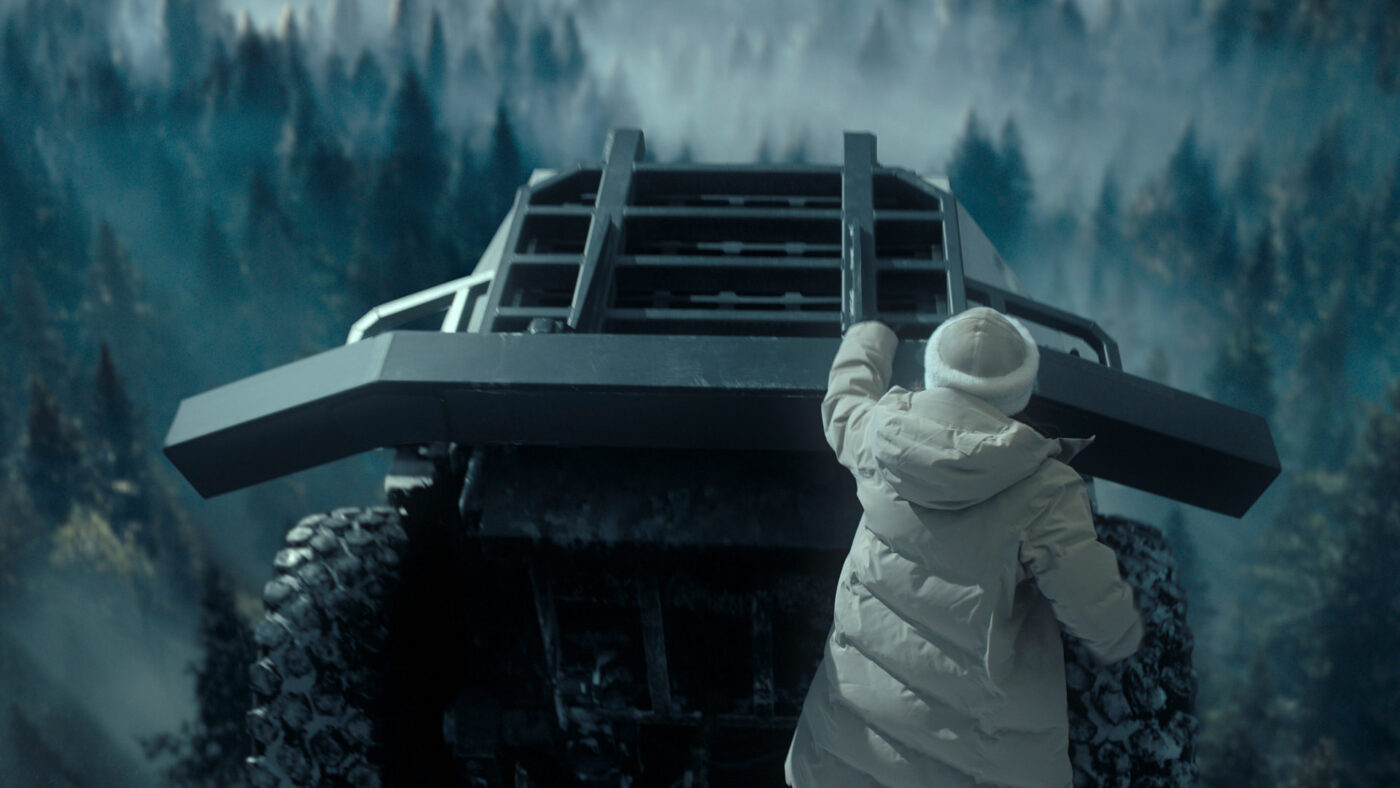
Making matters worse is the handling of the main plot, which prefers to focus on Frank’s family traumas and Sidney and Havlock’s relationship, rather than exploiting the funniest component of the tale: the hunt for escaped prisoners. Each episode could have been a self-contained mini action, but instead it drags on in a labyrinth of subplots and less-than-punchy flashbacks. Finally, the tone oscillates dangerously between drama and involuntary camp, with moments that border on involuntary parody. Only a few action scenes –such as that of the truck suspended over a ravine – manage to awaken the viewer, reminding them of what The Last Frontier could have been if it had chosen the path of pure entertainment. The Last Frontier gets off on the right foot, but soon loses its way between spy drama clichés and “major series” pretensions. It is a technically refined production, but narratively confused, incapable of enhancing its starting idea. After ten episodes, the feeling of a missed opportunity remains: that of a crazy and adrenaline-filled adventure transformed into a bureaucratic mess between the FBI, CIA, and personal remorse. The finale leaves open the possibility of a second season, but perhaps it would be better, for everyone, if this really remained the final frontier.
Without absolutely shouting at the masterpiece, the Apple TV series by Jon Bokenkamp guarantees the kind of mainstream entertainment that the streaming platform offers. The Last Frontier, in fact, contains scenes spectacular – the conclusion of the third episode above all – alternating with a decent job of defining the characters ‘ordinary lives”. Another point in favor of the show is its wise use of the setting: snow-covered Alaska, landscapes uncontaminated and wild, the beauty of nature in its state more impervious, which immerses the plot and the protagonists in a setting as elegant as it is powerful. In this scenario that poses the human being faced with his own limitations, both physical and psychological, we can enjoy as spectators comfortably seated at the warmth of our sofas, discreetly articulated action, drama, human, a dash of romance, all mixed up in one show which offers exactly what it promises. If you are looking for a product that stimulates you to reflect, probably Vinegar’s Last Frontier, that’s not what you’re looking for. If, instead, you want light, syncopated entertainment, then this show is worth much more than many products of the same genre made by other platforms.
In the opening minutes, the show shows all its intentions. The TV series opens with a dense and grandiose sequence, where the cinematic special effects (the ones that Apple TV productions really like) die out in the snowy quiet, until suddenly Remnick finds himself surrounded to facing all the numerous inmates alone who jump on him, as in the most worrying apocalypse of the living dead. Yet, before the story really begins to entertain, we will have to wait a few episodes, when the starting energy explodes, Jon Bokenkamp’s concept begins to conquer us. Burning details emerge about what happened, and numerous mysterious suspicions begin to be undermined in the story: are the two protagonists perhaps hiding something? The incident was perhaps not merely a random occurrence that disturbed the course of events. Havlock himself will have something interesting to tell…
It goes without saying that Frank and Sidney will reveal themselves to be dependent on each other (as if the future cannot ignore the past, and vice versa), discovering the truth and chasing the classic badass, which directs the action of the show. In this sense, Havlock turns out to be a decisive character, shown little by little over the course of the ten episodes. A figure who, in the long run, is capable of shaking the line between Atomise. On the other hand, yes, there could be too many episodes, considering that each chapter lasts an hour and also considering that the inspiration Jon Bokenkamp had for the series can be traced back to the blockbusters of the nineties, in which accessibility and action were the founding bases (certainly not length). Somehow, The Last Frontier is an evolution, mixing tones and moods to bring everything back to a Wild West duel with strong current references: truth against lie.
The Last Frontier Season 1 Review: The Last Words
The Last Frontier, as a product, confirms the quality of the Apple TV series: the show written by Jon Bokenkamp is capable of keeping attention high right from the pilot with the first truly incredible and spectacular scene. At the center of the events is the character played by Jason Clarke, who gives us an excellent performance, further consolidating the value of this production, which successfully blends action, drama, spy story, and visual elegance, and ensures suspense, entertainment, surprise, and visual pleasure. If you are looking for a product that stimulates you to reflection, probably The Last Frontier is not what you are looking for. If you want light entertainment instead and a syncopated pace, then this show is worth much more than lots of products of the same genre made by other platforms.
Cast: Jason Clarke, Haley Bennett, Dominic Cooper, Simone Kessell, Alfre Woodard, John Slattery, Dallas Goldtooth
Directed: Sam Hargrave, John Curran
Streaming Platform: Apple TV
Filmyhype.com Ratings: 3.5/5 (three and a half stars)