
The Housemaid Movie Review: A Pulp Domestic Thriller, Sensual and Flawed, Yet Irresistibly Funny?
The Housemaid Movie Review: The Housemaid has no intention of feigning depths that do not belong to it. From the very first minutes, it makes clear its goal: to be an excessive, sensual, and deliberately over-the-top domestic thriller, a direct product of the erotic noirs of the 1990s. Paul Feig almost completely abandons pure comedy to tell a tale of psychological tension, composed of ambiguous glances, gaslighting, and power dynamics that continually shift. The result is a consciously “trash” film, which plays on the line between seriousness and complacency with an energy that is difficult to ignore. On the eve of the last Academy Awards ceremony, the CEO of the powerful American distributor NEON, Tom Quinn, participated in a well-known podcast to discuss the promotional campaign for Sean Baker’s The Florida Project, which would soon outperform the competition and even win the statuette for best film of the year. Quinn pointed out how NEON had bet on Baker’s film, among many reasons, because it had a just perfect ending.

Awards like Oscars are won when the film you promote is remembered by the viewer, and one of the most effective methods is to make a good film that has a splendid lock, capable of leaving behind a tangible and positive memory. Sydney Sweeney plays Millie, a girl with a stormy past and precarious financial conditions, desperate for a stable job. An unexpected opportunity comes to her from Nina (Amanda Seyfried), wife of the attractive and very rich Andrew (Brandon Sklenar), who, despite her meager resume, hires her as a maid. Millie’s initial enthusiasm, however, soon gives way to anxiety, as Nina proves mentally unstable and begins to take all her frustration out on her. Meanwhile, a mutual attraction develops between Millie and Andrew, which is increasingly difficult to contain. Thus begins a spiral of violence and twists, which leads the protagonists and the spectators themselves to reconsider their point of view on this intricate and sinister story.
The Housemaid Movie Review: The Story Plot
The story unfolds almost entirely inside an isolated villa, a perfect symbol of an artificial well-being ready to implode. Millie arrives in this world as a fragile and out-of-place figure, and the film builds tension precisely on social asymmetry: she needs that job, they seem to need nothing. The first act is deliberately more controlled, almost restrained, and works on the constant feeling that something isn’t coming back. It’s not so much the plot that’s disturbing, but the atmosphere: every gesture is charged with a hidden intention, every word can be a trap. Written by Rebecca Sonneshine, the plot starts with a basic but always effective idea: finding yourself in the wrong place at the wrong time. Millie Calloway knows it well (Sydney Sweeney), who sleeps in the car and desperately seeks work.
The turning point, for her, comes when wealthy Nina Winchester (Amanda Seyfried) offers her a job as a maid. The woman, helpful and affable, seems to live the perfect life: a gigantic house, a handsome and loving husband, Andrew (Brandon Sklenar), and a daughter (Indiana Elle), however, with another man. The tables are turned (too) soon: Nina appears to be borderline, traveling on the edge of schizophrenia. On the other hand, Andrew filters a little too much with Millie, torn between giving in and not, with the fear of being discovered and, therefore, of losing her job. However, without revealing any further details, the picture is even more tangled than it looks.
The Housemaid Movie Review and Analysis
If the film works, much of the credit goes to Amanda Seyfried. His Nina is a character who lives by excess: unpredictable, childish, threatening, and often deliberately caricatural. It’s a performance that doesn’t fear overacting and that actually uses it as a tool, transforming Nina into an almost horror figure, capable of swinging between victim and perpetrator in a matter of seconds. Seyfried perfectly understands the tone of the film and embraces it without restraint, becoming the true narrative engine of the story. Sydney Sweeney instead chooses the opposite approach. For a good part of the film, his character remains in the background, more observer than active agent. It’s a choice that may seem counterproductive in the overall economy of the story, but it makes sense in the final part, when the story shifts gears, and Millie finally reveals all her cards. It is in the very last third that The Housemaid becomes funnier and more cheeky, leaving room for a dirtier role-playing game and a tension that stops taking itself seriously. At that moment, Sweeney also finally finds the right register, turning his apparent passivity into a mask.
At times – but only briefly, obviously – The Housemaid, it’s even driving. It will be the cast – Amanda Seyfried is getting exponentially better and better, and Sydney Sweeney certainly needs no introduction -, it will be the wink of a classic psychological thriller, but all things considered the result, although weighed down by the more than two hours of running time (an unjustifiable timing, lacking clarity, often eliminating tension), manages to convince. Of course, Feig’s film should be taken for what it is, without looking for that comma refined which, despite everything, the director clumsily tries to add, thus resulting forced and not very lucid being an unconscious divertissement. Why distort something patently implausible, pushing it towards a credibility that has little to do with it? We could then talk about writing. We can’t make the comparison with the novel, but The Housemaid breaks the first rule of thrillers: do nothing to avoid being in the slightest bit unpredictable. On the contrary. While several characters that populate the background are often forgotten (one above all: the little daughter), even the most distracted viewer, in fact, can guess how the film will end, foreseeing twists and turns and – excuse the term – twists.
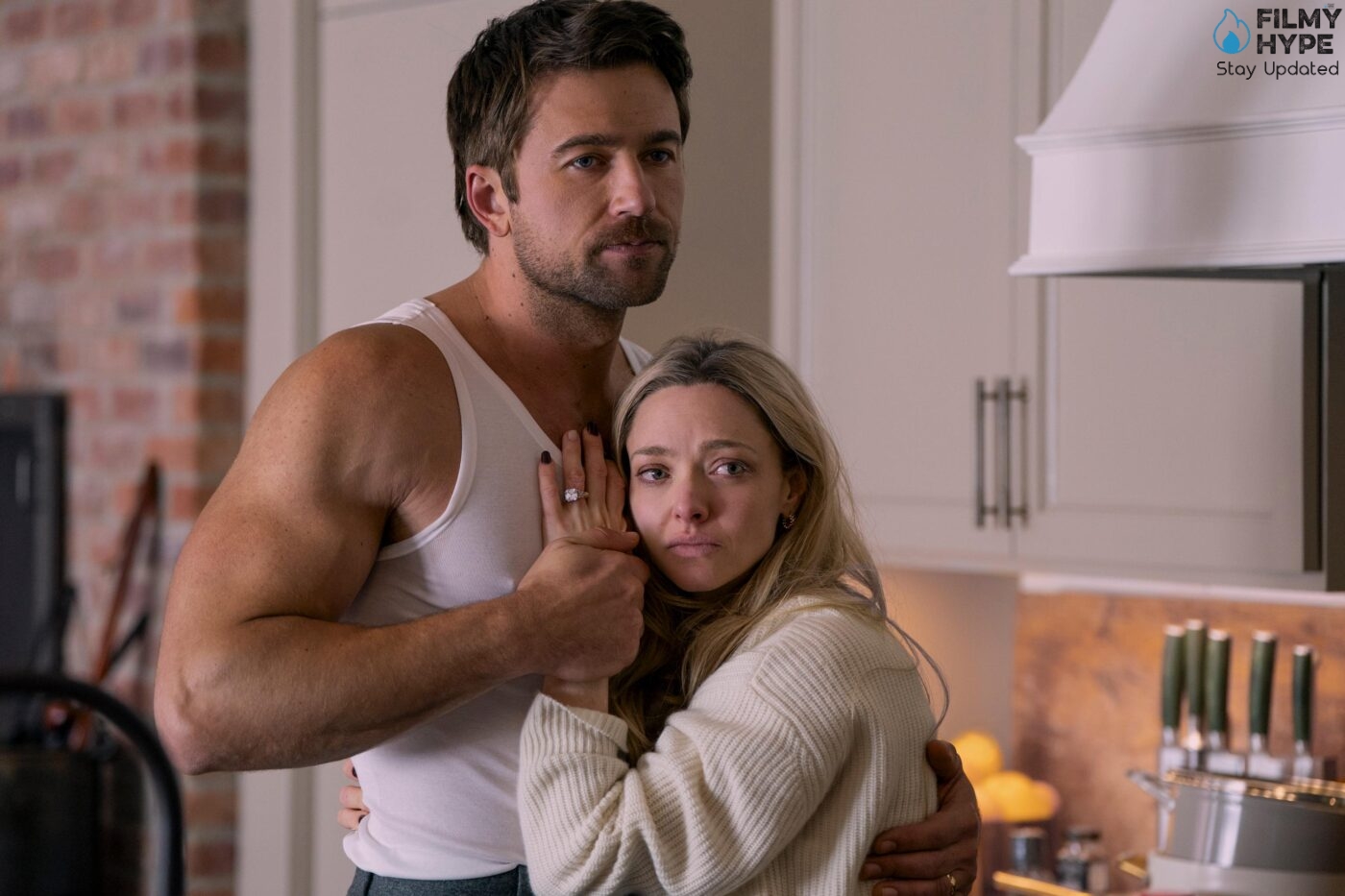
A macroscopic detail, but one that manages to fade into the background in front of the cacophonous and therefore irresistible duet between Amanda Seyfried and Sydney Sweeney – and we also add Sklenar, often on stage in a hot white tank top. An out-of-scale featuring, and then capable of approaching the best genre cinema, as much as possible. There you have it: the film in question is very reminiscent of those excessive and redundant thrillers of the 1990s. The same ones who, years later, have become an indispensable guilty pleasure. Who knows if even The Housemaid will suffer the same fate (let’s risk it: no). The Housemaid presents herself with an openness bordering on catastrophic, which is well accompanied by the situation of her protagonist: despite presenting herself as an excellent housekeeper with a lot of experience, Millie (Sydney Sweeney) is actually a young woman with no ties and no money, who uses her appearance as a beautiful and inoffensive girl to try to find a job and maintain an extremely precarious condition, sleeping in a car, still preferable to the past from which she is trying to escape.
Being hired by the equally beautiful and blonde Nina (Amanda Seyfried) is a dream worth lying about, and don’t pay too much attention to the neurotic manias and angry outbursts that the employer demonstrates right from the start. Millie and Nina are two recent evolutions of the female political and social imagination(s), which Feig and her screenwriter have the merit of being among the first to bring to the screen in a consumer film. Nina is the embodiment of the trad wife, that is, the version updated for Trump’s second term of the perfect wife and mother who supports her husband, remains within the home, always walking around dressed in white and without a hair out of place, praising family values, and dedicating herself to community activities related to her daughter’s education and dance performances. Millie is instead the restless incarnation of a Generation Z with no prospects, who does not hesitate to approach work and life from an amoral and personal perspective, aimed at extracting the greatest possible advantage, which is in any case barely sufficient for one’s survival and independence. As we learn its story, we understand that Millie has internalized and radicalized the latest lessons of feminism, or, to quote an old Sherlock joke, “he is on the side of the angels, but he is not one of them”.

Millie is then hired to cook, clean the Winchesters’ large mansion, and take care of her daughter, receiving in exchange a cell phone, a small room in the attic to live in, food, and a salary. The assignment, however, proves torturous: Nina is as cunning and false as she is, and her relationships with her husband, daughter, mother-in-law, and neighbor friends are full of sinister and unknown nuances. Furthermore, the housekeeper realizes she feels an attraction to her husband, Brandon (Brandon Sklenar), incredibly patient with his wife’s hysterical outbursts and close to the new hire, whom he defends from Nina’s often irrational, but not entirely unfounded, attacks.
The Housemaid gets off to a bad start, with a series of stereotypical shots and dialogue so bogus it’s embarrassing. The film is quick to provide us with all the information we need to introduce us to a story that, given the success achieved by Gone Girl upon its release, has at least a couple of predictable joints in the second half. The second half, however, is precisely the one in which the film shows its cards and dares more than the triangular tension between Millie’s attraction to Brandon and Nina’s hostility towards the employee. It is also the one where initial hiccups are erased by an increasingly faster flow.
Once again, Feig is not afraid to resort to exaggeration and excess, seeking a continuous crescendo of tension and asking a lot of its protagonists. Both prove perfect: Amanda Seyfried is very good at giving in escandescences, basking in pure hysteria without ever losing control of the role. Together with The Will by Ann Lee, the other film of the year that sees her in the role of an extreme and radical woman, although with a completely different register and ambitions,
The Housemaid demonstrates how Seyfried knows how to naturally and genuinely convey roles of great intensity. Sydney Sweeney, we find her here again after a not easy year on a personal level, surrounded by political scandals that have seen it become, more or less voluntarily, the face of a certain Republican political narrative. The Housemaid comes after an advertising campaign that made her radioactive to some audiences and after Christy, her “serious” film project, flopped at the box office, along with her dreams of a leap in acting quality.
Yet here Sweeney returns to present himself as a sort of Hollywood unicum: an actress who is not afraid to use her sex appeal, but also to get her hands and reputation dirty, in commercial films that, year after year, see her as the protagonist and producer of one silent hit after another. Upon closer inspection, his role is certainly not laudatory: Millie doesn’t come out of it like a peak or a beautiful person.
Yet she is the true protagonist of the film, who deliberately plays on the similarity of her very oxygenated protagonists, on the resilience and weaknesses that both show, and which, from a similar starting point, lead them to very different outcomes. The most tantalizing idea, the real coup, The Housemaid reserves it for the finale, which almost seems to transform the entire film into the genesis of yet another character that Sweeney is not afraid to pass off as, if not a villain, at least for a woman as busty as she is disreputable, ready to be unpleasant and get her hands dirty when necessary.

Undoubtedly, the most astute viewers will be able to understand well in advance what is too perfect to be true and what is not as crazy and evil as it appears, but the strength of The Housemaid – The Housemaid is not what happens, but as it happens. In this, Paul Feig is once again divisive and admits no middle ground: if one approaches it with reason and detachment, The Housemaid – The Housemaid it’s simply too grotesque, forced, and implausible to be sustainable; if you play along, you can even emerge satisfied with a thriller that’s consistently over-the-top and disproportionately long for the story to be told (130 minutes!), but which manages to captivate above all else with its discovered absurdities and deliberate shortcomings.
The Housemaid Movie Review: The Last Words
In his excessive thriller genre that spectacularizes physical and psychological violence between blondes as a starting point for a plot full of twists and turns, from the calculated tones and the continuous emphasis, The Housemaid can be delightfully funny when approached with the right lightness, condoning a truly awkward and awkward first half hour.
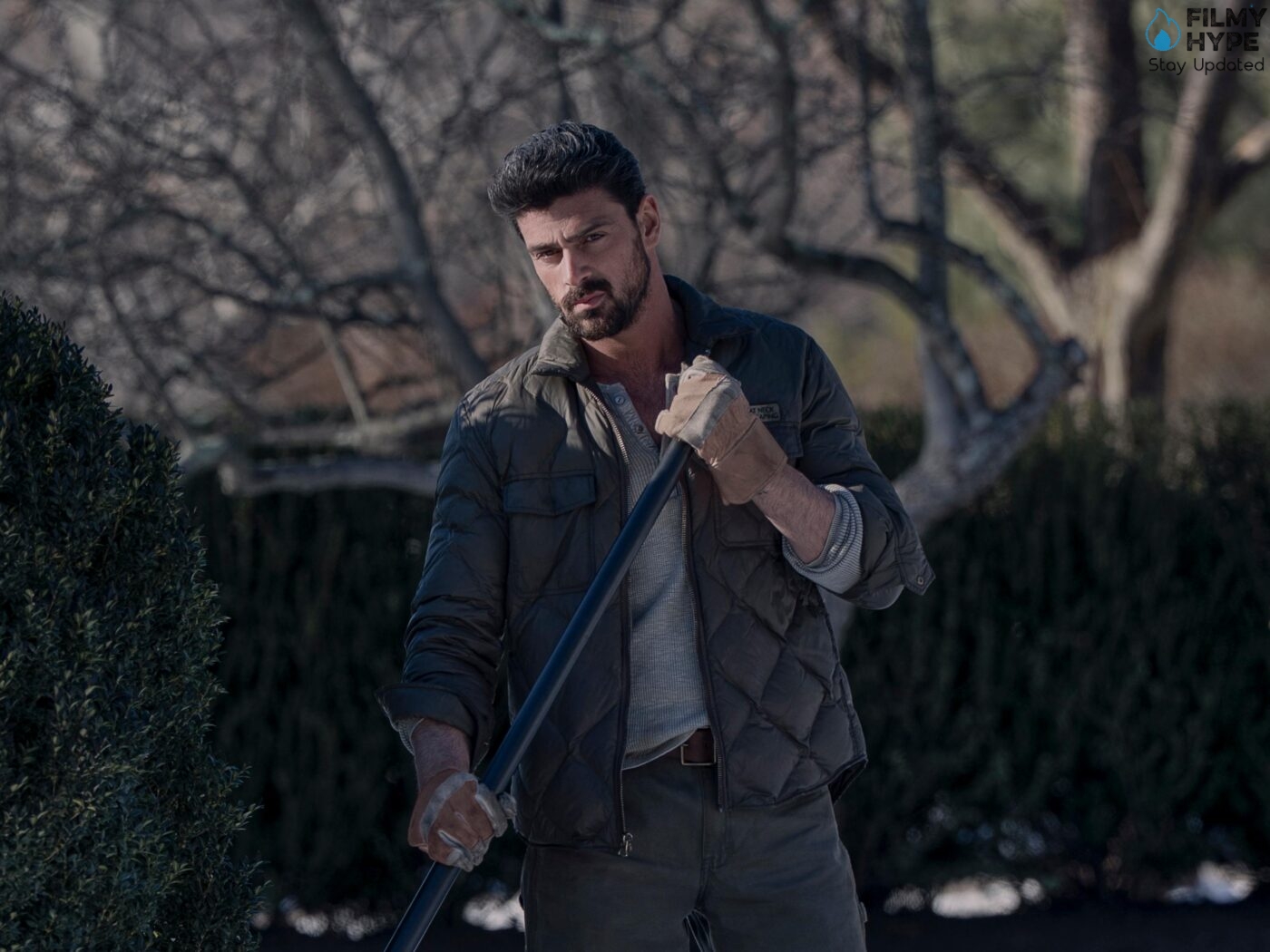
All the worst elements, including the presence of a Michele Morrone who is usually very exaggerated in his interpretative intensity, Feig uses them as blunt objects to file down what is most absurd, awkward and facile in the film, to the point of making it camp and amusing in his constant doing, undoing and overdoing, cutting his fairytale morals with the proverbial axe. It is the exact opposite of A Little Favor, which, after an excellent start, drowned in a growing exaggeration that it could no longer handle.
Cast: Sydney Sweeney, Amanda Seyfried, Brandon Sklenar, Elizabeth Perkins, Michele Morrone, Indiana Elle
Direction: Paul Feig
Filmyhype.com Ratings: 3.5/5 (three and a half stars)